(日々の生産から見た製造の視点)
ほとんどのクリニックが話題にしない問題
必ずしも明確に議論されているわけではないとしても、ほとんどのクリニックでこの状況が見られています。
2 つのケース。同様の準備。同じ症状。
2 つの異なる研究室に送られました。
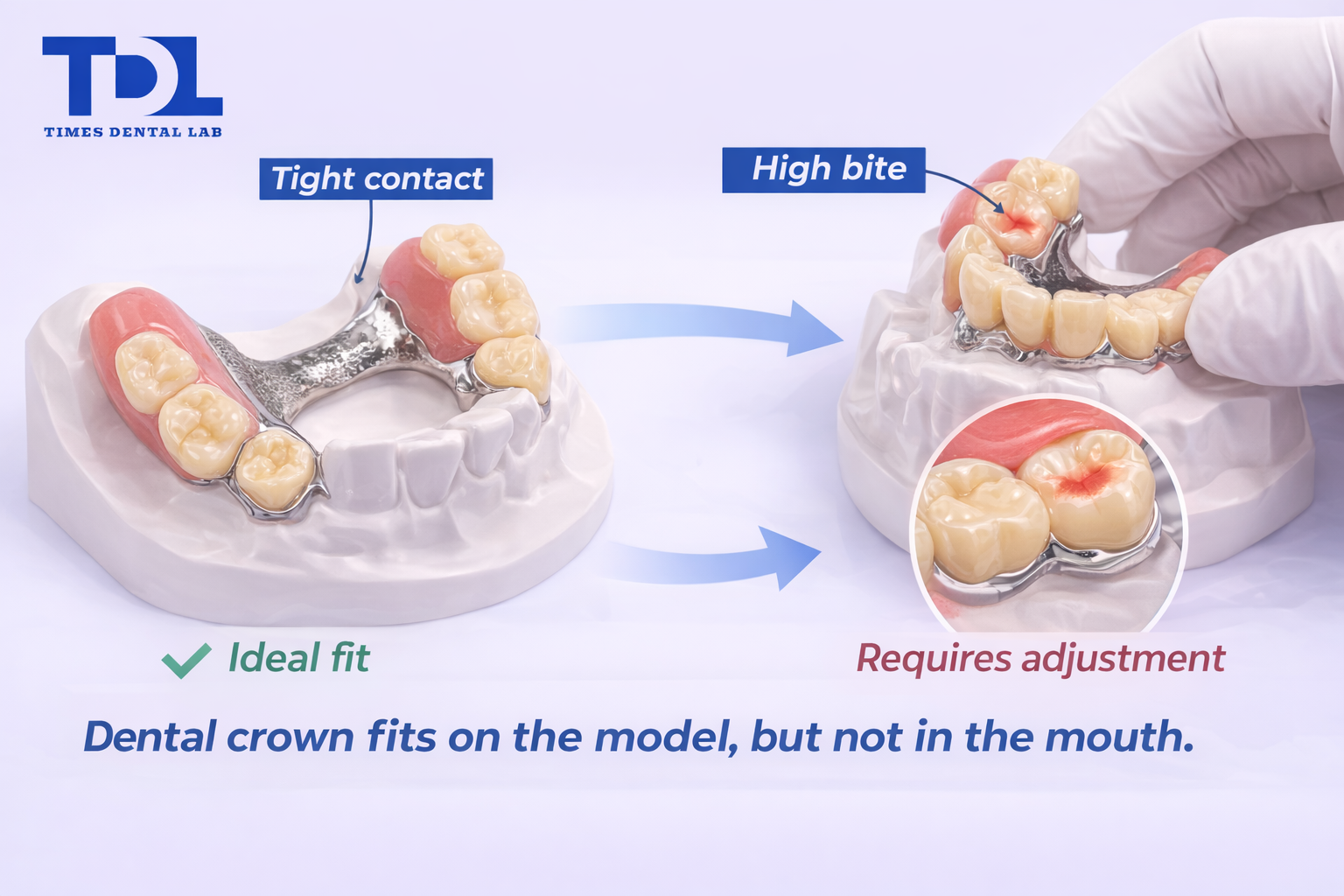
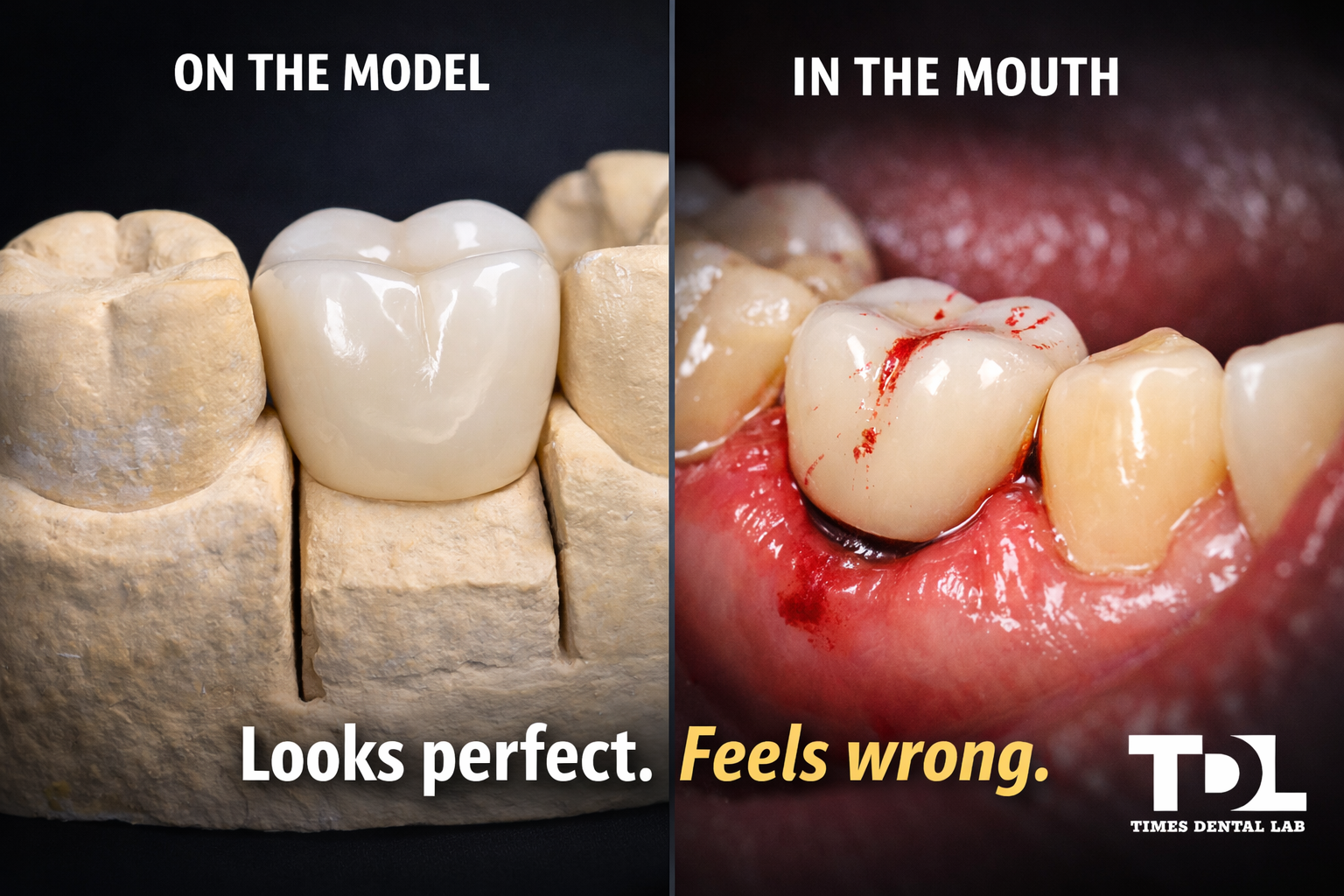
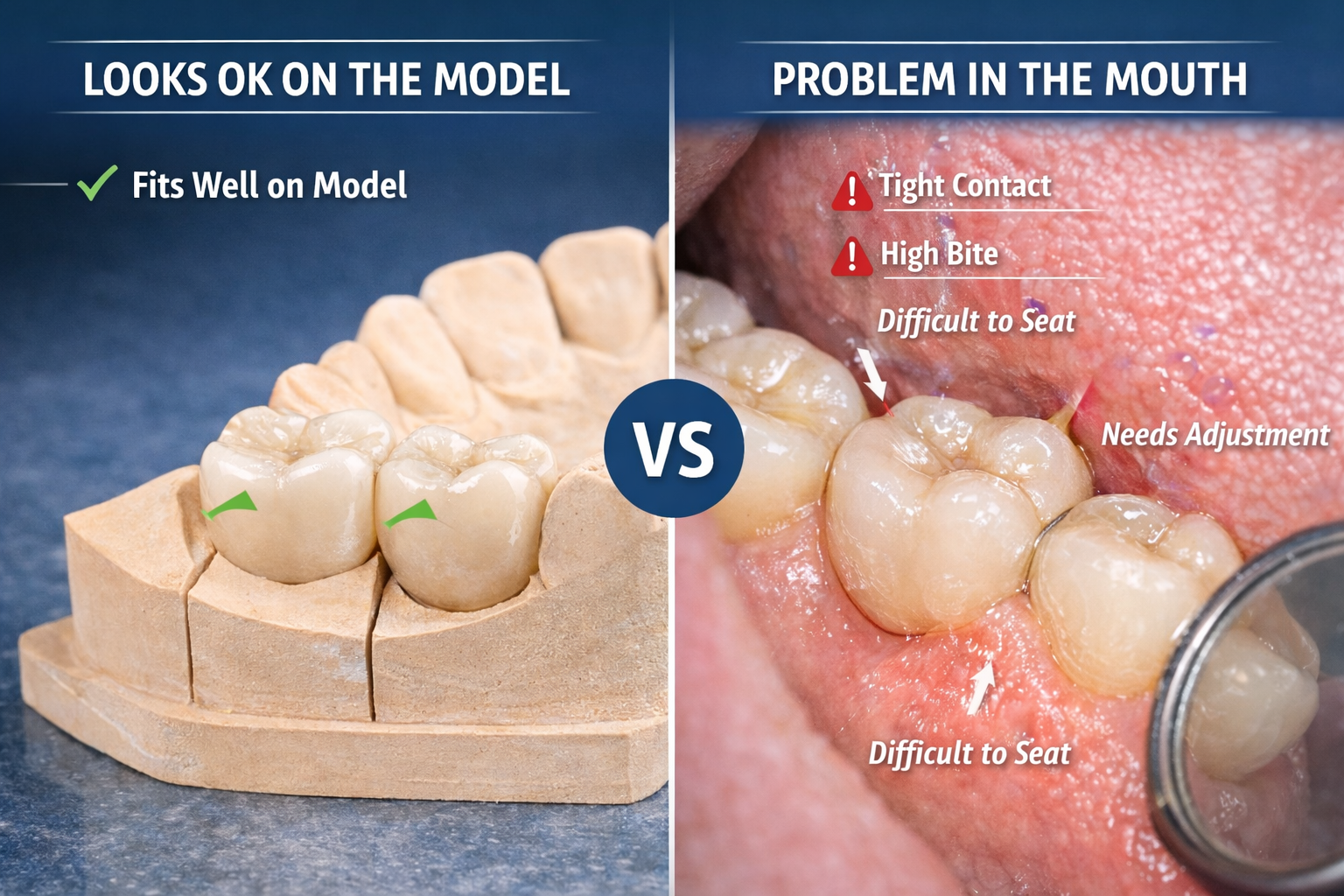
予測可能な結果が返されます。スムーズに着座できます。最小限の調整。もう 1 つはモデル上では許容範囲に見えますが、一度口に入れた場合:
l 接触が予想よりきついです
l バイトを調整する必要があります。
l 座席は本来よりも受動的ではありません 場合によってはリメイクにつながることもあります。 最初は、これはケースの問題のように感じます。 しかし、それが繰り返し発生すると、別のパターンが明らかになります。 l 違いは常にあるわけではありません。
l 場合。 時間の経過とともに安定していると感じるラボもあります。一貫性がないと感じるラボもあります。 必ずしも間違っているわけではありませんが、予測できません。 臨床現場では、時折起こるミスよりも、予測不可能性の方がプレッシャーがかかります。 一貫性は、完璧であると誤解されることがよくあります。 実際には、すべてのケースに変数があります: l準備の違い
l バイト登録の変動性
l スキャン歪み
lマテリアルの動作
完全にデジタル化されたワークフローでも、これらの変数は残ります。 一貫性とは次のことを意味しません。 l 調整なし
l偏差なし
もっと実用的な意味です: ケースは期待どおりに動作します。 予測可能な症例は臨床医を驚かせるものではありません。 接触はよく知られた範囲内にあります。オクルージョンは制御可能な方法で動作します。着席する必要はありません。力。 調整が必要な場合でも、次のようになります。 l マイナー
l期待される
l 効率的
時間の経過とともに、これにより信頼が構築されます。 臨床医は、箱を開ける前から何が届くかを知り始めます。 これはよくある経験です。 クリニックが新しい研究室を試す 最初に: l 結果は良好です
l コミュニケーションはスムーズです
その後、徐々に: l 連絡先は異なります。
l バイトが不均一になる
l 結果の予測が難しくなります。
劇的に悪いことは何もありません。 しかし、何かが変わります: 結果は安定しなくなりました。 これは、材料や機器が原因で発生することはほとんどありません。 これは、ラボの内部運営方法が原因で発生します。 外から見ると、ほとんどのラボは同じように見えます。 それらはすべて以下を使用します: lCAD デザイン
l フライス盤
l 類似のマテリアル
しかし、内部的には大きな違いがあります。 一部のラボでは、誰がケースを担当するかによって結果が大きく左右されます。 さまざまな技術者が行うことができます: l 連絡先を変更します。
lオクルージョンを調整します。
l 余白の解釈
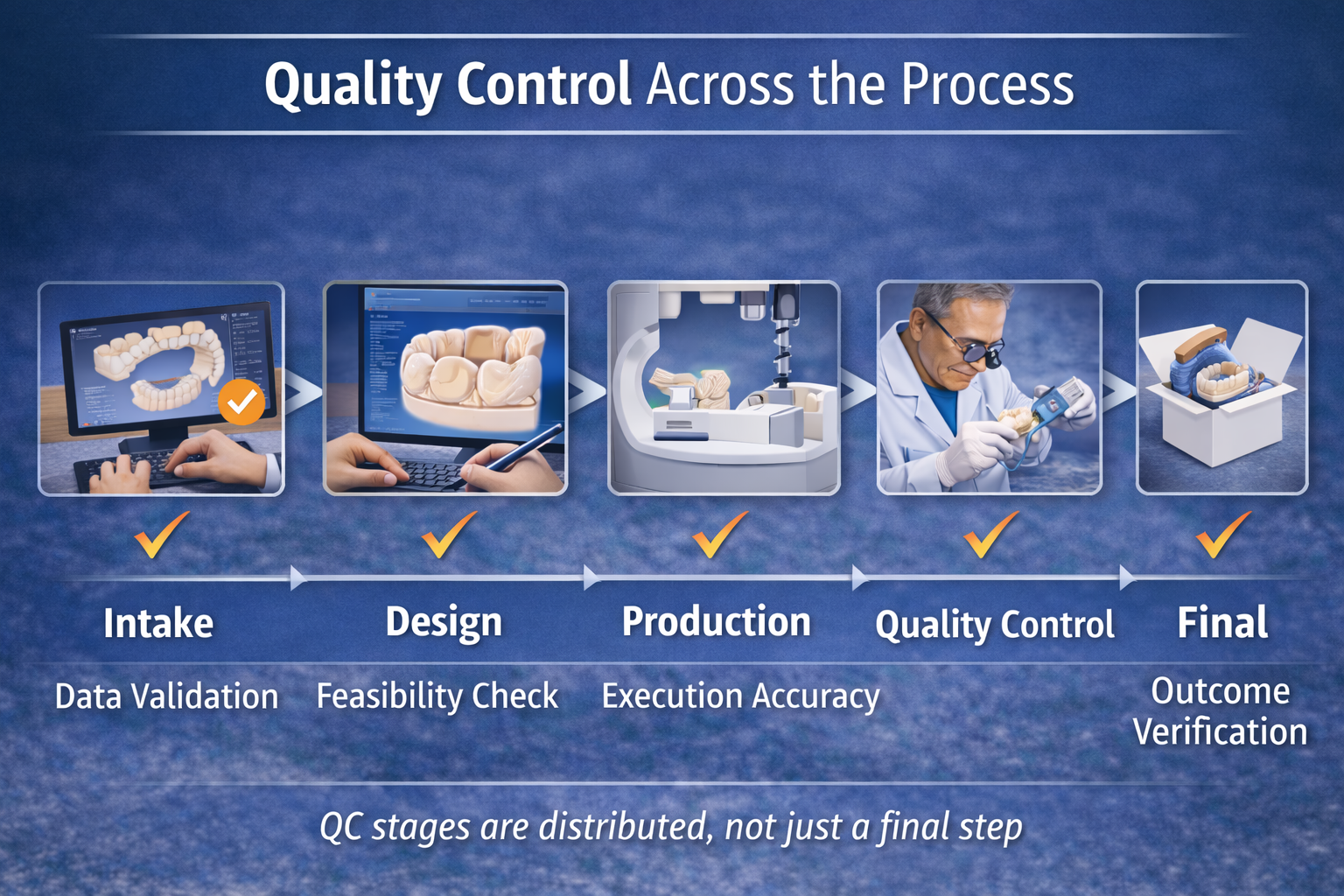
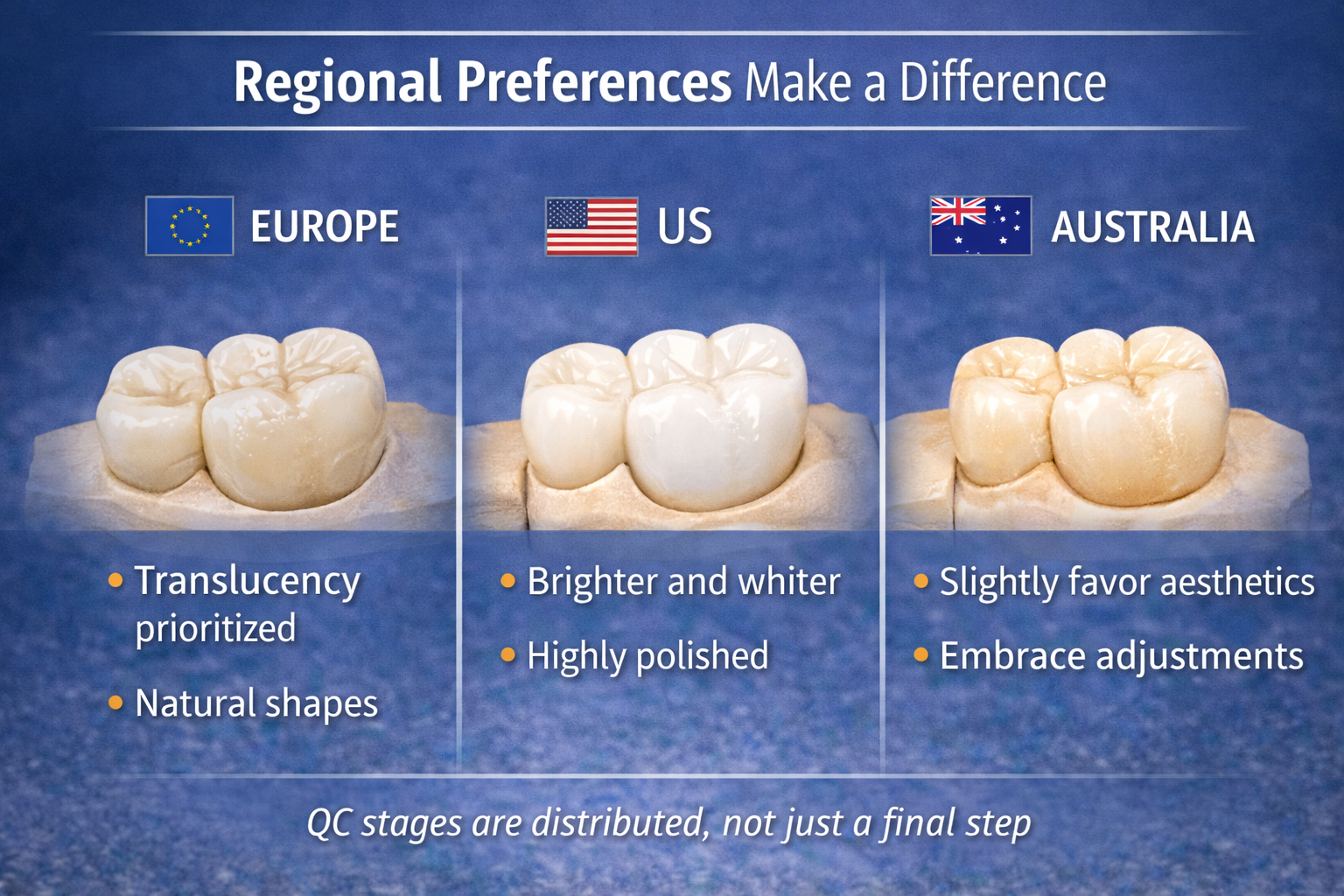
熟練した技術者であっても、ばらつきが生じます。 結果が個人に依存すると、一貫性が保てなくなります。 一部のワークフローは、ケースの受信からデザインに直接移行します。 しかし、実際のケースでは、次のような問題が存在することがよくあります。 l 不完全なスキャン領域 l 不安定なバイト記録 l スペースに限りがあります l 参照がありません 構造化されたレビューがなければ、これらは本番環境に持ち込まれます。 そして、生産が開始されると、オプションは限られます。 一部のラボでは、QC は最終段階でのみ実行されます。 しかし、それまでに: l デザインの決定はすでに決定されています l 構造上の制限は修正できません 品質管理では上流の決定を修正することはできません。 安定したラボでは、QC をチェックポイントではなくプロセスとして扱います。 すべてのケースを同じ方法で処理する必要があるわけではありません。 場合によっては以下が必要になります。 l 確認 l 期待値の調整 l デザイン前のコミュニケーション 他の人は直接続行できます。 この違いを認識する機能はソフトウェアに基づいていません。 これは経験から来ています。 最後に一貫性が作成されません。 日常のワークフローに組み込まれています。 大量の国際訴訟を扱った経験から言えば、安定性は個人の努力からではなく構造から生まれます。 構造化されたラボ環境では、ケースは定義された手順に従います。 l 摂取量とデータのレビュー l デザイン計画 l Production l Multi-stage quality checks This reduces variability. At Times Dental Lab, with over 400 technicians organized into specialized teams, cases are not handled randomly but through coordinated workflows. This structure allows similar cases to be processed in a consistent way, regardless of individual technicians. In smaller setups, flexibility may seem like an advantage. But at scale, too much flexibility leads to variation. In our daily production — where output consistently exceeds 1,000 crowns per day — stability depends on repeatable processes rather than individual interpretation. Parameters such as: l contact range l occlusal adjustment approach l margin handling are controlled within defined boundaries. This ensures that similar cases behave similarly. Instead of relying on final inspection, stable labs distribute QC across stages: l Intake → data validation l Design → feasibility check l Production → execution accuracy l Final → outcome verification This layered approach reduces accumulated deviation. At Times Dental Lab, multiple QC checkpoints are built into the workflow to support consistent output across production lines. Experience is not only in people. It is built into how decisions are made. With over 95% of cases consistently exported to Europe, the US, and Australia, differences in clinical expectations become part of daily handling rather than exceptions. For example: l Contact tightness preferences vary l Occlusion standards differ l Aesthetic expectations are not uniform Recognizing these differences early allows better alignment before production begins. Price and turnaround time are easy to compare. Consistency is not. But over time, it has a greater impact. Inconsistent outcomes lead to: l Increased chairside adjustment l More communication cycles l Higher remake rates l Patient dissatisfaction These costs accumulate. And often exceed any initial savings. Fast turnaround is valuable. But speed without structure introduces risk: l Reduced review time l Increased variability l Less control over outcomes In stable workflows, speed is supported by process — not achieved by skipping steps. Consistency is not visible in marketing materials. But it can be understood through simple questions. l How are cases reviewed before production? l How many QC stages are involved? l How is consistency maintained across teams? l What happens when case data is unclear? Look for: l Clear process explanation l Structured workflow l Consistent logic Be cautious of vague answers. Consistency comes from systems, not claims. Over time, stable cooperation is built on predictability. When workflows are consistent: l Planning becomes easier l Adjustments decrease l Communication becomes more efficient The lab understands clinical expectations.The clinic understands how restorations behave. This alignment reduces uncertainty. Consistency is not something a lab promises. It is built into: l Workflow l Decision-making l Quality control l Experience It is reflected not in one perfect case,but in many predictable ones. Stability is not about eliminating variation.It is about managing it — consistently. And over time, that is what separates a short-term supplierfrom a long-term manufacturing partner like Times Dental Lab —where consistency is not a result, but a system.
歯科技工所の仕事における「一貫性」が本当に意味するもの
一貫性とは予測可能性が重要です
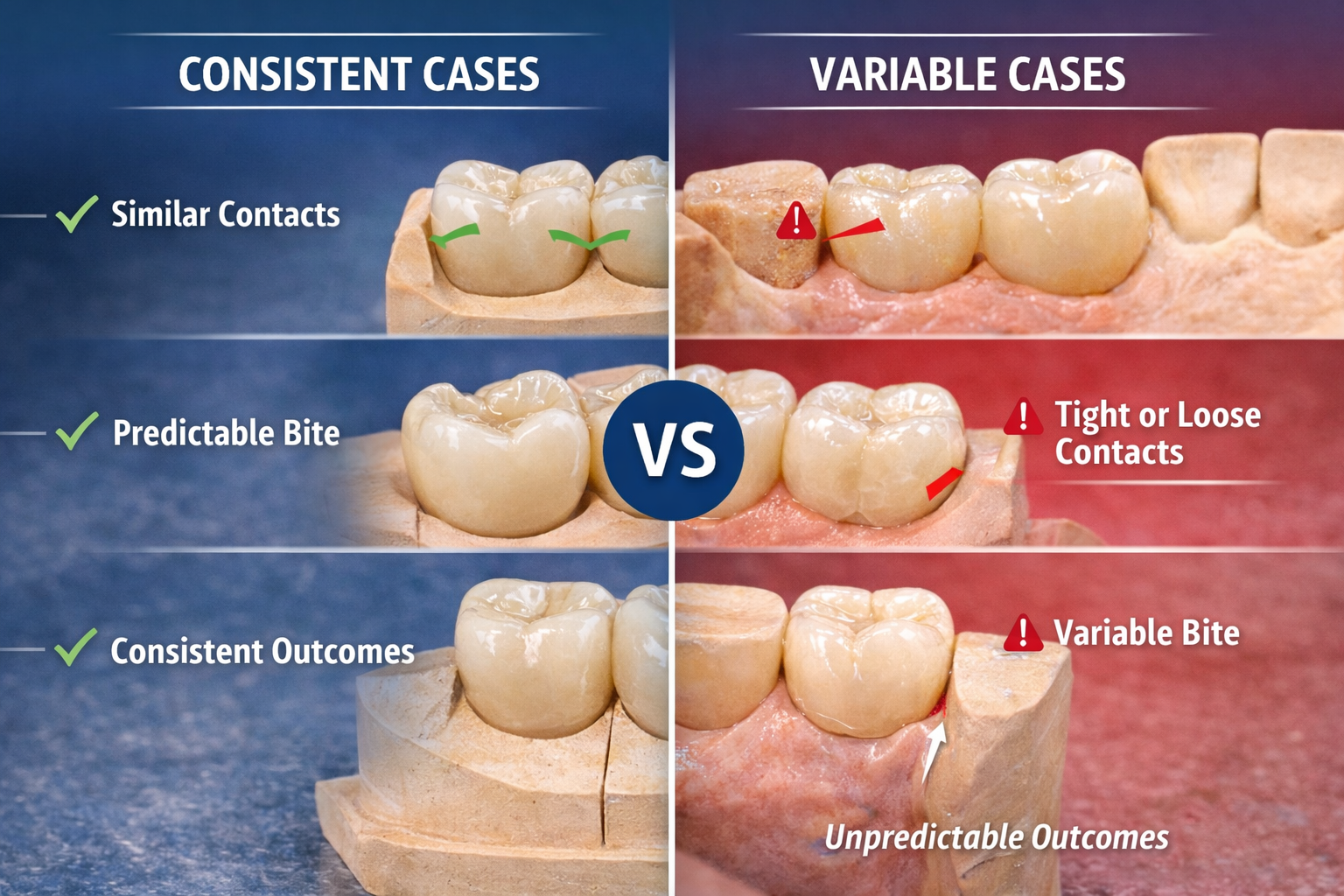
一部の研究所が信頼できると感じる理由 — 信頼できなくなるまで
不一致の実際の原因
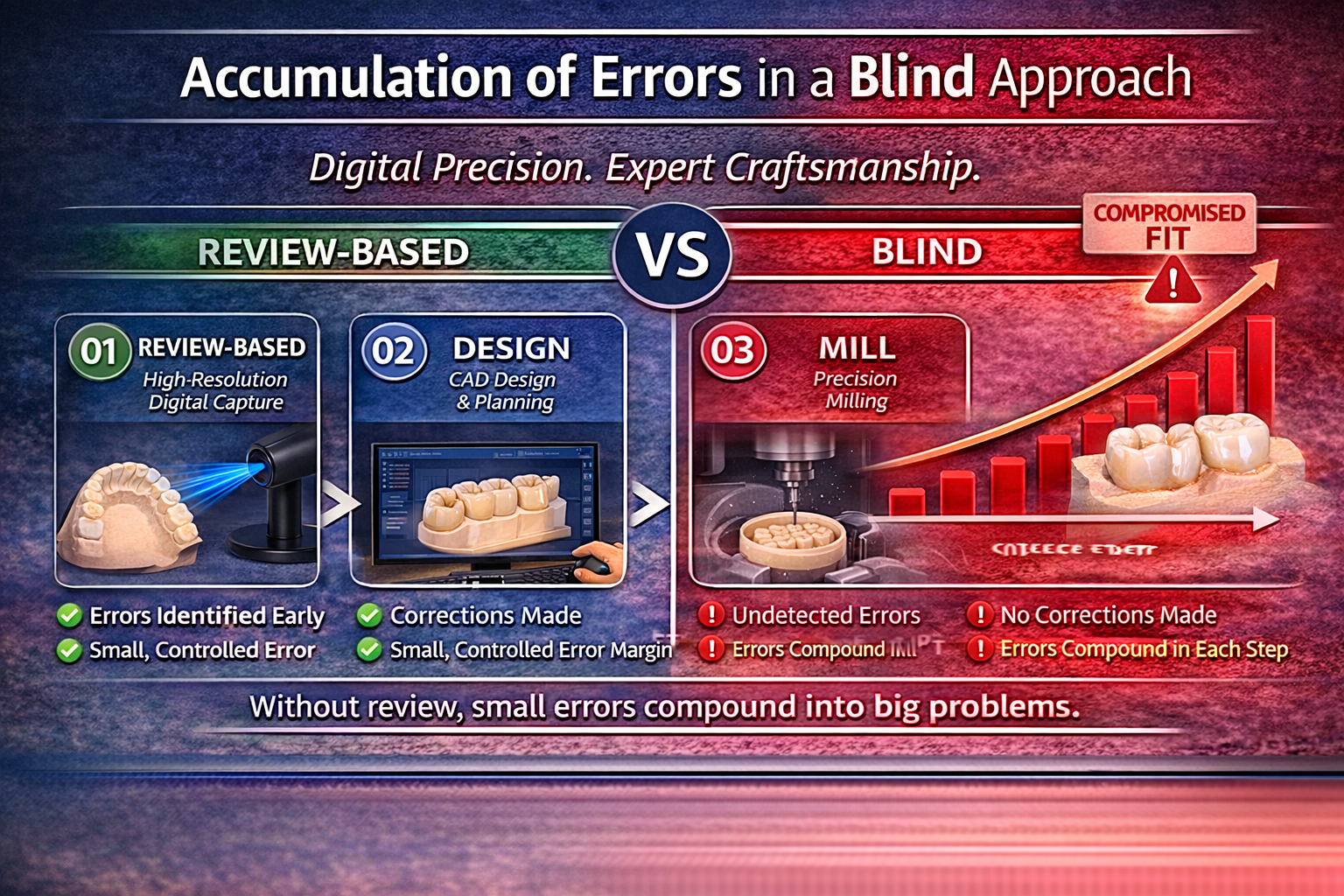
生産が個人に依存する場合
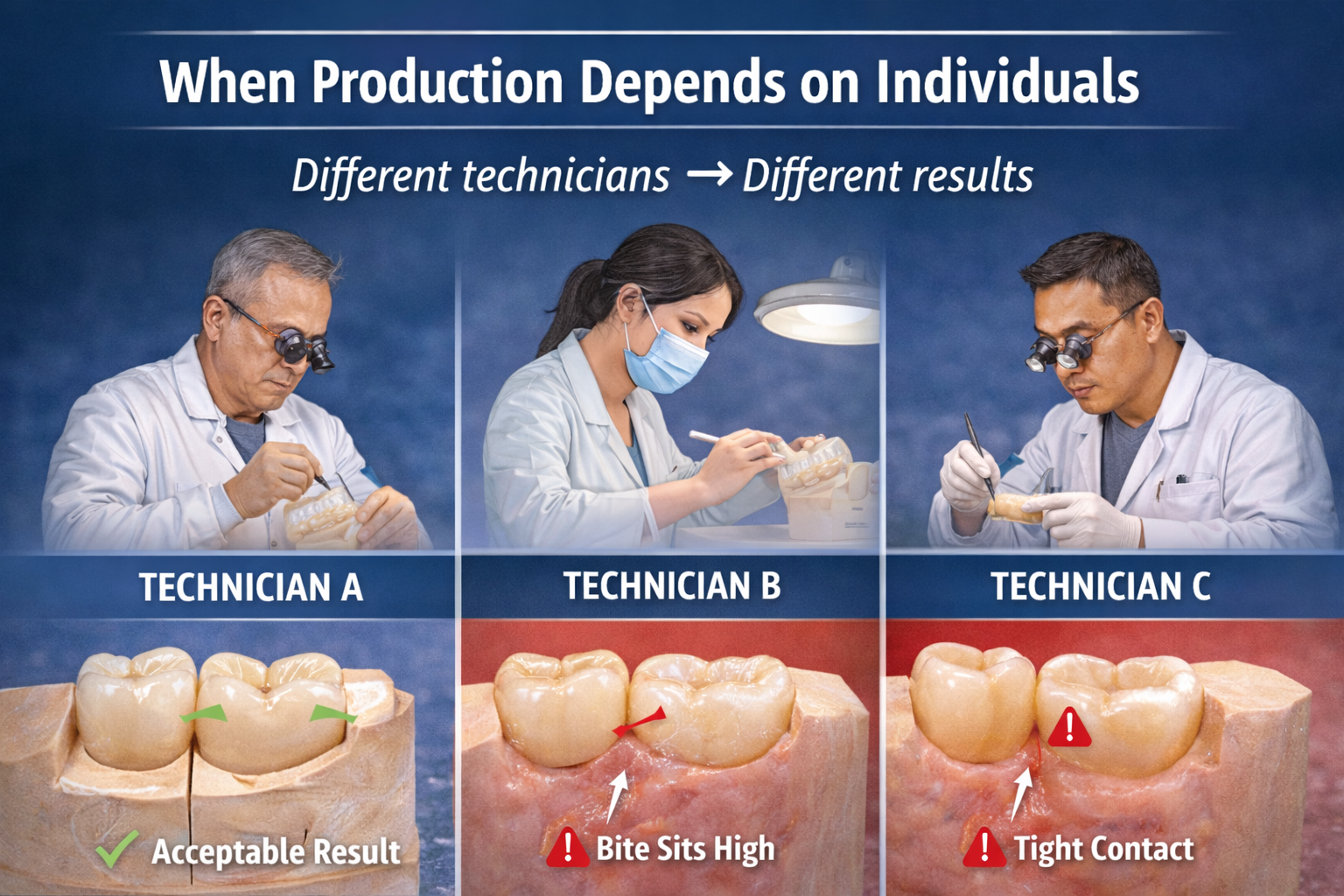
ケースがレビューなしで本番環境に入る場合
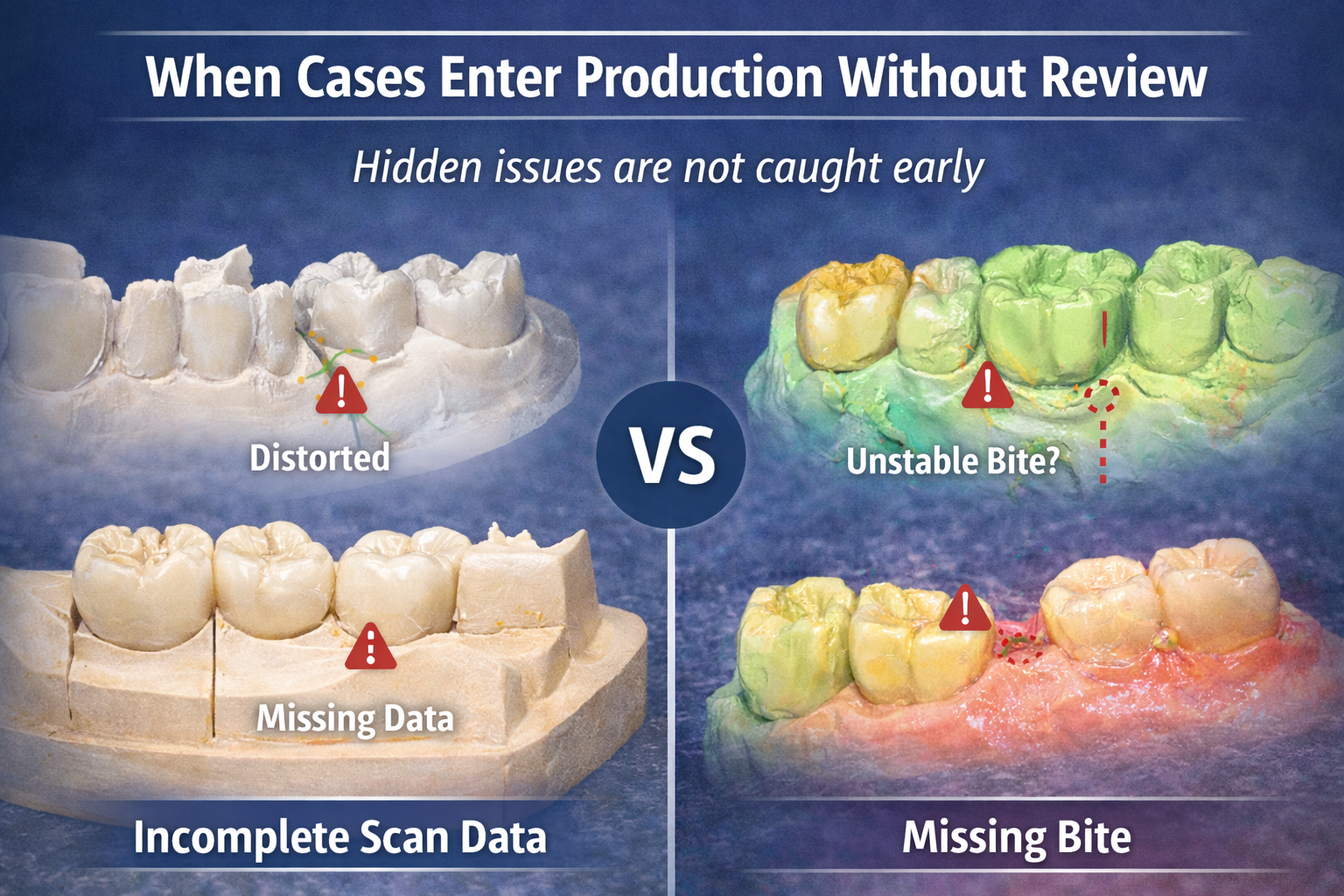
品質管理が遅すぎる場合
事件判決が欠落している場合
安定したラボの違い (多くの場合舞台裏)
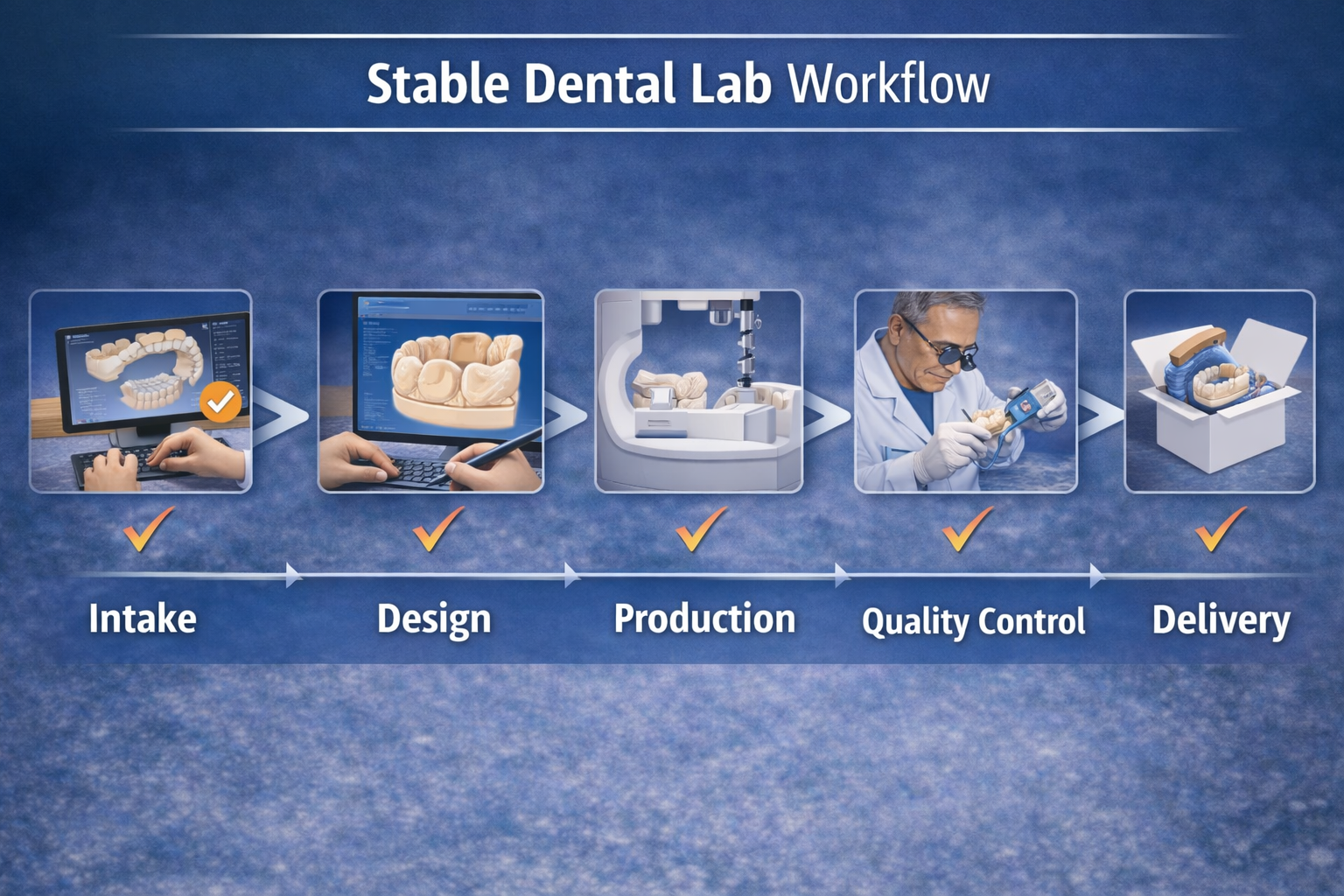
ワークフローは再現性を考慮して設計されています
Production Is Built for Stability, Not Flexibility
Quality Control Happens Across the Process
Experience Is Embedded Into the System
Why This Matters More Than Price or Speed
The Hidden Cost of Inconsistency
Why Speed Alone Does Not Guarantee Stability
A Practical Way to Evaluate Your Dental Lab
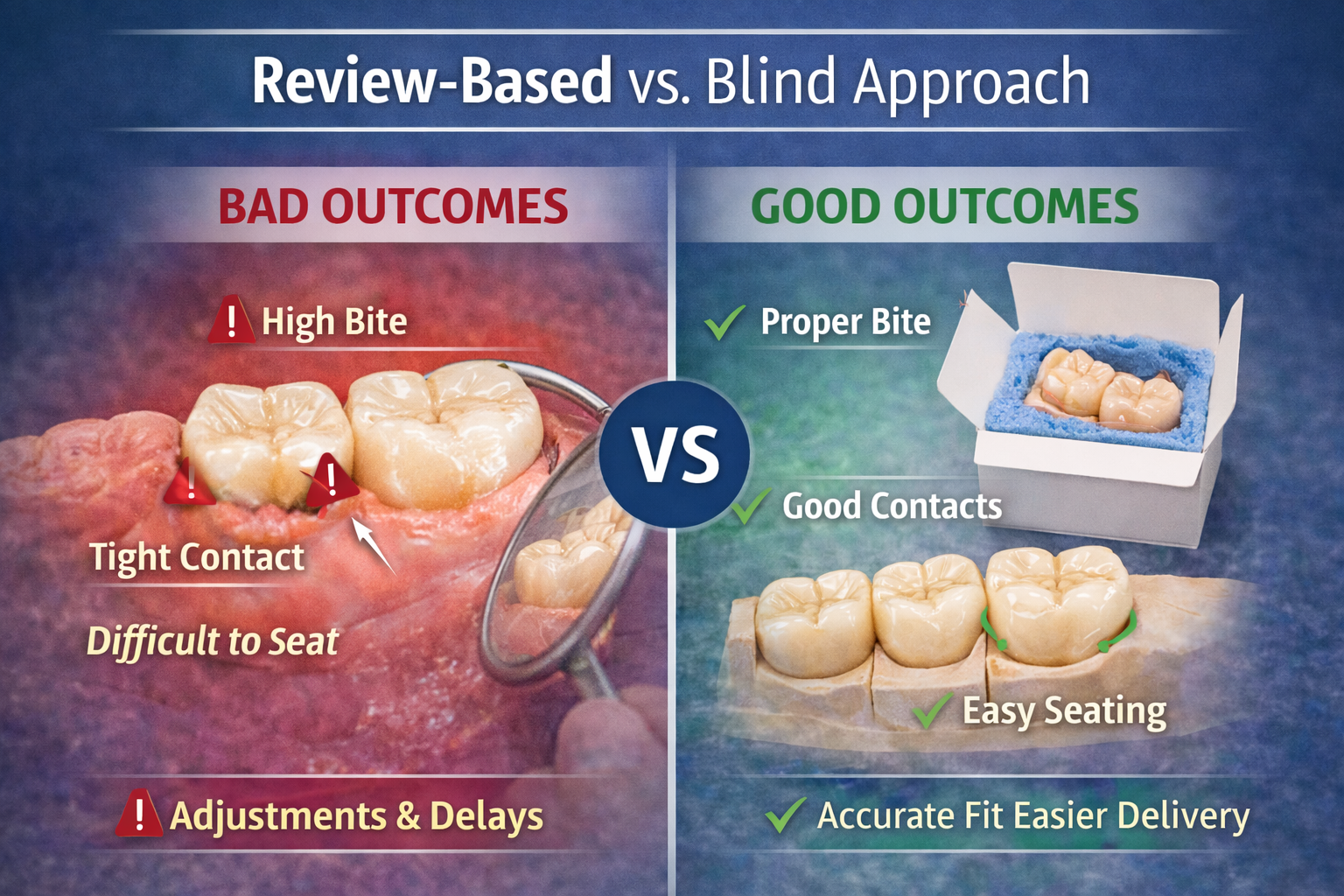
Questions That Reveal Real Capability
What to Listen For
A More Predictable Way to Work with a Dental Lab
Conclusion: Stability Is Built, Not Claimed