(일상 생산의 제조 관점)
대부분의 진료소에서 말하지 않는 문제
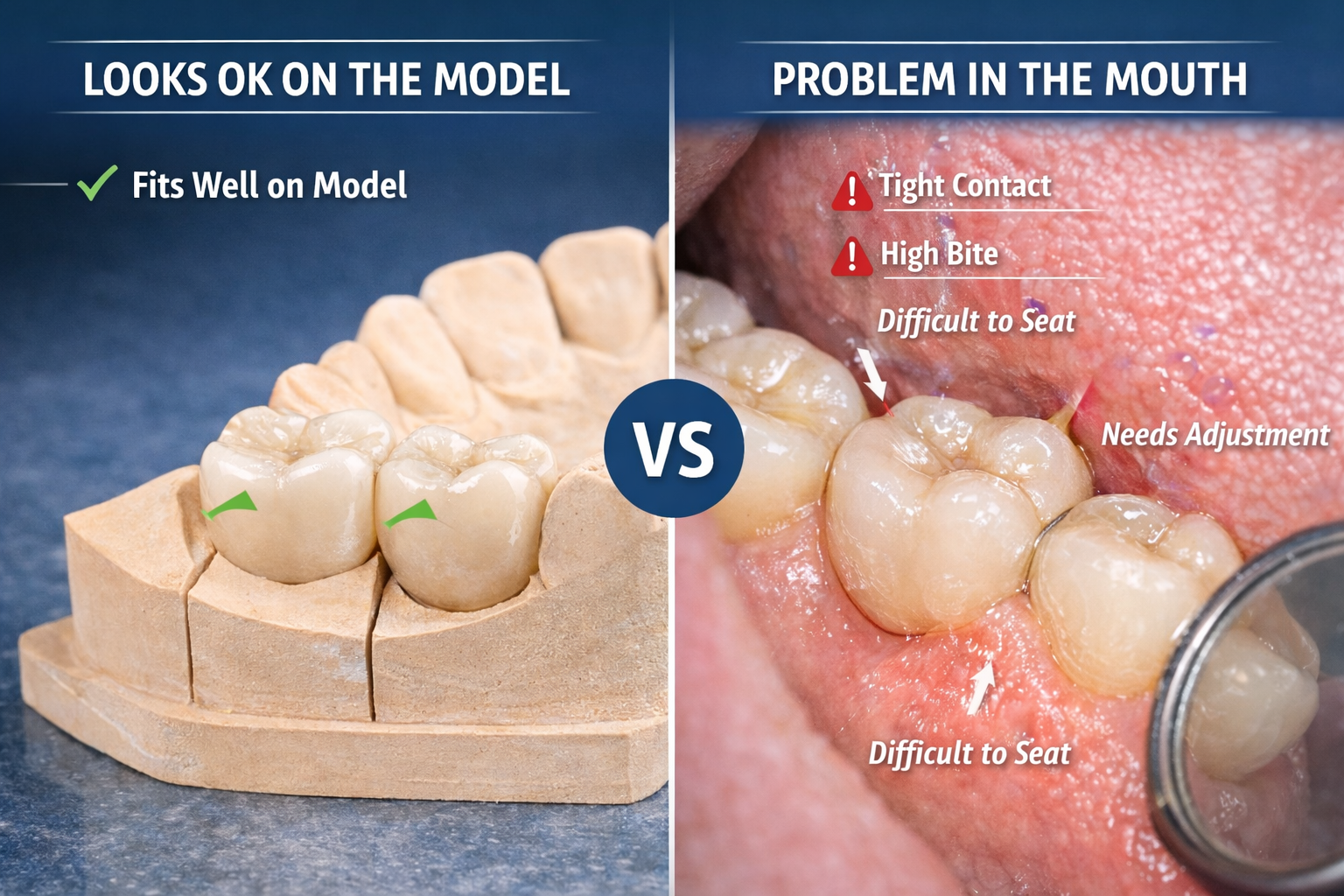
항상 명확하게 논의되지는 않더라도 대부분의 진료소에서는 이러한 상황을 목격했습니다.
2가지 경우.비슷한 준비.같은 표시.
두 개의 다른 연구실로 보냈습니다.
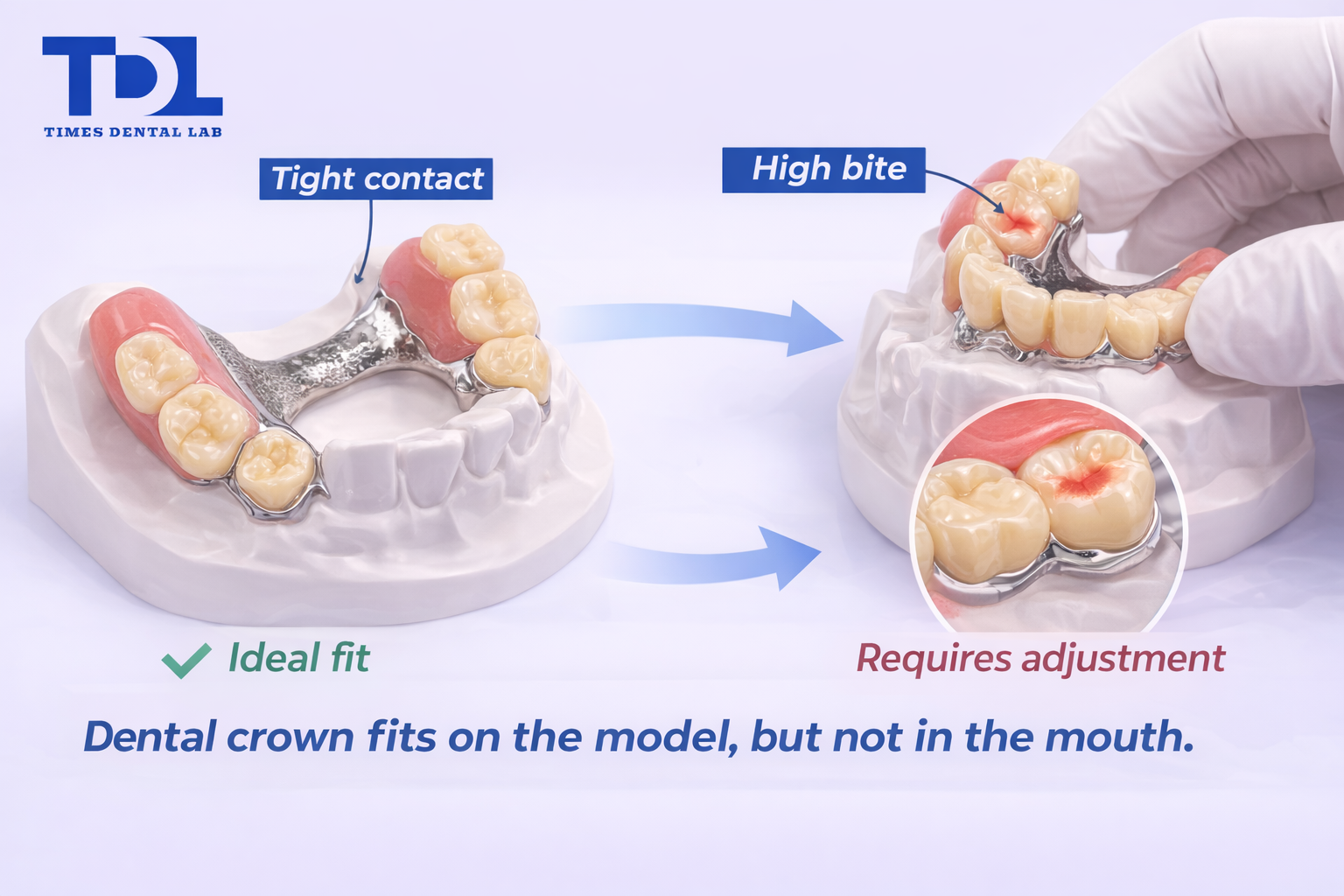
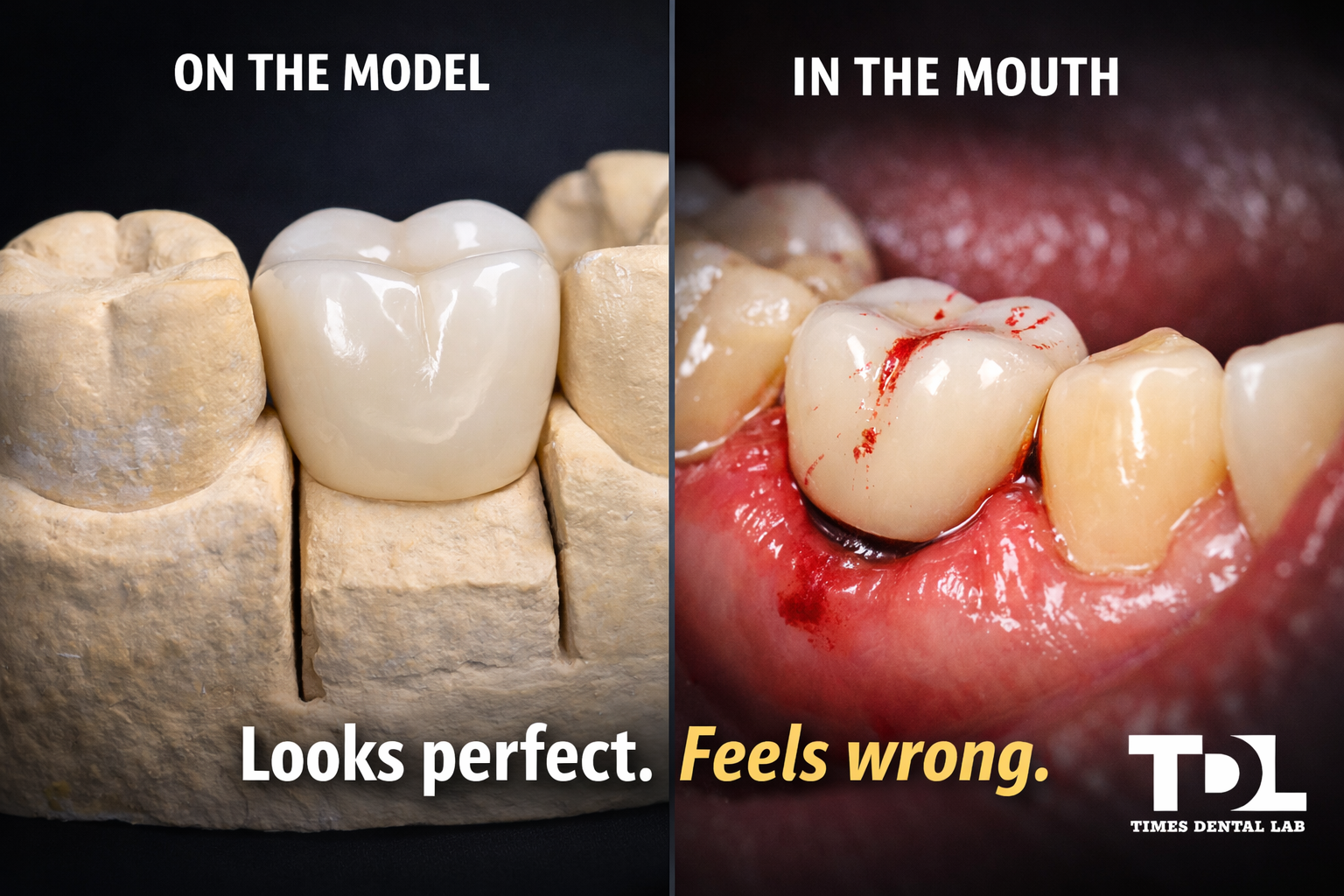
예측 가능하게 돌아옵니다. 원활하게 좌석. 최소한의 조정.다른 하나는 모델에서는 괜찮아 보이지만 입에 넣으면:
l 접촉이 예상보다 빡빡한 느낌입니다
l 물린 부분을 조정해야 합니다.
l 좌석이 생각보다 수동적이지 않습니다.
가끔 리메이크로 이어지는 경우도 있습니다.
처음에는 케이스 문제처럼 느껴졌습니다.
그러나 이러한 일이 반복적으로 발생하면 다른 패턴이 분명해집니다.
l 항상 차이가 있는 것은 아닙니다.
l 실험실에서 사례를 처리하는 방식에 있습니다.
시간이 지나면서 안정감을 느끼는 실험실도 있습니다.일관되지 않는 실험실도 있습니다.
항상 틀린 것은 아니지만 예측할 수는 없습니다.
그리고 임상 작업에서는 예측 불가능성이 가끔 실수하는 것보다 더 큰 압박감을 줍니다.
치과 기공소 작업에서 "일관성"이 실제로 의미하는 것
일관성을 완벽함으로 오해하는 경우가 많습니다.
실제로 모든 사례에는 변수가 있습니다.
l 준비 차이
l 바이트 등록 가변성
l 스캔 왜곡
l 재료 동작
완전한 디지털 워크플로에서도 이러한 변수는 그대로 유지됩니다.
따라서 일관성이 다음을 의미하는 것은 아닙니다.
l 조정 없음
l 편차 없음
더 실용적인 것을 의미합니다.
케이스가 예상대로 작동합니다.
일관성은 예측 가능성에 관한 것입니다
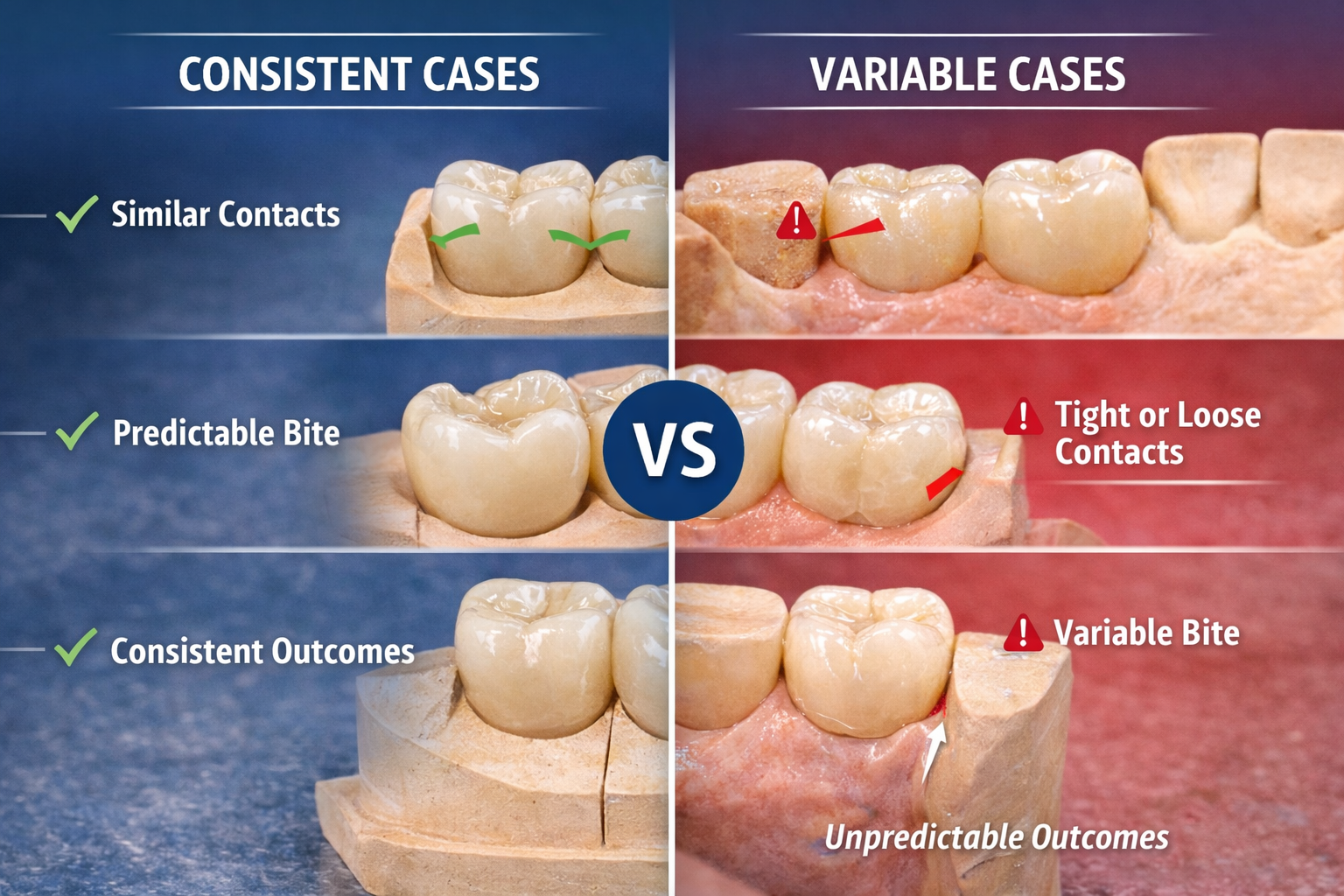
예측 가능한 사례는 임상의를 놀라게 하지 않습니다.
연락처가 익숙한 범위 내에 있습니다.차폐는 제어 가능한 방식으로 작동합니다.힘을 들이지 않고도 앉을 수 있습니다.
조정이 필요한 경우에도 다음과 같습니다.
l 사소함
l 예상됨
l 효율적
시간이 지나면서 신뢰가 쌓입니다. 임상의는 상자를 열기 전에 무엇을 받게 될지 알기 시작합니다. 이것은 일반적인 경험입니다. 병원이 새로운 실험실을 시도합니다. 처음에는: l 결과가 좋습니다 l 소통이 원활합니다.
그런 다음 점차적으로: l 연락처는 다양함 l 물림의 일관성이 떨어집니다. l 결과를 예측하기가 더 어려워집니다.
극적으로 잘못된 점은 없습니다. 그러나 변경된 사항은 다음과 같습니다. 결과가 더 이상 안정적이지 않습니다. 자재나 장비로 인해 발생하는 경우는 거의 없습니다. 연구실 내부 운영 방식으로 인해 발생합니다. 외부에서 보면 대부분의 실험실이 비슷해 보입니다. 모두 다음을 사용합니다: l CAD 디자인
l 밀링 기계
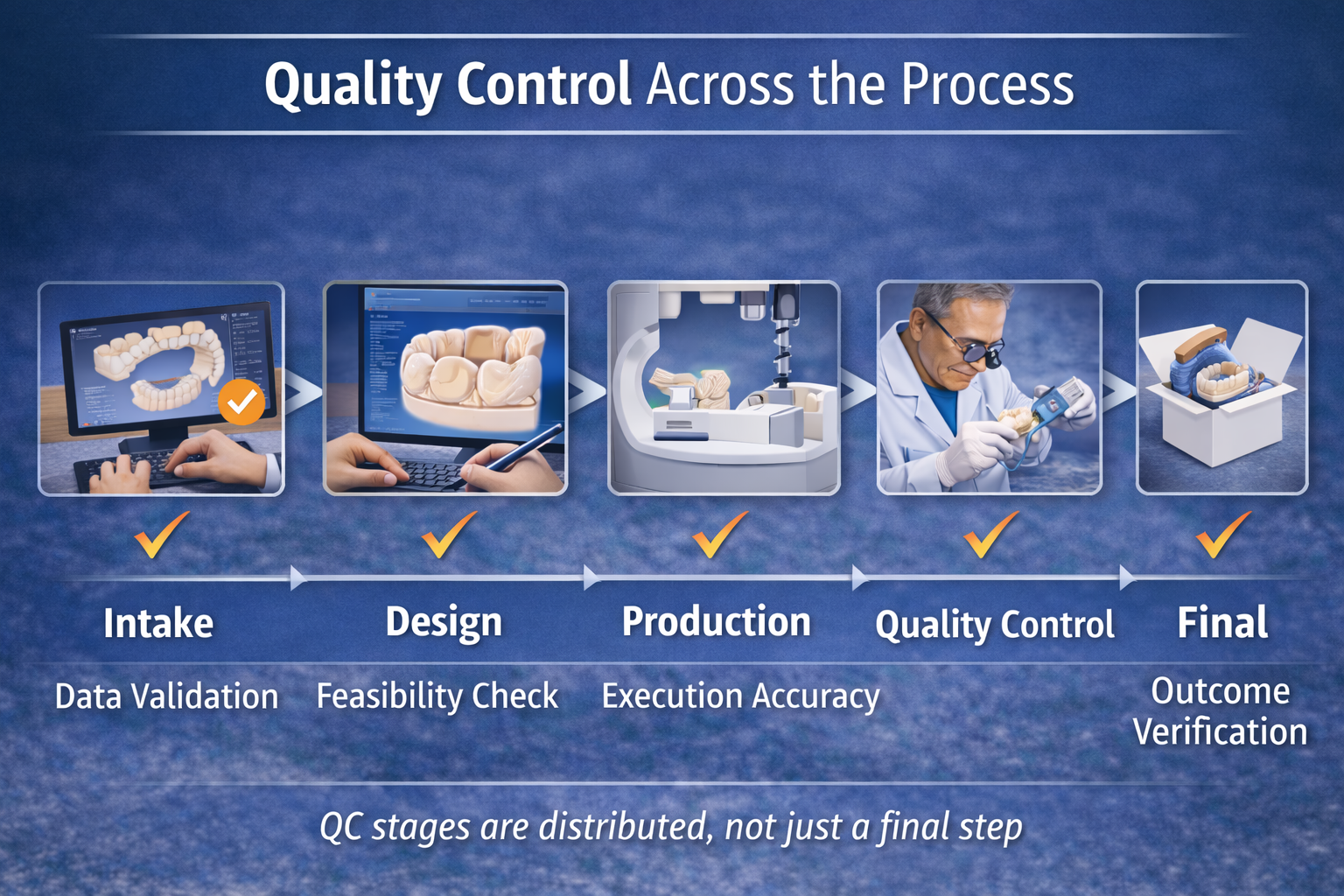
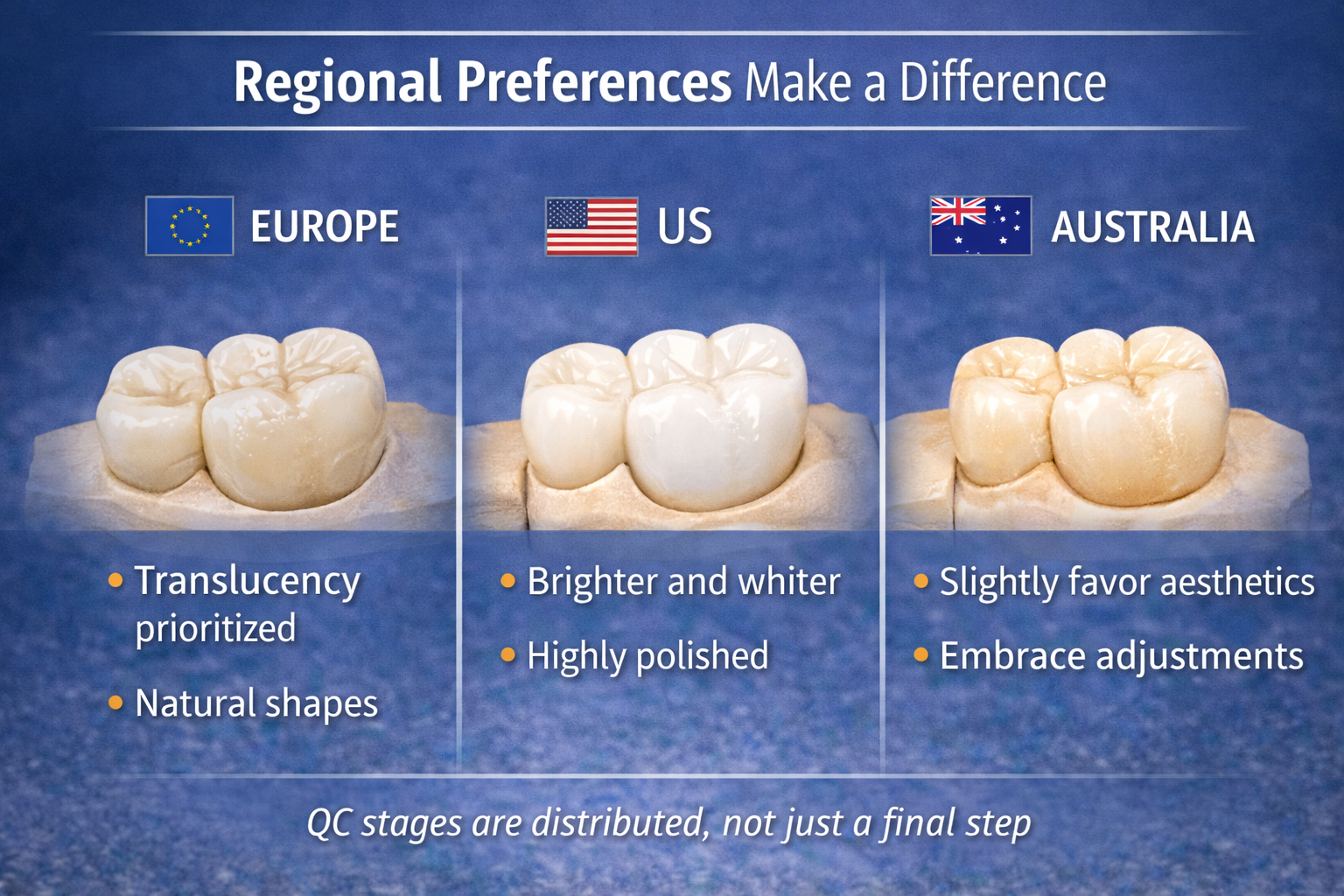
l 유사한 자료 그러나 내부적으로는 그 차이가 상당합니다. 일부 실험실에서는 누가 사건을 처리하느냐에 따라 결과가 크게 달라집니다. 다른 기술자는 다음을 수행할 수 있습니다. l 연락처를 다르게 디자인하세요. l 다른 방식으로 폐색 조정 l 여백 다르게 해석하기 숙련된 기술자라도 변화는 나타납니다. 결과가 개인에 따라 다를 경우일관성을 유지할 수 없습니다. 일부 워크플로는 케이스 접수부터 디자인까지 직접 진행됩니다. 그러나 실제 사례에서는 종종 문제가 존재합니다: l 불완전한 스캔 영역 l 불안정한 바이트 기록 l 제한된 공간 l 누락된 참조 체계적인 검토 없이 제작에 들어갑니다. 제작이 시작되면 옵션이 제한됩니다. 일부 실험실에서는 최종 단계에서만 QC가 수행됩니다. 하지만 그때까지는: l 디자인 결정은 이미 수정되었습니다 l 구조적 제한은 수정할 수 없습니다. 품질 관리로는 업스트림 결정을 수정할 수 없습니다. 안정적인 실험실에서는 QC를 체크포인트가 아닌 프로세스로 취급합니다. 모든 경우를 같은 방식으로 처리해서는 안 됩니다. 일부 경우에는 다음이 필요합니다: l 확인 l 기대 조정 l 디자인 전 의사소통 다른 사람들은 직접 진행할 수 있습니다. 이 차이를 인식하는 능력은 소프트웨어에 따라 결정되지 않습니다. 경험에서 나온 것입니다. 마지막에 일관성이 생성되지 않습니다. 일일 작업 흐름에 내장되어 있습니다. 많은 양의 국제 사건을 처리한 경험에 따르면 안정성은 개인의 노력이 아닌 구조에서 나옵니다. 구조화된 실험실 환경에서 케이스는 정의된 단계를 따릅니다. l 섭취 및 데이터 검토 l Design planning l Production l Multi-stage quality checks This reduces variability. At Times Dental Lab, with over 400 technicians organized into specialized teams, cases are not handled randomly but through coordinated workflows. This structure allows similar cases to be processed in a consistent way, regardless of individual technicians. In smaller setups, flexibility may seem like an advantage. But at scale, too much flexibility leads to variation. In our daily production — where output consistently exceeds 1,000 crowns per day — stability depends on repeatable processes rather than individual interpretation. Parameters such as: l contact range l occlusal adjustment approach l margin handling are controlled within defined boundaries. This ensures that similar cases behave similarly. Instead of relying on final inspection, stable labs distribute QC across stages: l Intake → data validation l Design → feasibility check l Production → execution accuracy l Final → outcome verification This layered approach reduces accumulated deviation. At Times Dental Lab, multiple QC checkpoints are built into the workflow to support consistent output across production lines. Experience is not only in people. It is built into how decisions are made. With over 95% of cases consistently exported to Europe, the US, and Australia, differences in clinical expectations become part of daily handling rather than exceptions. For example: l Contact tightness preferences vary l Occlusion standards differ l Aesthetic expectations are not uniform Recognizing these differences early allows better alignment before production begins. Price and turnaround time are easy to compare. Consistency is not. But over time, it has a greater impact. Inconsistent outcomes lead to: l Increased chairside adjustment l More communication cycles l Higher remake rates l Patient dissatisfaction These costs accumulate. And often exceed any initial savings. Fast turnaround is valuable. But speed without structure introduces risk: l Reduced review time l Increased variability l Less control over outcomes In stable workflows, speed is supported by process — not achieved by skipping steps. Consistency is not visible in marketing materials. But it can be understood through simple questions. l How are cases reviewed before production? l How many QC stages are involved? l How is consistency maintained across teams? l What happens when case data is unclear? Look for: l Clear process explanation l Structured workflow l Consistent logic Be cautious of vague answers. Consistency comes from systems, not claims. Over time, stable cooperation is built on predictability. When workflows are consistent: l Planning becomes easier l Adjustments decrease l Communication becomes more efficient The lab understands clinical expectations.The clinic understands how restorations behave. This alignment reduces uncertainty. Consistency is not something a lab promises. It is built into: l Workflow l Decision-making l Quality control l Experience It is reflected not in one perfect case,but in many predictable ones. Stability is not about eliminating variation.It is about managing it — consistently. And over time, that is what separates a short-term supplierfrom a long-term manufacturing partner like Times Dental Lab —where consistency is not a result, but a system.
일부 실험실이 신뢰할 수 있다고 느끼는 이유 — 그렇지 않을 때까지
실제로 불일치가 발생하는 곳
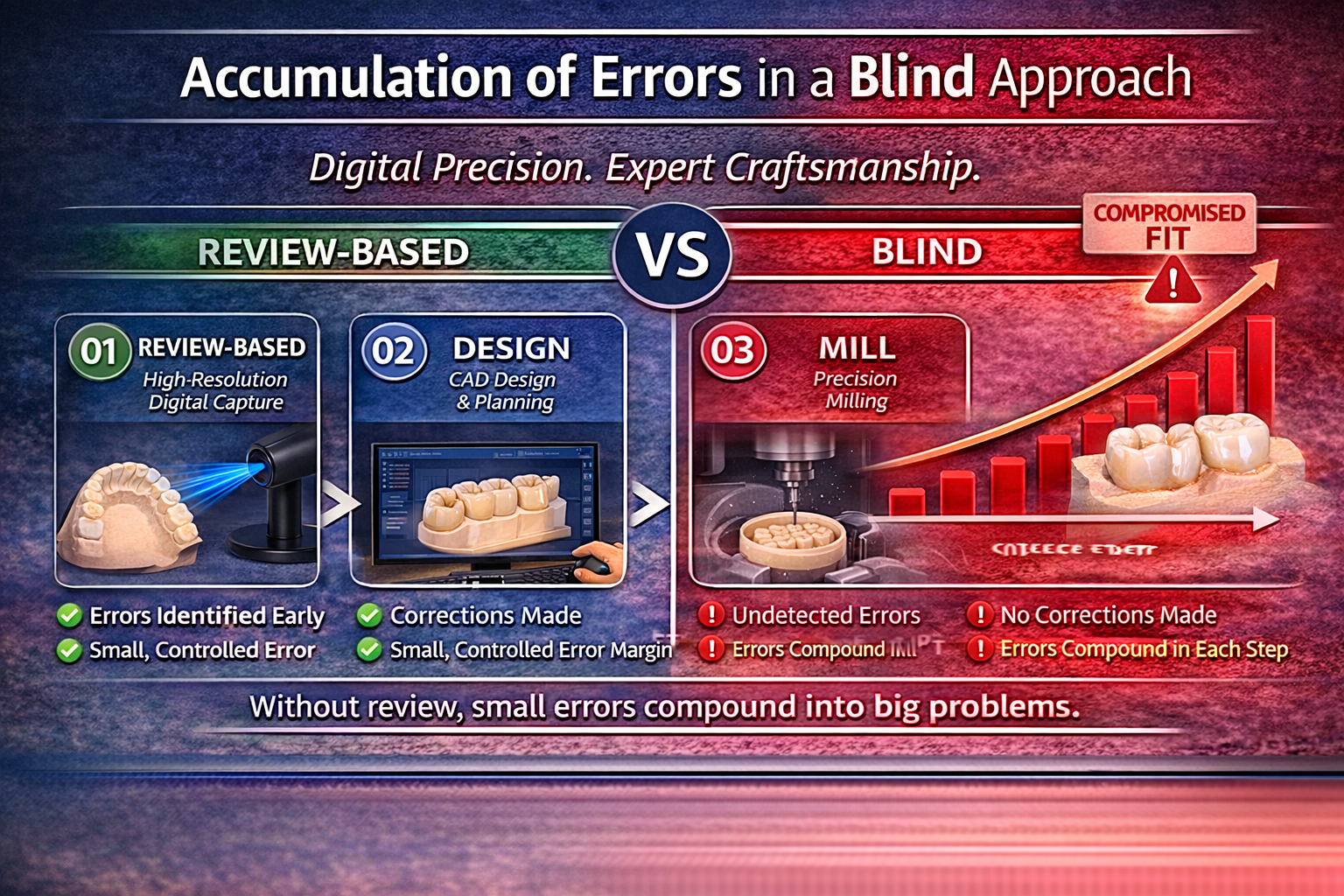
생산이 개인에 달려 있는 경우
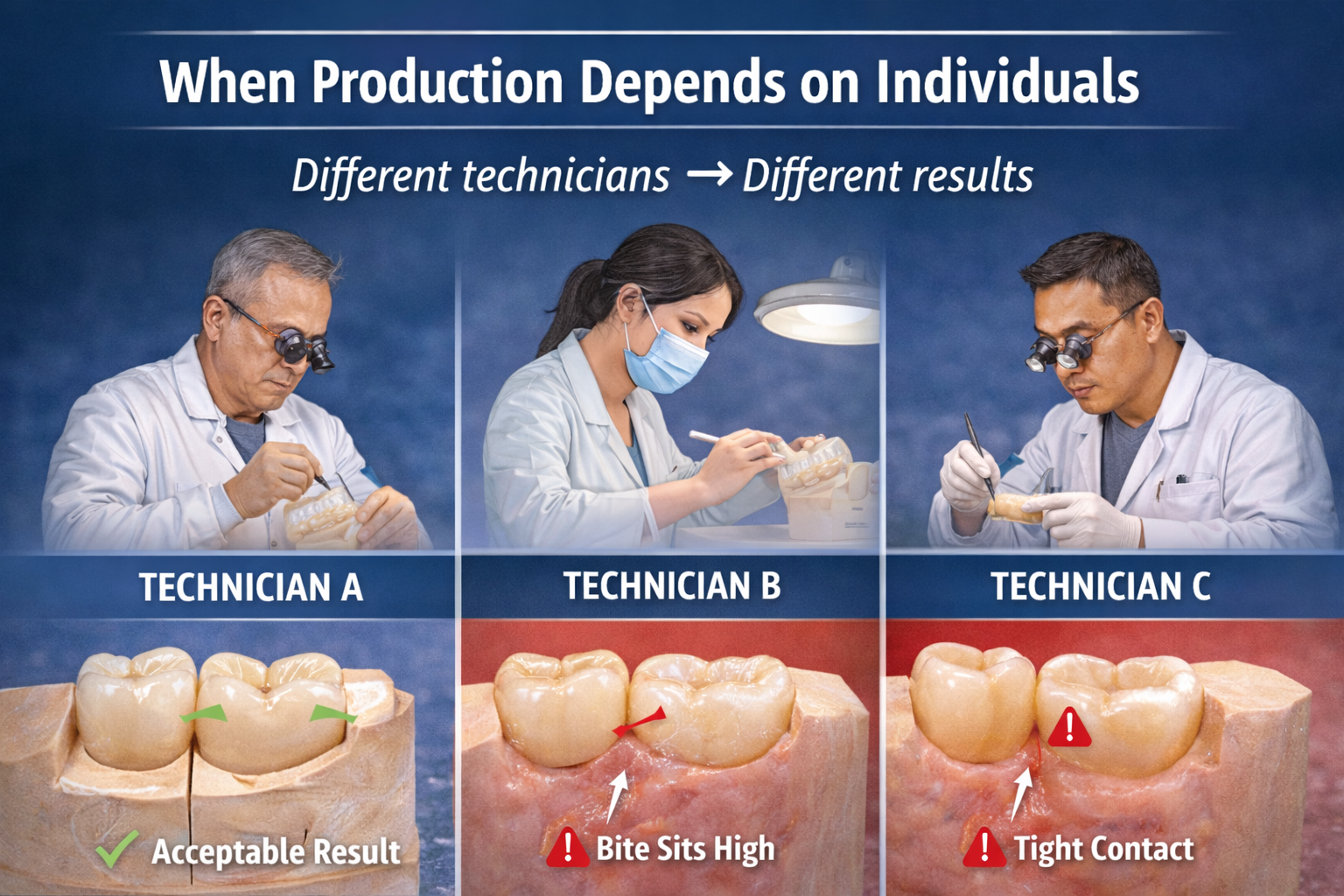
케이스가 검토 없이 제작에 들어가는 경우
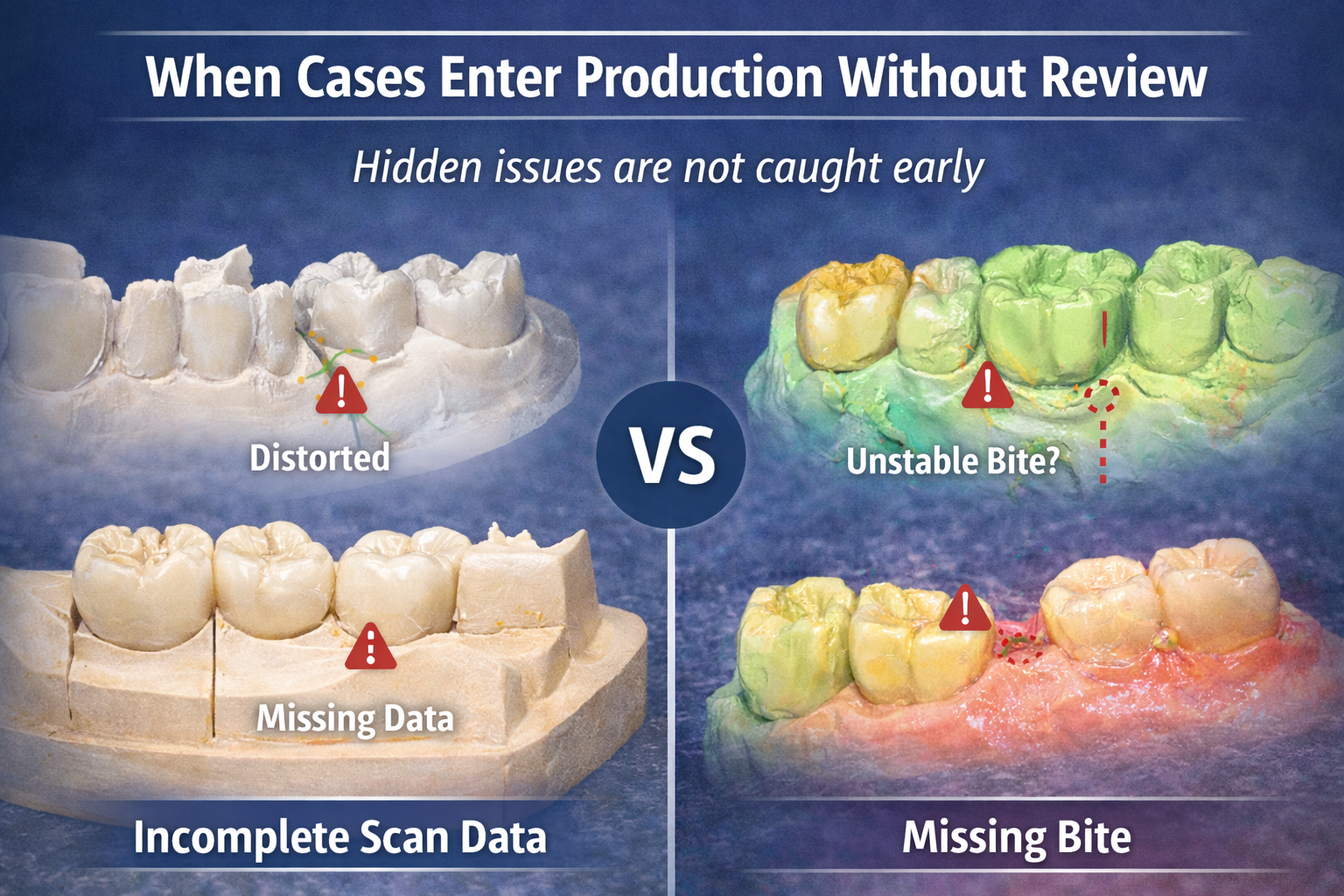
품질 관리가 너무 늦게 이루어지는 경우
사건 판결이 누락된 경우
Stable Lab이 다른 방식으로 수행하는 작업(보통 뒤에서)
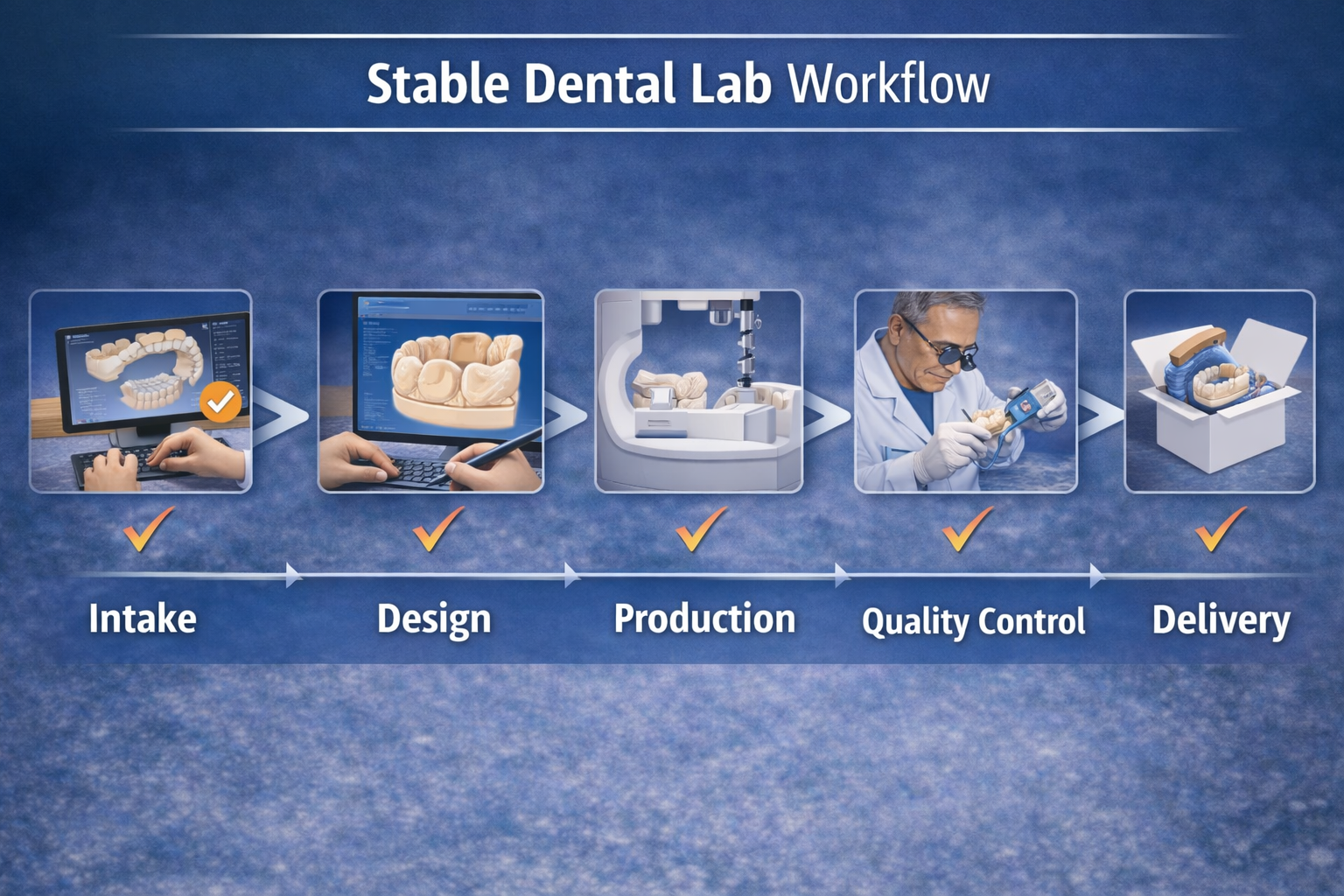
반복성을 고려하여 설계된 워크플로
Production Is Built for Stability, Not Flexibility
Quality Control Happens Across the Process
Experience Is Embedded Into the System
Why This Matters More Than Price or Speed
The Hidden Cost of Inconsistency
Why Speed Alone Does Not Guarantee Stability
A Practical Way to Evaluate Your Dental Lab
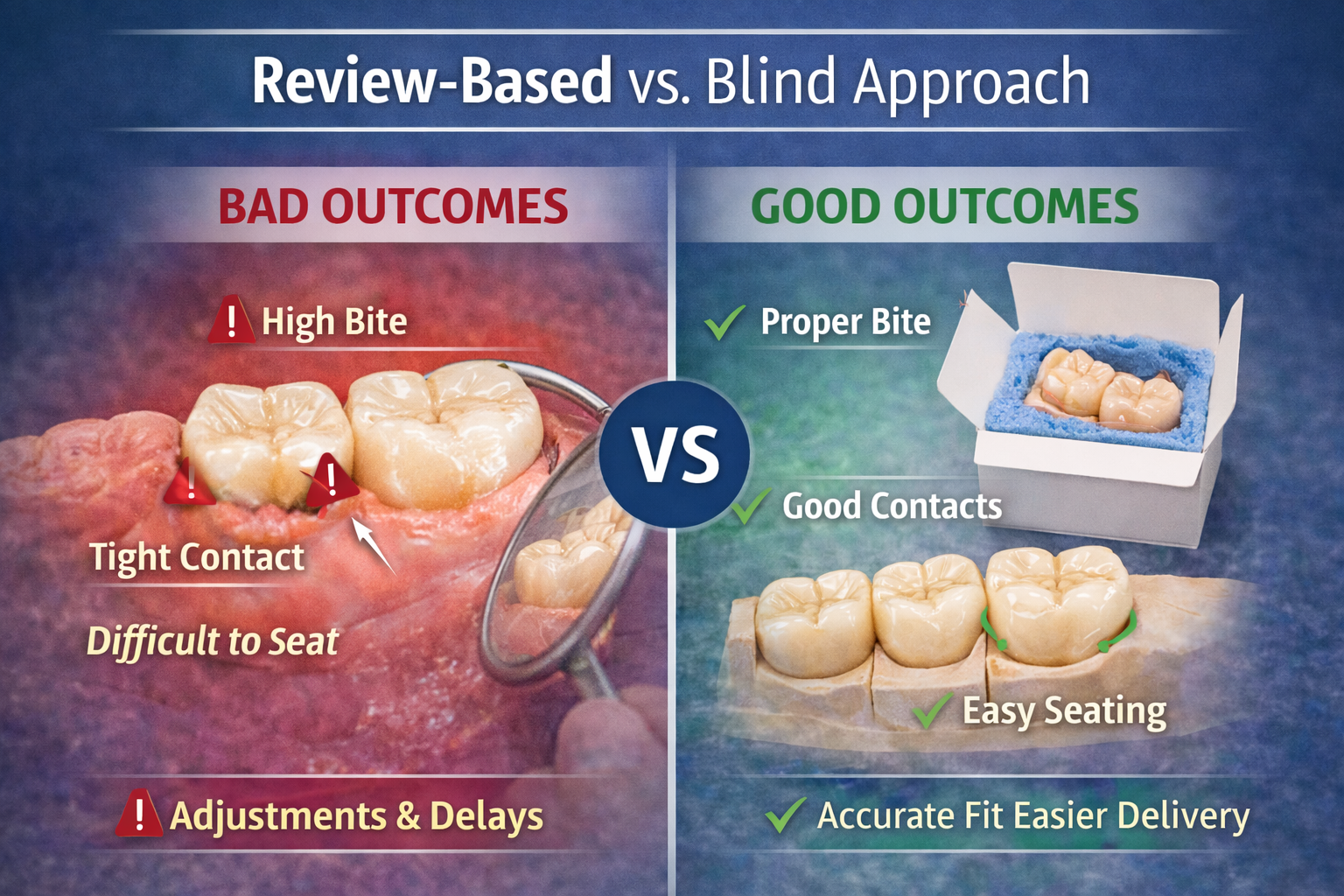
Questions That Reveal Real Capability
What to Listen For
A More Predictable Way to Work with a Dental Lab
Conclusion: Stability Is Built, Not Claimed