Нижние зубные протезы — одна из самых сложных реставраций в съемном протезировании. Даже для опытных зуботехнических лабораторий установка нижнего полного протеза редко является простой задачей «привести его в порядок». Он включает в себя анатомию, движение мышц, окклюзию, состояние гребня, положение зубов, адаптацию пациента и клинические записи – все это работает вместе.
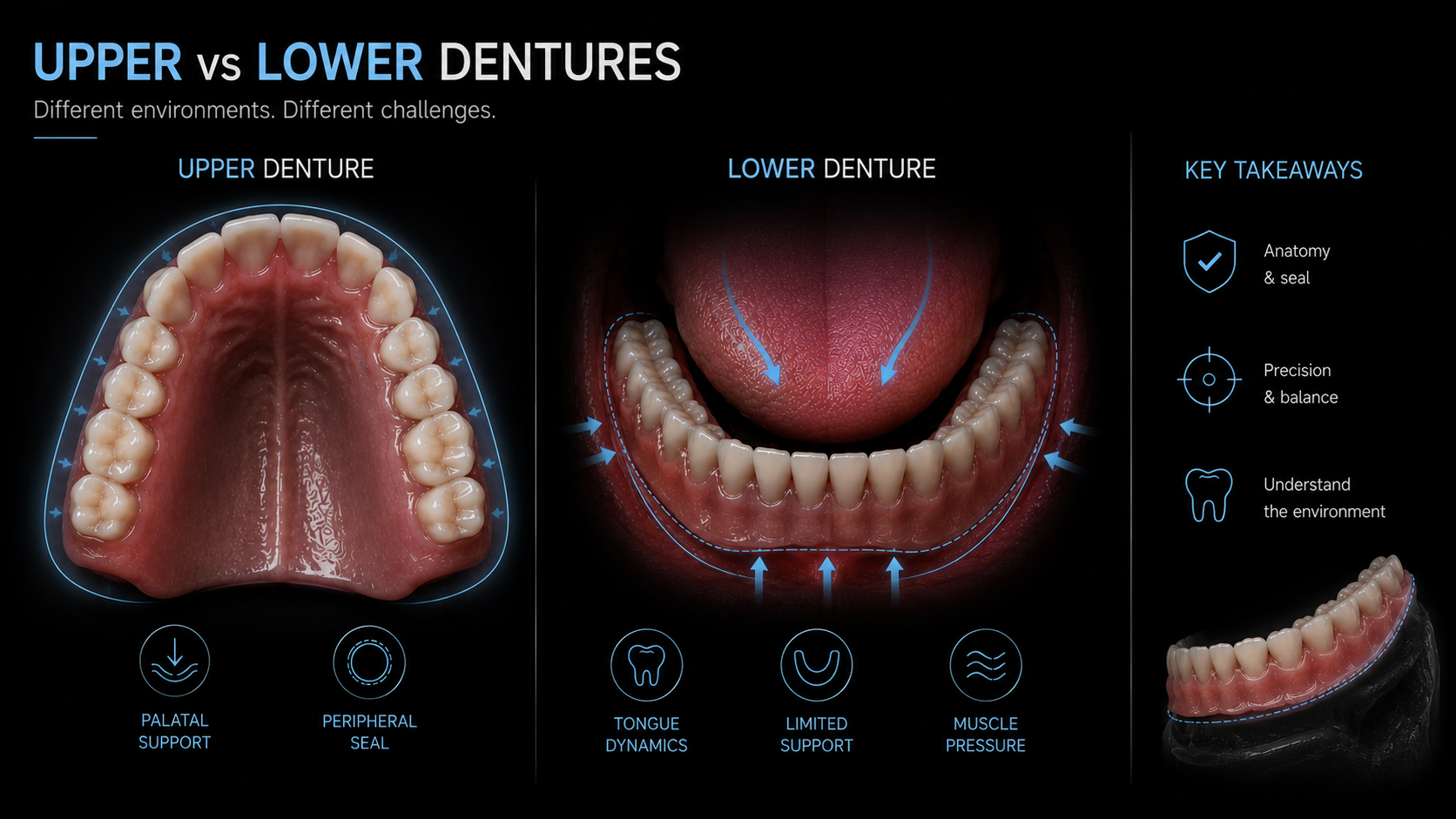
В Times Dental Lab мы часто объясняем трудности с протезами нижней челюсти одним простым способом: верхний протез обычно имеет большую площадь поверхности и небную поддержку, в то время как нижний протез должен работать гораздо более активное пространство. Язык двигается. Пол рта двигается. Щеки и губы оказывают давление. Гребень может быть плоским или резорбированным. Протез должен оставаться стабильным, пока пациент говорит, глотает, жует и адаптируется.
Вот почему снижение стабильности зубных протезов — это не только вопрос лабораторной обработки. Это совокупный результат клинических записей, анатомических ограничений, технических решений и адаптации пациента.
Почему нижние зубные протезы менее устойчивы, чем верхние
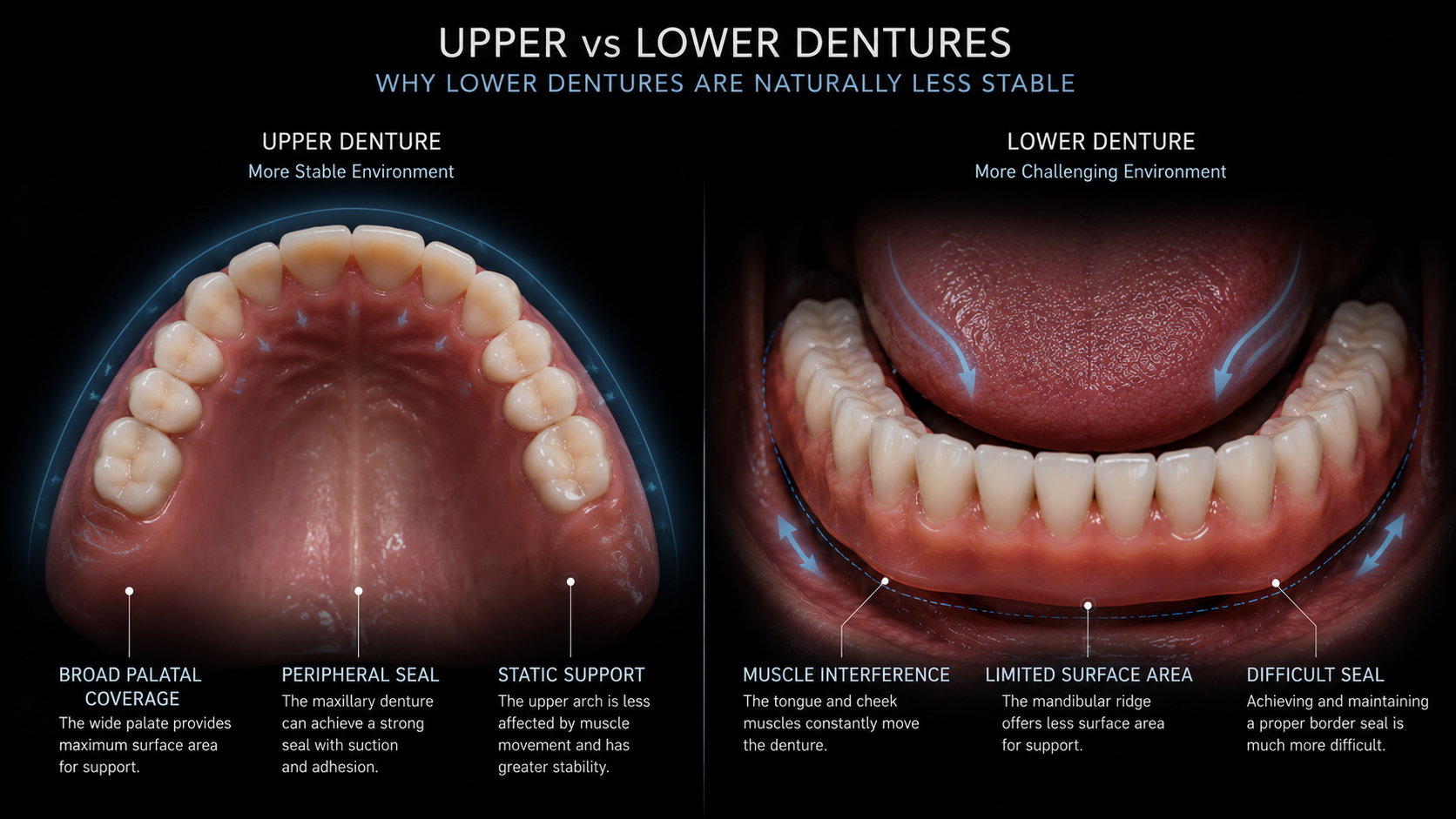
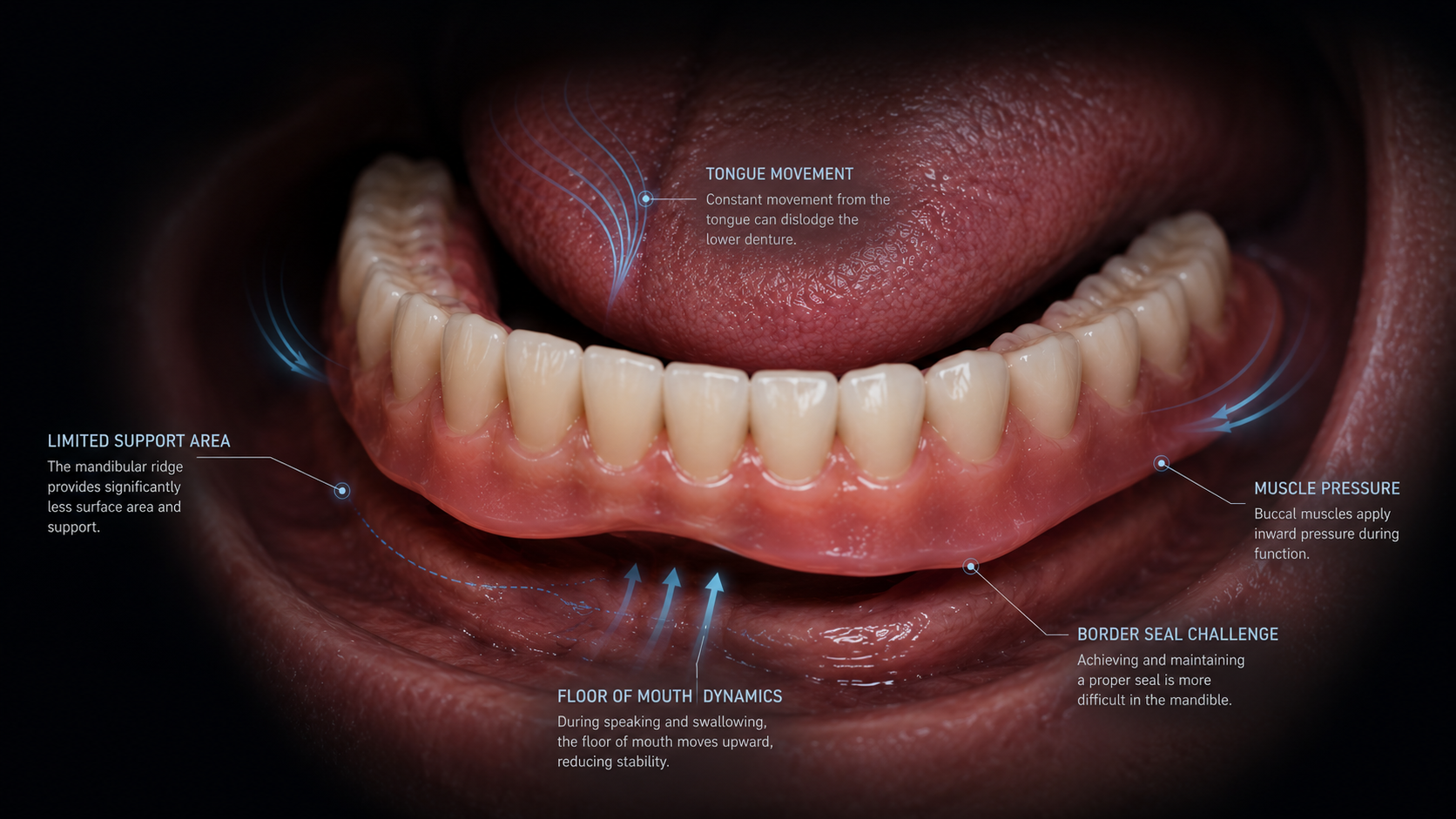
Протез верхней челюсти обычно имеет более широкую область, на которую опирается протез. Он может покрывать небо, создавать более широкую опорную поверхность и часто обеспечивать лучшее всасывание. Протез нижней челюсти имеет гораздо меньшую площадь опоры. Он не может использовать небо для удержания и не должен мешать языку и дну рта.
Эта анатомическая разница является первой причиной, по которой нижние зубные протезы труднее стабилизировать. Нижнечелюстная дуга дает лаборатории меньше места для работы и меньшую площадь поверхности для распределения усилий. При приложении жевательной силы нижний протез с большей вероятностью опрокинется, повернется или поднимется, если поддерживающие ткани, окклюзия или положение зубов не идеальны.
Язык также играет важную роль. В полных протезах нижней челюсти положение языка может напрямую влиять на его ретенцию и стабильность. В литературе по клиническому протезированию отмечается, что если язык втягивается, когда пациент открывает рот, становится очень трудно добиться хорошего уплотнения язычного края нижнего протеза.
Вот почему нижний протез может выглядеть приемлемо на модели, но ощущаться нестабильно во рту. Модель статична. Рота нет.
Основные технические проблемы при использовании нижних зубных протезов
1. Закрытие границ сложнее контролировать
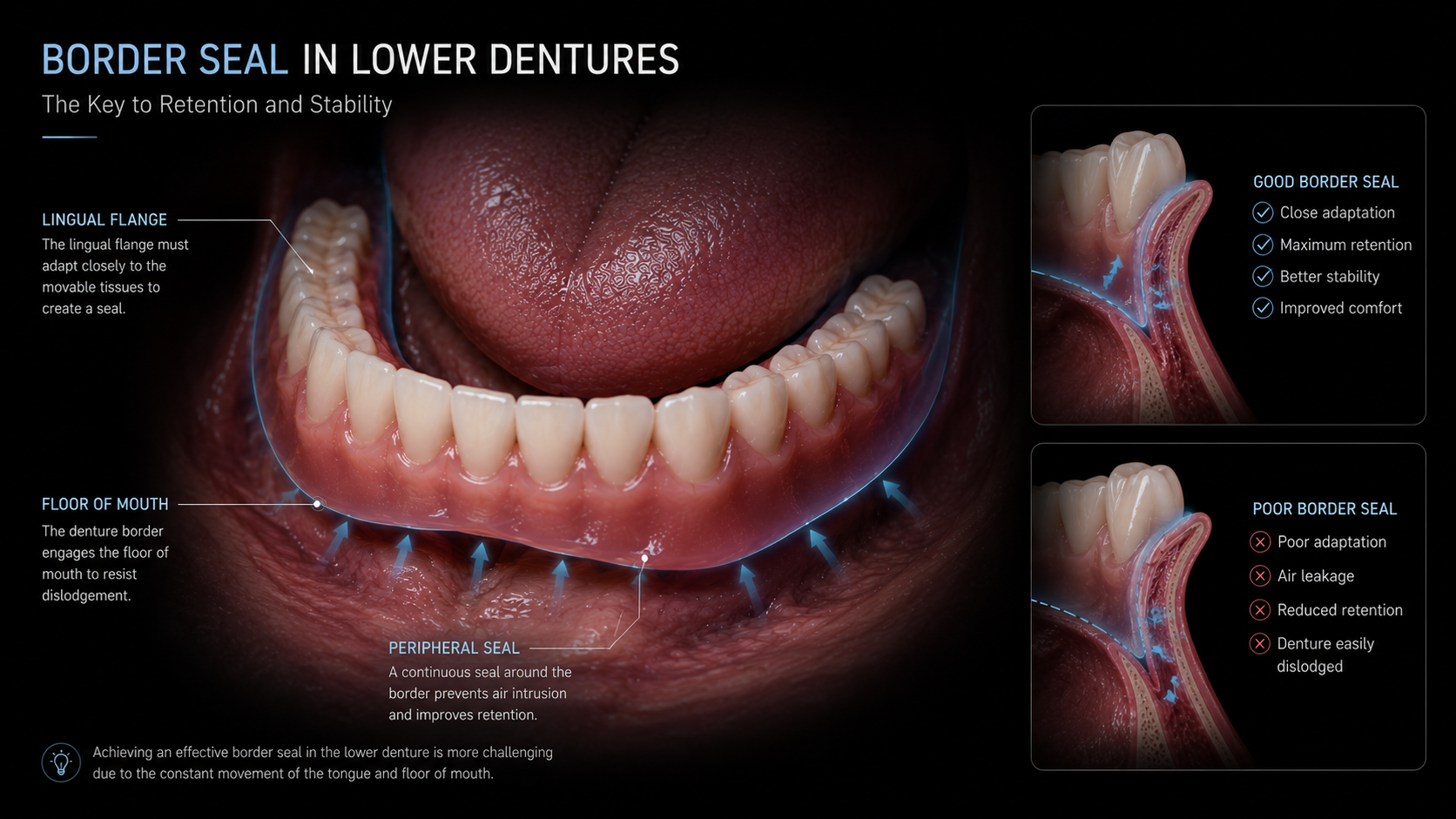
Уплотнение границ является одним из наиболее важных факторов полной ретенции зубного протеза. Для верхних зубных протезов периферическое уплотнение и заднее небное уплотнение часто обеспечивают более предсказуемую поддержку. Для нижних зубных протезов приграничная зона гораздо более динамична.
Языковой фланец должен охватывать язык и дно рта. Щечный фланец не должен затрагивать мышцы щек. Лаборатория должна балансировать между расширением и комфортом. Если граница слишком короткая, удержание может быть слабым. Если граница слишком длинная или громоздкая, протез может подниматься во время речи, глотания или движения языка.
Это одна из наиболее распространенных причин, почему установка нижних зубных протезов затруднена. Нижний край зубного протеза – это не только физический край. Эта область должна работать вместе с подвижными мягкими тканями.
С точки зрения лаборатории, небольшие различия в дизайне границ могут изменить конечный результат. Небольшое перенапряжение может быть не заметно на гипсовой повязке, но оно может стать очевидным, когда пациент говорит или глотает. Небольшое недоразгибание может выглядеть комфортным, но пациент может жаловаться на то, что нижний протез кажется свободным.
2. Движение языка постоянно влияет на стабильность
Нижний протез расположен рядом с одной из самых активных мышц рта: языком.
Во время разговора, глотания, жевания и отдыха язык меняет положение. Это может помочь стабилизировать нижний протез, когда он естественным образом прилегает к язычному фланцу. Но он также может сместить протез, если форма фланца, пространство для языка или положение зубов не подходят.
Вот почему при проектировании язычного фланца важна не только толщина. Речь идет об уважении пространства для языка. Если язычный фланец слишком громоздкий, пациент может чувствовать себя тесно. Если он слишком тонкий или недостаточно растянут, протез может потерять опору. Если язык расположен слишком далеко назад, поддерживать язычное уплотнение становится труднее.
Для опытных технических специалистов это одна из областей, где суждение имеет большое значение. Нижний протез не должен задевать язык. Он должен максимально работать языком.
3. Сильная резорбция гребня снижает поддержку
Многие случаи с протезами нижних конечностей становятся трудными из-за рассасывания гребня нижней челюсти. Высокий и широкий гребень обеспечивает лучшую поддержку. Плоский или сильно резорбированный гребень снижает сопротивление протезу движению.
Сильно резорбированные гребни нижней челюсти широко признаны как серьезная проблема при полном протезировании протезировании, поскольку они ухудшают поддержку, ретенцию и стабильность. (Липпинкотт Журналы)
В этих случаях даже хорошо изготовленный зубной протез может иметь ограничения. Протез может соответствовать модели, но пациент все равно может чувствовать движение из-за плохой анатомической поддержки. Мягкие ткани могут быть подвижными. Гребень может быть узким. Базис протеза может иметь очень небольшое вертикальное сопротивление.
Вот почему проблемы с нижними зубными протезами не всегда следует расценивать как простую лабораторную ошибку. Иногда сам случай имеет ограниченные анатомические условия. Лаборатория может улучшить конструкцию, но не может создать костную опору там, где ее нет.
4. Положение зубов может улучшить или разрушить стабильность
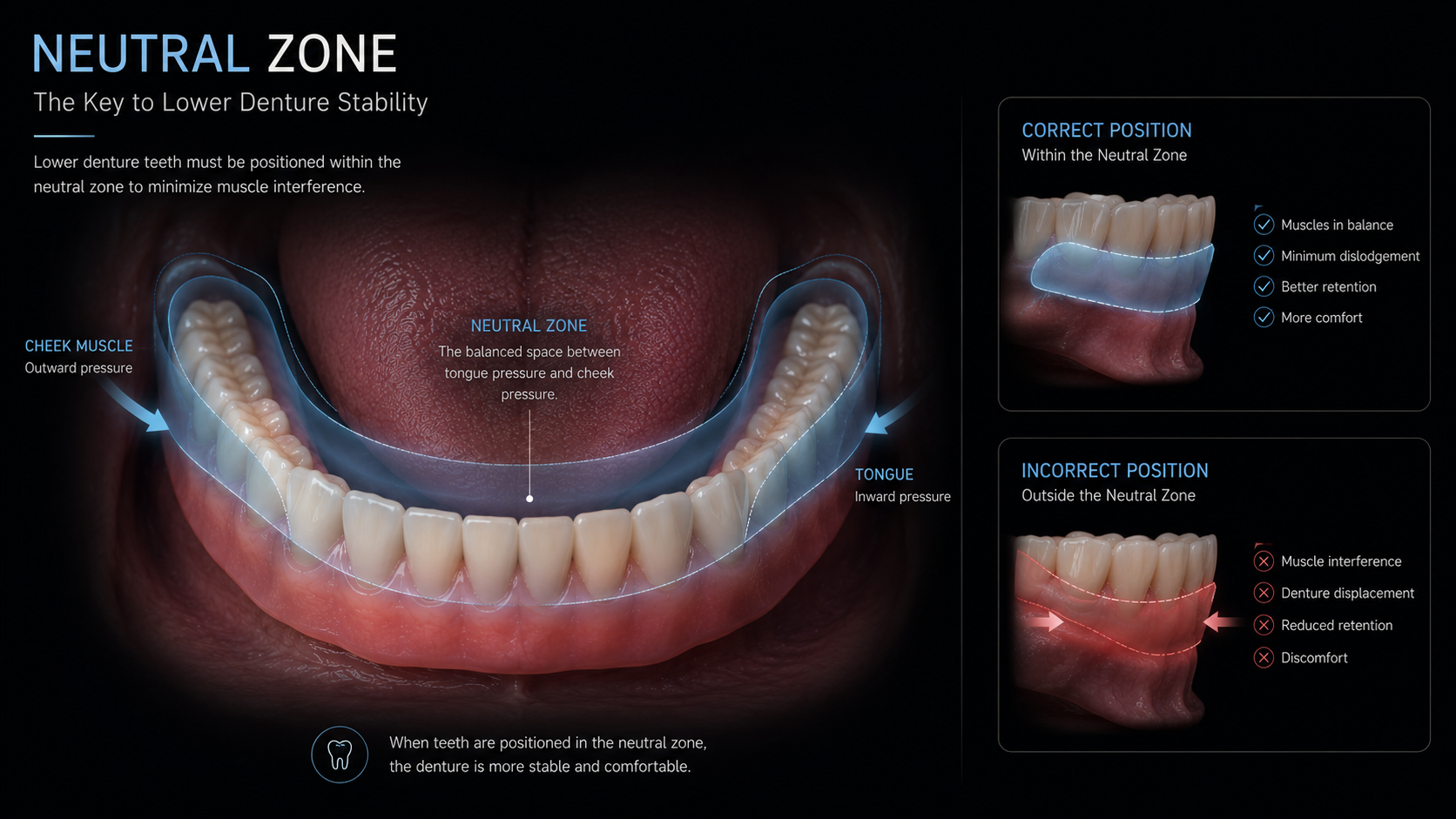
Постановка зубов — один из наиболее важных технических факторов, снижающих стабильность протеза.
Если задние зубы установлены слишком далеко щечно или лингвально, жевательные силы могут выйти за пределы области опорного гребня. Это может привести к опрокидыванию. Если передние зубы установлены слишком далеко вперед с точки зрения эстетики, протез может потерять устойчивость во время функционирования. Если окклюзионная плоскость не контролируется, протез может раскачиваться во время жевания.
Именно здесь нейтральная зона становится важной. нейтральная зона — это область, где внешние силы языка уравновешиваются внутренними силами щек и губ. Зубы протеза в идеале должны располагаться внутри этой зоны так, чтобы мышечные силы помогали стабилизировать протез, а не смещать его.
Для зубных протезов нижней челюсти эта концепция особенно важна. Нижний протез окружен подвижными мышцами. Если зубы расположены вне функциональной зоны пациента, протез может выглядеть хорошо, но работать плохо.
В Times Dental Lab мы часто наблюдаем этот конфликт в реальных случаях. Врач может попросить сделать зубы более видимыми, выдвинутыми вперед или более похожими на старый протез. Но если старый протез уже был нестабильным, копирование положения его зубов может повторить ту же проблему. Вот почему перед окончательной обработкой необходима техническая связь.
5. Ошибки прикуса более заметны в протезах нижней челюсти
Прикус имеет значение для всех зубных протезов, но нижние протезы менее прощают ошибки.
Небольшой преждевременный контакт может показаться несерьезным для артикулятора, но во рту он может опрокинуть нижний протез. Неравномерный двусторонний баланс может вызвать движение во время жевания. Тяжелый контакт с одной стороны может создать давление и нестабильность. Если регистрация прикуса неточная, постоянный протез может работать не так, как ожидалось.
Сбалансированная окклюзия важна, поскольку нижние зубные протезы зависят от стабильного распределения силы. Когда окклюзионные силы не сбалансированы, протез может сместиться. Пациент может описать это как слабость, раскачивание, болезненность или неспособность жевать.
Вот почему регистрация прикуса является одной из наиболее важных клинических записей для нижних зубных протезов. Если запись прикуса нестабильна, лаборатория должна проявлять осторожность. Протез, изготовленный из-за нестабильного прикуса, может выглядеть приемлемо, но функция может быть непредсказуемой.
Почему некоторые протезы нижней челюсти кажутся устойчивыми на модели, но болтаются во рту
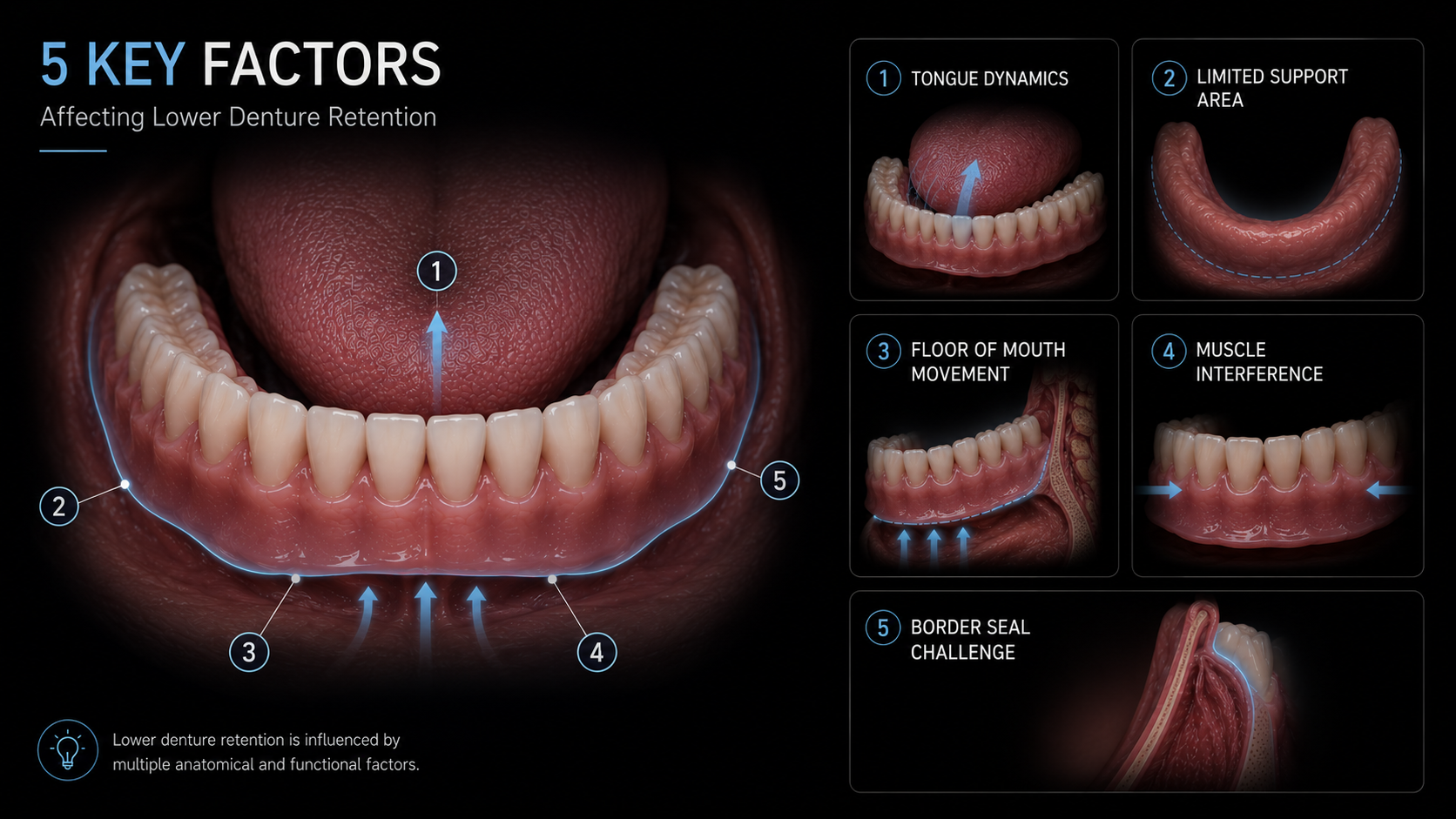
Это частый вопрос в клиниках.
Нижний протез может идеально сидеть на модели. Это может не качаться. База может хорошо адаптироваться. Постановка зубов может выглядеть сбалансированной. Но после родов пациентка может сообщить о движении.
Причина проста: модель показывает только статическую анатомию. Он не показывает полного движения языка, движения дна рта, состояния слюны, характера глотания, давления на щеки или мышечного контроля пациента.
Протез нижней челюсти работает в динамической среде. Во время речи язык может упираться в язычный фланец. Во время глотания дно рта может приподниматься. Во время жевания неравномерная сила может опрокинуть протез. На ранней стадии адаптации пациент может еще не уметь управлять протезом с помощью мышц.
Вот почему нижний протез необходимо оценивать после гипсовой повязки. Подбор модели необходим, но этого недостаточно. Хороший нижний протез также нуждается в функциональной стабильности.
С лабораторной точки зрения мы обычно разделяем нестабильность нижнего протеза на несколько возможных причин:
<ул>Это различие имеет значение. Если истинная проблема заключается в окклюзии, корректировка границы может не решить ее. Если истинная проблема заключается в столкновении язычков, переделка основания без изменения конструкции фланца может повторить ту же проблему. Если истинная проблема заключается в серьезной резорбции гребня, к ожиданиям следует относиться осторожно.
Как лаборатории определяют истинную причину нестабильности нижних зубных протезов
Опытные лаборатории спрашивают не только: «Расшатался ли протез?» Они спрашивают: «Когда оно движется?»
Этот вопрос часто раскрывает настоящую причину.
Если он движется во время жевания
Когда нижний протез перемещается преимущественно во время жевания, причина часто связана с окклюзией, положением зубов или опорой гребня.
Лаборатория может проверить:
<ул>Если протез устойчив в состоянии покоя, но перемещается во время жевания, следует тщательно проверить окклюзию.
Если он движется во время разговора или глотания
Когда движение происходит во время разговора или глотания, проблема может быть связана с расширением границы, контуром язычного фланца или пространством языка.
Лаборатория может рассмотреть:
<ул>В этих случаях протез может выглядеть устойчиво на модели, но не работать во время работы.
Если сразу после вставки кажется, что он болтается
Если нижний протез сразу же чувствуется, что он расшатывается, еще до жевания или разговора, проблема может заключаться в адаптации основания, точности оттиска, расширении границ или состоянии гребня.
Лаборатория может проверить:
<ул>Иногда это проблема производителя. Иногда это проблема с медицинской картой. Иногда это анатомическое ограничение.
Если пациент не может адаптироваться после нескольких корректировок
Если протез несколько раз корректировали, но он по-прежнему кажется нестабильным, проблема может быть более сложной. Это может включать в себя сочетание резорбции гребня, плохого нервно-мышечного контроля, нереалистичных ожиданий или нестабильного прикуса.
Именно здесь связь между клиникой и лабораторией становится очень важной. Фотографии, отметки индикаторов давления, записи прикусов и отзывы пациентов помогут лаборатории понять, что происходит во рту.
Почему адаптация пациента имеет большее значение, чем многие ожидают
Адаптацию пациента часто недооценивают.
Новый нижний зубной протез — это не только протез. Это также то, что пациент должен научиться контролировать. Языку, щекам и губам нужно время, чтобы координироваться с протезом. Те, кто впервые носит зубные протезы, могут испытывать больше трудностей, чем те, кто носит зубные протезы опытным путем. Те, кто долгое время носит протез, могут сравнить новый протез со старым протезом, к которому их мышцы адаптировались за многие годы.
Вот почему технически улучшенный зубной протез поначалу может показаться странным. Если старый протез был изношен, слишком закрыт, нестабильен или сильно отрегулирован, мышцы пациента, возможно, адаптировались к этому старому состоянию. Новый протез с исправленным положением зубов или VDO может показаться незнакомым.
Не следует игнорировать период адаптации. Некоторые ранние движения могут улучшиться, когда пациент научится контролировать протез. Однако следует оценить постоянные движения, боль или неспособность функционировать.
С профессиональной точки зрения адаптация пациента не должна использоваться в качестве оправдания каждой проблемы. Но это следует рассматривать как часть полноценной диагностики.
Почему успех протезов нижней челюсти у каждого пациента разный
Не существует универсальной конструкции нижнего протеза, подходящей для каждого пациента.
У некоторых пациентов наблюдается широкий гребень и хороший контроль мышц. У некоторых наблюдается плоский гребень, подвижная ткань, сухость во рту, сильное движение языка или длительная резорбция. Некоторые пациенты могут быстро адаптироваться. Другим требуется больше встреч и тщательная корректировка.
Вот почему опытные лаборатории избегают одинакового подхода к каждому случаю нижнего протеза.
Важные факторы регистра включают:
<ул>Нижний зубной протез — это не просто продукт. Это функциональный прибор, который должен учитывать анатомию и поведение пациента.
Почему цифровые протезы по-прежнему требуют технической оценки
Рабочие процессы в области цифровых протезов могут улучшить согласованность. Они могут уменьшить количество ошибок, допускаемых вручную, улучшить повторяемость и упростить внесение изменений в конструкцию. Цифровые записи также помогают сообщать и воспроизводить случаи.
Однако цифровые протезы не устраняют технических сложностей нижних зубных протезов.
Сканирование фиксирует анатомию в определенный момент. Он не полностью фиксирует движение мышц. Программное обеспечение может помочь спроектировать протез, но оно не может полностью предсказать, как будет вести себя язык во время речи и глотания. Цифровая установка может выглядеть на экране четкой, но технику все равно необходимо оценить, подходят ли положение зубов, контур фланца и окклюзия.
Это особенно актуально для зубных протезов нижней челюсти.
Цифровой рабочий процесс – это инструмент. Это не замена съемному интерфейсу.
В Times Dental Lab мы рассматриваем цифровые зубные протезы как способ улучшить контроль и общение. Но более низкая стабильность протеза по-прежнему зависит от клинических данных, анатомического заключения, постановки зубов, контроля окклюзии и окончательной проверки.
Что обычно замечают опытные лаборатории, прежде чем нижний протез выйдет из строя
Во многих случаях предупреждающие знаки появляются еще до установки окончательного протеза.
Опытные специалисты по съемным устройствам могут заметить:
<ул>These details are important because lower denture problems often begin early. If the lab only checks the final denture, it may be too late to prevent instability.
This is why we believe quality control should not only happen at the end. It should start from case review.
How Experienced Dental Labs Reduce Lower Denture Problems
A lab cannot control every clinical and anatomical factor. But a good lab can reduce risk through a structured process.
1. Careful Case Review
Before production, the lab should review the impression, bite, opposing arch, previous denture information, and doctor’s instructions.
For lower dentures, the technician should pay special attention to:
<ул>If something is unclear, communication should happen before processing.
2. Accurate Model and Base Control
The denture base must adapt well to the cast. Any distortion in the model, processing, or finishing can affect fit.
For lower dentures, base stability is especially important because the support area is limited. A small error may cause obvious movement.
3. Controlled Border Design
The border must be extended enough for retention but not so much that it interferes with muscles.
This balance is difficult. It requires understanding the anatomy and respecting the clinical impression. In some cases, chairside border molding information is essential.
4. Tooth Setup Within Functional Limits
Tooth position should support stability, not only esthetics.
If posterior teeth are positioned outside the ridge support area, the denture may tip. If anterior teeth are placed too far forward, the lower denture may become unstable. The technician must balance appearance, phonetics, and function.
5. Occlusion Verification
Occlusion must be checked carefully before delivery. For lower dentures, the lab should avoid obvious premature contacts and unstable bite relationships.
Balanced occlusion is not only a textbook idea. It directly affects whether the lower denture stays stable during chewing.
6. Try-in Evaluation
Try-in is extremely valuable for difficult lower denture cases. It allows the clinic and patient to check esthetics, VDO, tooth position, and bite before final processing.
For high-risk lower denture cases, skipping try-in may increase remake risk.
7. Clear Communication With the Clinic
Some lower denture problems cannot be solved by the lab alone. If the ridge is severely resorbed, the bite is unstable, or the patient has unrealistic expectations, the clinic and lab need to discuss the case early.
Good communication helps prevent surprises after delivery.
How Times Dental Lab Approaches Lower Denture Stability
At Times Dental Lab, lower denture cases are handled with a process-driven mindset. We do not see lower dentures as simple acrylic appliances. We see them as functional restorations that require careful judgment at multiple stages.
Our removable team focuses on:
<ул>For us, the key is not only making the denture look correct. The key is reducing avoidable risk.
Some instability issues are caused by clinical records. Some are caused by anatomy. Some are caused by tooth position or occlusion. Some are related to patient adaptation. A responsible lab should help identify the likely cause instead of treating every problem the same way.
This is where experience matters.
When a Lower Denture Should Be Adjusted and When It May Need Remaking
Not every unstable lower denture needs to be remade.
Some issues can be corrected by chairside adjustment:
<ул>The correct solution depends on diagnosis.
For example, if the denture base fits well but the bite is heavy on one side, occlusal adjustment may solve the problem. If the impression was distorted, repeated chairside grinding may not solve the issue. If the ridge is extremely flat, the patient may need realistic expectations, relining, implant support, or another treatment option depending on the clinical situation.
Why Lower Denture Problems Should Be Discussed Early
Lower denture instability is easier to prevent than to correct.
Once the denture is processed, major changes become harder. Tooth position changes may require resetting. Bite errors may require remounting or remaking. Border issues may require chairside adjustment or new impressions.
This is why early communication is valuable.
If the lab sees a high-risk factor, it should inform the clinic. If the clinic sees movement during try-in, it should send clear feedback. If the patient has worn an old unstable denture for many years, that history should be shared.
Better records lead to better decisions.
FAQ
Why are lower dentures less stable than upper dentures?
Lower dentures are less stable because they have a smaller support area and no palatal suction. They also sit close to the tongue, cheeks, lips, and floor of the mouth, which all move during function.
Why do lower dentures move when eating?
Lower dentures may move during eating because of uneven occlusion, poor ridge support, incorrect tooth position, or weak border seal. Chewing forces can tip the denture if they are not distributed properly.
Can lower dentures ever feel completely stable?
Some lower dentures can feel very stable, especially when the ridge condition is good and the patient adapts well. However, lower dentures are naturally more challenging than upper dentures. Severe ridge resorption or poor muscle control may limit stability.
Does digital denture technology solve lower denture instability?
Digital dentures can improve consistency and repeatability, but they do not eliminate all lower denture challenges. Tongue movement, ridge resorption, border seal, occlusion, and patient adaptation still require clinical and technical judgment.
What is the most common reason lower dentures fail?
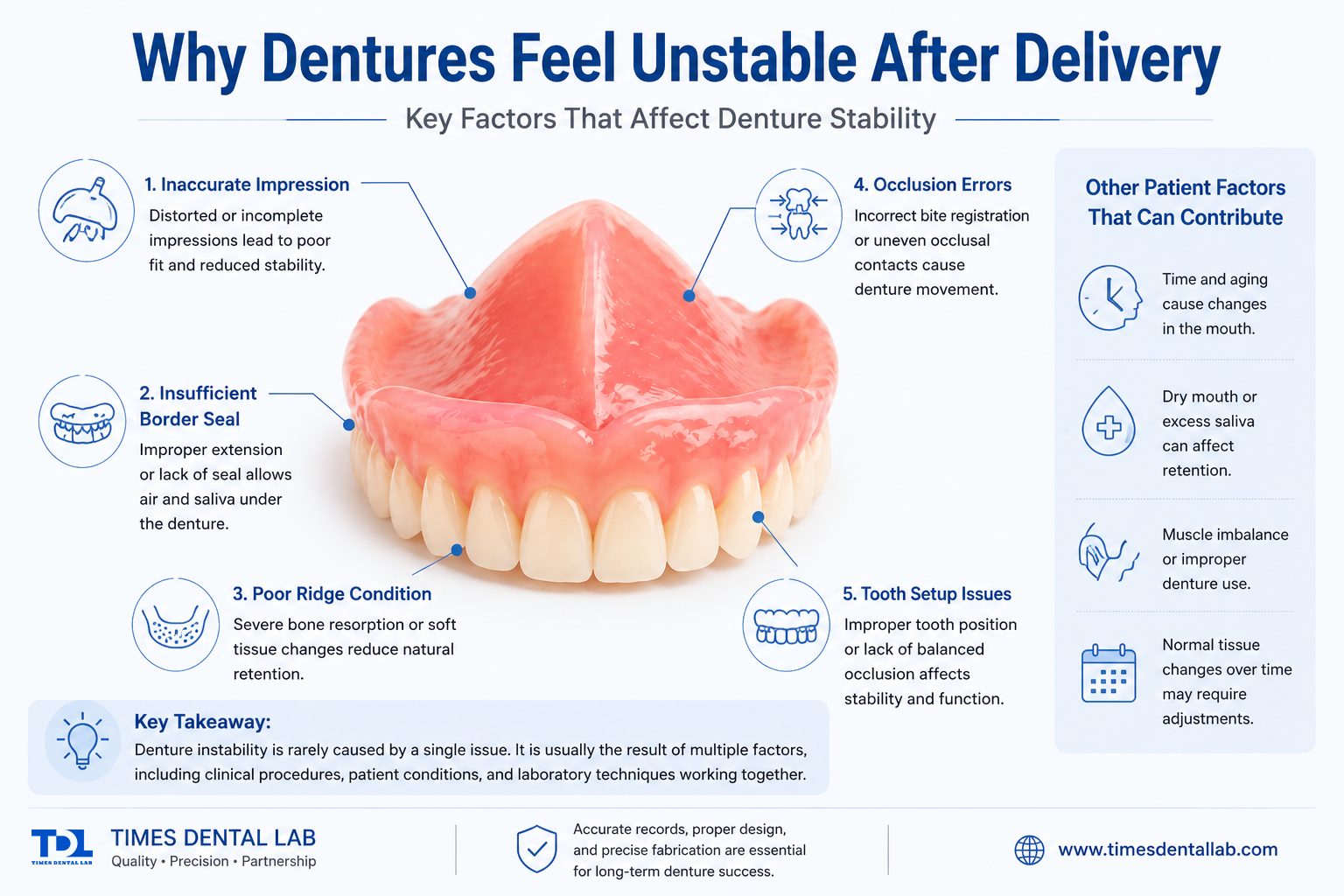
There is no single reason. Common causes include inaccurate impressions, poor border extension, unstable bite registration, severe ridge resorption, incorrect tooth position, occlusion imbalance, and limited patient adaptation.
Should a loose lower denture be remade or adjusted?
It depends on the cause. Minor pressure or occlusion issues may be adjusted. A distorted impression, incorrect bite, poor base adaptation, or major tooth setup problem may require relining or remaking.
Conclusion
Lower dentures are difficult because they are not only supported by anatomy. They must also work with moving muscles, limited ridge support, tongue activity, occlusal force, and patient adaptation.
Even experienced dental labs face challenges with lower dentures because many factors are outside the lab’s direct control. A lower denture may fit the model but still behave differently in the mouth. This is why careful case review, accurate records, functional tooth setup, border control, and clinic-lab communication are essential.
At Times Dental Lab, our approach is simple: lower denture stability should be built through process, not guessed at the final stage. The more carefully we evaluate the case before and during production, the better chance the final denture has to function comfortably for the patient.
Lower dentures will always be challenging. But with the right clinical records, technical judgment, and communication, many common problems can be reduced before they become remakes.