下颌假牙是可摘修复体中最具挑战性的修复体之一。即使对于经验丰富的牙科实验室来说,下颌全口义齿也很少是简单的“使其适合”的情况。它涉及解剖学、肌肉运动、咬合、牙槽嵴状况、牙齿位置、患者适应和临床记录,所有这些都一起发挥作用。
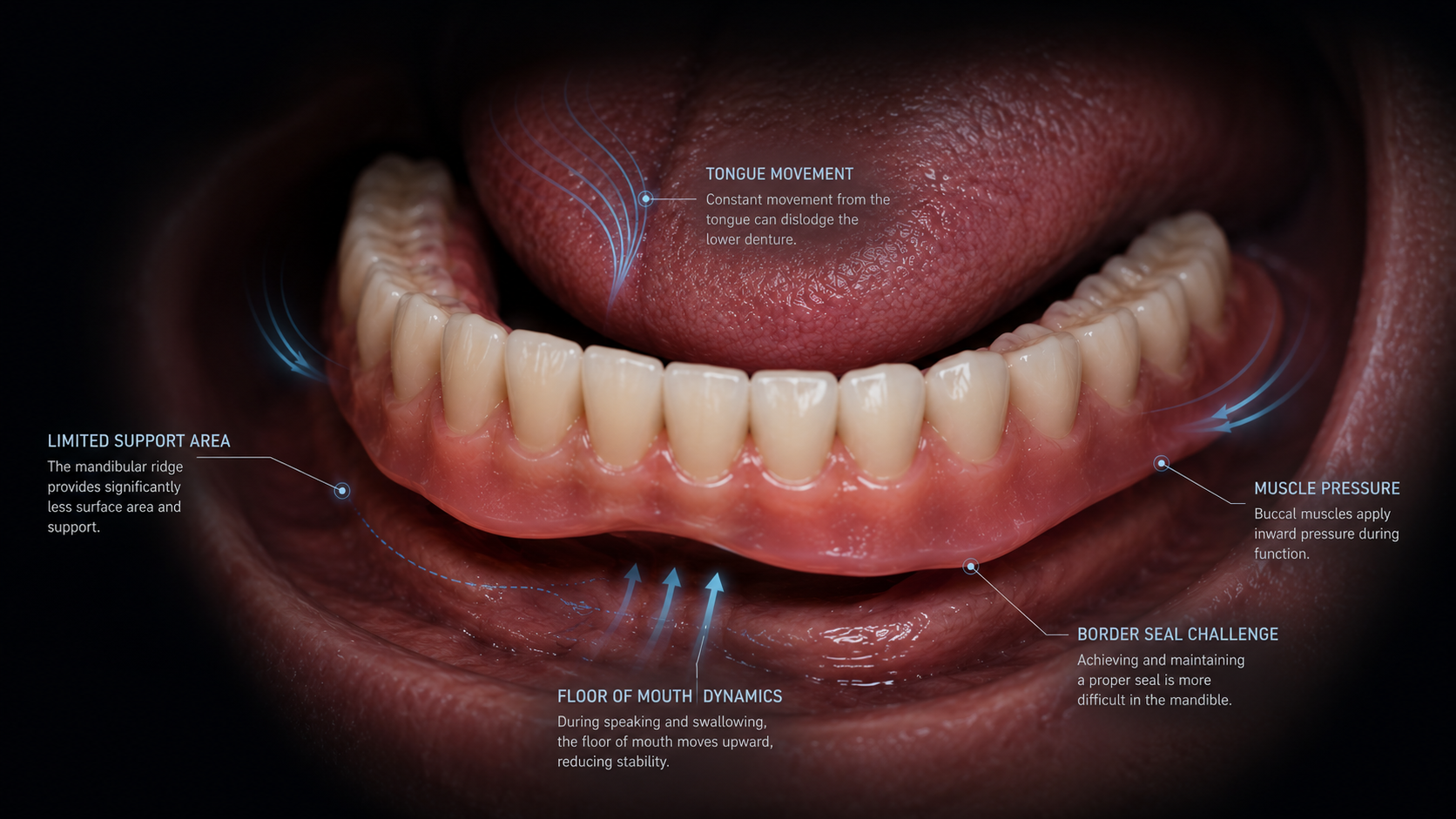
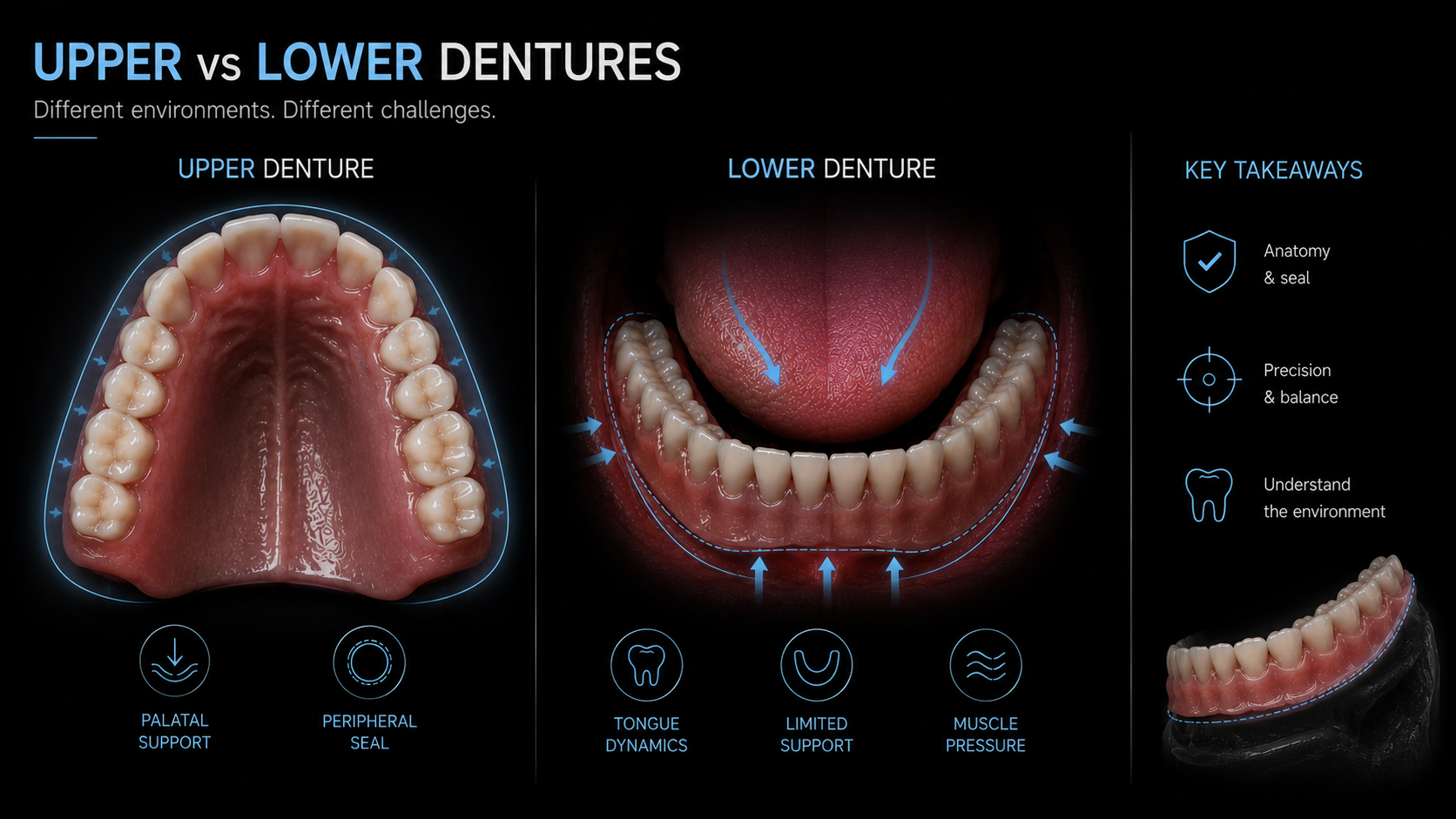
在 Times Dental Lab,我们经常用一种简单的方法解释下假牙的难度:上假牙通常有更多的表面积和腭部支撑,而下假牙必须在更活跃的空间中工作。舌头动了。嘴底移动。脸颊和嘴唇施加压力。脊可能是平坦的或被吸收的。当患者说话、吞咽、咀嚼和适应时,义齿必须保持稳定。
这就是为什么较低的义齿稳定性不仅仅是实验室处理的问题。它是临床记录、解剖学限制、技术判断和患者适应的综合结果。
为什么下颌假牙自然不如上颌假牙稳定
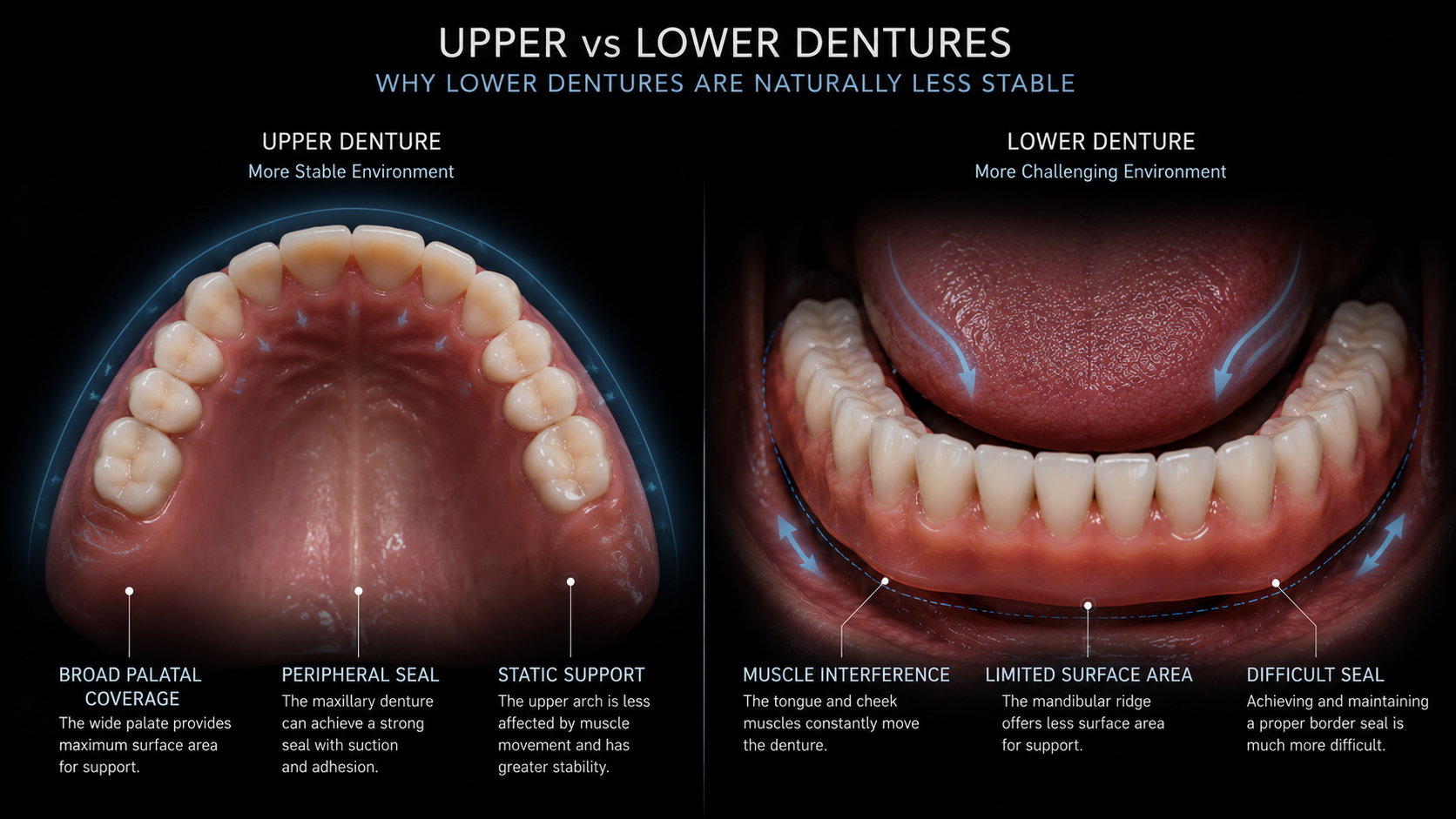
上颌义齿通常受益于更广泛的义齿承载区域。它可以覆盖上颚,形成更宽的支撑表面,并且通常可以实现更好的吸力。下颌假牙的支撑面积要小得多。它不能用上颚来保持,并且必须避免干扰舌头和口底。
这种解剖学差异是下颌假牙更难稳定的第一个原因。下颌弓为实验室提供了更小的工作空间和更少的分配力的表面积。当施加咀嚼力时,如果支撑组织、咬合或牙齿位置不理想,下颌义齿更有可能倾斜、旋转或抬起。
舌头也扮演着重要角色。在下颌全口义齿中,舌头位置可以直接影响固位和稳定性。 临床修复文献指出,如果患者张口时舌头缩回,则下颌义齿获得良好的舌缘密封变得非常困难。
这就是为什么下颌假牙在模型上看起来可以接受,但在嘴里却感觉不稳定。该模型是静态的。嘴不是。
下颌义齿盒的主要技术挑战
1.边境封锁更难控制
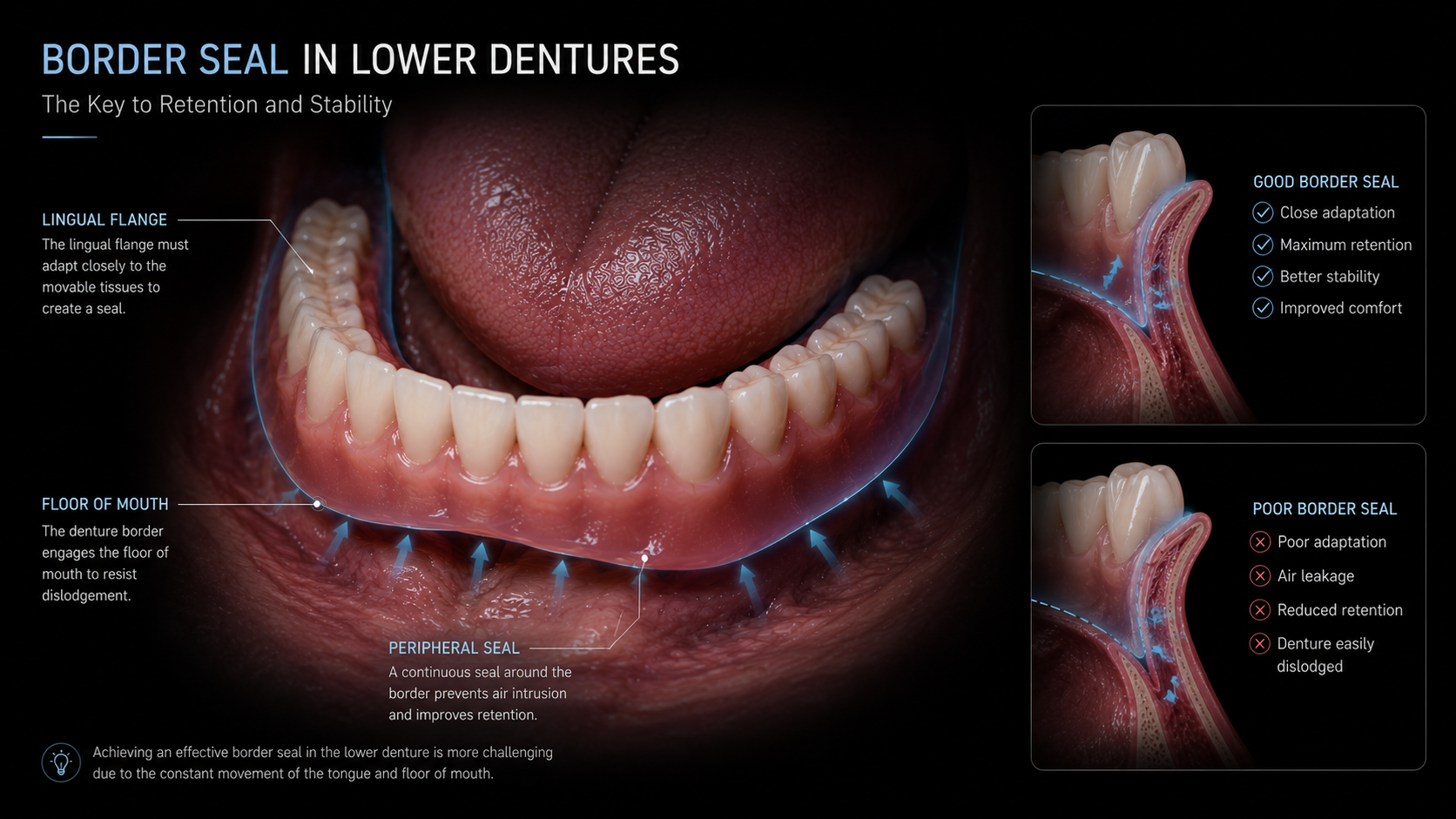
边界密封是全口义齿固位最重要的因素之一。对于上义齿,周边密封和后腭密封通常提供更可预测的支撑。对于下颌假牙,边界区域更加动态。
舌侧凸缘必须围绕舌头和口腔底部。颊侧凸缘必须避免面颊肌肉的干扰。实验室必须平衡延伸性和舒适性。如果边界太短,保留可能会很弱。如果边缘太长或太大,义齿可能会在说话、吞咽或舌头运动时抬起。
这是下颌假牙困难的最常见原因之一。下义齿边缘不仅仅是物理边缘。该区域必须与移动的软组织一起工作。
从实验室的角度来看,微小的边框设计差异可能会改变最终结果。轻微的过度伸展在石膏上可能不明显,但当患者说话或吞咽时可能会变得明显。轻微的伸不足可能看起来很舒服,但患者可能会抱怨下义齿感觉松动。
2.舌头运动不断影响稳定性
下假牙位于口腔中最活跃的肌肉之一:舌头旁边。
在说话、吞咽、咀嚼和休息期间,舌头会改变位置。当下义齿自然靠在舌侧凸缘上时,它可以帮助稳定下义齿。但如果凸缘形状、舌间隙或牙齿位置不合适,也可能导致义齿脱落。
这就是为什么舌侧凸缘设计不仅仅与厚度有关。这是关于尊重舌头空间。如果舌侧凸缘太大,患者可能会感到拥挤。如果太薄或延伸不足,假牙可能会失去支撑。如果舌头位置太靠后,舌侧密封就会变得更难维持。
对于经验丰富的技术人员来说,这是判断力很重要的领域之一。下颌假牙不应与舌头接触。它应该尽可能地与舌头配合。
3.严重的脊吸收减少了支撑
许多下颌义齿病例因为下颌骨吸收而变得困难。高而宽的山脊提供更好的支撑。平坦或严重吸收的牙槽嵴使义齿移动的阻力较小。
严重吸收的下颌骨嵴被广泛认为是全口义齿的主要挑战修复学,因为它们会损害支撑、固位和稳定性。 (Lippincott期刊)
在这些情况下,即使是制作精良的假牙也可能有局限性。假牙可能适合模型,但由于解剖支撑不良,患者仍可能感到移动。软组织可以是活动的。山脊可能很窄。义齿基托的垂直阻力可能很小。
这就是为什么下义齿问题不应总是被判断为简单的实验室错误。有时,病例本身的解剖条件有限。实验室可以改进设计,但无法在不存在的地方创建骨骼支撑。
4.牙齿位置可以决定稳定性,也可以破坏稳定性
牙齿排列是影响下义齿稳定性的最重要的技术因素之一。
如果后牙距颊侧或舌侧太远,咀嚼力可能会落在支撑牙槽嵴区域之外。这可能会导致翻倒。如果为了美观,前牙位置太靠前,假牙在使用过程中可能会失去稳定性。如果不控制咬合面,咀嚼时义齿可能会晃动。
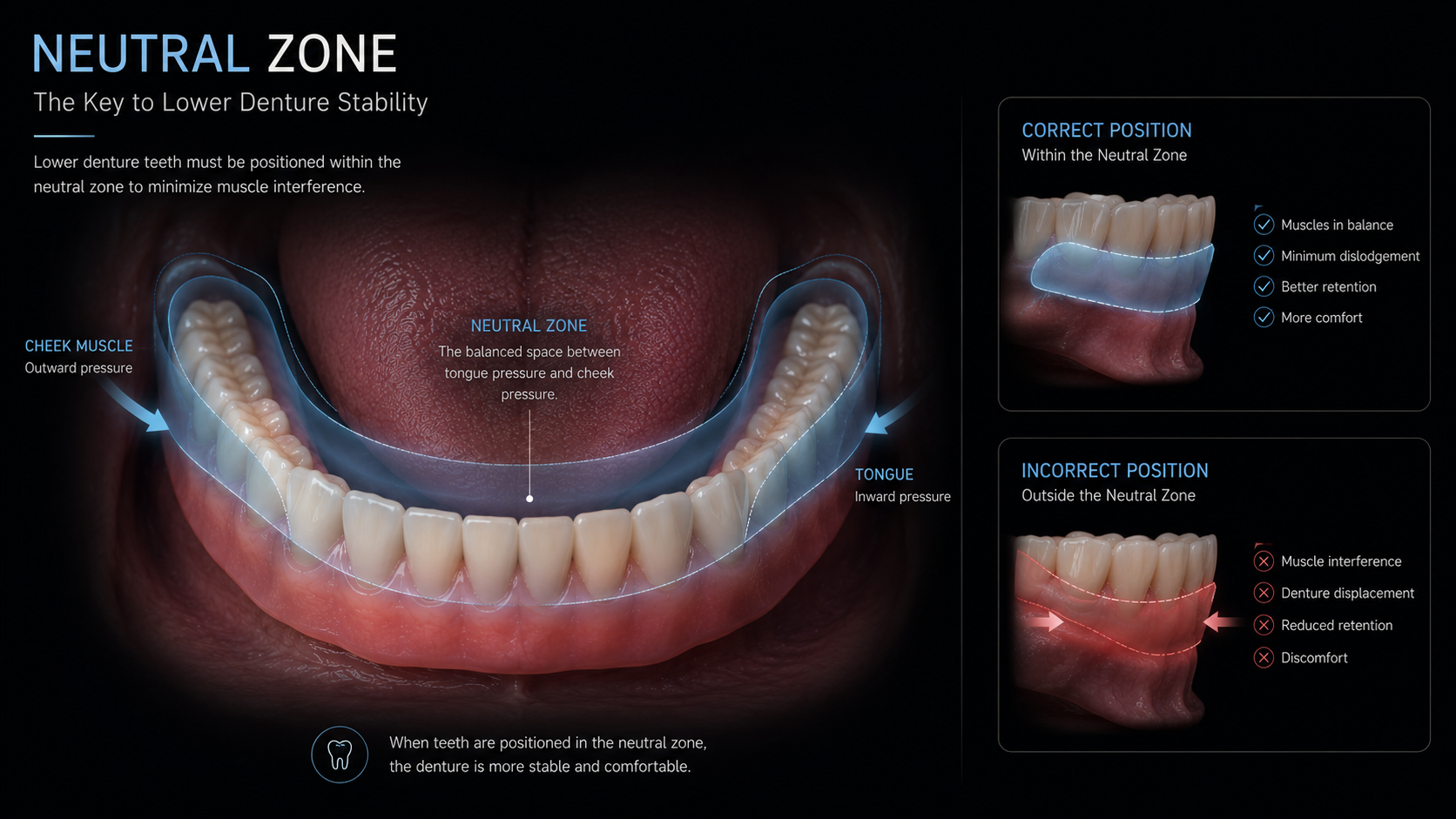
这就是中立区变得重要的地方。 中性区是来自舌头的向外力与来自脸颊和嘴唇的向内力平衡的区域。理想情况下,义齿应排列在该区域内,以便肌肉力量有助于稳定义齿而不是使其移位。
对于下颌假牙,这个概念尤其重要。下义齿周围有运动的肌肉。如果牙齿位于患者功能区之外,假牙可能看起来不错,但性能很差。
在时代牙科实验室,我们经常在真实案例中看到这种冲突。医生可能会要求让牙齿更明显、更靠前或更类似于旧的假牙。但如果旧假牙已经不稳定,复制其牙齿位置可能会重复同样的问题。这就是为什么在最终加工之前需要进行技术沟通。
5.下颌假牙的咬合错误更为明显
咬合对于所有假牙来说都很重要,但下颌假牙的宽容度较差。
轻微的过早接触对于咬合架来说可能并不严重,但在口腔中可能会使下义齿倾斜。双侧平衡不平衡可能会导致咀嚼时移动。一侧的严重接触可能会产生压力和不稳定。如果咬合记录不准确,最终的假牙可能无法发挥预期的作用。
平衡咬合非常重要,因为下颌义齿依赖于稳定的力分布。当咬合力不平衡时,义齿可能会移位。患者可能将其描述为松散、摇晃、酸痛或无法咀嚼。
这就是为什么咬合记录是下颌假牙最重要的临床记录之一。如果咬合记录不稳定,实验室必须谨慎。由不稳定咬合制成的假牙可能看起来仍然可以接受,但功能可能无法预测。
为什么有些下颌假牙在模型上感觉稳定,但在嘴里却松动
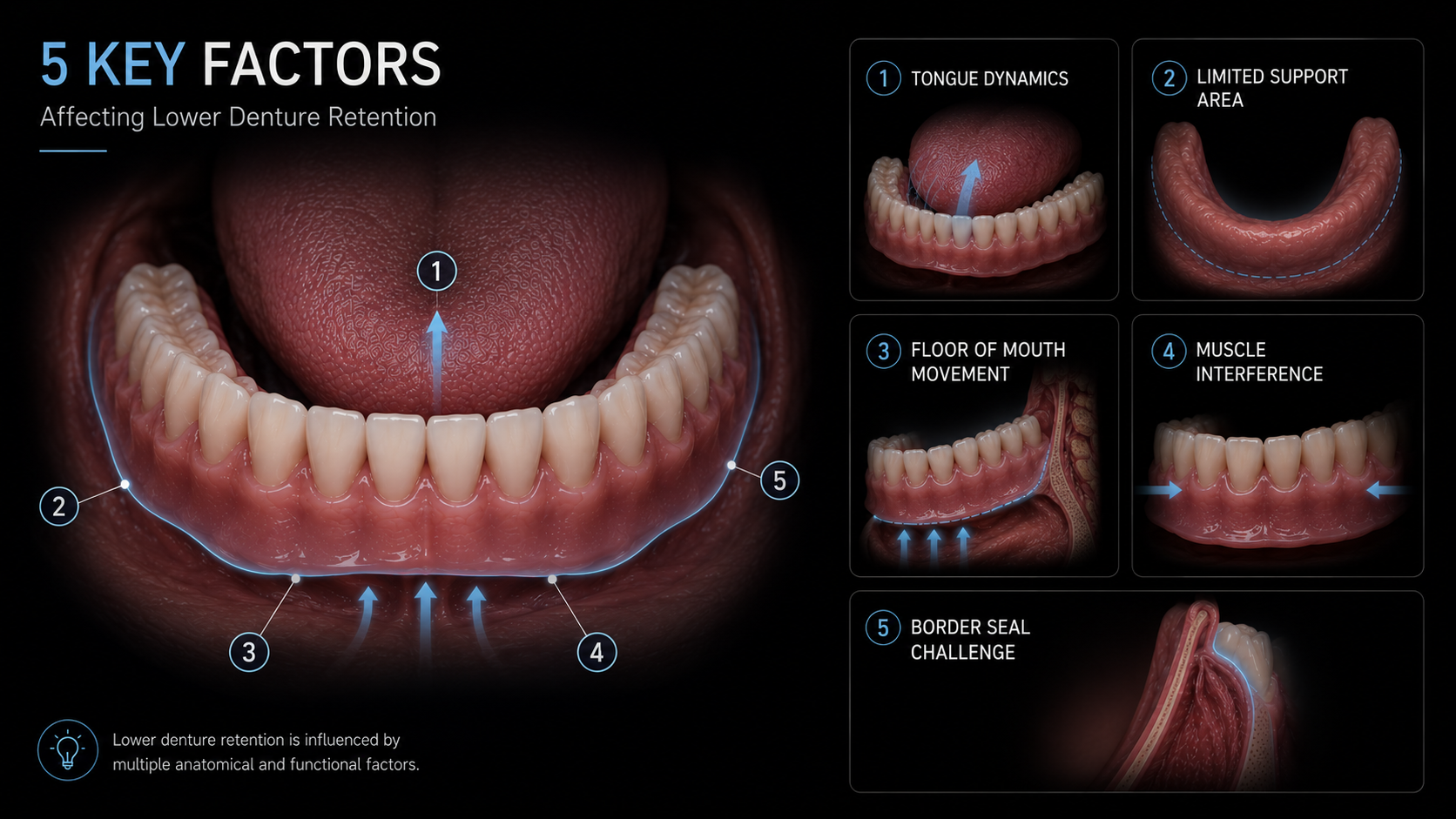
这是诊所常见的问题。
下假牙可以完美地固定在模型上。它可能不会摇滚。底座可以很好地适应。牙齿排列可能看起来很平衡。但分娩后,患者可能会报告有活动。
原因很简单:模型只显示静态解剖结构。它不显示完整的舌头运动、口底运动、唾液状况、吞咽模式、脸颊压力或患者的肌肉控制。
下颌义齿在动态环境中工作。说话时,舌头可能会推压舌侧凸缘。吞咽过程中,口底可能会上升。咀嚼过程中,用力不均匀可能会使假牙倾斜。在早期适应过程中,患者可能还不知道如何用肌肉控制义齿。
这就是为什么下颌义齿必须在石膏之外进行评估的原因。模型拟合是必要的,但这还不够。好的下颌义齿还需要功能稳定性。
从实验室的角度来看,我们通常将下义齿不稳定分为几个可能的原因:
- 基础适配问题
- 边框扩展问题
- 遮挡问题
- 牙齿位置问题
- ridge 支持限制
- 患者适应问题
- 临床记录不准确
这种区别很重要。如果真正的问题是遮挡,调整边框可能无法解决问题。如果真正的问题是舌干涉,则在不改变法兰设计的情况下重新制作底座可能会重复相同的问题。如果真正的问题是严重的牙槽嵴吸收,则必须谨慎管理期望。
实验室如何识别下颌义齿不稳定性的真正原因
经验丰富的实验室不仅会问“假牙是否松动?”他们问:“它什么时候移动?”
这个问题往往揭示了真正的原因。
咀嚼过程中是否移动
当下颌义齿主要在咀嚼过程中移动时,原因通常与咬合、牙齿位置或牙槽嵴支撑有关。
实验室可能会检查:
- 咬合是否均匀
- 后接触面是否平衡
- 是否一侧击球较重
- 牙齿是否位于牙槽嵴上方
- 假牙是否在外力作用下倾斜
如果假牙在休息时稳定,但在咀嚼时移动,则应仔细检查咬合情况。
说话或吞咽时是否移动
当说话或吞咽过程中发生运动时,问题可能与边界延伸、舌缘轮廓或舌间隙有关。
实验室可能会考虑:
- 舌侧凸缘是否过度延伸
- 口底是否抬起假牙
- 舌头是否有足够的空间
- 患者舌位是否不利
- 抛光面是否太笨重
在这些情况下,假牙在模型上可能看起来很稳定,但在使用过程中会出现故障。
插入后是否立即感觉松动
如果在咀嚼或说话之前立即感觉下颌义齿松动,则问题可能涉及基托适应、印模准确性、边界延伸或牙槽嵴状况。
实验室可能会审核:
- 展示质量
- 投射准确度
- 基础处理
- 组织适应
- 法兰扩展
- 山脊解剖
有时这是一个捏造问题。有时这是临床记录问题。有时这是解剖学上的限制。
如果多次调整后患者无法适应
如果义齿已经调整过多次但仍然感觉不稳定,问题可能会更复杂。它可能涉及牙槽嵴吸收、神经肌肉控制不良、不切实际的期望或不稳定的咬合记录等综合因素。
这就是诊所和实验室之间的沟通变得非常重要的地方。照片、压力指示标记、咬合记录和椅旁反馈可以帮助实验室了解口腔中发生的情况。
为什么患者适应比许多人预期的更重要
患者的适应能力常常被低估。
新型下颌义齿不仅仅是假牙。这也是患者必须学会控制的事情。舌头、脸颊和嘴唇需要时间与假牙协调。第一次佩戴假牙的人可能比有经验的假牙佩戴者更困难。长期佩戴者可能会将新假牙与他们的肌肉已经适应多年的旧假牙进行比较。
这就是为什么经过技术改进的假牙一开始可能仍然感觉很奇怪。如果旧的假牙磨损、过度闭合、不稳定或经过大量调整,患者的肌肉可能已经适应了旧的状况。矫正了牙齿位置的新假牙或 VDO 可能会感觉不熟悉。
适应期不容忽视。当患者学会控制假牙时,一些早期活动可能会有所改善。然而,应评估持续性运动、疼痛或功能障碍。
从专业角度来看,患者适应不应该成为所有问题的借口。但应将其视为全面诊断的一部分。
为什么每个患者的下托义齿成功率不同
没有一种适用于所有患者的通用下颌义齿设计。
一些患者具有宽阔的脊线和良好的肌肉控制能力。有些牙槽嵴平坦,组织活动,口干,舌头运动强烈,或长期吸收。有些患者可以很快适应。其他人则需要更多的预约和仔细的调整。
这就是为什么经验丰富的实验室避免以同样的方式处理每个下义齿盒。
重要的大小写因素包括:
- 山脊高度
- 脊线宽度
- 软组织质量
- 唾液情况
- 舌头位置
- 脸颊肌肉活动
- 咬合记录准确性
- 患者之前的假牙历史
- 审美期望
- 咀嚼模式
下颌义齿不仅仅是一个产品。它是一种功能性矫治器,必须符合患者的解剖结构和行为。
为什么数字义齿仍然需要技术判断
数字义齿工作流程可以提高一致性。它们可以减少一些手动错误,提高可重复性,并使设计修改变得更容易。数字记录还有助于案例沟通和复制。
但是数字义齿并不能消除下颌义齿的技术难度。
扫描捕捉特定时刻的解剖结构。它不能完全捕捉肌肉运动。软件可以帮助设计假牙,但它无法完全预测舌头在说话和吞咽过程中的行为。数字设置可能在屏幕上看起来很干净,但技术人员仍然需要判断牙齿位置、法兰轮廓和咬合是否合适。
对于下颌假牙尤其如此。
数字工作流程是一个工具。它不能替代可移动体验。
在 Times Dental Lab,我们将数字义齿视为改善控制和沟通的一种方式。但下颌义齿的稳定性仍取决于临床记录、解剖判断、牙齿排列、咬合控制和最终验证。
经验丰富的实验室在下颌义齿失败之前通常会注意到什么
在许多情况下,在最终假牙交付之前会出现警告信号。
经验丰富的可拆卸技术人员可能会注意到:
- 咬合记录不稳定
- 下脊平坦或狭窄
- 旧假牙牙齿位置不佳
- 后牙要求在支撑区域外
- 舌头空间看起来有限
- 舌侧凸缘可能会干扰功能
- 美观要求可能会降低稳定性
- the occlusal plane is not ideal
- the lower denture base has limited support
- the case may need try-in verification
These details are important because lower denture problems often begin early. If the lab only checks the final denture, it may be too late to prevent instability.
This is why we believe quality control should not only happen at the end. It should start from case review.
How Experienced Dental Labs Reduce Lower Denture Problems
A lab cannot control every clinical and anatomical factor. But a good lab can reduce risk through a structured process.
1. Careful Case Review
Before production, the lab should review the impression, bite, opposing arch, previous denture information, and doctor’s instructions.
For lower dentures, the technician should pay special attention to:
- ridge condition
- border information
- bite stability
- tooth position request
- old denture reference
- available vertical space
- esthetic requirements
If something is unclear, communication should happen before processing.
2. Accurate Model and Base Control
The denture base must adapt well to the cast. Any distortion in the model, processing, or finishing can affect fit.
For lower dentures, base stability is especially important because the support area is limited. A small error may cause obvious movement.
3. Controlled Border Design
The border must be extended enough for retention but not so much that it interferes with muscles.
This balance is difficult. It requires understanding the anatomy and respecting the clinical impression. In some cases, chairside border molding information is essential.
4. Tooth Setup Within Functional Limits
Tooth position should support stability, not only esthetics.
If posterior teeth are positioned outside the ridge support area, the denture may tip. If anterior teeth are placed too far forward, the lower denture may become unstable. The technician must balance appearance, phonetics, and function.
5. Occlusion Verification
Occlusion must be checked carefully before delivery. For lower dentures, the lab should avoid obvious premature contacts and unstable bite relationships.
Balanced occlusion is not only a textbook idea. It directly affects whether the lower denture stays stable during chewing.
6. Try-in Evaluation
Try-in is extremely valuable for difficult lower denture cases. It allows the clinic and patient to check esthetics, VDO, tooth position, and bite before final processing.
For high-risk lower denture cases, skipping try-in may increase remake risk.
7. Clear Communication With the Clinic
Some lower denture problems cannot be solved by the lab alone. If the ridge is severely resorbed, the bite is unstable, or the patient has unrealistic expectations, the clinic and lab need to discuss the case early.
Good communication helps prevent surprises after delivery.
How Times Dental Lab Approaches Lower Denture Stability
At Times Dental Lab, lower denture cases are handled with a process-driven mindset. We do not see lower dentures as simple acrylic appliances. We see them as functional restorations that require careful judgment at multiple stages.
Our removable team focuses on:
- reviewing case records before production
- checking model accuracy
- controlling base adaptation
- evaluating tooth setup
- checking occlusion before delivery
- communicating when records are unclear
- reviewing remake causes when problems occur
For us, the key is not only making the denture look correct. The key is reducing avoidable risk.
Some instability issues are caused by clinical records. Some are caused by anatomy. Some are caused by tooth position or occlusion. Some are related to patient adaptation. A responsible lab should help identify the likely cause instead of treating every problem the same way.
This is where experience matters.
When a Lower Denture Should Be Adjusted and When It May Need Remaking
Not every unstable lower denture needs to be remade.
Some issues can be corrected by chairside adjustment:
- minor pressure points
- slight occlusal interference
- small border overextension
- early adaptation discomfort
- minor flange polishing
- Other cases may require relining, rebasing, or remaking:
- poor base adaptation
- incorrect bite registration
- major tooth position error
- severe occlusion mismatch
- distorted impression
- unstable VDO
- major border extension error
The correct solution depends on diagnosis.
For example, if the denture base fits well but the bite is heavy on one side, occlusal adjustment may solve the problem. If the impression was distorted, repeated chairside grinding may not solve the issue. If the ridge is extremely flat, the patient may need realistic expectations, relining, implant support, or another treatment option depending on the clinical situation.
Why Lower Denture Problems Should Be Discussed Early
Lower denture instability is easier to prevent than to correct.
Once the denture is processed, major changes become harder. Tooth position changes may require resetting. Bite errors may require remounting or remaking. Border issues may require chairside adjustment or new impressions.
This is why early communication is valuable.
If the lab sees a high-risk factor, it should inform the clinic. If the clinic sees movement during try-in, it should send clear feedback. If the patient has worn an old unstable denture for many years, that history should be shared.
Better records lead to better decisions.
FAQ
Why are lower dentures less stable than upper dentures?
Lower dentures are less stable because they have a smaller support area and no palatal suction. They also sit close to the tongue, cheeks, lips, and floor of the mouth, which all move during function.
Why do lower dentures move when eating?
Lower dentures may move during eating because of uneven occlusion, poor ridge support, incorrect tooth position, or weak border seal. Chewing forces can tip the denture if they are not distributed properly.
Can lower dentures ever feel completely stable?
Some lower dentures can feel very stable, especially when the ridge condition is good and the patient adapts well. However, lower dentures are naturally more challenging than upper dentures. Severe ridge resorption or poor muscle control may limit stability.
Does digital denture technology solve lower denture instability?
Digital dentures can improve consistency and repeatability, but they do not eliminate all lower denture challenges. Tongue movement, ridge resorption, border seal, occlusion, and patient adaptation still require clinical and technical judgment.
What is the most common reason lower dentures fail?
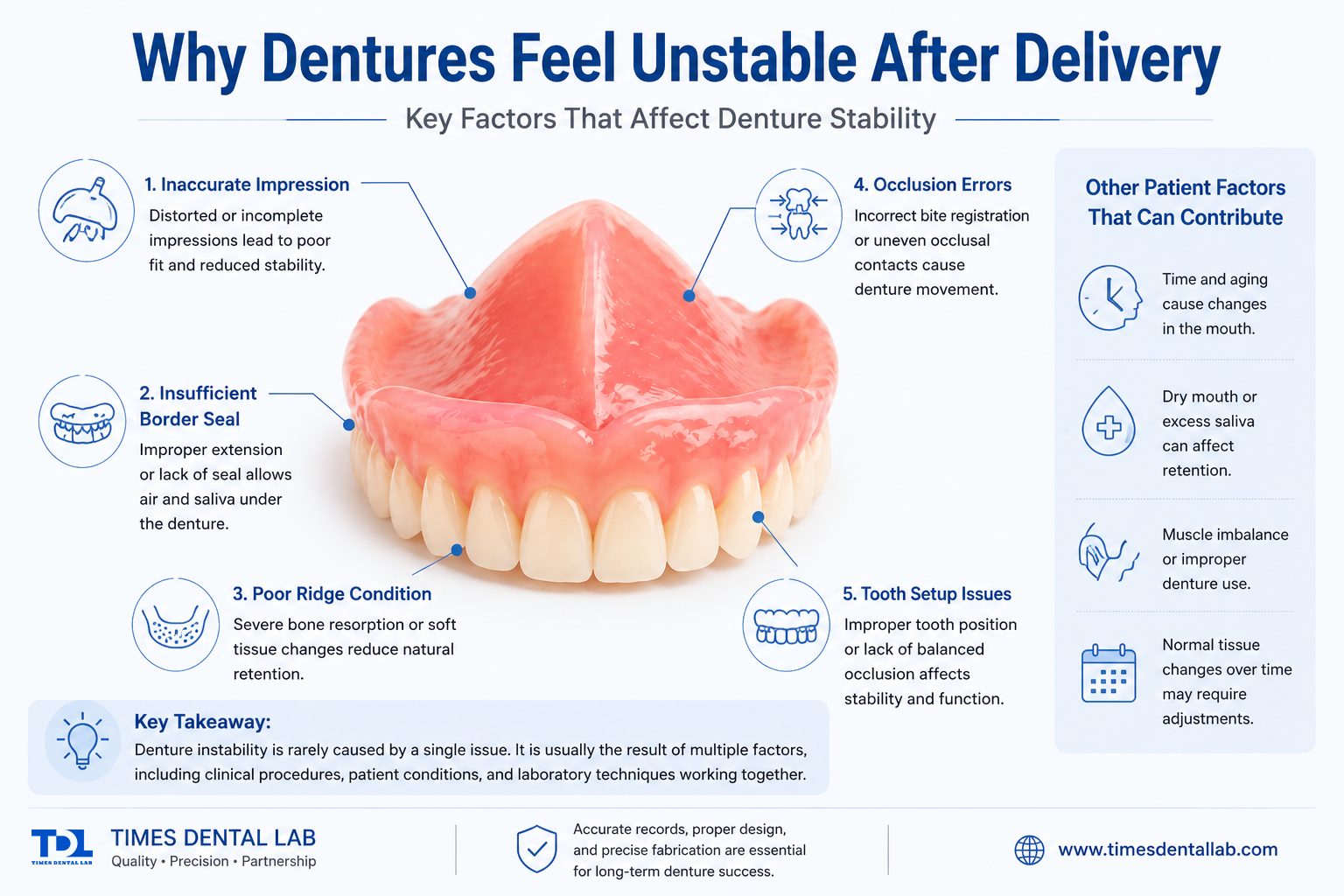
There is no single reason. Common causes include inaccurate impressions, poor border extension, unstable bite registration, severe ridge resorption, incorrect tooth position, occlusion imbalance, and limited patient adaptation.
Should a loose lower denture be remade or adjusted?
It depends on the cause. Minor pressure or occlusion issues may be adjusted. A distorted impression, incorrect bite, poor base adaptation, or major tooth setup problem may require relining or remaking.
Conclusion
Lower dentures are difficult because they are not only supported by anatomy. They must also work with moving muscles, limited ridge support, tongue activity, occlusal force, and patient adaptation.
Even experienced dental labs face challenges with lower dentures because many factors are outside the lab’s direct control. A lower denture may fit the model but still behave differently in the mouth. This is why careful case review, accurate records, functional tooth setup, border control, and clinic-lab communication are essential.
At Times Dental Lab, our approach is simple: lower denture stability should be built through process, not guessed at the final stage. The more carefully we evaluate the case before and during production, the better chance the final denture has to function comfortably for the patient.
Lower dentures will always be challenging. But with the right clinical records, technical judgment, and communication, many common problems can be reduced before they become remakes.