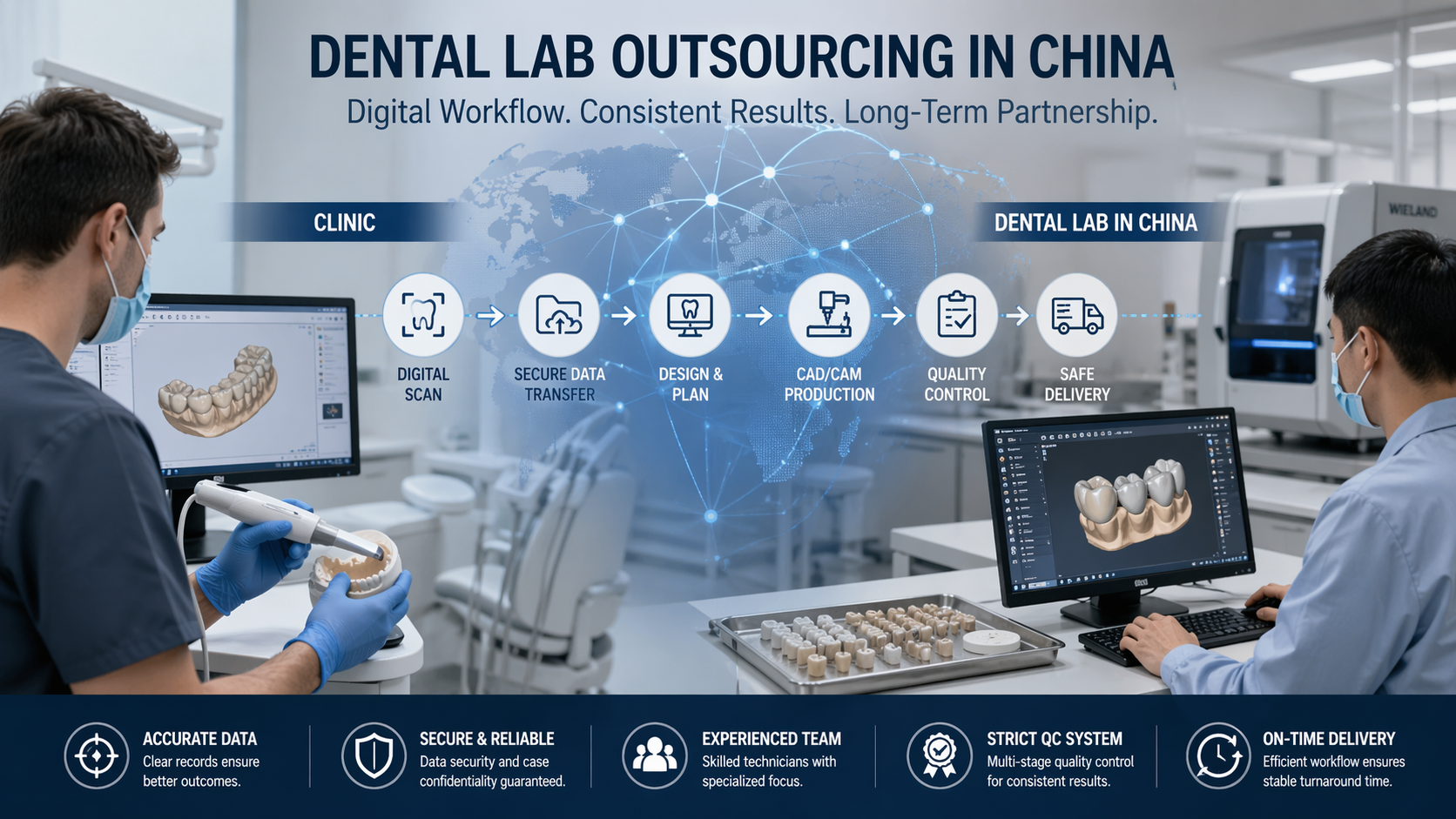
(来自日常生产的制造视角)
大多数诊所不谈论的问题
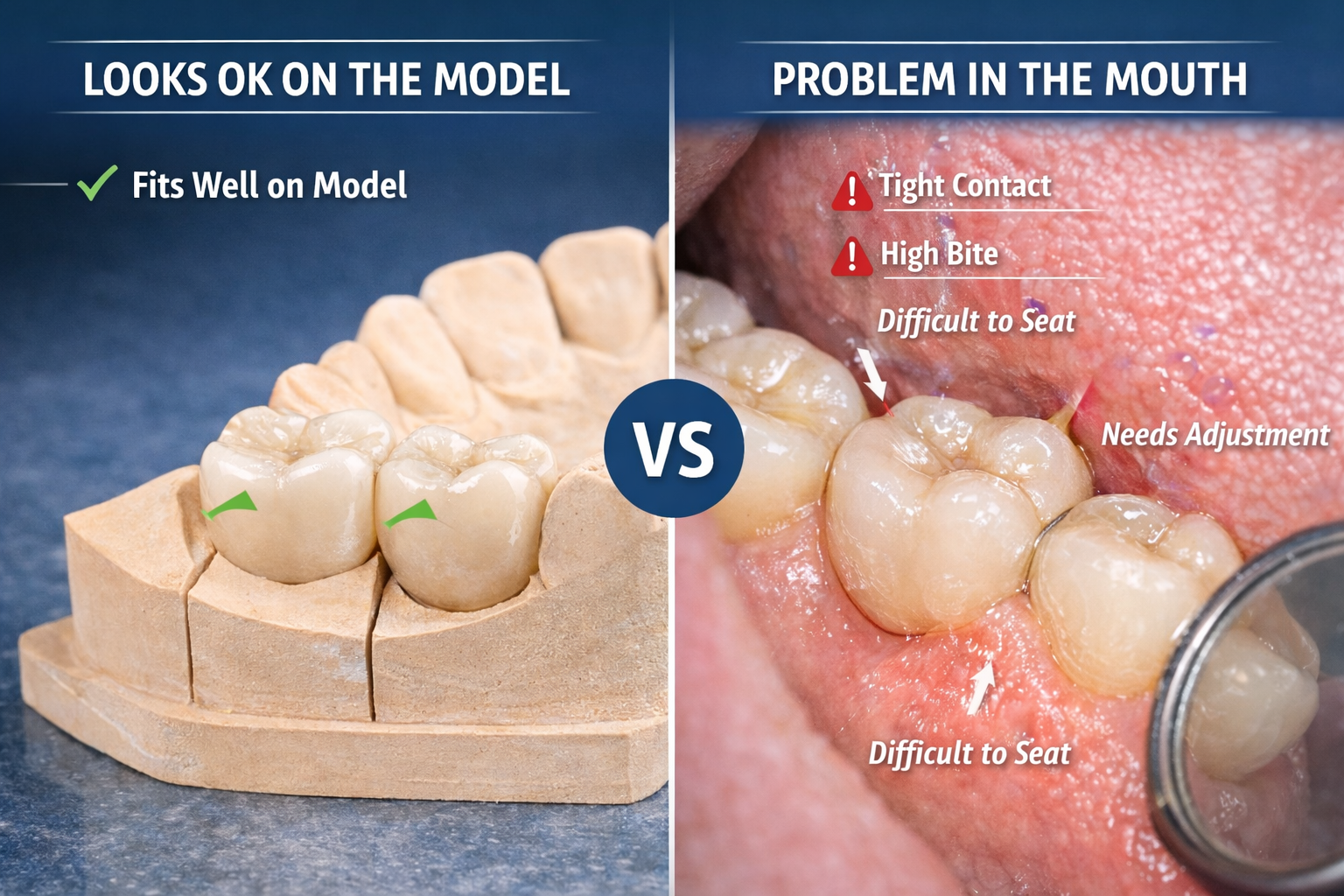
大多数诊所都见过这种情况,即使并不总是明确讨论。
两种情况。类似准备。相同指示。
发送到两个不同的实验室。
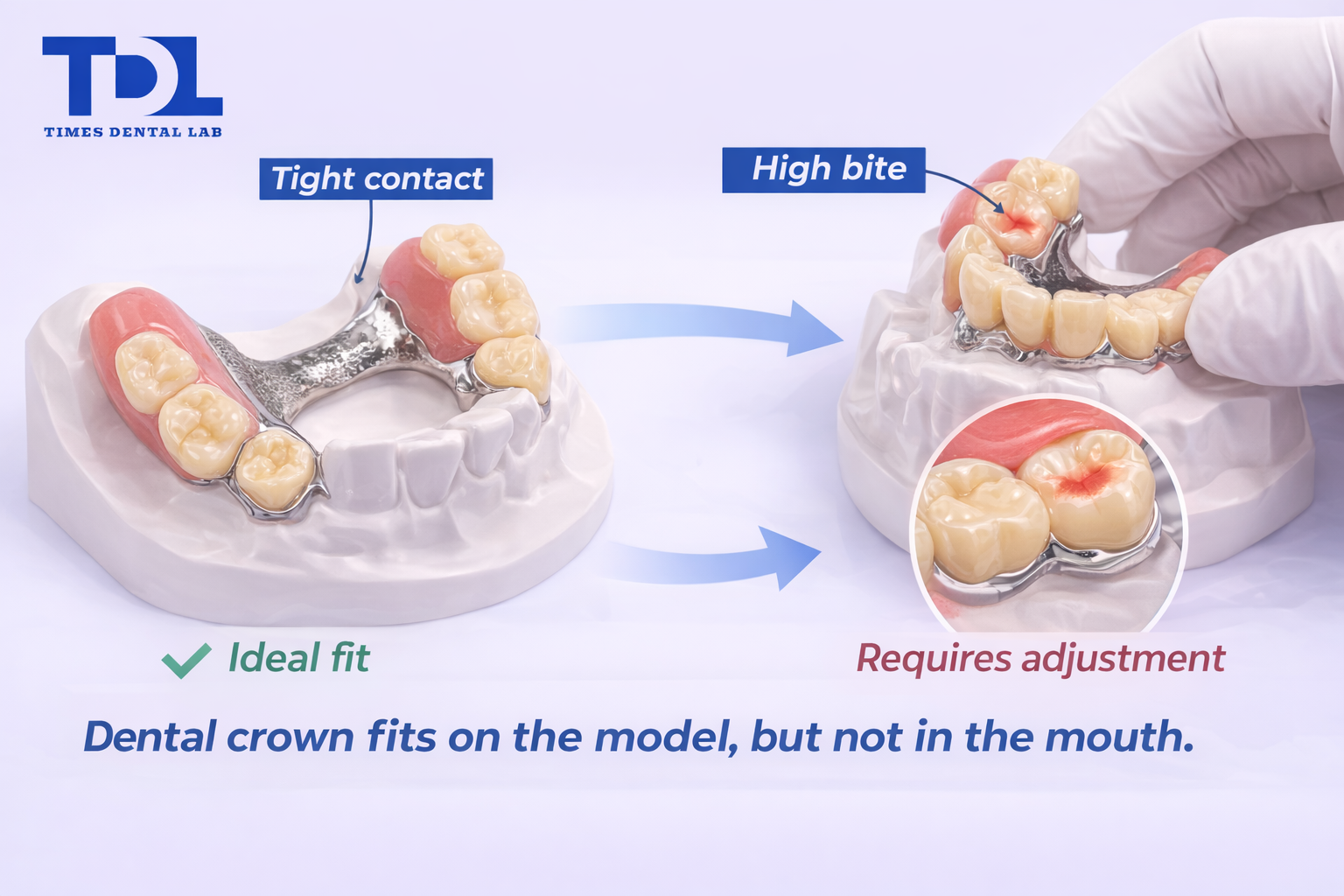
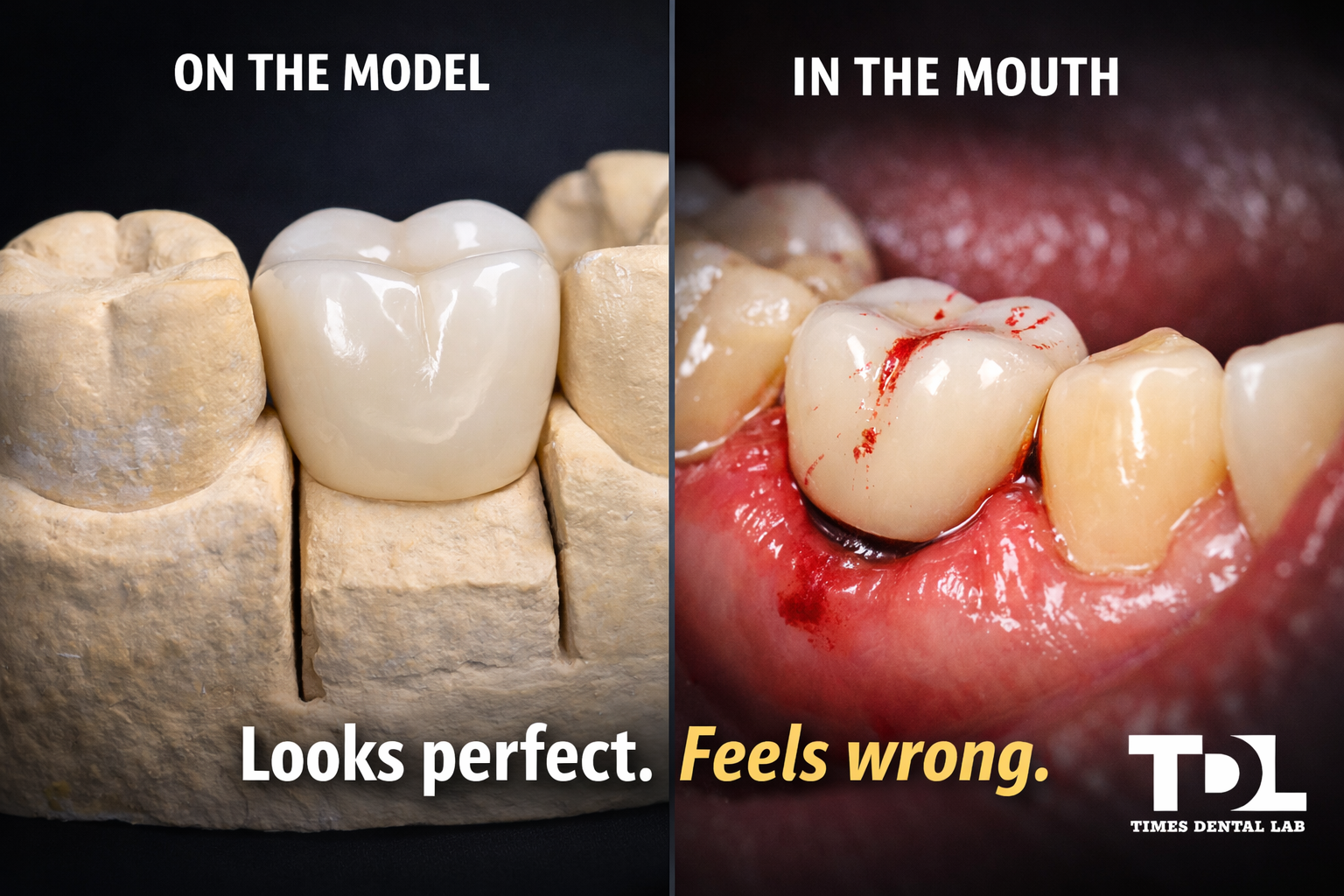
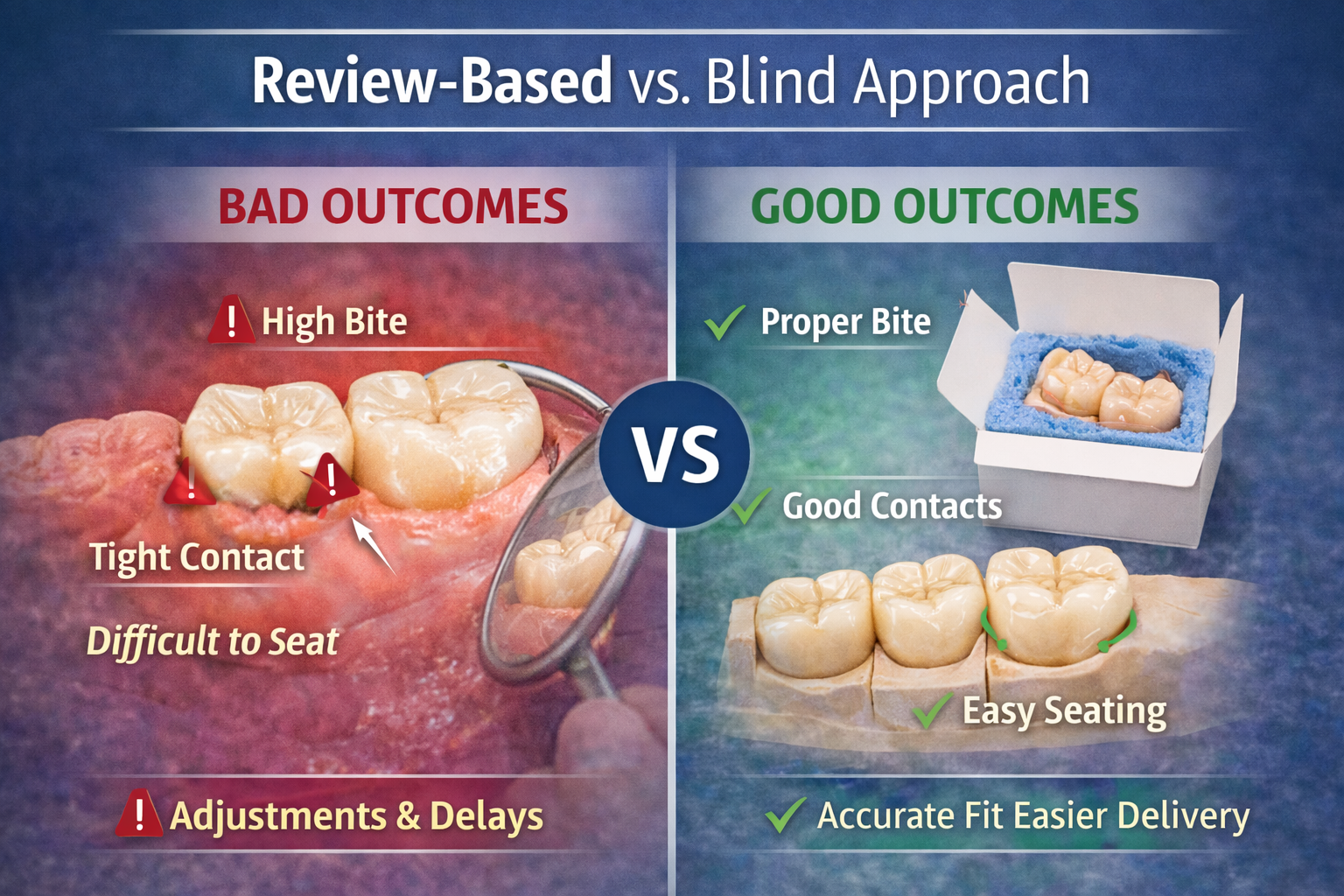
一个回来是可以预见的。座位平稳。最小的调整。另一个在模型上看起来还可以,但一旦放进嘴里:
l 接触感觉比预期更紧
l 咬合需要调整
l 座位并不像应有的那样被动
有时它会导致重制。
起初,这感觉像是一个案例问题。
但是当它重复发生时,不同的模式就会变得清晰:
l 差异并不总是如此。
l 这是实验室的处理方式。 一些实验室随着时间的推移感觉很稳定。其他实验室感觉不一致。 并不总是错误 - 但不可预测。 在临床工作中,不可预测性比偶尔的错误带来的压力更大。
牙科实验室工作中的“一致性”真正意味着什么
一致性常常被误解为完美。
现实中,每种情况都有变数:
l 准备差异
l 咬合变化
l 扫描失真
l 材料行为
即使在完全数字化的工作流程中,这些变量仍然存在。
所以一致性并不意味着:
l 无调整
l 没有偏差
这意味着更实用的东西:
该案例的行为符合预期。
一致性在于可预测性
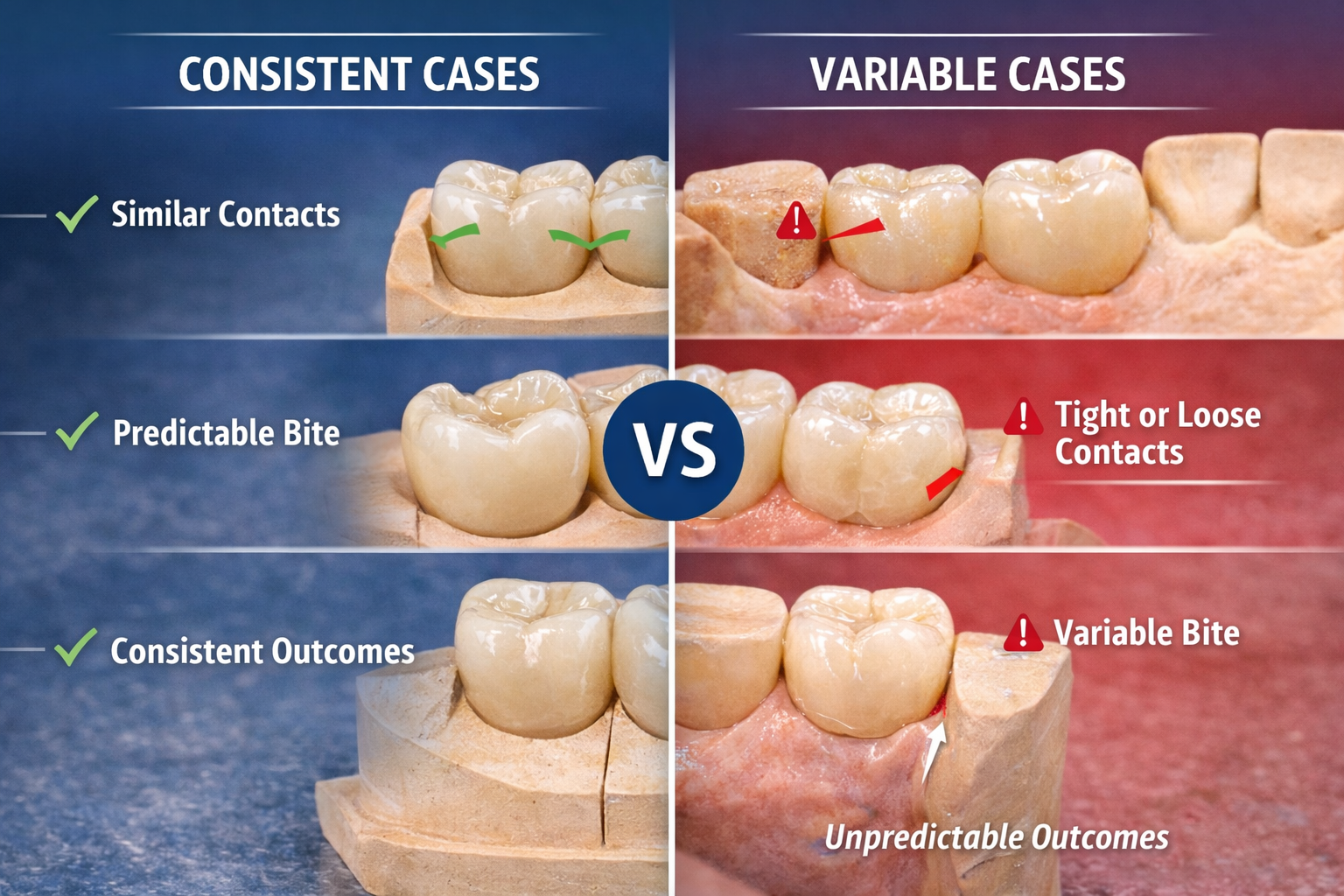
可预测的病例不会让临床医生感到惊讶。
接触处于熟悉的范围内。遮挡表现在可控范围内。座位不需要力。
即使需要调整,也是:
l 次要
l 预期
l 高效
随着时间的推移,这会建立信任。
临床医生在打开盒子之前就开始知道他们会收到什么。
为什么有些实验室感觉可靠——直到他们不可靠
这是一种常见的体验。
一家诊所尝试新实验室。
首先:
l 结果很好
l 沟通顺畅
然后逐渐:
l 联系人不同
l 咬合变得不太一致
l 结果变得更难预测
没有什么明显的错误。
但是有些事情发生了变化:
结果不再稳定。
这很少是由材料或设备引起的。
这是实验室内部运作方式造成的。
不一致实际上从何而来
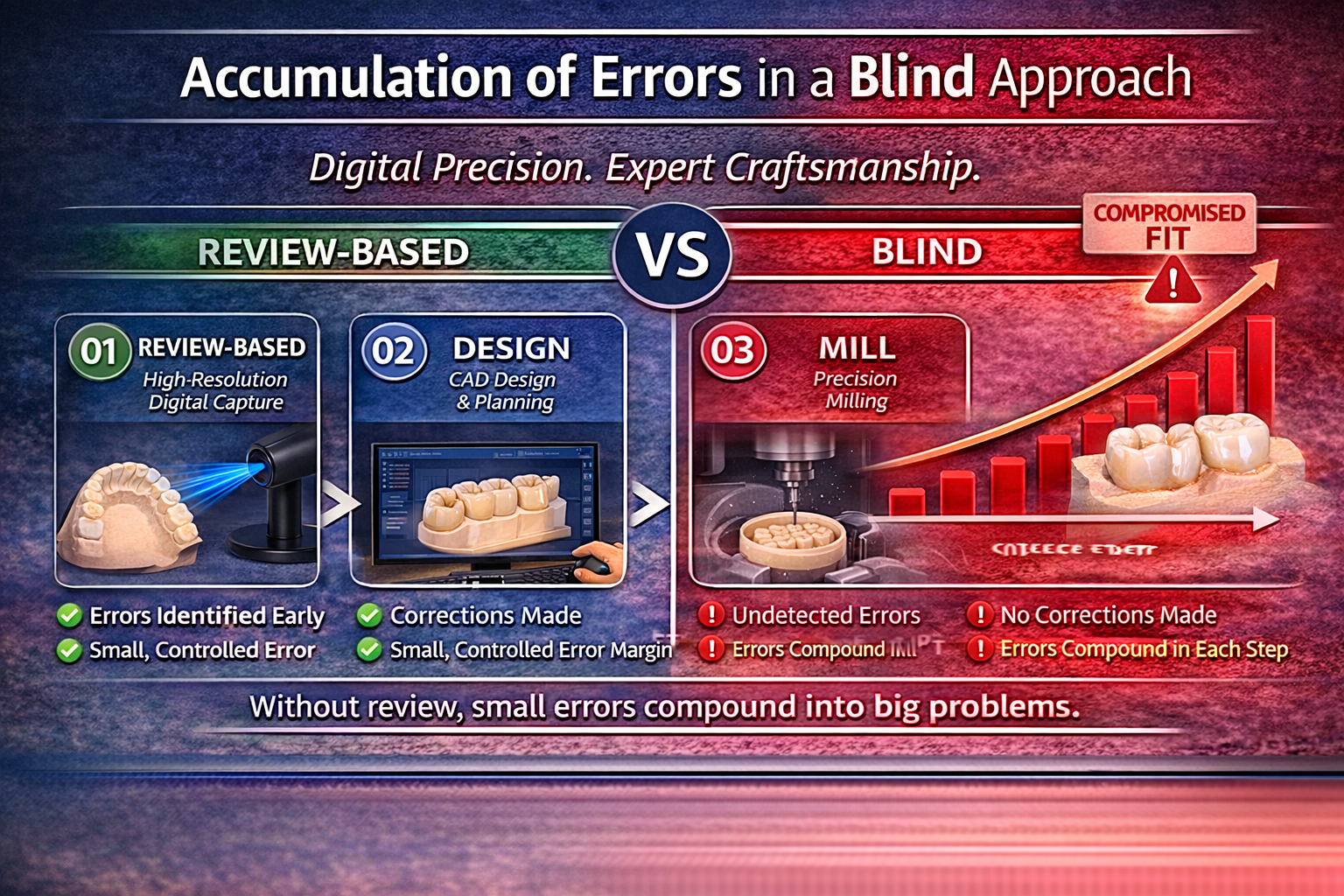
从外面看,大多数实验室看起来都很相似。
他们都使用:
l CAD 设计
l 铣床
l 类似材料
但在内部,差异是显着的。
当生产取决于个人
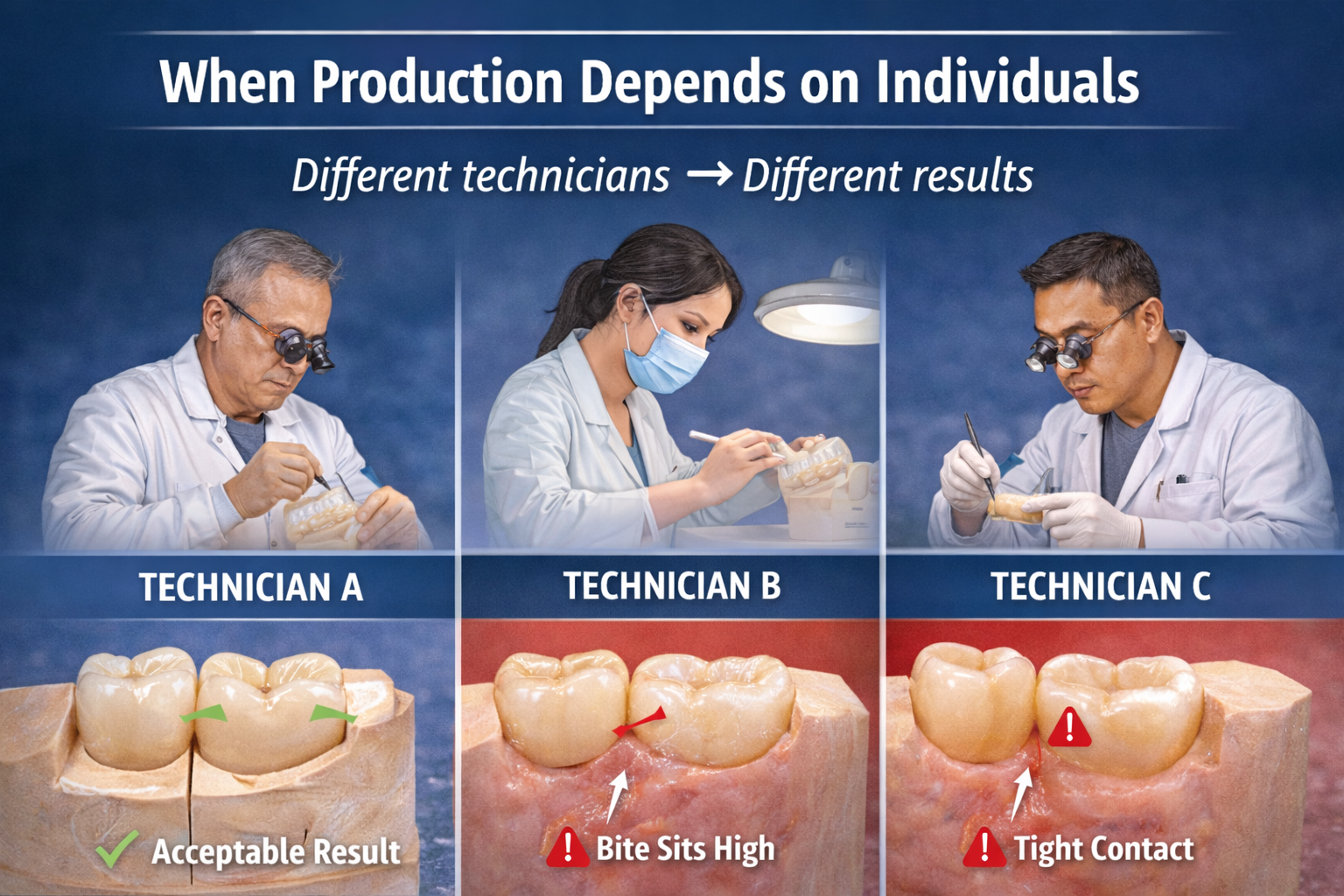
在一些实验室中,结果在很大程度上取决于处理案例的人。
不同的技术人员可能:
l 以不同方式设计联系人
l 以不同方式调整遮挡
l 以不同方式解释边距
即使拥有熟练的技术人员,也会出现变化。
如果结果取决于个人,就无法保持一致性。
案例未经审核就进入生产
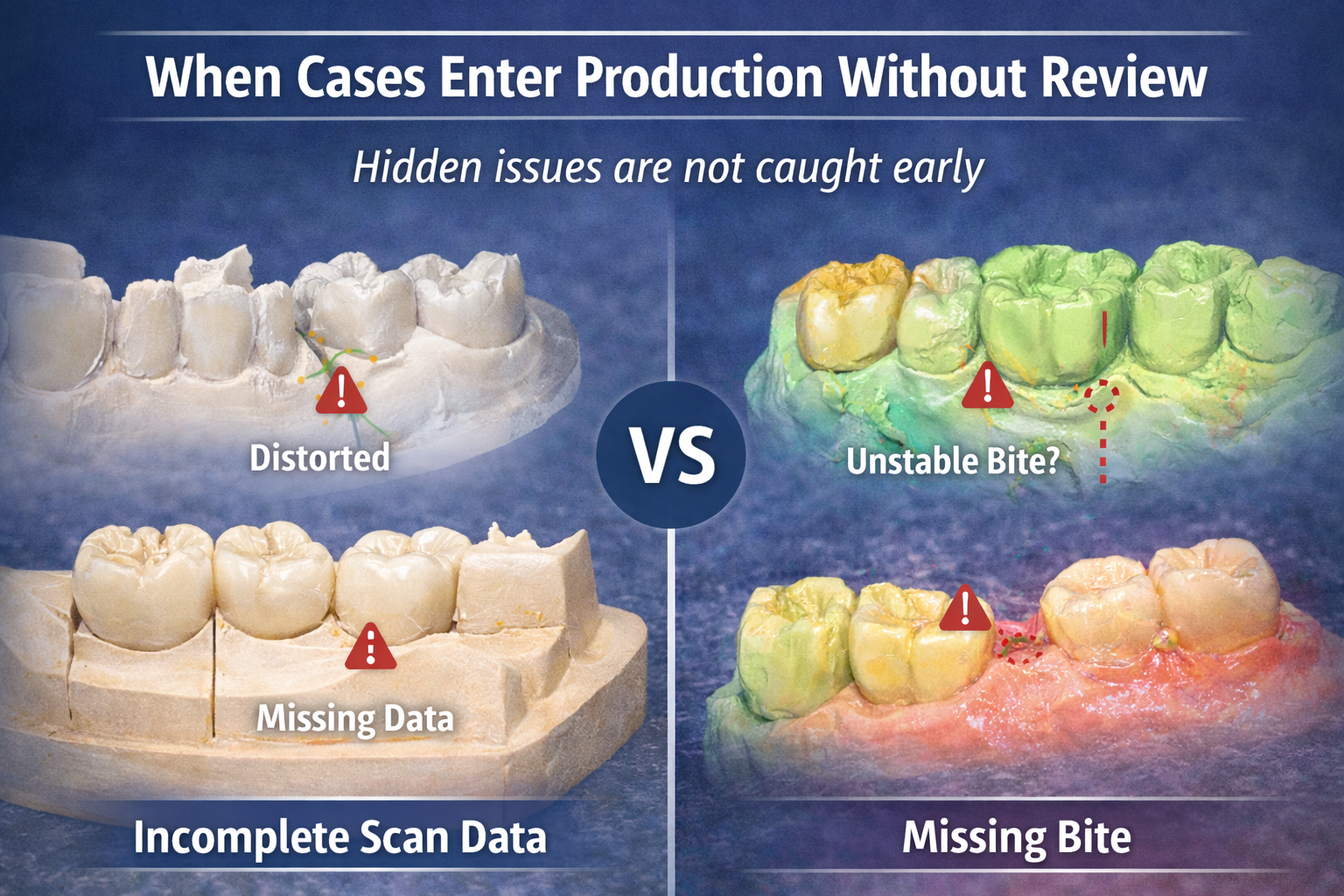
一些工作流程直接从案例接收转移到设计。
但在实际情况下,经常存在问题:
l 扫描区域不完整
l 不稳定的咬合记录
l 空间有限
l 缺少引用
未经结构化审查,这些就被投入生产。
一旦开始生产,选择就变得有限。
质量控制来得太晚
在一些实验室中,QC 仅在最后阶段进行。
但是到那时:
l 设计决策已经确定
l 结构限制无法纠正
质量控制无法修复上游决策。
稳定的实验室将 QC 视为一个过程,而不是检查点。
当案件判决缺失时
并非所有情况都应该以相同的方式处理。
某些情况需要:
l 确认
l 预期调整
l 设计前沟通
其他可直接进行。
识别这种差异的能力并非基于软件。
来自经验。
稳定实验室的不同做法(通常在幕后)
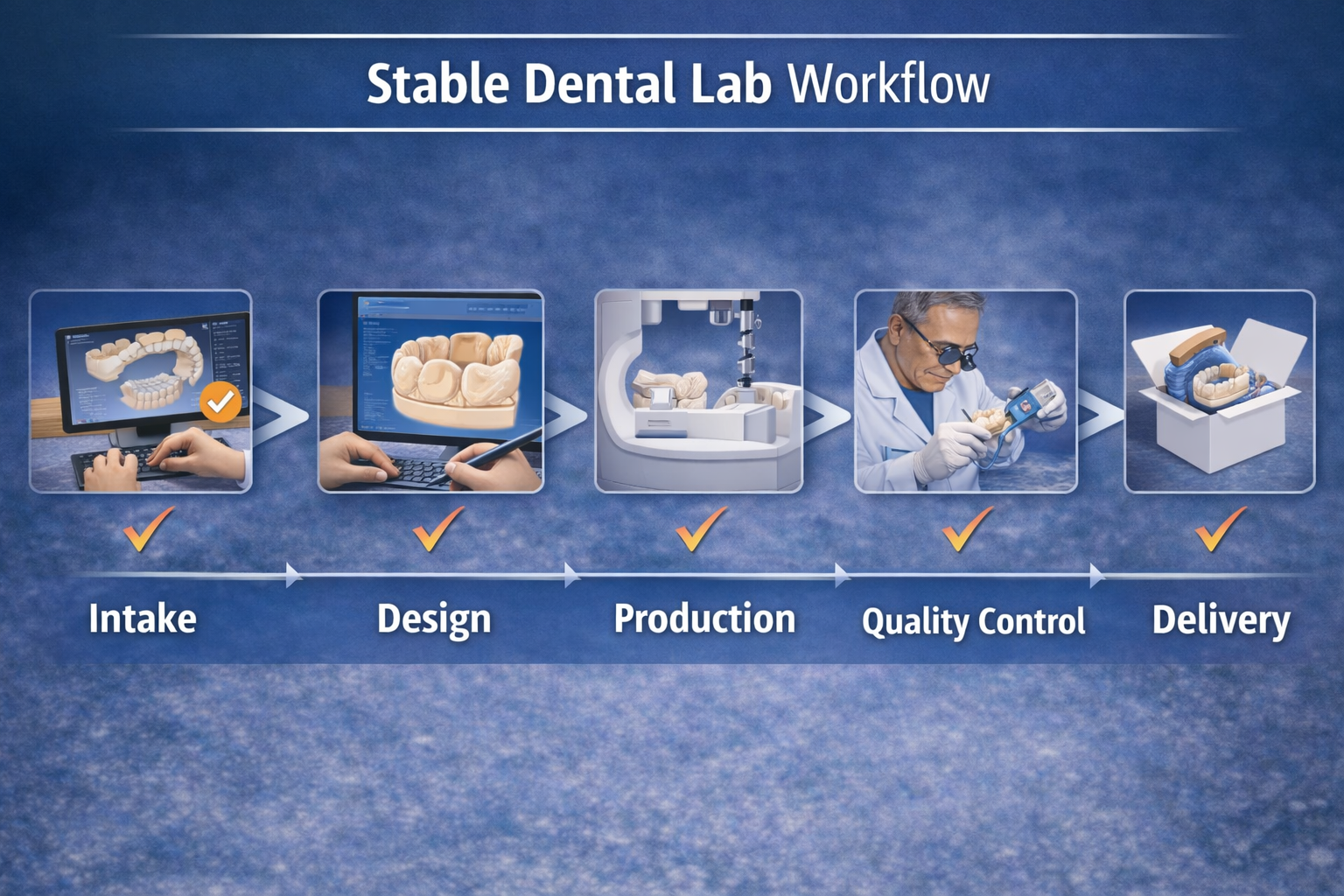
最后没有创建一致性。
它已融入日常工作流程中。
根据我们处理大量国际案件的经验,稳定性来自结构,而不是个人努力。
工作流程专为可重复性而设计
在结构化实验室环境中,案例遵循定义的步骤:
l 摄入量和数据审核
l 设计规划
l 制作
l 多阶段质量检查
这减少了可变性。
在时代牙科实验室,400 多名技术人员组成了专门的团队,案件不是随机处理的,而是通过协调的工作流程处理的。
这种结构允许以一致的方式处理类似的案例,而不管技术人员是谁。
产品是为了稳定性而不是灵活性
在较小的设置中,灵活性似乎是一种优势。
但是在规模上,太多的灵活性会导致变化。
在我们的日常生产中,每天的产量始终超过 1,000 克朗,稳定性取决于可重复的流程,而不是个人的解释。
参数如:
l 联系范围
l 咬合调整方法
l 边距处理
控制在定义的边界内。
这可以确保类似的情况表现相似。
质量控制贯穿整个流程
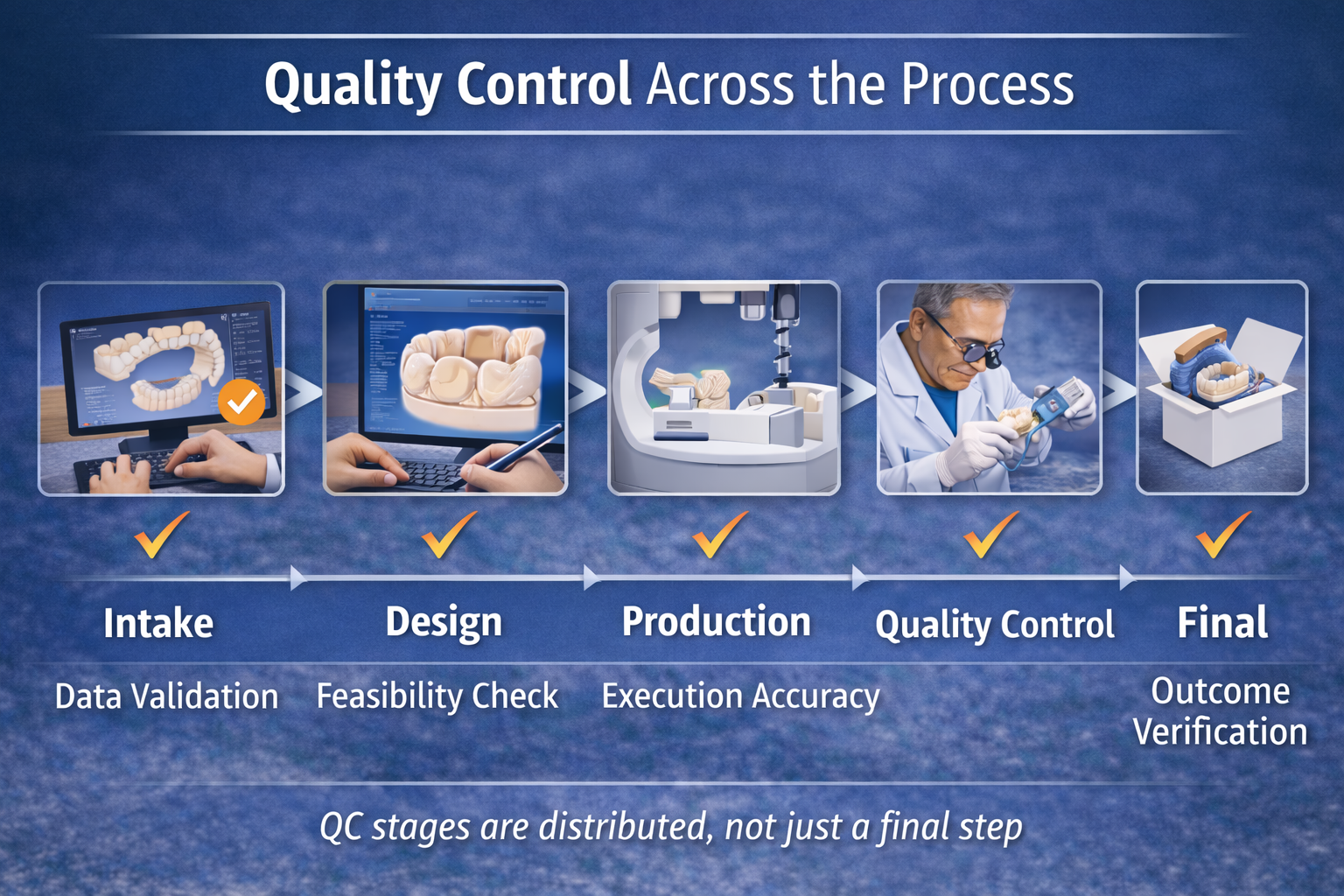
稳定的实验室不依赖最终检查,而是跨阶段分配质量控制:
l 摄入 → 数据验证
l 设计→可行性检查
l 生产→执行精度
l Final → outcome verification
This layered approach reduces accumulated deviation.
At Times Dental Lab, multiple QC checkpoints are built into the workflow to support consistent output across production lines.
Experience Is Embedded Into the System
Experience is not only in people.
It is built into how decisions are made.
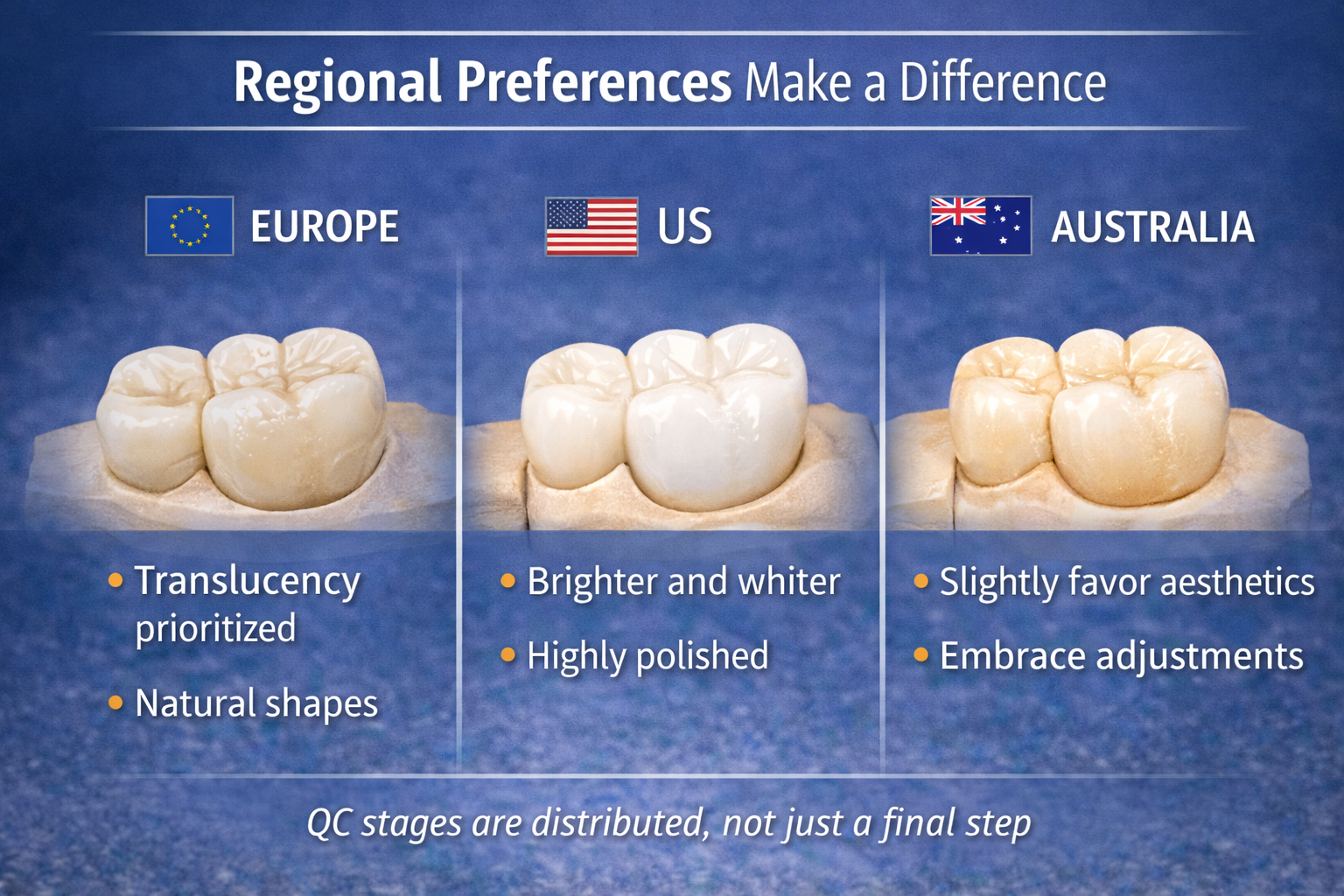
With over 95% of cases consistently exported to Europe, the US, and Australia, differences in clinical expectations become part of daily handling rather than exceptions.
For example:
l Contact tightness preferences vary
l Occlusion standards differ
l Aesthetic expectations are not uniform
Recognizing these differences early allows better alignment before production begins.
Why This Matters More Than Price or Speed
Price and turnaround time are easy to compare.
Consistency is not.
But over time, it has a greater impact.
The Hidden Cost of Inconsistency
Inconsistent outcomes lead to:
l Increased chairside adjustment
l More communication cycles
l Higher remake rates
l Patient dissatisfaction
These costs accumulate.
And often exceed any initial savings.
Why Speed Alone Does Not Guarantee Stability
Fast turnaround is valuable.
But speed without structure introduces risk:
l Reduced review time
l Increased variability
l Less control over outcomes
In stable workflows, speed is supported by process — not achieved by skipping steps.
A Practical Way to Evaluate Your Dental Lab
Consistency is not visible in marketing materials.
But it can be understood through simple questions.
Questions That Reveal Real Capability
l How are cases reviewed before production?
l How many QC stages are involved?
l How is consistency maintained across teams?
l What happens when case data is unclear?
What to Listen For
Look for:
l Clear process explanation
l Structured workflow
l Consistent logic
Be cautious of vague answers.
Consistency comes from systems, not claims.
A More Predictable Way to Work with a Dental Lab
Over time, stable cooperation is built on predictability.
When workflows are consistent:
l Planning becomes easier
l Adjustments decrease
l Communication becomes more efficient
The lab understands clinical expectations.The clinic understands how restorations behave.
This alignment reduces uncertainty.
Conclusion: Stability Is Built, Not Claimed
Consistency is not something a lab promises.
It is built into:
l Workflow
l Decision-making
l Quality control
l Experience
It is reflected not in one perfect case,but in many predictable ones.
Stability is not about eliminating variation.It is about managing it — consistently.
And over time, that is what separates a short-term supplierfrom a long-term manufacturing partner like Times Dental Lab —where consistency is not a result, but a system.