为什么牙科实验室质量控制仍然失败 - 即使在最终检查后
大多数诊所都经历过的常见情况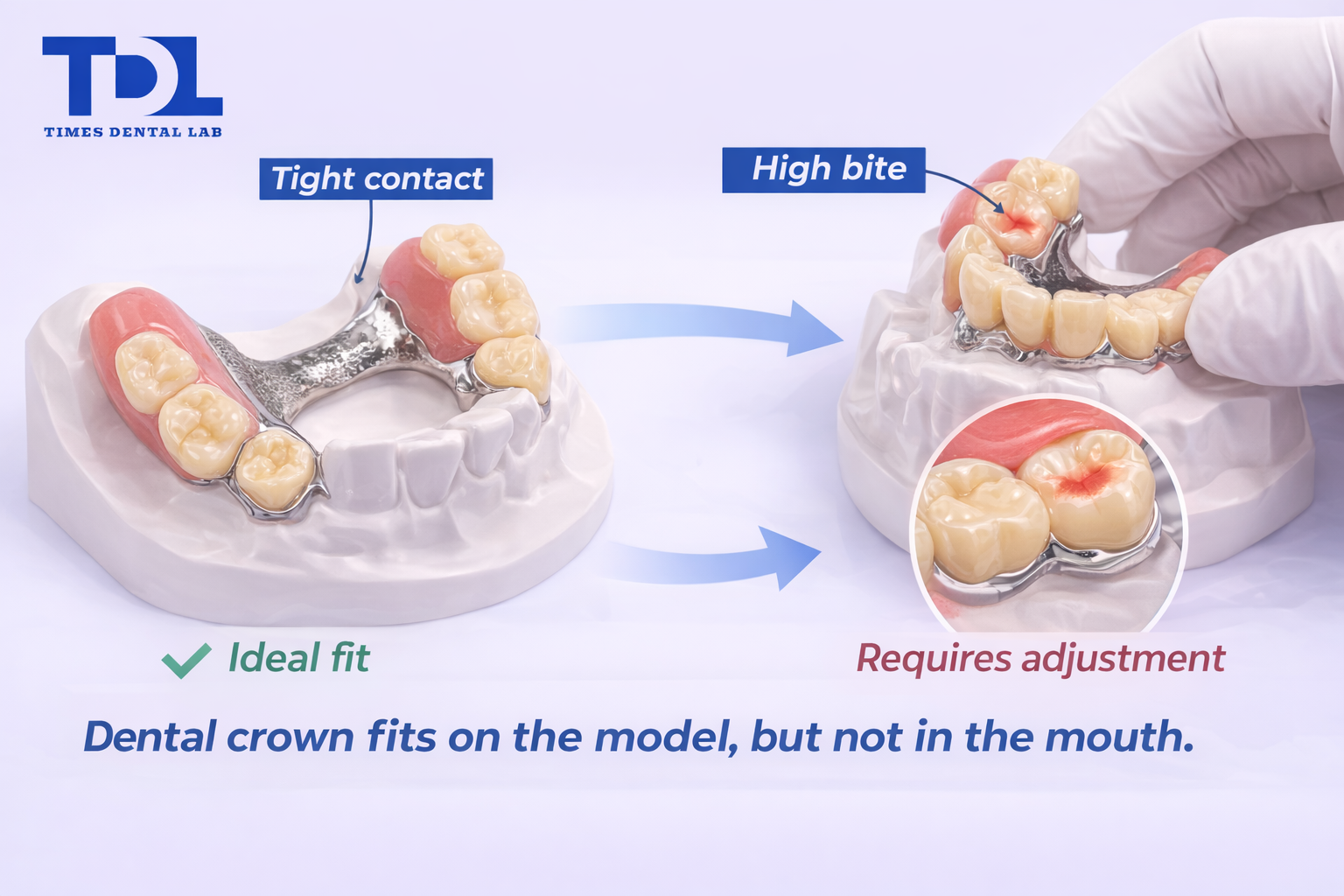
皇冠通过质量控制。
在模型上,一切看起来都可以接受。接触感觉在范围内。遮挡似乎稳定。
但是一旦皇冠落入嘴中:
· 接触感觉比预期更紧
· 咬合度稍高
· 需要调整
没有什么大问题。但是有些事情不太对劲。
这种情况很常见。它提出了一个重要的问题:
如果通过了质控,为什么还需要调整?
答案并不总是在最终检查中。
在许多情况下,问题开始得更早。
牙科实验室质量控制应该做什么
牙科实验室质量控制通常被理解为最终检查步骤。
但在实践中,其目的是不同的。
质量控制不仅仅是识别可见缺陷。它是在变化成为问题之前对其进行控制。
在牙冠和牙桥工作中,这包括:
· 联系关系
· 遮挡
· 页边距完整性
· 整体适配和座位
每个元素都有一个容差范围。
案例不需要完美。但它需要是可预测的。
当质量控制正常工作时,结果将按预期运行:
· 联系人可轻松调整
· 遮挡仅需要少量改进
· 座位稳定且被动
目标不是消除所有变异。目标是将变异保持在可控范围内。
关于质量控制的常见误解
在日常交流中,经常会出现一些关于QC的假设。
它们听起来很合理,但并不完整。
质量控制是最后一步
在许多工作流程中,QC 被视为交付前的最后一个检查点。
这会产生错误的期望:
如果案例通过了QC,那么它应该是正确的。
实际上,最后阶段的QC只能评估已经生产出来的产品。
它不能改变之前的决定。
QC 可以解决任何问题
最后可以调整一些问题:
· 稍紧接触
· 轻微咬合干扰
但其他的无法完全纠正:
· 咬合记录不正确
· 恢复空间不足
· 错误的边距
当这些问题到达最终质量控制时,它们不再容易逆转。
QC主要是视觉
目视检查只是质量控制的一部分。
功能检查同样重要:
· 接触张力
· 咬合平衡
· 座位行为
看起来正确的牙冠在临床上并不总是正确的。
为什么仅靠最终检查无法预防问题
最终检查是在做出关键决定后进行的。
在那个阶段:
· 设计已固定
· 素材已处理
· 几何形状不能轻易改变
这意味着:
最后的QC可以发现问题,但它不能总是阻止它们。
例如:
如果咬合记录不准确,遮挡在模型上可能显示正确,但在嘴。
如果可用空间不足,修复体可能会进行调整以适应,但可能会出现结构性妥协。
这些并不是检查失败。它们是时间限制。
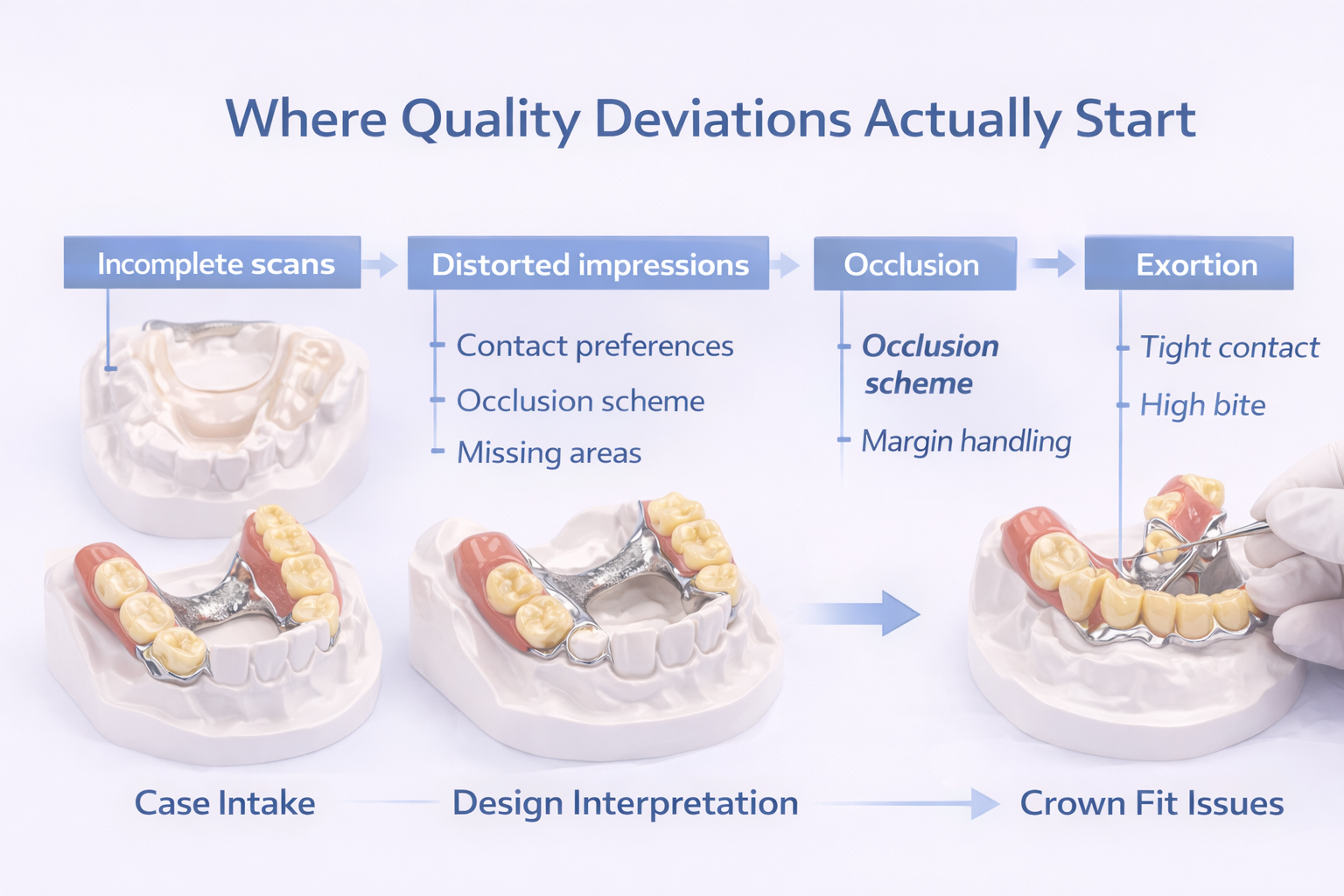
质量偏差实际开始的地方
大多数偏差并不是从最后开始的。
它们从早期阶段开始:
案例受理
· 不完整扫描
· 缺失区域
· 扭曲的印象
这些问题从一开始就带来了不确定性。
牙科实验室案例审查期间做出决定关于:
· 数据是否可用
· 是否需要澄清
· 案件是否继续进行
跳过此步骤会增加下游风险。
设计解读
即使有完整的数据,解释也很重要:
· 接触松紧偏好
· 咬合方案
· 边距处理
此处的微小差异会影响最终行为。
材料处理、整理和调整可以引入进一步的变化。
牙科实验室质量控制应检查哪些内容
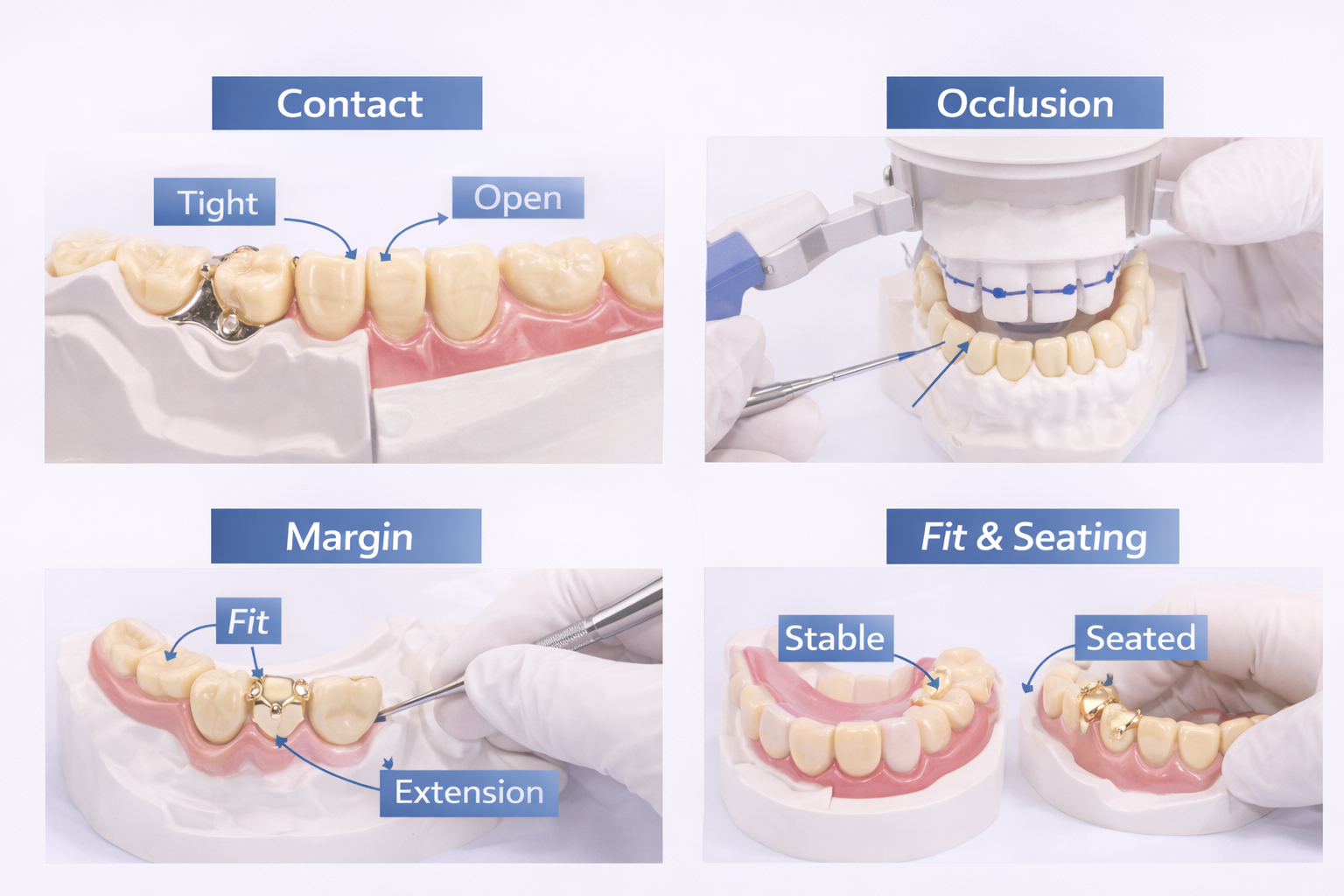
要正确理解质量控制,有助于了解实际评估的内容。
联系方式
接触不应该简单地“紧”或“开”。
它们应该在可控范围内:
· 太紧 → 座位困难
· 太开放→食物嵌塞
遮挡
必须根据所提供的咬合来评估咬合。
重要因素包括:
· 联系方式分布
· 干扰点
· 功能运动
边距
边距评估包括:
· 连续性
· 适配
· 扩展
即使很小的误差也会影响长期性能。
适合和座位
修复体应无阻力就位。
不合适的指标包括:
· 摇滚
· 座位不完整
· 接触不均匀
检查与控制:关键区别
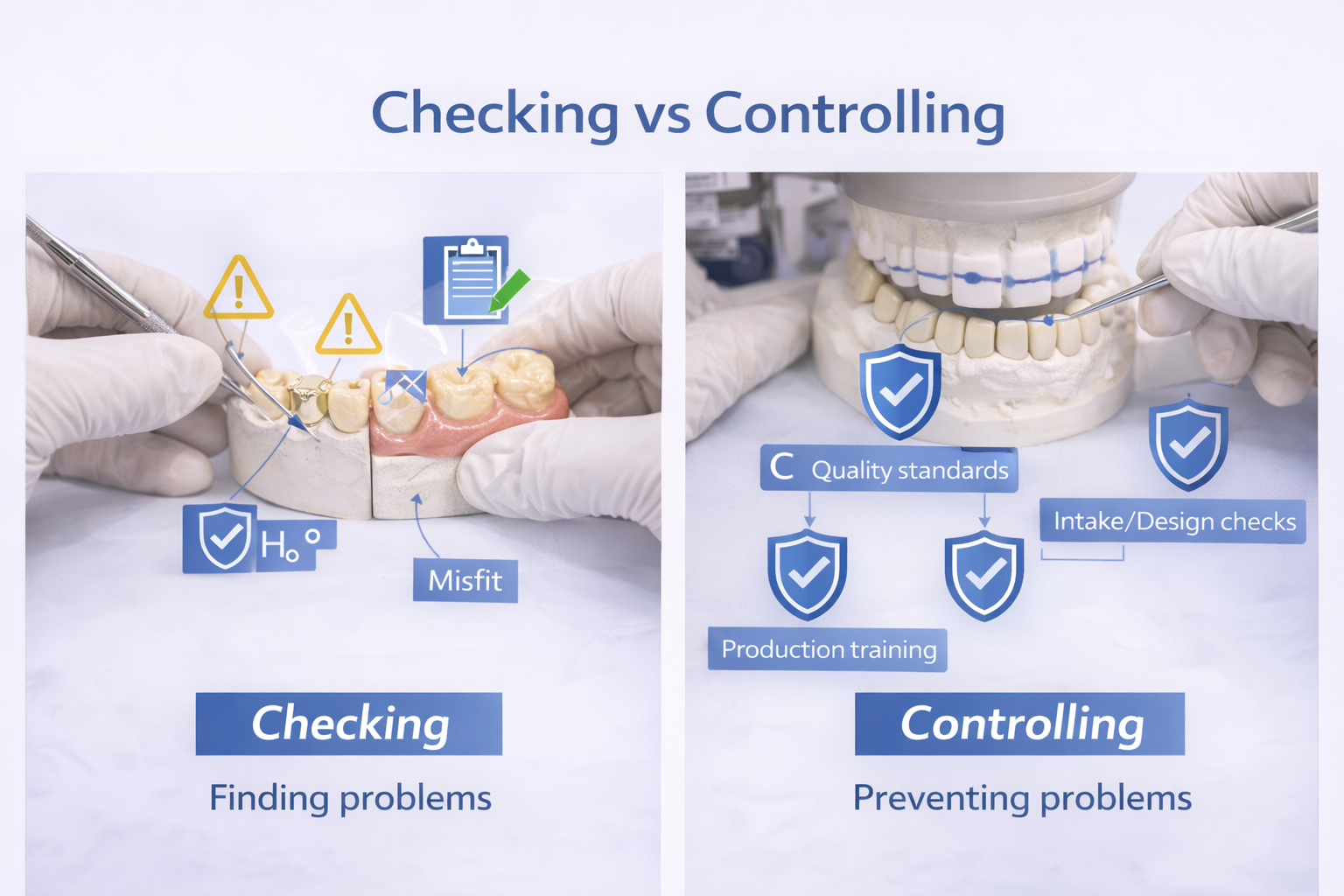
检查和控制之间有一个重要的区别。
<正文>
|
检查
|
控制
|
|
生产后发生
|
发生在制作之前和制作期间
|
|
识别问题
|
防止出现问题
|
|
反应式
|
主动
|
仅基于检查的工作流程永远落后一步。
基于控制的工作流程减少出现问题的可能性。
为什么有些实验室有质量控制——但仍然感觉不稳定
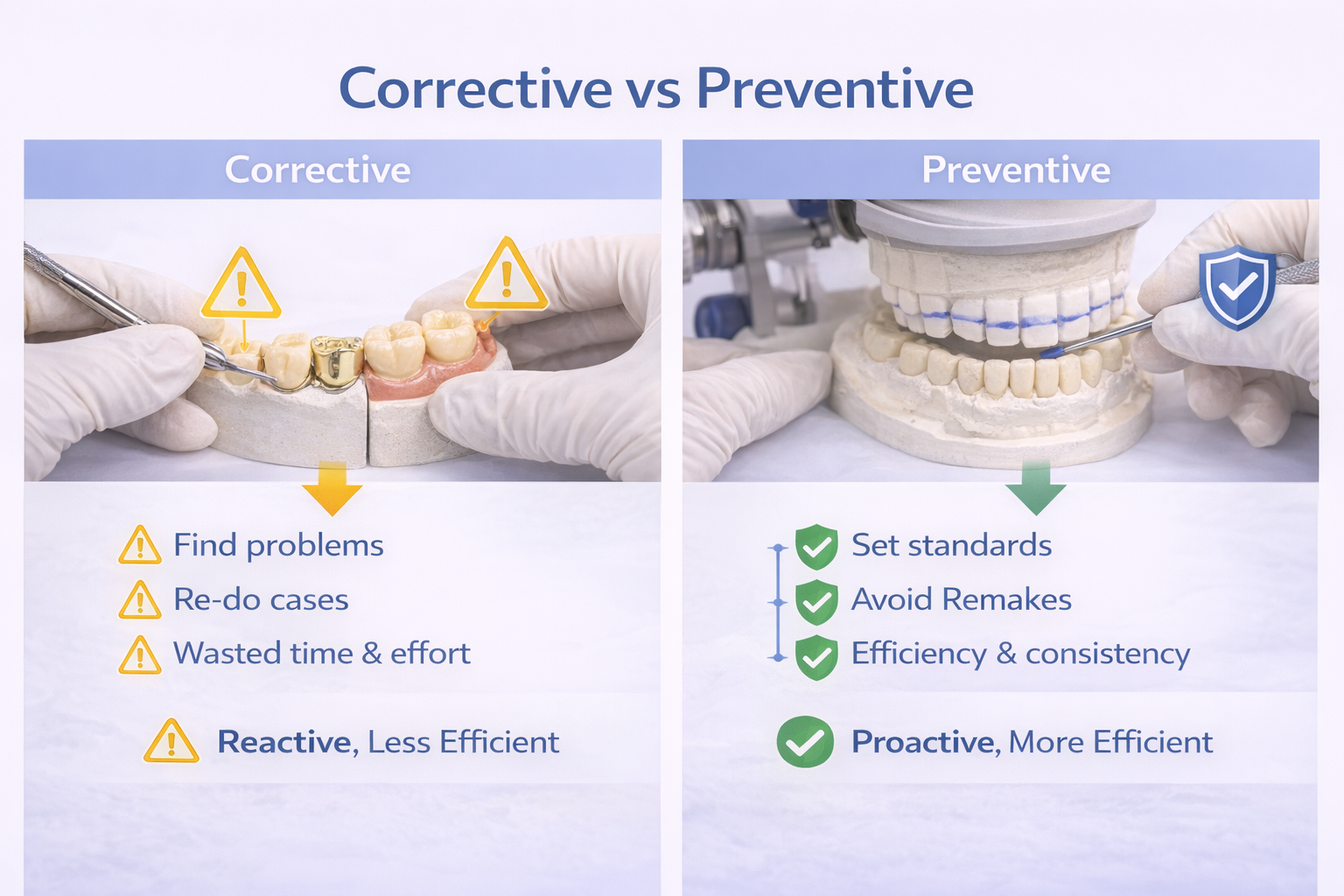
Many labs have a QC step.
But not all achieve consistent outcomes.
The difference lies in how QC is applied.
QC as a formality
In some workflows, QC exists but is limited to:
· Visual inspection
· Basic checks
Without integration into earlier stages,its impact is limited.
Lack of upstream control
If intake and design decisions are not standardized,variation accumulates before QC begins.
Dependence on individuals
When outcomes rely heavily on individual technicians,consistency becomes difficult to maintain.
Having QC is not enough.It must be part of a system.
How Quality Control Should Be Built Into the Workflow
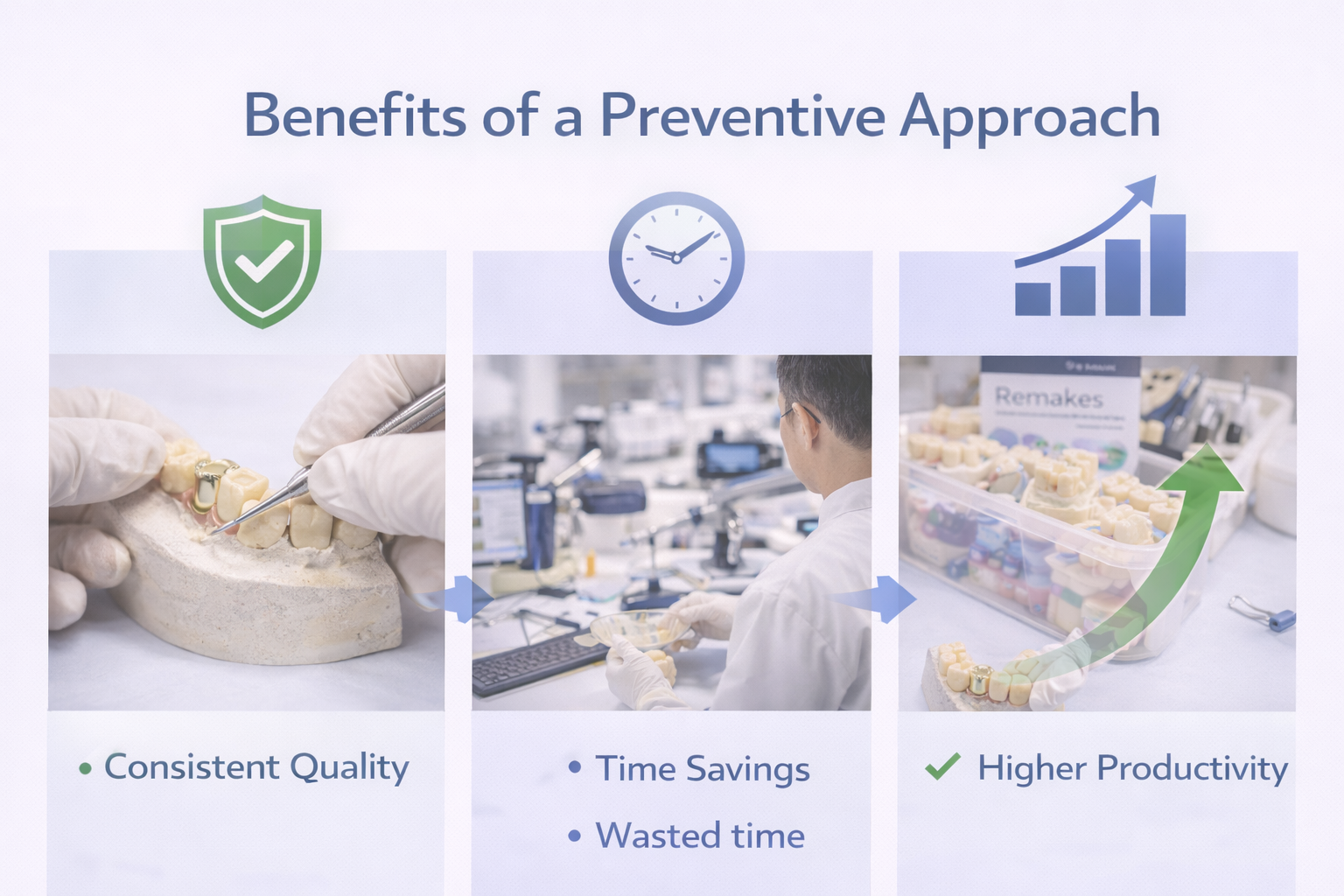
Effective QC is distributed across the entire process.
Intake QC
· Verify scan completeness
· Identify missing data
· Assess bite reliability
Design QC
· Evaluate feasibility
· Confirm contact and occlusion strategy
· Identify potential risks
Production QC
· Monitor execution
· Maintain consistency in shaping and finishing
Final QC
· Verify outcome
· Confirm readiness for delivery
QC is not a step.It is a structure applied across steps.
How This Is Applied in Daily Production
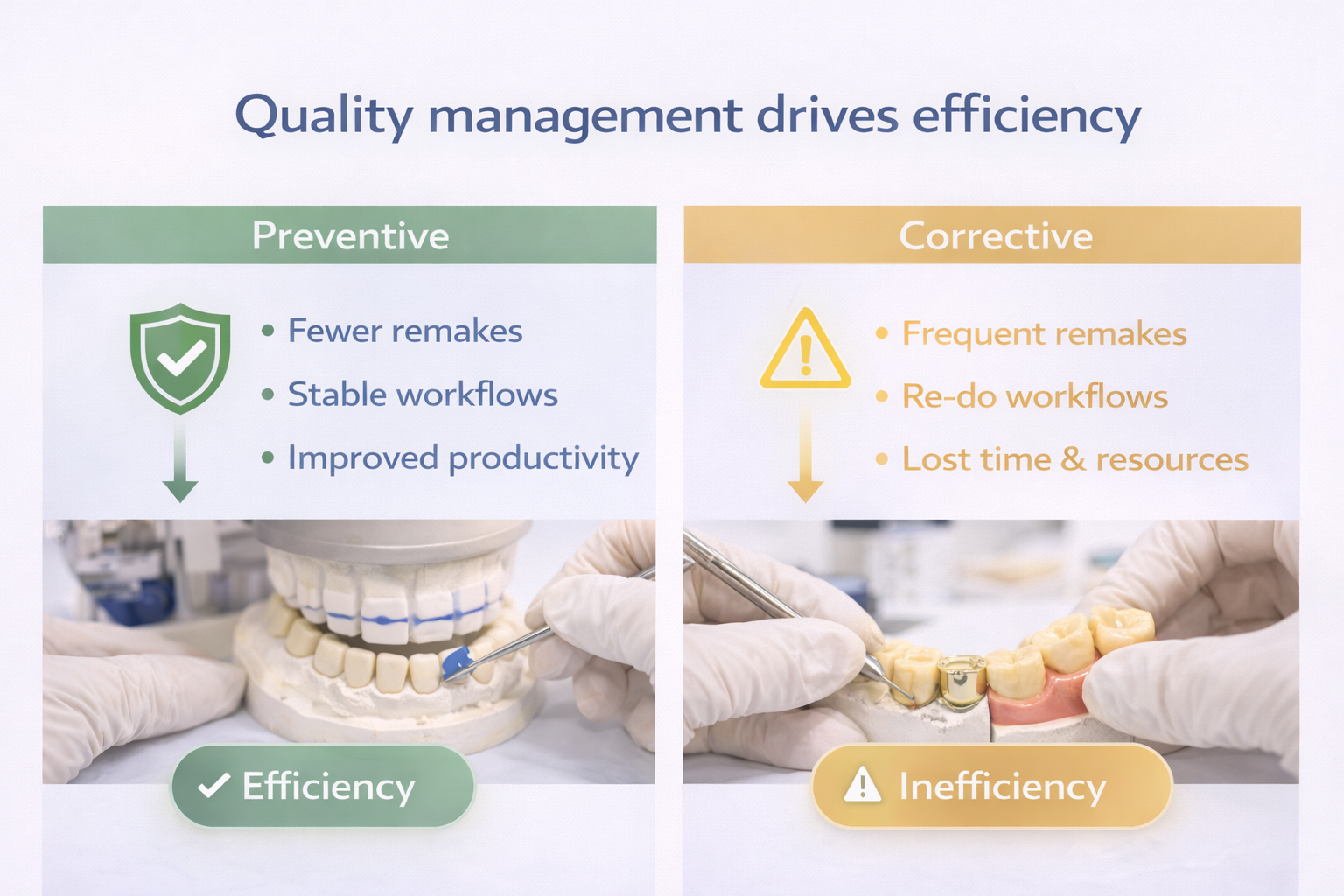
In higher-volume environments, consistency depends less on individual techniqueand more on how decisions are standardized.
In daily production, it is common to encounter:
· Incomplete data
· Unclear instructions
· Variations in clinical preference
To manage this, workflows are structured to:
· Identify issues early
· Standardize decision criteria
· Apply multiple checkpoints
This approach supports more predictable outcomes,especially when handling cases across different markets and clinical expectations.
Why Consistency Matters More Than Perfection
Perfection is not always achievable in dental restorations.
Every case includes variables:
· Patient anatomy
· Bite registration
· Clinical preparation
What matters more is consistency.
Clinicians benefit from:
· Predictable contact behavior
· Stable occlusion
· Reliable seating
Consistency reduces adjustment time.It improves efficiency.
How Clinics Can Evaluate a Lab’s Quality Control System
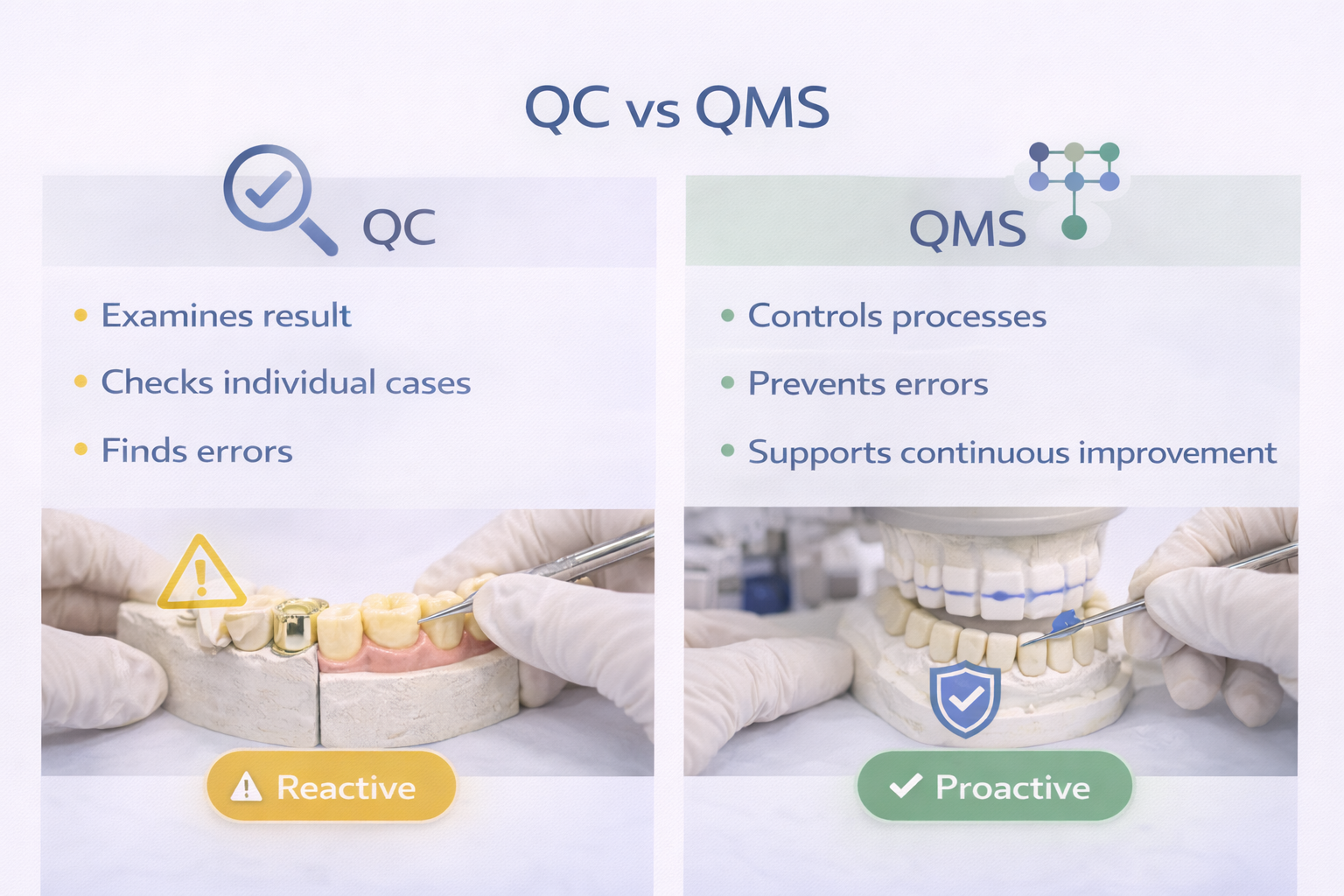
Instead of asking whether a lab has QC,it is more useful to understand how it works.
Questions to consider:
· Is case review performed before design?
· Are issues identified and communicated early?
· Is QC applied only at the end, or throughout the process?
· Are decisions standardized or technician-dependent?
Practical indicators:
· Fewer unexpected adjustments
· More predictable fit
· Consistent outcomes across cases
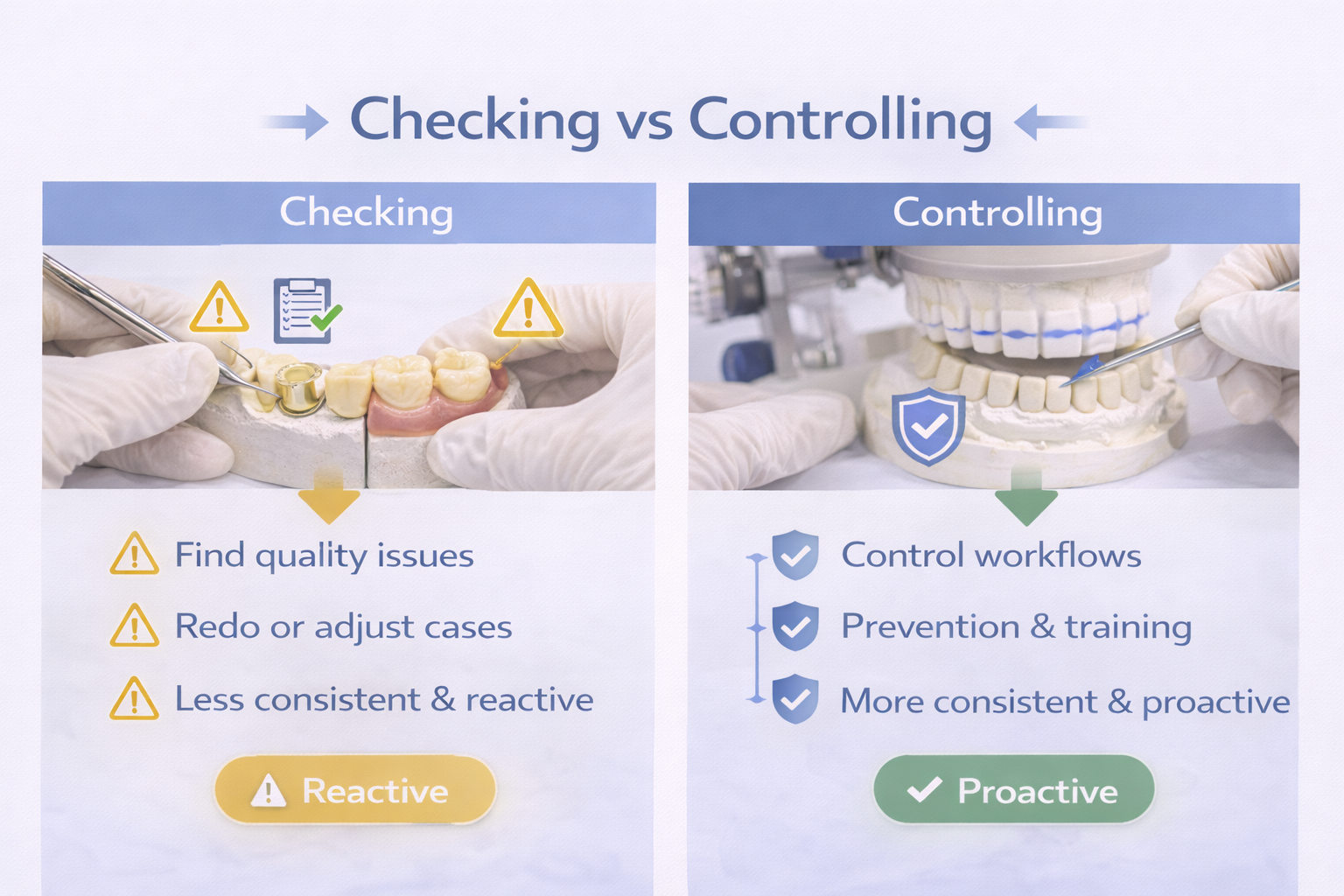
Conclusion: Quality Control Is Built, Not Inspected
A crown does not fail at delivery.
It reflects decisions made throughout the process.
Small deviations — in contact, occlusion, or fit —rarely appear suddenly.
They develop over time,when something was not controlled early enough.
Quality control, in its most effective form,is not about catching errors at the end.
It is about reducing the chance of those errors appearing in the first place.