تعد أطقم الأسنان السفلية واحدة من أكثر عمليات الترميم صعوبة في الأطراف الاصطناعية القابلة للإزالة. حتى بالنسبة لمختبرات طب الأسنان ذات الخبرة، فإن طقم الأسنان الكامل السفلي نادرًا ما يكون مجرد حالة "جعله مناسبًا". فهو يتضمن علم التشريح، وحركة العضلات، والإطباق، وحالة التلال، وموضع الأسنان، وتكيف المريض، والسجلات السريرية، كلها تعمل معًا.
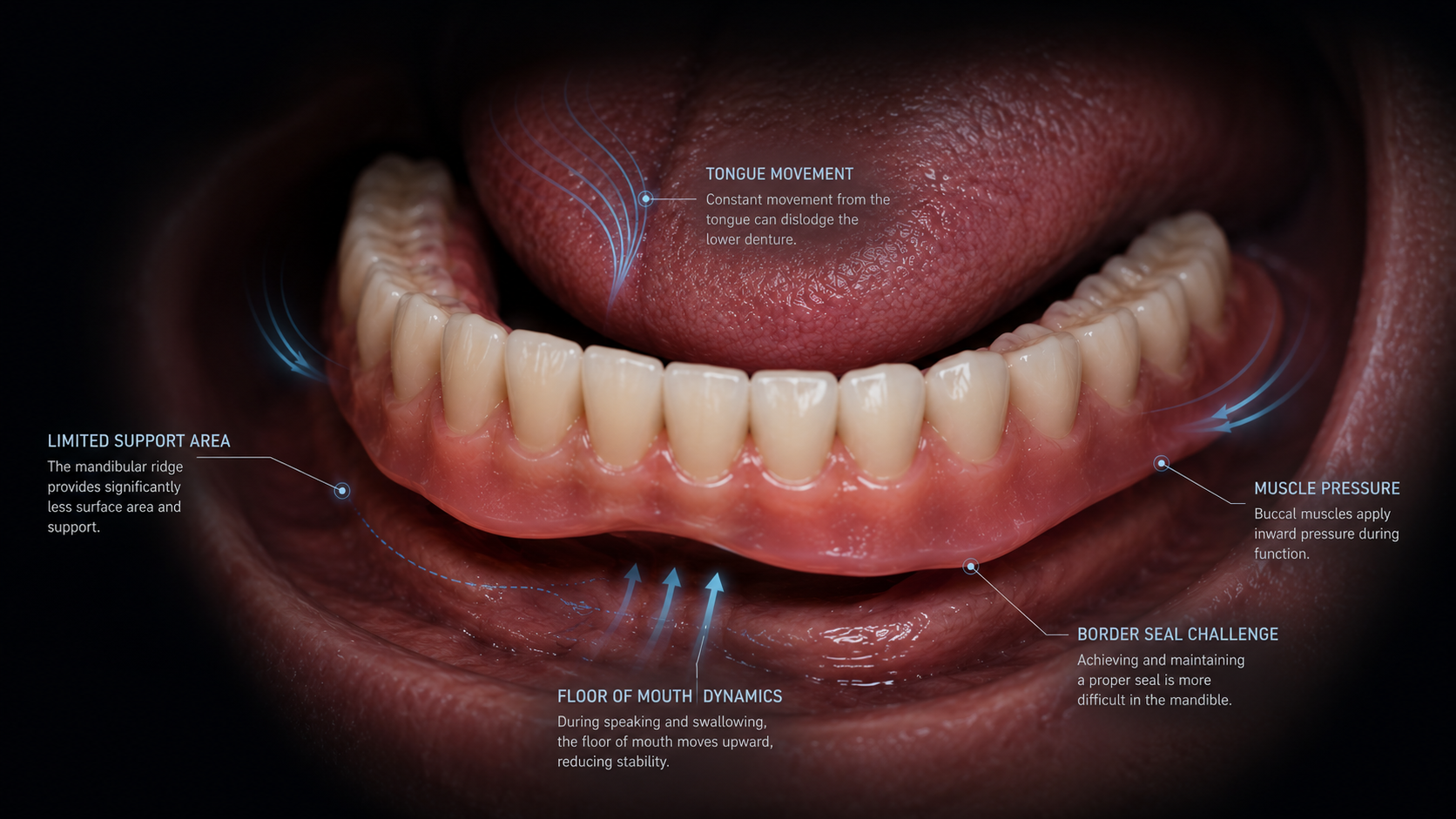
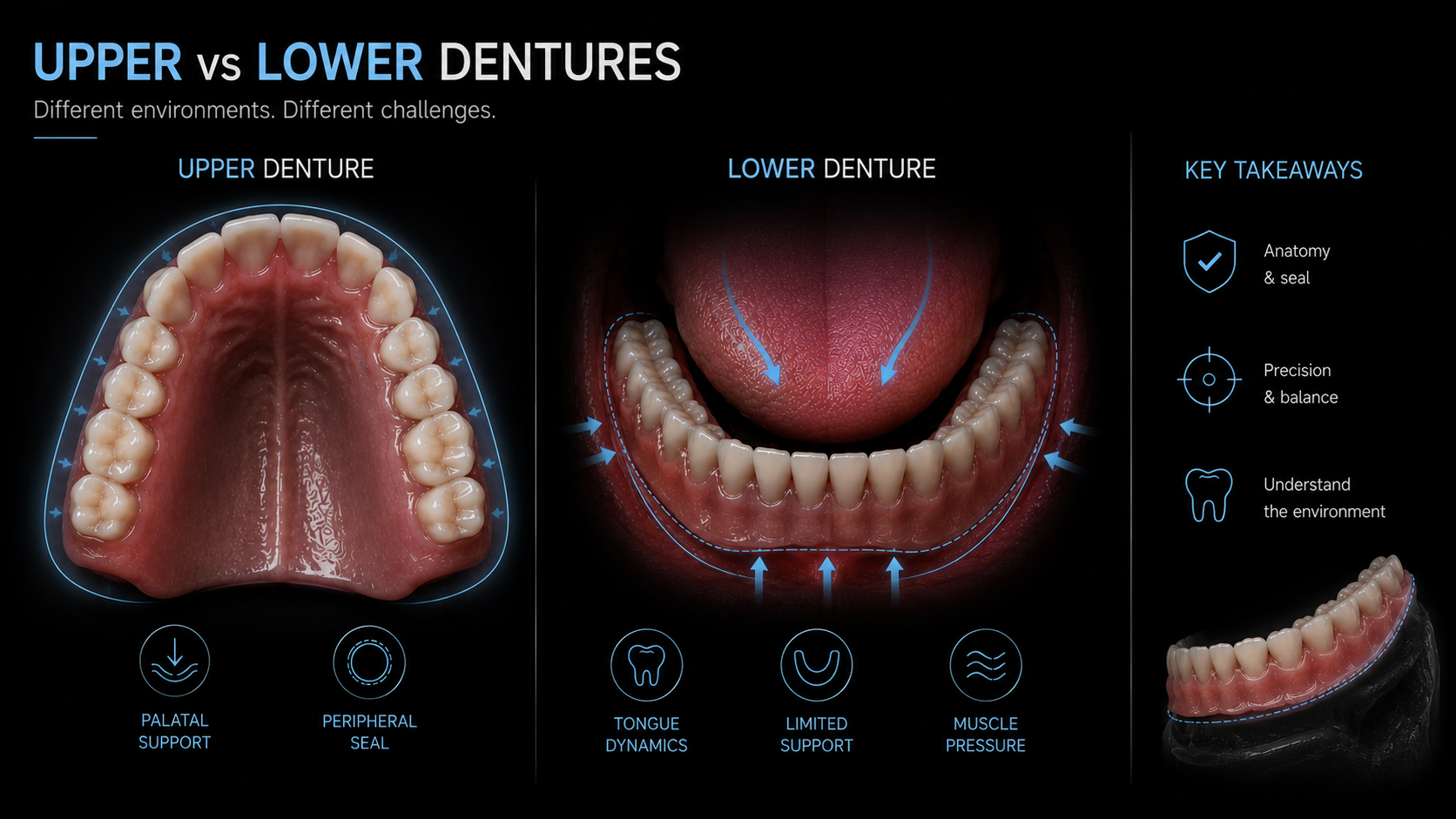
في Times Dental Lab، غالبًا ما نشرح صعوبة طقم الأسنان السفلي بطريقة واحدة بسيطة: عادةً ما يحتوي طقم الأسنان العلوي على مساحة سطح أكبر ودعم حنكي، بينما يجب أن يعمل طقم الأسنان السفلي في مساحة أكثر نشاطًا. اللسان يتحرك . تتحرك أرضية الفم. تطبق الخدين والشفاه الضغط. قد تكون الحافة مسطحة أو مُمتصة. يجب أن يظل طقم الأسنان مستقرًا أثناء التحدث والبلع والمضغ والتكيف.
وهذا هو السبب في أن استقرار طقم الأسنان السفلي لا يعد مجرد مسألة معالجة مخبرية. إنها نتيجة مشتركة للسجلات السريرية، والقيود التشريحية، والحكم الفني، وتكيف المريض.
لماذا تعتبر أطقم الأسنان السفلية أقل استقرارًا بشكل طبيعي من أطقم الأسنان العلوية
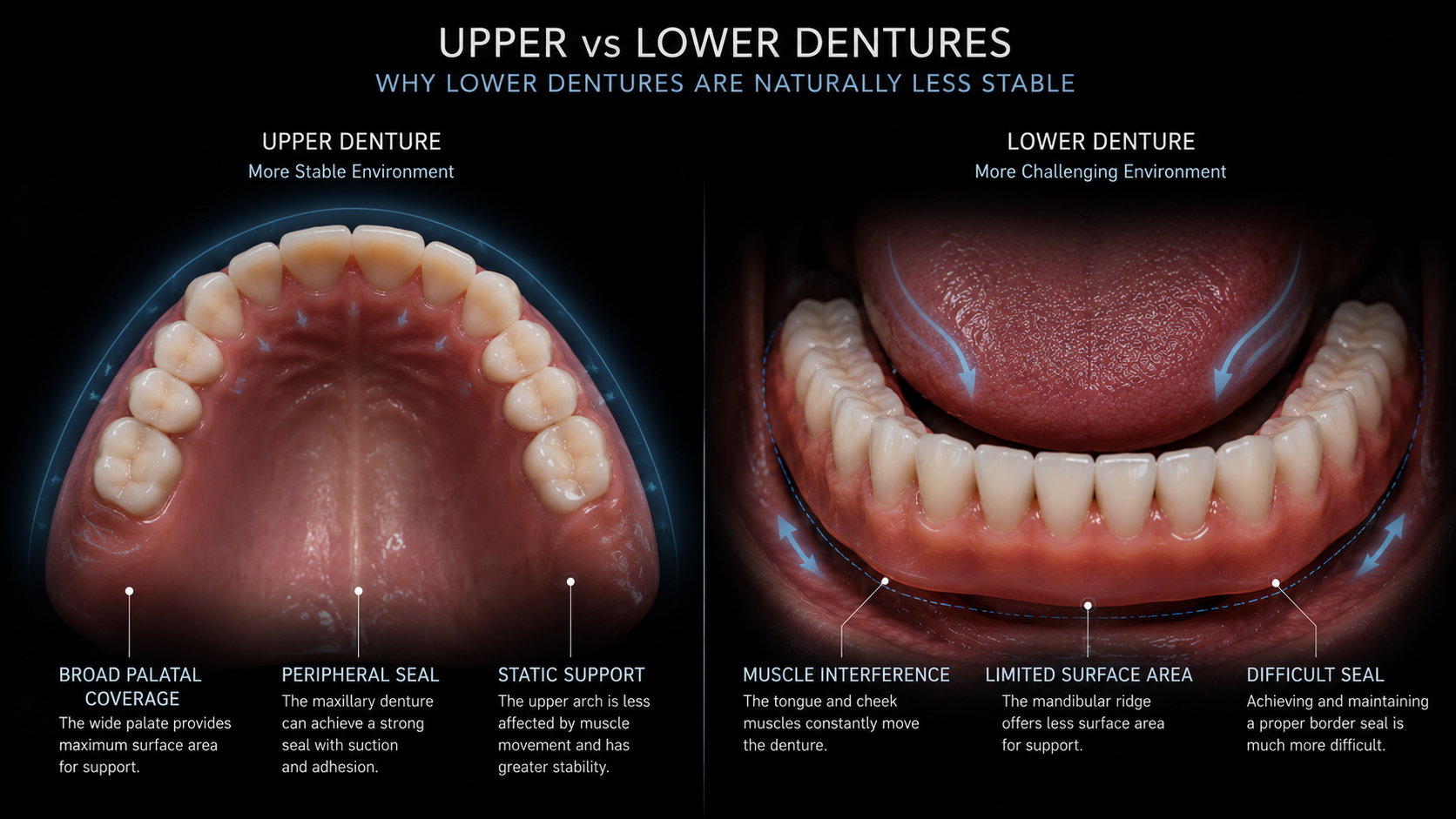
يستفيد طقم الأسنان العلوي عادةً من منطقة حامل طقم أسنان أوسع. يمكن أن يغطي الحنك، ويخلق سطحًا داعمًا أوسع، وغالبًا ما يحقق شفطًا أفضل. يحتوي طقم الأسنان الفكية السفلية على منطقة دعم أصغر بكثير. ولا يمكنه استخدام الحنك للاحتفاظ، ويجب تجنب التدخل في اللسان وأرضية الفم.
هذا الاختلاف التشريحي هو السبب الأول وراء صعوبة تثبيت أطقم الأسنان السفلية. يمنح قوس الفك السفلي المختبر مساحة أقل للعمل ومساحة سطحية أقل لتوزيع القوى. عند تطبيق قوى المضغ، من المرجح أن يميل طقم الأسنان السفلي أو يدور أو يرتفع إذا كانت الأنسجة الداعمة أو الانسداد أو موضع الأسنان غير مثالي.
يلعب اللسان أيضًا دورًا رئيسيًا. في أطقم الأسنان الكاملة الفك السفلي، يمكن أن يؤثر وضع اللسان بشكل مباشر على الاحتفاظ بالأسنان واستقرارها. تشير أدبيات التعويضات السنية السريرية إلى أنه إذا تراجع اللسان عندما يفتح المريض فمه، يصبح من الصعب للغاية الحصول على ختم جيد للحدود اللغوية للطقم السفلي.
هذا هو السبب في أن طقم الأسنان السفلي قد يبدو مقبولاً في النموذج ولكنه يشعر بعدم الاستقرار في الفم. النموذج ثابت. الفم ليس كذلك.
التحديات التقنية الرئيسية في حالات أطقم الأسنان السفلية
1. يصعب التحكم في ختم الحدود
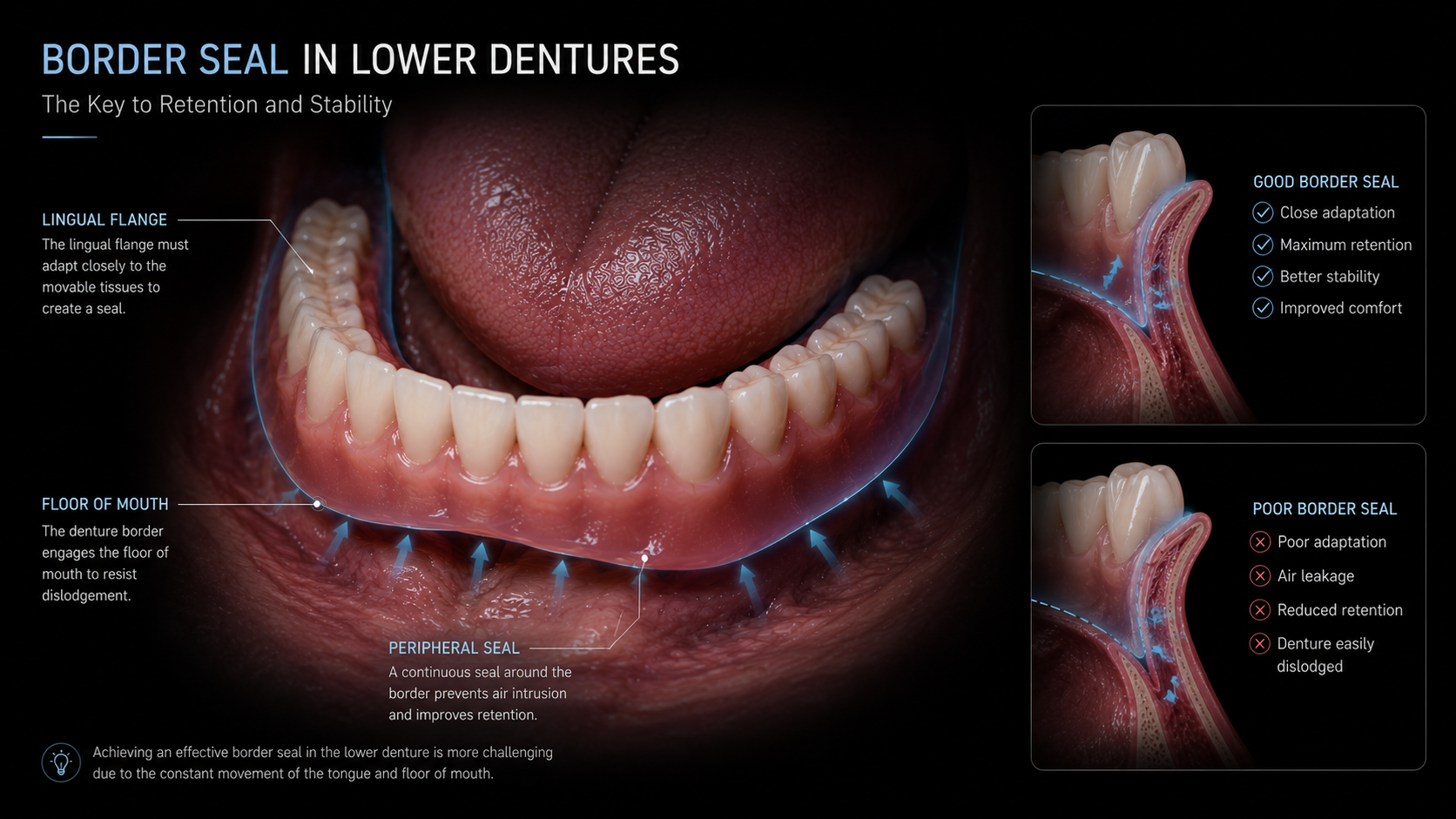
يعد ختم الحدود أحد أهم العوامل في الاحتفاظ الكامل بالأسنان. بالنسبة لأطقم الأسنان العلوية، غالبًا ما يوفر الختم المحيطي والختم الحنكي الخلفي دعمًا أكثر قابلية للتنبؤ به. بالنسبة لأطقم الأسنان السفلية، تكون المنطقة الحدودية أكثر ديناميكية.
يجب أن تعمل الحافة اللسانية حول اللسان وأرضية الفم. يجب أن تتجنب الحافة الشدقية تداخل عضلات الخد. يجب أن يوازن المختبر بين الإرشاد والراحة. إذا كانت الحدود قصيرة جدًا، فقد يكون الاحتفاظ بها ضعيفًا. إذا كانت الحدود طويلة جدًا أو ضخمة جدًا، فقد يرتفع طقم الأسنان أثناء الكلام أو البلع أو حركة اللسان.
يعد هذا أحد الأسباب الأكثر شيوعًا لصعوبة أطقم الأسنان السفلية. إن حدود طقم الأسنان السفلية ليست مجرد حافة مادية. وهي منطقة يجب أن تعمل مع الأنسجة الرخوة المتحركة.
من منظور المختبر، يمكن للاختلافات الصغيرة في تصميم الحدود تغيير النتيجة النهائية. قد لا يكون التمدد الزائد الطفيف واضحًا على الجبيرة، لكنه قد يصبح واضحًا عندما يتحدث المريض أو يبتلع. قد يبدو النقص الطفيف في التمدد مريحًا، ولكن قد يشكو المريض من أن طقم الأسنان السفلي يشعر بالارتخاء.
2. تؤثر حركة اللسان باستمرار على الاستقرار
يوضع طقم الأسنان السفلي بجوار إحدى العضلات الأكثر نشاطًا في الفم: اللسان.
أثناء التحدث والبلع والمضغ والراحة، يتغير موضع اللسان. يمكن أن يساعد في تثبيت طقم الأسنان السفلي عندما يستقر بشكل طبيعي على الحافة اللسانية. ولكن يمكن أيضًا أن يؤدي ذلك إلى إزاحة طقم الأسنان إذا كان شكل الحافة أو مساحة اللسان أو موضع السن غير مناسب.
وهذا هو السبب في أن تصميم الحافة اللسانية لا يقتصر فقط على السُمك. يتعلق الأمر باحترام مساحة اللسان. إذا كانت الشفة اللسانية كبيرة جدًا، فقد يشعر المريض بالازدحام. إذا كان رقيقًا جدًا أو غير ممتد بشكل كافٍ، فقد يفقد طقم الأسنان الدعم. إذا تم وضع اللسان بعيدًا جدًا إلى الخلف، يصبح من الصعب الحفاظ على الختم اللغوي.
بالنسبة للفنيين ذوي الخبرة، يعد هذا أحد المجالات التي يكون فيها الحكم مهمًا. طقم الأسنان السفلي لا ينبغي أن يحارب اللسان. ويجب أن يعمل مع اللسان قدر الإمكان.
3. يؤدي ارتشاف الحافة الشديدة إلى تقليل الدعم
تصبح العديد من حالات أطقم الأسنان السفلية صعبة بسبب إعادة امتصاص حافة الفك السفلي. توفر الحافة العالية والواسعة دعمًا أفضل. الحافة المسطحة أو شديدة الامتصاص تمنح طقم الأسنان مقاومة أقل ضد الحركة.
من المعروف على نطاق واسع أن حواف الفك السفلي المعاد امتصاصها بشدة تمثل تحديًا كبيرًا في أطقم الأسنان الكاملة التعويضات السنية لأنها تؤثر على الدعم والاحتفاظ والاستقرار. (Lippincott المجلات)
في هذه الحالات، حتى طقم الأسنان الجيد الصنع قد يكون له قيود. قد يناسب طقم الأسنان النموذج، ولكن قد يظل المريض يشعر بالحركة بسبب ضعف الدعم التشريحي. قد تكون الأنسجة الرخوة متحركة. قد تكون الحافة ضيقة. قد تتمتع قاعدة طقم الأسنان بمقاومة رأسية قليلة جدًا.
لهذا السبب لا ينبغي دائمًا الحكم على مشاكل الأسنان السفلية على أنها خطأ معملي بسيط. في بعض الأحيان يكون للحالة نفسها ظروف تشريحية محدودة. يمكن للمختبر تحسين التصميم، لكنه لا يستطيع إنشاء دعم للعظام في حالة عدم وجوده.
4. موضع السن يمكن أن يؤدي إلى استقرار أو كسره
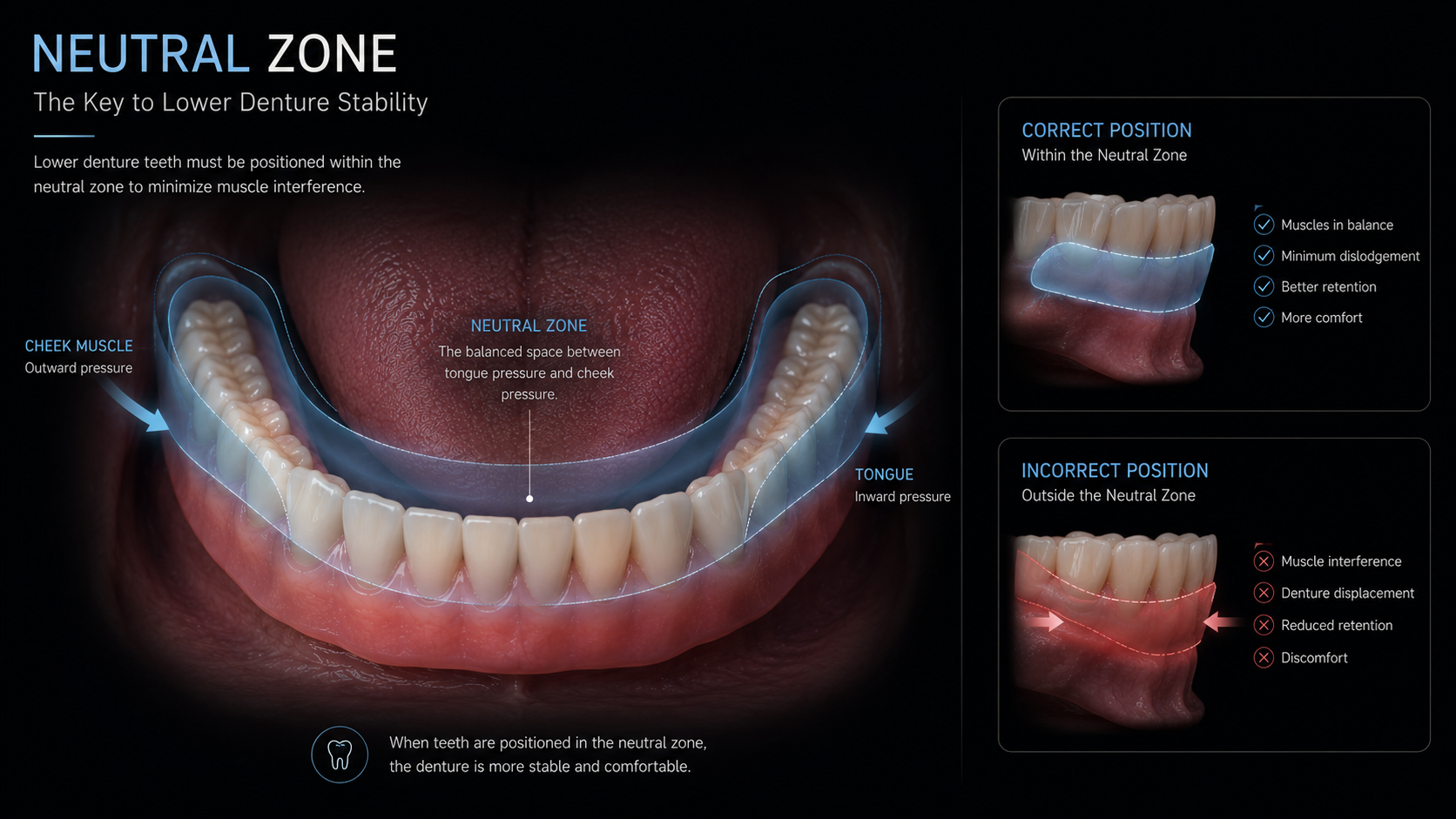
يعد إعداد الأسنان أحد أهم العوامل التقنية في انخفاض ثبات طقم الأسنان.
إذا تم وضع الأسنان الخلفية بعيدًا عن الشدق أو اللسان، فقد تقع قوى المضغ خارج منطقة التلال الداعمة. هذا يمكن أن يسبب البقشيش. إذا تم وضع الأسنان الأمامية بعيدًا جدًا عن الناحية الجمالية، فقد يفقد طقم الأسنان ثباته أثناء الوظيفة. إذا لم يتم التحكم في مستوى الإطباق، فقد يهتز طقم الأسنان أثناء المضغ.
هذا هو المكان الذي تصبح فيه المنطقة المحايدة مهمة. المنطقة المحايدة هي المنطقة التي تتم فيها موازنة القوى الخارجية من اللسان مع القوى الداخلية من الخدين والشفتين. يجب ترتيب أسنان الأسنان بشكل مثالي داخل هذه المنطقة بحيث تساعد قوى العضلات على تثبيت طقم الأسنان بدلاً من إزاحته.
بالنسبة لأطقم الأسنان السفلية، يعد هذا المفهوم مهمًا بشكل خاص. طقم الأسنان السفلي محاط بالعضلات المتحركة. إذا تم وضع الأسنان خارج المنطقة الوظيفية للمريض، فقد يبدو طقم الأسنان جيدًا ولكن أداءه سيئ.
في Times Dental Lab، كثيرًا ما نرى هذا التعارض في حالات حقيقية. قد يطلب الطبيب جعل الأسنان أكثر وضوحًا، أو أكثر تقدمًا، أو أكثر تشابهًا مع طقم الأسنان القديم. ولكن إذا كان طقم الأسنان القديم غير مستقر بالفعل، فإن نسخ موضع السن يمكن أن يكرر نفس المشكلة. ولهذا السبب فإن التواصل الفني ضروري قبل المعالجة النهائية.
5. تكون أخطاء الإطباق أكثر وضوحًا في أطقم الأسنان السفلية
الانسداد مهم في جميع أطقم الأسنان، لكن أطقم الأسنان السفلية أقل تسامحًا.
قد لا يبدو الاتصال الصغير المبكر خطيرًا على المفصل، ولكنه في الفم يمكن أن يقلب طقم الأسنان السفلي. التوازن الثنائي غير المتساوي قد يسبب الحركة أثناء المضغ. الاتصال الشديد على جانب واحد قد يخلق الضغط وعدم الاستقرار. إذا كان تسجيل العضة غير دقيق، فقد لا يعمل طقم الأسنان النهائي كما هو متوقع.
الإطباق المتوازن مهم لأن أطقم الأسنان السفلية تعتمد على توزيع القوة المستقر. عندما تكون قوى الإطباق غير متوازنة، قد يتحرك طقم الأسنان. قد يصف المريض ذلك بأنه ارتخاء أو تأرجح أو ألم أو عدم القدرة على المضغ.
لهذا السبب يعد تسجيل العضات أحد أهم السجلات السريرية لأطقم الأسنان السفلية. إذا كان سجل اللدغة غير مستقر، فيجب على المختبر توخي الحذر. قد يبدو طقم الأسنان المصنوع من لدغة غير مستقرة مقبولاً، ولكن قد لا يمكن التنبؤ بوظيفته.
لماذا تبدو بعض أطقم الأسنان السفلية مستقرة في النموذج ولكنها فضفاضة في الفم
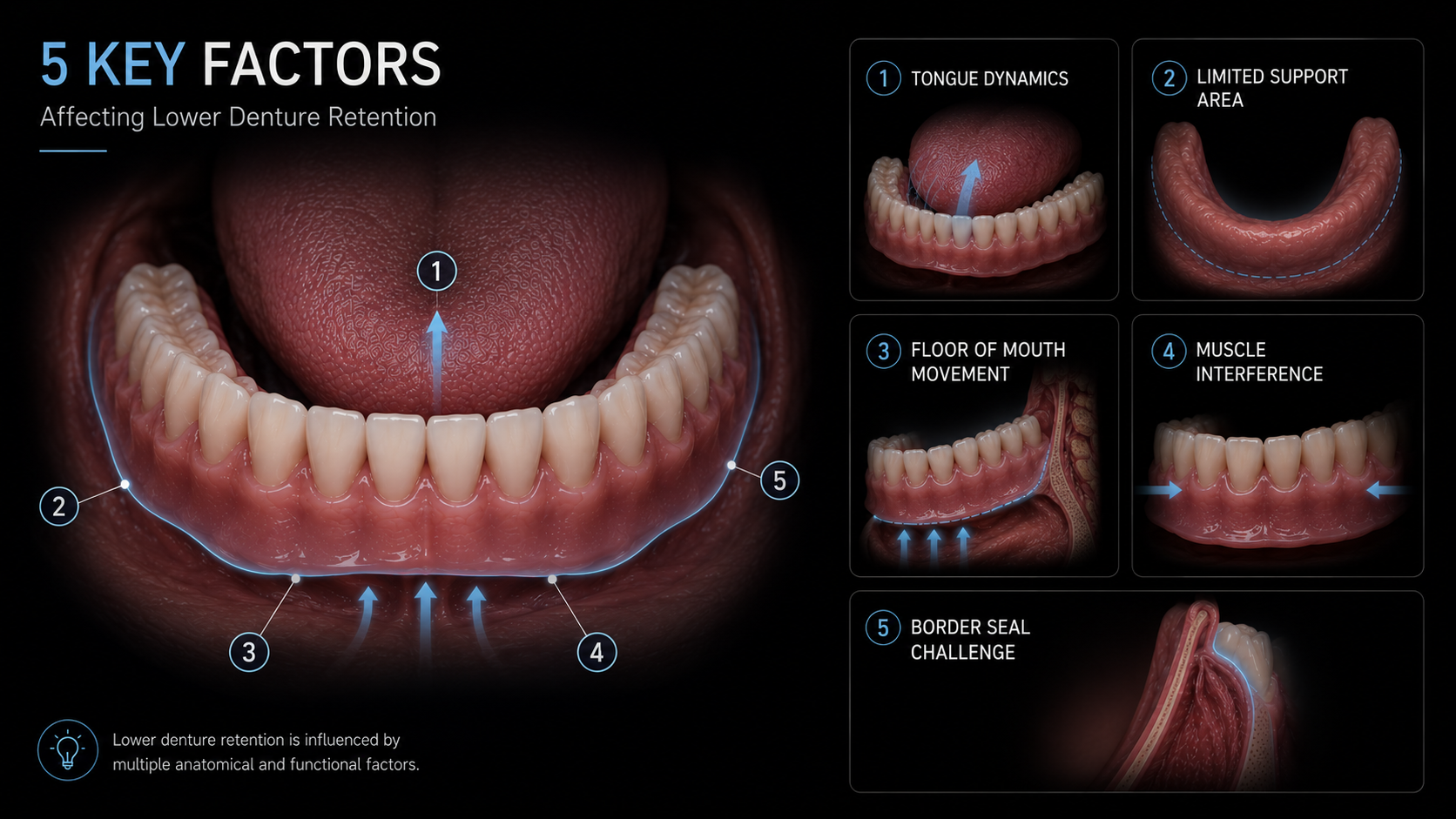
هذا سؤال شائع من العيادات.
قد يتناسب طقم الأسنان السفلي بشكل مثالي مع النموذج. قد لا الصخور. القاعدة قد تتكيف بشكل جيد. قد يبدو إعداد الأسنان متوازنًا. ولكن بعد الولادة قد تبلغ المريضة عن الحركة.
السبب بسيط: النموذج يظهر التشريح الثابت فقط. ولا يُظهر حركة اللسان الكاملة، أو حركة أرضية الفم، أو حالة اللعاب، أو نمط البلع، أو ضغط الخد، أو تحكم المريض في عضلاته.
يعمل طقم أسنان الفك السفلي في بيئة ديناميكية. أثناء الكلام، قد يضغط اللسان على حافة اللسان. أثناء البلع، قد ترتفع أرضية الفم. أثناء المضغ، قد تؤدي القوة غير المتساوية إلى قلب طقم الأسنان. أثناء التكيف المبكر، قد لا يعرف المريض بعد كيفية التحكم في طقم الأسنان بالعضلات.
لهذا السبب يجب تقييم طقم الأسنان السفلي خارج نطاق الجبيرة. إن ملاءمة النموذج ضرورية، ولكنها ليست كافية. ويحتاج طقم الأسنان السفلي الجيد أيضًا إلى الاستقرار الوظيفي.
من منظور المختبر، نقوم عادةً بفصل عدم استقرار طقم الأسنان السفلي إلى عدة أسباب محتملة:
- مشكلة التكيف الأساسي
- مشكلة تمديد الحدود
- مشكلة الانسداد
- مشكلة في موضع الأسنان
- حدود دعم التلال
- مشكلة تكيف المريض
- سجل سريري غير دقيق
هذا التمييز مهم. إذا كانت المشكلة الحقيقية هي الانسداد، فإن تعديل الحدود قد لا يحلها. إذا كانت المشكلة الحقيقية هي تداخل اللسان، فإن إعادة صنع القاعدة دون تغيير تصميم الحافة قد يكرر نفس المشكلة. إذا كانت المشكلة الحقيقية هي ارتشاف التلال الشديد، فيجب إدارة التوقعات بعناية.
كيف تحدد المعامل السبب الحقيقي لعدم استقرار طقم الأسنان السفلي
المختبرات ذات الخبرة لا تسأل فقط، "هل طقم الأسنان مفكك؟" يسألون: "متى يتحرك؟"
غالبًا ما يكشف هذا السؤال عن السبب الحقيقي.
إذا تحرك أثناء المضغ
عندما يتحرك طقم الأسنان السفلي بشكل رئيسي أثناء المضغ، غالبًا ما يرتبط السبب بالإطباق أو موضع السن أو دعم الحافة.
قد يقوم المعمل بالتحقق من:
- ما إذا كانت اللقمة متساوية
- ما إذا كانت جهات الاتصال الخلفية متوازنة
- ما إذا كان أحد الجانبين يزداد ثقلًا
- سواء تم وضع الأسنان فوق التلال
- ما إذا كان طقم الأسنان يميل تحت القوة
إذا كان طقم الأسنان ثابتًا أثناء الراحة ولكنه يتحرك أثناء المضغ، فيجب مراجعة عملية الإطباق بعناية.
إذا تحرك أثناء التحدث أو البلع
عندما تحدث الحركة أثناء التحدث أو البلع، فقد تكون المشكلة مرتبطة بامتداد الحدود، أو محيط شفة اللسان، أو مساحة اللسان.
قد يأخذ المختبر في الاعتبار ما يلي:
- سواء كانت الحافة اللغوية ممتد
- ما إذا كانت أرضية الفم ترفع طقم الأسنان
- ما إذا كان اللسان به مساحة كافية
- ما إذا كان موضع لسان المريض هو غير مواتية
- سواء كان السطح المصقول ضخمًا جدًا
في هذه الحالات، قد يبدو طقم الأسنان ثابتًا على النموذج ولكنه يفشل أثناء الوظيفة.
إذا شعرت بالارتخاء فورًا بعد الإدراج
إذا شعرت أن طقم الأسنان السفلي مفكك على الفور، قبل المضغ أو التحدث، فقد تتضمن المشكلة تكيف القاعدة، أو دقة الانطباع، أو امتداد الحدود، أو حالة التلال.
يمكن للمختبر مراجعة:
- جودة الظهور
- دقة الإرسال
- المعالجة الأساسية
- تكيف الأنسجة
- امتداد الحافة
- تشريح الحافة
في بعض الأحيان تكون هذه مشكلة تلفيق. في بعض الأحيان تكون مشكلة في السجل السريري. في بعض الأحيان يكون ذلك بمثابة قيود تشريحية.
إذا لم يتمكن المريض من التكيف بعد عدة تعديلات
إذا تم تعديل طقم الأسنان عدة مرات ولكن لا يزال يشعر بعدم الاستقرار، فقد تكون المشكلة أكثر تعقيدًا. وقد يتضمن مزيجًا من ارتشاف التلال، أو ضعف التحكم العصبي العضلي، أو التوقعات غير الواقعية، أو سجلات العض غير المستقرة.
هذا هو المكان الذي يصبح فيه التواصل بين العيادة والمختبر مهمًا للغاية. يمكن أن تساعد الصور وعلامات مؤشر الضغط وسجلات العض والتعليقات بجانب الكرسي المختبر على فهم ما يحدث في الفم.
لماذا يعد تكيف المريض مهمًا أكثر مما يتوقعه الكثير من الناس
غالبًا ما يتم الاستهانة بتكيف المريض.
طقم الأسنان السفلي الجديد ليس مجرد طرف اصطناعي. وهو أيضًا شيء يجب على المريض أن يتعلم التحكم فيه. يحتاج اللسان والخدين والشفتين إلى وقت للتنسيق مع طقم الأسنان. قد يعاني مرتدي طقم الأسنان لأول مرة أكثر من مرتدي طقم الأسنان ذوي الخبرة. قد يقارن مرتدي الجهاز على المدى الطويل طقم الأسنان الجديد مع طقم أسنان قديم تكيفت عضلاته معه على مدى سنوات عديدة.
وهذا هو السبب في أن طقم الأسنان المحسّن تقنيًا قد يظل غريبًا في البداية. إذا كان طقم الأسنان القديم مهترئًا أو مغلقًا أو غير مستقر أو تم تعديله بشكل كبير، فقد تكون عضلات المريض قد تكيفت مع تلك الحالة القديمة. قد يبدو طقم الأسنان الجديد ذو موضع الأسنان المصحح أو VDO غير مألوف.
لا ينبغي تجاهل فترة التكيف. قد تتحسن بعض الحركة المبكرة عندما يتعلم المريض التحكم في طقم الأسنان. ومع ذلك، يجب تقييم الحركة المستمرة أو الألم أو عدم القدرة على العمل.
من وجهة نظر مهنية، لا ينبغي استخدام تكيف المريض كذريعة لكل مشكلة. ولكن ينبغي اعتباره جزءًا من التشخيص الكامل.
لماذا يختلف نجاح طقم الأسنان السفلي من شخص لآخر
لا يوجد تصميم عالمي للأسنان السفلية يناسب كل مريض.
يتمتع بعض المرضى بحافة عريضة وتحكم جيد في العضلات. لدى البعض حافة مسطحة، أو أنسجة متحركة، أو جفاف الفم، أو حركة لسان قوية، أو ارتشاف طويل الأمد. يمكن لبعض المرضى التكيف بسرعة. ويحتاج البعض الآخر إلى مزيد من المواعيد والتعديل الدقيق.
ولهذا السبب تتجنب المختبرات ذات الخبرة معالجة كل حالة من حالات أطقم الأسنان السفلية بنفس الطريقة.
تتضمن عوامل الحالة المهمة ما يلي:
- ارتفاع التلال
- عرض التلال
- جودة الأنسجة الرخوة
- حالة اللعاب
- موضع اللسان
- نشاط عضلات الخد
- دقة التسجيل
- تاريخ طقم الأسنان السابق للمريض
- التوقعات الجمالية
- نمط المضغ
طقم الأسنان السفلي ليس مجرد منتج. وهو جهاز وظيفي يجب أن يتوافق مع تشريح المريض وسلوكه.
لماذا لا تزال أطقم الأسنان الرقمية تتطلب حكمًا فنيًا
سير عمل الأجهزة الرقمية يمكن أن يحسن الاتساق. يمكنها تقليل بعض الأخطاء اليدوية وتحسين التكرار وتسهيل تعديلات التصميم. تساعد السجلات الرقمية أيضًا في توصيل الحالة وإعادة إنتاجها.
لكن أطقم الأسنان الرقمية لا تزيل الصعوبة الفنية لأطقم الأسنان السفلية.
يلتقط المسح التشريح في لحظة معينة. لا يلتقط حركة العضلات بشكل كامل. يمكن أن تساعد البرامج في تصميم طقم الأسنان، لكنها لا تستطيع التنبؤ بشكل كامل بكيفية تصرف اللسان أثناء الكلام والبلع. قد يبدو الإعداد الرقمي نظيفًا على الشاشة، ولكن لا يزال الفني بحاجة إلى الحكم على ما إذا كان موضع السن ومحيط الحافة والإطباق مناسبًا أم لا.
ينطبق هذا بشكل خاص على أطقم الأسنان السفلية.
سير العمل الرقمي هو أداة. وهي ليست بديلاً للتجربة القابلة للإزالة.
في Times Dental Lab، نرى أطقم الأسنان الرقمية كوسيلة لتحسين التحكم والتواصل. لكن ثبات طقم الأسنان السفلي لا يزال يعتمد على السجلات السريرية، والحكم التشريحي، وإعداد الأسنان، والتحكم في الانسداد، والتحقق النهائي.
ما تلاحظه المختبرات ذات الخبرة عادة قبل فشل طقم الأسنان السفلي
في كثير من الحالات، تظهر علامات التحذير قبل تسليم طقم الأسنان النهائي.
قد يلاحظ الفنيون ذوو الخبرة في مجال النقل ما يلي:
- سجل العض غير مستقر
- الحافة السفلية مسطحة أو ضيقة
- طقم الأسنان القديم ذو موضع أسنان سيء
- يتم طلب الأسنان الخلفية خارج منطقة الدعم
- تبدو مساحة اللسان محدودة
- قد تتداخل الحافة اللسانية مع الوظيفة
- الطلبات الجمالية قد تقلل من الاستقرار
- the occlusal plane is not ideal
- the lower denture base has limited support
- the case may need try-in verification
These details are important because lower denture problems often begin early. If the lab only checks the final denture, it may be too late to prevent instability.
This is why we believe quality control should not only happen at the end. It should start from case review.
How Experienced Dental Labs Reduce Lower Denture Problems
A lab cannot control every clinical and anatomical factor. But a good lab can reduce risk through a structured process.
1. Careful Case Review
Before production, the lab should review the impression, bite, opposing arch, previous denture information, and doctor’s instructions.
For lower dentures, the technician should pay special attention to:
- ridge condition
- border information
- bite stability
- tooth position request
- old denture reference
- available vertical space
- esthetic requirements
If something is unclear, communication should happen before processing.
2. Accurate Model and Base Control
The denture base must adapt well to the cast. Any distortion in the model, processing, or finishing can affect fit.
For lower dentures, base stability is especially important because the support area is limited. A small error may cause obvious movement.
3. Controlled Border Design
The border must be extended enough for retention but not so much that it interferes with muscles.
This balance is difficult. It requires understanding the anatomy and respecting the clinical impression. In some cases, chairside border molding information is essential.
4. Tooth Setup Within Functional Limits
Tooth position should support stability, not only esthetics.
If posterior teeth are positioned outside the ridge support area, the denture may tip. If anterior teeth are placed too far forward, the lower denture may become unstable. The technician must balance appearance, phonetics, and function.
5. Occlusion Verification
Occlusion must be checked carefully before delivery. For lower dentures, the lab should avoid obvious premature contacts and unstable bite relationships.
Balanced occlusion is not only a textbook idea. It directly affects whether the lower denture stays stable during chewing.
6. Try-in Evaluation
Try-in is extremely valuable for difficult lower denture cases. It allows the clinic and patient to check esthetics, VDO, tooth position, and bite before final processing.
For high-risk lower denture cases, skipping try-in may increase remake risk.
7. Clear Communication With the Clinic
Some lower denture problems cannot be solved by the lab alone. If the ridge is severely resorbed, the bite is unstable, or the patient has unrealistic expectations, the clinic and lab need to discuss the case early.
Good communication helps prevent surprises after delivery.
How Times Dental Lab Approaches Lower Denture Stability
At Times Dental Lab, lower denture cases are handled with a process-driven mindset. We do not see lower dentures as simple acrylic appliances. We see them as functional restorations that require careful judgment at multiple stages.
Our removable team focuses on:
- reviewing case records before production
- checking model accuracy
- controlling base adaptation
- evaluating tooth setup
- checking occlusion before delivery
- communicating when records are unclear
- reviewing remake causes when problems occur
For us, the key is not only making the denture look correct. The key is reducing avoidable risk.
Some instability issues are caused by clinical records. Some are caused by anatomy. Some are caused by tooth position or occlusion. Some are related to patient adaptation. A responsible lab should help identify the likely cause instead of treating every problem the same way.
This is where experience matters.
When a Lower Denture Should Be Adjusted and When It May Need Remaking
Not every unstable lower denture needs to be remade.
Some issues can be corrected by chairside adjustment:
- minor pressure points
- slight occlusal interference
- small border overextension
- early adaptation discomfort
- minor flange polishing
- Other cases may require relining, rebasing, or remaking:
- poor base adaptation
- incorrect bite registration
- major tooth position error
- severe occlusion mismatch
- distorted impression
- unstable VDO
- major border extension error
The correct solution depends on diagnosis.
For example, if the denture base fits well but the bite is heavy on one side, occlusal adjustment may solve the problem. If the impression was distorted, repeated chairside grinding may not solve the issue. If the ridge is extremely flat, the patient may need realistic expectations, relining, implant support, or another treatment option depending on the clinical situation.
Why Lower Denture Problems Should Be Discussed Early
Lower denture instability is easier to prevent than to correct.
Once the denture is processed, major changes become harder. Tooth position changes may require resetting. Bite errors may require remounting or remaking. Border issues may require chairside adjustment or new impressions.
This is why early communication is valuable.
If the lab sees a high-risk factor, it should inform the clinic. If the clinic sees movement during try-in, it should send clear feedback. If the patient has worn an old unstable denture for many years, that history should be shared.
Better records lead to better decisions.
FAQ
Why are lower dentures less stable than upper dentures?
Lower dentures are less stable because they have a smaller support area and no palatal suction. They also sit close to the tongue, cheeks, lips, and floor of the mouth, which all move during function.
Why do lower dentures move when eating?
Lower dentures may move during eating because of uneven occlusion, poor ridge support, incorrect tooth position, or weak border seal. Chewing forces can tip the denture if they are not distributed properly.
Can lower dentures ever feel completely stable?
Some lower dentures can feel very stable, especially when the ridge condition is good and the patient adapts well. However, lower dentures are naturally more challenging than upper dentures. Severe ridge resorption or poor muscle control may limit stability.
Does digital denture technology solve lower denture instability?
Digital dentures can improve consistency and repeatability, but they do not eliminate all lower denture challenges. Tongue movement, ridge resorption, border seal, occlusion, and patient adaptation still require clinical and technical judgment.
What is the most common reason lower dentures fail?
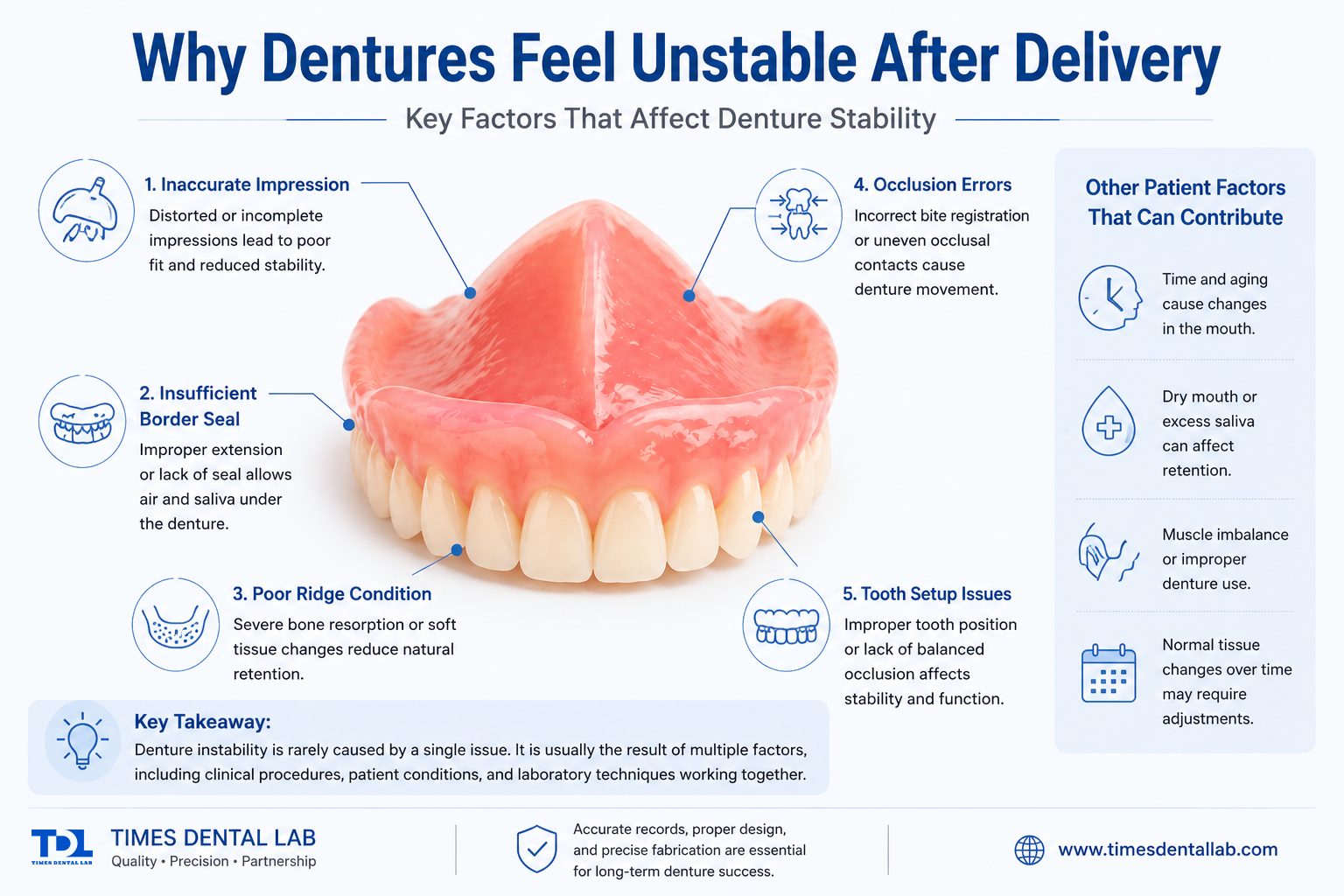
There is no single reason. Common causes include inaccurate impressions, poor border extension, unstable bite registration, severe ridge resorption, incorrect tooth position, occlusion imbalance, and limited patient adaptation.
Should a loose lower denture be remade or adjusted?
It depends on the cause. Minor pressure or occlusion issues may be adjusted. A distorted impression, incorrect bite, poor base adaptation, or major tooth setup problem may require relining or remaking.
Conclusion
Lower dentures are difficult because they are not only supported by anatomy. They must also work with moving muscles, limited ridge support, tongue activity, occlusal force, and patient adaptation.
Even experienced dental labs face challenges with lower dentures because many factors are outside the lab’s direct control. A lower denture may fit the model but still behave differently in the mouth. This is why careful case review, accurate records, functional tooth setup, border control, and clinic-lab communication are essential.
At Times Dental Lab, our approach is simple: lower denture stability should be built through process, not guessed at the final stage. The more carefully we evaluate the case before and during production, the better chance the final denture has to function comfortably for the patient.
Lower dentures will always be challenging. But with the right clinical records, technical judgment, and communication, many common problems can be reduced before they become remakes.