Dental lab outsourcing in China is often discussed in simple terms.Some reduce it to price.Some reduce it to turnaround time.Some assume it is only about production capacity.
In reality, none of these explanations is enough.
Clinics that succeed with dental lab outsourcing in China rarely do so because they found the lowest-cost lab.They succeed because they built a workflow that makes outcomes predictable.
Clinics that struggle usually do not fail because the lab is in China.They fail because too many small uncertainties are left unmanaged.
That difference matters.
A restoration can look fine when the case leaves the lab, yet still create pressure later:
· more chairside adjustment
· more back-and-forth
· more lost clinical time
· more frustration for both sides
In dental lab outsourcing in China, these problems rarely come from one major mistake.They usually come from small issues at the beginning:
· incomplete records
· unclear expectations
· weak feedback loops
· lack of process control
That is why dental lab outsourcing in China should not be evaluated as a “country choice.”
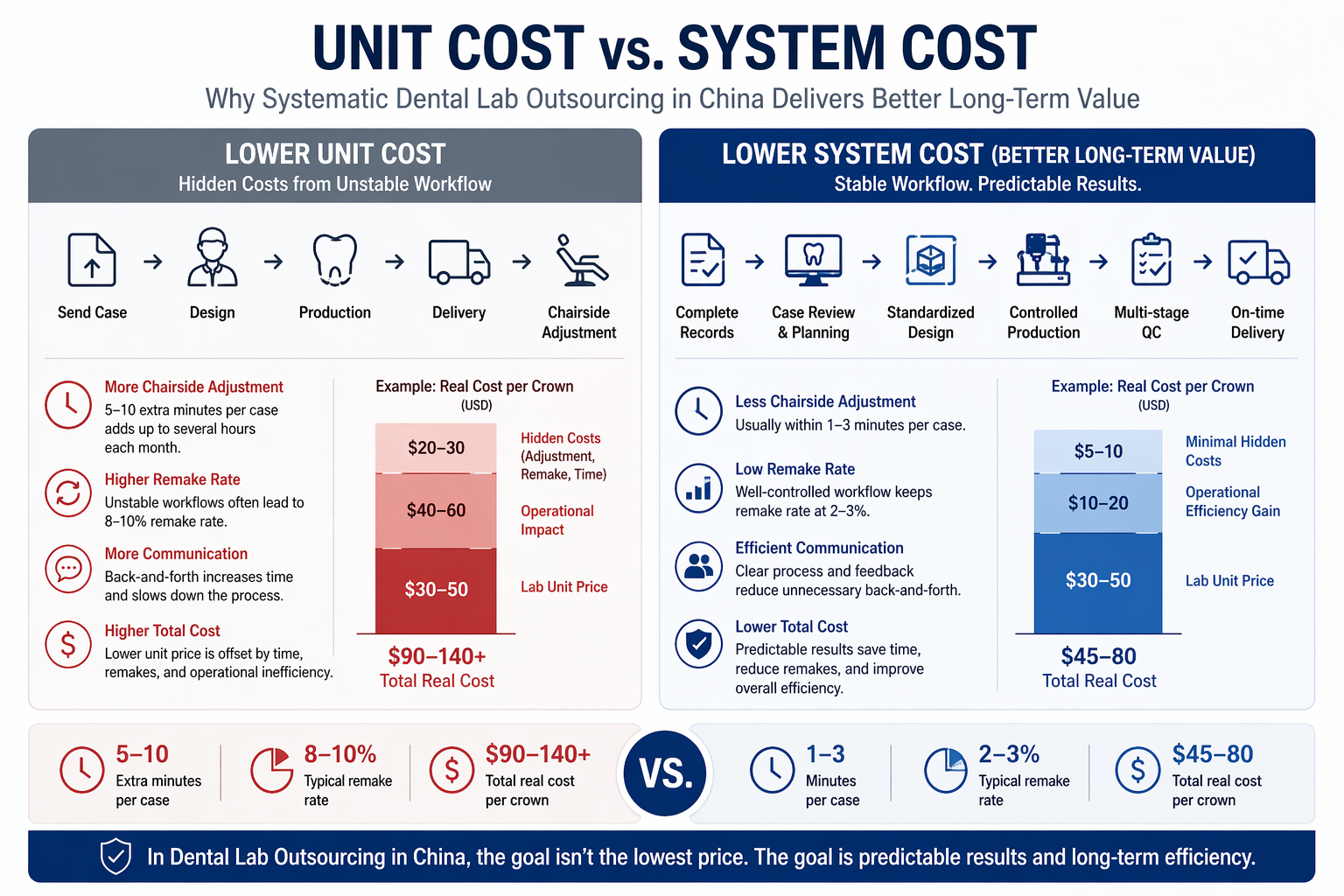 It should be evaluated as a systems decision.
The real question is not:
Can China make dental work?
The real question is:
Can this lab consistently turn variable clinical input into predictable output?
If the answer is yes, outsourcing becomes efficient and scalable.If the answer is no, lower pricing on paper often becomes higher cost in reality.
What Dental Lab Outsourcing in China Means Today
Why Standardized Workflow Matters
Much of the old thinking about dental lab outsourcing in China is outdated.
The old model focused on:
· low labor cost
· large volume
· limited communication
Today, stronger labs operate very differently.
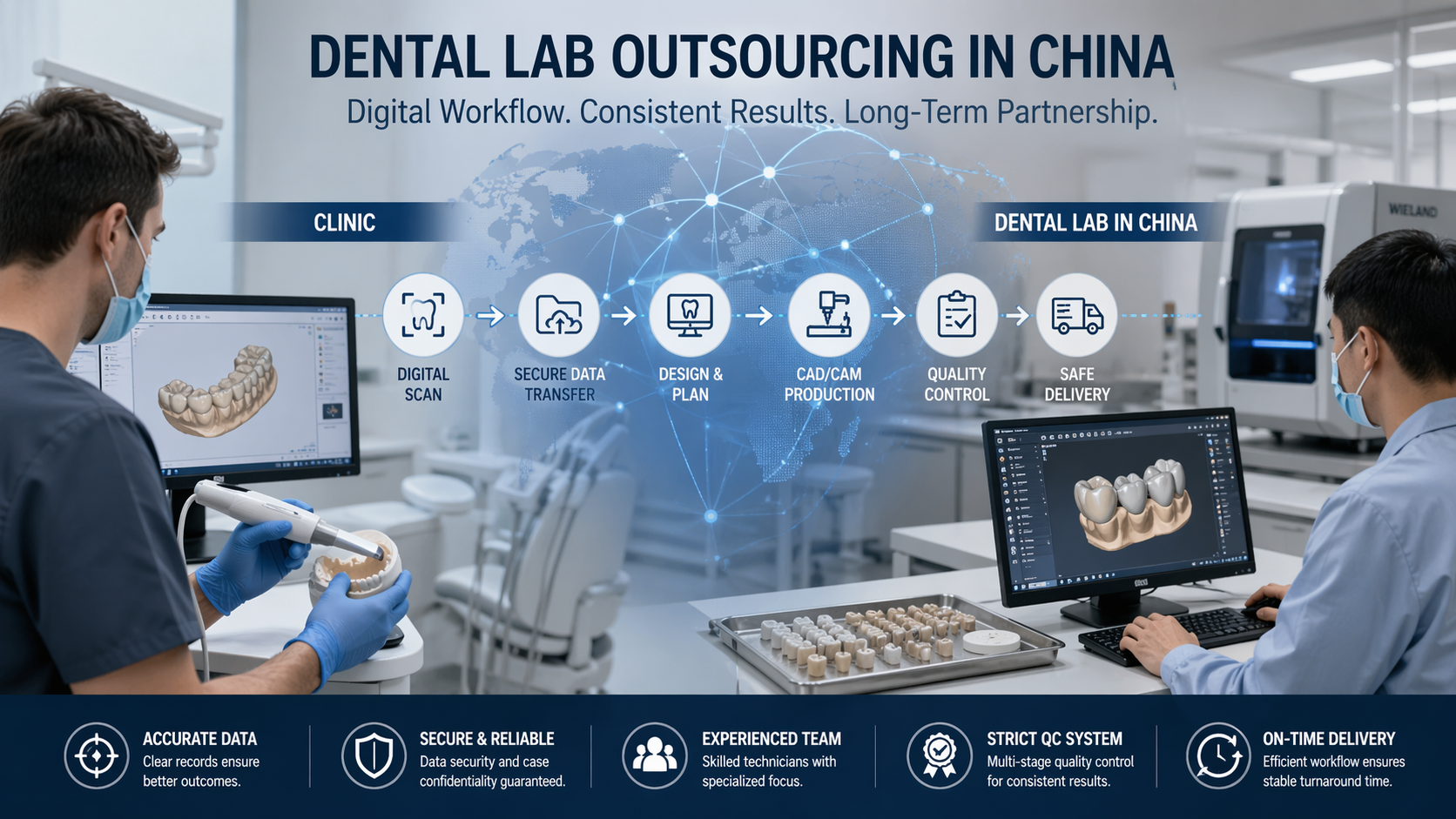
Modern dental lab outsourcing in China typically includes:
· digital case intake
· CAD-based design
· standardized production routing
· layered quality control systems
The key difference is not just technology.It is how that technology is structured into a workflow.
A scanner does not remove interpretation.CAD software does not remove judgment.Milling does not correct inaccurate bite records.
This means dental lab outsourcing in China is no longer just manufacturing.At its best, it is a collaboration model:
· The clinic provides usable records and clear preferences
· The lab provides repeatability, scale, and process control
The Real Risks Behind Dental Lab Outsourcing in China
When dental lab outsourcing in China fails, clinics often describe the result:
· inconsistent fit
· more chairside adjustment
· unclear occlusion
· remake pressure
But these are downstream symptoms.The real causes are upstream.
1. Inconsistent Quality
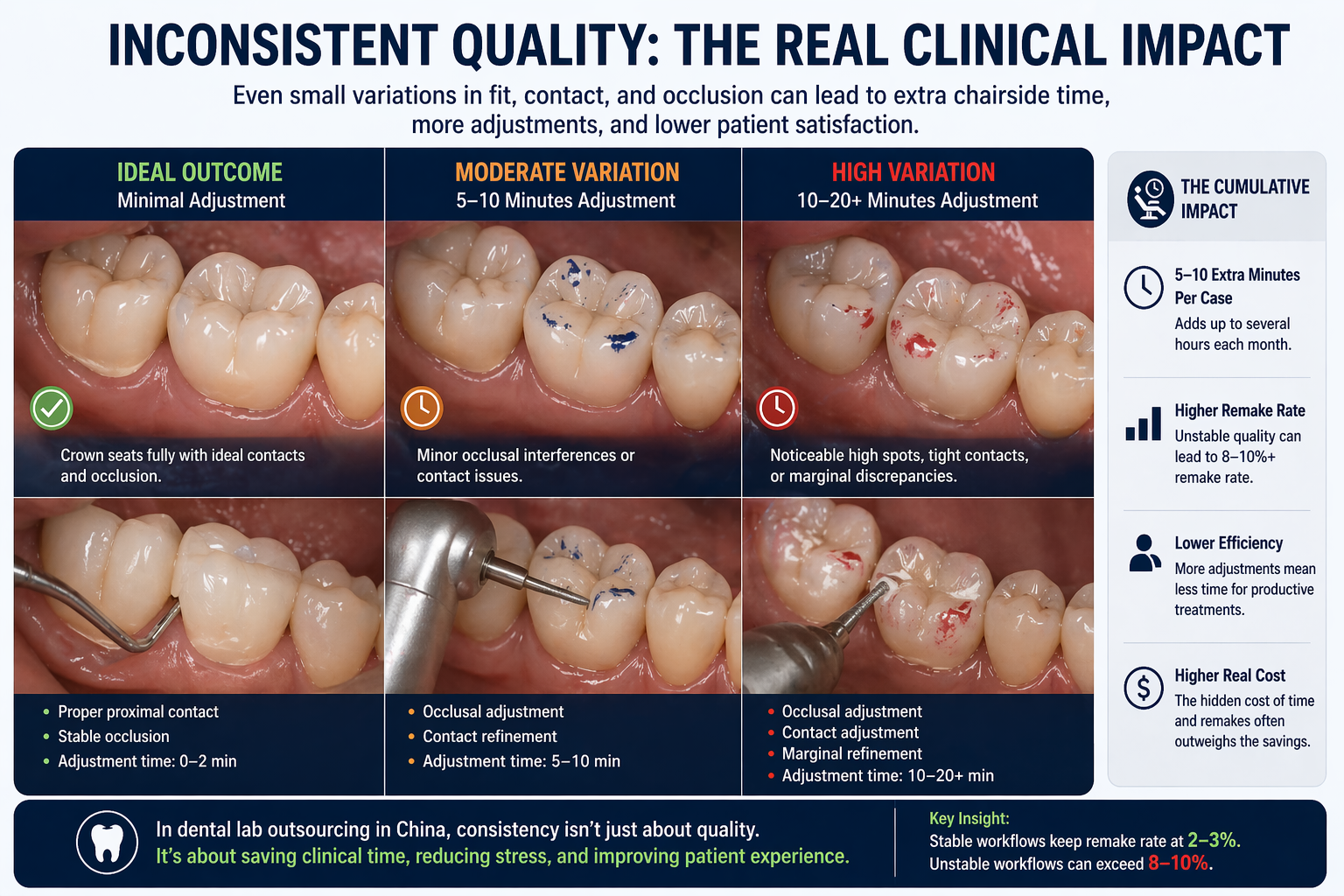
Inconsistent quality does not always mean “bad work.”It often means unpredictable work.
In practice, it may look like:
· One case seats easily
· Another requires 5–10 minutes of adjustment
· A third needs significant occlusal correction
Individually, these are manageable.But over time, they accumulate.
Even an extra 5–10 minutes per case can translate into:
· several additional clinical hours per month
· increased staff pressure
· longer patient chair time
Frequent remakes can increase communication, production, adjustment, and logistics costs across the outsourcing workflow.
That gap directly affects clinic efficiency.
Clinical outcomes and restorative standards are also widely discussed by organizations such as the American Dental Association (ADA).
2. Communication Gaps
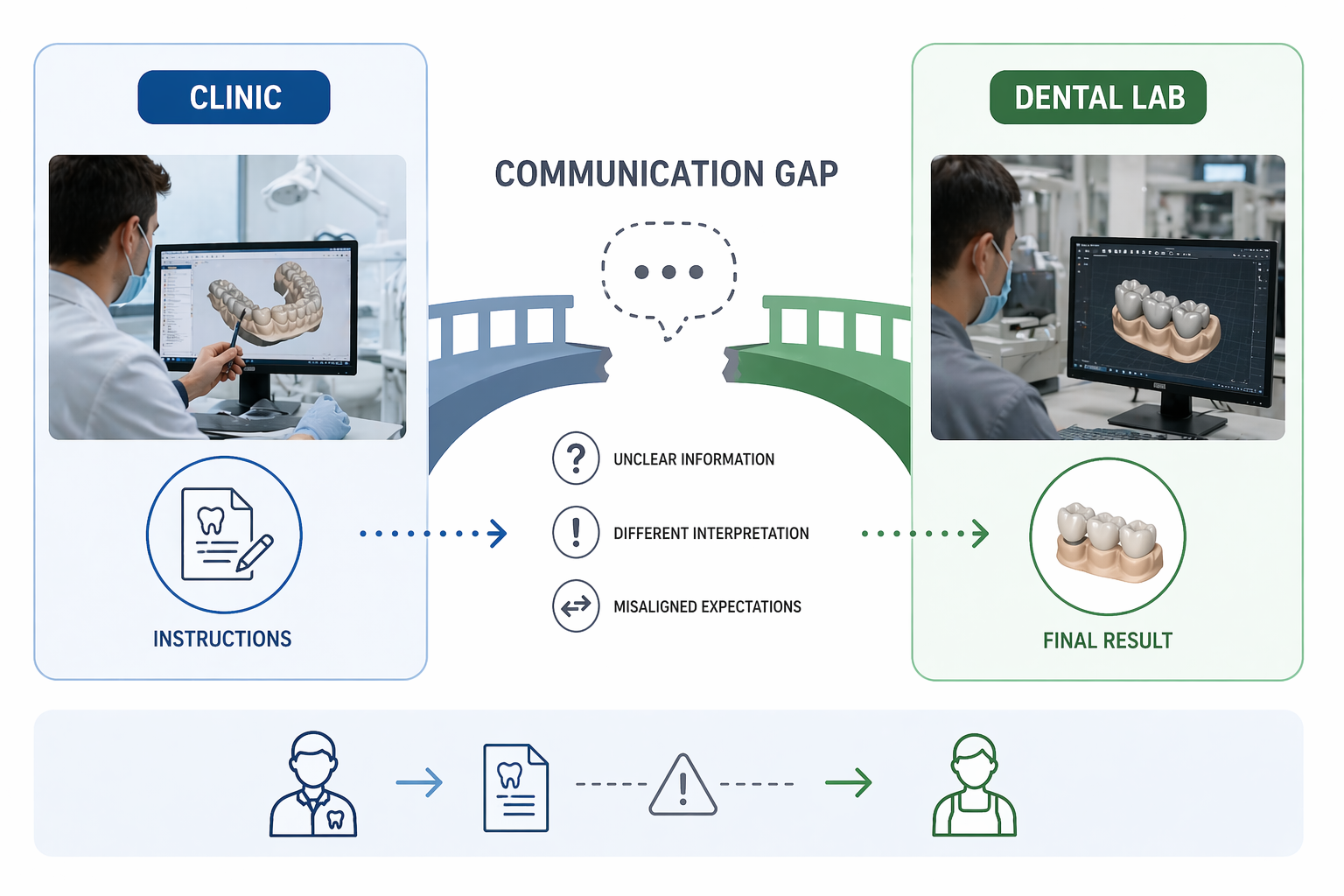
Communication issues are rarely just about language.They are about interpretation.
A clinic may say:
“light contact”
But this can be interpreted differently by:
· the designer
· the technician
· the doctor
This applies to:
· occlusion
· esthetics
· margin expectations
· tissue pressure
In many outsourcing scenarios, a large portion of remake-related issues are linked to:
· incomplete records
· unclear instructions
· mismatched expectations
Without a structured feedback system, the same issues repeat.
3. Lack of Process Control
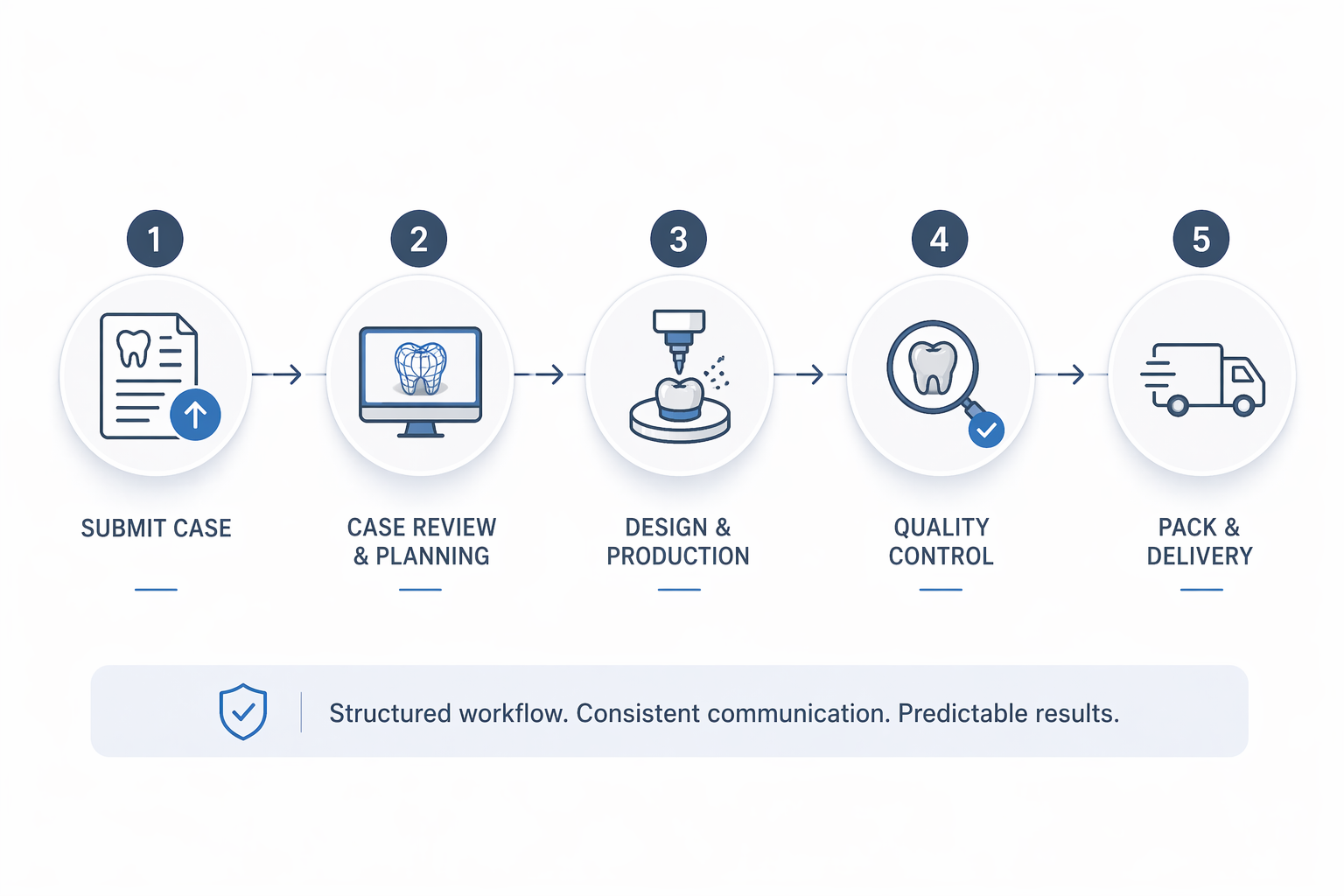
This is the most critical risk in dental lab outsourcing in China.
Many failures are not technical.They are control failures.
Typical examples:
· cases entering production without full review
· design proceeding without resolving risk
· QC happening too late
A lab may check the final result,but fail to control the path that creates it.
That leads to instability.
4. Case Interpretation Differences
Even a good prescription leaves room for interpretation.
When:
· bite is unstable
· scan data is incomplete
· restorative space is limited
Someone in the lab must make decisions.
A strong outsourcing partner does not just “produce what was sent.”It knows:
· when to proceed
· when to ask
· when to stop and clarify
This is where dental lab outsourcing in China either works—or breaks.
Why Price Is Often the Wrong Starting Point
Price is visible.Process risk is not.
That is why many dental lab outsourcing in China decisions start in the wrong place.
A clinic may save $15–$30 per unit on paper.But if each case requires even 5 extra minutes of adjustment:
· that can become hours of lost time monthly
· chairside cost increases
· workflow slows down
A cheaper crown is not cheap if it:
· increases adjustment time
· creates uncertainty
· requires remakes
This is why experienced clinics shift from:
unit cost → system cost
System cost includes:
· time
· consistency
· communication load
· remake frequency
In dental lab outsourcing in China, the cheapest option is rarely the most efficient long-term.
What Defines a Reliable Dental Lab Outsourcing Partner
A strong outsourcing partner is usually defined by five factors.
1. Structured Workflow
A clear path from:
· intake → design → production → QC → shipping
Reduces variability from the start.
2. Case Review Capability
Before design begins, the lab should evaluate:
· scan completeness
· margin clarity
· bite usability
· restorative space
Early detection prevents downstream failure.
3. Quality Control as a System
Not just final inspection.
But layered control:
· intake QC
· design QC
· production QC
· final QC
This is essential for stable dental lab outsourcing in China.
4. Consistency Across Cases
Clinics need predictable behavior:
· contact tightness
· occlusion
· finishing
· communication rhythm
Consistency reduces stress more than perfection.
5. Feedback Loop
A strong outsourcing relationship improves over time.
That requires:
· structured feedback
· pattern recognition
· preference alignment
Without this, outsourcing stays unstable.
Who Should — and Should Not — Use Dental Lab Outsourcing in China
Dental lab outsourcing in China is not for every clinic.
Works Best When:
· case flow is stable
· records are consistent
· preferences are defined
· feedback is structured
Struggles When:
· every case is treated as unique
· records are inconsistent
· expectations are unclear
· communication is reactive
Outsourcing does not fix unstable clinical input.It amplifies it.
How to Start Dental Lab Outsourcing in China Properly
Avoid two extremes:
· moving too slowly
· scaling too fast
A better approach:
Start with Test Cases
Use cases that reveal real behavior:
· posterior crowns
· contact-sensitive cases
· occlusion-relevant cases
Align Expectations Early
Define:
· contact preference
· occlusal style
· esthetic expectations
Build a Communication Protocol
Clarify:
· who handles questions
· response format
· escalation process
Scale Gradually
Increase volume only after consistency is proven.
Focus on Patterns, Not Exceptions
Every lab has occasional errors.What matters is trend stability.
How This Works in Daily Production
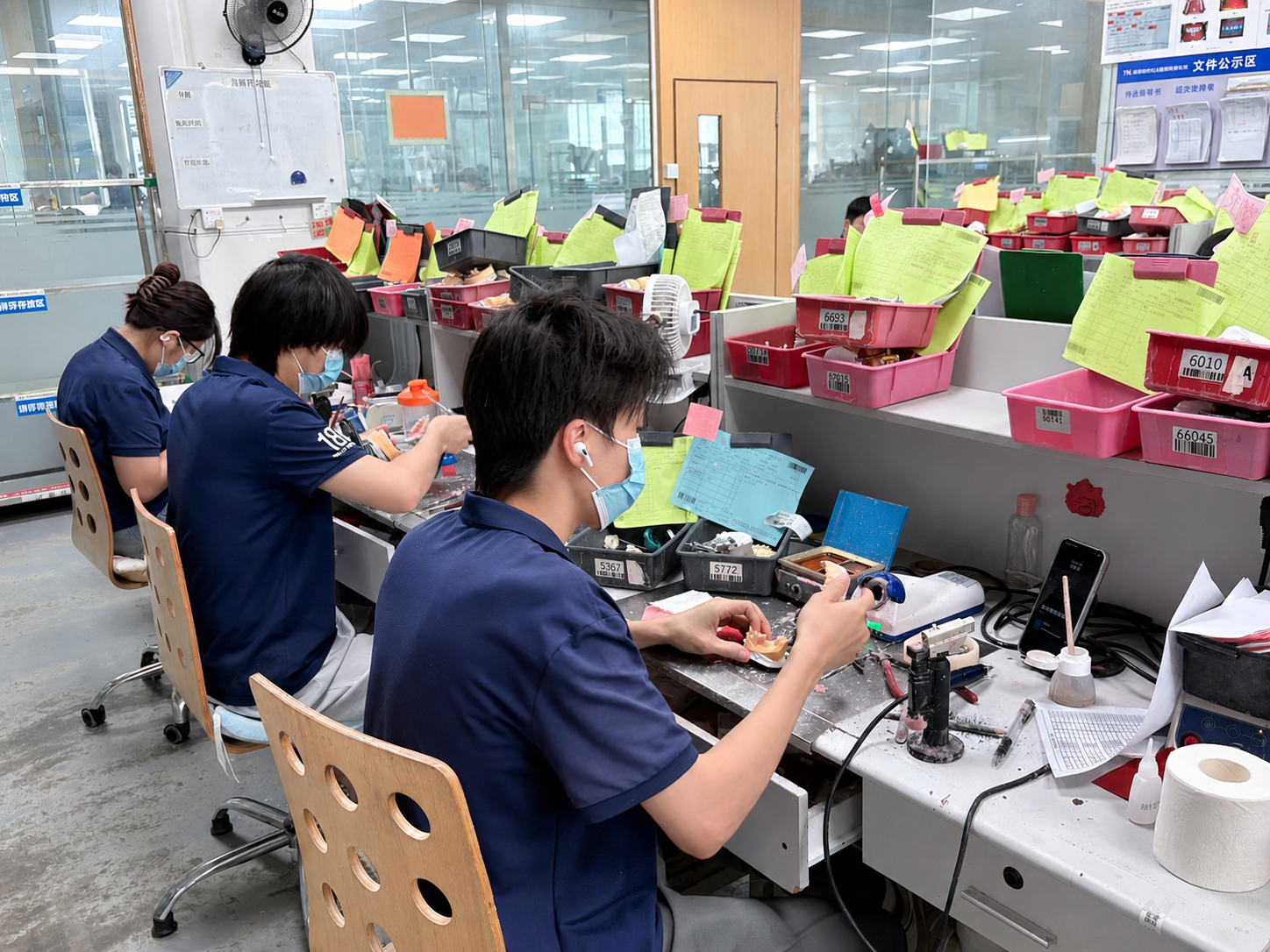
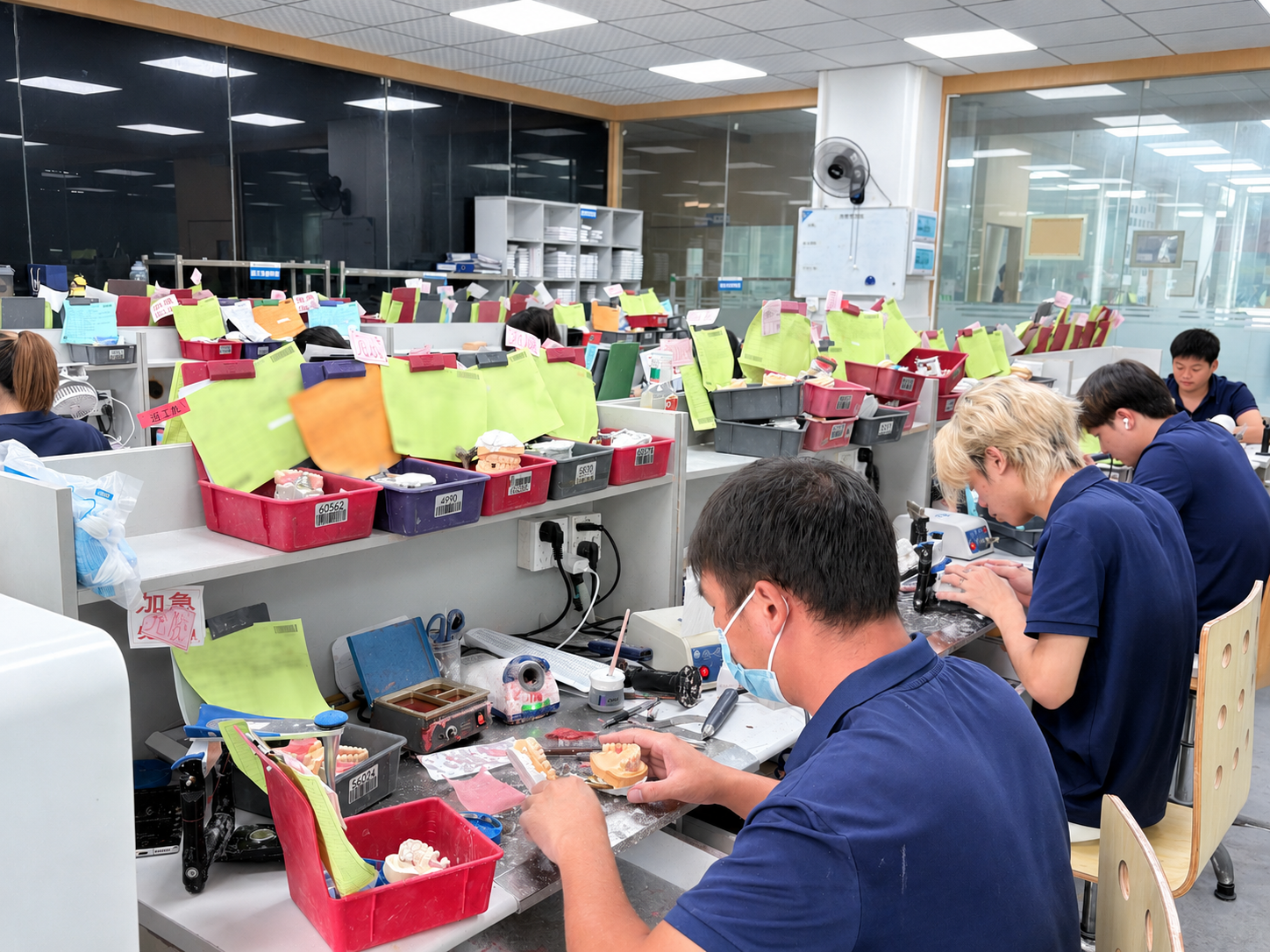
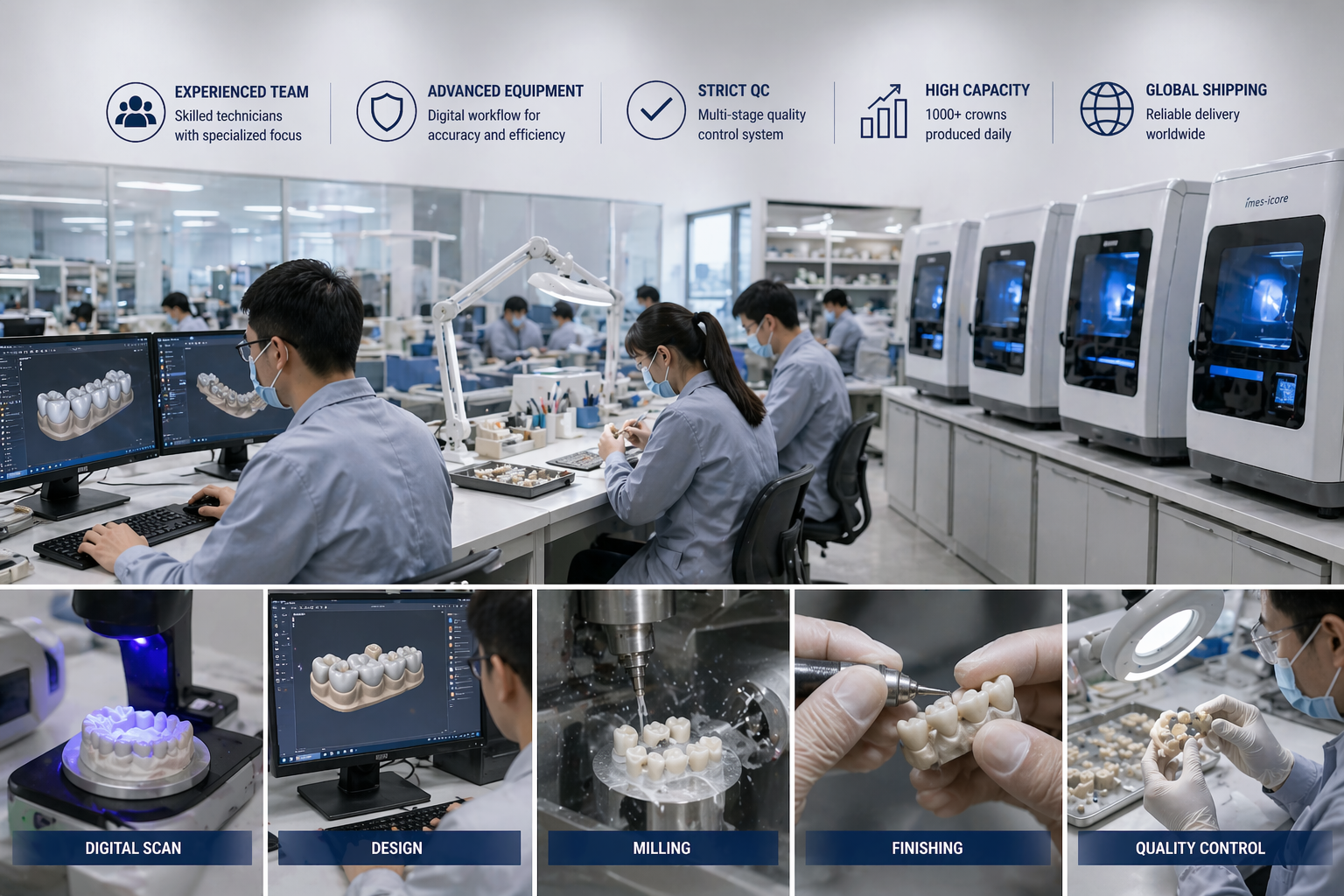
In practice, successful dental lab outsourcing in China depends on structure, not individual performance.
At scale:
· over 1,000 crowns per day
· multiple specialized teams
· layered QC checkpoints
Consistency cannot rely on individual technicians alone.It depends on repeatable systems.
These systems include:
· standardized case routing
· defined review stages
· controlled production steps
· consistent QC criteria
The goal is simple:
Reduce the number of surprises that reach the clinic.
The Shift from Cost-Based to System-Based Outsourcing
At the beginning, clinics compare:
· price
· turnaround
· shipping
Later, they evaluate:
· adjustment frequency
· communication quality
· consistency over time
This is the key shift in dental lab outsourcing in China:
From:
How much can we save per case?
To:
How much uncertainty can we remove?
The second question defines long-term success.
Conclusion: Outsourcing Works When It Is Controlled

Dental lab outsourcing in China works when it is structured.
Not because of:
· geography
· price
· technology
But because of:
· controlled workflow
· clear input
· consistent review
· system-based quality control
Outsourcing is not about finding a cheaper lab.
It is about building a system that behaves predictably.
Over time, even small improvements in:
· fit
· occlusion
· communication
can lead to measurable gains in:
· clinical efficiency
· patient satisfaction
· operational stability
That is what separates a low-cost supplier from a reliable long-term partner.