Ordering an implant bar involves more than sending an implant scan and requesting a framework. The laboratory needs to understand how the bar will connect to the implants, which attachment system will retain the overdenture, and how much space is available for the complete prosthesis.
At Times Dental Lab, we support implant bar enquiries from overseas dental clinics and partner laboratories as part of our implant restoration services. We review the prescribed restoration, component information and available records before confirming the production route. This guide focuses on bars for removable implant overdentures, rather than frameworks for fixed full-arch bridges.
Quick Answer: What Is an Implant Bar for an Overdenture?
An implant bar for an overdenture is a framework that connects multiple implants or abutments and provides an attachment interface for a removable denture. Depending on the prescribed design, clips or other compatible attachments engage the bar to help retain the prosthesis. The patient can remove the overdenture, while the bar normally remains secured and is managed by the clinical team.
For an implant bar case, Times Dental Lab needs the implant system and connection level, verified position records, the specified attachment system, and the planned overdenture design. We also need enough information to evaluate the space available for the bar, attachments, denture base and replacement teeth. The treating clinician determines the treatment plan; our laboratory reviews the records and manufacturing requirements.
What Does an Implant Bar Do?
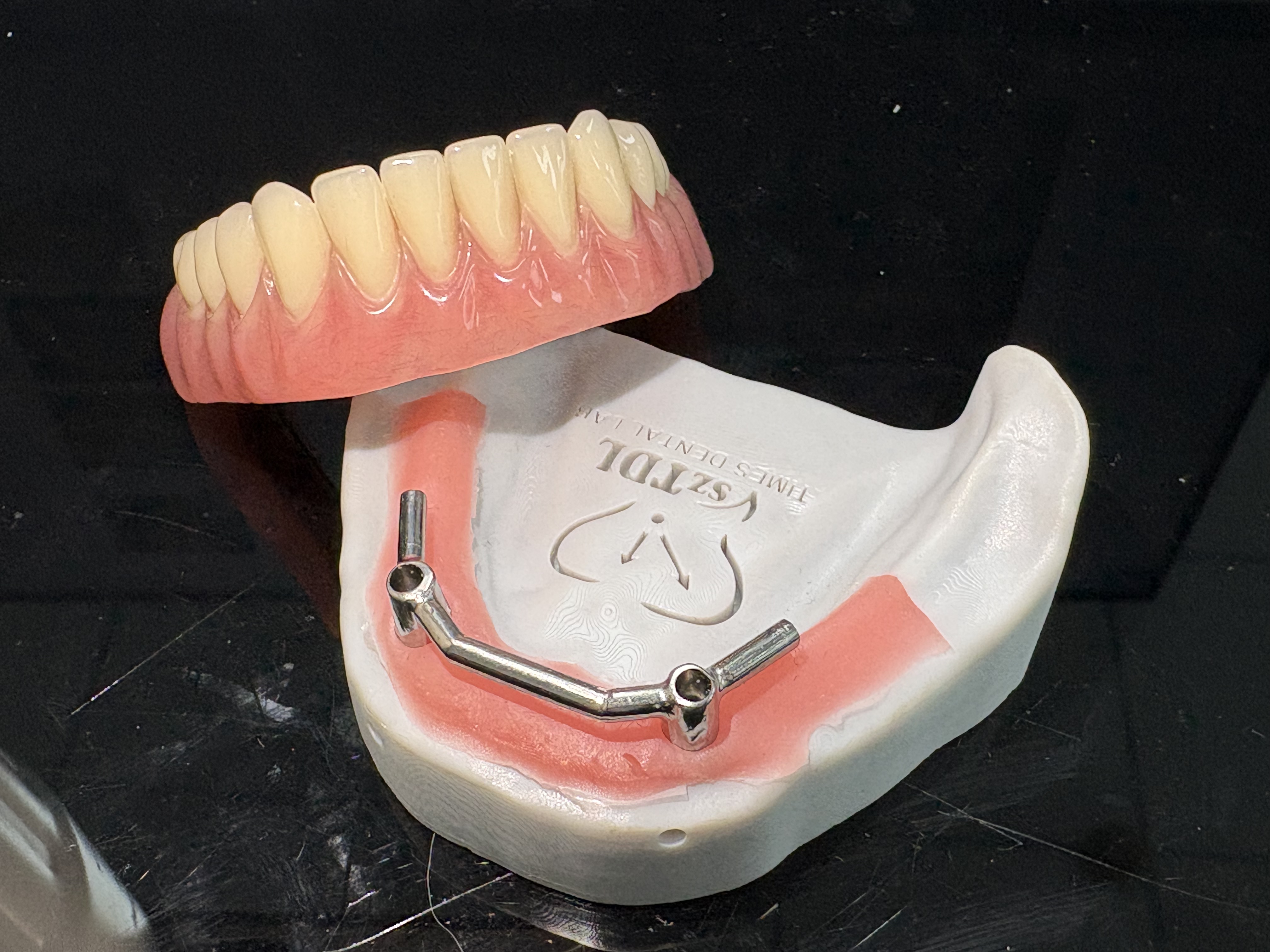
An implant bar links the prescribed implant or abutment positions and forms part of the overdenture retention system. Its shape and attachment arrangement must work with the denture, not simply follow the curve of the arch.
The complete design involves several related elements: the implant connections, bar framework, attachments, denture base and tooth arrangement. Depending on the clinical plan, the residual ridge may also contribute to support. For this reason, an implant-retained overdenture should not automatically be described as entirely implant-supported.
At Times, we need to know the intended prosthesis before designing the bar. A framework designed without an approved tooth setup or reliable prosthetic-space reference may leave insufficient room for attachments, denture material or the planned tooth positions.
Implant Bar Versus Fixed Full-Arch Framework
A bar for an overdenture and a framework for a fixed full-arch restoration serve different prosthetic designs.
In a bar-retained overdenture, the removable denture engages the bar through the prescribed attachment system. The bar and denture are separate parts of a coordinated restoration. The design must account for removal, attachment access, maintenance and cleaning around the framework.
A fixed full-arch restoration is secured to implants or abutments and is not intended for routine removal by the patient. Its framework may support acrylic teeth, individual crowns, ceramic components or another prescribed restorative structure.
When contacting Times Dental Lab, please state whether the case is a removable bar-retained overdenture or a fixed full-arch restoration. Terms such as “implant bar,” “hybrid” or “full arch” do not provide enough information on their own. Our All-on-X restoration guide covers the broader fixed full-arch workflow.
Which Design Details Define an Implant Bar?
Implant-Level or Abutment-Level Connection
The laboratory must know where the bar connects. An implant-level bar connects to the prescribed implant interfaces. An abutment-level bar connects to specified intermediate abutments, such as a compatible multi-unit abutment system.
These approaches require different component information and may use different scan bodies, libraries, screws and verification procedures. Even within one implant brand, connection and platform options can vary.
Please provide the implant manufacturer, implant family, platform and connection details. If the restoration connects at abutment level, include the abutment manufacturer and reference information. We clarify unidentified components before confirming the design route.
Attachment System and Bar Geometry
The attachment system influences the bar design. A request for “a bar with clips” is incomplete unless the clip or attachment family, dimensions and compatible bar geometry are identified.
The prescription should specify the intended system or request a discussion of available options before production. If your clinic or local laboratory will supply the attachments, tell us which components will be used and who will incorporate them into the overdenture.
Bar shape, attachment position and component requirements must follow the selected system’s instructions. We do not treat attachment systems as interchangeable because they appear similar.
Space for the Complete Overdenture

The available restorative space must accommodate more than the metal framework. It also needs to accommodate the attachment components, denture base and teeth, together with the prescribed tissue relationship.
Insufficient space may create conflicts between tooth position, attachment placement and denture material thickness. A bar that fits the implant positions can still be unsuitable for the planned prosthesis if those relationships have not been reviewed.
Useful references include an approved tooth setup, a provisional denture scan, a diagnostic arrangement or another clinically approved prosthetic reference. These help us evaluate the framework within the intended restoration rather than designing it in isolation.
Hygiene Access and Tissue Relationship
The bar’s relationship to the surrounding tissues affects access for cleaning and clinical maintenance. The clinician should communicate the intended tissue clearance and identify any areas that require particular attention.
Our laboratory can review the proposed contour against the supplied model or digital records, but we cannot assess the patient’s cleaning ability or tissue response from a CAD view alone. The clinical team must confirm that the final design is appropriate for the patient and provide suitable hygiene instructions.
The American College of Prosthodontists’ dental implant information provides broader context on implant-supported restorative options. The exact overdenture design still requires an individual clinical assessment.
Material and Manufacturing Route
Material selection should be confirmed together with the framework design and component requirements. A material name alone does not establish that a particular bar can be produced for every implant system, attachment arrangement or available space.
For a Times enquiry, state any required material, named component or manufacturing restriction. We review the requested combination before confirming production. Where an alternative is proposed, it should be approved by the client rather than substituted without discussion.
What Should Be Confirmed Before Ordering?
Are You Ordering the Bar Only or a Complete Prosthesis?
The order should clearly define what Times will deliver.
A bar-only order is different from a bar supplied with attachment components, and both are different from a completed bar-retained overdenture. The division of work affects the records required, approval stages and final inspection responsibilities.
If your local laboratory will manufacture the denture, we need to understand its intended workflow and attachment requirements. If the enquiry includes the overdenture, the tooth setup, gingival appearance, bite relationship and any try-in stage also need to be agreed.
Who Supplies the Components?
Please identify whether Times, the clinic or the partner laboratory will supply the restorative components.
Component references should be documented before production. When components are supplied by the client, label them by case and position where relevant. Loose screws, analogs and attachment parts should be packaged separately and securely.
Our international dental case shipping guide explains practical considerations for sending physical records and implant components.
Is There an Existing Denture to Use as a Reference?
An existing denture may help communicate tooth position, appearance, lip support or other prosthetic information. However, the clinic should explain which features are acceptable and which need to change.
For example, “follow the existing denture” is ambiguous if the patient wants different tooth display or the current bite requires correction. Marked photographs and written instructions help separate approved features from problems that should not be reproduced.
An existing denture is a reference, not automatic approval of the final bar or implant position records.
Which Stages Need Approval?
Agree on the approval points before production begins. These may include the tooth setup, proposed bar design, attachment arrangement, verification stage or a clinical try-in.
Tell us who is authorized to approve the case and whether the approval must come from the prescribing clinician, the partner laboratory or both. One clearly identified approval contact helps prevent conflicting instructions.
What Records Does Times Dental Lab Need?
An implant bar enquiry should include enough information to identify the connection system and understand the complete prosthetic plan.
Please prepare:
· Case identification and clinic or laboratory contact details.
· A written prescription stating that the restoration is a bar-retained overdenture.
· Implant manufacturer, system, connection and platform information.
· Implant-level or abutment-level instructions.
· Scan body or impression component manufacturer and reference.
· Working and opposing scans, impressions or models.
· A reliable bite or jaw-relation record.
· Soft-tissue records relevant to the proposed bar.
· An approved tooth setup, provisional denture or other prosthetic reference when available.
· The requested attachment system and component references.
· Material instructions and component-supply arrangements.
· Design approval and try-in requirements.
· Destination country and requested delivery date.
This list is a starting point. Additional records may be needed according to the case and production stage. Our implant case submission checklist provides broader guidance on implant records.
Why Might Verification Be Needed Before Final Production?
A bar connects several implant or abutment positions. The framework therefore depends on a reliable record of their relationship across the arch.
A verification stage may be considered when the clinical team needs to confirm that the working record represents those positions accurately. Whether verification is required, and which method is appropriate, depends on the clinical workflow and the treating clinician’s assessment.
A verification jig does not replace every other approval. It mainly addresses the implant or abutment position record. Tooth position, bite, appearance and the relationship between the bar and overdenture require their own review.
For a detailed explanation, read our full-arch implant verification jig guide. At Times, we keep the verification purpose separate from prosthetic-design approval so the client knows what each checkpoint confirms.
How Times Dental Lab Reviews an Implant Bar Case
Case and Component Review
We first review the requested prosthesis and the implant or abutment connection information. We check whether the scan bodies, component references and submitted records can be matched to the intended workflow.
If essential information is missing or inconsistent, we contact the client for clarification. Receiving scan files does not, by itself, mean that the case is ready for final framework production.
Design Coordination
We review the bar within the planned overdenture arrangement, using the available tooth setup, bite and tissue records. The design discussion may include the attachment arrangement, restorative space, proposed tissue relationship and component requirements.
Where a digital preview is part of the agreed workflow, we use it to communicate the proposed design before manufacturing. The International Team for Implantology’s CAD/CAM consensus recommends active clinician involvement and approval of the virtual prosthetic plan that guides abutment or framework design.
Production and Laboratory Checks
Production follows the confirmed component requirements, material and approved design. Laboratory checks are made against the available validated records and the agreed prescription.
Relevant checks include framework seating on the working record, component consistency, attachment-related geometry, surface finishing and case identification. These checks support controlled fabrication, but they do not reproduce every intraoral condition.
The treating clinician remains responsible for clinical seating assessment, tissue evaluation, occlusion, applicable tightening procedures and final delivery. If the framework does not seat as expected, the issue should be documented and reviewed before the case proceeds.
FAQs
Can I order an implant bar without ordering the overdenture?
You can enquire about a bar-only workflow. Please tell us which laboratory will produce the denture, which attachment system it will use and what records or components will be shared. We confirm the deliverable and division of work before production.
Can Times design a bar from digital scans?
We can review digital implant records for a proposed bar workflow. The scan body, CAD library, component level and position records must be suitable for the case. A digital submission does not remove the need for any verification or clinical approval required by the treating clinician.
Do I need to specify the attachment brand?
The attachment system and relevant component references should be identified before the bar design is finalized. If you have not selected a system, raise that question during the enquiry rather than asking the laboratory to assume one.
Can an existing denture be used with a new implant bar?
That requires case-specific assessment. The available space, denture condition, tooth arrangement and attachment incorporation requirements all need review. The clinician must determine whether retaining the existing denture is appropriate.
Is a bar-retained overdenture the same as a fixed implant bridge?
No. A bar-retained overdenture is removable by the patient and engages a bar through the prescribed attachments. A fixed implant bridge is secured to implants or abutments and is not intended for routine patient removal.
Does an approved CAD design guarantee clinical fit?
No. A CAD approval confirms the intended design based on the supplied records. Clinical seating, tissue relationships, occlusion and the complete prosthesis still require evaluation by the treating clinician.
Discuss an Implant Bar Case with Times Dental Lab
If your clinic or laboratory is looking for an implant bar production partner in China, start with a representative case and a clearly defined deliverable. Tell us whether you need the bar only, attachment-related support or a broader overdenture workflow.
Send your prescription, implant system details, component references and available case records to cases@times-dental.com. Include your clinic or laboratory name, destination country and approval requirements so we can review the enquiry and clarify the next step.
You can also contact Times Dental Lab to discuss the proposed workflow or request a quote.