(A Manufacturing Perspective from Daily Production)
The Problem Most Clinics Don’t Talk About
Most clinics have seen this situation, even if it’s not always clearly discussed.
Two cases.Similar preparation.Same indication.
Sent to two different labs.
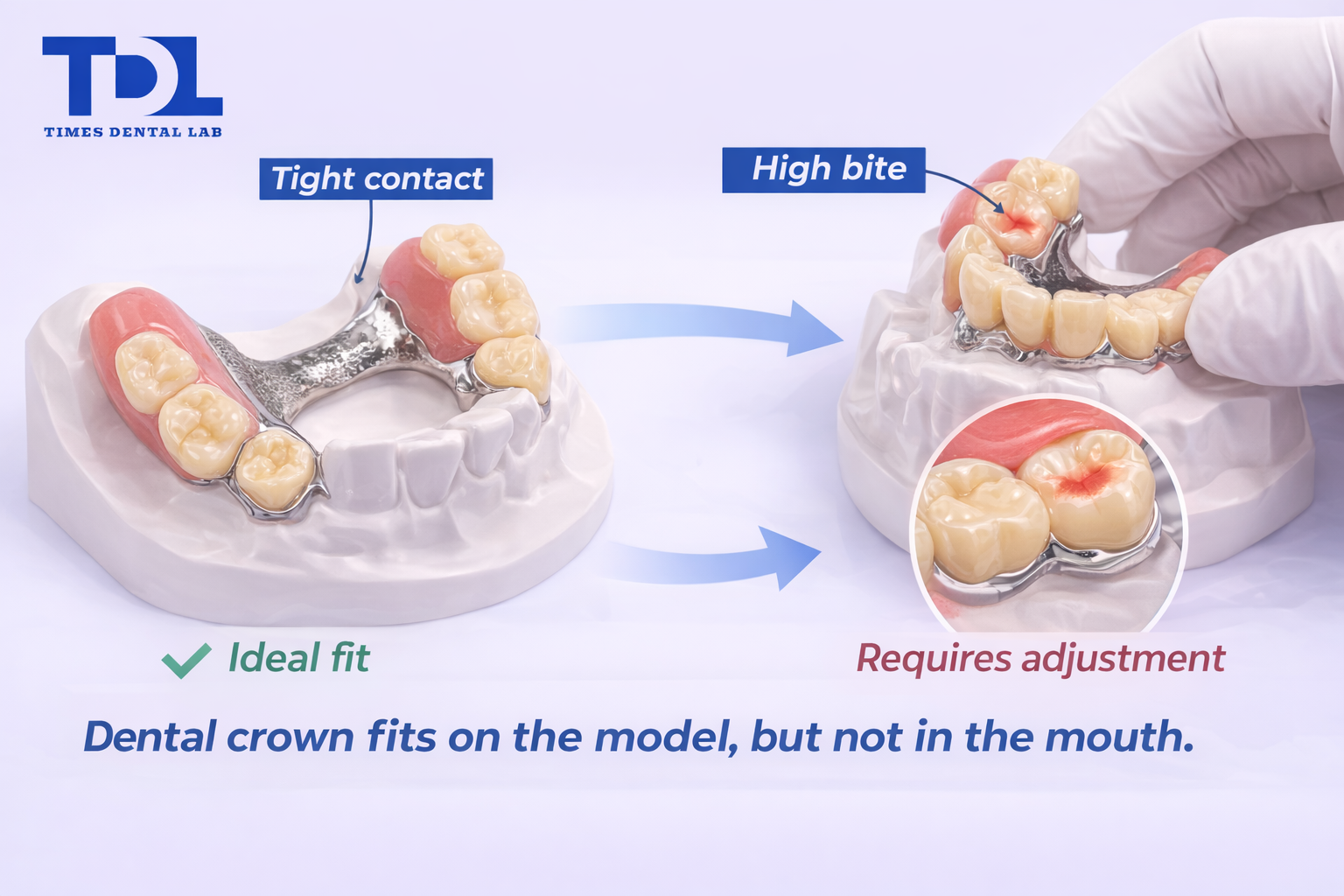
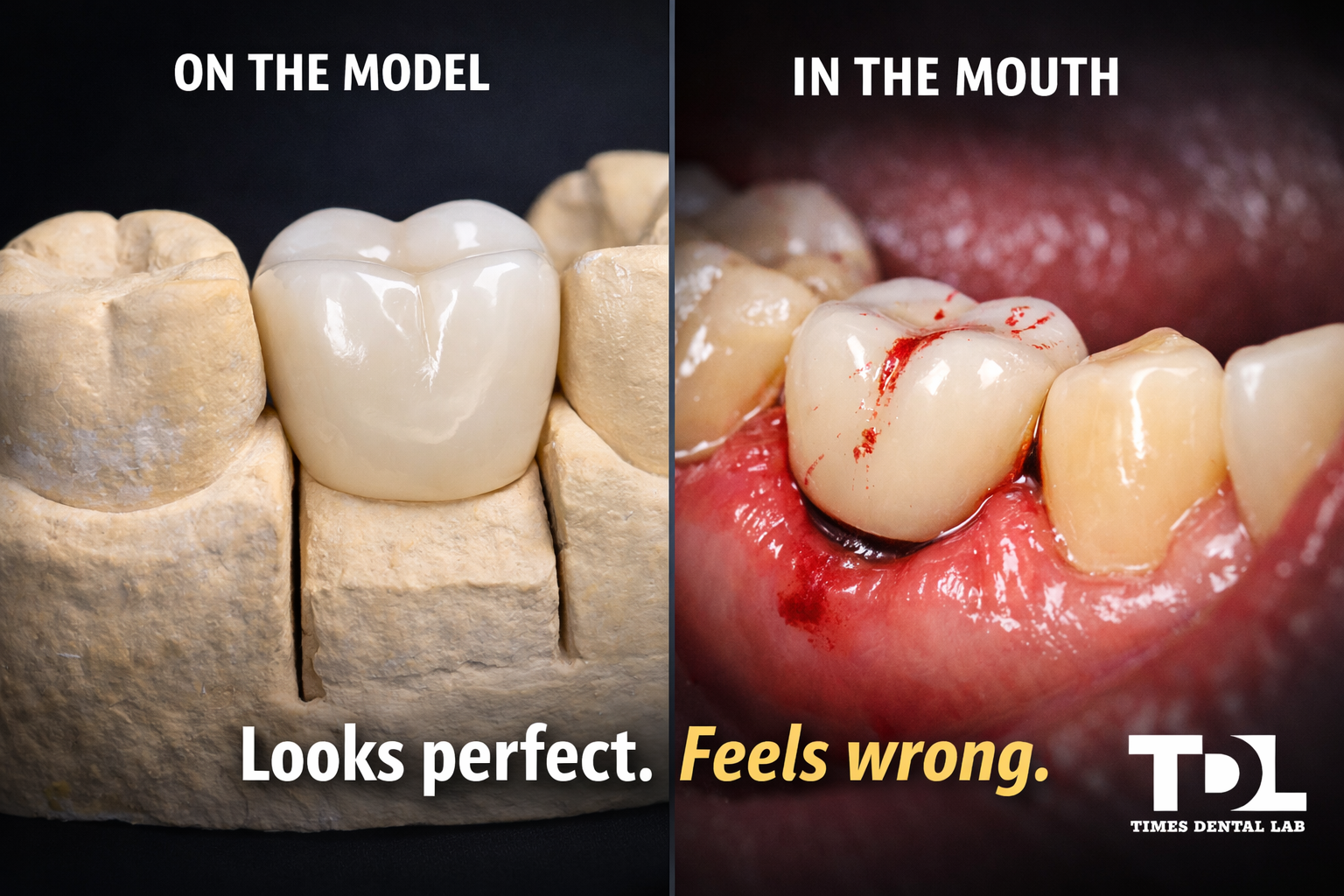
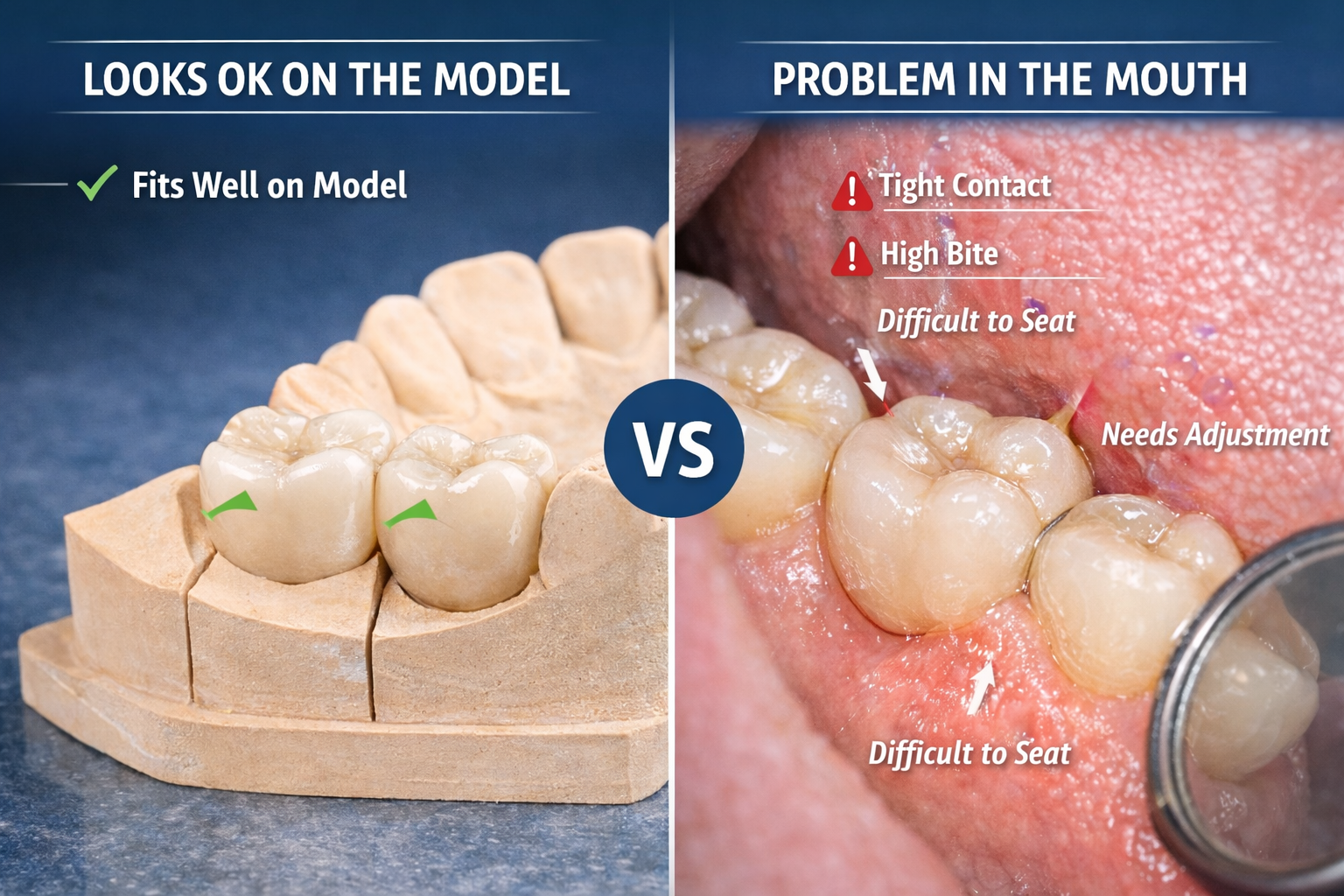
One comes back predictable. Seats smoothly. Minimal adjustment.The other looks acceptable on the model, but once in the mouth:
l The contact feels tighter than expected
l The bite needs adjustment
l Seating is not as passive as it should be
Sometimes it leads to a remake.
At first, this feels like a case issue.
But when it happens repeatedly, a different pattern becomes clear:
l The difference is not always in the case.
l It is in how the lab handles the case.
Some labs feel stable over time.Others feel inconsistent.
Not always wrong — but not predictable.
And in clinical work, unpredictability creates more pressure than occasional mistakes.
What “Consistency” Really Means in Dental Lab Work
Consistency is often misunderstood as perfection.
In reality, every case has variables:
l Preparation differences
l Bite registration variability
l Scan distortion
l Material behavior
Even in fully digital workflows, these variables remain.
So consistency does not mean:
l No adjustment
l No deviation
It means something more practical:
The case behaves as expected.
Consistency Is About Predictability
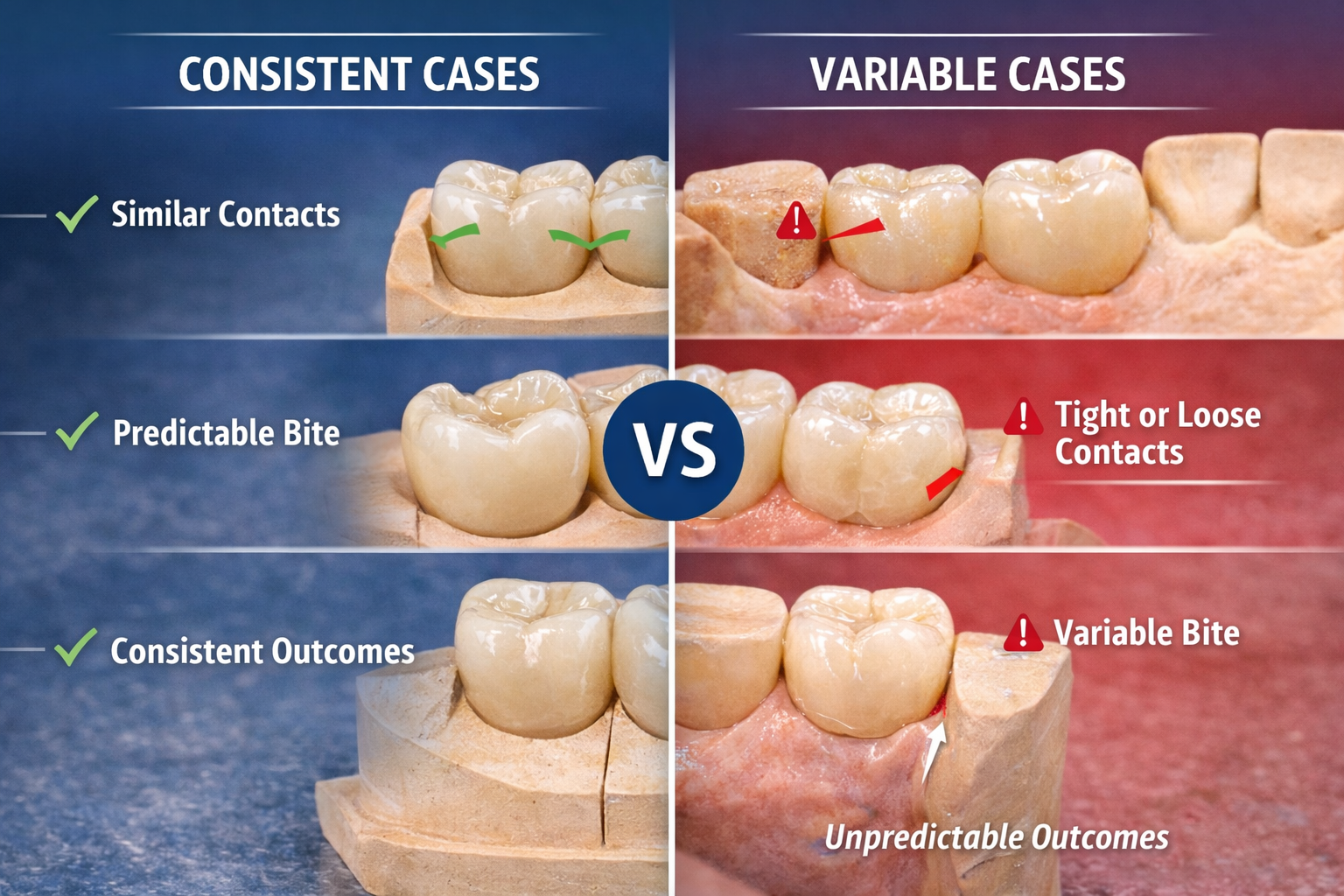
A predictable case does not surprise the clinician.
Contacts are within a familiar range.Occlusion behaves in a controllable way.Seating does not require force.
Even when adjustment is needed, it is:
l Minor
l Expected
l Efficient
Over time, this builds trust.
Clinicians begin to know what they will receive — before opening the box.
Why Some Labs Feel Reliable — Until They Don’t
This is a common experience.
A clinic tries a new lab.
At first:
l Results are good
l Communication is smooth
Then gradually:
l Contacts vary
l Bite becomes less consistent
l Outcomes become harder to predict
Nothing dramatically wrong.
But something changes:
The result is no longer stable.
This is rarely caused by material or equipment.
It is caused by how the lab operates internally.
Where Inconsistency Actually Comes From
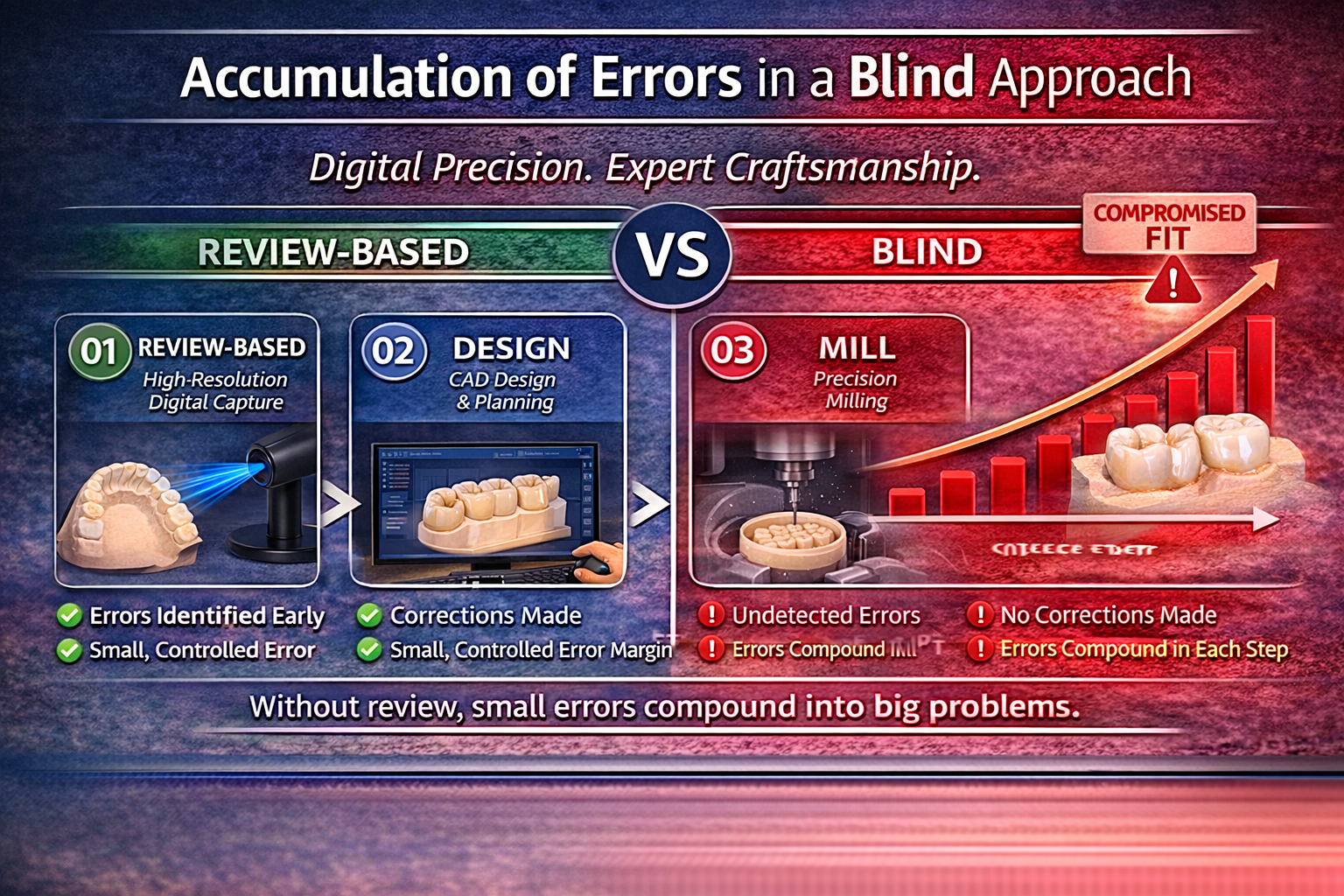
From the outside, most labs look similar.
They all use:
l CAD design
l Milling machines
l Similar materials
But internally, the difference is significant.
When Production Depends on Individuals
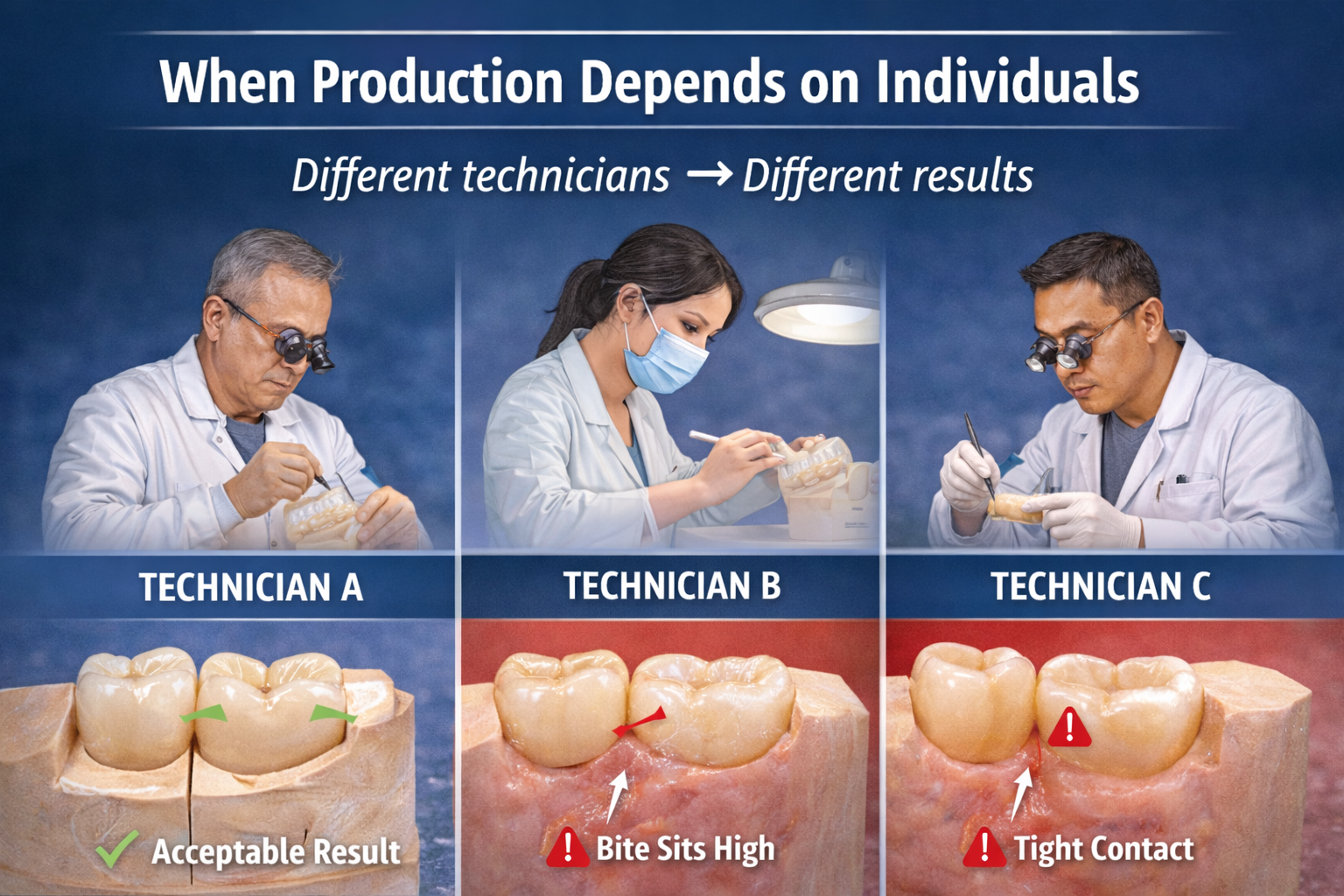
In some labs, results depend heavily on who handles the case.
Different technicians may:
l Design contacts differently
l Adjust occlusion differently
l Interpret margins differently
Even with skilled technicians, variation appears.
If the outcome depends on the individual,consistency cannot be maintained.
When Cases Enter Production Without Review
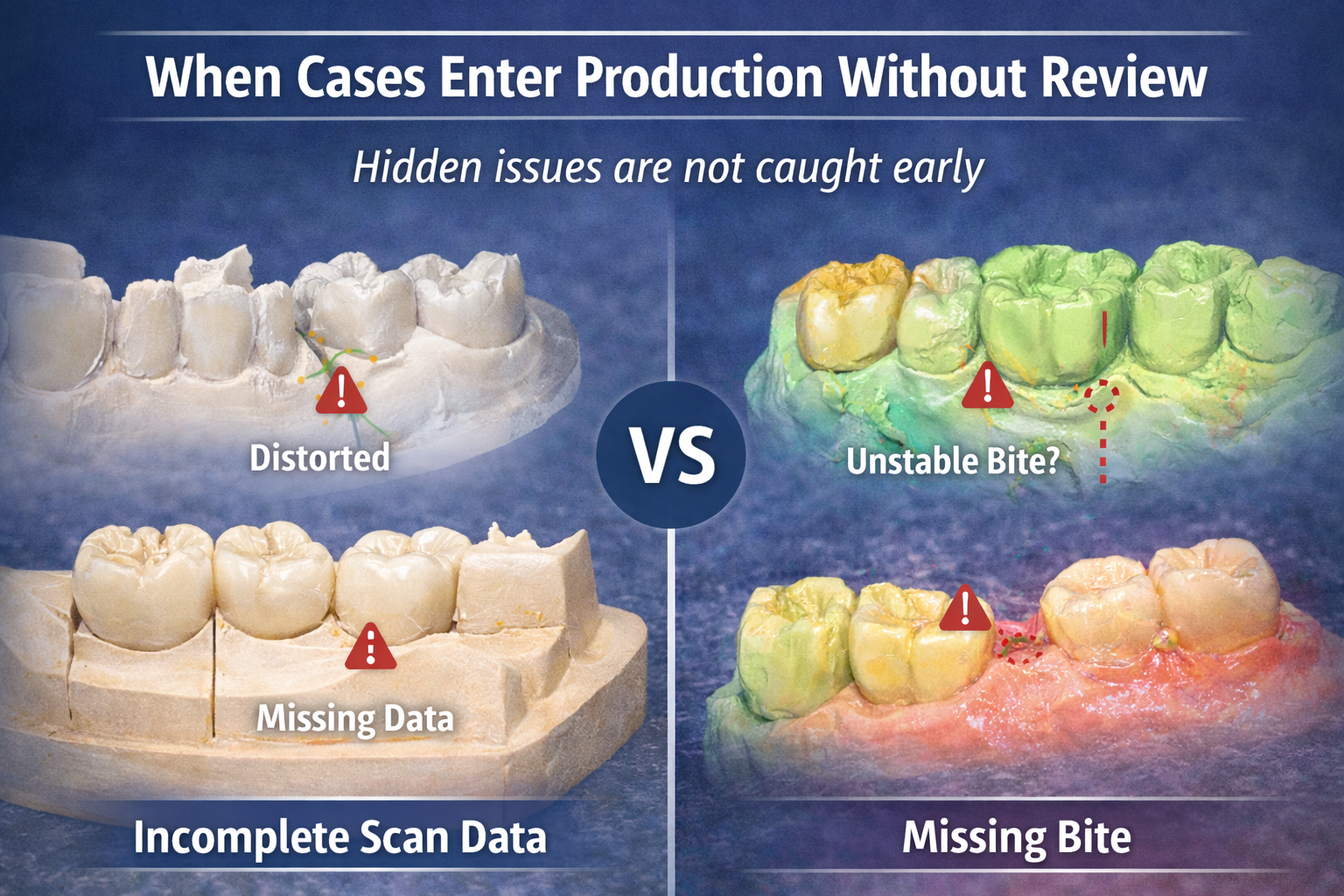
Some workflows move directly from case receipt to design.
But in real cases, issues often exist:
l Incomplete scan areas
l Unstable bite records
l Limited space
l Missing references
Without structured review, these are carried into production.
And once production begins, options become limited.
When Quality Control Happens Too Late
In some labs, QC is only performed at the final stage.
But by then:
l Design decisions are already fixed
l Structural limitations cannot be corrected
Quality control cannot fix upstream decisions.
Stable labs treat QC as a process, not a checkpoint.
When Case Judgment Is Missing
Not all cases should be handled the same way.
Some cases require:
l Confirmation
l Adjustment of expectations
l Communication before design
Others can proceed directly.
The ability to recognize this difference is not based on software.
It comes from experience.
What Stable Labs Do Differently (Often Behind the Scenes)
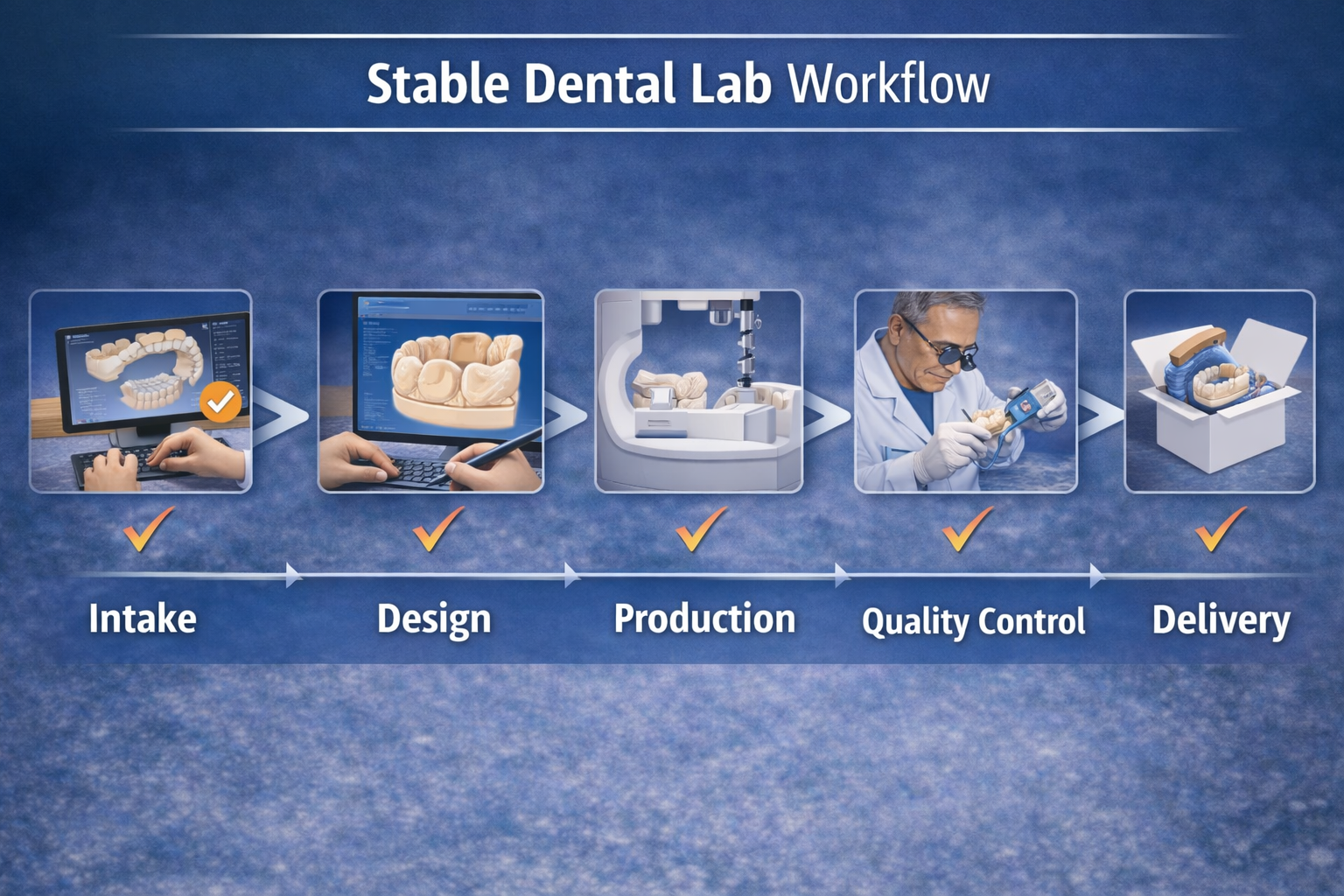
Consistency is not created at the end.
It is built into the daily workflow.
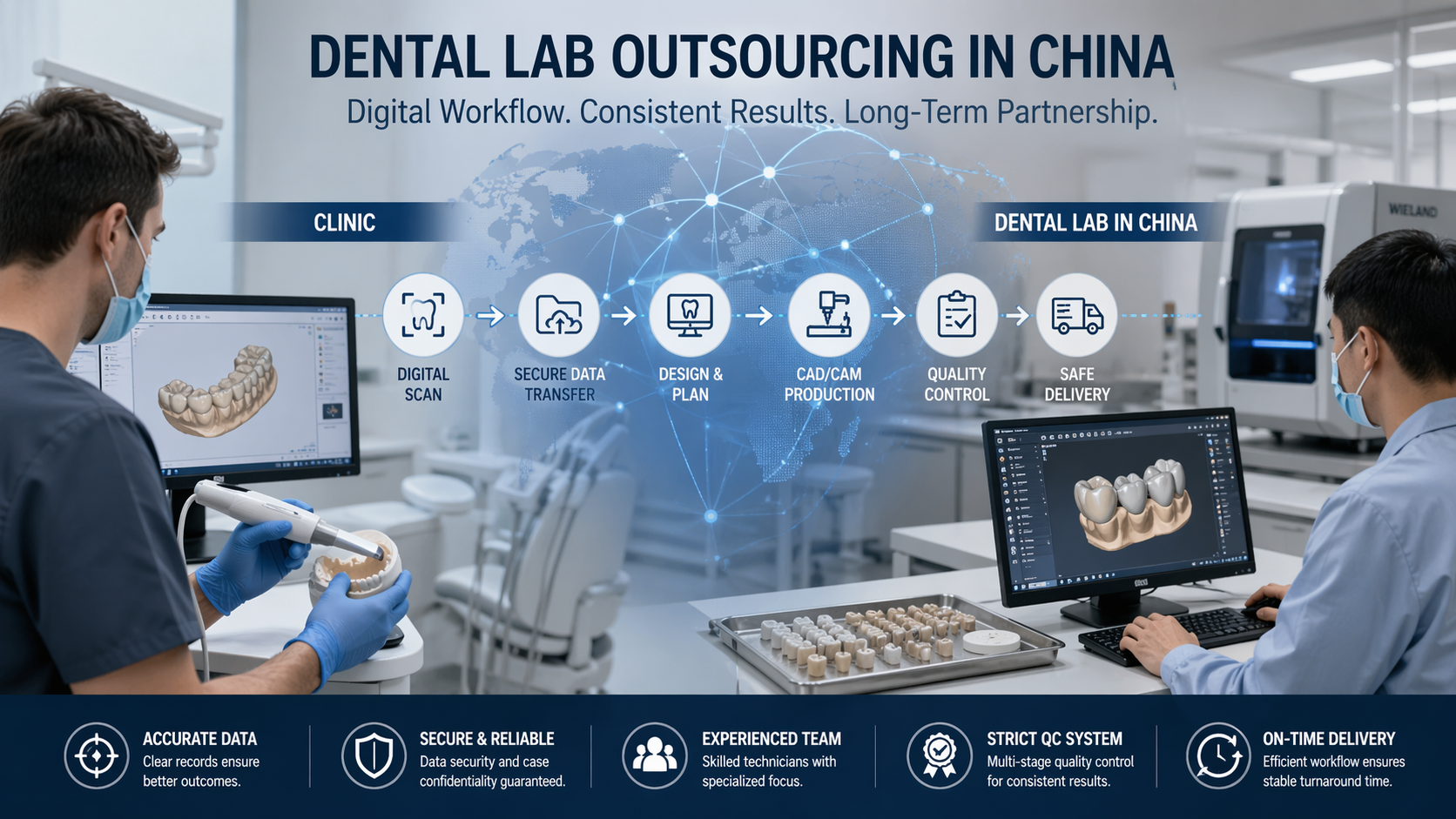
In our experience handling large volumes of international cases, stability comes from structure, not from individual effort.
Workflows Are Designed for Repeatability
In a structured lab environment, cases follow defined steps:
l Intake and data review
l Design planning
l Production
l Multi-stage quality checks
This reduces variability.
At Times Dental Lab, with over 400 technicians organized into specialized teams, cases are not handled randomly but through coordinated workflows.
This structure allows similar cases to be processed in a consistent way, regardless of individual technicians.
Production Is Built for Stability, Not Flexibility
In smaller setups, flexibility may seem like an advantage.
But at scale, too much flexibility leads to variation.
In our daily production — where output consistently exceeds 1,000 crowns per day — stability depends on repeatable processes rather than individual interpretation.
Parameters such as:
l contact range
l occlusal adjustment approach
l margin handling
are controlled within defined boundaries.
This ensures that similar cases behave similarly.
Quality Control Happens Across the Process
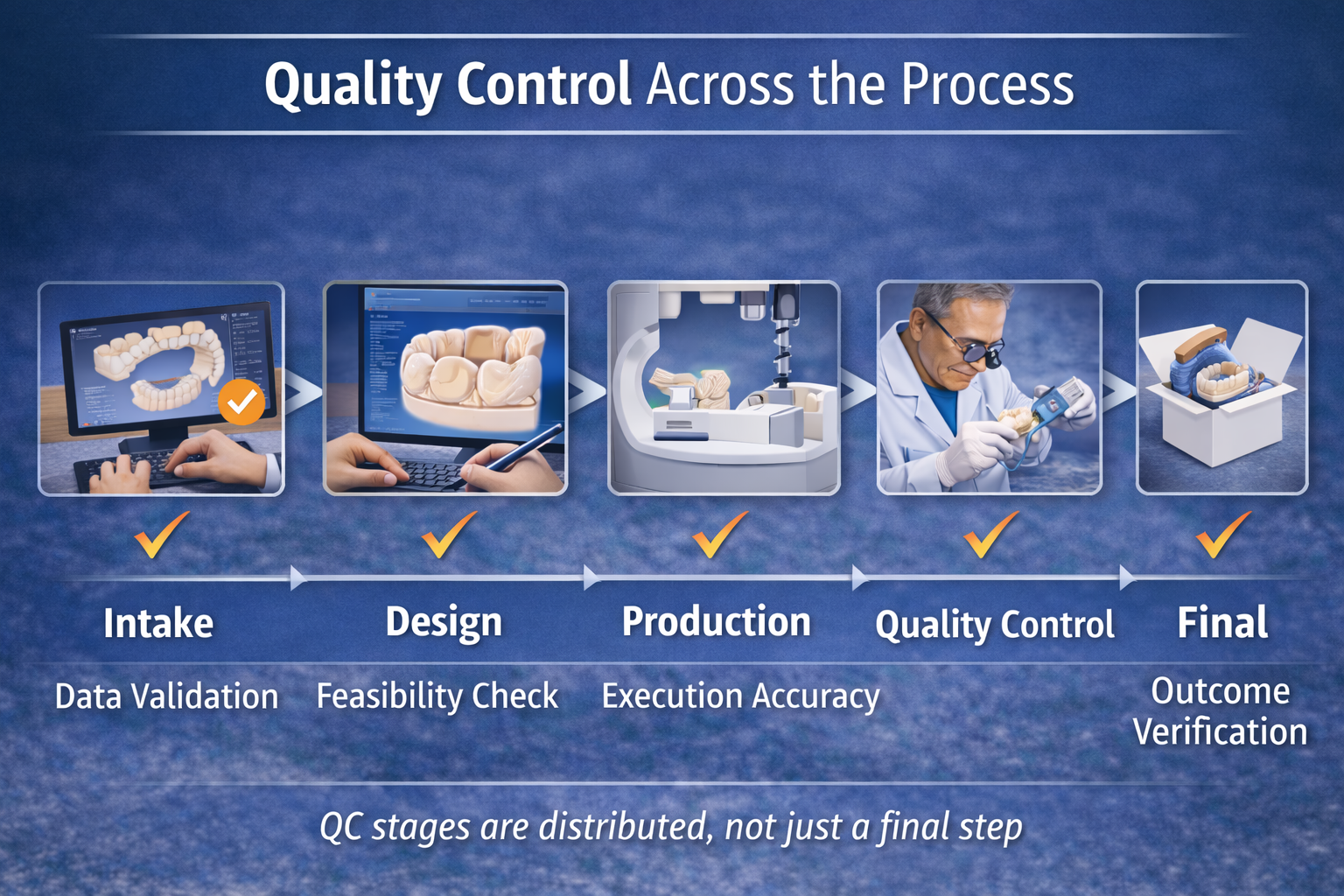
Instead of relying on final inspection, stable labs distribute QC across stages:
l Intake → data validation
l Design → feasibility check
l Production → execution accuracy
l Final → outcome verification
This layered approach reduces accumulated deviation.
At Times Dental Lab, multiple QC checkpoints are built into the workflow to support consistent output across production lines.
Experience Is Embedded Into the System
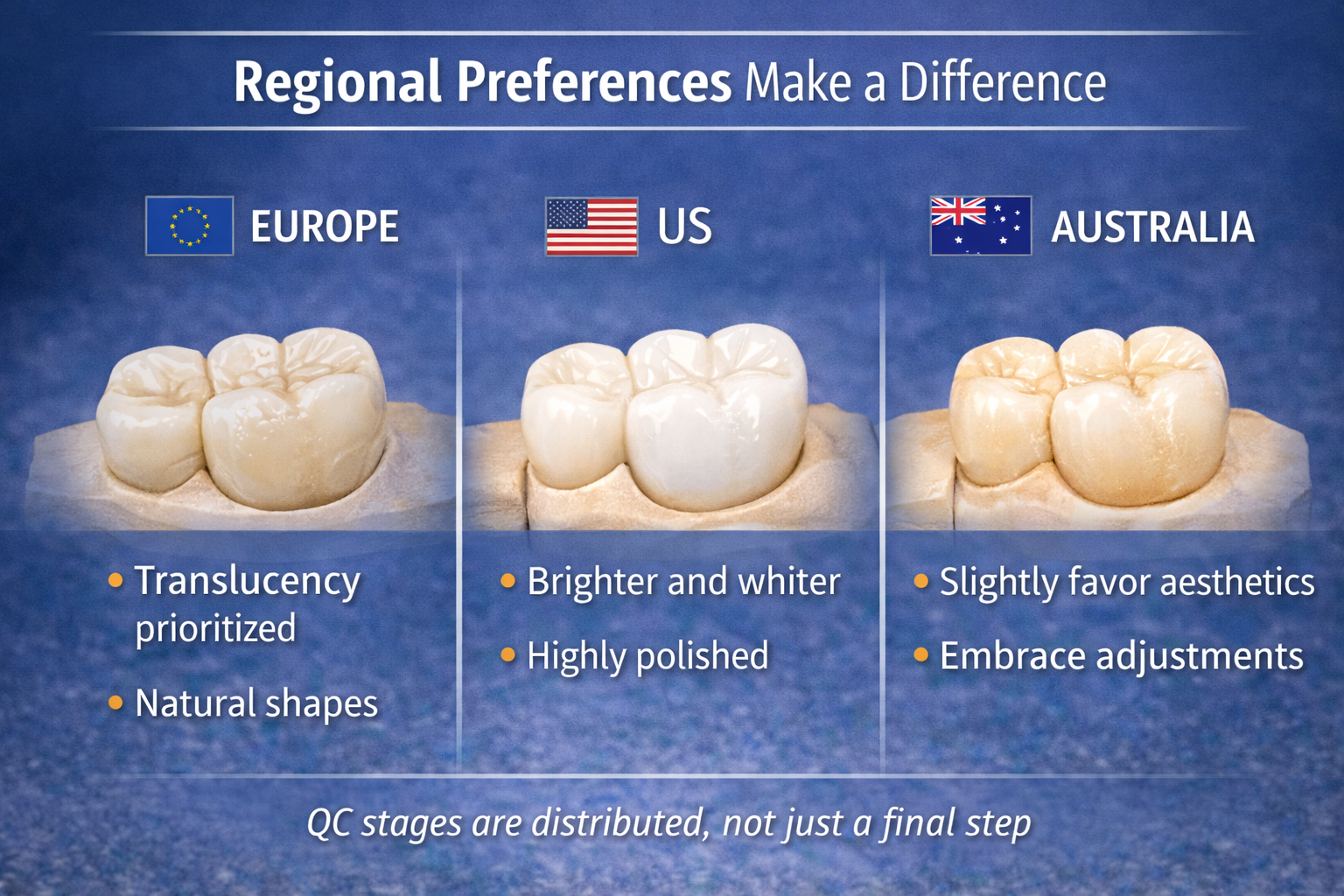
Experience is not only in people.
It is built into how decisions are made.
With over 95% of cases consistently exported to Europe, the US, and Australia, differences in clinical expectations become part of daily handling rather than exceptions.
For example:
l Contact tightness preferences vary
l Occlusion standards differ
l Aesthetic expectations are not uniform
Recognizing these differences early allows better alignment before production begins.
Why This Matters More Than Price or Speed
Price and turnaround time are easy to compare.
Consistency is not.
But over time, it has a greater impact.
The Hidden Cost of Inconsistency
Inconsistent outcomes lead to:
l Increased chairside adjustment
l More communication cycles
l Higher remake rates
l Patient dissatisfaction
These costs accumulate.
And often exceed any initial savings.
Why Speed Alone Does Not Guarantee Stability
Fast turnaround is valuable.
But speed without structure introduces risk:
l Reduced review time
l Increased variability
l Less control over outcomes
In stable workflows, speed is supported by process — not achieved by skipping steps.
A Practical Way to Evaluate Your Dental Lab
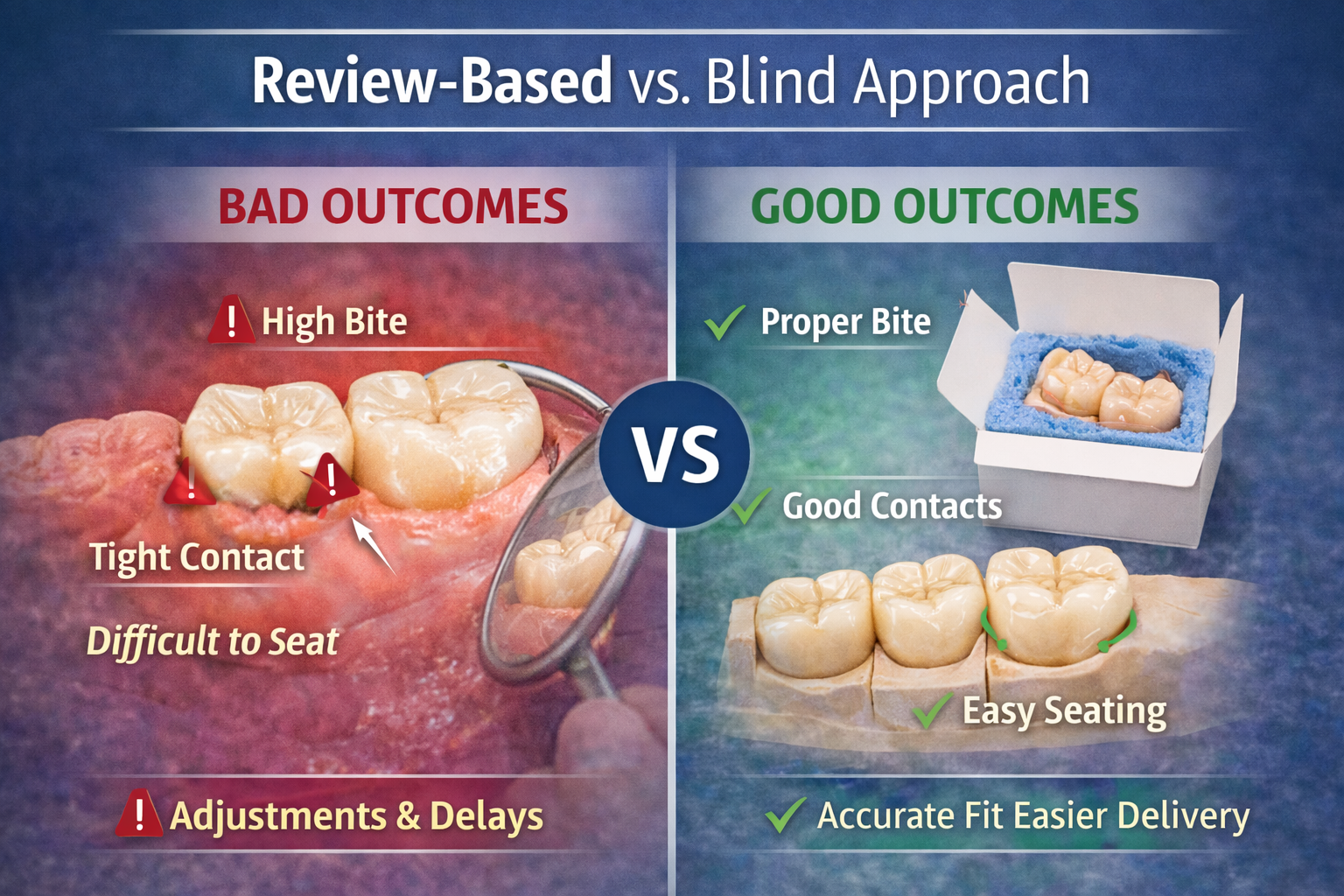
Consistency is not visible in marketing materials.
But it can be understood through simple questions.
Questions That Reveal Real Capability
l How are cases reviewed before production?
l How many QC stages are involved?
l How is consistency maintained across teams?
l What happens when case data is unclear?
What to Listen For
Look for:
l Clear process explanation
l Structured workflow
l Consistent logic
Be cautious of vague answers.
Consistency comes from systems, not claims.
A More Predictable Way to Work with a Dental Lab
Over time, stable cooperation is built on predictability.
When workflows are consistent:
l Planning becomes easier
l Adjustments decrease
l Communication becomes more efficient
The lab understands clinical expectations.The clinic understands how restorations behave.
This alignment reduces uncertainty.
Conclusion: Stability Is Built, Not Claimed
Consistency is not something a lab promises.
It is built into:
l Workflow
l Decision-making
l Quality control
l Experience
It is reflected not in one perfect case,but in many predictable ones.
Stability is not about eliminating variation.It is about managing it — consistently.
And over time, that is what separates a short-term supplierfrom a long-term manufacturing partner like Times Dental Lab —where consistency is not a result, but a system.