Introduction
Most clinicians and dental labs have experienced this.
A case looks correct on the model.
Margins seem clear. Contacts look acceptable. Occlusion appears balanced.
But once it is placed in the patient’s mouth, something changes.
The contact feels tighter than expected.
The bite is slightly high.
Or the restoration does not seat as smoothly as it should.
Adjustment becomes necessary.
Sometimes minor. Sometimes not.
In certain cases, a full remake is required.
This is not unusual.
But what is often misunderstood is this:
Remakes are rarely caused by a single mistake.
They are usually the result of small uncertainties that were not fully addressed early in the workflow.
Where Remakes Actually Come From
Every clinic and every dental lab has faced this situation at some point.
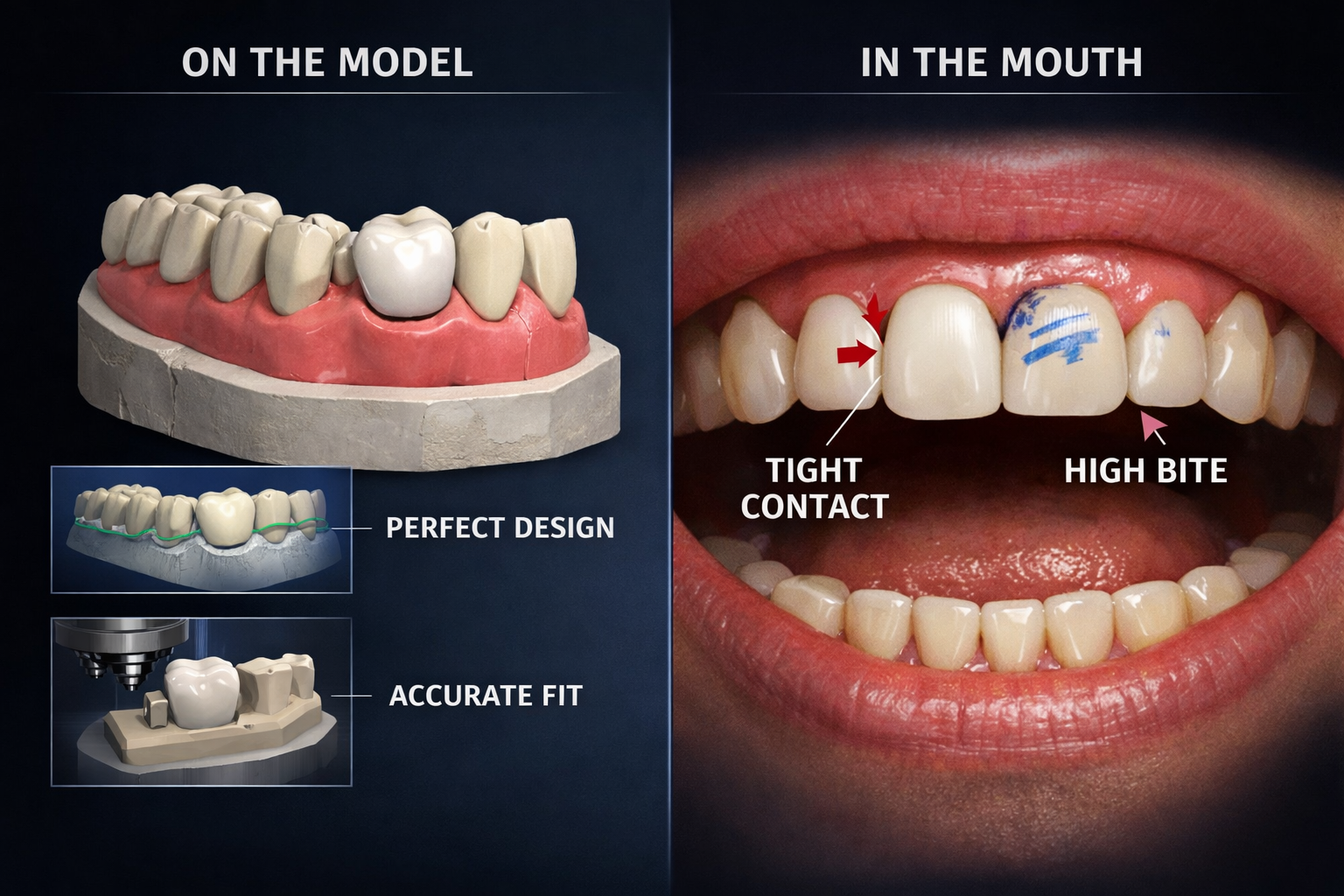
A case looks correct on the model.Margins appear clear. Contacts look acceptable. The occlusion seems balanced.
But once it is placed in the patient’s mouth, something changes.
The contact feels tighter than expected.The bite is slightly high.Or the restoration does not seat as smoothly as it should.
Adjustment becomes necessary.Sometimes minor. Sometimes not.
And in certain cases, a full remake is required.
This is not unusual.
Dental lab remakes are not uncommon in daily clinical and laboratory work.
But what is often misunderstood is this:
Remakes are rarely caused by a single mistake.
They are usually the result of small uncertainties that were not fully addressed early in the workflow.
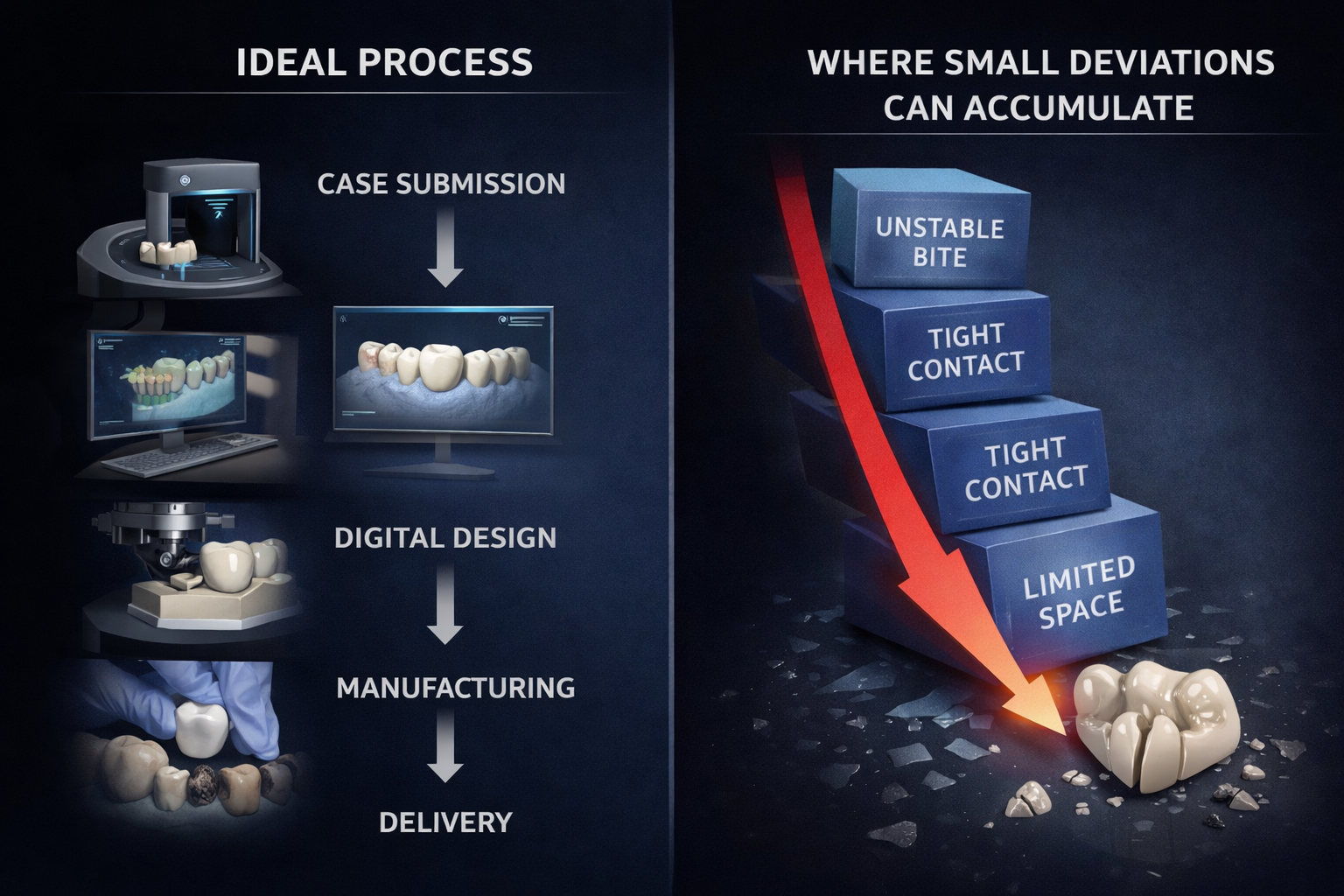
When the Case Looks Complete — But Key Information Is Missing
A clean scan does not always mean a complete case.
In many situations, the geometry is accurate and margins are visible, but important context is missing. There may be no pre-operative reference, the bite registration may not be stable, or shade is provided without any visual guidance.
These are not obvious errors. But they introduce uncertainty — and that uncertainty often leads to adjustment later.
When a “Perfect” Design Doesn’t Fit a Real Mouth
Digital design allows for ideal anatomy and balanced occlusion.
But real clinical conditions are rarely ideal.
Opposing teeth may be worn. The bite may already be unstable. Teeth are not always aligned in a predictable way. The insertion path may be limited.
A design that looks perfect on screen may not follow the reality in the mouth.
When Small Deviations Start to Accumulate
Most remakes are not caused by a single mistake.
Many dental lab remakes are not caused by one major issue, but by a combination of small deviations that build up over time.
These include:
l Slightly tight contact
l Minor bite discrepancy
l Small differences in margin interpretation
l Insertion path not fully considered
Each alone may be manageable. Together, they affect the final result.
Common Clinical Situations That Lead to Remakes
Across different types of restorations, certain patterns appear repeatedly.
Contacts That Feel Different After Seating
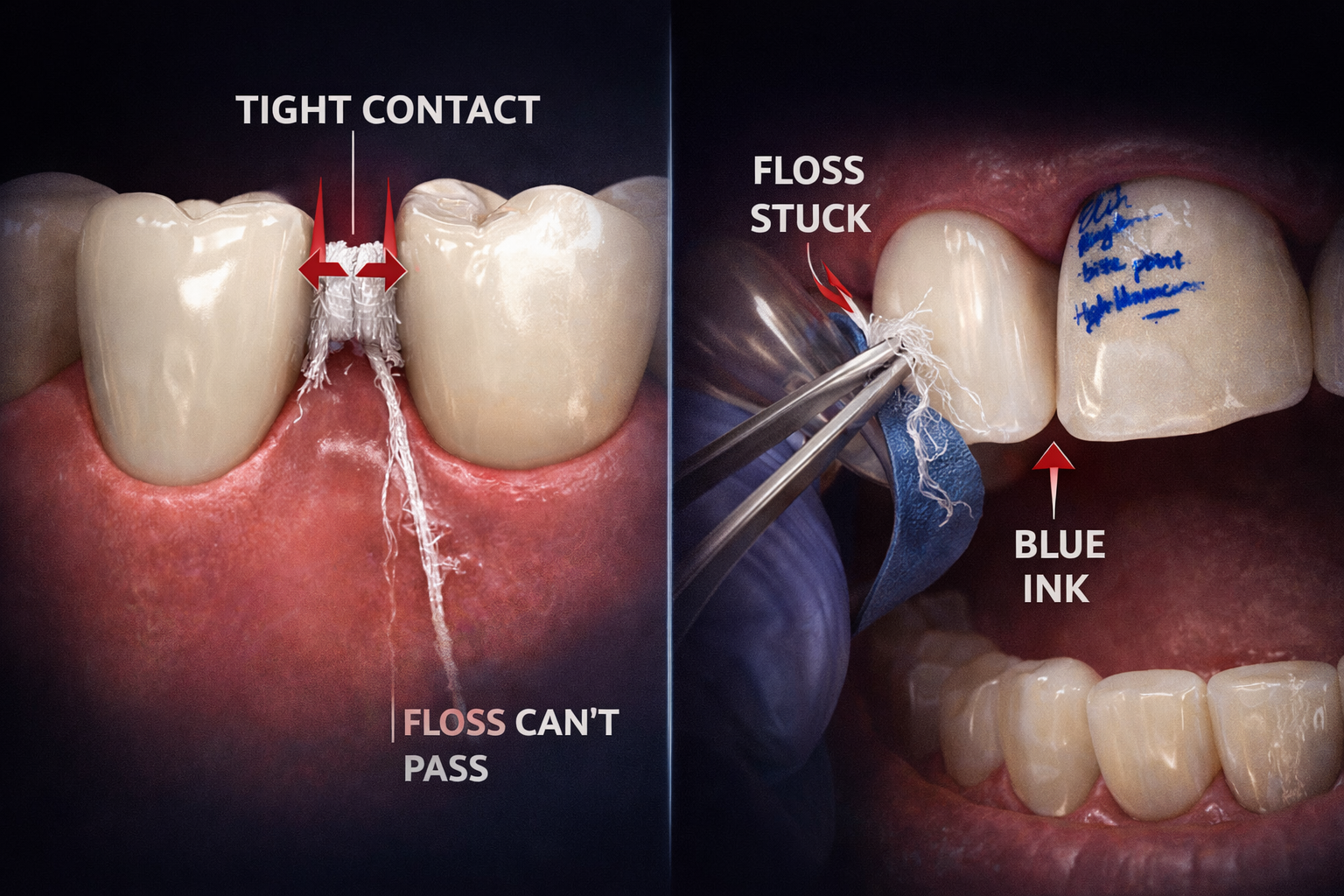
On the model, contacts may appear correct.
In the mouth, they feel tighter.
This difference can come from slight tooth movement, material tolerance, or differences between the model and intraoral condition.
Occlusion That Feels High
Even when occlusion is checked carefully, the bite may feel slightly elevated after delivery.
This is often related to unstable bite registration or inconsistency in the opposing dentition.
Shade That Does Not Match Expectations
Shade is not only about selecting a code.
Lighting, gingival tone, adjacent teeth, and material thickness all influence the final appearance.
Without visual reference, shade interpretation becomes less predictable.
Limited Space for Restoration
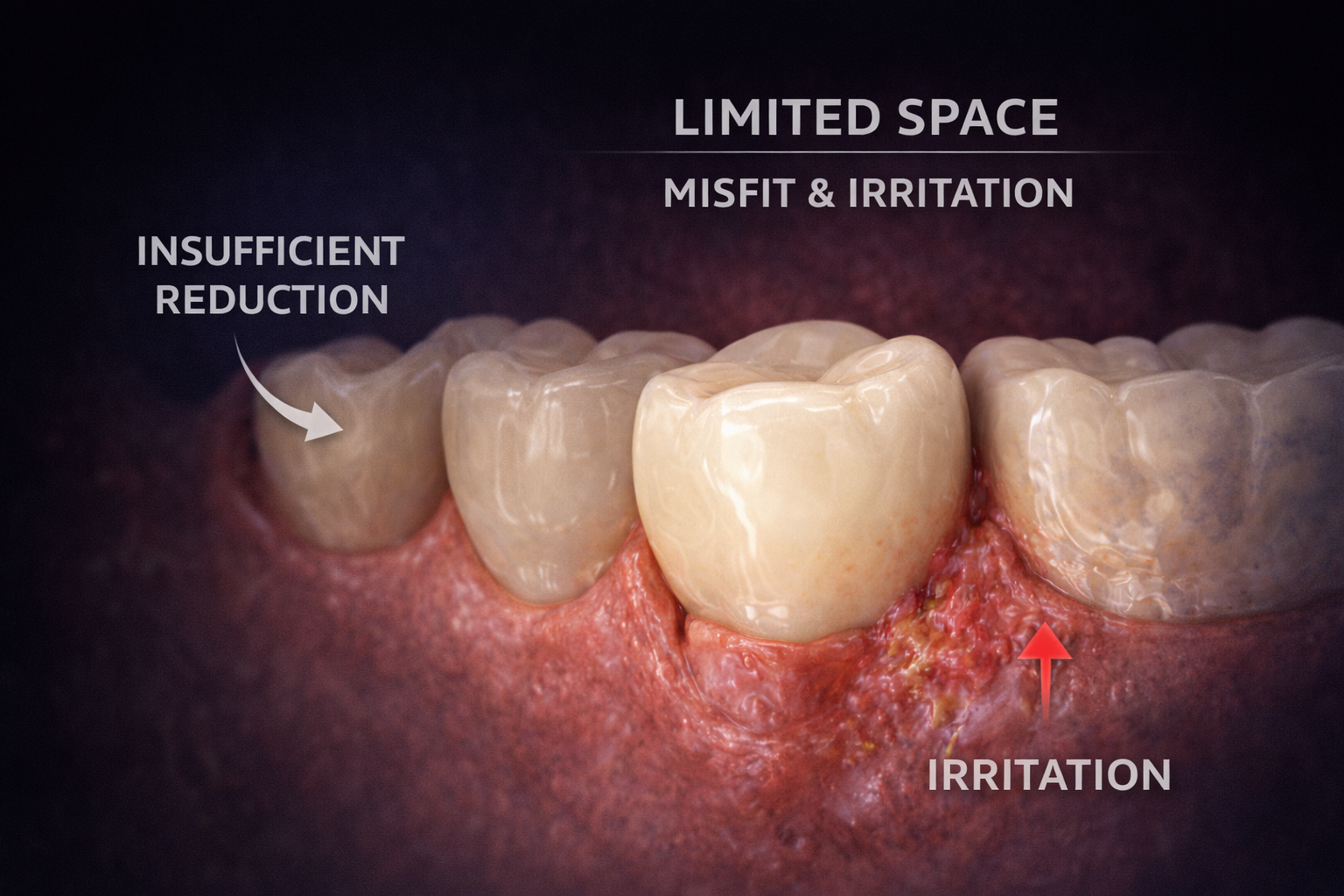
When reduction is insufficient, the lab must work within constraints.
Balancing strength, aesthetics, and seating becomes more difficult, increasing the risk of adjustment.
Implant Cases with Incomplete Reference
Implant restorations rely on stable reference points.
If scan body data is incomplete or misaligned, it affects positioning and fit.
What Can Be Done Before Production
Most remake risks can be reduced before manufacturing begins.
Provide More Than Just a Scan
A clean scan is important, but not sufficient.
Additional information such as pre-operative scans, bite registration, intraoral photos, and shade references provides context that improves predictability.
Define Priorities Clearly
Each case has different priorities.
Clarifying whether aesthetics or function is more important helps guide design decisions.
Adapt to the Case — Not to an Ideal
If the clinical situation is not ideal, forcing an ideal design may create problems.
Following the existing condition often leads to better outcomes.
Review Complex Cases Early
For full-arch, implant bridges, or large-span restorations, early review helps reduce uncertainty.
A clearer and more structured case submission process is one of the most effective ways to reduce dental lab remakes before production even begins.
What We See in Daily Lab Work
In daily production, patterns become clearer.
In a lab environment with over 400 technicians, handling more than 1,000 crowns per day, these situations are not occasional — they are part of routine work.
Cases received from Europe, the United States, and Australia often present similar challenges.
Many Cases Are Technically Correct — But Not Clinically Stable
A case may look correct in data form.
But when reviewed more closely, bite may be inconsistent, reference may be missing, or opposing condition may not be clear.
These are not mistakes, but they affect the final outcome.
A Single Missing Detail Can Affect the Entire Case
Small details matter.
A missing bite reference or unclear shade can influence the entire restoration.
Cross-Border Cases Add Additional Complexity
Different regions may have different expectations.
For example, aesthetic preferences in Europe may differ from those in the United States.
Without clear communication, interpretation can vary.
How a Structured Workflow Helps Reduce Remakes
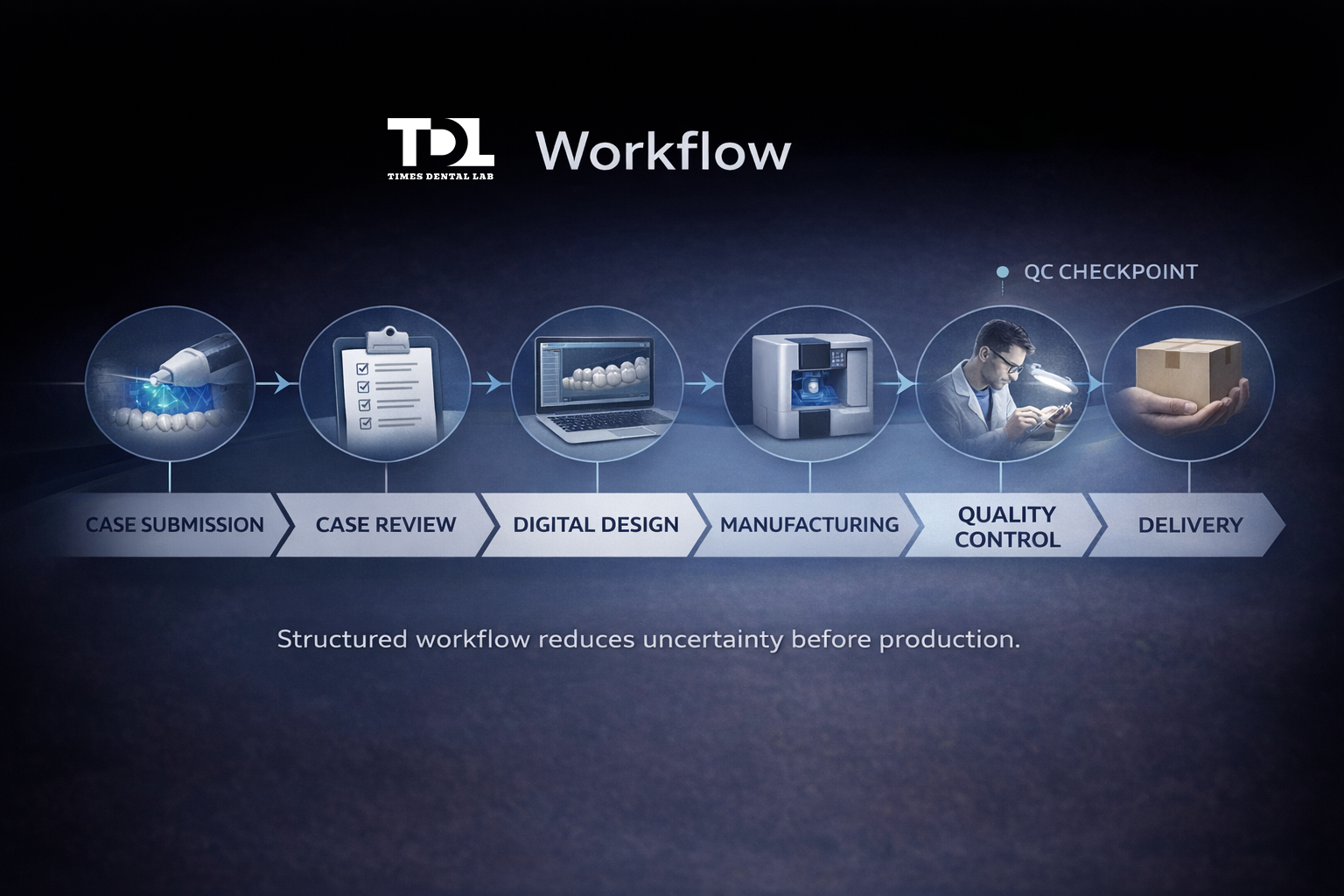
A predictable workflow reduces uncertainty.
In daily operations, a structured workflow is one of the most reliable ways to reduce dental lab remakes across different case types.
Case Review at Intake
Instead of waiting until final QC, reviewing cases at intake helps identify potential issues early.
https://times-dental.com/sending-a-case
Early Communication
Clarifying uncertainties early prevents assumptions.
A short discussion before production often avoids later adjustments.
Design Based on Clinical Reality
Design should adapt to real conditions rather than ideal parameters.
Multiple Quality Checkpoints
A structured workflow includes multiple QC stages, reducing cumulative error.
A Practical Checklist That Helps in Daily Work
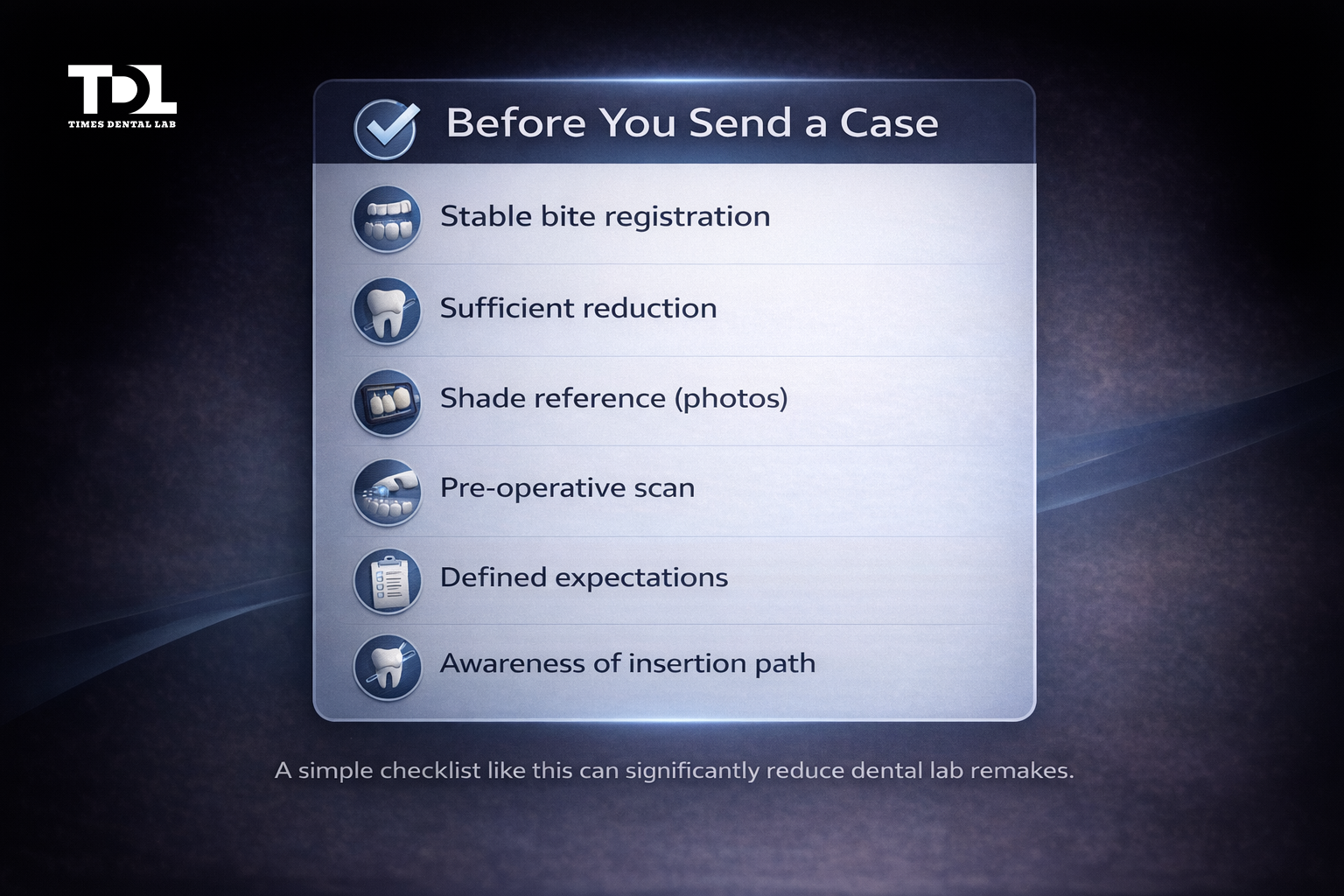
Before sending a case, it helps to confirm:
l Stable bite registration
l Sufficient reduction
l Clear shade reference (photos recommended)
l Pre-operative scan when available
l Defined expectations
l Awareness of insertion path
Final Thoughts
Remakes are rarely caused by a single mistake.
They are the result of:
l Missing context
l Small deviations
l Misaligned expectations
Reducing remakes is not about perfection.
It is about building a workflow where uncertainty is addressed early.
Reducing dental lab remakes is not about eliminating all variation, but about improving predictability in every step of the workflow.
In long-term cooperation between clinics and labs, this approach becomes more stable over time.
External References
l https://www.journals.elsevier.com/the-journal-of-prosthetic-dentistry