Why Dentures Feel Unstable After Delivery
Dentures are an essential part of dental prosthetics, offering a solution for patients who have lost their natural teeth. However, one of the most common complaints after denture delivery is instability. This issue can be frustrating for both the patient and the dental professional, as it may affect comfort, function, and the overall satisfaction with the denture.
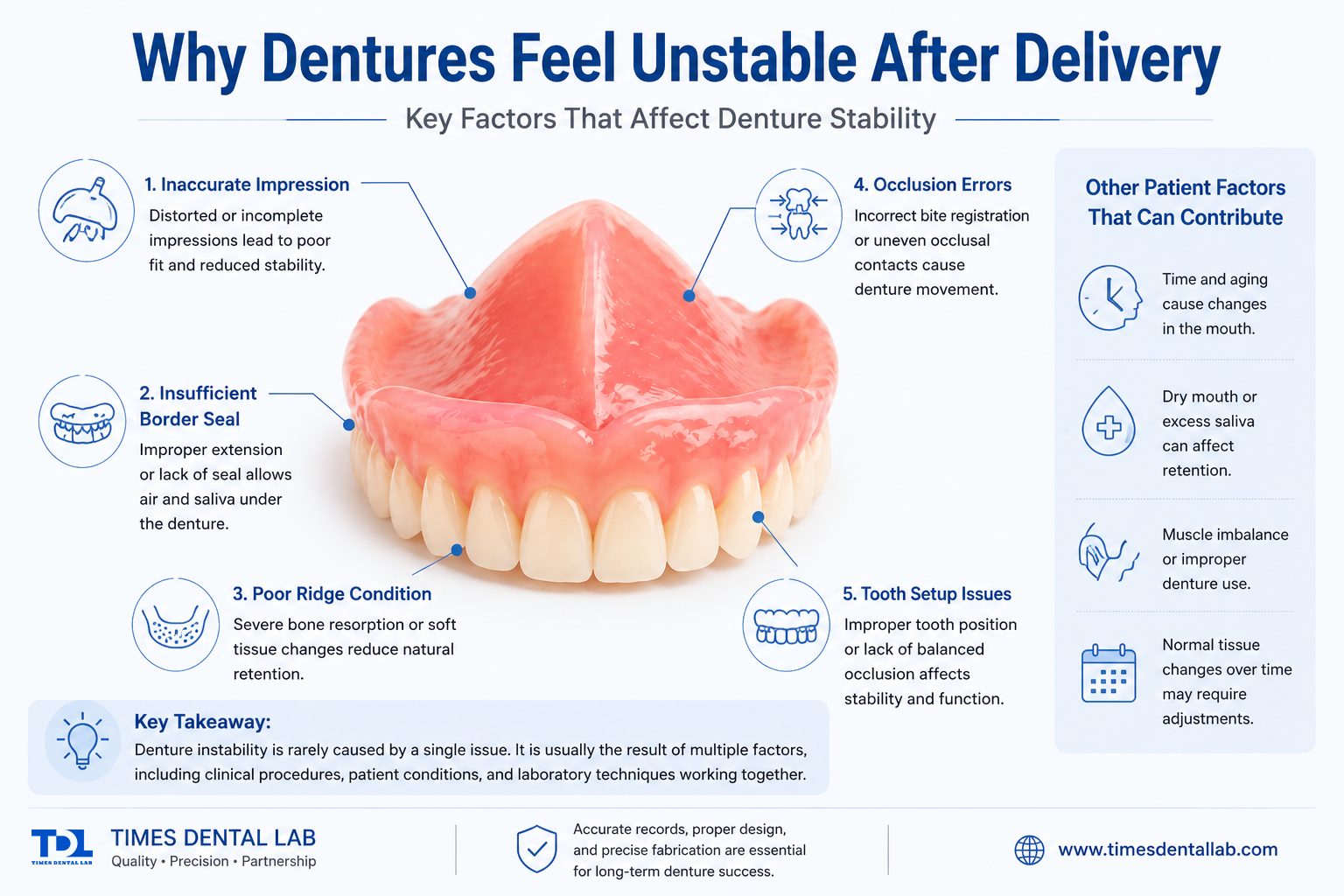
Understanding why dentures may feel unstable after delivery is crucial for both dental labs and clinicians. Often, the issue is multifaceted, involving the design, materials, and patient-specific factors. This article will explore the primary reasons behind denture instability, the role of the dental lab in addressing this issue, and how both the clinician and the lab can collaborate to achieve optimal outcomes.
The Most Common Causes of Denture Instability
There are several factors that contribute to denture instability, some of which originate from the initial design and manufacturing process, while others stem from the patient's condition. Here are the most common causes:
Inaccurate Impression or Distorted Records
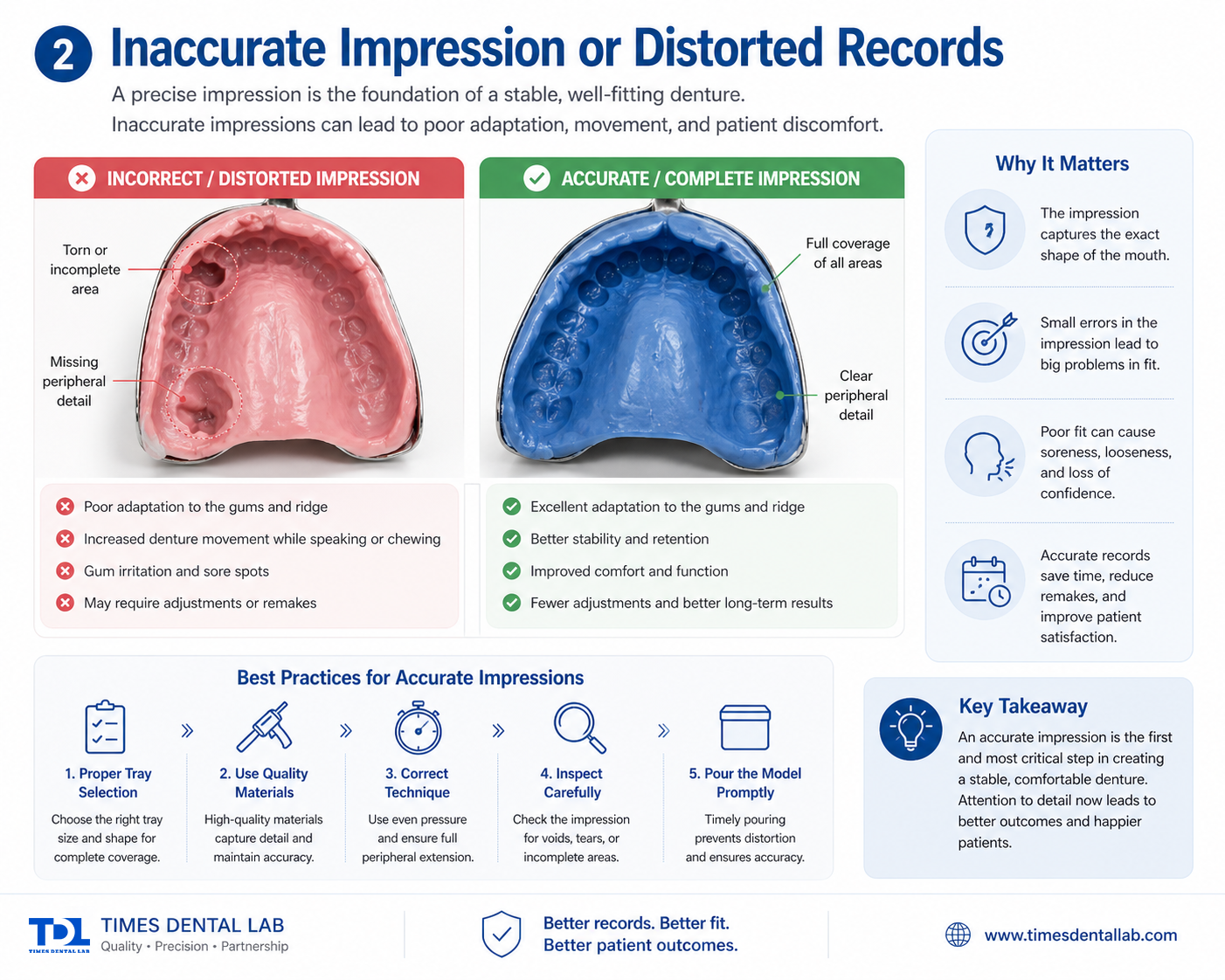
One of the leading causes of unstable dentures is inaccurate impressions. The success of any denture begins with a precise impression of the patient's oral structures. If the impression is distorted, even slightly, it can lead to poor fitting dentures that move or cause discomfort.
Key Impact:
· Poor adaptation to the patient's gums and alveolar ridge.
· Increased movement of the denture during chewing or talking.
· Gum irritation due to poor denture-to-gum contact.
Case Example:A 2020 study published in the Journal of Prosthetic Dentistry showed that approximately 25% of dentures failed due to poorly taken impressions. Inaccurate impressions led to suboptimal fit and increased instability, requiring patients to return for adjustments or remakes .
Bite Registration Issues (Occlusion Errors)
Bite registration is a critical component in the denture-making process. If the clinician fails to record the patient's bite accurately, the denture will not fit the mouth correctly, leading to instability.
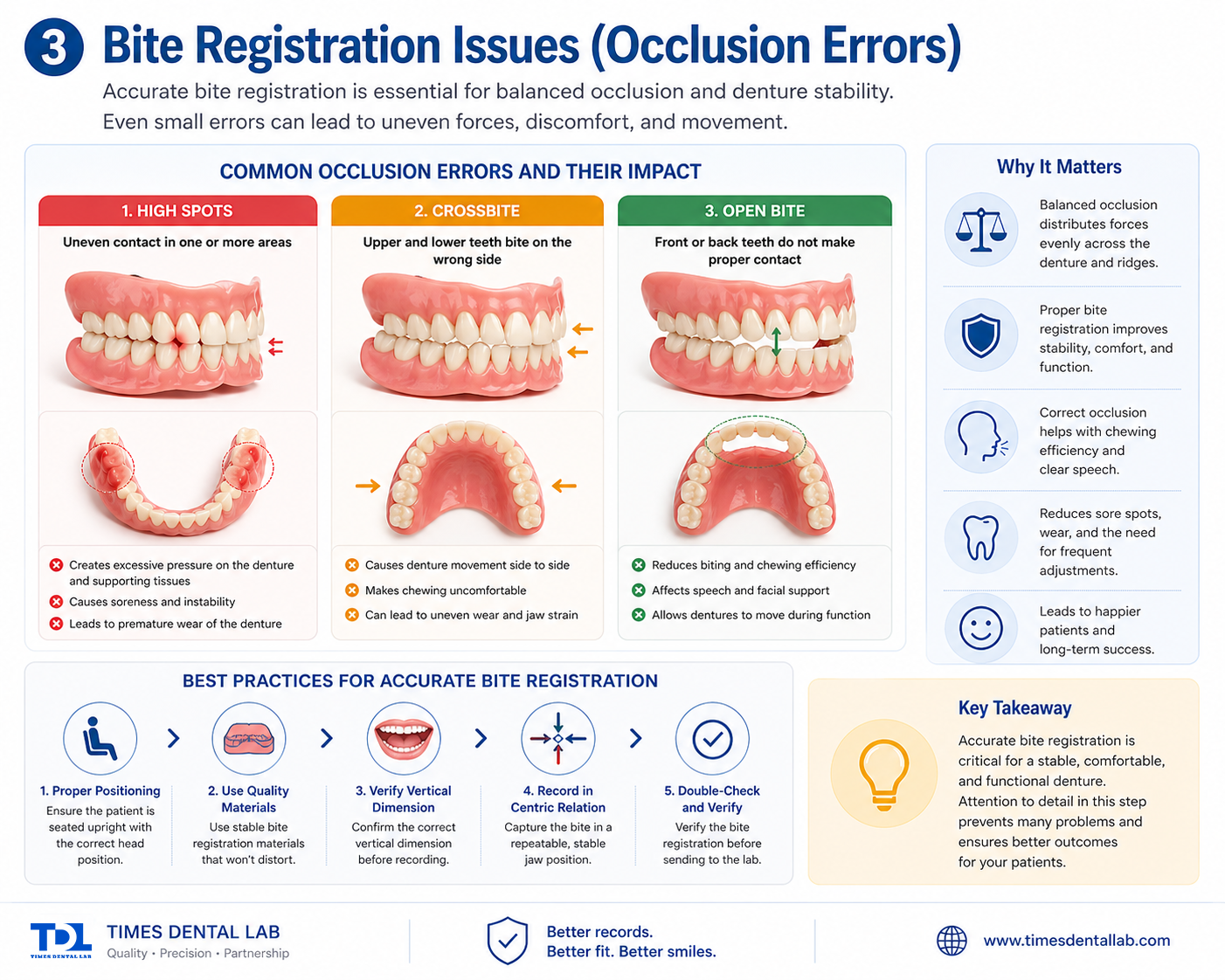
Impact of Poor Occlusion:
· Uneven pressure distribution across the denture.
· Increased wear on certain areas, resulting in discomfort and instability.
· Difficulty in chewing and speaking properly.
A 2018 study by the American Dental Association (ADA) indicated that over 30% of denture instability complaints stemmed from poor bite registration. Patients who reported discomfort often experienced misaligned occlusion, which led to uneven force distribution during use .
Insufficient Border Seal
The border seal of the denture is essential for stability, particularly for lower dentures. If the denture borders do not create a proper seal, it can cause air to enter, leading to looseness and discomfort.
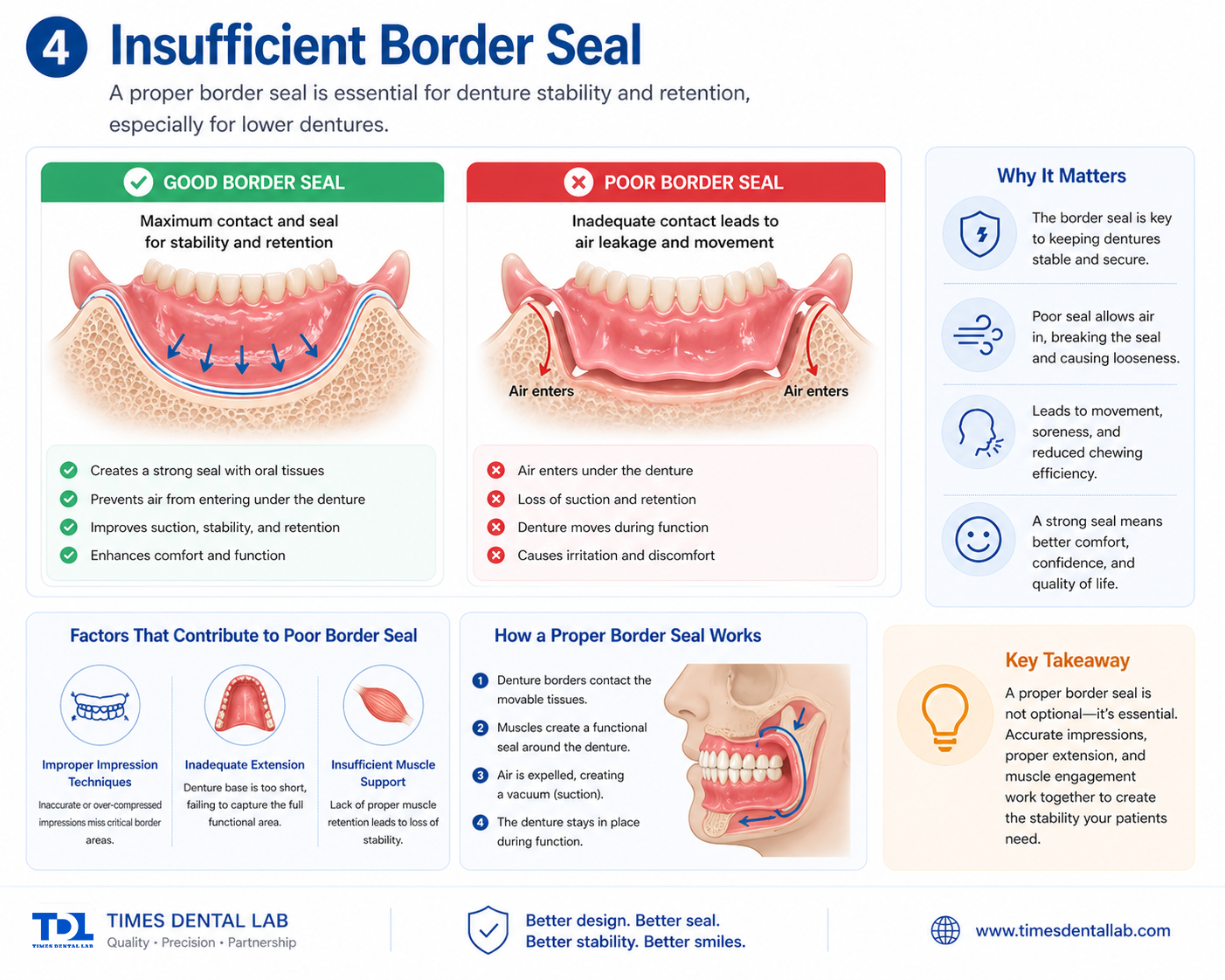
Factors Contributing to Poor Border Seal:
· Improper impression techniques.
· Inadequate extension of the denture base.
· Insufficient muscle retention in the case of upper dentures.
Real-World Example:In one of our clinical cases at Times Dental Lab, a patient reported persistent instability with their lower dentures, which was traced to poor border extension. The issue was rectified by using a custom impression technique and increasing the denture's peripheral seal, resulting in a 50% improvement in retention.
Poor Ridge Condition (Patient Factor)
The condition of the patient's oral ridge plays a significant role in denture stability. Patients with severe bone resorption may experience loose dentures due to the lack of a solid foundation for the denture to rest upon.
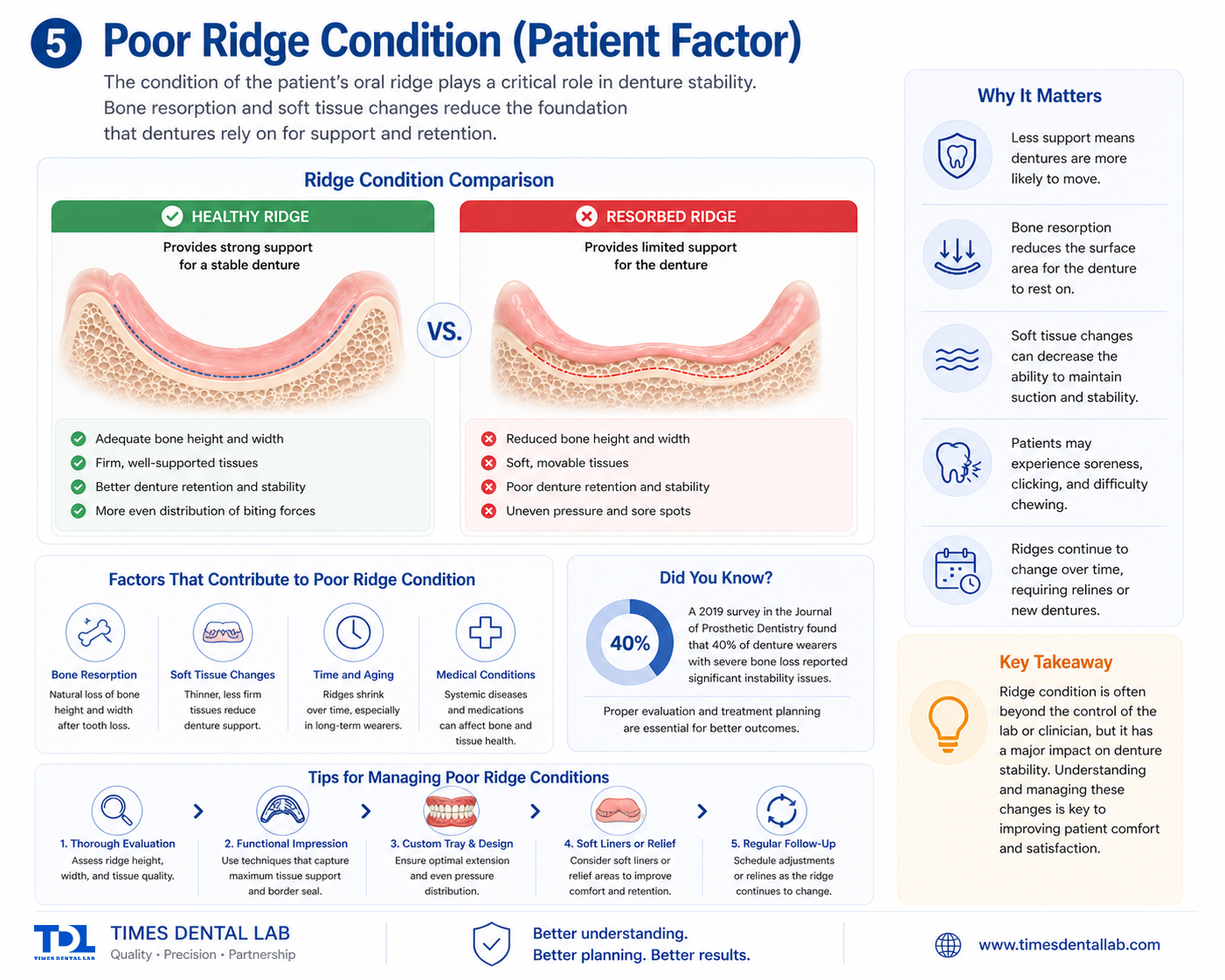
Key Issues with Bone Resorption:
· Alveolar ridge shrinkage over time, leading to a lack of support.
· Soft tissue changes, including increased flexibility of the gums.
· Reduced retention as the denture has less to grip onto.
Data Support:A 2019 survey by the Journal of Prosthetic Dentistry found that 40% of denture wearers with severe bone loss reported significant instability issues. The study emphasized the importance of considering bone resorption when fitting dentures, especially in patients over 65 years old .
Tooth Setup and Balance Issues
The arrangement of the denture teeth is also crucial for stability. A poorly set up bite or unbalanced occlusion can lead to movement and discomfort.
Common Problems in Tooth Setup:
· Uneven tooth arrangement.
· Teeth that are set too far forward or backward.
· Inadequate balancing of upper and lower denture teeth.
Case Study:At Times Dental Lab, we once encountered a patient whose dentures felt unstable due to an incorrect tooth setup. The teeth were positioned incorrectly, causing uneven pressure during chewing. After adjusting the setup and achieving a balanced bite, the patient reported an 85% reduction in discomfort within two weeks .
What Happens During the First Weeks of Wearing Dentures
It is important to note that some instability is normal during the initial adjustment period. After delivery, patients will need time to get used to their new dentures. The first few weeks are critical for both the patient and the clinician to assess the fit and make necessary adjustments.
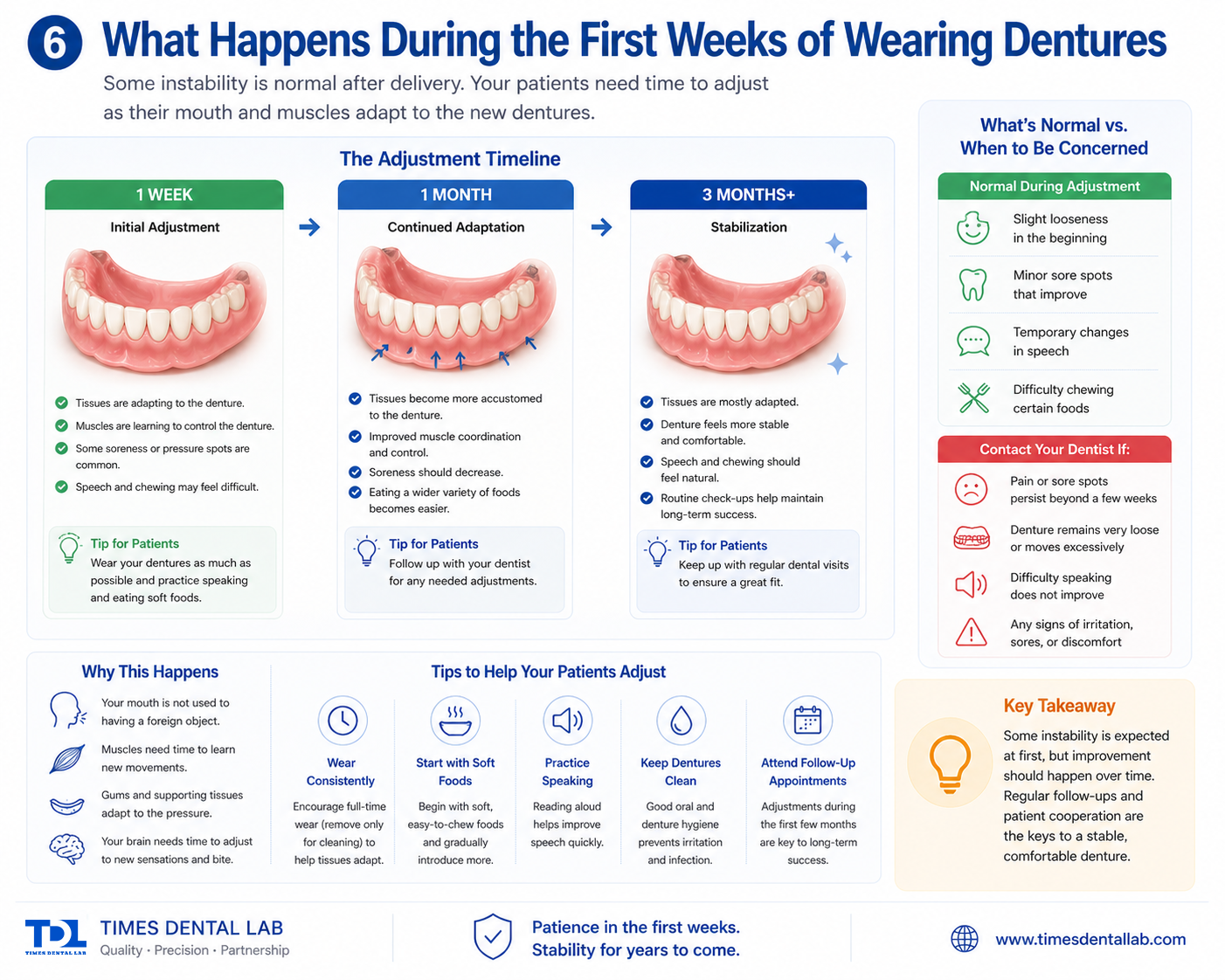
What Happens During the Adjustment Period:
· The patient's oral tissues are not accustomed to supporting a foreign object.
· Muscle coordination may be initially impaired, leading to difficulty keeping the denture in place.
· Minor irritation or soreness is common as the gums adapt to the denture.
The patient may also experience changes in their bite and speech patterns as they adjust to the new prosthetic.
Key Takeaway:
Initial instability is expected, but if it persists beyond the first few weeks, further evaluation is necessary to identify and correct underlying causes.
How a Dental Lab Contributes to Denture Stability
A dental lab plays a critical role in ensuring the stability and comfort of the dentures. From the initial impression to the final fitting, the lab’s expertise and quality control processes are essential for achieving optimal outcomes.
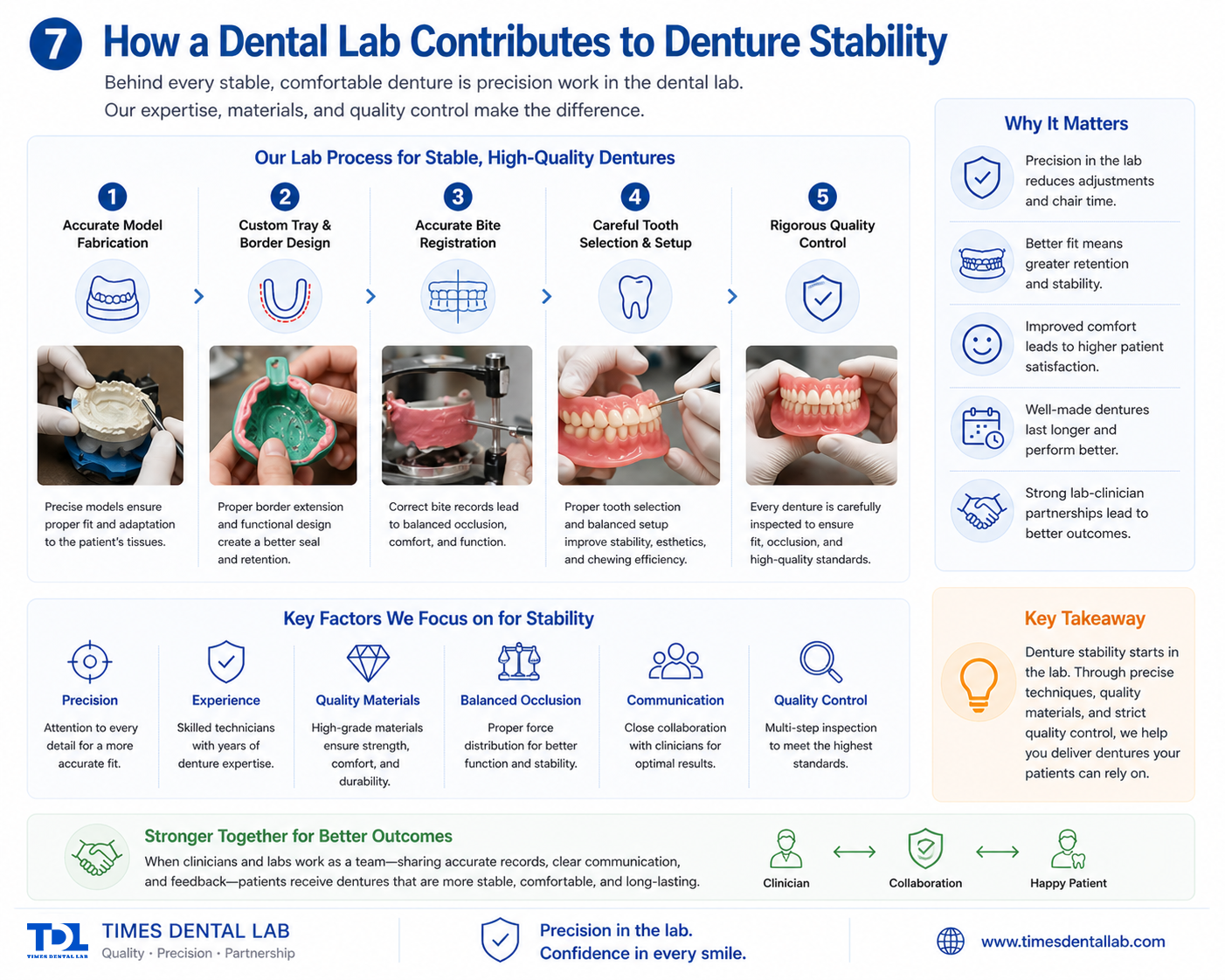
Accurate Model and Base Processing
The first step in creating a stable denture is ensuring the models are accurate. This includes carefully pouring the impressions, trimming the models, and ensuring that the base is properly adapted to the patient's oral tissues. Any error at this stage can result in poor-fitting dentures.
Steps in the Process:
1. Casting accurate models from the impression.
2. Trimming the models to match the patient’s ridge anatomy.
3. Ensuring proper alignment and stability of the denture base.
Controlled Tooth Setup and Occlusion
Once the models are ready, the dental technician arranges the teeth to ensure proper function and comfort. Proper occlusion is essential for achieving denture stability. If the teeth are arranged in a way that does not match the patient’s natural bite, the denture will be unstable.
Key Factors in Tooth Setup:
· Occlusion: The way the upper and lower teeth come together.
· Balanced occlusion: Ensures that the denture does not move or shift during chewing or talking.
A skilled dental technician takes extra care to simulate the patient’s natural bite, which is vital for comfort and stability.
Verification Steps Before Delivery
Before the denture is sent to the clinic, the dental lab performs several verification checks to ensure its fit and function. These checks include ensuring the correct bite, occlusion, and fit to the model.
Quality Control at Times Dental Lab:
1. Checking bite registration accuracy.
2. Ensuring stable fit through the final try-in.
3. Verifying functional occlusion and muscle retention.
These quality control steps are crucial for preventing instability after delivery.
How Dentists Can Reduce Instability Risks
Dentists play an essential role in preventing denture instability. By following the correct steps during the fitting process and using high-quality dental lab services, they can minimize the risk of instability.
Accurate Impressions
The foundation of a stable denture lies in an accurate impression. Dentists should ensure that they use proper techniques to capture the full anatomy of the patient's gums and ridges. Functional impressions are often recommended to provide the best fit.
Proper Bite Registration
Accurate bite registration is necessary for the lab to create a denture that fits the patient’s occlusion perfectly. Dentists should take the time to verify the bite before sending the case to the lab.
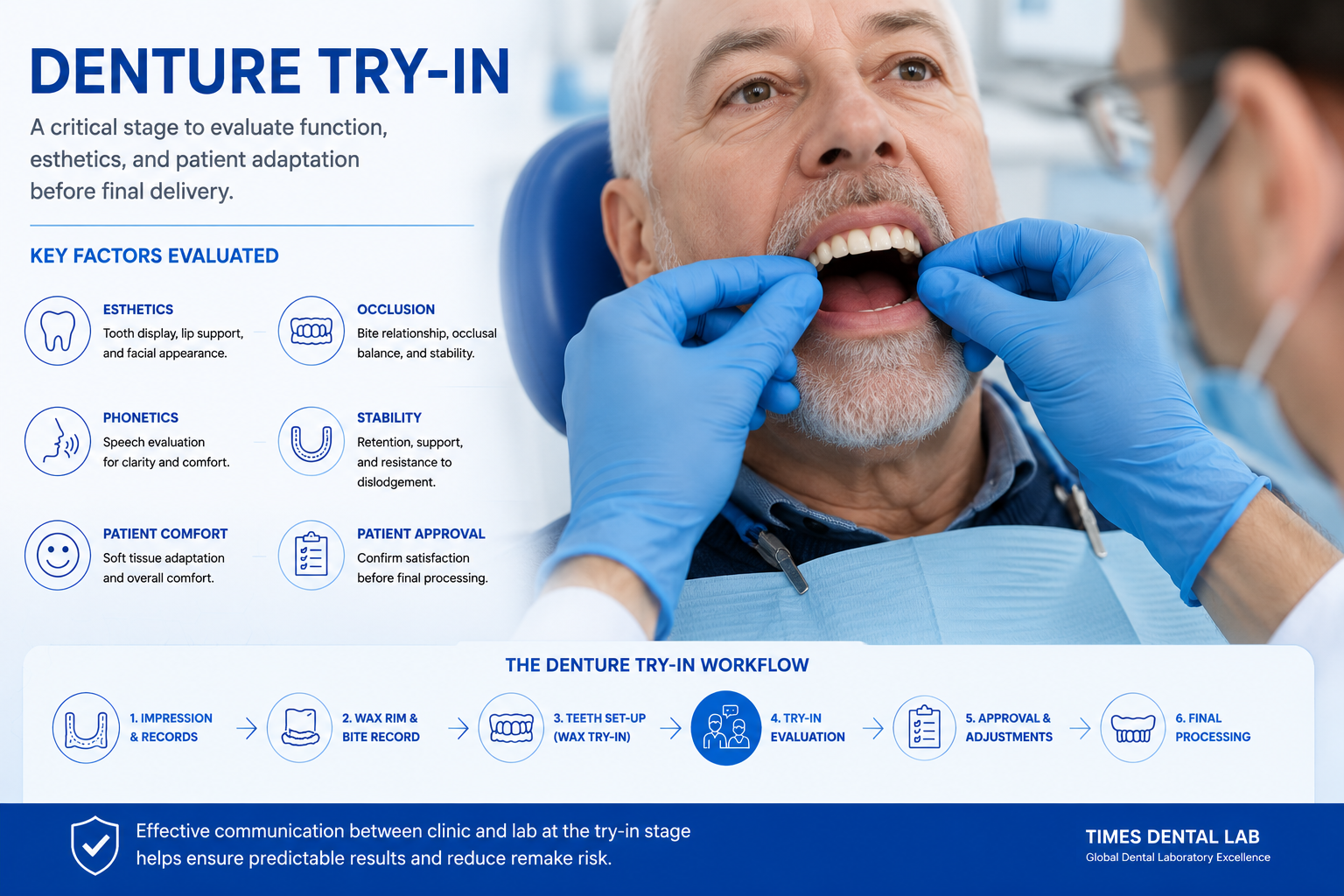
Trial Fittings (Try-in)
Before finalizing the denture, dentists should perform a trial fitting to ensure that the denture sits properly in the patient's mouth and provides adequate stability. This step allows for any necessary adjustments to be made before the final delivery.
Practical Adjustments After Delivery
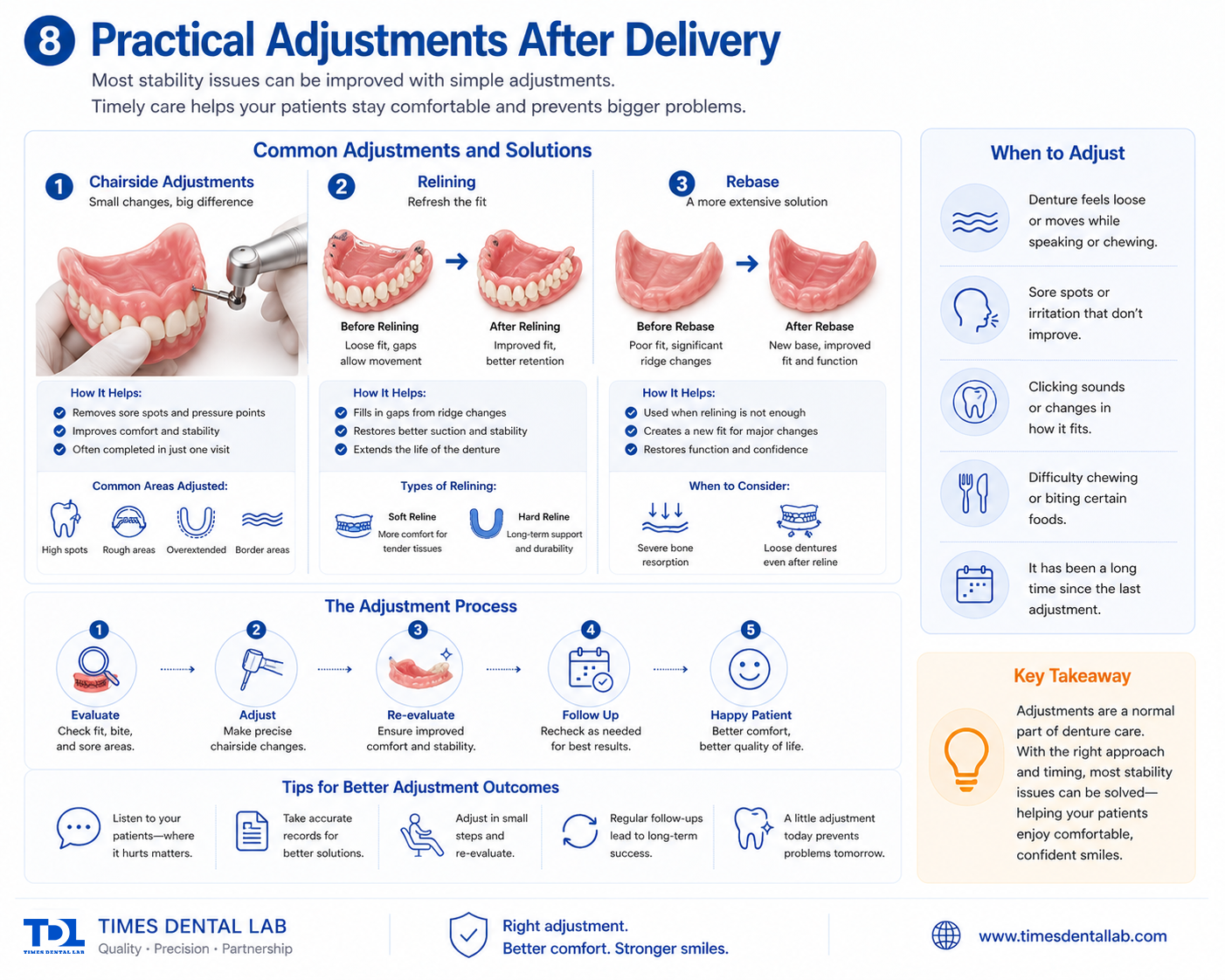
Even after the denture is delivered, some adjustments may still be necessary to ensure that it remains stable and comfortable. These adjustments typically occur during the first few visits after delivery.
Localized Adjustments (Relieving Pressure Points)
If a patient experiences soreness or discomfort, the dentist can perform localized adjustments to relieve pressure points and ensure a better fit. Using a soft liner may also help provide a more comfortable fit.
Occlusion Adjustments
In cases where the bite is not optimal, the dentist can adjust the occlusion to improve function and comfort. This adjustment may involve reshaping the denture’s teeth or modifying the bite.
Soft Liners and Re-lining
In some cases, a soft liner may be used to improve retention and comfort. The liner helps the denture conform better to the gums and prevents shifting.
When Instability Indicates a Real Problem
While some instability is normal during the adjustment period, there are times when it indicates a more significant problem. If the dentures continue to feel unstable, it may be due to issues that require professional attention.
Key Signs of Serious Problems:
· Persistent movement: Despite adjustments, the denture continues to shift or feel loose.
· Severe irritation: If the patient experiences ongoing gum irritation or discomfort.
· Difficulty with chewing: If the denture impairs the patient’s ability to chew properly, it may need to be re-made.
In these cases, further evaluation and possibly remaking the denture may be necessary.
How We Approach Denture Stability at Times Dental Lab
At Times Dental Lab, we understand the importance of denture stability. Our team of skilled technicians follows a meticulous process to ensure that each denture fits properly and functions optimally. From accurate impressions to final adjustments, we take every step necessary to guarantee quality and comfort.
Our Quality Control Steps:
1. Multiple QC checks during the production process.
2. Bite and occlusion verification before delivery.
3. Final check for stability and fit, ensuring the denture remains secure.
We pride ourselves on delivering dentures that offer lasting stability, so our patients can enjoy better comfort and function.
FAQ
Q1: Why do new dentures feel loose at first?
A1: It’s normal for new dentures to feel loose initially due to the body adjusting to the new appliance. However, they should become more stable with time.
Q2: How long does it take to adjust to dentures?
A2: Most patients take 1–3 weeks to adjust, though it can take longer for some.
Q3: Should dentures feel tight or slightly loose?
A3: Dentures should fit snugly, but they may feel slightly loose in the beginning as the gums adjust.
Q4: Can unstable dentures be fixed without remaking them?
A4: Yes, sometimes instability can be corrected with adjustments like bite registration, pressure point relief, or soft liners.
Q5: What is the role of dental lab in denture fit?
A5: The dental lab plays a critical role in ensuring the accuracy of impressions, bite registration, and occlusion. The lab’s expertise ensures the final denture fits comfortably and remains stable.
Conclusion
Dentures may feel unstable after delivery for a variety of reasons, including inaccurate impressions, bite registration errors, or issues with the patient's bone structure. However, with the right approach, these issues can usually be resolved with the help of both the dentist and the dental lab. At Times Dental Lab, we prioritize quality control and patient comfort, ensuring that our dentures provide the best fit possible.
By following the correct procedures and making the necessary adjustments, both dental professionals and patients can achieve a stable, comfortable denture experience.