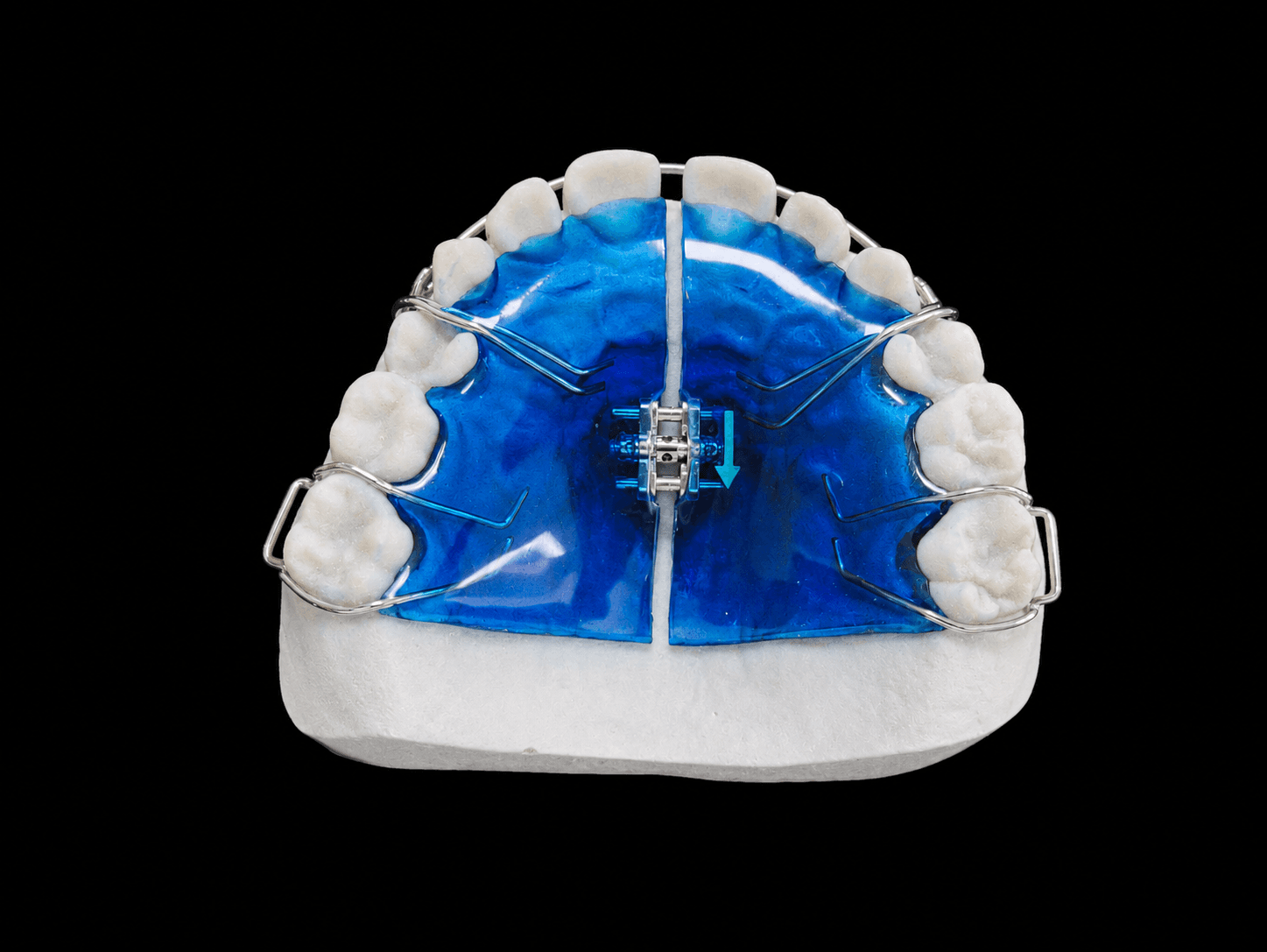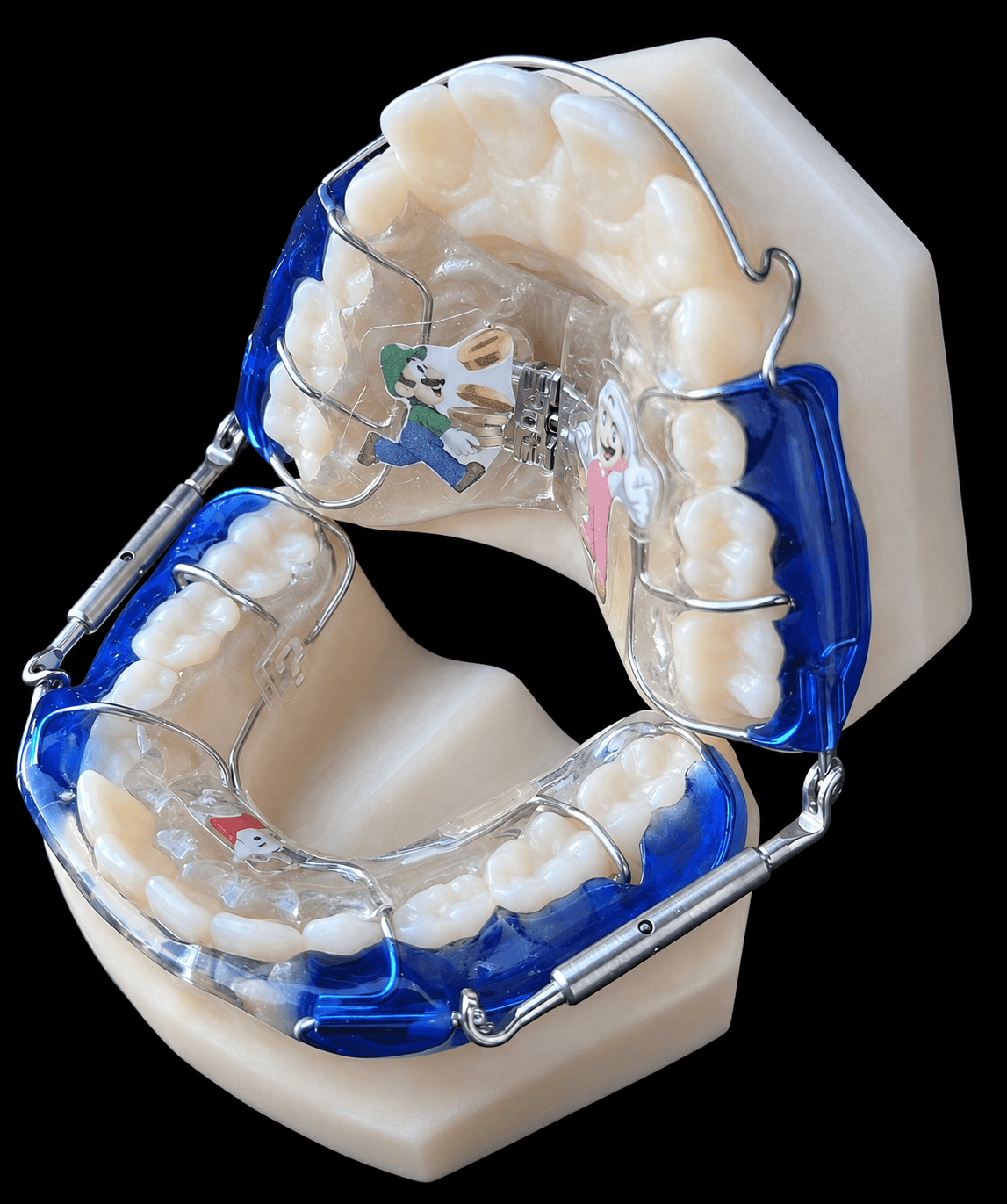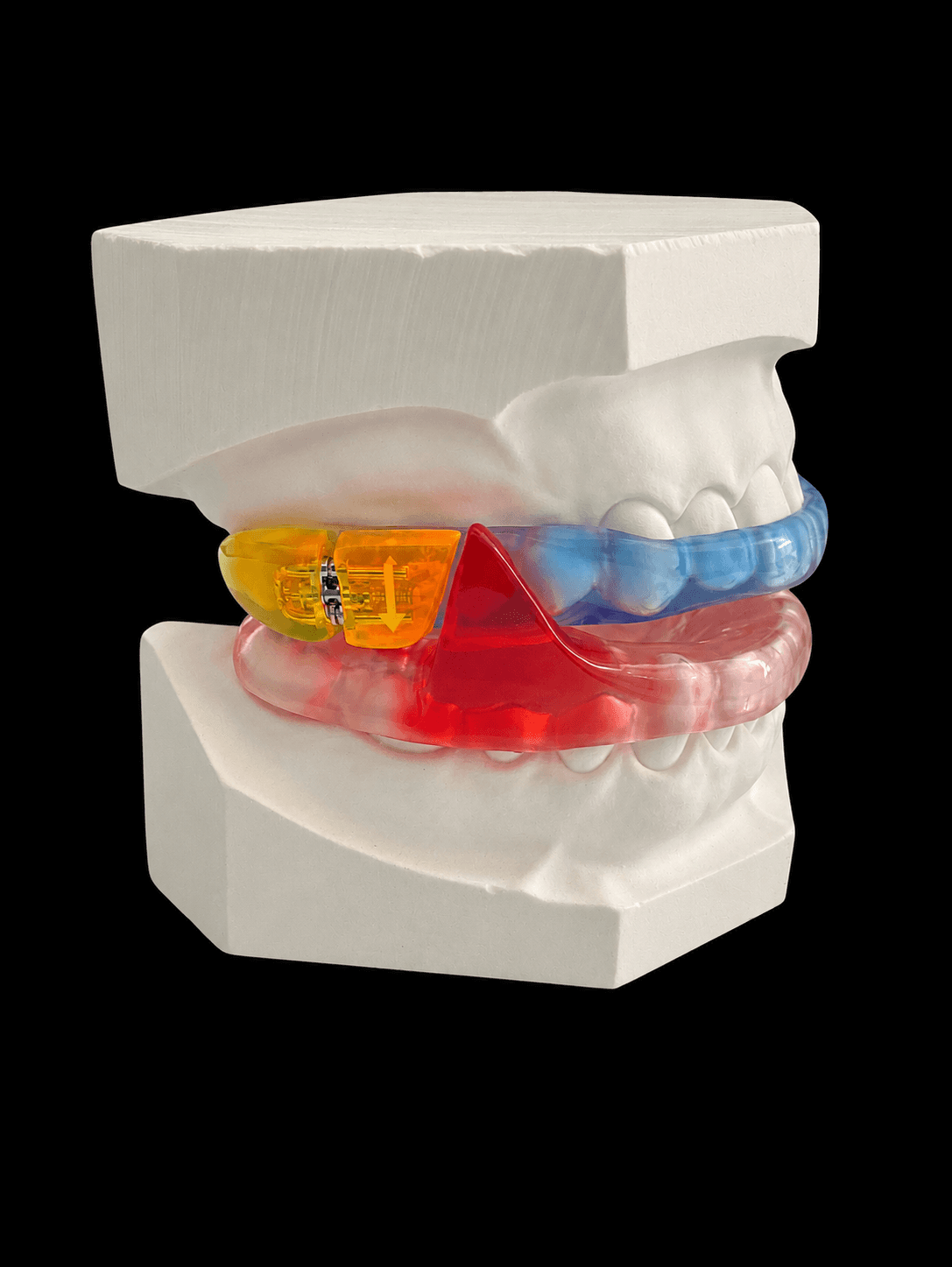

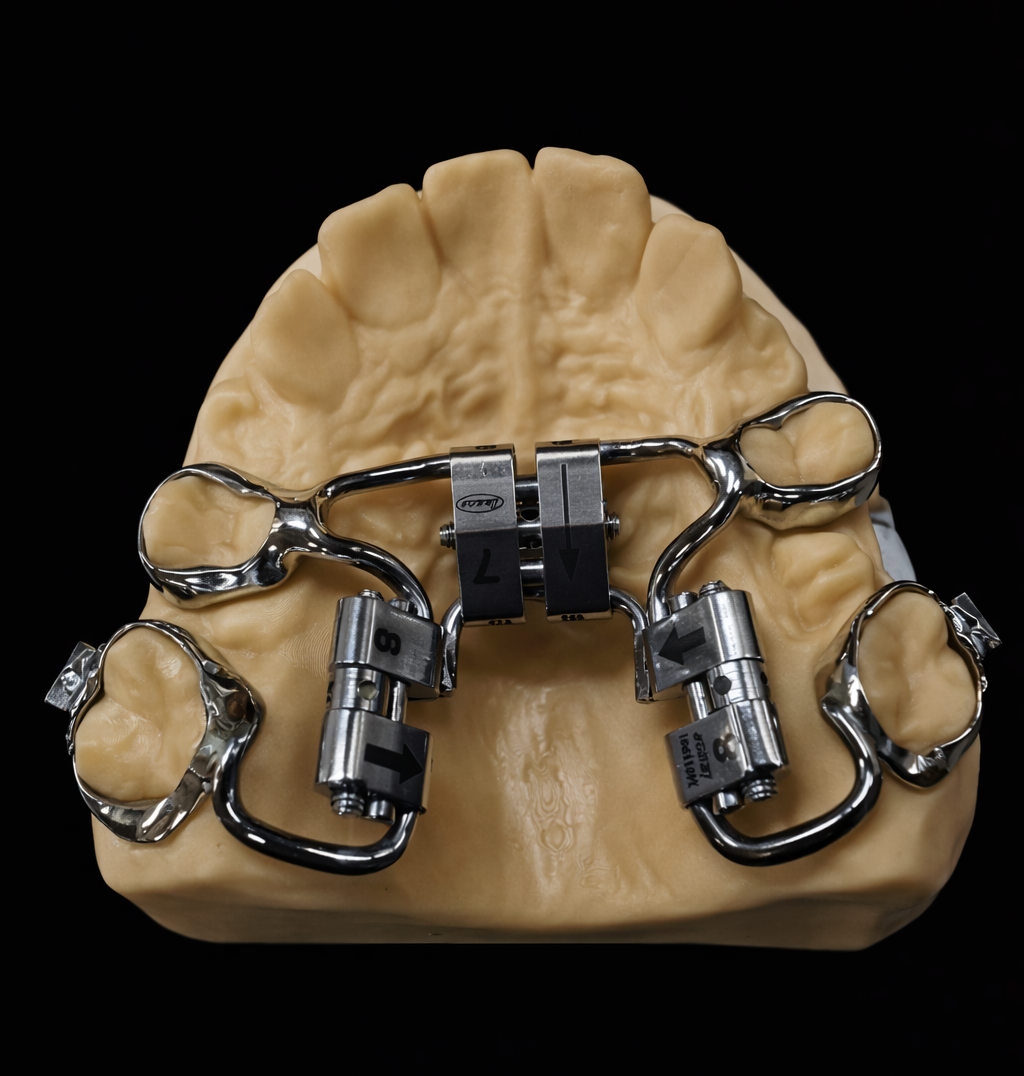
The Fan-Type Expander is a custom-made orthodontic appliance designed to produce more expansion in the anterior part of the upper dental arch than in the posterior part. Its fan-opening mechanism may be considered when an orthodontist wants to increase anterior arch width while limiting expansion near the molars.
How Does a Fan-Type Expander Work?
Fan-Opening Screw and Posterior Hinge
The expansion mechanism opens more widely toward the front of the arch and less near the posterior hinge. This creates a different expansion pattern from a conventional parallel-opening screw.
The exact change in arch width depends on the appliance design, anchorage, activation, and patient response.
Case-Specific Anchorage
The orthodontist specifies the teeth used for support and whether the appliance requires acrylic coverage, bands, or other components. Times Dental Lab fabricates the prescribed configuration from the submitted records.
When May It Be Prescribed?
A Fan-Type Expander may be considered for a patient whose upper arch needs greater widening in the canine region than in the molar region. The orthodontist assesses the anterior and posterior arch widths, bite, dental development, and treatment goals before choosing this design.
It may be less suitable when substantial posterior expansion is also required. The clinician determines the appropriate appliance and monitors the response during treatment.
What to Send to Times Dental Lab
Please provide accurate upper and lower scans or impressions, a bite record, and a detailed prescription. Specify the intended anchorage teeth, screw and hinge design, acrylic or band requirements, and any clearance instructions.
The treating orthodontist checks the fit, directs activation, and determines when expansion and retention are complete.
Frequently Asked Questions
How is it different from a standard expander?
A conventional expander generally opens across the arch. The fan-type design is intended to produce a greater opening toward the anterior teeth.
Does it leave the molar width unchanged?
That cannot be assumed. Posterior changes depend on the design and the patient’s response, so the orthodontist should assess them during follow-up.
Planning a Fan-Type Expander case? Send your records and prescription to Times Dental Lab for fabrication review.