
Pendulum Appliance
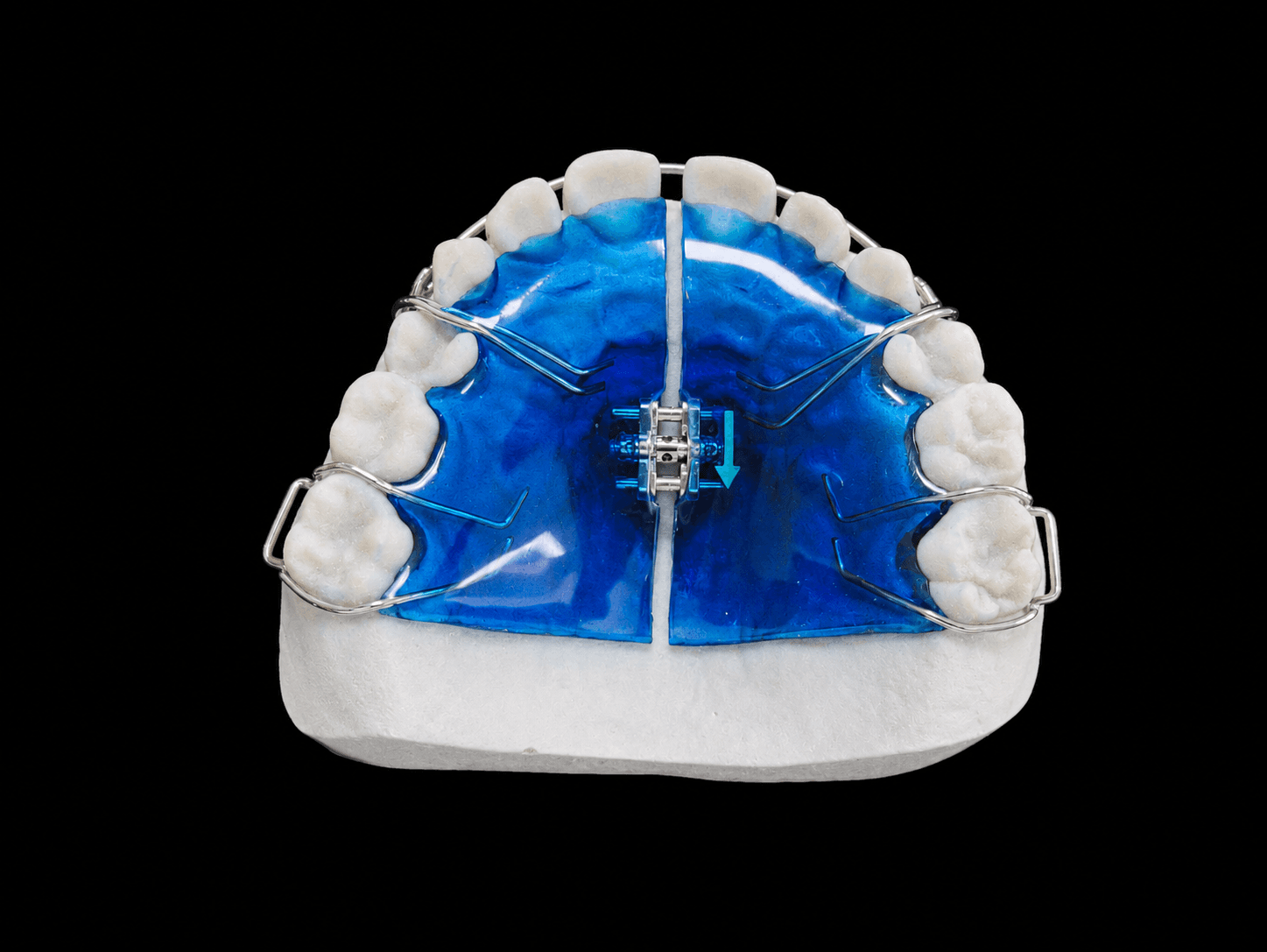
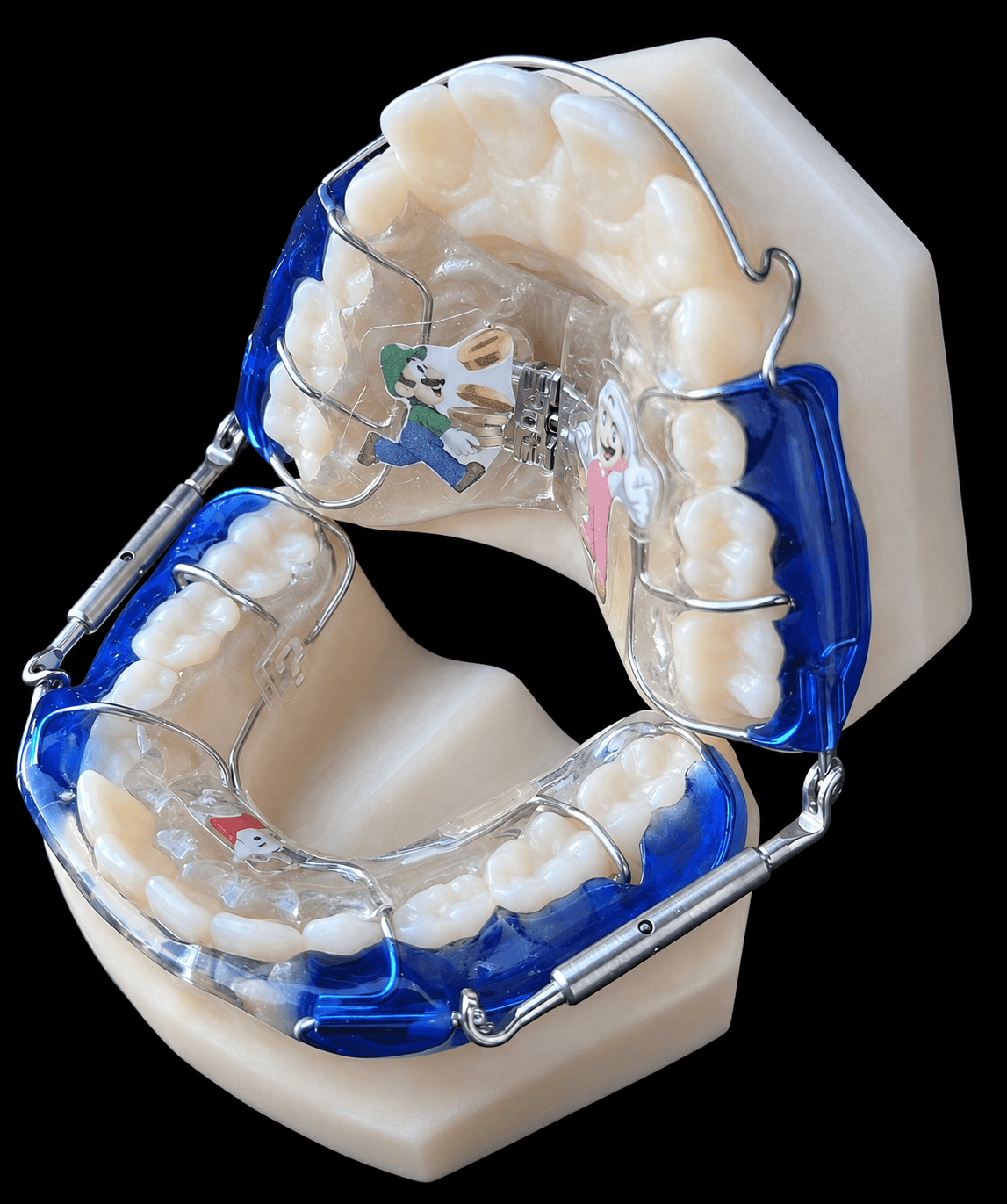
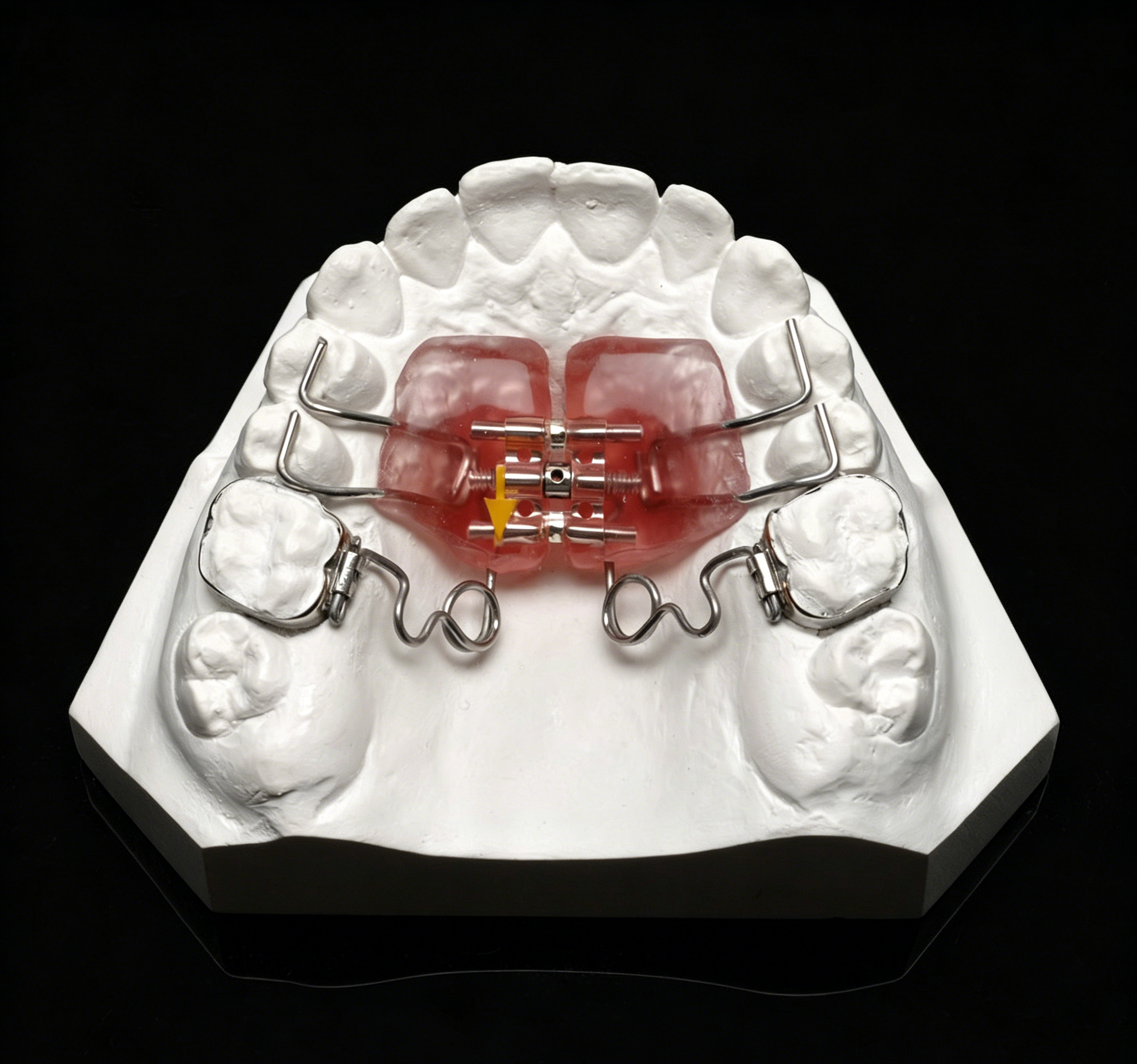
The Pendulum Appliance is a custom-made fixed orthodontic appliance used to move upper molars distally as part of a prescribed treatment plan. Its conventional design combines a palatal acrylic anchorage button with spring components that apply forces to the molars. It may be selected for certain Class II cases requiring upper molar distalization.
Appliance Design
Palatal Anchorage Button
A Nance-type acrylic button rests against the anterior palate and connects to the prescribed anchorage teeth. Its contours and supporting components follow the patient’s anatomy and the clinician’s anchorage plan.
Distalizing Springs
Titanium-molybdenum alloy springs extend from the acrylic button to attachments on the upper molars. The treating clinician controls spring activation and monitors molar movement, tipping, rotation, and anchorage changes.
When Is a Pendulum Appliance Prescribed?
An orthodontist may prescribe a Pendulum Appliance when moving the upper molars backward is appropriate for improving the molar relationship or supporting space management.
Suitability depends on the available posterior space, dental development, facial pattern, and overall treatment objectives. Further orthodontic treatment is generally needed to align the remaining teeth and complete the bite correction.
Records Required for Fabrication
Please provide accurate upper and lower scans or impressions, a bite record, and a detailed prescription. Include fitted bands or band information appropriate to the agreed fabrication workflow.
Specify the molars to be distalized, anchorage teeth, molar attachment configuration, spring requirements, and acrylic coverage. Any expansion screw or alternative anchorage arrangement should be requested explicitly.
Times Dental Lab fabricates the appliance to the approved design. The treating clinician checks fit, directs activation, and monitors treatment progress.
FAQs
Does a Pendulum Appliance include an expansion screw?
A conventional Pendulum Appliance is designed for molar distalization. A version incorporating an expansion screw is commonly called a Pendex and should be specified separately.
Can the patient remove it?
The appliance remains secured during treatment and is removed by the treating clinician.
Does it require patient cooperation?
Its fixed design reduces reliance on daily appliance insertion. Patients still need to maintain oral hygiene, care for the appliance, and attend scheduled reviews.
Planning a molar distalization case? Send your records and prescription to Times Dental Lab for fabrication review.