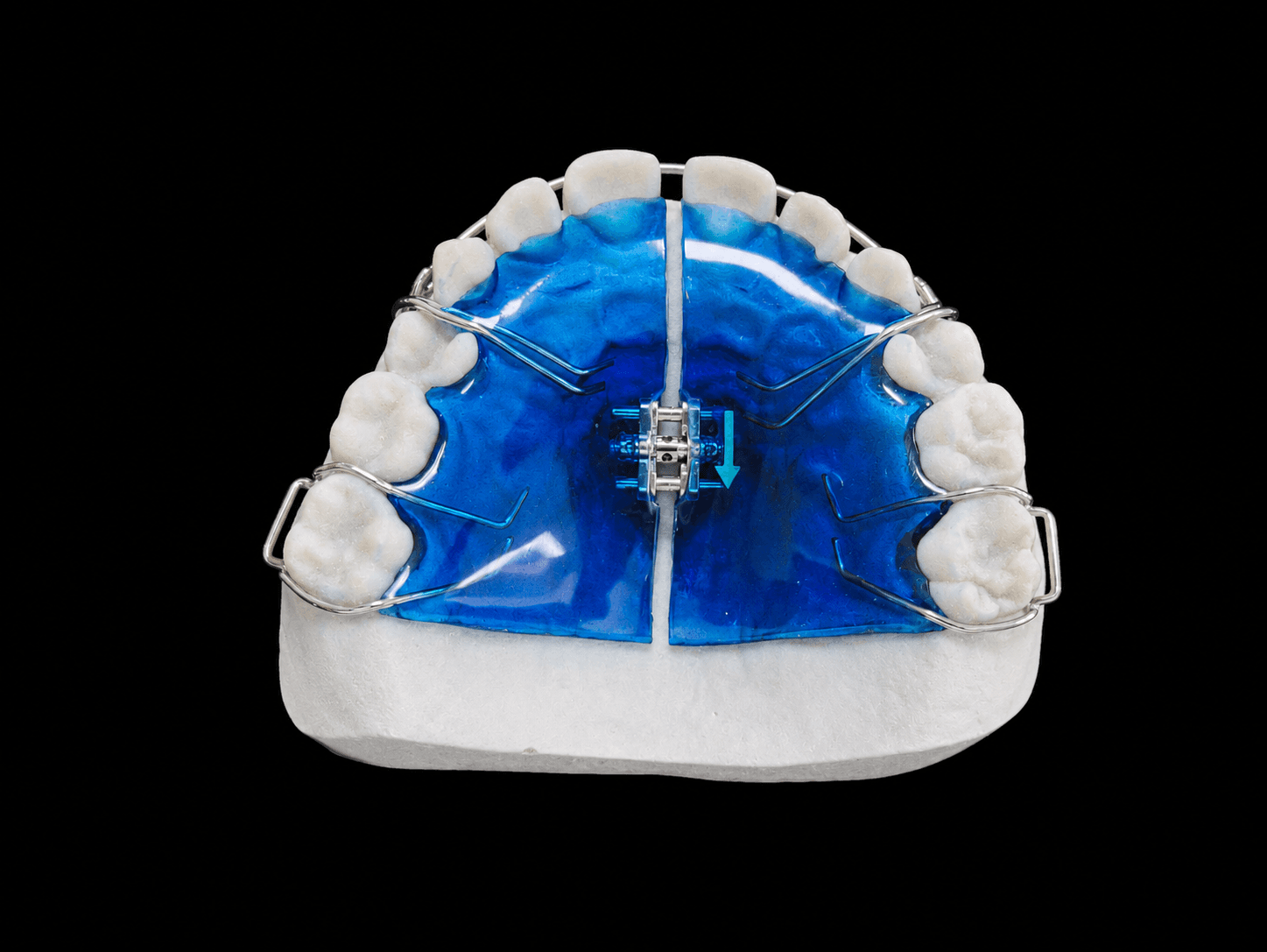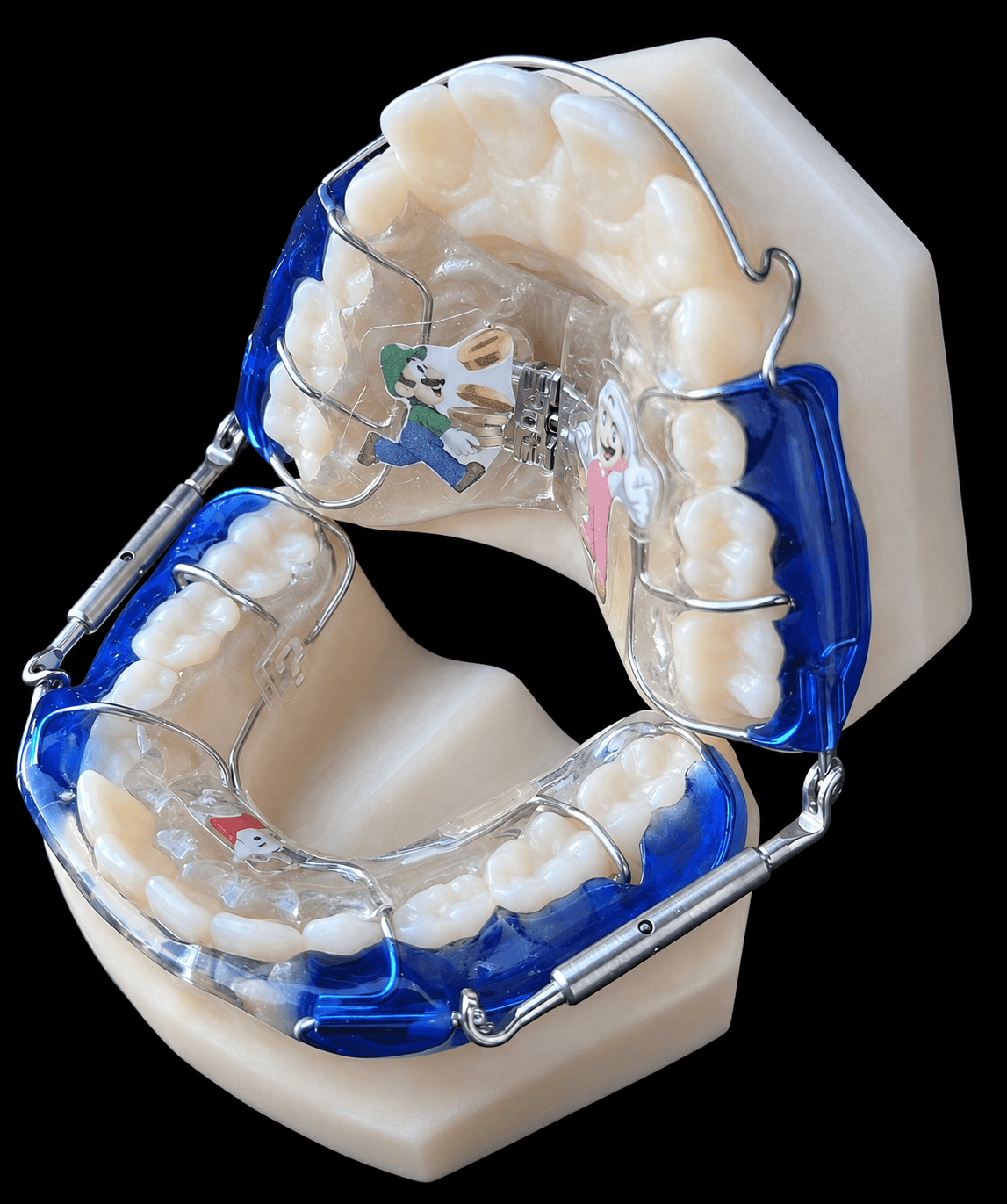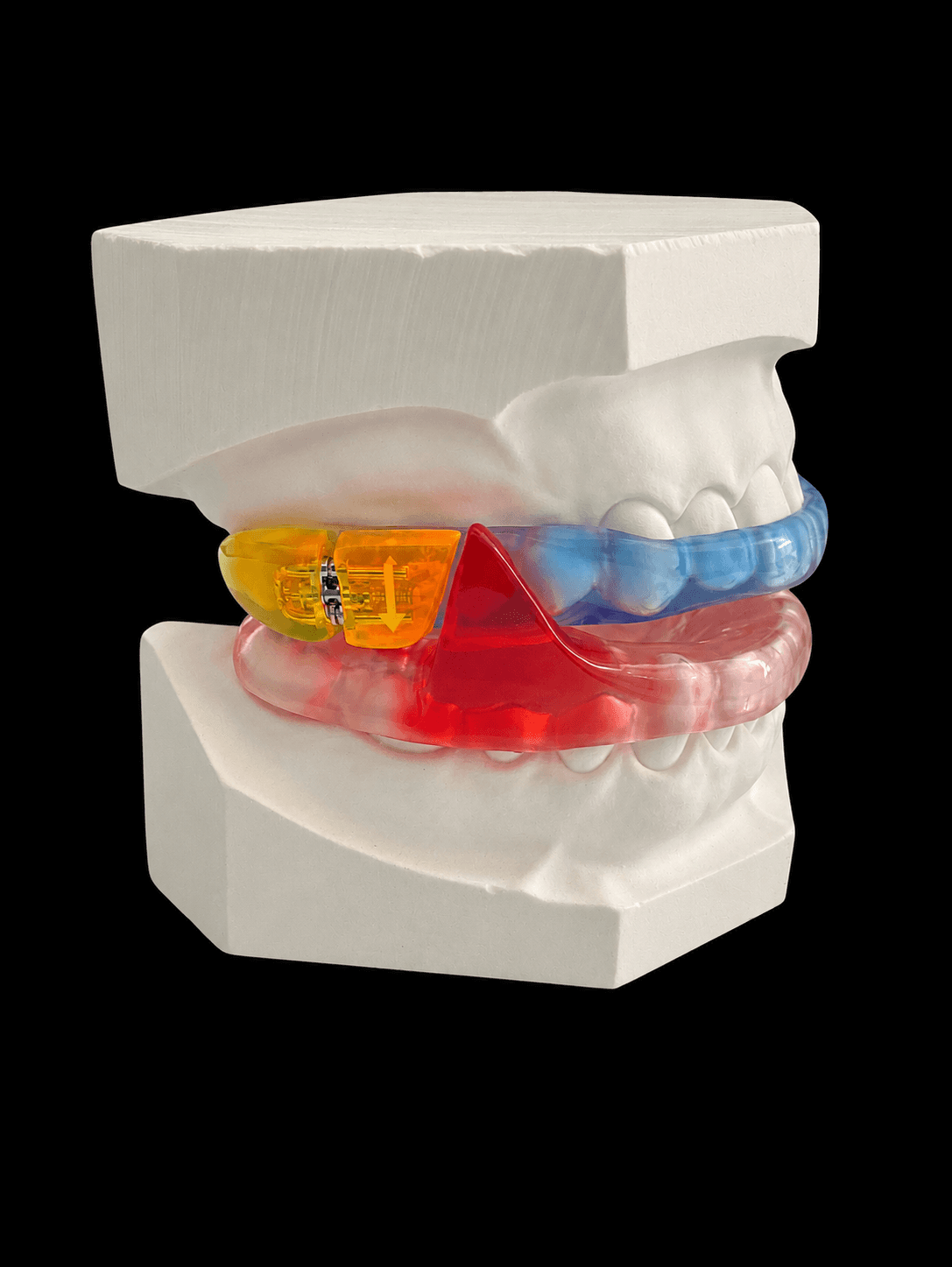

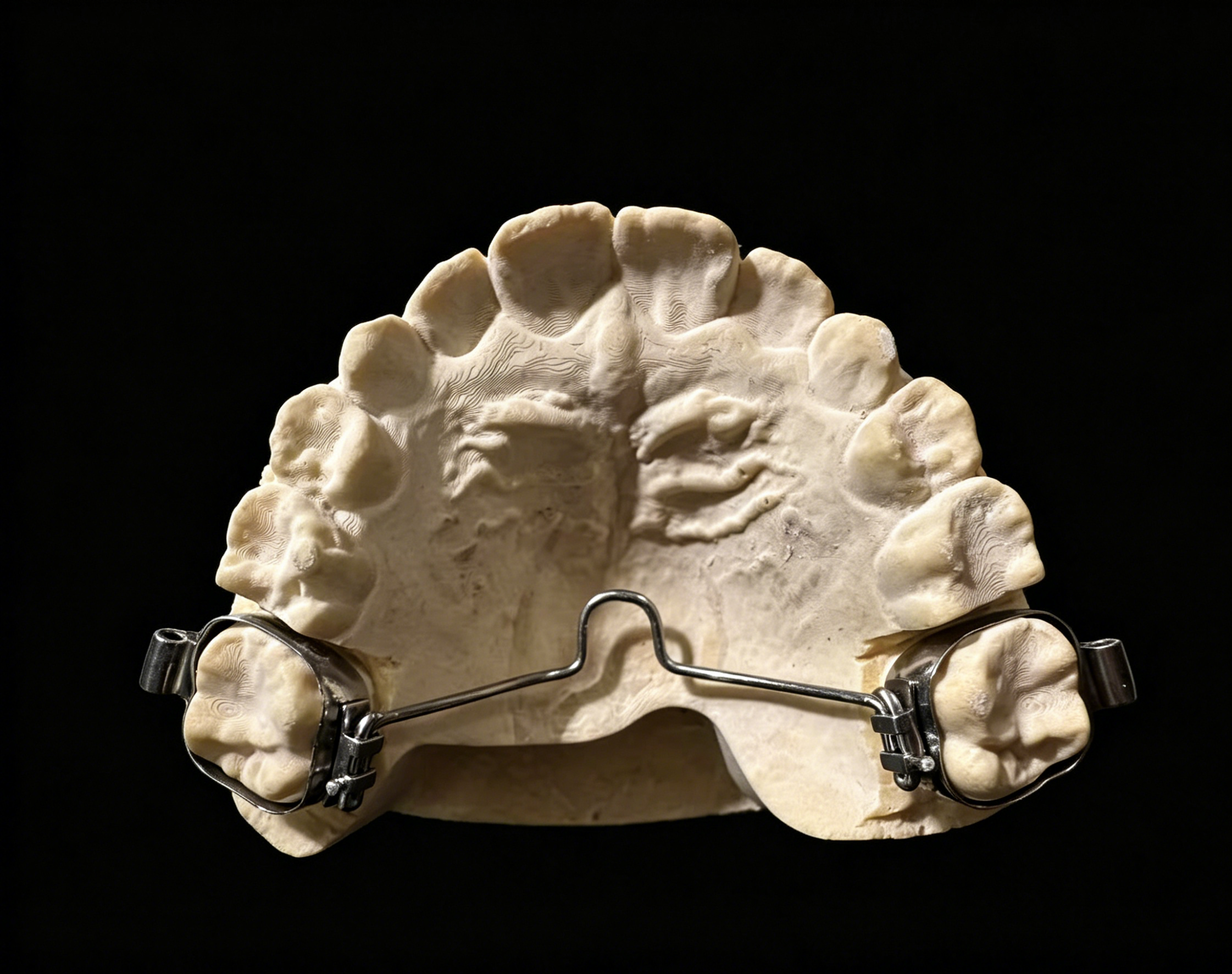
A Transpalatal Arch (TPA) is a custom-made fixed orthodontic appliance that connects selected upper molars across the palate. Depending on how the orthodontist prescribes and adjusts it, a TPA can help maintain the molars’ relationship or support specific molar movements during treatment.
Appliance Design
Palatal Wire
A shaped wire extends between the upper molars, with clearance from the palatal tissues. The clinician specifies its contour and whether a central loop or other adjustment feature is required.
Molar Attachments
The wire may be soldered to molar bands or designed to fit into palatal sheaths attached to the bands. The required attachment method should be stated on the prescription.
When Is a TPA Prescribed?
An orthodontist may prescribe a passive TPA to help maintain posterior arch width or molar position. An activated TPA may be used for selected molar movements, such as rotation correction, according to the treatment plan.
A TPA can contribute to anchorage management, but its effect depends on the design and clinical conditions. The orthodontist determines whether it provides enough support for the planned tooth movement.
What to Send to Times Dental Lab
Please provide an accurate upper arch scan or impression, the opposing arch and bite record when relevant, and a detailed prescription. Include fitted bands or the band information needed for the agreed fabrication workflow.
Specify the anchorage teeth, soldered or sheath-fit construction, wire and loop design, and any requested molar movement or palatal clearance. Times Dental Lab fabricates the TPA to the approved prescription. The treating clinician checks its fit, tissue clearance, and activation at placement and follow-up visits.
FAQs
Does a TPA have an acrylic palatal button?
A conventional TPA is a wire appliance. A palatal acrylic button is characteristic of a Nance appliance and should be requested if that design is intended.
Is a TPA an expander?
It can be adjusted for selected transverse molar movement, but it is not the same as a screw-based rapid palatal expander. The intended movement should be specified in the prescription.
Planning a TPA case? Send your records and design instructions to Times Dental Lab for fabrication review.