What Digital Dentistry Still Can't Solve in Dental Lab Manufacturing
Introduction
Digital Dentistry Changed Workflows — But Manufacturing Still Defines the Result
Over the past two decades, digital dentistry has transformed how dental restorations are designed and produced.
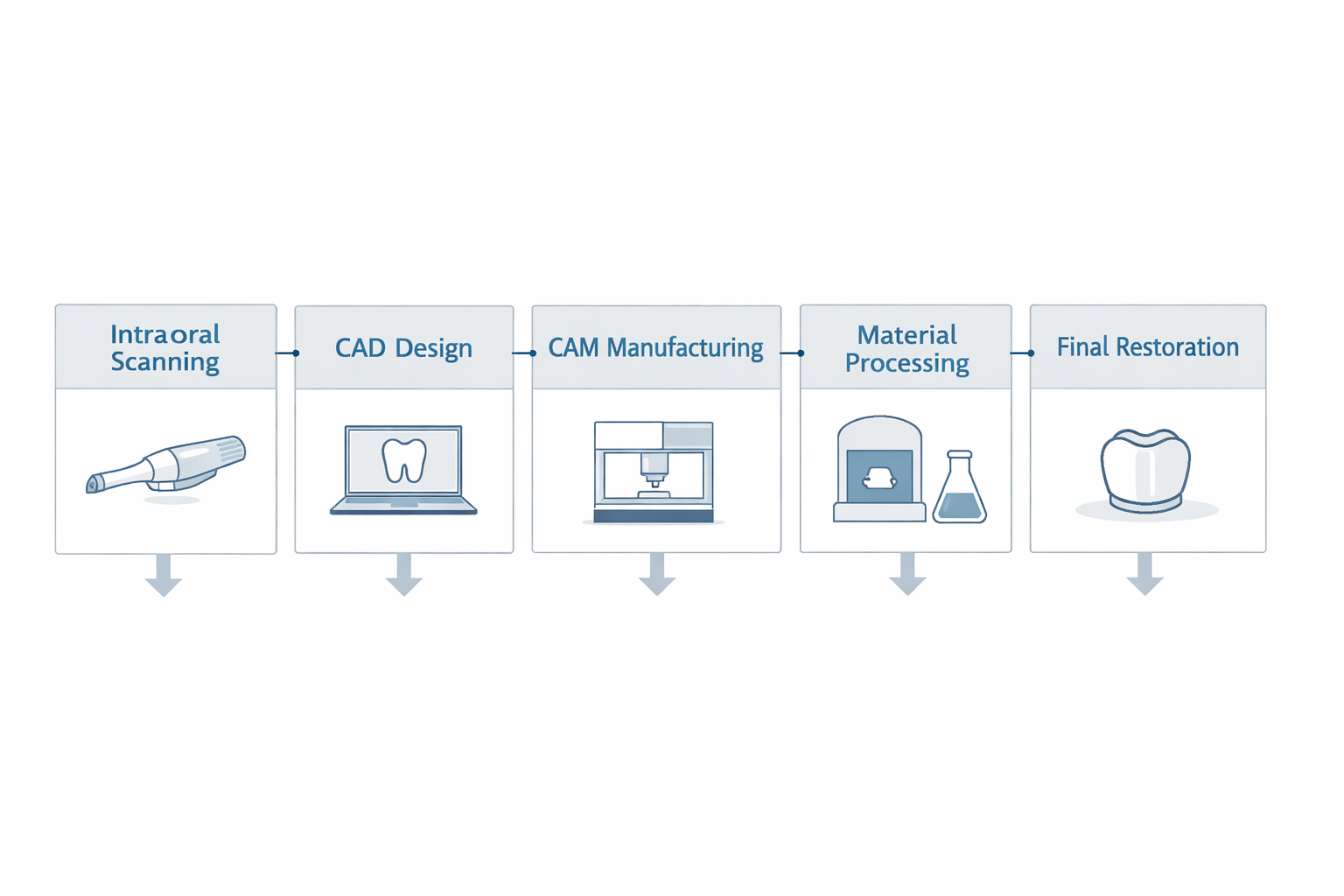
Intraoral scanners replaced traditional impressions.CAD software accelerated design processes.Milling machines and 3D printing reshaped laboratory manufacturing.
For many clinicians, digital workflows promised something very appealing:faster production, fewer adjustments, and more predictable outcomes.
And in many ways, digital technology has delivered meaningful improvements.
Yet experienced dentists and technicians still encounter familiar situations in daily practice:
• Crowns that require slight adjustment before seating• Contacts that feel tighter than expected• Occlusion that needs refinement chairside• Shades that appear slightly different once placed intraorally
These situations do not mean digital dentistry has failed.
Instead, they reflect a reality that remains true even in the digital era:
Dental restorations are still physical products manufactured through complex material processes.
Digital workflows improve efficiency and communication, but they do not eliminate the physical limitations of manufacturing.
Understanding these limitations helps clinicians and laboratories work together more effectively.
Digital Dentistry Solved Many Workflow Problems
Digital dentistry introduced several important improvements to the dental industry.
Faster Data Acquisition
Intraoral scanners allow clinicians to capture impressions more quickly and with immediate visual feedback.
Compared to conventional impressions, digital scanning provides advantages such as:
• faster impression capture• easier margin visualization• simplified data transfer to laboratories
Research published in the Journal of Prosthetic Dentistry confirms that digital impressions can provide comparable accuracy while improving workflow efficiency.
External reference:https://www.journalofprostheticdentistry.org
Faster Design and Communication
CAD systems allow technicians to visualize restorations digitally before manufacturing begins.
Digital tools make it possible to:
• adjust contacts digitally• evaluate occlusion• simulate final restoration geometry
This dramatically improves design efficiency and communication between dentists and laboratories.
Improved Manufacturing Consistency
Milling machines and digital manufacturing centers enable laboratories to produce restorations with much greater repeatability than traditional manual techniques.
However, digital precision in design does not eliminate all variables in production.
The manufacturing stage still introduces its own complexities.
Dental Restorations Are Still Manufactured Objects
One common misconception about digital dentistry is that digital precision automatically guarantees perfect clinical outcomes.
In reality, digital files are only the beginning of the manufacturing process.
Final restorations must still be produced from materials such as:
• zirconia
• lithium disilicate
• ceramics
• metal alloys
These materials respond to temperature, mechanical forces, and processing conditions.
For example, zirconia frameworks undergo high-temperature sintering, during which the material shrinks significantly.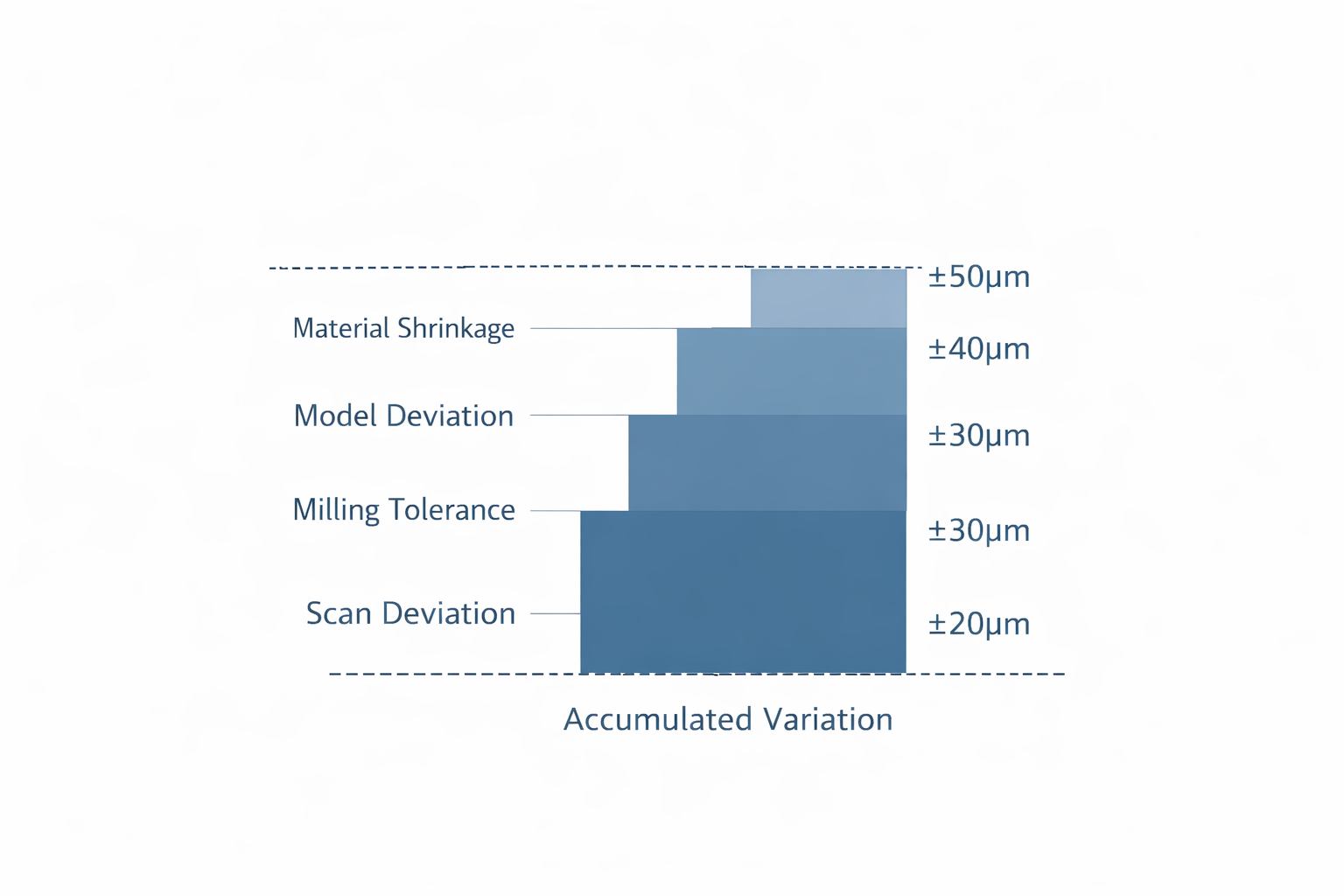
Even when software compensates for shrinkage mathematically, small variations in furnace calibration or processing conditions can influence the final dimensions.
Reference:https://www.sciencedirect.com/topics/materials-science/zirconia-dental
Because of this, dental restorations are produced within controlled tolerances rather than absolute precision.
Where Digital Workflows Still Break Down
Even with advanced digital tools, certain types of problems still appear regularly in laboratory production.
These situations are familiar to experienced technicians.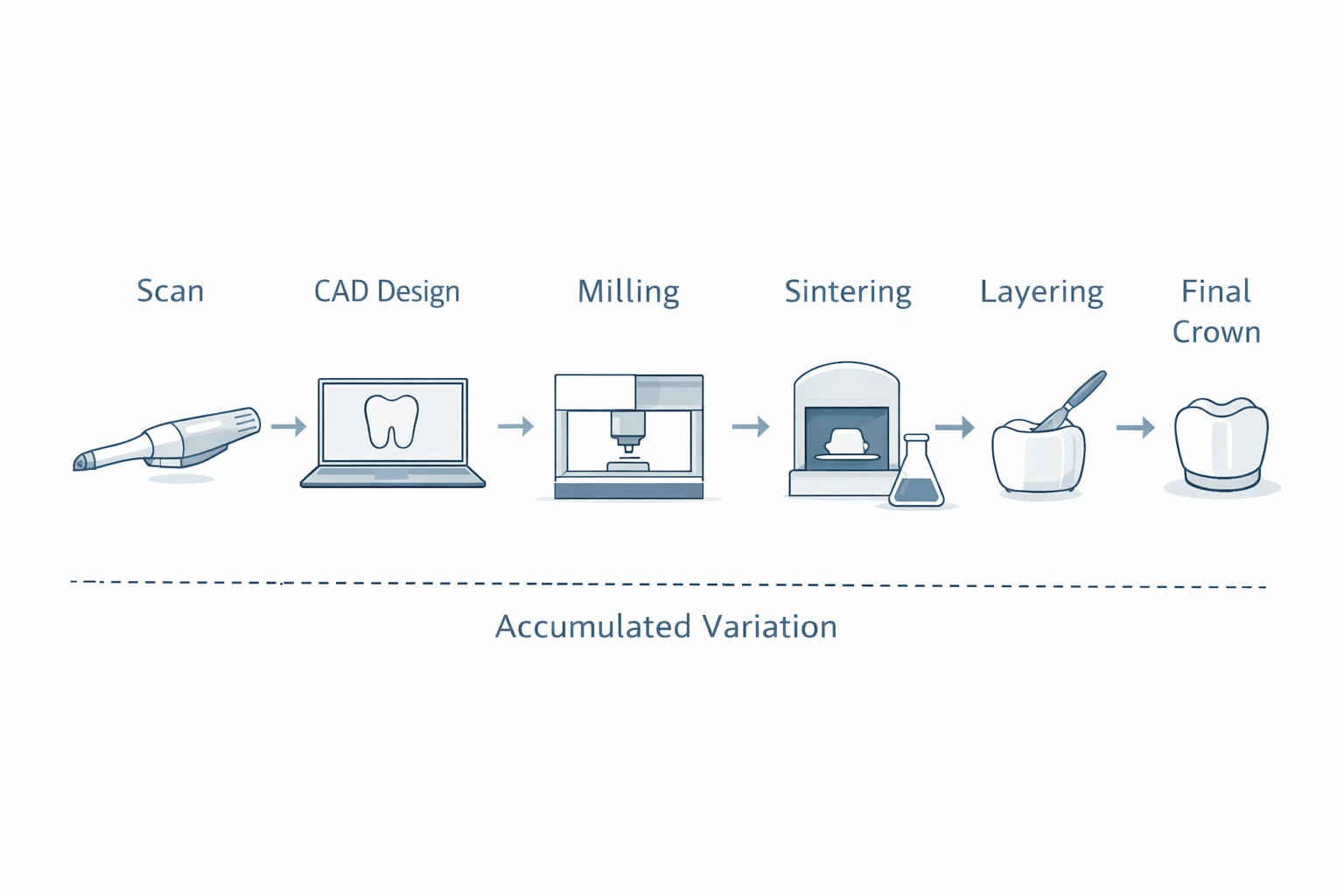
Perfect Scan, Tight Crown
A scan may appear complete and clear, but once the restoration is manufactured, the crown may feel slightly tight during seating.
This often results from the accumulation of very small deviations across scanning, modeling, and manufacturing.
Digital Bite, Occlusion Adjustment
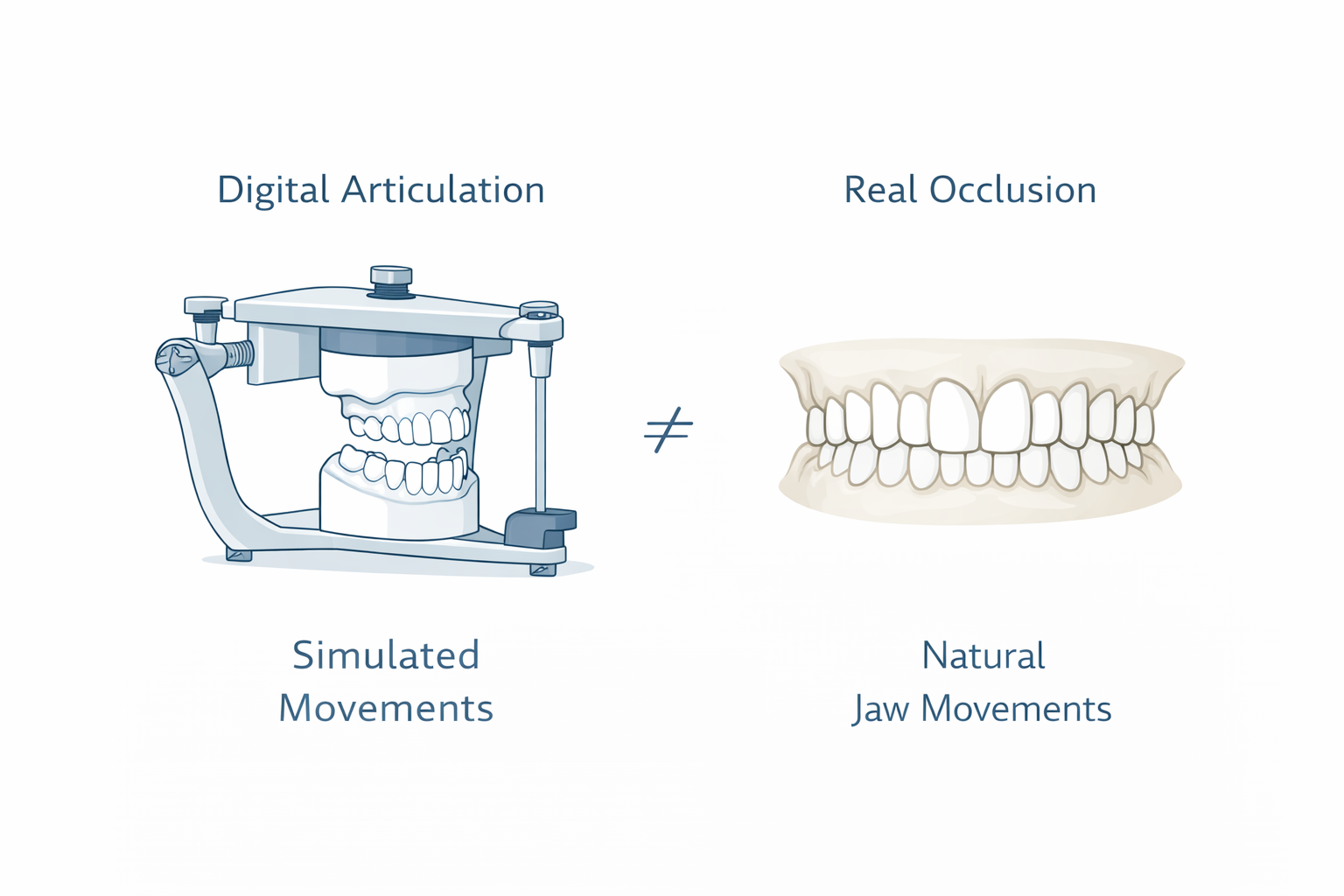
Digital articulation tools simulate occlusal relationships.
However, real human occlusion includes complex muscular and periodontal dynamics that cannot be fully captured digitally.
As a result, minor occlusal adjustments remain common in clinical practice.
Correct Shade Tab, Different Visual Result
Shade communication remains one of the most complex aspects of restorative dentistry.
Photography can assist shade matching, but it rarely captures the full optical behavior of natural teeth.
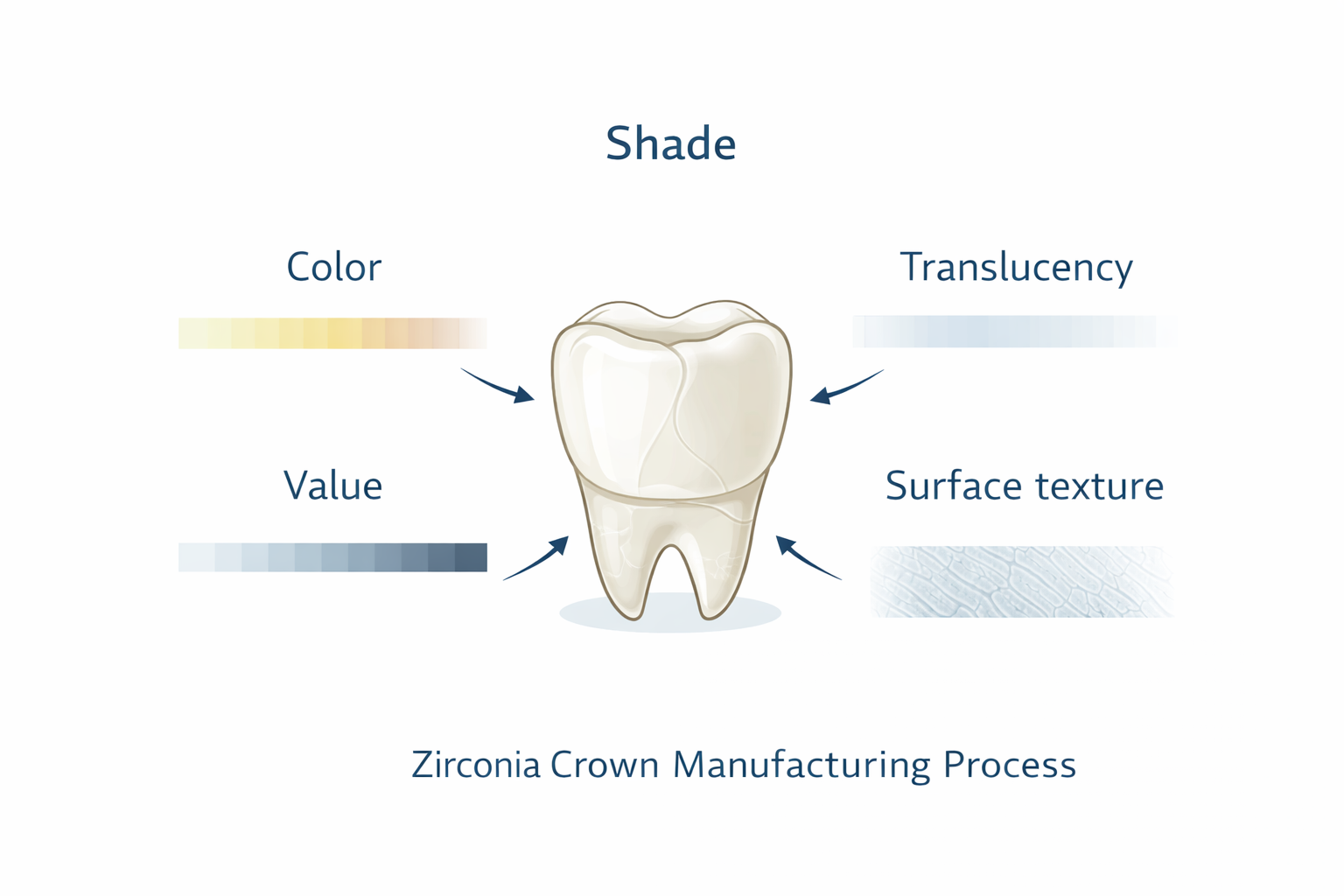
Technicians must evaluate not only color but also:
• value• translucency• internal characteristics• surface texture
These parameters still depend heavily on technician judgment.
The Reality of Manufacturing Tolerances
Every step in the manufacturing process introduces small variations.
These variations come from multiple sources.
Scan Data Interpretation
Even when scans appear complete, technicians must interpret:
• margin clarity• contact zones• occlusal relationships
Small interpretation differences can influence design decisions.
Model Generation
When digital models are printed, slight dimensional deviations may occur due to:
• printer calibration• resin shrinkage• post-curing conditions
Milling and Tool Wear
Milling machines operate with mechanical tolerances.
Over time, tool wear and machine calibration influence precision.
Material Behavior
Material processing introduces further variability.
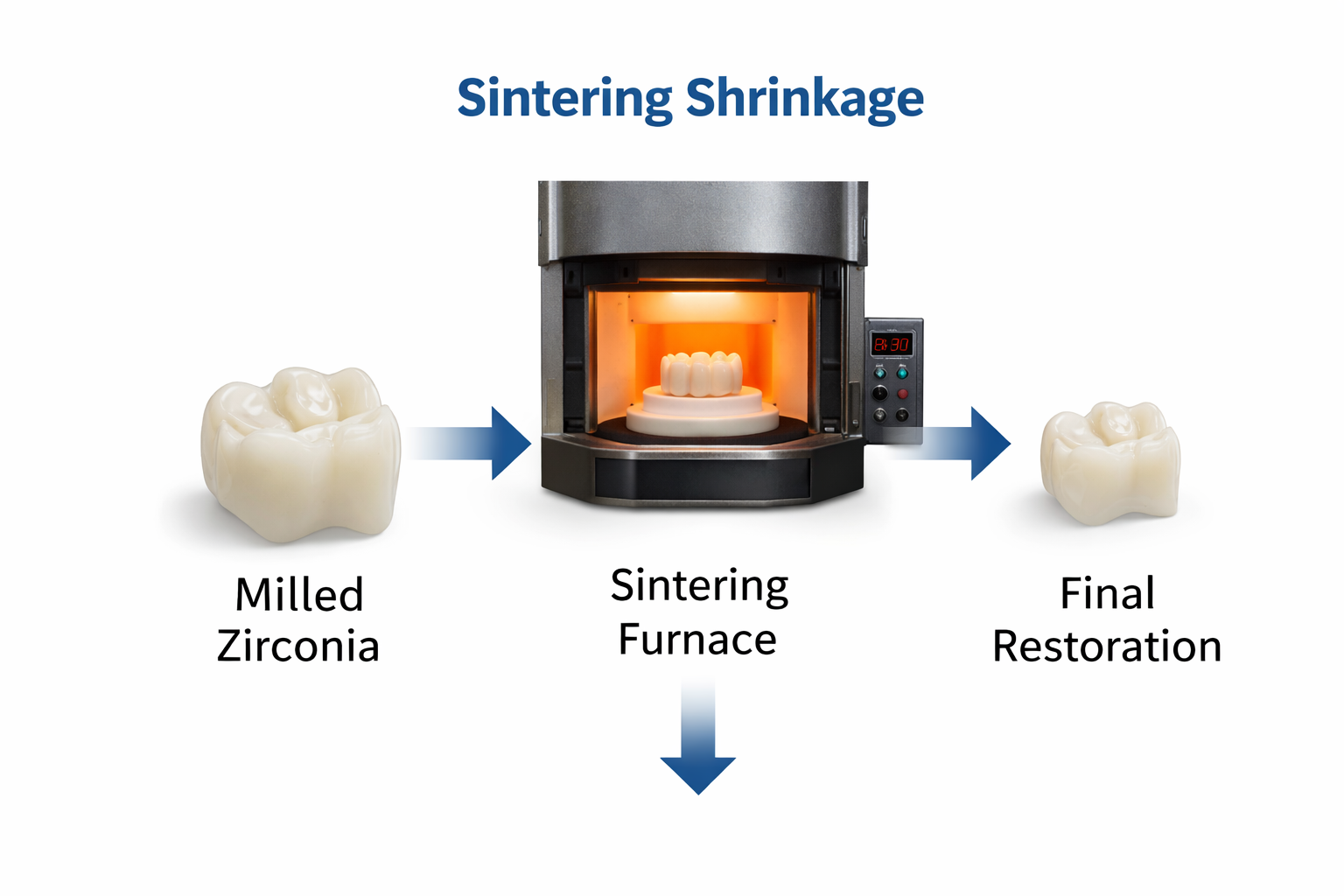
Zirconia sintering, ceramic firing cycles, and polishing procedures all affect final restoration geometry.
When these small variations accumulate across multiple stages, the result may require minor clinical adjustment.
This phenomenon is known as tolerance accumulation.
Why Technician Experience Still Matters
Despite advances in digital dentistry, technician expertise remains one of the most important factors in restorative success.
Experienced technicians evaluate cases before production begins.
They look for risk indicators such as:
• incomplete scan data• unclear margins• questionable bite relationships• shade ambiguity
In many cases, identifying these issues early prevents downstream problems.
Experience allows technicians to anticipate how digital data will behave once converted into physical restorations.
How Modern Dental Labs Control These Variables
Leading dental laboratories manage these challenges through structured systems rather than relying solely on individual skill.
Key strategies include:
Standardized Workflows
Clear production workflows ensure that every case passes through defined checkpoints.
Process-Embedded Quality Control
Quality control should not exist only at the final stage.
Instead, checks must be integrated throughout the production process.
Product-Specific Specialization
Different restoration types require different expertise.
Separating teams by product category improves consistency and technical depth.
How Times Dental Lab Addresses These Challenges
At Times Dental Lab, manufacturing systems are designed specifically to support long-term outsourcing relationships rather than one-off production.
As described in our internal operational framework
How Times Dental Addresses Thes…
, the laboratory structure focuses on risk control, process stability, and scalable collaboration.
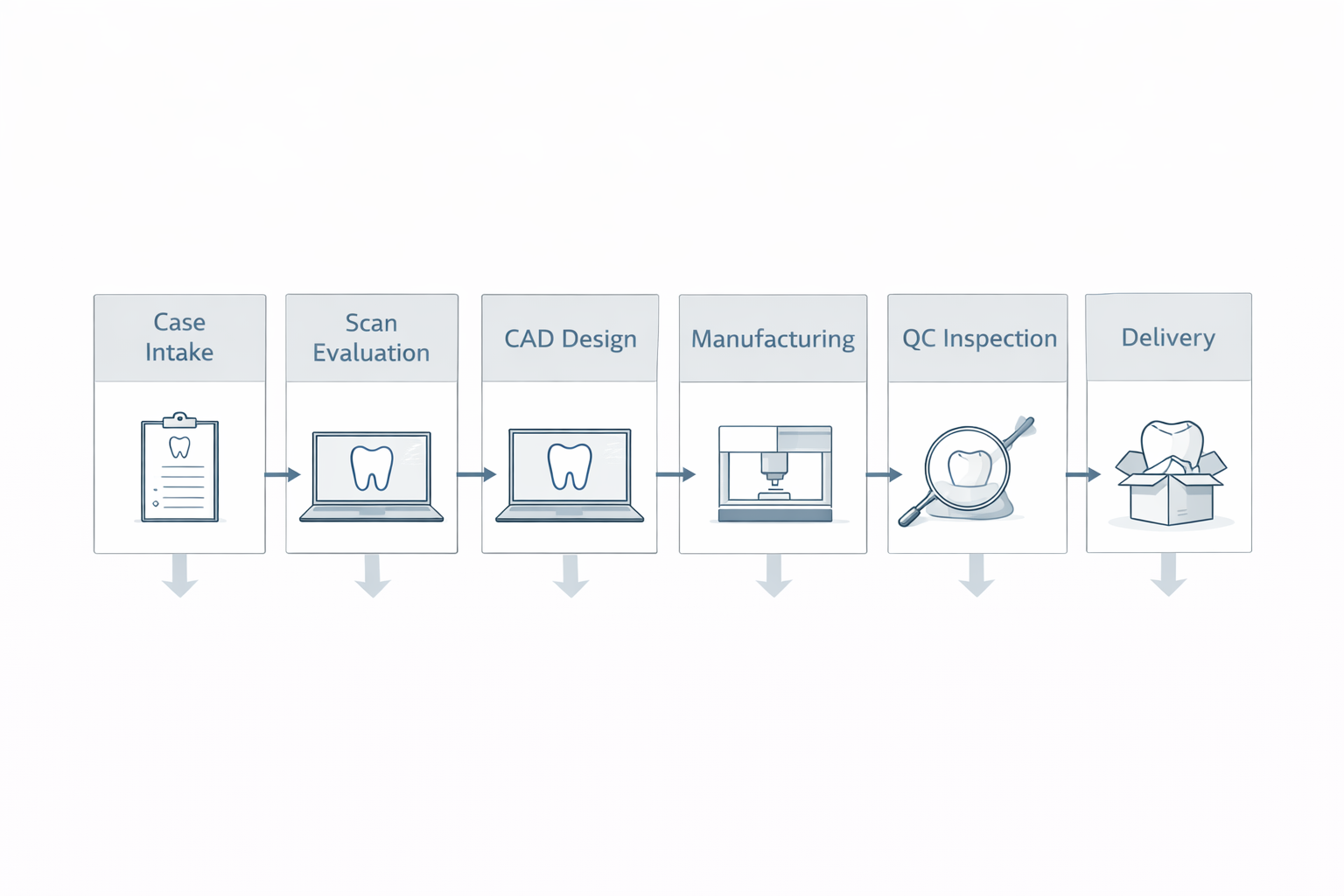
Quality Control as a System
Quality control is embedded across the workflow rather than applied only at the end.
Production checkpoints exist throughout the process, allowing potential issues to be identified where they originate.
This approach aligns with internationally recognized quality principles that emphasize process control rather than outcome correction.
External reference:https://blog.ddslab.com/a-look-at-the-different-dental-lab-certifications-in-the-us
Structured Workflow Designed for Outsourcing
Cases entering Times Dental Lab follow a standardized workflow.
Data and prescriptions are reviewed at the intake stage to identify potential problems before manufacturing begins.
Automated internal systems assist with data handling and translation to reduce manual errors and maintain stability when processing large case volumes.
Product-Specific Technical Teams
Rather than assigning cases randomly, Times Dental Lab organizes technicians into specialized teams focusing on specific product categories:
• crown and bridge• implant restorations• removable prosthetics• orthodontic appliances
Technicians working on the same product types every day develop deeper familiarity with materials, designs, and common risk points.
This specialization improves consistency and reduces manufacturing variability.
Communication Designed to Prevent Rework
Communication systems are designed to identify potential issues before production begins.
If scan data is incomplete, margins are unclear, or occlusal relationships appear risky, the case is flagged for confirmation rather than proceeding with uncertain assumptions.
This approach reduces downstream corrections and improves predictability for outsourcing partners.
The Future of Dental Lab Manufacturing
Digital dentistry will continue evolving.
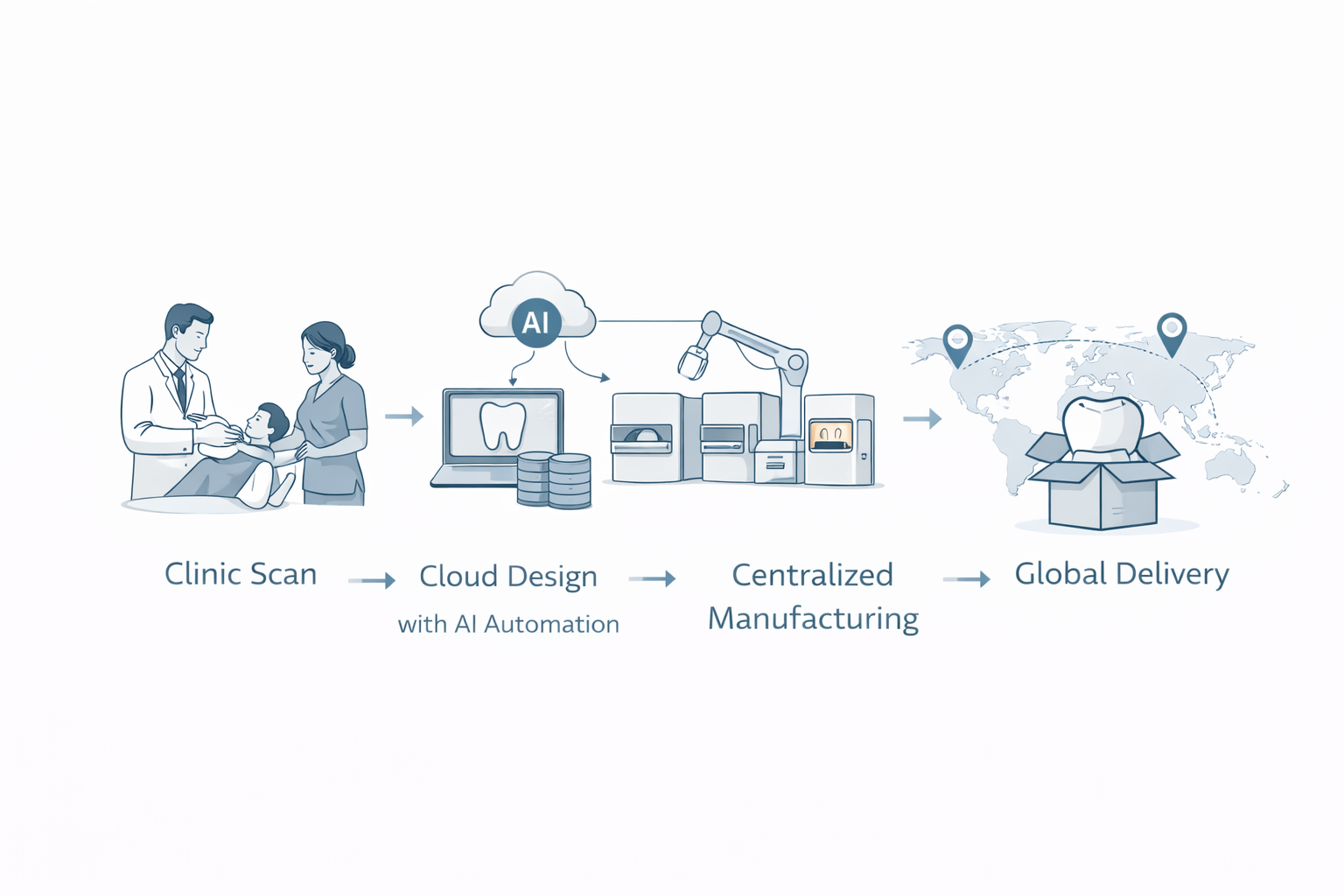
Future developments may include:
• improved scanning technologies• more advanced CAD automation• AI-assisted design tools• centralized manufacturing centers
However, technology alone will not define the future of dental laboratories.
The most successful laboratories will combine digital efficiency with structured manufacturing systems and experienced technicians.
Conclusion
Digital dentistry has dramatically improved how restorations are designed and produced.
Yet it has not eliminated the fundamental realities of dental manufacturing.
Restorations are still physical products created through complex processes involving materials, machines, and human judgment.
Digital tools enhance efficiency and repeatability.
But the final outcome still depends on controlled manufacturing workflows and experienced technicians.
For dentists and laboratories alike, understanding these limitations leads to better collaboration and more predictable results.