Introduction
Zirconia has become one of the most important ceramic materials in modern crown and bridge dentistry. It is used for single crowns, bridges, implant restorations, and full-contour restorations because it can combine strength, digital manufacturability, and acceptable esthetics when the right zirconia type is selected.
However, not every zirconia crown is the same. A monolithic zirconia crown and a layered zirconia crown may both start with zirconium oxide, but they differ in structure, esthetic potential, production process, and clinical risk. Understanding this difference helps dentists, clinics, and dental laboratories choose a restoration that fits the case instead of choosing a material name alone.
At Times Dental Lab, zirconia is part of our Crowns and Bridges workflow, including full-contour zirconia, layered zirconia, implant crowns, bridges, and related fixed restorations for overseas dental labs and clinics.
What Is Monolithic Zirconia?
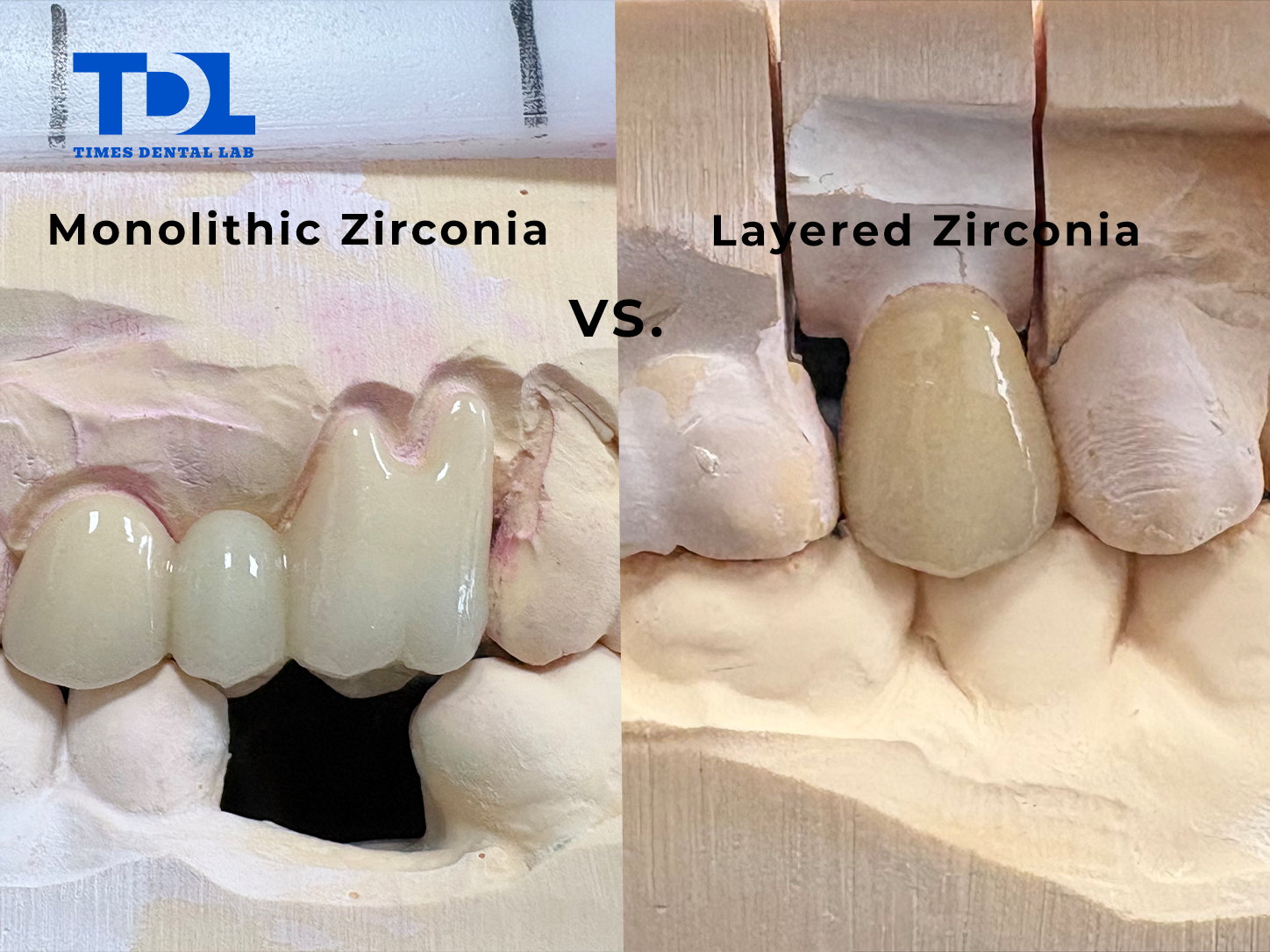
Monolithic zirconia, often called full zirconia, is a restoration milled primarily as one solid zirconia structure. Instead of using a thick external porcelain layer, the crown or bridge is designed as a full-contour restoration and then finished with staining, glazing, polishing, or characterization.
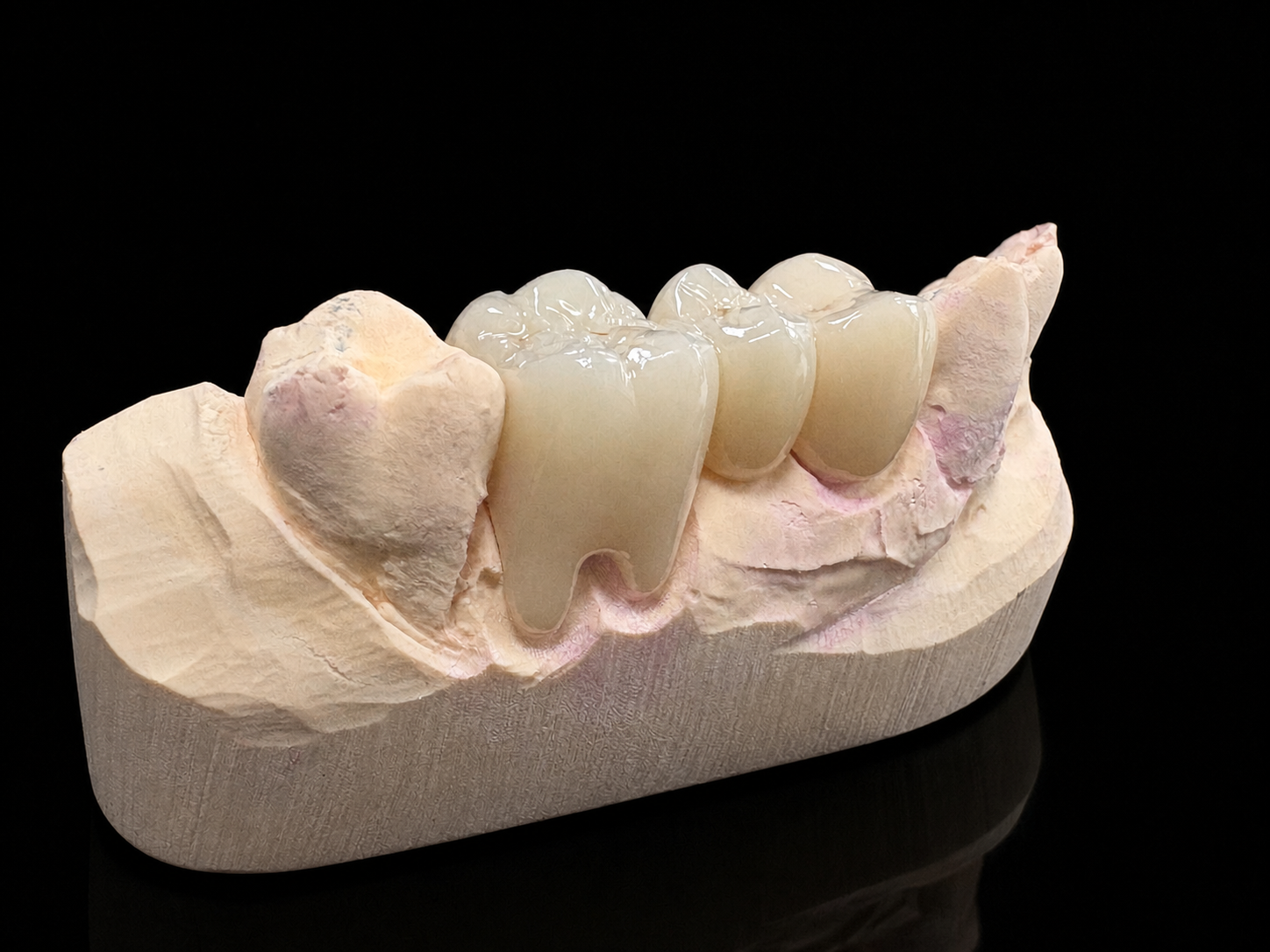
Because the restoration is mostly one continuous zirconia body, monolithic zirconia is commonly selected for posterior crowns, molars, implant crowns, bruxism-risk cases, and restorations where strength and fracture resistance are the main priorities. Modern high-translucency zirconia has improved esthetics, but full-contour zirconia is still usually less customizable than a hand-layered ceramic surface in demanding anterior cases.
What Is Layered Zirconia?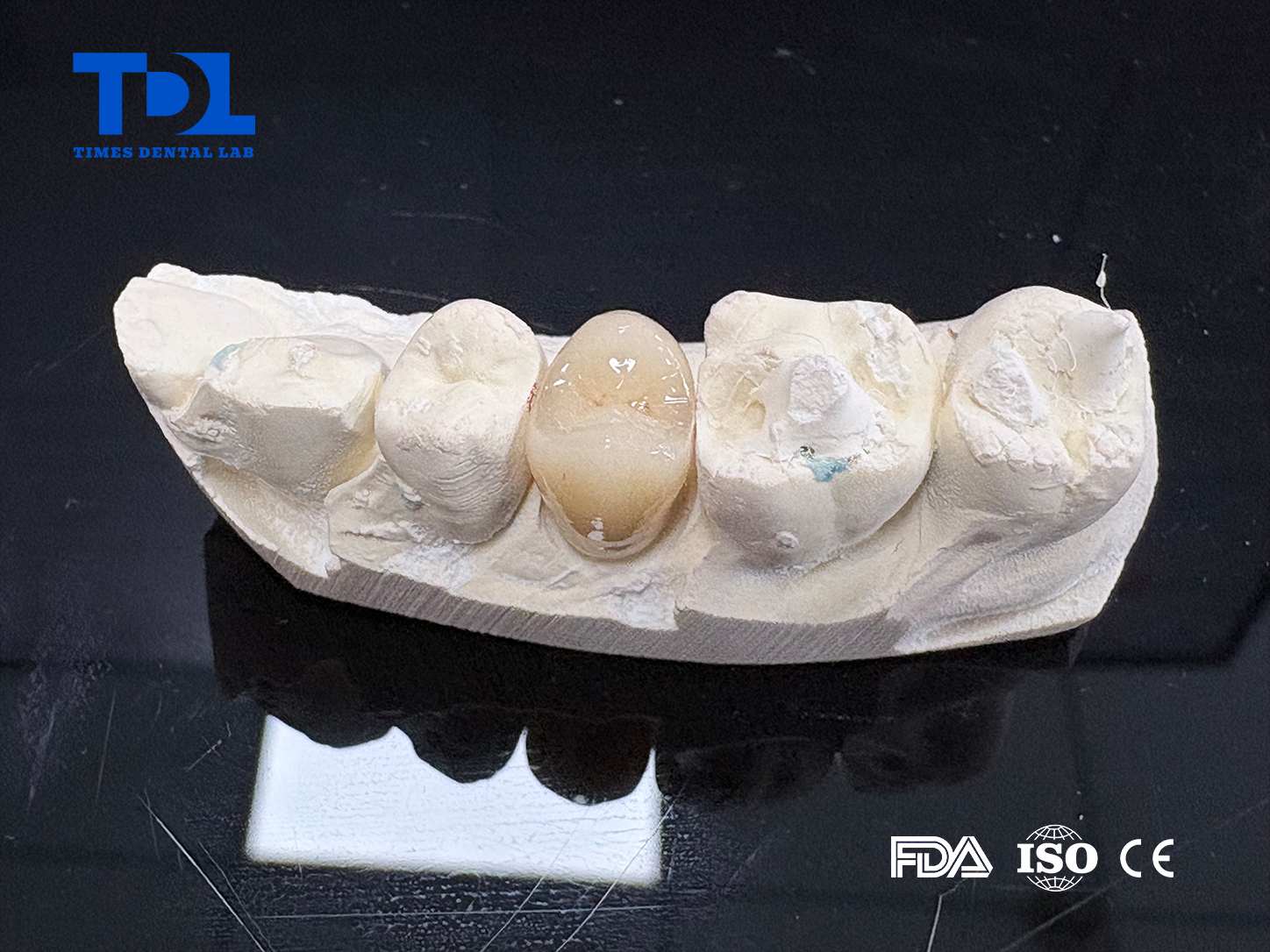
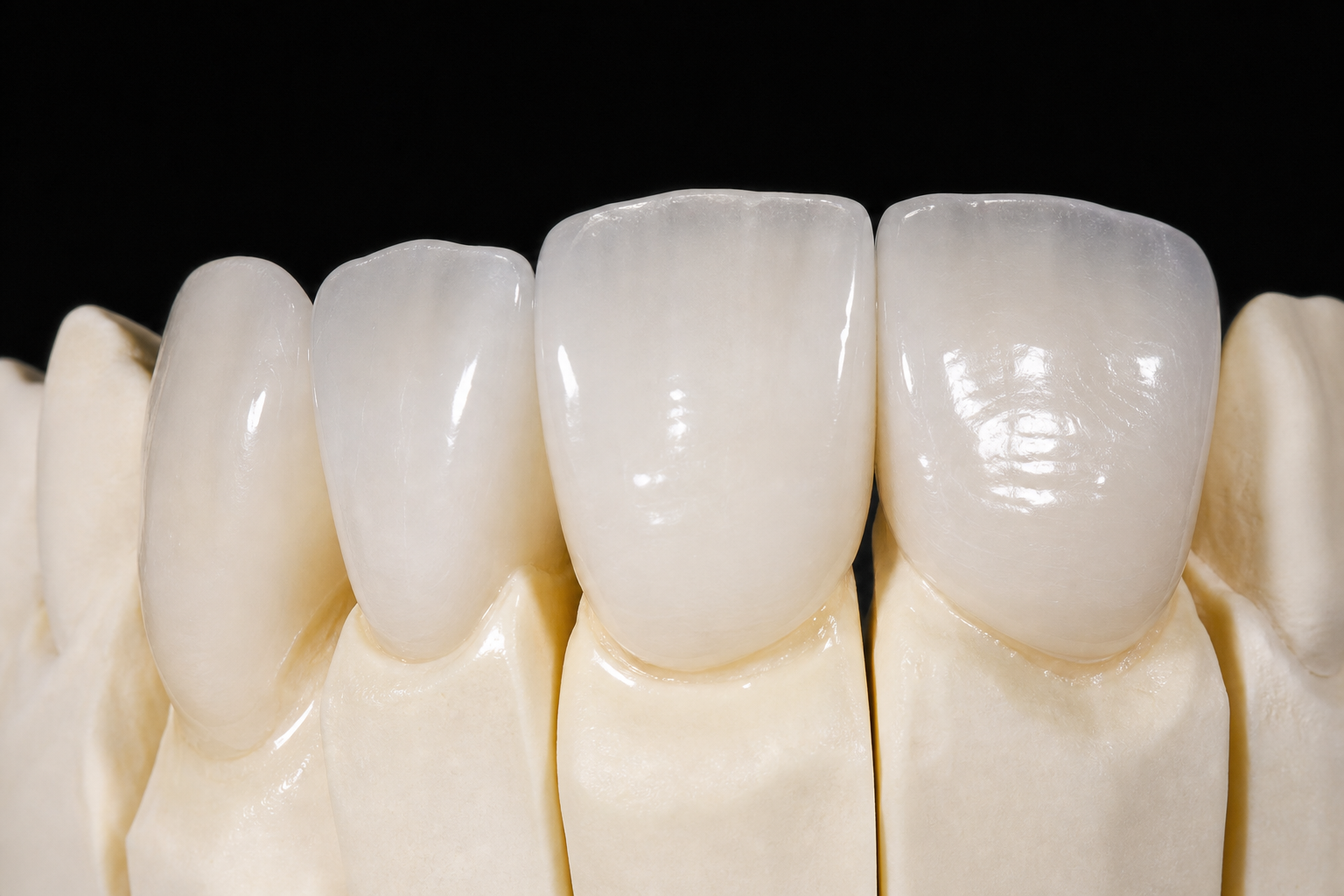
Layered zirconia uses a zirconia coping or framework as the structural base, then adds a veneering ceramic layer to improve final color, translucency, incisal effects, surface texture, and natural tooth-like depth. It is often used when esthetics are more demanding, especially in visible anterior or premolar areas.
The key benefit is esthetic flexibility. A skilled ceramist can build enamel-like effects, mamelons, translucency, and subtle shade transitions that are difficult to reproduce with staining alone. The tradeoff is that layered zirconia introduces another interface between the zirconia core and the veneering ceramic, so design, support, thickness, firing, finishing, and occlusal control become very important.
Key Properties
|
Property |
Monolithic Zirconia |
Layered Zirconia |
|
Strength |
Usually the stronger choice because the crown is mainly one solid zirconia structure with no thick veneering layer. |
Strong zirconia framework, but the veneering ceramic layer can be more vulnerable to chipping if poorly supported or overloaded. |
|
Translucency |
Improved in modern high-translucency zirconia, but still more limited than layered esthetic work in highly visible cases. |
Higher esthetic flexibility because porcelain layering can create depth, incisal translucency, and natural surface effects. |
|
Biocompatibility |
Zirconia is widely used in dental restorations and is commonly selected for metal-free crown and bridge cases. |
Also metal-free when built with ceramic veneering materials over a zirconia framework. |
|
Wear Resistance |
Can be favorable when the surface is well polished and occlusion is controlled; rough or adjusted surfaces should be carefully refinished. |
Veneering ceramic can be adjusted and polished, but chipping risk must be managed through design and occlusion. |
|
Longevity |
Often selected for durability in posterior and high-load cases, provided preparation, cementation, fit, and occlusion are appropriate. |
Can perform well in esthetic areas when the framework supports the porcelain and occlusal forces are controlled. |
Material manufacturers such as Ivoclar describe zirconia systems with different strength, translucency, and processing options, including monolithic and veneering techniques. This is why the exact zirconia disc, shade, translucency level, restoration design, and finishing process should be matched to the clinical case.
Clinical Indications
Monolithic zirconia is often a strong option for:
· Posterior crowns where strength and fracture resistance are priorities
· Molar and premolar crowns with limited esthetic demand
· Full-contour zirconia crowns and bridges
· Implant crowns and screw-retained restorations when case design allows
· Patients with heavy occlusion or higher functional load
· Cases where reduced chipping risk is important
Layered zirconia is often a strong option for:
· Anterior crowns requiring higher esthetic characterization
· Visible premolar cases where shade depth matters
· Cases requiring custom incisal effects, texture, and translucency
· Smile-zone restorations where the dentist provides detailed shade photos
· Cases where the zirconia framework can provide proper support for the porcelain layer
Monolithic zirconia may not be ideal when:
· The patient has very high anterior esthetic expectations
· The case requires complex internal color effects that staining alone cannot reproduce
· The selected zirconia is too opaque for the desired shade result
Layered zirconia may not be ideal when:
· The patient has severe bruxism or uncontrolled heavy occlusion
· There is insufficient space for a supported zirconia framework and ceramic layer
· The restoration is in a high-load posterior area where chipping risk is a major concern
· The case lacks shade photos, stump shade, occlusal information, or clear clinical instructions
Advantages of Monolithic Zirconia
· High strength for posterior and functional cases
· Lower risk of veneering porcelain chipping because there is no thick porcelain layer
· Efficient CAD/CAM production for digital dental workflows
· Useful for full-contour crowns, bridges, and implant restorations
· Good option when durability, fit, and occlusal control are more important than maximum esthetic layering
Limitations of Monolithic Zirconia
· May look less natural than layered restorations in demanding anterior cases
· Translucency depends heavily on zirconia type, shade selection, and restoration thickness
· Surface finishing is critical after chairside adjustment; rough zirconia surfaces should be properly polished
· Stain and glaze effects may not fully reproduce the depth of hand-layered ceramics
· Material selection still requires case review; full zirconia is not automatically the best answer for every crown
Advantages of Layered Zirconia
· Higher esthetic potential for anterior and visible restorations
· More room for custom shade matching, incisal translucency, and surface texture
· Useful when a strong zirconia framework is needed under an esthetic ceramic surface
· Can better mimic natural tooth depth when designed and layered by experienced technicians
· Good option for clinics that provide detailed shade photos and esthetic instructions
Limitations of Layered Zirconia
· Veneering ceramic may chip if it is unsupported, too thick, or exposed to heavy occlusion
· Requires more technical skill and careful communication than simple full-contour zirconia
· May need more restorative space than monolithic zirconia
· Production time can be longer because layering, firing, finishing, and characterization require additional steps
· Not always the best choice for posterior high-load cases or patients with strong parafunctional habits
Monolithic Zirconia vs. Layered Zirconia: Quick Comparison
|
Question |
Better Fit |
|
Best for strength? |
Monolithic zirconia |
|
Best for posterior crowns? |
Usually monolithic zirconia |
|
Best for anterior esthetics? |
Often layered zirconia |
|
Lower chipping risk? |
Monolithic zirconia |
|
More natural shade depth? |
Layered zirconia |
|
More efficient digital production? |
Monolithic zirconia |
|
Better for complex characterization? |
Layered zirconia |
|
Best universal choice? |
Neither. The best choice depends on indication, occlusion, esthetic demand, material type, and lab workflow. |
For a broader crown material decision, this topic can also connect with the Zirconia vs. E.max guide. Zirconia is often selected for strength and broader posterior use, while lithium disilicate materials such as E.max are often considered when translucency and anterior esthetics are the main concern.
How Times Dental Lab Supports Zirconia Case Selection
Choosing between monolithic zirconia and layered zirconia should not be based on a product label alone. A reliable dental lab should review the scan or model, margin design, preparation space, occlusion, restoration type, shade photos, opposing arch, implant information, and clinical instructions before production.
As a full-service China dental lab, Times Dental Lab supports zirconia crowns, bridges, implant restorations, digital design, and related fixed prosthetics. Our crown and bridge workflow focuses on fit, contacts, occlusion, shade communication, finishing, and final inspection before shipment.
For clinical teams comparing full zirconia, layered zirconia, PFM, or E.max restorations, the best next step is to submit case files and photos for review through Contact Times Dental Lab.
FAQs
Is layered zirconia stronger than monolithic zirconia?
Usually no. Layered zirconia has a strong zirconia framework, but the veneering ceramic layer can be the weaker part if it is unsupported or exposed to heavy occlusion. Monolithic zirconia is generally preferred when maximum strength and lower chipping risk are priorities.
Can monolithic zirconia be used for anterior teeth?
Yes, especially with newer high-translucency zirconia materials. However, for highly demanding anterior esthetic cases, layered zirconia or other ceramic options may provide more natural shade depth and incisal characterization.
How long does zirconia last?
Zirconia restorations can last many years when the case is properly planned, fabricated, fitted, cemented, and maintained. Longevity depends on preparation design, material choice, occlusion, oral habits, cementation, hygiene, and regular dental follow-up.
Is monolithic zirconia better for bruxism?
It is often selected for patients with heavier occlusion because of its strength and lower risk of veneering porcelain chipping. The dentist should still evaluate occlusion, restoration thickness, antagonist material, and whether a night guard is needed.
Does layered zirconia look more natural?
Often yes. Layering allows the ceramist to build translucency, incisal effects, texture, and shade depth. This can be helpful in anterior and visible premolar cases, especially when the clinic provides clear shade photos and esthetic instructions.
Which zirconia crown is better for posterior teeth?
Monolithic zirconia is commonly preferred for posterior crowns because posterior teeth experience higher functional load and often require durability. Layered zirconia may still be used in selected premolar or visible cases if space, support, and occlusion are favorable.
What information should a clinic send to the lab?
Send scans or impressions, bite records, opposing arch, stump shade when relevant, final shade, photos, restoration type, implant system details if applicable, and any special instructions about contacts, occlusion, texture, or esthetic expectations.
Conclusion
Monolithic zirconia and layered zirconia are not competing answers to the same problem. They are two different ways to use zirconia depending on the clinical goal. Monolithic zirconia is usually the stronger and more efficient choice for posterior, high-load, and full-contour cases. Layered zirconia is often the better choice when the case requires more natural esthetics, shade depth, and individualized ceramic characterization.
For dentists and dental labs, the most reliable approach is to match the restoration to the indication, not simply choose the strongest or most esthetic material in isolation. Times Dental Lab supports both monolithic zirconia and layered zirconia restorations as part of our crown and bridge services, helping overseas clinics and laboratories manage strength, fit, esthetics, and production quality in one structured workflow.