Introduction
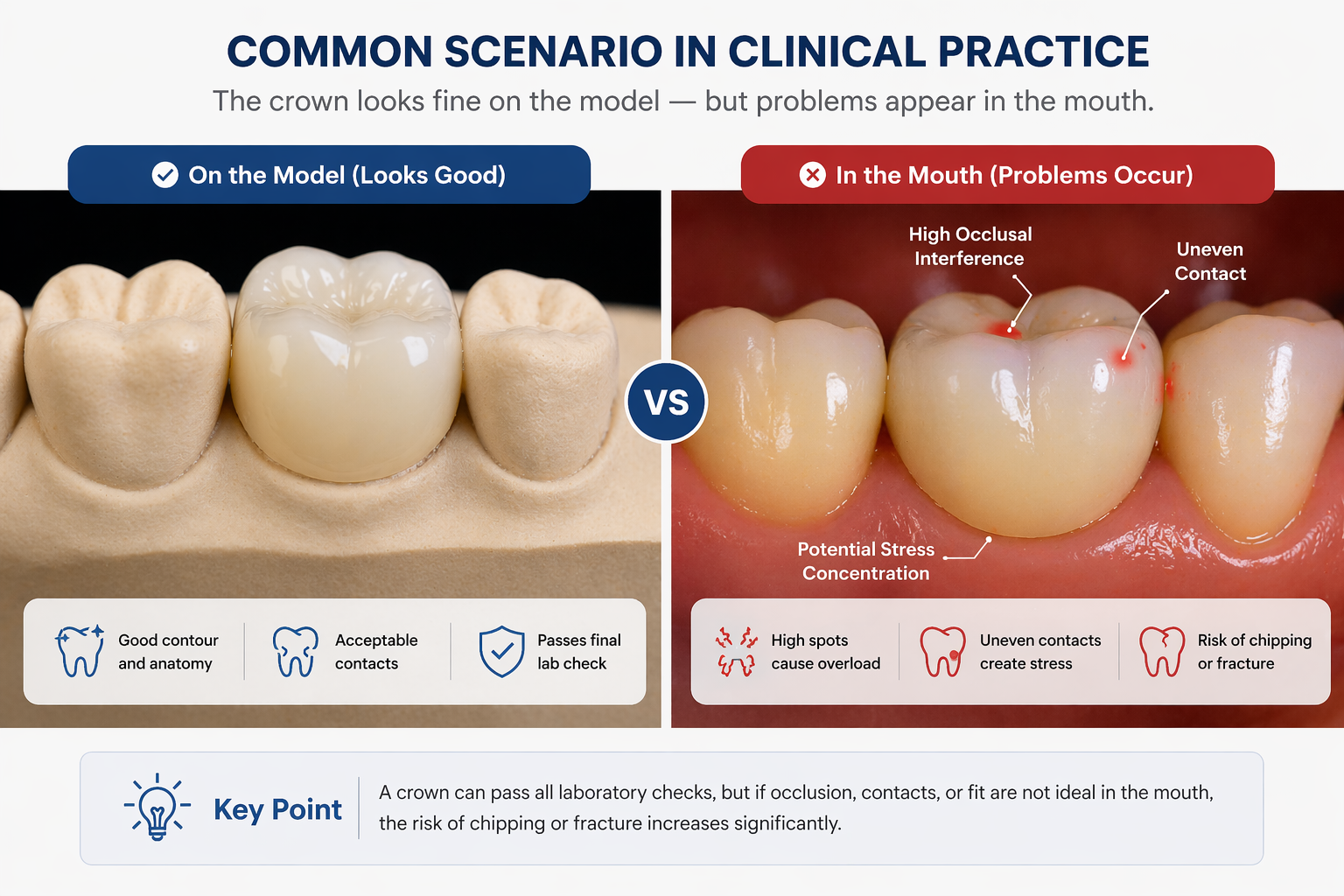
Many clinics have experienced a similar situation: a zirconia crown is delivered, the model looks acceptable, contacts feel within range, and occlusion appears balanced. The case passes final checks. But after delivery, the patient returns with discomfort, a high spot is adjusted, and weeks or months later a chip or fracture appears.
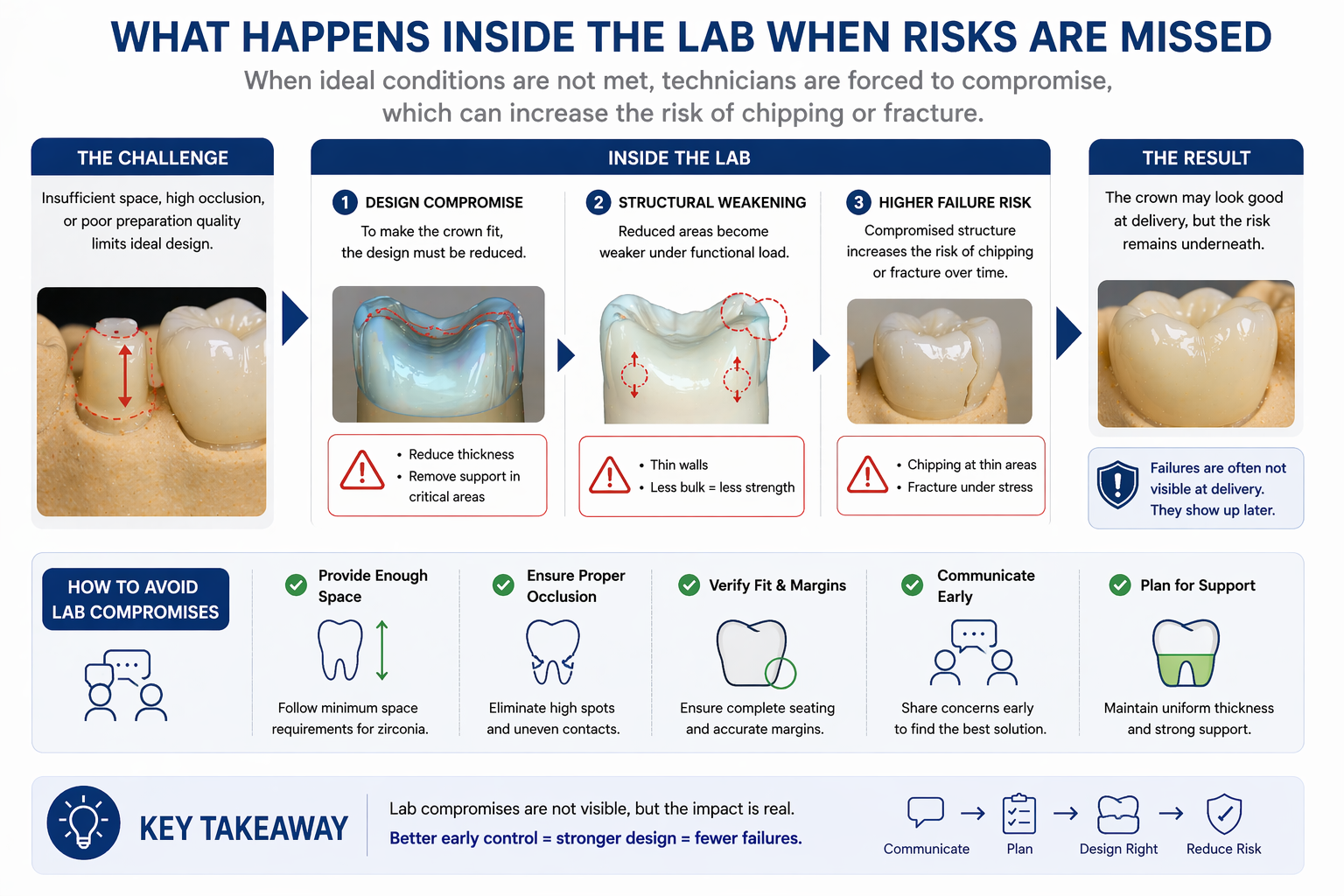
When zirconia crowns chip or break, the failure is rarely random. Zirconia is a strong dental ceramic, but it is not indestructible. Most failures begin earlier in the workflow, often through limited space, stress concentration, poor occlusal design, incomplete seating, unsupported veneering ceramic, or missed communication between the clinic and dental lab.
For clinics working with a China dental lab, this topic matters because prevention depends on case review, digital workflow, design logic, manufacturing control, and final quality checks before shipment.
Quick Answer
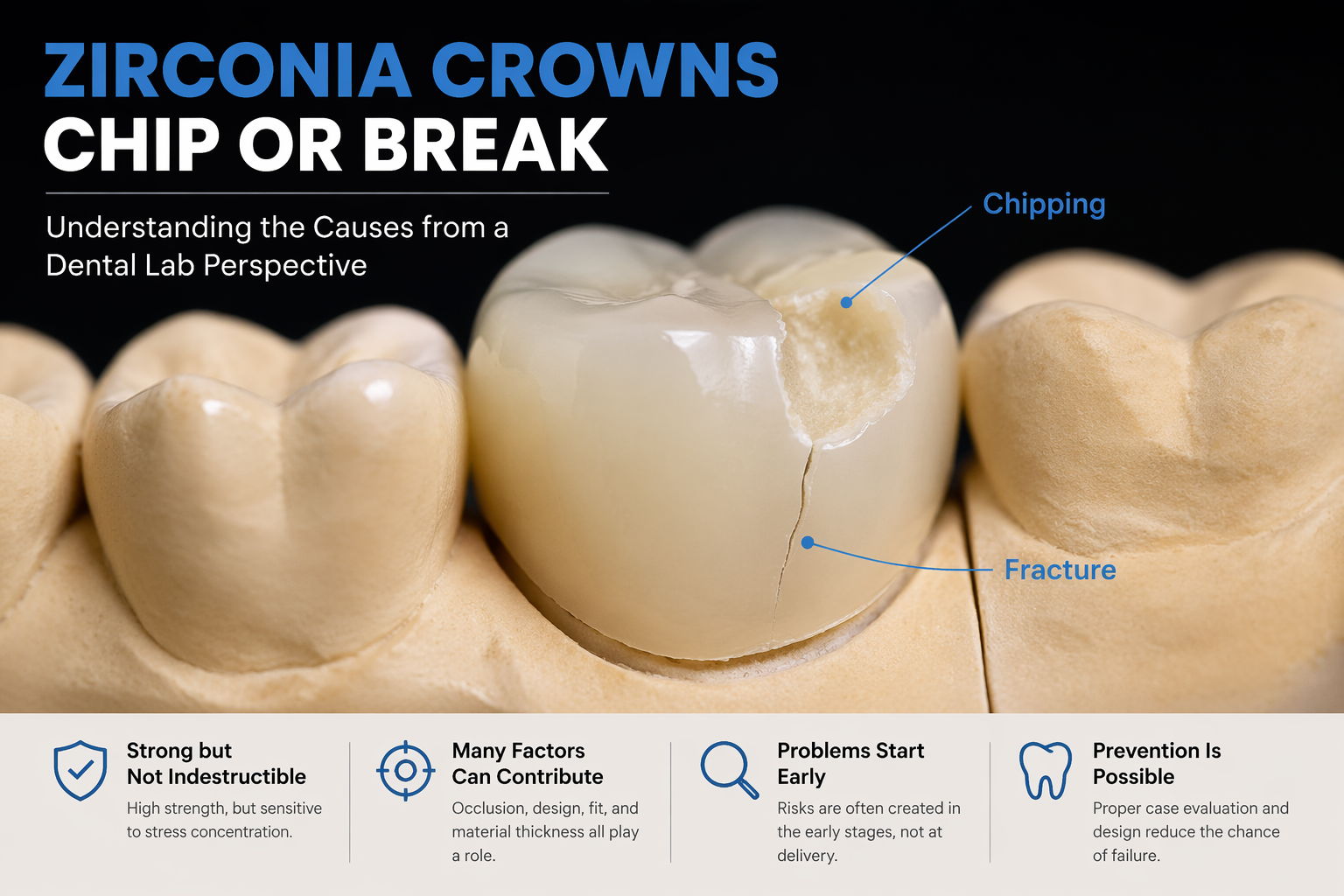
Zirconia crowns usually chip or break because stress was concentrated in one area. Common reasons include insufficient occlusal reduction, thin or uneven material thickness, poor occlusal design, sharp internal transitions, incomplete seating, unsupported porcelain in layered zirconia, sintering or processing problems, and aggressive chairside adjustment without proper polishing.
The solution is not simply making every crown thicker. A more reliable approach is to control the full workflow: evaluate the case early, confirm material thickness, design occlusion carefully, support layered ceramics, verify fit, manage sintering and finishing, and apply multi-stage QC. Times Dental Lab handles zirconia cases through its Zirconia / Crowns and Bridges product workflow with digital design and quality-control checkpoints.
What Is a Zirconia Crown Failure?
A zirconia crown failure can appear as a small chip, a veneer fracture, a crack line, a broken cusp, a fractured connector, or a complete restoration fracture. In layered zirconia, chipping often happens in the veneering ceramic. In monolithic zirconia, fracture is less common but can still occur when design, thickness, occlusion, or seating conditions are unfavorable.
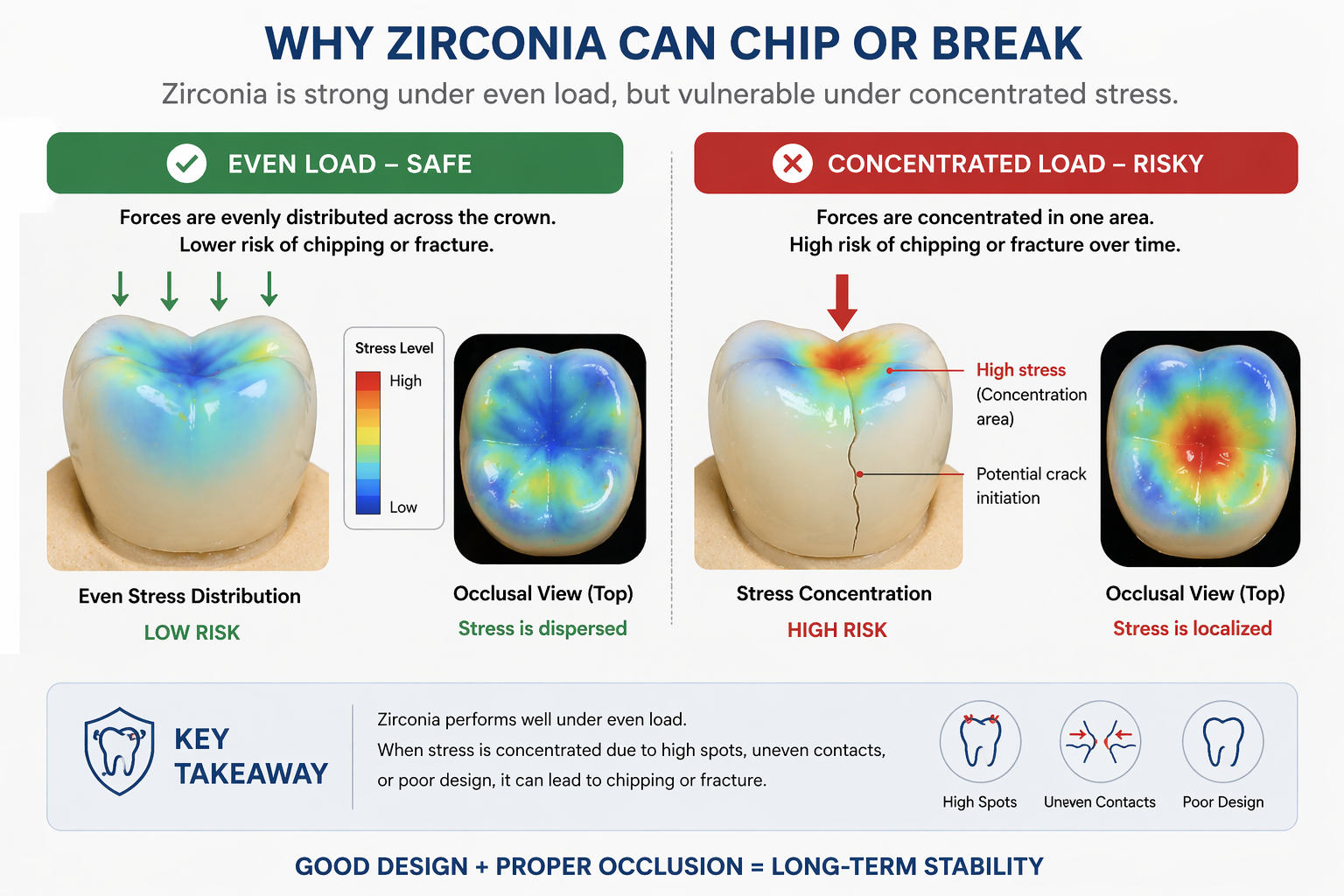
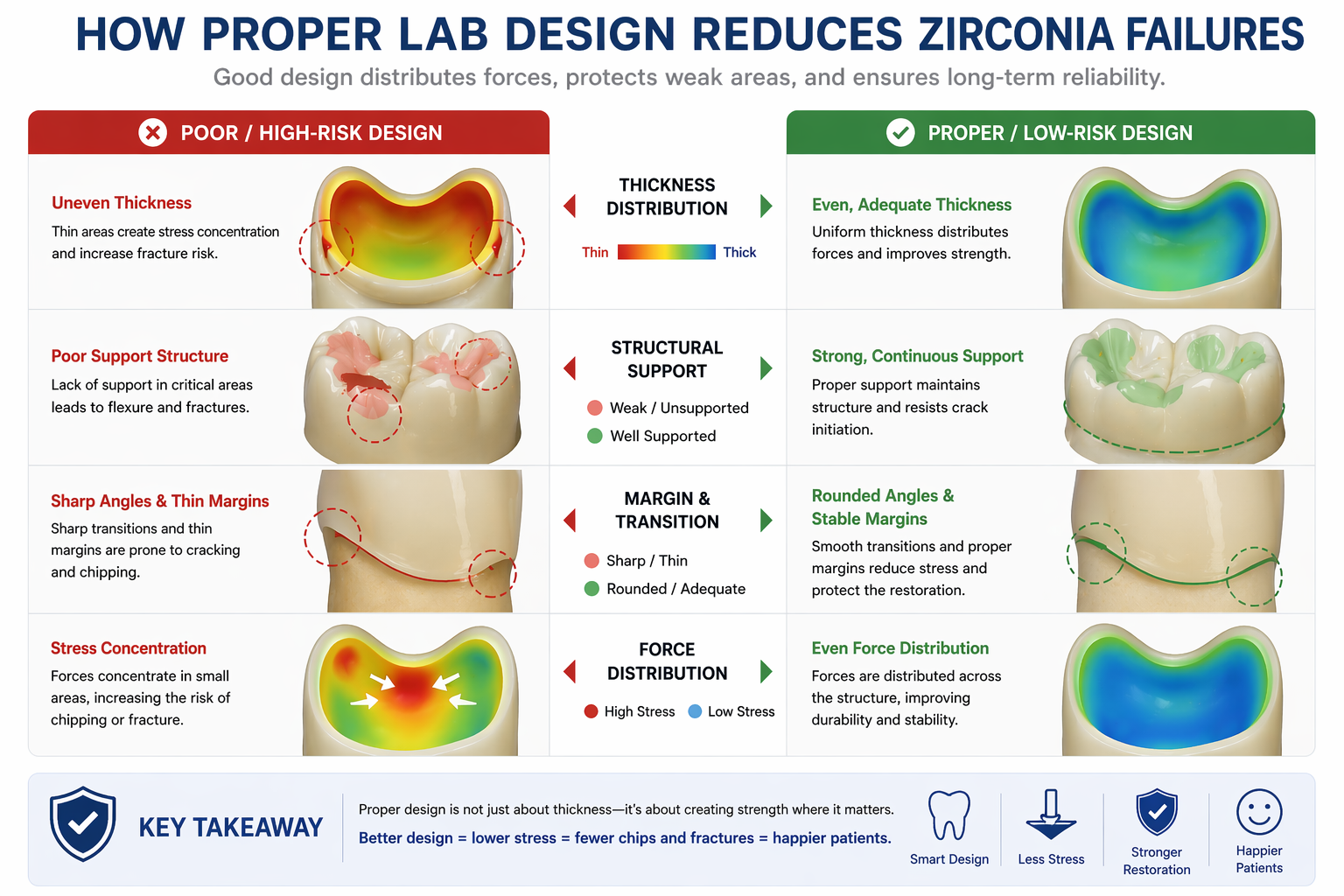
Zirconia performs well when forces are distributed. It becomes more vulnerable when force is concentrated at a thin area, sharp transition, unsupported layer, high occlusal point, or poorly seated internal surface.
Why Dentists Choose Zirconia Crowns
· High strength compared with many esthetic ceramic materials.
· Good option for posterior crowns, bridges, and implant restorations.
· Metal-free restoration option for patients and clinics that prefer ceramic materials.
· Strong fit with CAD/CAM and digital dental manufacturing.
· Monolithic zirconia can reduce veneering ceramic chipping risk in high-load cases.
· Modern multilayer zirconia can improve esthetics compared with older opaque zirconia options.
Zirconia strength is useful, but strength should not replace case planning. For a broader material discussion, see the related Times guide on How Strong Is Zirconia?.
Key Factors to Consider
Material Thickness
Insufficient thickness is one of the most important risk factors. If occlusal clearance is limited, the crown may become too thin or the design may be raised to preserve thickness, creating a high bite. Thickness distribution matters as much as total thickness: a crown can be thick in one area and still vulnerable in another.
Occlusal Design
Repeated loading on one high spot can turn a strong material into a vulnerable restoration. Poor occlusal design may create single-point loading, steep functional contacts, or stress at cuspal areas and connectors.
Sintering and Processing
Zirconia requires controlled milling, sintering, finishing, glazing, and polishing. Processing errors, contamination, incorrect program selection, or rough surface finishing can affect the final restoration. A dental lab should treat sintering as a controlled manufacturing step, not a routine background process.
Chairside Adjustment
A high spot may need chairside adjustment, but zirconia should be properly polished after adjustment. Roughened surfaces can affect opposing wear and may leave areas more vulnerable to functional stress.
Layered vs Monolithic Design
Layered zirconia can provide better esthetics, but the veneering ceramic needs support. Unsupported porcelain is more likely to chip. Monolithic zirconia is often preferred for posterior high-load cases because it avoids a thick veneering ceramic layer.
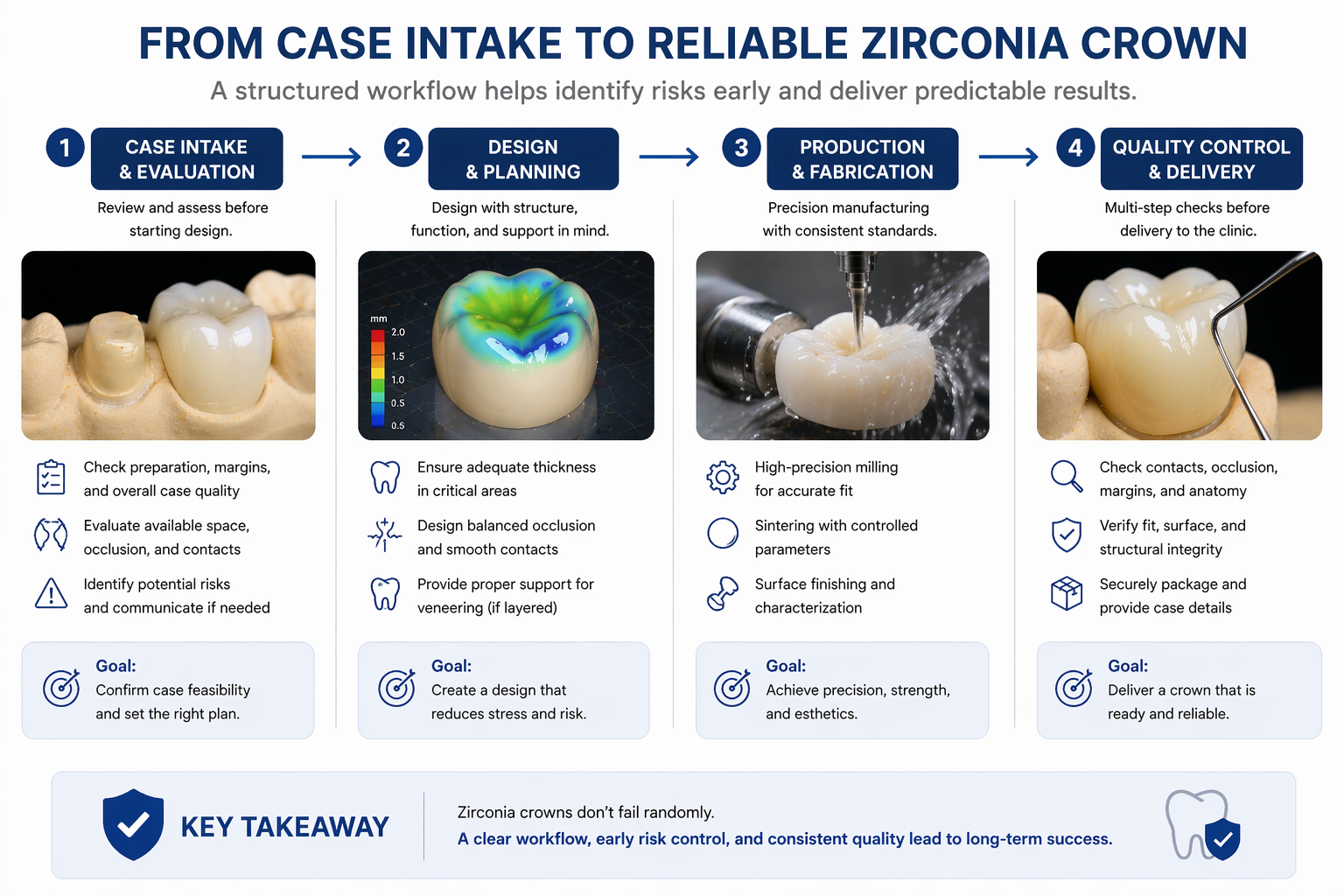
Table Comparison
|
Risk Factor |
How It Causes Failure |
Prevention |
|
Limited occlusal space |
Creates thin zirconia or high occlusion. |
Confirm reduction and material thickness before production. |
|
Poor occlusal design |
Concentrates force at one point. |
Distribute contacts and review functional movements. |
|
Unsupported veneering ceramic |
Porcelain absorbs stress without framework support. |
Design proper support for layered zirconia. |
|
Sharp internal transitions |
Creates stress concentration inside the restoration. |
Use smooth internal design and avoid abrupt geometry. |
|
Incomplete seating |
Creates internal binding and uneven force distribution. |
Check fit, contacts, and internal surface before delivery. |
|
Processing or sintering issues |
Affects material behavior and final fit. |
Use controlled manufacturing parameters and QC checkpoints. |
|
Over-adjustment |
Can roughen surfaces or reduce anatomy support. |
Adjust conservatively and polish properly after adjustment. |
Dental Laboratory Workflow
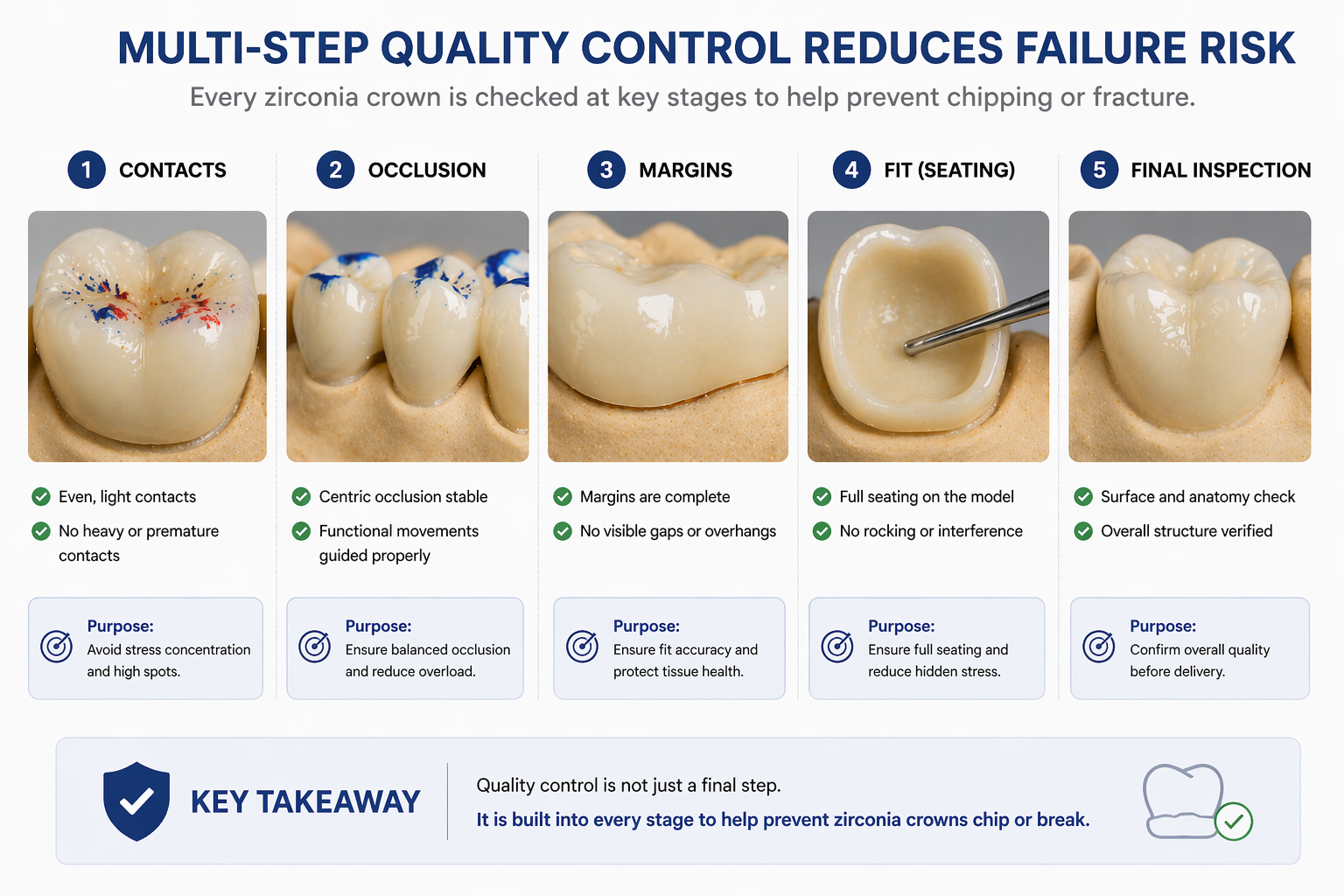
A zirconia failure is often visible at the end, but the risk usually begins earlier. A reliable dental laboratory workflow should identify risk before production, not after fracture. This is why Times Dental Lab connects Digital Workflow, CAD design, material selection, production control, and final QC.
A Practical QC Workflow for Zirconia Crowns
|
QC Stage |
What Is Checked |
Why It Prevents Failure |
|
Case intake review |
Scan/impression quality, bite, opposing arch, shade, material, instructions. |
Prevents design assumptions from incomplete data. |
|
Pre-design feasibility |
Occlusal space, margin clarity, restoration type, bridge span, implant details. |
Identifies cases that need clarification before production. |
|
CAD design review |
Thickness, cement space, contacts, occlusion, connector size, anatomy, internal transitions. |
Reduces stress concentration and seating problems. |
|
Pre-production check |
Material selection, zirconia type, nesting position, milling strategy. |
Matches strength and esthetics to the case indication. |
|
Post-processing check |
Sintering result, fit, surface defects, cracks, margin integrity. |
Catches manufacturing issues before finishing. |
|
Final restoration QC |
Fit, contacts, occlusion, shade, surface finish, polishing, case details. |
Reduces chairside adjustment and remake risk. |
|
Packing and shipment check |
Case label, restoration protection, order details, accessories when applicable. |
Protects the restoration during international delivery. |
This workflow connects directly with Times Dental Lab's broader Quality Control approach for overseas crown and bridge cases.
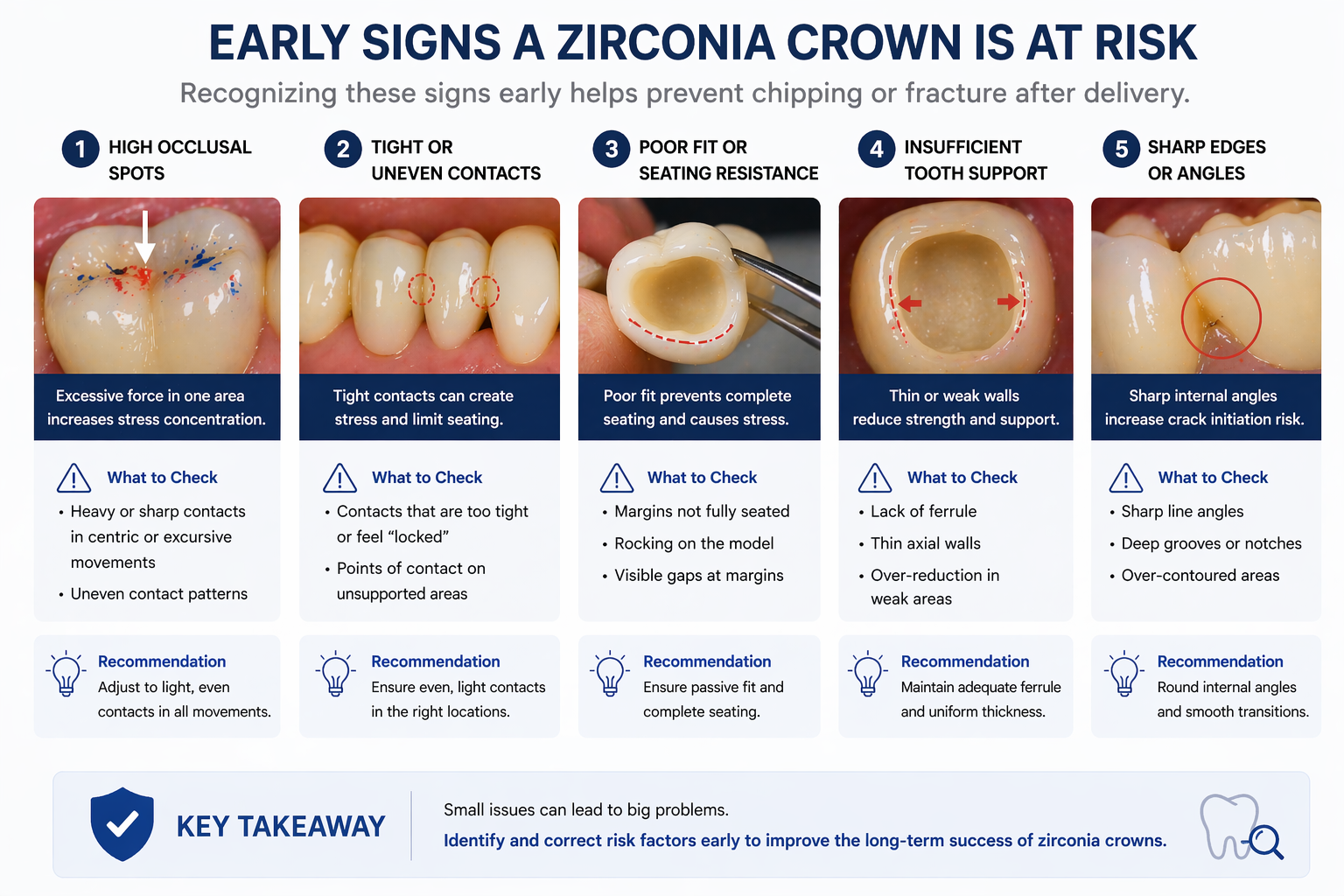
Common Mistakes Dentists Should Avoid
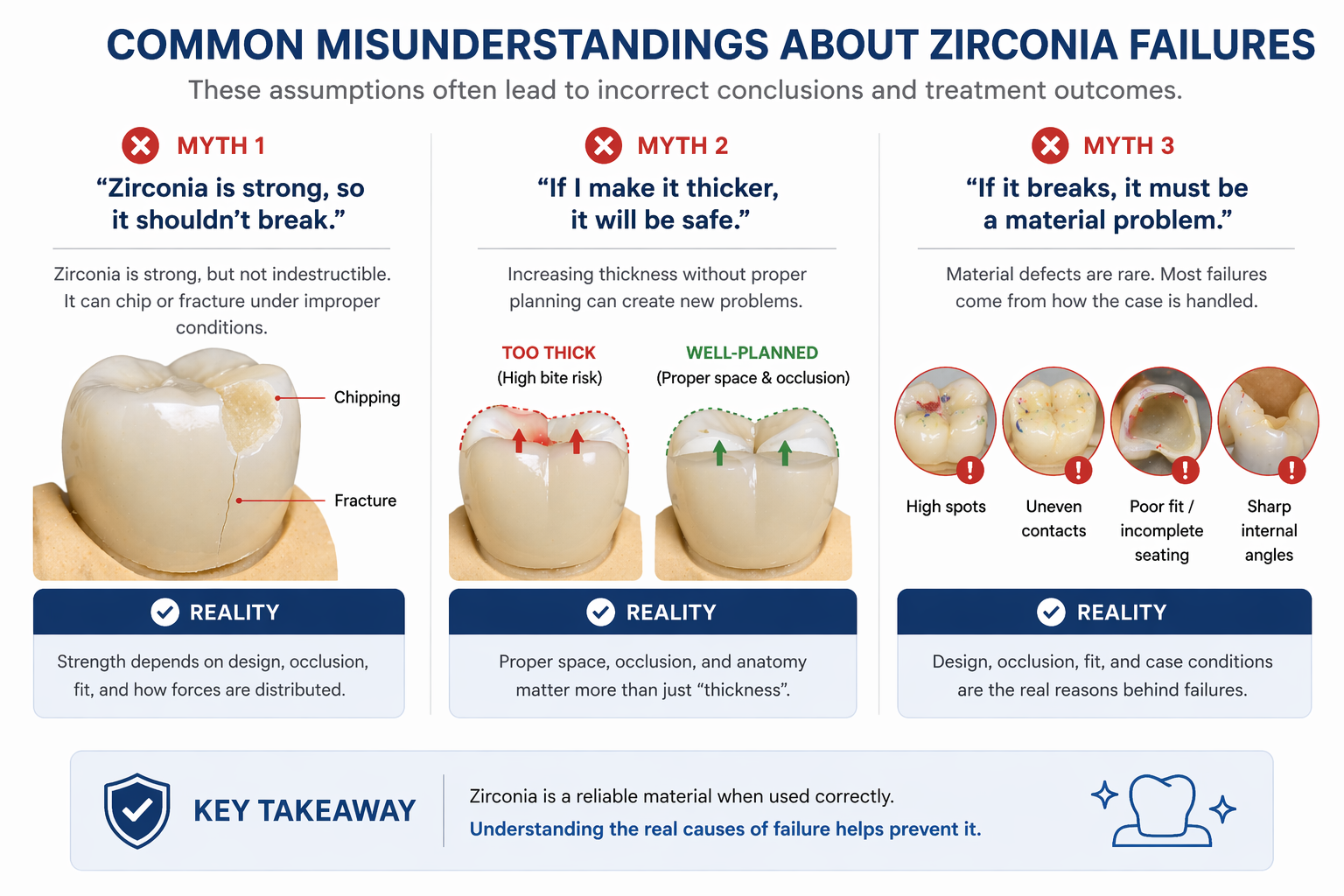
· Assuming zirconia cannot break because it is strong.
· Choosing high-translucency zirconia for a high-load case without reviewing material limits.
· Accepting insufficient occlusal reduction without discussing risk with the lab.
· Sending unclear margins, unstable bite records, or incomplete opposing arch data.
· Ignoring bruxism, implant loading, or functional movement patterns.
· Over-adjusting the crown chairside without proper polishing.
· Treating a fracture as only a material defect instead of reviewing the full workflow.
Explore our Restoration Problems Hub for related guidance on poor fit, shade mismatch, crown chipping, occlusal problems, and remake prevention.
Failure Case Patterns We Commonly See
Case Pattern 1: Thin Posterior Crown With High Occlusion
The clinic has limited occlusal space, so the crown is designed close to the minimum thickness. After seating, a high spot is adjusted repeatedly. The risk is not one single step; it is the combination of limited space, occlusal concentration, and chairside adjustment.
Case Pattern 2: Layered Zirconia With Unsupported Porcelain
The zirconia framework is strong, but the veneering ceramic is not fully supported. The crown looks good at delivery, but repeated functional load causes veneer chipping. This is a design-support problem more than a zirconia-core problem.
Case Pattern 3: Incomplete Seating With Hidden Internal Binding
The crown appears close to correct, but seating resistance remains. Occlusal forces are then transferred unevenly through the internal surface. Over time, internal stress can contribute to discomfort, adjustment issues, or fracture.
FAQ
Do zirconia crowns chip easily?
Monolithic zirconia does not usually chip easily compared with layered ceramic restorations, but chipping or fracture can still happen when thickness, occlusion, seating, design, or surface finishing are not properly controlled.
Why did my zirconia crown break after a few months?
A delayed fracture often means stress was present earlier. Common causes include insufficient occlusal space, high bite, incomplete seating, bruxism, thin areas, connector weakness, or over-adjustment.
Is a broken zirconia crown always a material problem?
No. Material defects are possible, but many failures relate to case conditions, occlusion, design, thickness, adjustment, or communication between the clinic and lab.
Can sintering problems make zirconia weaker?
Sintering and processing must be controlled because zirconia performance depends on the correct manufacturing workflow. Incorrect processing, contamination, or poor finishing can affect the final restoration.
How thick should a zirconia crown be to prevent fracture?
Thickness depends on the zirconia type, indication, crown location, occlusion, and manufacturer recommendations. The lab should evaluate whether the available space matches the selected material.
Can chairside adjustment damage zirconia?
Adjustment may be necessary, but the surface should be properly polished afterward. Rough or over-adjusted zirconia surfaces can create functional and surface-finish concerns.
How does a dental lab prevent zirconia crown failures?
A lab helps prevent failures through case review, CAD design control, thickness checks, occlusal design, proper material selection, manufacturing control, fit and contact checks, surface finishing, and final QC.
Conclusion + Times Introduction
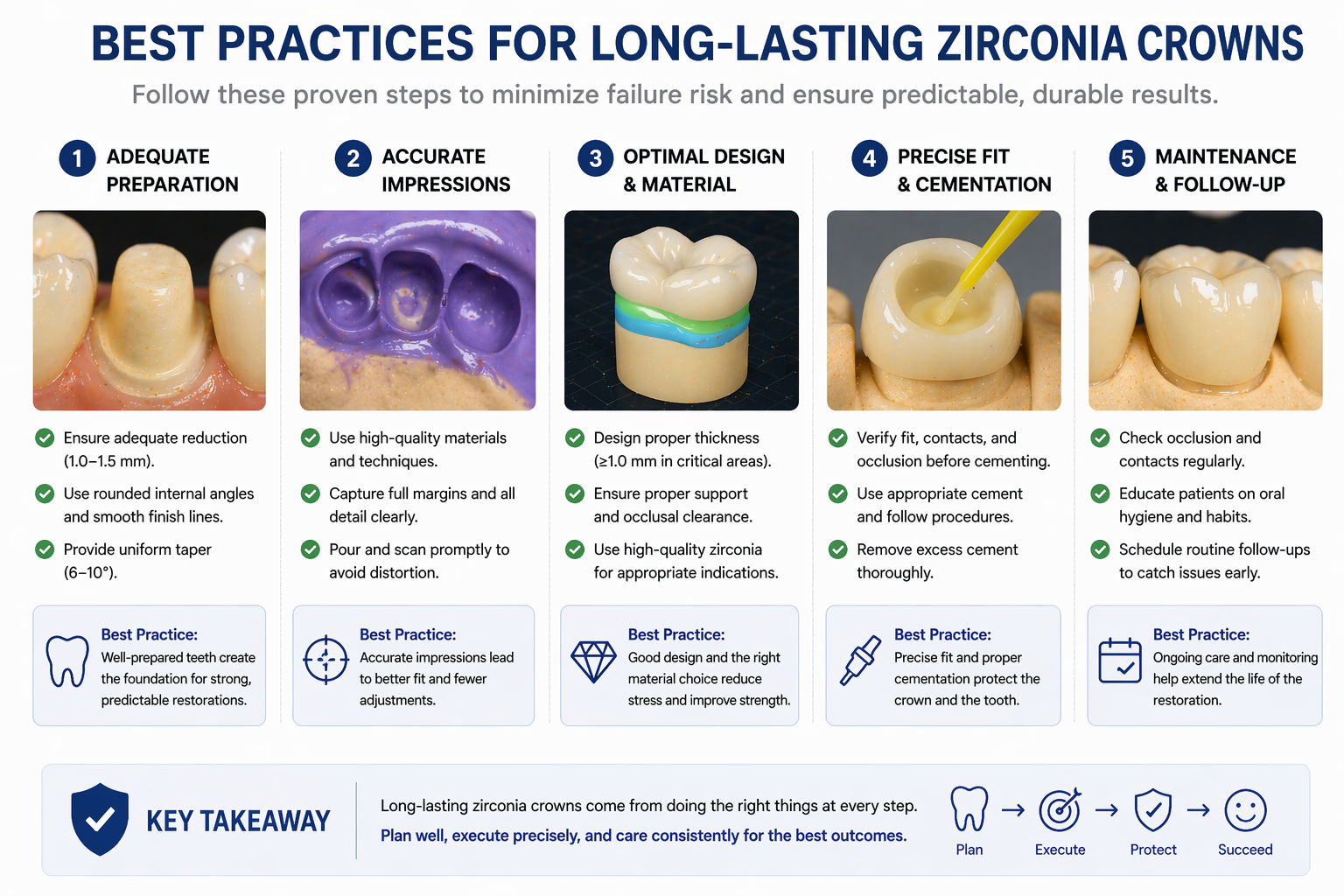
Zirconia crowns do not chip or break without a reason. The reason is often built into the case earlier through limited space, uneven load, unsupported ceramic, incomplete seating, processing problems, or missed QC checkpoints. Understanding these causes helps clinics and dental labs prevent failures before they reach the patient.
Times Dental Lab is a full-service dental laboratory based in Shenzhen, China. We support overseas clinics and dental laboratories with zirconia crowns, bridges, implant restorations, digital design support, production control, and quality checks. For zirconia crown and bridge cases, contact Times Dental Lab with scans, photos, bite records, restoration details, and case requirements.