What Should Be Included in a Dental Lab Case Submission?
A complete dental lab case submission should include a clear prescription, digital scans or physical models, bite records, clinical photos, shade information, material choice, requested restoration type, deadline, and any special instructions. For implant, denture, removable, or esthetic cases, the submission should also include case-specific details such as implant system information, old denture reference, soft tissue scans, or smile photos.
This dental lab case submission checklist is designed to help clinics reduce delays, avoid repeated clarification, and make case review easier before production begins. It is not a general dental lab outsourcing article. It is a practical sending guide for clinics, labs, and case coordinators preparing work for a dental laboratory.
Quick Answer
Before sending a case to a dental lab, prepare these core items: prescription, tooth number, restoration type, material, shade, scans or models, upper and lower arch records, bite record, photos, deadline, and special design requirements. If the case involves implants, removables, esthetics, or complex occlusion, send the additional case-specific records listed below.
|
Submission Item |
Why It Matters |
|
Prescription |
Defines tooth number, restoration type, material, design, shade, and deadline. |
|
Scans or models |
Gives the lab the working record for design and fabrication. |
|
Bite records |
Helps the lab design occlusion and reduce chairside adjustment. |
|
Photos and shade |
Supports shade matching, esthetic planning, and communication. |
|
Implant or removable details |
Prevents production delays caused by missing components or setup information. |
|
Special instructions |
Records doctor preferences for contacts, occlusion, texture, pontics, or try-in steps. |
Dental Prescription and Patient Information
The dental prescription is the main instruction record for the lab. It should be complete enough for the technician to understand the clinical request without guessing. A clear prescription should include the tooth number, arch, restoration type, material, shade, design preference, delivery date, and any special requirements.
· Tooth number or FDI/Universal notation.
· Restoration type: crown, bridge, veneer, inlay, onlay, implant crown, denture, splint, or appliance.
· Material choice: zirconia, multilayer zirconia, PFM, E.max, acrylic, cobalt chrome, flexible material, or other requested material.
· Design details: monolithic, layered, screw-retained, cement-retained, pontic shape, contact preference, occlusion notes, or surface texture.
· Deadline and priority level.
· Doctor, clinic, or lab contact person for case questions.
Clinics should avoid sending unnecessary patient privacy information. In many cases, the lab does not need the patient's full name or private medical details. Use a case ID, initials, or internal tracking reference when possible, and send only the information needed for production and communication.
It also helps to assign one person to manage the dental lab case submission. The coordinator can confirm that the prescription, scans, photos, bite records, shade information, and deadline all refer to the same case before the file is sent. This simple handoff step prevents a common problem: the lab receives a scan under one case name, a prescription under another name, and photos without a clear reference. When the case arrives as one organized package, technical review can begin faster.
Digital Files and Scan Requirements
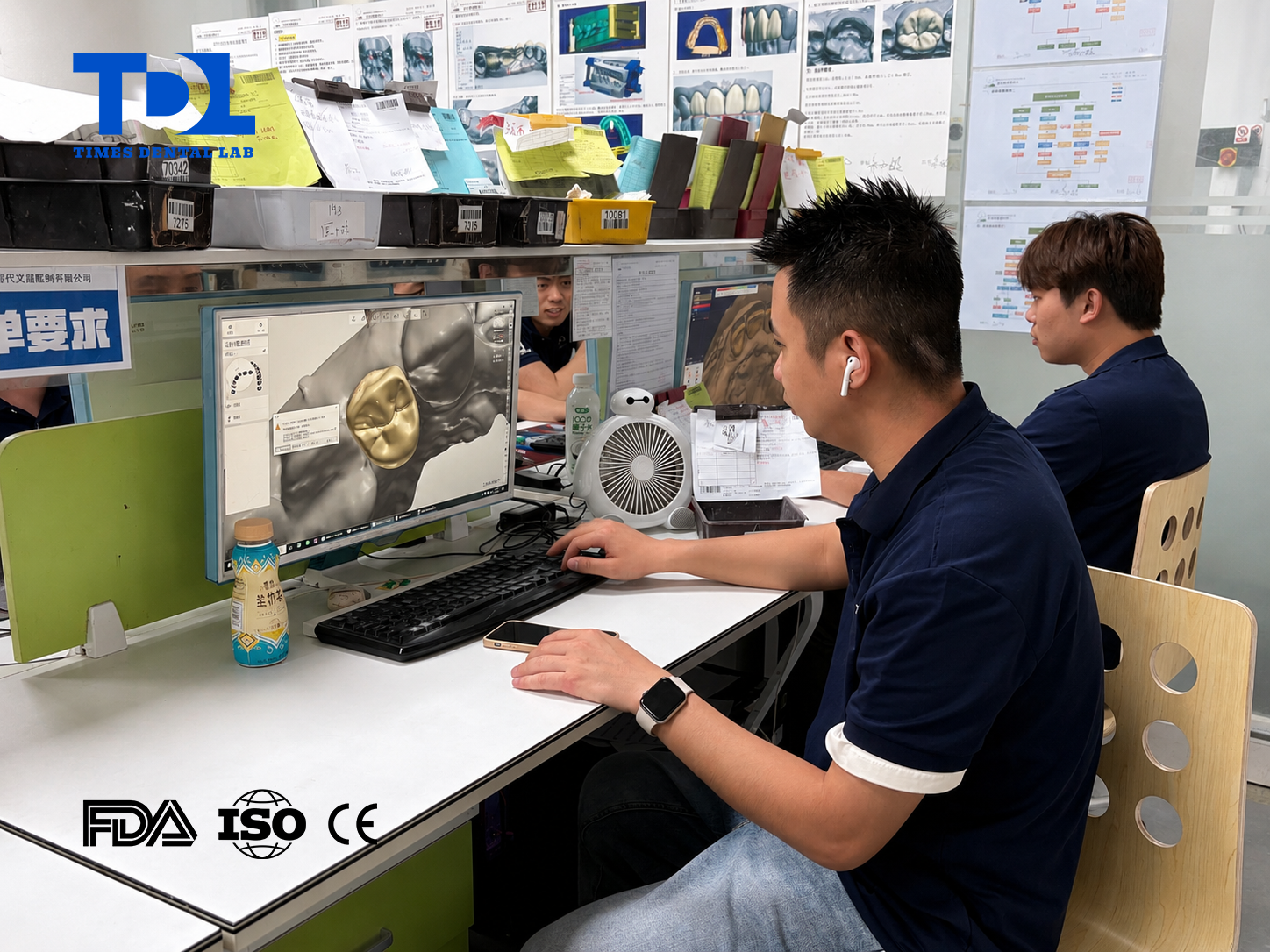
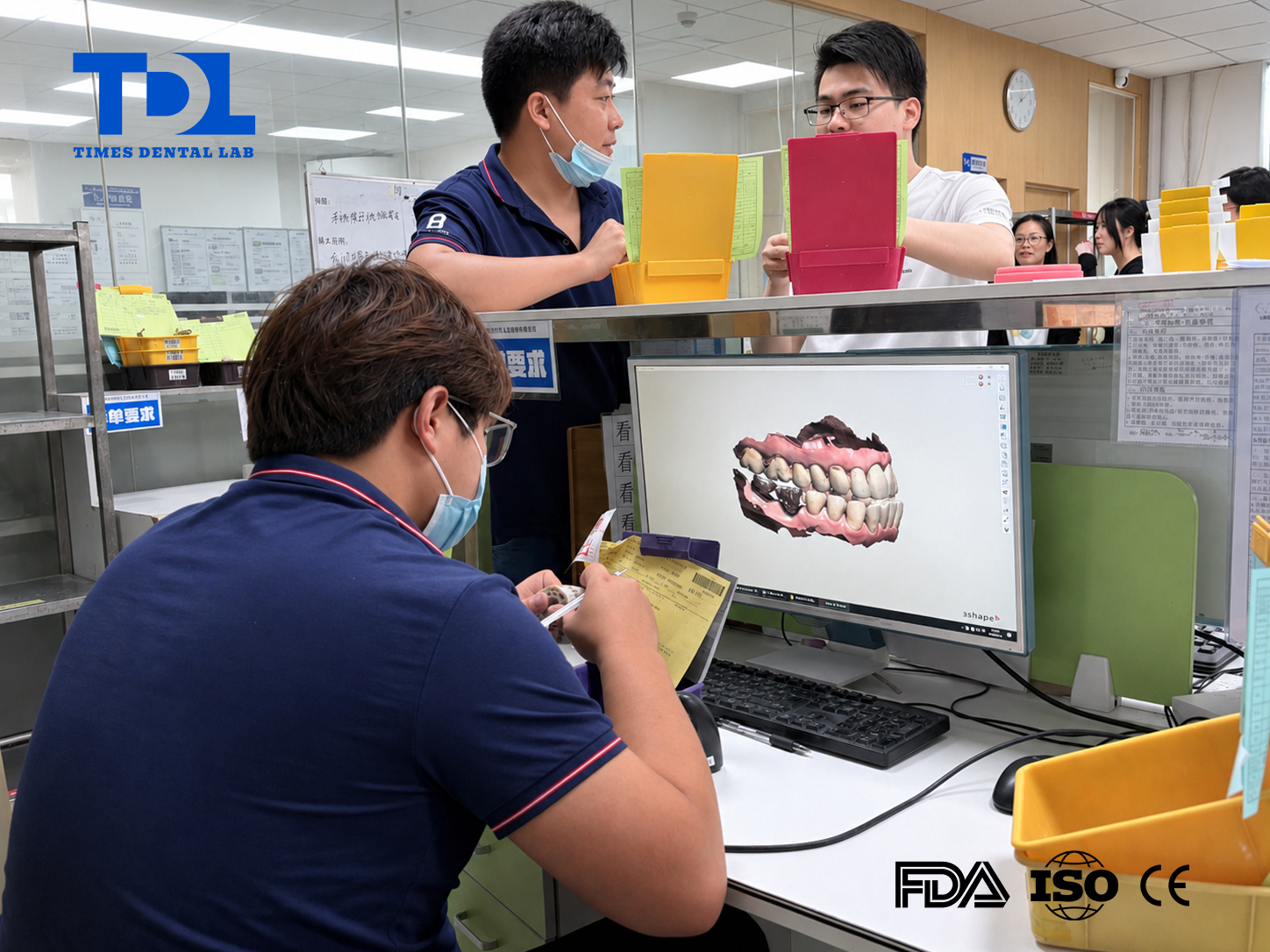
Digital dental case submission works best when the files are complete and clearly named. For digital cases, clinics may send STL or PLY files, upper and lower arch scans, bite scans, preparation scans, soft tissue scans when relevant, and clinical photos. Times Dental Lab supports both digital and physical workflows through its Digital Solutions and case review process.
· Upper arch scan.
· Lower arch scan.
· Bite scan or bite record.
· Preparation scan with complete margins.
· Pre-op or temporary scan when useful for anatomy reference.
· Soft tissue scan for implant or removable cases when relevant.
· Clearly named files showing case ID, arch, tooth number, and date.
Before sending STL files for dental lab production, check whether margins are complete, interproximal areas are captured, the bite scan aligns correctly, and no critical areas are missing. If the file has holes, unclear margins, or scan distortion, production may pause while the lab asks for clarification or a rescan.
File naming is a small detail that can save a large amount of communication time. A practical naming format is case ID, restoration area, record type, and date, such as TDL-1028_UpperScan_2026-07-17 or TDL-1028_BiteScan_2026-07-17. Avoid vague names such as scan1, final, new bite, or patient photo because they are difficult to trace when several files are uploaded together.
For digital dental case submission, the clinic should also check whether the bite record matches the clinical situation. A scan may look complete but still be unusable if the upper and lower arches are incorrectly aligned. If the patient has a deep bite, crossbite, limited opening, missing opposing teeth, or a removable appliance that affects occlusion, add a short note so the dental laboratory can interpret the records correctly.
Photos and Shade Information
Photos are especially important for anterior restorations, visible premolars, veneers, E.max restorations, layered zirconia, implant esthetic zones, and shade-sensitive cases. A written shade alone may not give enough context for value, translucency, characterization, or neighboring tooth appearance.
· Full-face smile photo for esthetic cases.
· Retracted intraoral photo.
· Close-up photo with shade tab in the same frame.
· Stump shade photo when the preparation color may affect the restoration.
· Photos of adjacent teeth for texture, translucency, and incisal effects.
· Photos under neutral lighting when possible; avoid strong color filters or heavy shadows.
For best communication, place the shade tab close to the tooth and keep the tab label visible. If the case has a special esthetic goal, write it in the prescription instead of relying only on photos.
A useful shade photo should show both the tooth and the shade guide under similar lighting. If only a close-up of the tooth is sent, the technician may not know whether the image is too warm, too cool, overexposed, or affected by operatory lighting. For anterior cases, clinics can send one photo for value, one for chroma, and one for texture or characterization. This is especially helpful for layered ceramic, E.max, veneers, and visible implant crowns.
Requirements for Crown and Bridge Cases
Crown and bridge cases need accurate margins, occlusal space, contact expectations, and design instructions. The lab should understand whether the restoration is a single crown, multi-unit bridge, veneer, inlay, onlay, full-contour zirconia, layered ceramic, or temporary restoration.
· Clear preparation margin and finish line.
· Enough occlusal clearance for the requested material.
· Opposing arch and bite record.
· Pontic design for bridge cases: ridge lap, modified ridge lap, ovate, sanitary, or custom instruction.
· Contact preference: normal, light, tight, open for try-in, or adjusted to clinic preference.
· Temporary crown, pre-op scan, or wax-up reference when matching existing anatomy.
· Special occlusion notes for bruxism, implant support, or limited space.
When the preparation has limited occlusal clearance, the prescription should say whether the doctor prefers material adjustment, reduction request, or a design compromise. Without this note, the lab may need to stop and ask before moving forward. For bridges, the lab also needs enough information about connector areas and pontic tissue contact because these choices affect strength, hygiene, and appearance.
Requirements for Implant Cases
Implant cases often take longer to confirm if implant information is incomplete. Before sending an implant case, include all details needed to identify the implant system, platform, components, scan body, and restoration type.
· Implant brand and system.
· Platform, diameter, and connection type.
· Scan body brand, size, and scan body file if needed.
· Screw-retained or cement-retained restoration preference.
· Screw access channel preference and esthetic limitation if applicable.
· Soft tissue scan and emergence profile notes.
· Custom abutment requirements.
· Photos and shade records for anterior implant restorations.
If any implant detail is uncertain, send photos of component packaging or previous records. Missing implant information is one of the most common reasons a case is delayed before production.
Requirements for Denture and Removable Cases
Denture and removable cases need records that describe fit, bite, tooth arrangement, esthetics, and patient expectations. These cases often require more than a single impression because the lab needs to understand tissue support, vertical dimension, occlusal relationship, and try-in preferences.
· Primary and final impressions or accurate digital/physical models.
· Bite registration, wax rims, or jaw relation records.
· Old denture reference when replacing or improving an existing prosthesis.
· Tooth mold, shade, arrangement preference, and midline information.
· Clasp design, framework design, or flexible denture instructions.
· Try-in stage requirements and feedback after try-in.
· Photos showing smile line, lip support, tooth display, and esthetic expectation.
If the patient has an old denture, it is often one of the most useful references. The clinic can explain what the patient likes and dislikes about the old prosthesis: tooth size, tooth shade, lip support, midline, vertical dimension, retention, sore spots, or phonetics. This prevents the new case from repeating an old problem and gives the lab a clearer starting point for setup.
Common Submission Problems That Delay Production
Most dental lab production delays are not caused by manufacturing speed alone. Many delays begin because the case arrives without the information needed to review, design, and produce the restoration safely.
|
Problem |
Why It Delays the Case |
How to Prevent It |
|
Missing files |
The lab cannot complete design review. |
Send upper, lower, bite, and preparation files together. |
|
Bite mismatch |
Occlusion cannot be trusted. |
Check bite scan alignment before submission. |
|
Unclear margins |
The finish line must be interpreted or clarified. |
Rescan or provide margin photos/notes. |
|
Shade photo color shift |
The lab cannot judge value or characterization reliably. |
Use shade tab photos under neutral lighting. |
|
Incomplete implant information |
The lab cannot choose components or design correctly. |
Send implant brand, platform, scan body, and retention type. |
|
Unrealistic deadline |
The case may need review, clarification, or try-in. |
Confirm production and shipping needs before promising delivery. |
|
Missing special instructions |
Technicians may follow default settings that do not match clinic preference. |
Document contact, occlusion, pontic, texture, and try-in preferences. |
Pre-Submission Checklist
The checklist below can be saved, shared with clinic staff, or used as a chairside case submission reference before sending files to the lab.
|
Check |
Item |
What to Confirm |
|
[ ] |
Prescription |
Tooth number, restoration type, material, shade, design, deadline, and special instructions. |
|
[ ] |
Patient privacy |
Use case ID or initials when possible; avoid unnecessary full patient information. |
|
[ ] |
Upper and lower records |
Upper and lower scans or models are complete and correctly labeled. |
|
[ ] |
Bite record |
Bite scan or physical bite record is accurate and matches the arches. |
|
[ ] |
Margins |
Preparation margins are visible and not hidden by scan gaps, saliva, blood, or tissue. |
|
[ ] |
Photos |
Smile, intraoral, shade tab, and stump shade photos included when needed. |
|
[ ] |
Material |
Zirconia, PFM, E.max, acrylic, metal framework, flexible material, or other material selected. |
|
[ ] |
Crown/bridge details |
Pontic design, contact preference, occlusion notes, temporary/pre-op reference included. |
|
[ ] |
Implant details |
Brand, platform, diameter, scan body, retention type, screw access, soft tissue data included. |
|
[ ] |
Removable details |
Impressions/models, bite, old denture, tooth arrangement, try-in, and patient expectations included. |
|
[ ] |
Deadline |
Requested date and shipping needs are realistic and clearly written. |
|
[ ] |
Contact person |
Clinic or lab contact person is available for case questions. |
How to Submit a Case to Times Dental Lab
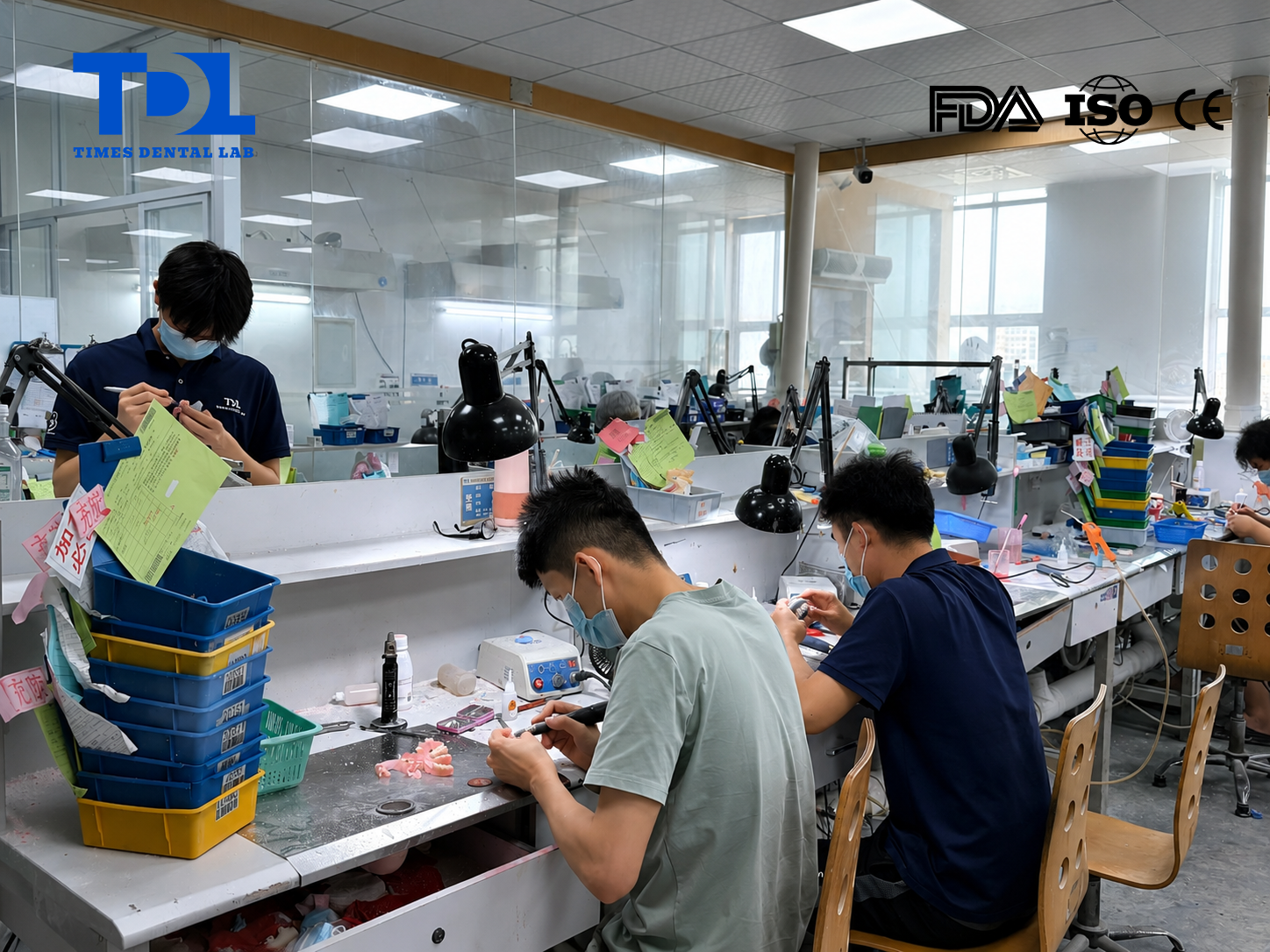
Times Dental Lab supports digital and physical case submissions for overseas clinics and dental laboratories. For digital cases, clients can send scans, STL files, design files, bite records, shade photos, and case instructions for review. For physical cases, models, impressions, bite blocks, wax rims, or old dentures may be shipped depending on the case type.
To start, review the How to Start page, prepare the files and records listed in this checklist, and use Digital Solutions for digital case workflow context. For case questions or submission support, contact Times Dental Lab.
After a case is received, Times Dental Lab reviews whether the records are complete enough for production. Digital case review may check margins, scan quality, bite relationship, opposing arch, implant data, shade information, restoration type, and written instructions. If something important is missing, the case can be clarified before manufacturing begins. This front-end review is one of the easiest ways to prevent avoidable remakes and shipping delays.
FAQ
What should I send to a dental lab for a crown case?
Send the prescription, tooth number, material, shade, upper and lower scans or models, bite record, clear margin record, opposing arch, photos when needed, and any contact or occlusion preferences.
Do dental labs need photos for every case?
Not every posterior case needs extensive photos, but photos are very useful for shade-sensitive, anterior, implant esthetic, veneer, E.max, and layered ceramic cases.
Are STL files enough for digital dental case submission?
STL files are important, but they are usually not enough by themselves. The lab also needs prescription details, bite information, shade, material, photos when needed, and implant or removable case information when applicable.
What implant information should I send to a dental lab?
Send implant brand, system, platform, diameter, scan body details, retention type, screw access preference, soft tissue scan, and any component or abutment instructions.
Why does incomplete case submission delay production?
Incomplete submission forces the lab to pause and ask for missing information. This can delay case review, CAD design, component selection, production, and shipment.
Conclusion + Times Introduction
A complete dental lab case submission helps reduce production delays, repeated clarification, design errors, and avoidable remakes. The most important information includes a clear prescription, scans or models, bite records, photos, shade, material choice, implant or removable details, deadline, and special instructions.
Times Dental Lab is a full-service dental laboratory based in Shenzhen, China. We support overseas clinics and dental laboratories with crowns and bridges, implant restorations, removable prosthetics, orthodontic appliances, digital design services, digital case submission, case review, production checks, and final QC. To submit a case or ask what records are needed, contact Times Dental Lab.