Introduction
Submitting a dental implant case requires more information than sending an intraoral scan and selecting a shade. Implant system details, scan body data, bite records, soft-tissue information, restoration instructions, and approval requirements all affect whether the dental laboratory can design and manufacture the case accurately.
This implant case submission checklist is designed for dental laboratories, clinics, and dentists sending single-unit, multi-unit, or full-arch implant cases to an outsourcing dental lab. The goal is to reduce clarification, incorrect component selection, design revisions, avoidable delays, and remake risk before production begins.
Quick Answer
A complete implant case should identify the implant system and platform, include accurate working and opposing scans, provide a reliable bite record, specify the restoration and retention type, include scan body and soft-tissue information when required, and clearly define the design approval process before production.
Implant Case Submission Checklist
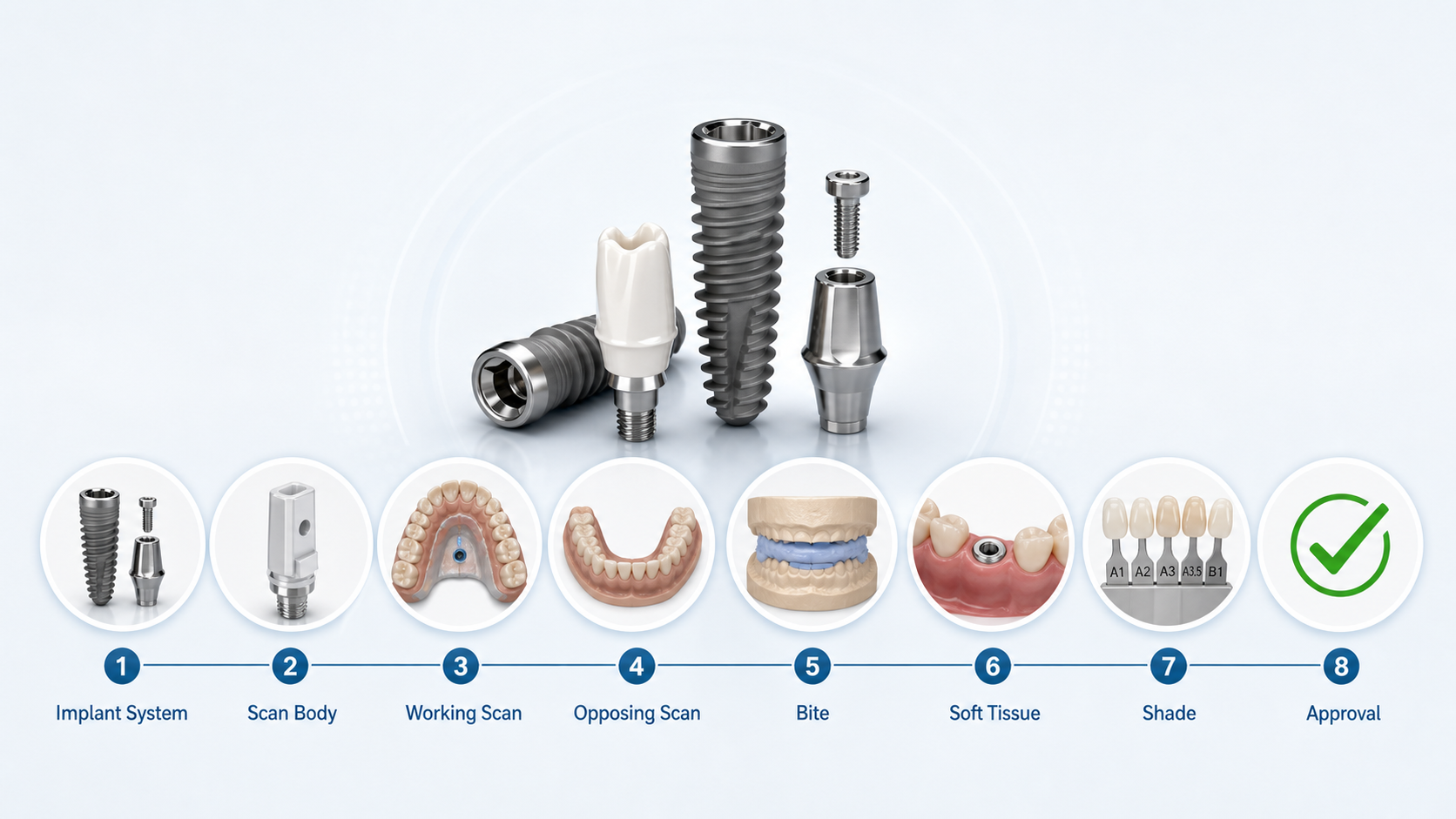
Before submitting an implant case, confirm that the case package includes:
|
Check |
Required Information |
|
[ ] |
Patient or case identification. |
|
[ ] |
Tooth number or restoration position. |
|
[ ] |
Implant manufacturer, system, connection type, and platform. |
|
[ ] |
Implant level or multi-unit abutment level. |
|
[ ] |
Compatible scan body information. |
|
[ ] |
Working-arch scan. |
|
[ ] |
Opposing-arch scan. |
|
[ ] |
Bite scan or verified jaw relationship. |
|
[ ] |
Soft-tissue scan when required. |
|
[ ] |
Shade photographs and esthetic references. |
|
[ ] |
Restoration material. |
|
[ ] |
Screw-retained or cement-retained instructions. |
|
[ ] |
Emergence-profile requirements. |
|
[ ] |
Occlusal and contact preferences. |
|
[ ] |
Design approval requirements. |
|
[ ] |
Requested production and delivery date. |
Missing information should be clarified before design begins. Starting production with assumptions increases the risk of delays, incorrect components, design revisions, and remakes.
Implant System and Platform Information
The dental lab should receive the exact implant manufacturer, implant system, connection type, and platform size. The phrase "implant crown" is not enough information because different systems may use different libraries, scan bodies, interfaces, screws, and restorative components. Even products from the same manufacturer may have several platform or connection options.
For broader device context, the FDA explains that dental implant systems can include the implant body, abutment, and abutment fixation screw, and recommends keeping the implant system brand and model information for records.FDA dental implant information. This is one reason implant identification is important before a dental lab begins digital design.
· Implant manufacturer.
· Implant system or product line.
· Platform diameter or size.
· Connection type.
· Implant level or abutment level.
· Multi-unit abutment details, when applicable.
· Preferred restorative component.
· Original or compatible component requirement.
Photographs of packaging labels, component references, or implant identification cards can help the lab verify unclear information.
Scan Body and Digital Library Data
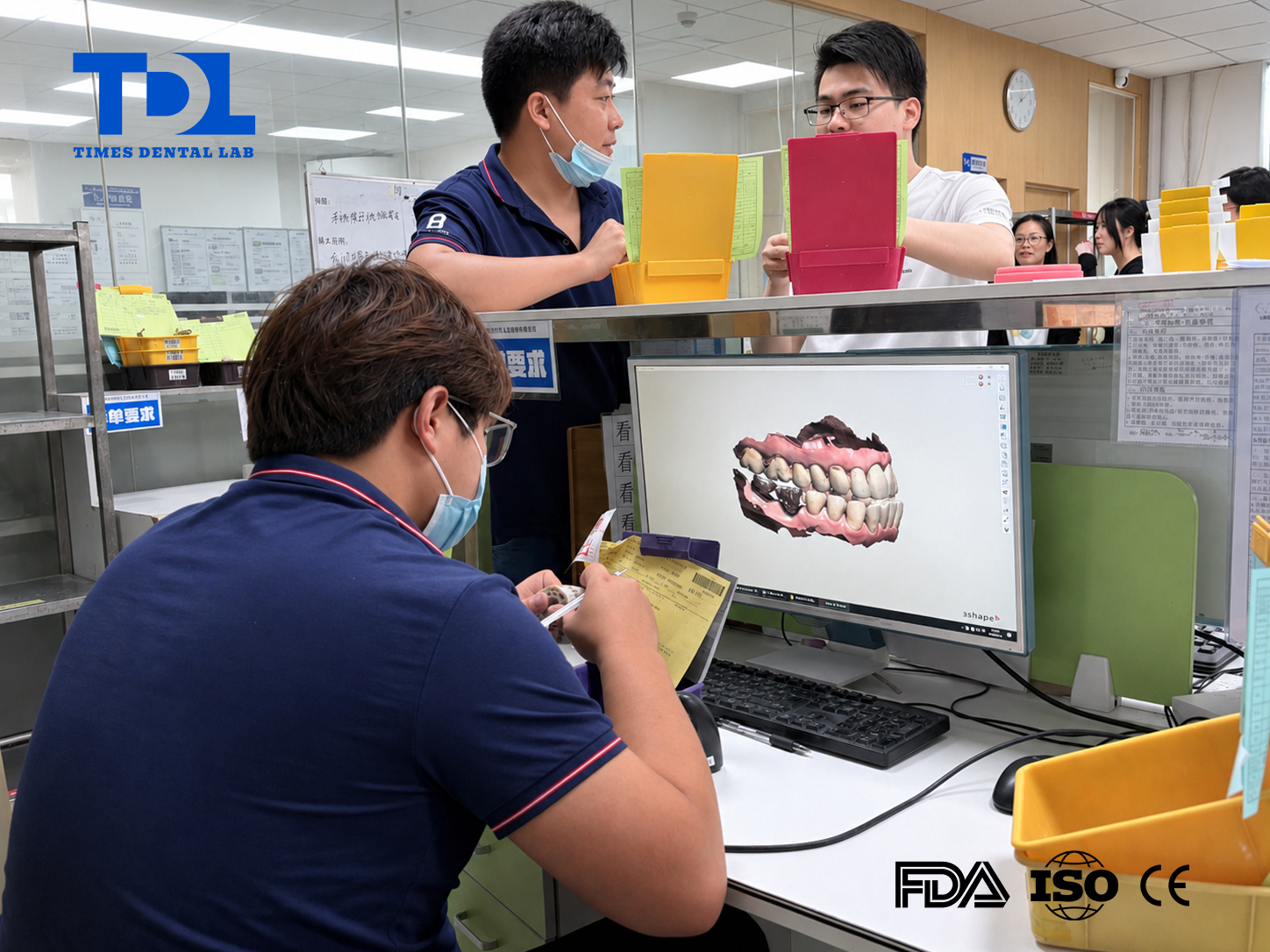
A scan body transfers the three-dimensional implant position into the digital workflow. The dental laboratory must match the clinical scan body with the correct CAD library. Provide the scan body manufacturer and reference whenever possible. The lab should also know whether the scan was captured at implant level or multi-unit abutment level.
Common Scan Body Problems
· Incorrect scan body selected in the prescription.
· Incomplete scan body surface data.
· Scan body movement during scanning.
· Soft tissue obscuring important geometry.
· Mismatch between the physical scan body and CAD library.
· Insufficient surrounding anatomy for alignment.
If the laboratory cannot verify the scan body, it should pause the case and request confirmation rather than selecting a library based on appearance alone.
Working, Opposing, and Bite Scans
A digital implant case normally requires three essential records:
|
Record |
Purpose |
|
Working-arch scan |
Captures the implant position, preparation area, and surrounding anatomy. |
|
Opposing-arch scan |
Provides the opposing dentition for occlusal design. |
|
Bite scan |
Records the relationship between the upper and lower arches. |
The scans should include enough stable anatomy for alignment. Distortion, missing posterior data, or an unreliable bite can affect occlusion even when the implant position itself is accurate. For full-arch cases, additional verification records may be required because large edentulous areas provide fewer natural landmarks for scan alignment.
Soft-Tissue and Emergence-Profile Records
Soft-tissue information helps the dental technician design the emergence profile, cervical contour, and tissue support. If the provisional restoration has created a successful tissue contour, scanning or duplicating that contour can provide a useful design reference.
· A scan with the healing abutment removed.
· A soft-tissue scan.
· A scan of the provisional restoration.
· Photographs of the tissue and emergence profile.
· A model or impression for verification.
Restoration and Retention Instructions
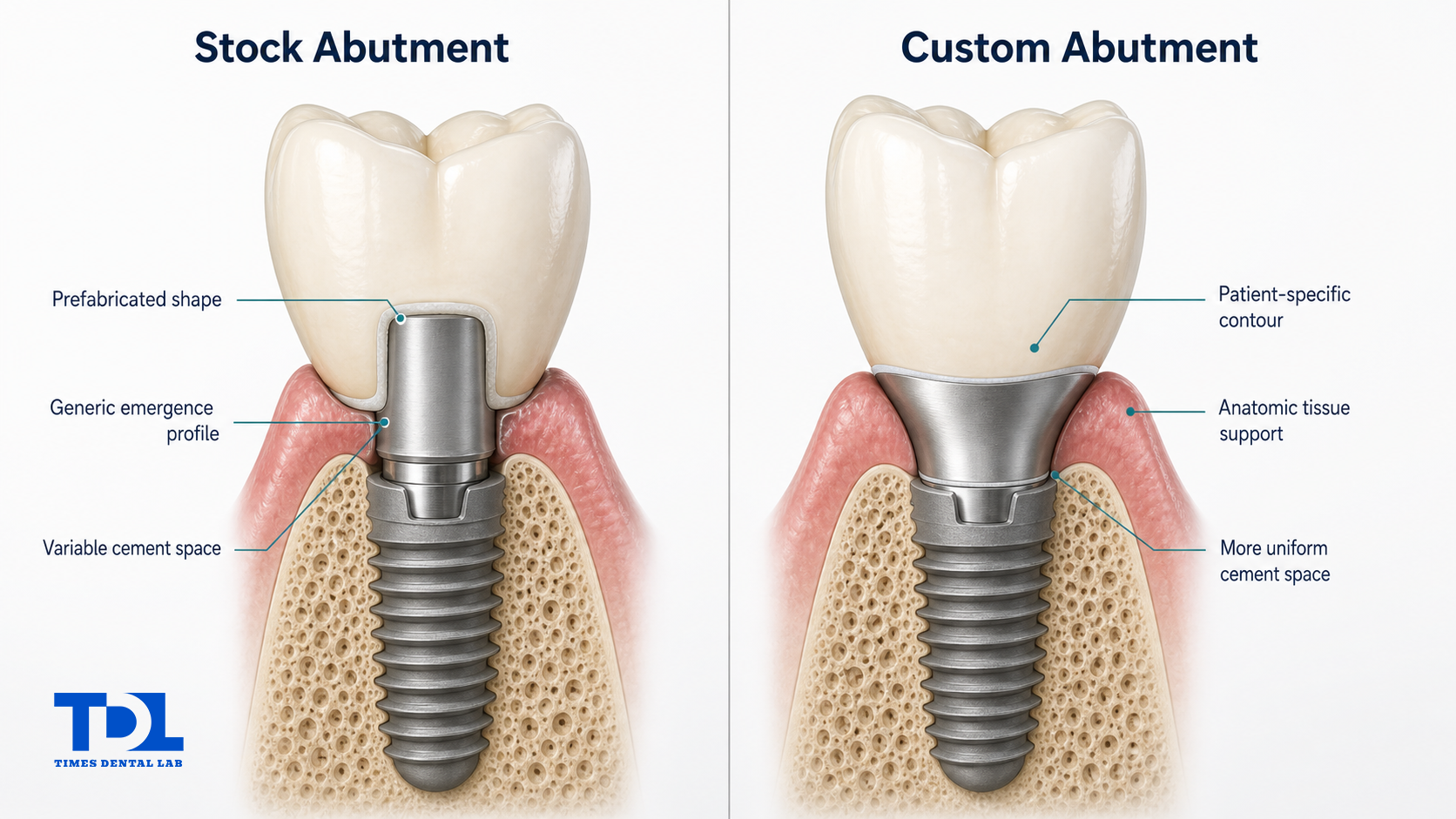
The prescription should clearly identify the requested restoration. Times Dental Lab supports implant crowns, implant bridges, custom abutments, implant bars, and related implant restoration workflows through its Implant Restorations product category.
· Screw-retained zirconia crown.
· Cement-retained crown with custom abutment.
· Titanium-base zirconia crown.
· Implant-supported bridge.
· Custom titanium or zirconia abutment.
· Full-arch provisional restoration.
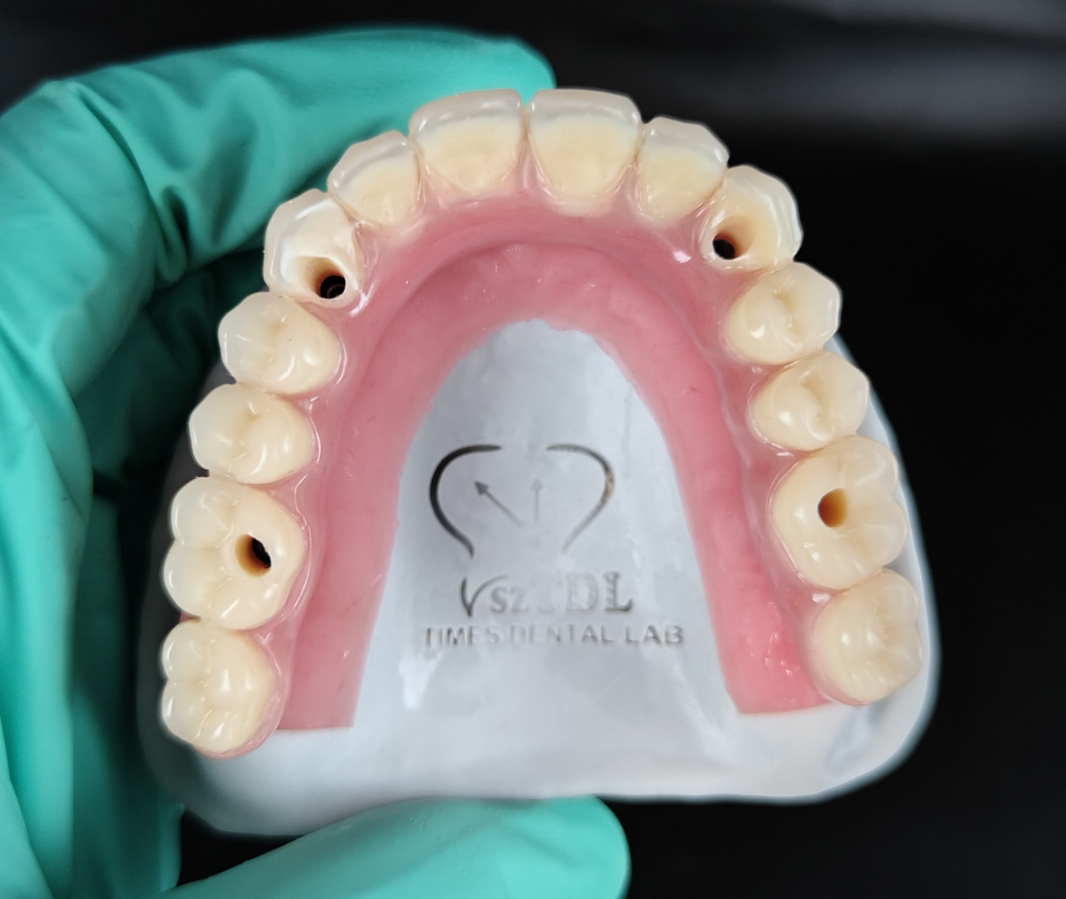
· Final full-arch zirconia restoration.
· Implant bar or overdenture framework.
The prescription should also specify whether the restoration is screw-retained or cement-retained. If the screw channel is located in an unfavorable esthetic or functional position, the clinic and laboratory may need to review alternative designs before production.
Shade and Esthetic References
A written shade alone may be insufficient for anterior and other esthetically demanding implant cases. Photographs should be well exposed and show the shade tab close to the restoration area. The shade-tab label should remain visible.
· Shade-tab photographs.
· Full-face smile photograph.
· Retracted frontal view.
· Lateral views.
· Photographs of adjacent teeth.
· Requested surface texture and translucency.
· Provisional restoration photographs.
· Midline, incisal-edge, and smile-line references.
Full-Arch Implant Case Requirements
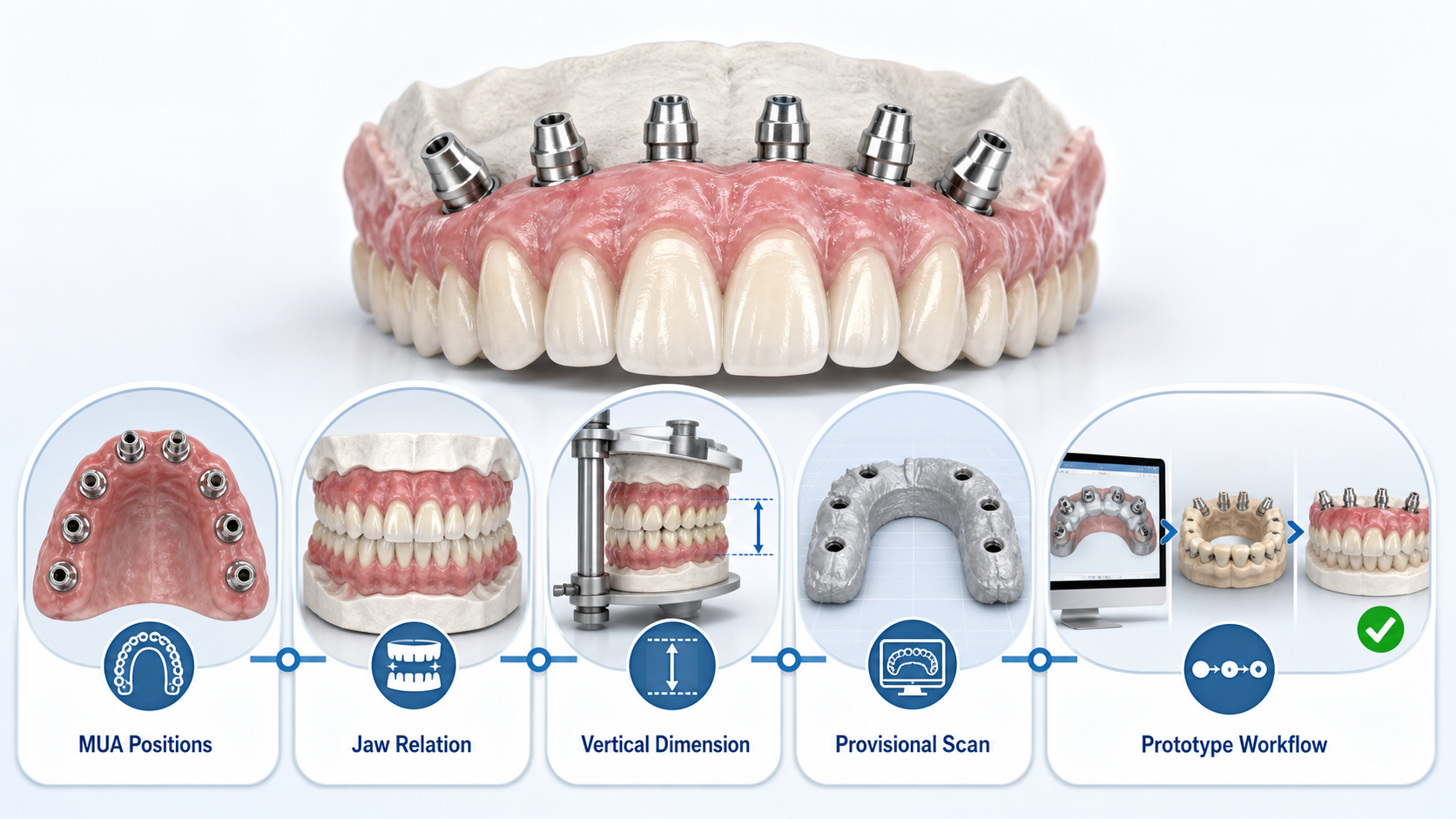
Full-arch implant cases require more extensive records and additional verification because small errors can affect the entire restoration. The dental lab may recommend a verification step, prototype, or try-in before final manufacturing to confirm fit, jaw relationship, tooth position, and esthetics.
The American College of Prosthodontists notes that prosthetic design and maintenance are important considerations for full-arch implant restorations, including hygiene access, biological complications, mechanical stability, and recall planning.ACP full-arch implant restoration position statement. For lab submission, this supports the need for complete records before final production.
· Implant or multi-unit abutment positions.
· Verified scan body data.
· Upper and lower scans.
· Jaw-relation record.
· Vertical-dimension information.
· Existing denture or provisional scan.
· Facial and smile photographs.
· Midline and occlusal-plane references.
· Tooth setup preferences.
· Lip-support requirements.
· Approved prototype or try-in workflow.
· Component and screw requirements.
Design Approval and Communication
The clinic should tell the laboratory which parts of the case require approval. Approval instructions should identify who is authorized to approve the design and how quickly the clinic expects to respond. Clear approval responsibilities prevent production delays and undocumented design changes.
· Custom abutment design.
· Screw-access position.
· Emergence profile.
· Crown contour.
· Implant bridge design.
· Full-arch tooth setup.
· Gingival design.
· Prototype or try-in.
· Final shade and characterization.
How Times Dental Lab Reviews Implant Cases
Times Dental Lab supports implant crowns, custom abutments, implant bridges, bars, and full-arch restorations for overseas dental laboratories and clinics. Before production, the team reviews available case information, including implant system details, scan body data, scans, bite records, soft-tissue information, material selection, and design instructions. If essential information is missing or unclear, the case should be placed on hold for confirmation.
Digital design previews can be provided for cases that require approval before manufacturing. Quality checks focus on the submitted instructions and relevant restoration details, including fit, contacts, occlusion, screw access, contour, finishing, and component requirements.
To submit a case, send the available digital files and prescription through the Times Dental Lab case-submission workflow. Review the How to Start page before sending a new case. Physical models, impressions, or components can also be arranged when a completely digital workflow is not appropriate.
Frequently Asked Questions
What files should I send for a single implant crown?
Send the working-arch scan, opposing-arch scan, bite scan, implant system and platform information, scan body reference, restoration instructions, and shade records.
Does the dental lab need the implant brand?
Yes. The implant manufacturer, system, connection, and platform help the lab select the correct library and restorative components.
Can I send an implant case without scan body information?
The case can be submitted for review, but design should not begin until the laboratory can verify the scan body and compatible digital library.
What additional records are needed for a full-arch implant case?
Full-arch cases may require verified implant positions, jaw-relation records, vertical dimension, provisional or denture scans, facial photographs, and a prototype or try-in workflow.
Should implant restorations be approved before production?
Design approval is especially useful for custom abutments, implant bridges, screw-channel positioning, and full-arch restorations. The required approval points should be defined when the case is submitted.
Conclusion
A predictable implant restoration begins with complete and verifiable case information. Implant system details, accurate scans, bite records, soft-tissue data, restoration instructions, and clear approval points allow the dental laboratory to identify problems before manufacturing begins.
Dental laboratories and clinics can use this checklist as a standard intake form for single implants, multi-unit restorations, and full-arch cases. To submit an implant case, request a case review, or discuss an implant outsourcing workflow, contact Times Dental Lab.