Introduction
Choosing between a custom abutment and a stock abutment is a common decision in implant restoration planning. For dentists and dental labs, the choice affects emergence profile, margin position, esthetics, restorative space, implant angulation, component compatibility, cost, and the digital workflow required before the final crown or bridge is fabricated.
This topic is different from screw-retained vs cement-retained implant crowns. Retention type answers how the crown is fixed. Abutment selection answers what foundation supports the restoration and how that foundation is shaped. A case may involve a stock abutment with a cement-retained crown, a custom abutment with a cemented crown, a screw-retained custom design, or a hybrid workflow depending on the clinical plan.
The most credible answer is not a universal preference for one abutment type. The right abutment should be chosen case by case, based on implant position, soft tissue contour, restorative space, abutment height, margin position, material, component compatibility, clinical maintenance plan, and the dentist's prescription.
This article is written from a dental laboratory workflow perspective and reviewed for technical relevance by the Times Dental Lab implant and digital design team. It does not replace clinical diagnosis or treatment planning. The treating dentist is responsible for the final clinical decision.
Quick Answer
A stock abutment may be suitable for straightforward implant cases with favorable implant position, adequate restorative space, acceptable soft tissue contour, and standard component needs. A custom abutment may be considered when the case requires improved emergence profile, customized margin placement, angulation correction, esthetic control, or CAD/CAM design flexibility. Dental labs should verify implant system details, scan body data, implant library compatibility, soft tissue information, material choice, and margin requirements before design begins.
What Is an Implant Abutment?
An implant abutment is the prosthetic component that connects the dental implant to the final restoration. It supports the crown, bridge, or implant-supported prosthesis and helps define the shape of the restoration near the gum tissue. The abutment can influence retention, esthetics, emergence profile, margin location, hygiene access, and how occlusal forces are transferred through the restoration.
For a dental lab, the abutment is not just a connector. It is a design element. If the abutment contour, height, angulation, or margin placement does not match the clinical situation, the final crown may become harder to seat, clean, maintain, or match esthetically.
What Is a Stock Abutment?
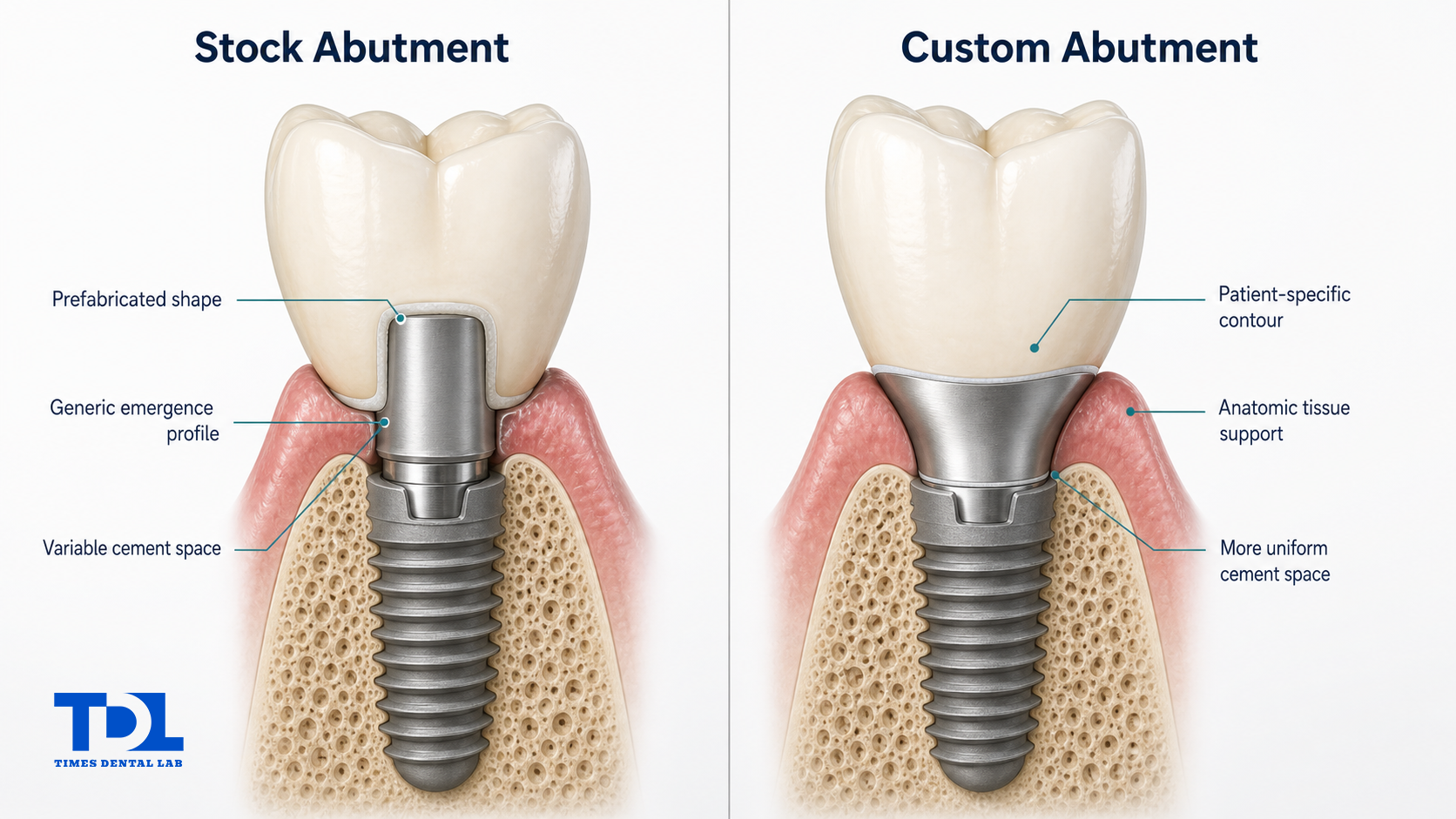
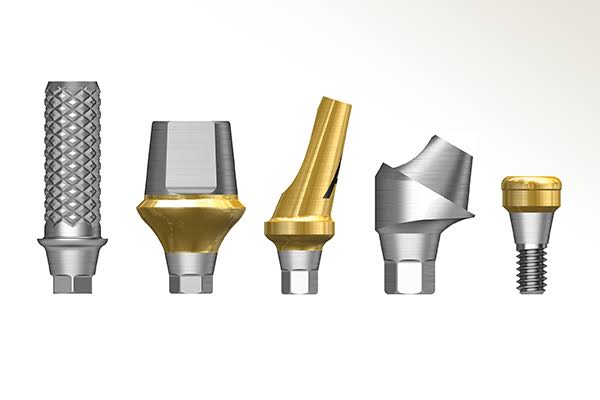
A stock abutment is a prefabricated abutment supplied in standard shapes, diameters, heights, angulations, and platform options. It may be selected from the implant manufacturer's component system and adjusted when clinically appropriate. Stock abutments can be efficient and cost-effective when the implant position and soft tissue conditions match the available component design.
The limitation is that stock abutments are not shaped for each patient's tissue profile or restorative contour. If the implant is angled, tissue depth is uneven, or the esthetic zone requires a custom emergence profile, a stock design may require compromise.
What Is a Custom Abutment?
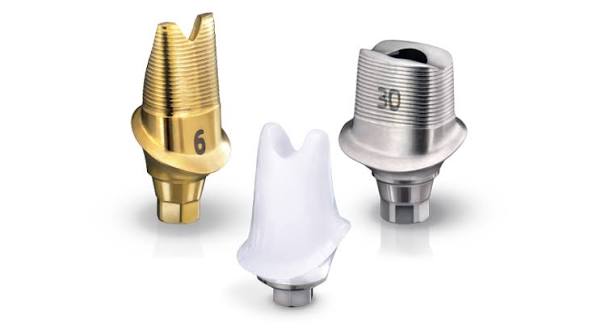
A custom abutment is designed for a specific implant case using digital or laboratory design methods. CAD/CAM custom abutments can be shaped around the implant position, soft tissue contour, desired emergence profile, margin position, restorative space, and final crown design. They may be made from titanium, zirconia, titanium base workflows, or other compatible materials depending on the system and prescription.
Times Dental Lab's Digital Design Services page describes custom abutment design as a digital prosthetic design service focused on accurate implant connection, proper emergence profile, margin placement, and reliable support for crowns or bridges.
Custom vs Stock Abutments: Key Differences
Emergence Profile
The emergence profile is the transition from implant platform to soft tissue and final crown contour. A stock abutment offers a standard shape. A custom abutment can be designed to better support tissue contour and crown anatomy when the clinical situation requires it.
Margin Position
Margin position affects cement cleanup, crown seating, esthetics, and hygiene. A custom abutment can help position the margin more intentionally, especially when tissue height is uneven. A stock abutment may be acceptable when the standard margin and tissue relationship are clinically manageable.
Implant Angulation
Implant angulation can make abutment selection more complex. When the implant axis does not support the desired restoration path, a custom abutment may help improve the restorative contour or insertion path. However, the final plan still depends on component compatibility and clinician approval.
Material and Esthetics
Titanium abutments are widely used for strength and component reliability. Zirconia abutments may be considered in esthetic zones when tissue color or translucency is a concern, but material choice depends on implant system, restoration design, tissue thickness, occlusal load, and clinician preference. The choice should not be made from esthetics alone.
Cost and Workflow
Stock abutments often have a simpler workflow and lower direct cost. Custom abutments require more digital design, verification, and manufacturing steps, but may reduce compromise in cases where standard components do not fit the clinical objective. The cost comparison should include chairside adjustment, cement cleanup, esthetic risk, remake risk, and long-term maintenance expectations.
|
Factor |
Stock Abutment |
Custom Abutment |
|
Design flexibility |
Limited to available component shapes and sizes. |
Designed around case-specific tissue, implant position, and restoration plan. |
|
Emergence profile |
Standardized shape. |
Can be customized for tissue contour and crown support. |
|
Margin control |
Depends on stock component geometry and tissue level. |
Can be designed more intentionally for the case. |
|
Implant angulation |
May require compromise if angulation is unfavorable. |
May help manage restorative path and contour in selected cases. |
|
Workflow |
Often faster and simpler. |
Requires scan body verification, implant library, CAD design, and QC. |
|
Cost |
Usually lower direct component/design cost. |
Usually higher design and manufacturing cost. |
|
Best fit |
Straightforward cases with favorable implant position. |
Cases needing customized emergence, margin, angulation, or esthetic control. |
When a Stock Abutment May Be Suitable
· The implant is positioned favorably for the planned restoration.
· Soft tissue contour and tissue height are simple and predictable.
· Restorative space is adequate without major angulation correction.
· The stock component provides acceptable margin position and retention.
· The case is posterior or has limited esthetic demand.
· The dentist prefers a standard component workflow for cost or simplicity.
When a Custom Abutment May Be Considered
· The case requires a customized emergence profile.
· The margin position needs better control for cement cleanup or esthetics.
· Implant angulation makes a stock abutment less ideal.
· The esthetic zone requires careful tissue and crown contour management.
· Soft tissue height is uneven or the implant is placed deeper.
· The final crown or bridge needs a more customized restorative foundation.
A comparative study of 20 custom CAD/CAM implant abutments and 20 stock abutments found measurable differences in several technical parameters and reported that custom abutments showed improved incisal margin dimensions and smaller inclination relative to the implant axis in the studied cases.PMC comparative study The same article is also indexed on PubMed. This supports the value of case-specific design, but it should not be interpreted as proof that every implant case requires a custom abutment.
Times Dental Custom Abutment Digital Workflow
Times Dental Lab supports implant crown and custom abutment workflows as part of its implant restoration and digital design services. On the Times product page, implant-related work includes implant crown design, custom abutment design, implant bar design, and the need to send implant system and scan body information when available.Times products and implant services.
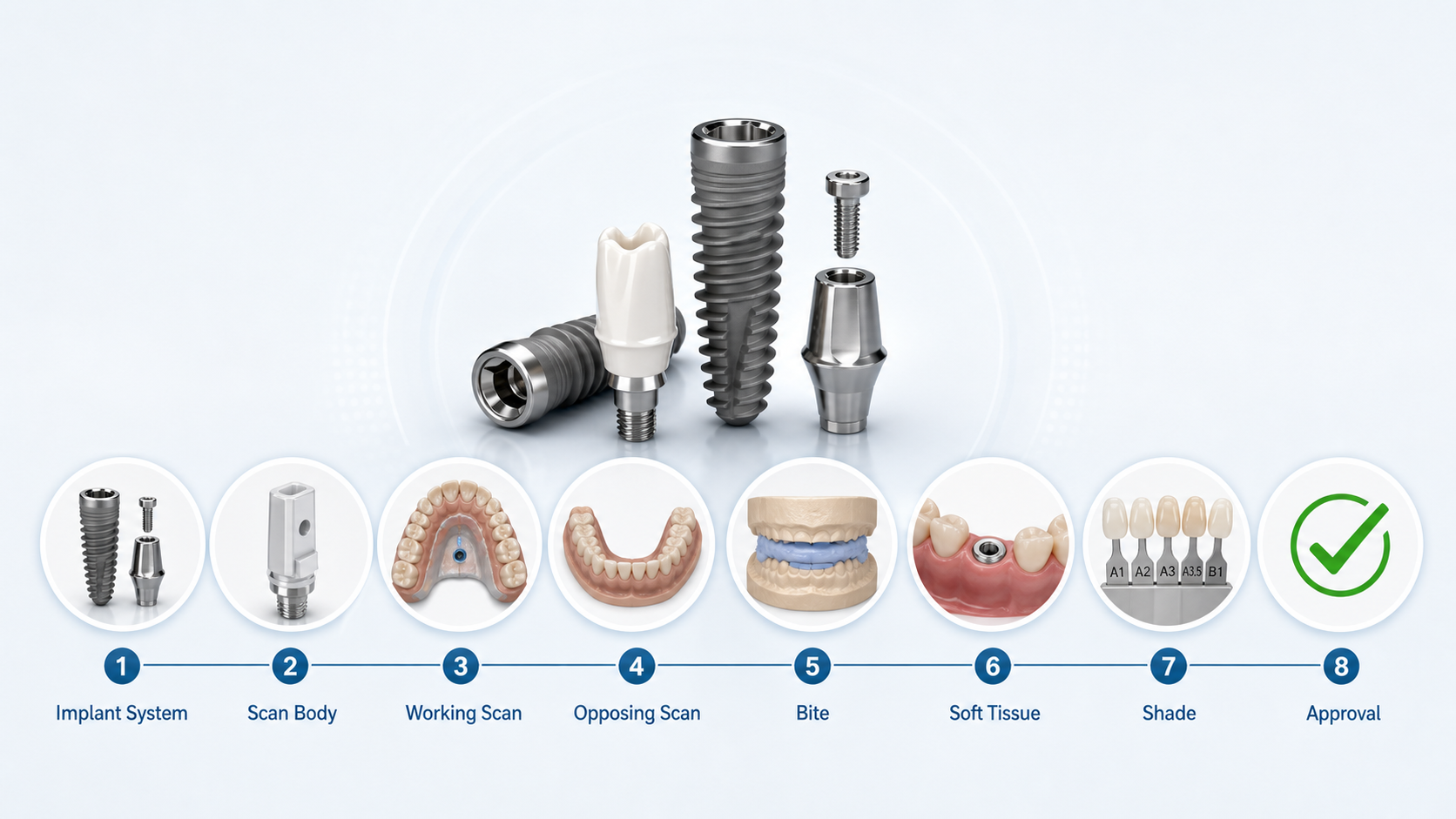
· Case intake: review prescription, tooth number, implant system, platform, restoration type, material, and clinician instructions.
· Scan body verification: check scan body data, seating, orientation, and implant library compatibility.
· Implant library setup: match the digital library to the submitted implant system and component workflow.
· Emergence profile design: shape the abutment to support the planned crown contour and tissue relationship.
· Margin placement: design the margin based on tissue height, esthetic need, cement cleanup, and clinician preference.
· Design preview: share or review a design preview when the case is complex or when the clinician requests confirmation.
· QC before delivery: check interface fit, margin design, emergence profile, material thickness, crown support, label, and packing.
Digital case submission can include STL files, intraoral scans, bite records, shade photos, implant components, scan body data, and case instructions. Times describes this type of file-based support through its Digital Solutions workflow.
Clinical vs Dental Lab Responsibilities
A trustworthy implant abutment article should separate clinical responsibility from laboratory responsibility. The treating dentist determines diagnosis, implant plan, restorative strategy, retention plan, material preference, maintenance approach, and patient-specific decisions. The dental lab fabricates the abutment and restoration according to the prescription and submitted records while identifying design concerns that should be clarified before production.
|
Decision Area |
Dentist / Clinic |
Dental Lab |
|
Clinical plan |
Chooses implant treatment plan and clinical indications. |
Follows submitted plan and asks for clarification when design risks appear. |
|
Abutment type |
Approves stock, custom, titanium, zirconia, Ti-base, or other workflow. |
Checks whether submitted files and components support the requested design. |
|
Margin position |
Defines clinical preference and cementation strategy. |
Designs margin according to prescription, tissue data, and manufacturability. |
|
Digital files |
Provides scans, scan body data, bite, photos, and instructions. |
Reviews file quality, implant library, emergence profile, and design fit. |
|
Final delivery |
Seats, adjusts, cements or screws in the restoration, and monitors patient maintenance. |
Performs production QC and communicates case-specific lab findings. |
Evidence-Based Limitations
The evidence around custom and stock abutments should be used carefully. A study may show design or measurement advantages for CAD/CAM custom abutments, but clinical outcomes still depend on implant position, prosthetic design, tissue health, occlusion, hygiene access, component quality, maintenance, and clinician technique.
For this reason, this guide avoids a one-size-fits-all recommendation. In many straightforward cases, a stock abutment can be practical, cost-effective, and clinically acceptable. In more complex or esthetic cases, a custom abutment may help the lab and clinician control contour, margin, and support more precisely.
Implant Abutment Case Submission Checklist
|
Check |
Information to Send |
|
[ ] |
Implant brand, system, platform, diameter, and connection type. |
|
[ ] |
Scan body brand, scan body size, scan body file, and confirmation of seating. |
|
[ ] |
Requested abutment type: stock, custom, titanium, zirconia, Ti-base, or lab recommendation request. |
|
[ ] |
Restoration type: single crown, bridge, screw-retained, cement-retained, or screwmentable workflow. |
|
[ ] |
Upper and lower scans or models, opposing arch, and bite record. |
|
[ ] |
Soft tissue scan, tissue height, emergence profile notes, and margin preference. |
|
[ ] |
Shade, photos, esthetic expectations, and adjacent-tooth references when needed. |
|
[ ] |
Design preview requirement, component preference, deadline, and special instructions. |
FAQ
Are custom abutments better than stock abutments?
Not always. Custom abutments offer more design flexibility, but stock abutments may be suitable for straightforward cases with favorable implant position, adequate space, and acceptable margin position.
When should a custom implant abutment be considered?
A custom abutment may be considered when the case needs customized emergence profile, improved margin placement, angulation management, esthetic control, or better support for the final restoration.
What is the main advantage of a stock abutment?
The main advantages are simplicity, component standardization, and usually lower direct cost. Stock abutments can work well when the clinical conditions match the available component design.
What materials are used for custom abutments?
Common options include titanium, zirconia, and titanium-base workflows. The choice depends on implant system, esthetic needs, tissue thickness, strength requirements, component compatibility, and clinician preference.
What files does a dental lab need for custom abutment design?
The lab needs implant system details, scan body data, upper and lower scans or models, bite record, soft tissue scan, restoration type, material preference, margin preference, and design instructions.
Can a dental lab decide whether to use a custom abutment?
The lab can recommend or flag design concerns, but the treating dentist should make the final clinical decision based on the treatment plan and patient-specific factors.
Conclusion
Custom abutments and stock abutments both have a place in implant restoration workflows. Stock abutments can be practical for favorable, straightforward cases. Custom abutments may be considered when emergence profile, margin placement, angulation, esthetics, tissue contour, or restorative support require a more individualized design.
Times Dental Lab supports overseas clinics and dental laboratories with implant crown design, custom abutment design, implant bar design, digital case review, CAD/CAM workflow, and QC before shipment. To discuss a custom abutment case or send implant files for review, contact Times Dental Lab. For the related topic of crown retention, see Screw-Retained vs Cement-Retained Implant Crowns.