Choosing between a screw-retained and a cement-retained implant crown is not simply a matter of laboratory preference. The decision can affect retrievability, cement management, screw-access position, restorative space, esthetics, maintenance, and the types of technical complications that may need to be managed later.
Neither option is universally superior for every patient or implant position. Current evidence suggests that both approaches can perform successfully when they are selected appropriately and executed through a controlled clinical and laboratory workflow. The retention choice should therefore be based on the individual case—not on a one-size-fits-all rule.
This guide is written for dental laboratories, restorative clinicians, and case coordinators who need a clearer way to communicate implant crown requirements before design and production.
Clinical notice: This article provides general laboratory and workflow information. It does not replace patient-specific diagnosis, treatment planning, informed consent, manufacturer instructions, or the judgment of the treating clinician.
What Is the Difference Between Screw-Retained and Cement-Retained Implant Crowns?
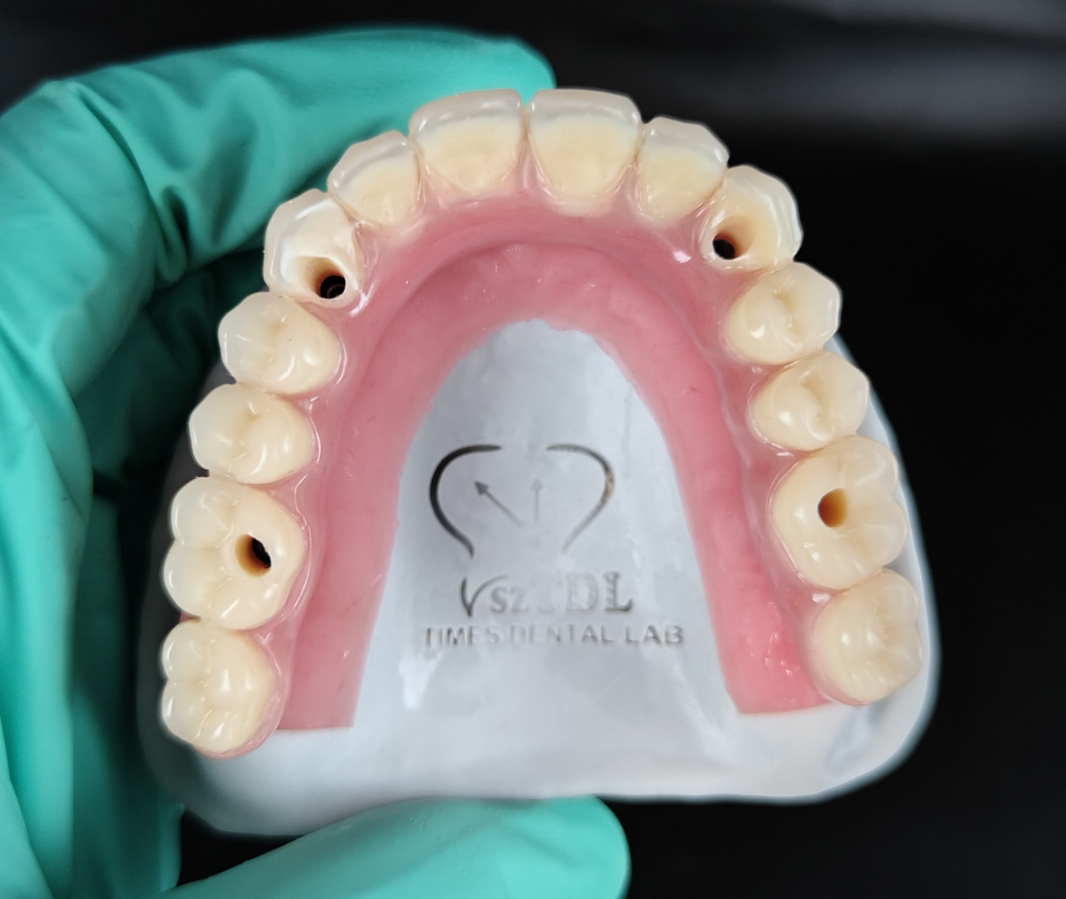
A screw-retained implant crown is secured through a screw-access channel. Depending on the restorative design, the crown may connect directly to the implant or form part of a crown-and-abutment assembly. After insertion and tightening according to the applicable clinical and manufacturer protocol, the access channel is sealed with a restorative material.
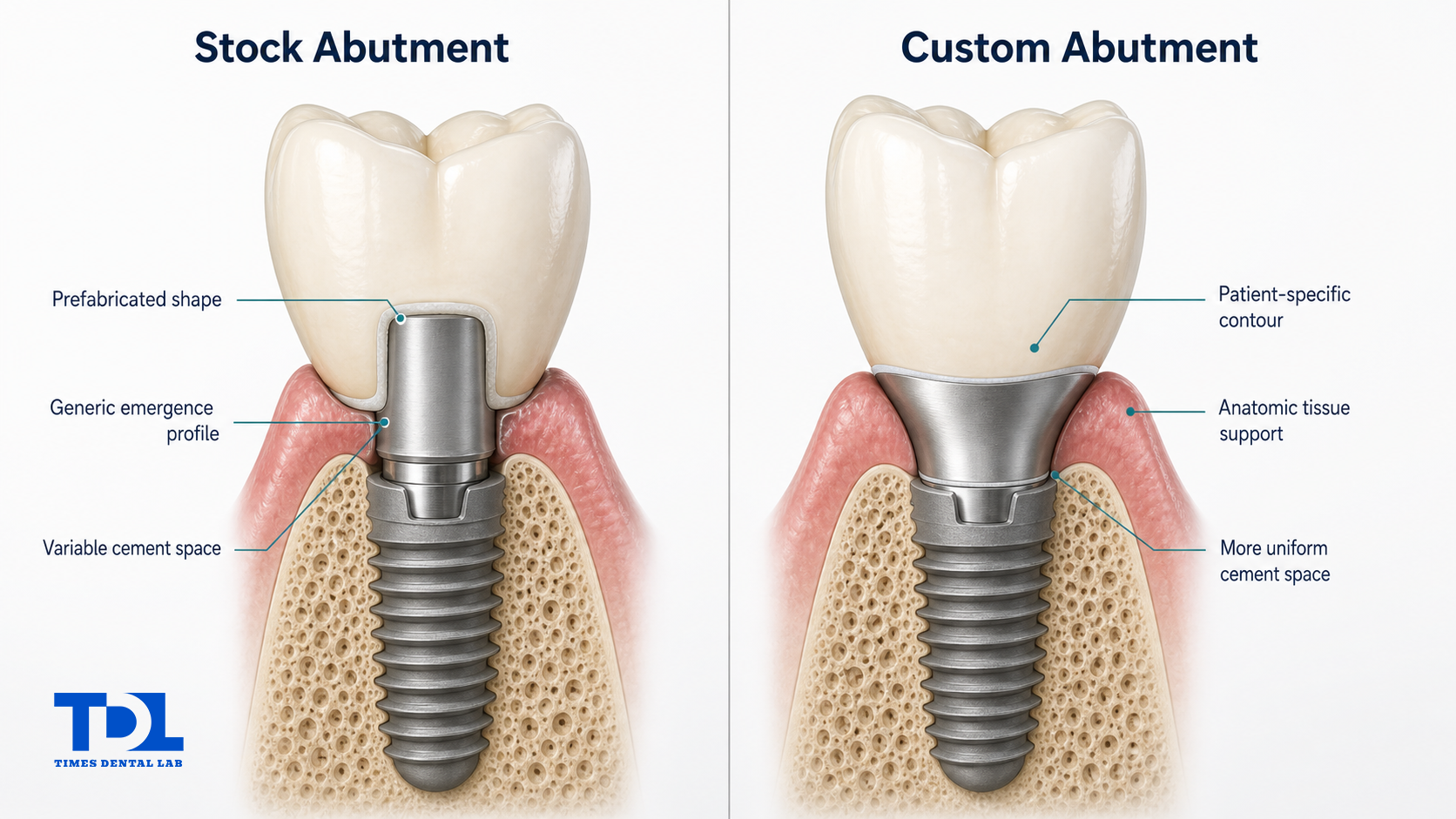
A cement-retained implant crown is cemented onto an implant abutment. The abutment is secured to the implant first, and the crown is then retained with a luting agent. This design avoids an occlusal or facial screw-access opening in the crown, but it introduces a cementation step that must be carefully managed clinically.
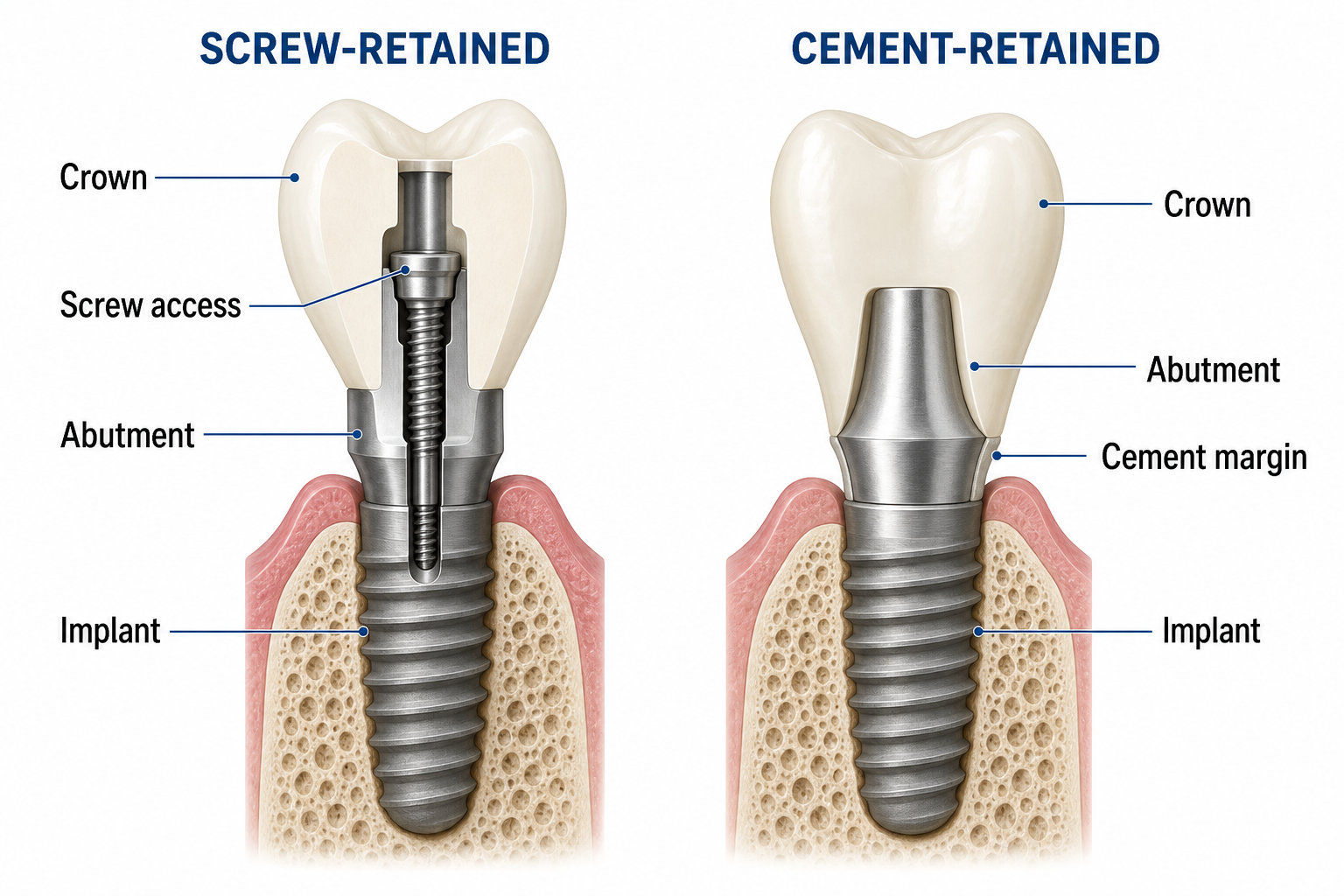
Some cases use a hybrid or “screwmentable” design in which the crown is bonded to a titanium base or abutment extraorally and the completed assembly is delivered through a screw-access channel. This approach is related to screw retention but has its own bonding, alignment, and component requirements.
Why the Retention Decision Matters
The retention method affects more than how the crown is attached. It changes what information the laboratory needs, what the clinician must verify, and how future maintenance or repair may be approached.
Retrievability and Maintenance
Screw-retained restorations are generally easier to retrieve because the clinician can access the retaining screw without cutting through a cemented crown. Retrievability may help when a restoration needs inspection, repair, screw replacement, hygiene access, or modification.
Retrievability does not mean that a screw-retained restoration should be removed routinely. The American College of Prosthodontists position statement on full-arch implant restoration maintenance states that regular removal is discouraged unless hygiene cannot be adequately maintained with the prosthesis in place or a mechanical complication requires removal. Although that position statement addresses full-arch restorations rather than every single-crown situation, it illustrates an important principle: retrievability is a maintenance option, not a reason for unnecessary intervention.
Residual Cement and Peri-Implant Tissue
Cement-retained restorations require careful control of the crown margin, cement quantity, seating process, and cleanup. Residual subgingival cement has been associated with peri-implant inflammation in the literature, while a systematic review of cementation techniques found that cement-residue control remains an important consideration. Deep or poorly accessible margins can make complete cement removal more difficult.
The laboratory can support a manageable cementation design by following the clinician’s approved margin position and abutment requirements. However, cement selection, intraoral cementation, removal of excess cement, and postoperative tissue assessment remain clinical responsibilities.
Screw-Related Technical Complications
Screw-retained restorations avoid an intraoral cement margin, but they introduce other technical considerations. Screw loosening, screw fracture, access-channel position, restorative material around the channel, and the stability of the implant–abutment connection may all affect the case.
A systematic review and meta-analysis of full-arch implant restorations reported different complication patterns rather than a simple winner: cement-retained reconstructions showed more biological complications in the included evidence, while screw-retained reconstructions showed more screw-related technical complications. These findings vary according to restoration type, study design, implant system, follow-up period, and whether the restoration is a single crown, partial prosthesis, or full-arch reconstruction.
Esthetics and Screw-Access Position
For a conventional straight screw channel, implant angulation may place the access opening in an unfavorable facial or incisal position. A cement-retained design can avoid a visible screw-access opening, but it must still provide an appropriate abutment form and a clinically manageable cement margin.
Angled screw-channel systems can move the access opening away from a visible surface in selected cases. A systematic review of angled screw-channel and cement-retained crowns in nonmolar sites found broadly comparable outcomes for several measured outcomes, while also emphasizing the limited number of available clinical studies. Compatibility, permitted angulation, restorative thickness, driver access, and manufacturer requirements must be confirmed for the specific system.
Screw-Retained vs Cement-Retained Implant Crowns at a Glance
|
Consideration |
Screw-retained crown |
Cement-retained crown |
|
Retrieval |
Generally more direct through the access channel |
May require crown removal or sectioning |
|
Cement-related risk |
No intraoral crown cement margin in a conventional screw-retained design |
Requires controlled cementation and complete excess-cement removal |
|
Technical considerations |
Screw access, screw loosening or fracture, component compatibility |
Abutment retention and resistance form, cement space, margin accessibility |
|
Esthetics |
Access position may be visible if implant angulation is unfavorable |
No screw-access opening in the crown |
|
Space and design |
Requires sufficient material around the access channel and compatible components |
Requires adequate abutment height, taper, surface area, and restorative clearance |
|
Maintenance |
Restoration is usually more retrievable |
Retrieval may be less predictable |
|
Final decision |
Made by the treating clinician from clinical and restorative findings |
Made by the treating clinician from clinical and restorative findings |
This comparison is a planning aid, not a clinical decision rule.
What the Clinician Decides and What the Dental Lab Controls
Clear responsibility boundaries reduce assumptions and prevent the laboratory from making unapproved clinical decisions.
Clinical Responsibilities
The treating clinician is responsible for:
· diagnosing the patient and determining whether implant treatment is appropriate;
· selecting and placing the implant and evaluating implant position;
· assessing osseointegration, peri-implant tissue health, restorative space, occlusion, esthetic risk, and hygiene access;
· choosing or approving the retention method;
· confirming the implant system, connection, platform, components, and manufacturer requirements;
· approving the abutment and crown design when approval is requested;
· following the applicable tightening, cementation, delivery, radiographic, and maintenance protocols;
· managing residual cement, occlusal adjustment, tissue response, complications, and follow-up care.
Laboratory Responsibilities
Within the prescription and records supplied, the dental laboratory is responsible for:
· checking whether the received scan or impression data are usable for the requested restoration;
· confirming that the stated implant system, platform, scan body, library, and components are sufficiently identified;
· communicating missing, inconsistent, or incompatible information before production;
· designing the restoration to the approved prescription and available restorative space;
· reviewing screw-access position, emergence-profile design, material thickness, contacts, occlusion, and component fit within the laboratory workflow;
· using traceable, compatible components and materials as specified or approved;
· completing production and final laboratory quality checks before dispatch;
· documenting questions and obtaining approval instead of making unconfirmed clinical assumptions.
The laboratory may identify risks and propose design alternatives, but it should not independently diagnose the patient, change the implant treatment plan, or select a retention method without clinical approval.
How Times Dental Lab Handles Implant Restoration Cases
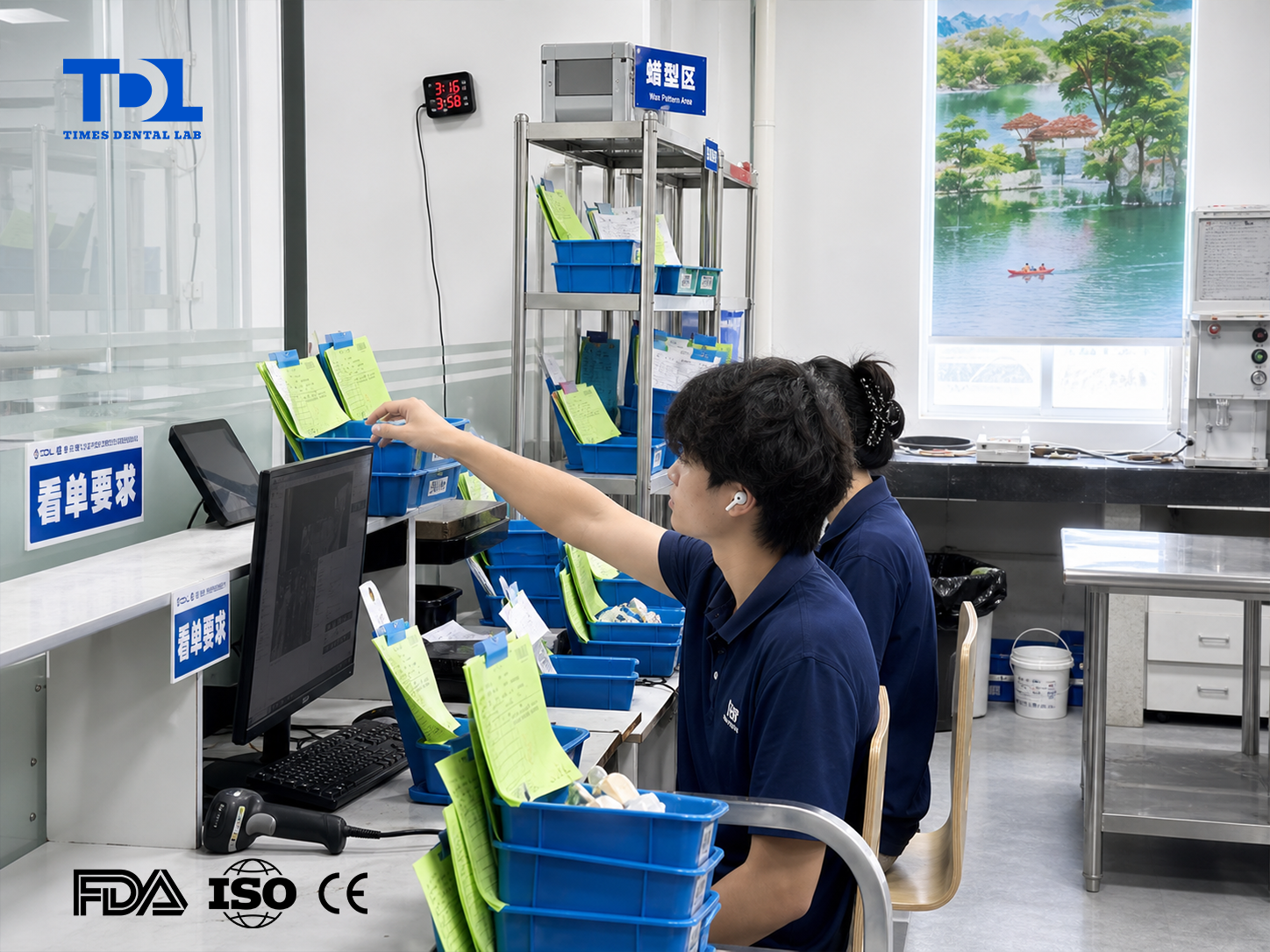
Times Dental Lab's products and implant restoration services include implant crowns, implant bridges, custom abutments, screw-retained restorations, implant bars, and full-arch implant restorations for overseas dental laboratories and clinics.
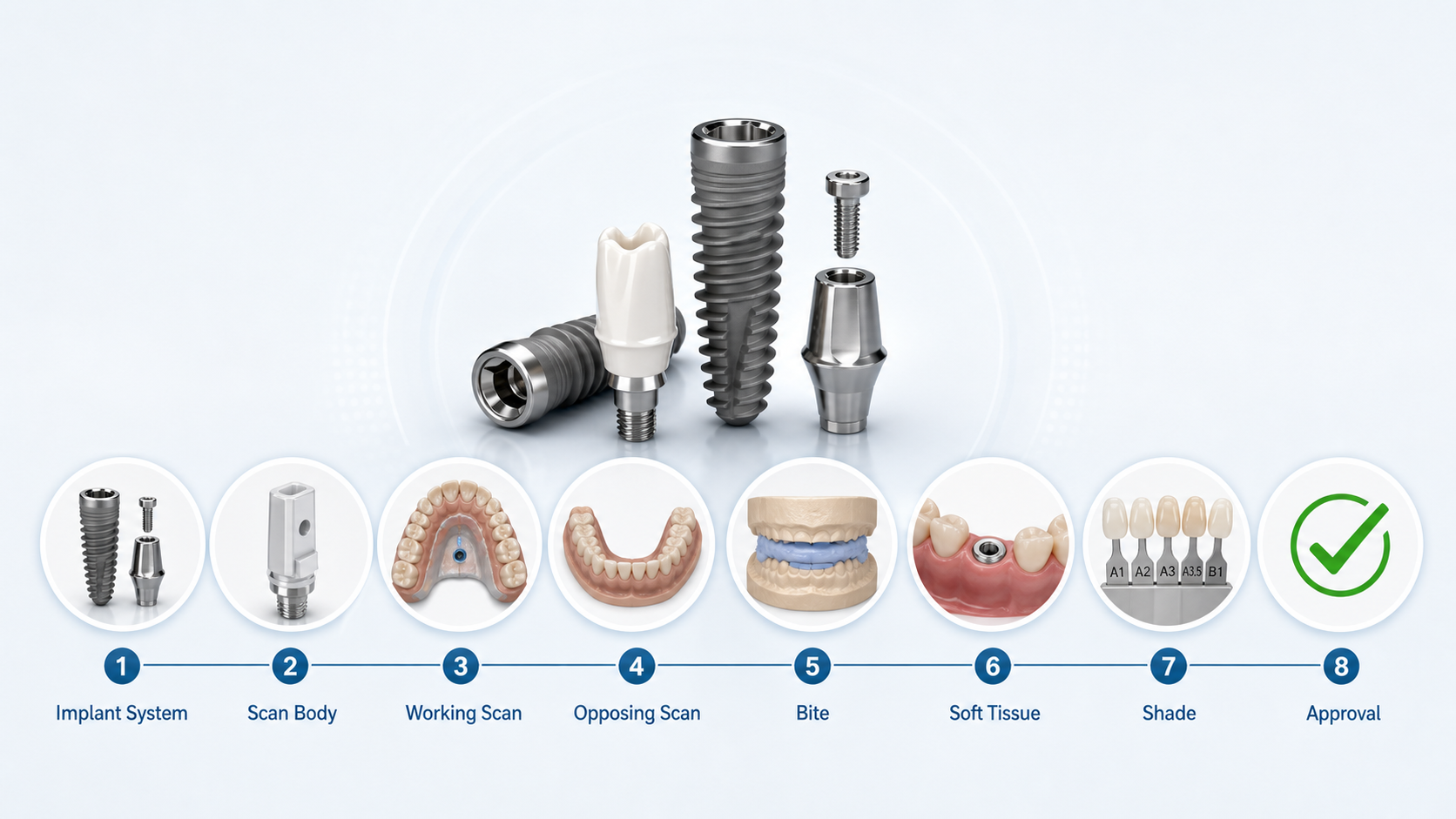
1. Case and File Review
Before design or production, the team reviews the records supplied for the case. This follows the same early-review principle described in Times Dental's guide to digital case intake and dental laboratory quality control. For an implant restoration, relevant information may include:
· implant manufacturer, system, connection, platform, and restorative component;
· scan-body type and corresponding scan data;
· complete arch and opposing-arch scans or models;
· bite record;
· soft-tissue scan or gingival information when required;
· tooth position, restoration type, shade, material, and design instructions;
· requested screw-access position or proposed retention method;
· photographs or reference information for esthetic cases.
If information appears incomplete or inconsistent, the appropriate next step is clarification before the case is released for production.
2. Digital Design and Review
Times Dental Lab provides digital dental design services for implant crowns, custom abutments, implant bars, and related restorations. During digital review, the team can assess the design information available for implant connection, emergence profile, margin placement, insertion path, screw access, contacts, occlusion, support, and restorative thickness.
Where the workflow calls for client approval, a digital design preview can be shared before fabrication. Approval does not transfer clinical responsibility to the laboratory; it creates a documented checkpoint between the prescribed plan and production.
3. Production and Laboratory QC
Production follows the approved design and selected material or component requirements. Product-specific laboratory checks may include:
· restoration and case identification;
· component and connection consistency;
· fit on the working model or validated digital workflow;
· proximal contacts and occlusal relationships on the available records;
· screw-access position and surrounding material form;
· emergence-profile and contour consistency with the approved design;
· surface finishing, shade, and visible defects;
· final case information and packaging accuracy.
These laboratory checks support controlled fabrication, but they cannot reproduce every intraoral variable. Final seating, clinical fit, tissue response, occlusion, tightening or cementation, and patient follow-up must be evaluated by the treating clinician.
Evidence-Based Limitations
The available evidence should be interpreted carefully.
First, studies often combine different indications. Results for a single posterior crown cannot automatically be applied to an anterior crown, a short-span fixed dental prosthesis, or a full-arch restoration.
Second, implant systems, abutment designs, restorative materials, screw-channel designs, cement types, margin depths, operator techniques, and maintenance protocols differ across studies. These differences can affect both biological and technical outcomes.
Third, a systematic review of screw- and cement-retained single implant-supported zirconia crowns found no clear overall difference in success or marginal bone loss between retention methods, while other reviews—particularly those involving full-arch reconstructions—have reported different complication profiles. This means the evidence supports case selection and risk management rather than an absolute universal preference.
Fourth, angled screw-channel evidence is promising but still limited by the number and follow-up duration of available comparative clinical studies. Manufacturer-specific limitations and component compatibility remain essential.
Finally, a laboratory workflow cannot compensate for inadequate diagnosis, implant placement, tissue management, incomplete records, an incorrect scan body, incompatible components, or a clinically unsuitable restorative plan.
Implant Crown Lab Submission Checklist
Use this checklist before sending a screw-retained or cement-retained implant crown case to the laboratory.
Implant Identification
☐ Implant manufacturer and system provided
☐ Connection and platform size confirmed
☐ Implant position and tooth number confirmed
☐ Correct scan body or impression component identified
☐ Preferred component or titanium-base requirement stated
Digital or Physical Records
☐ Complete working-arch scan, impression, or model supplied
☐ Opposing arch supplied
☐ Bite record supplied and reviewed
☐ Scan-body capture is complete and unobstructed
☐ Soft-tissue scan or gingival information supplied when needed
☐ Preoperative, provisional, or reference scan supplied when relevant
Restoration Prescription
☐ Screw-retained, cement-retained, or hybrid design prescribed or marked for clinical approval
☐ Crown, custom abutment, implant bridge, or other restoration type confirmed
☐ Material and shade stated
☐ Desired emergence profile or contour requirements stated
☐ Margin preference stated for a cement-retained design
☐ Screw-access restrictions or esthetic concerns stated
☐ Contact and occlusal instructions stated where case-specific requirements apply
Review and Approval
☐ Clinical photographs supplied for esthetic cases
☐ Design-preview requirement confirmed
☐ Person authorized to approve the design identified
☐ Questions and component substitutions resolved before production
☐ Delivery date reflects time needed for clarification and approval
Frequently Asked Questions
Is a screw-retained implant crown always better?
No. Screw retention offers retrievability and avoids an intraoral crown-cement margin, but screw-access position, restorative space, component compatibility, esthetics, and technical risks must still be considered. The clinician should select the design for the individual case.
Are cement-retained implant crowns unsafe?
No. Cement-retained crowns can be used successfully. However, margin accessibility, cementation technique, and complete removal of excess cement are important because residual cement has been associated with peri-implant inflammation.
Can an angled screw channel replace a cement-retained crown?
It may provide a screw-retained option in selected cases where a straight channel would emerge unfavorably. The clinician and laboratory must confirm implant-system compatibility, permitted angulation, driver access, material thickness, and manufacturer instructions.
Who chooses the implant crown retention method?
The treating clinician makes or approves the final retention decision. The laboratory can evaluate the supplied records, identify manufacturing or component concerns, and propose options for clinical approval.
What causes delays in an implant crown case?
Common workflow delays include missing implant-system information, an incorrect or unidentified scan body, incomplete scan data, an unclear bite, missing soft-tissue information, incompatible components, or a retention decision that has not been approved.
Conclusion
The practical question is not whether screw retention or cement retention wins in every situation. It is whether the selected design matches the implant position, restorative requirements, maintenance plan, available components, and patient-specific clinical conditions.
A predictable implant crown workflow begins with accurate records and a clearly assigned decision path. When the clinician provides complete implant information and approves the restorative plan—and the laboratory verifies data, design, components, and production details—both teams can reduce avoidable assumptions before fabrication.
Times Dental Lab supports digital and physical implant restoration workflows, including implant crowns, custom abutments, implant bridges, screw-retained restorations, and implant bars. New partners can also review how to start outsourcing to a Chinese dental lab. To discuss a case, use the case submission page and provide the implant system information, scans or models, bite record, soft-tissue data where applicable, and your restorative instructions for review.