Quick Answer
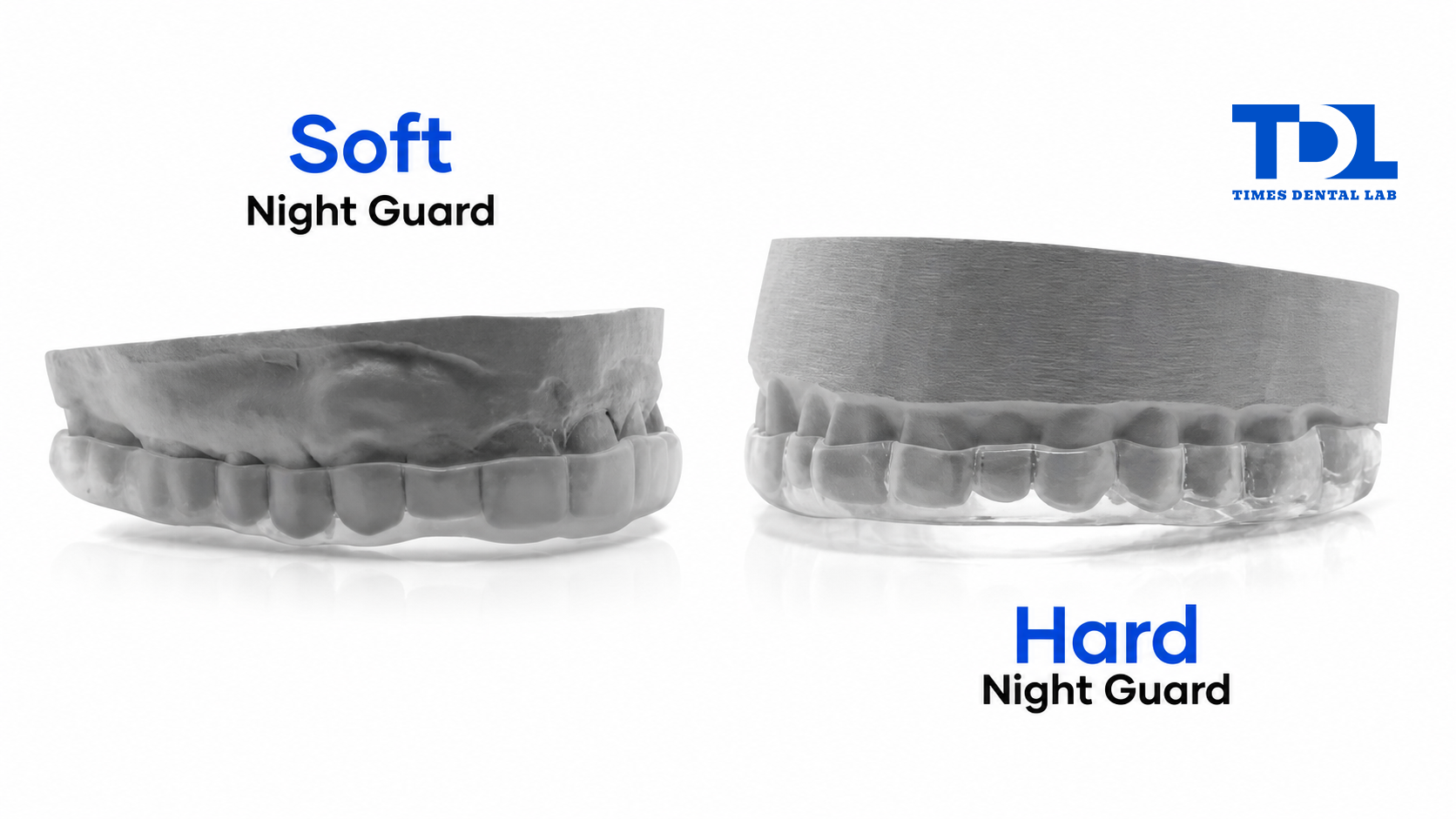
Hard night guards are made from rigid materials that allow controlled occlusal adjustment, while soft night guards use flexible materials that may feel easier to wear initially. Dual-laminate guards combine a soft internal surface with a harder external layer. The appropriate appliance depends on the dentist's diagnosis, prescribed design, occlusion, material requirements and intended use.
Hard vs. Soft Night Guards at a Glance
|
Factor |
Hard Night Guard |
Soft Night Guard |
Dual-Laminate |
|
Material |
Rigid acrylic or thermoplastic |
Flexible thermoplastic |
Soft interior, harder exterior |
|
Occlusal adjustment |
More controllable |
More limited |
Depends on outer layer |
|
Initial feel |
Firmer |
Softer |
Cushioned internally |
|
Durability |
Generally higher |
More dependent on wear |
Intermediate and case-dependent |
|
Production |
Digital or conventional |
Pressure or vacuum formed |
Laminated fabrication |
|
Best universal choice |
No |
No |
No |
This table should not be read as a universal ranking. Material hardness, appliance thickness, occlusal design, patient wear pattern, cleaning habits and clinical follow-up all affect the final result. The dental laboratory should follow the clinician's complete prescription rather than choosing the appliance based only on the product name.
What Is a Hard Night Guard?
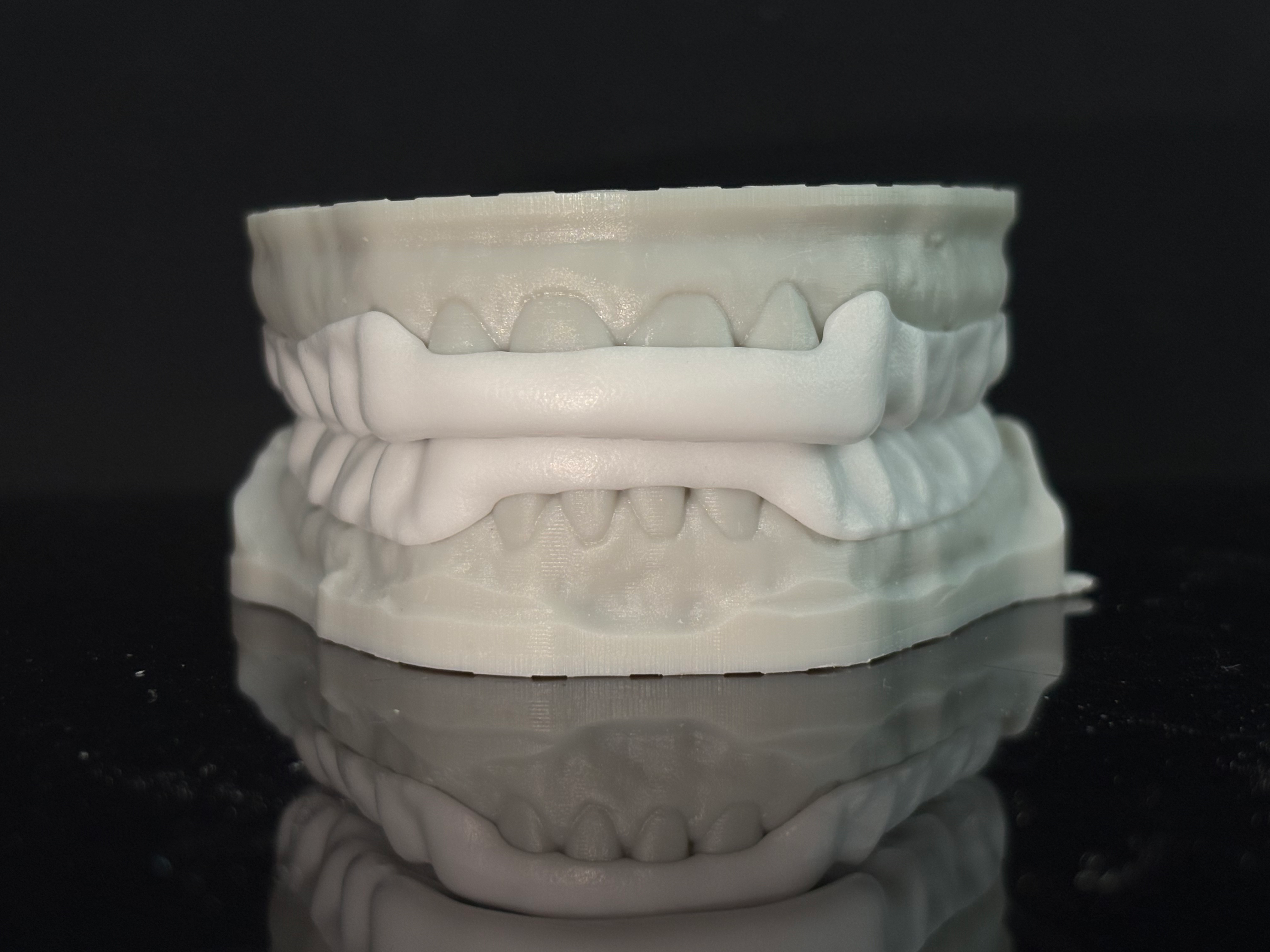
A hard night guard is a rigid intraoral appliance that is commonly fabricated from acrylic or rigid thermoplastic material. It may also be described as a hard occlusal splint, stabilization splint or hard splint, depending on the prescription and clinical context. The name alone does not define the design, coverage, thickness or occlusal scheme.
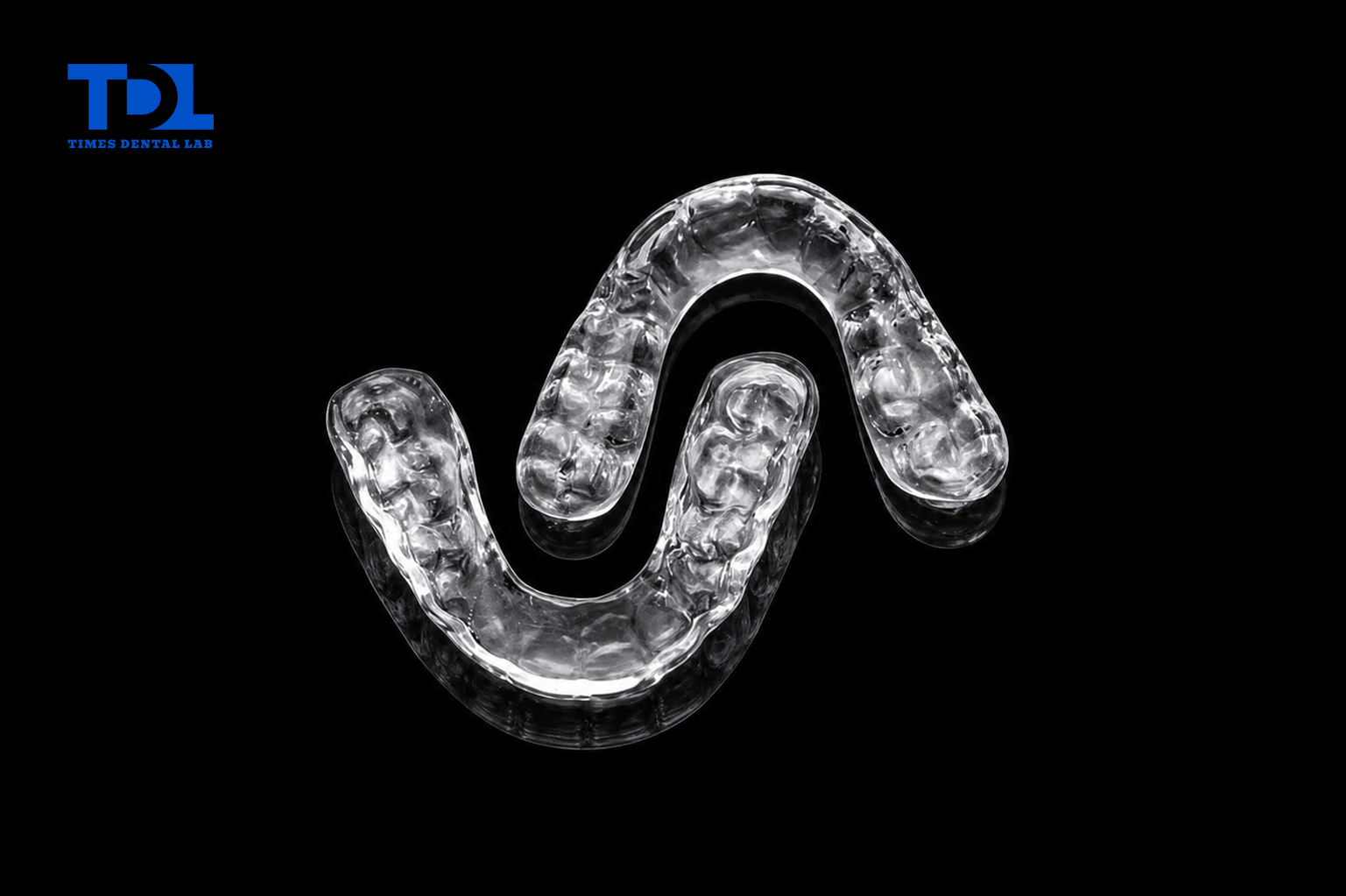
Hard appliances are often preferred when the clinician wants a more controllable surface for checking and adjusting occlusal contacts. A rigid surface can make it easier to evaluate contact points, guidance and balancing areas during clinical adjustment. Final occlusal adjustment remains a clinical responsibility.
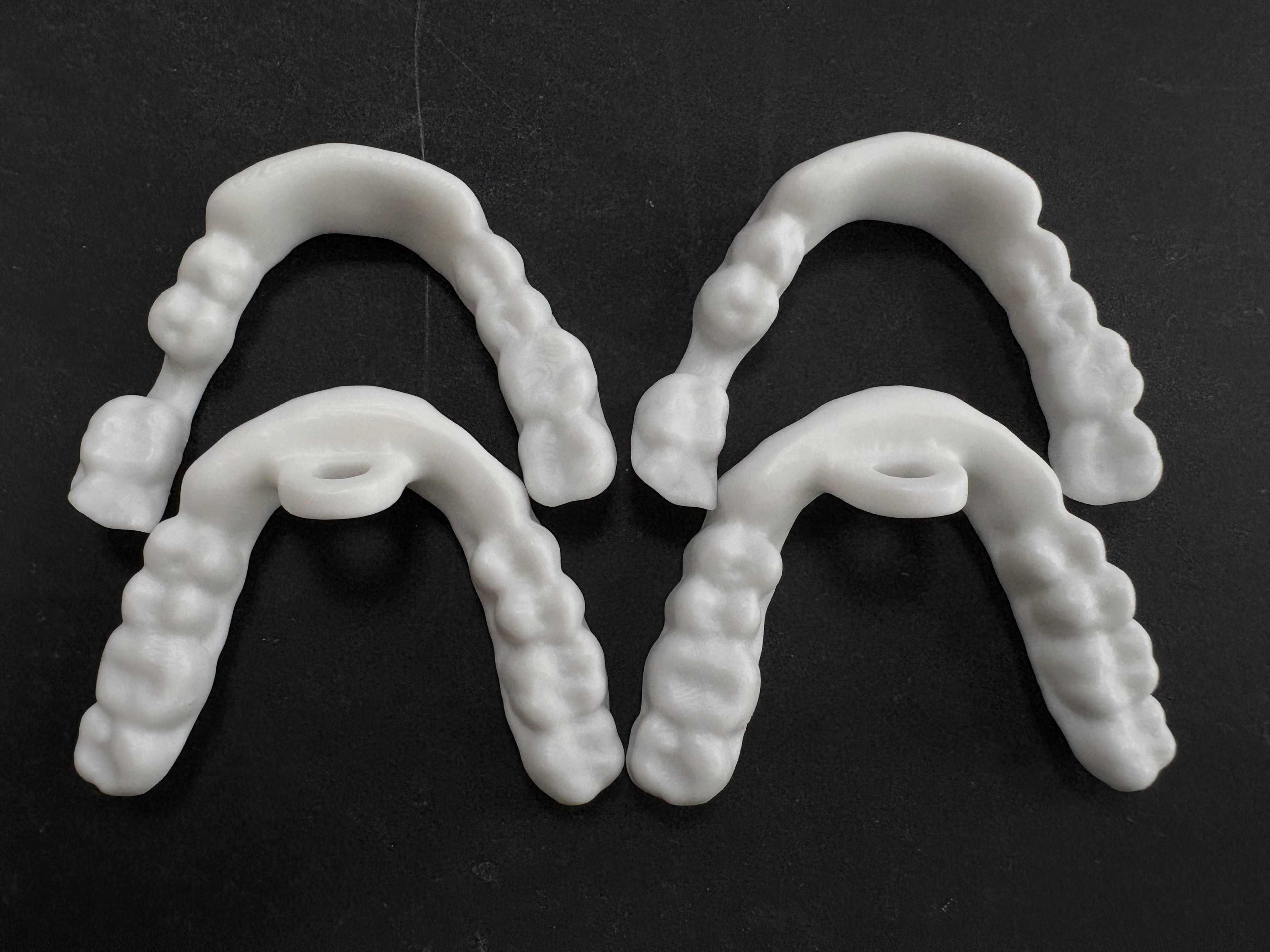
A hard night guard may be produced through conventional fabrication, CAD/CAM milling, 3D printing or a mixed digital-physical workflow. The selected method should match the material, appliance design and prescription requirements rather than being chosen for speed alone.
What Is a Soft Night Guard?
A soft night guard is made from flexible thermoplastic material and is commonly formed over a working model. The softer feel may help some patients adapt initially, but the appliance still requires proper clinical selection, accurate records and clear material instructions.
Soft appliances differ from rigid appliances because the occlusal surface is more flexible. That flexibility can make clinical adjustment and long-term wear behavior less predictable in some cases. The dentist should evaluate occlusion, grinding pattern, appliance purpose and patient-specific risk before prescribing a soft night guard.
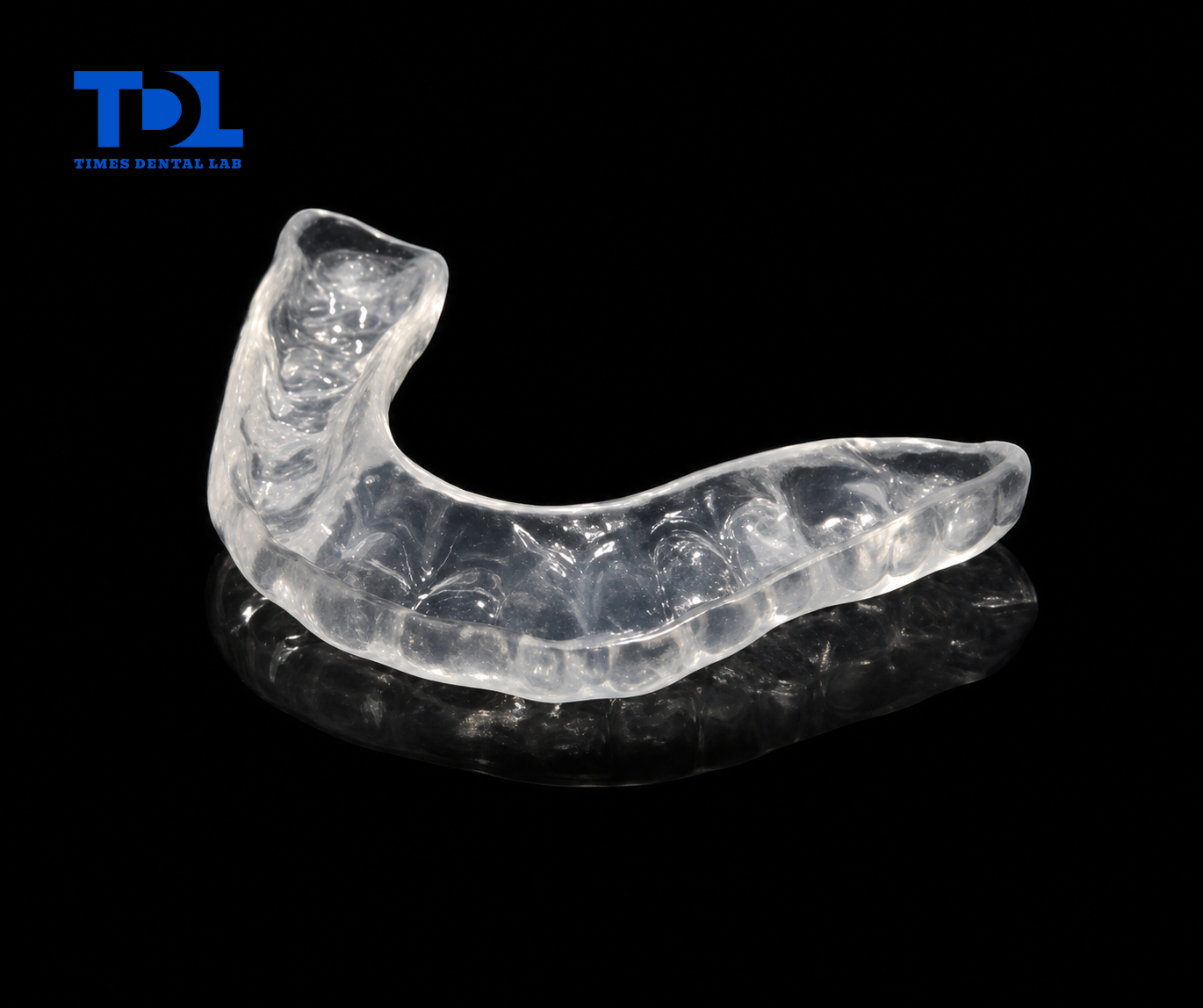
A soft night guard should not be described as automatically more comfortable or automatically suitable for mild bruxism. Comfort, fit and durability depend on material, thickness, design, patient habits and clinical instructions.
What Is a Dual-Laminate Night Guard?
A dual-laminate night guard combines a softer internal surface with a harder outer layer. The design concept is to provide a cushioned internal feel while maintaining a more durable or adjustable external surface. Actual performance depends on material combination, thickness, coverage, forming method and finishing quality.
Dual-laminate appliances should not be presented as automatically having all the advantages of both hard and soft guards. The clinic should still prescribe the intended use, material thickness, coverage and occlusal requirements. The lab should confirm any unclear design details before production.
Hard vs. Soft Night Guards: Main Differences
Material and Rigidity
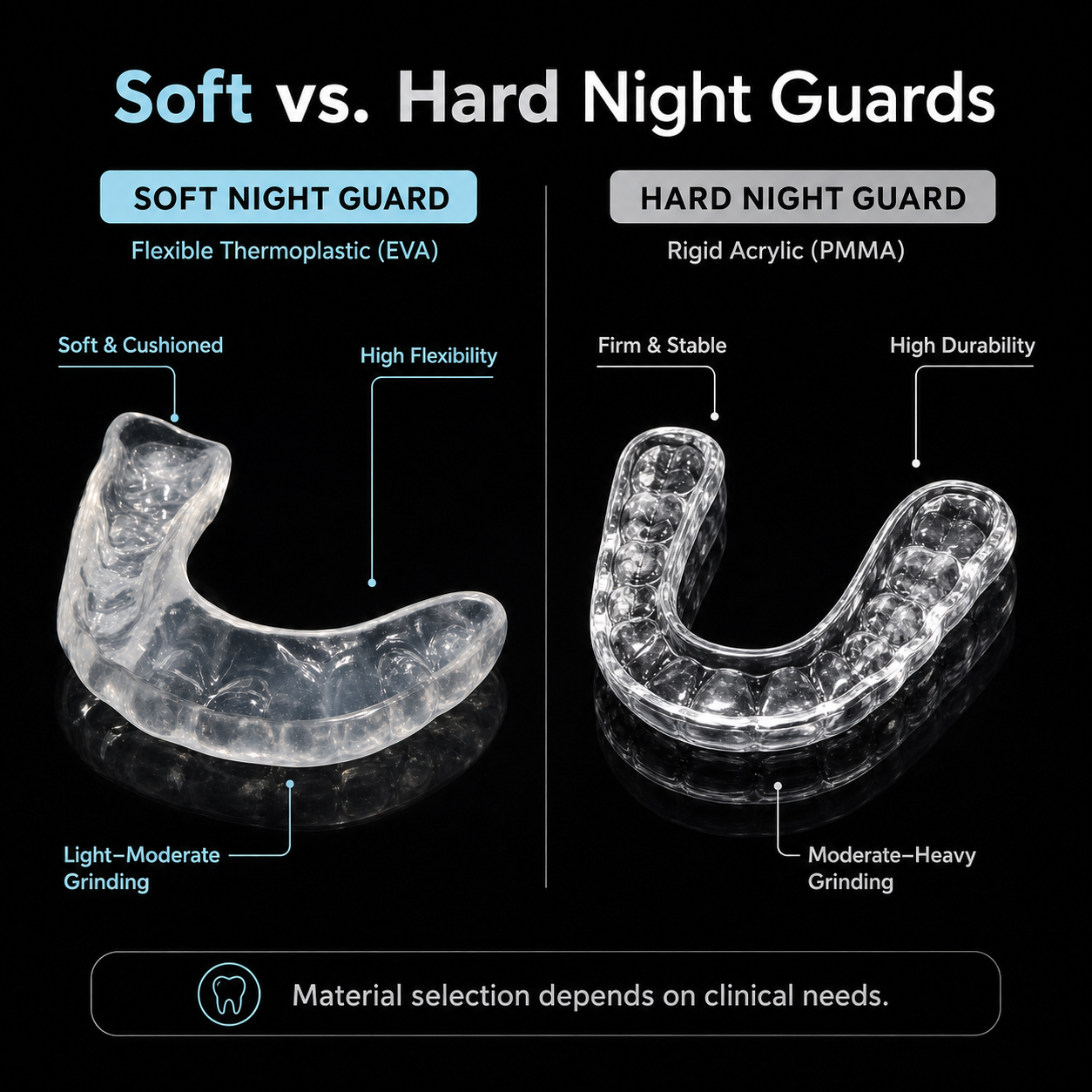
The primary difference is material rigidity. A hard appliance uses a rigid material, a soft appliance uses a flexible material and a dual-laminate appliance combines two layers. The ADA's professional coding discussion on hard and soft occlusal guards also separates appliances by hard, soft and hard-soft components, which supports using precise material language.
Occlusal Adjustment
Hard appliances generally provide a more controllable surface for creating and checking occlusal contacts. This does not mean the laboratory should design the bite independently. The lab manufactures according to the prescription, while the clinician evaluates fit, contacts and guidance in the patient's mouth.
Durability and Wear
Durability is influenced by material hardness, appliance thickness, patient grinding force, cleaning habits, storage, occlusion and case design. A hard appliance may offer higher wear resistance in many situations, but no fixed lifespan applies to every case. A soft appliance may wear faster in some patients and remain acceptable in others, depending on the clinical situation.
Fit and Patient Adaptation
Patient adaptation can differ because a hard appliance feels firmer and a soft appliance feels more flexible. Dual-laminate appliances may feel cushioned internally while retaining a firmer external surface. The dentist should decide which feel and design are appropriate for the patient's condition and compliance pattern.
Cleaning and Maintenance
Cleaning instructions should follow the dentist's advice and the material manufacturer's recommendations. In general, night guards should be cleaned gently, stored properly and kept away from excessive heat that may distort thermoplastic materials. Patients should bring appliances to dental visits when the dentist wants to inspect wear, fit or hygiene.
Is a Night Guard the Same as an Occlusal Splint?
Night guard is a broad product term, while occlusal splint may describe a more specifically designed appliance with prescribed coverage, contacts and guidance. Product names are not always interchangeable, so the dental laboratory should follow the clinician's complete prescription rather than relying on the name alone.
NIDCR's TMD information discusses jaw-joint and muscle conditions and emphasizes that diagnosis and treatment decisions require clinical evaluation. This is why a lab article should describe appliance differences without claiming that one product treats every TMD or bruxism-related condition.
What Information Should the Clinic Send to the Dental Lab?
The best night guard production outcomes start with complete case records. A lab should not have to guess the material, thickness, arch, coverage or occlusal scheme from a scan alone. Missing case information can delay design, model preparation, forming, milling, printing or final QC.
|
Information to Send |
Why It Matters for Production |
|
Upper or lower arch |
Confirms appliance location and model preparation. |
|
Hard, soft or dual-laminate material |
Prevents the lab from assuming the appliance type from the product name alone. |
|
Required thickness |
Affects fit, strength, adjustment space and patient adaptation. |
|
Full or partial coverage |
Defines appliance extension and case design boundaries. |
|
Working scan, impression or model |
Provides the manufacturing basis for digital or conventional workflow. |
|
Opposing arch |
Supports occlusal surface evaluation and appliance clearance. |
|
Bite record |
Helps the lab understand the relationship between arches when required. |
|
Requested occlusal scheme |
Guides the occlusal surface design and adjustment expectations. |
|
Contact and guidance instructions |
Clarifies clinician expectations before production begins. |
|
Relief areas |
Helps avoid unwanted pressure on specified teeth or restorations. |
|
Trim-line requirements |
Guides finishing, extension and patient comfort. |
|
Relevant restorations or implant information |
Helps protect crowns, bridges, implant restorations or vulnerable areas. |
|
Delivery date |
Allows scheduling before case acceptance and production. |
|
Special design instructions |
Captures case-specific requirements that the model alone cannot show. |
How Times Dental Lab Manufactures Night Guards
Times Dental Lab manufactures custom night guards and occlusal appliances through a case-review workflow that checks the prescription before production. The goal is not to replace the dentist's clinical diagnosis, but to manufacture the prescribed appliance accurately and flag missing information before the case moves forward.
· Review the prescription, scan, impression or model.
· Confirm material, thickness, arch and coverage design.
· Check opposing-arch data and bite record when required.
· Prepare the digital design or physical working model.
· Fabricate the appliance by forming, milling, printing or the approved workflow.
· Trim edges, polish surfaces and finish the appliance according to prescription.
· Check fit, thickness, occlusal surface, edge finish and surface quality.
· Confirm labeling, packaging and case documentation before shipment.
Based on Times Dental Lab's case-review workflow, common delays in night-guard production include an unspecified material, missing opposing-arch data, unclear appliance thickness and incomplete occlusal instructions. This sentence should be confirmed by the Times night guard or occlusal appliance production team before publication, because it is a valuable first-hand E-E-A-T signal.
Times Dental Lab's article on orthodontic appliances and night guards introduces Hard Splint, Soft Night Guard and Dual-Laminate Night Guard within the broader appliance product range. Clinics and laboratories can also review splint design services and Times Dental Lab products and services when planning a new case.
Clinical and Laboratory Responsibilities
Clinical Responsibilities
· Diagnose bruxism, TMD-related symptoms or other clinical conditions.
· Decide whether an intraoral appliance is appropriate.
· Prescribe material, thickness, coverage and occlusal design.
· Evaluate clinical fit, contacts, guidance and adjustment.
· Provide use instructions, follow-up schedule and patient management.
Dental Laboratory Responsibilities
· Manufacture according to the prescription.
· Check whether submitted records are complete enough for production.
· Confirm design and material requirements before fabrication.
· Complete production quality checks.
· Pause and clarify unclear requirements before proceeding.
Evidence Limitations
The evidence around occlusal splints is nuanced, so a dental lab article should avoid overclaiming. A 2024 systematic review on different occlusal splints for sleep bruxism reported that splint effects can vary by design and patient factors, and that more research is needed on long-term effects and patient-reported outcomes. That supports a case-by-case approach rather than a single product recommendation.
NIDCR's bruxism guidance describes mouth guards as intraoral appliances that separate the teeth, help prevent tooth damage and may reduce muscle activity related to grinding or clenching. The wording matters: a night guard may help manage tooth wear risk, but it should not be promoted as a guaranteed cure for bruxism.
Frequently Asked Questions
Is a hard night guard better than a soft night guard?
A hard night guard is not universally better than a soft night guard. A hard appliance may provide a more controllable occlusal surface, while a soft appliance may feel easier for some patients to wear initially. The dentist should choose the appliance based on diagnosis, occlusion, material needs and intended use.
Which night guard is more durable?
A hard night guard is often more wear-resistant than a soft night guard, but durability depends on material, thickness, grinding force, cleaning, storage and appliance design. No fixed lifespan should be promised for every patient.
Can a soft night guard be adjusted?
A soft night guard usually offers more limited occlusal adjustment than a hard appliance. The dentist should decide whether the flexible surface is appropriate for the case and whether any chairside modification is suitable.
What is a dual-laminate night guard?
A dual-laminate night guard combines a softer internal layer with a harder external layer. The design may provide an internal cushioned feel while preserving a firmer occlusal surface, but performance depends on material, thickness, coverage and production quality.
Can night guards be made from intraoral scans?
Night guards can be made from suitable intraoral scans when the digital records are complete and the prescription is clear. The lab still needs the arch, material, thickness, opposing data, bite record if required, coverage design and occlusal instructions.
What thickness should be prescribed?
Night guard thickness should be prescribed by the dentist according to the clinical situation, appliance material, occlusion, available space and intended use. The dental lab should not guess the thickness when the prescription is incomplete.
Does a night guard treat bruxism?
A night guard does not cure bruxism. According to NIDCR guidance, mouth guards can separate the teeth, help prevent tooth damage and may reduce muscle activity related to grinding or clenching. Diagnosis and treatment planning remain the dentist's responsibility.
What should a clinic send to the dental lab?
A clinic should send the arch, appliance type, material, thickness, scan or model, opposing arch, bite record if required, occlusal scheme, contact and guidance instructions, relief areas, trim line, relevant restoration information and delivery date.
Conclusion
Hard, soft and dual-laminate night guards each have different material behavior, adjustment potential, wear characteristics and production requirements. The correct appliance is not chosen by the lab from the product name alone; it is prescribed by the dentist according to the patient's clinical situation.
Times Dental Lab supports overseas clinics and dental laboratories with custom night guards, hard splints, soft night guards, dual-laminate appliances and related digital workflows. To discuss a case, review how to start a dental lab case or contact Times Dental Lab with the appliance type, material, thickness and case records.