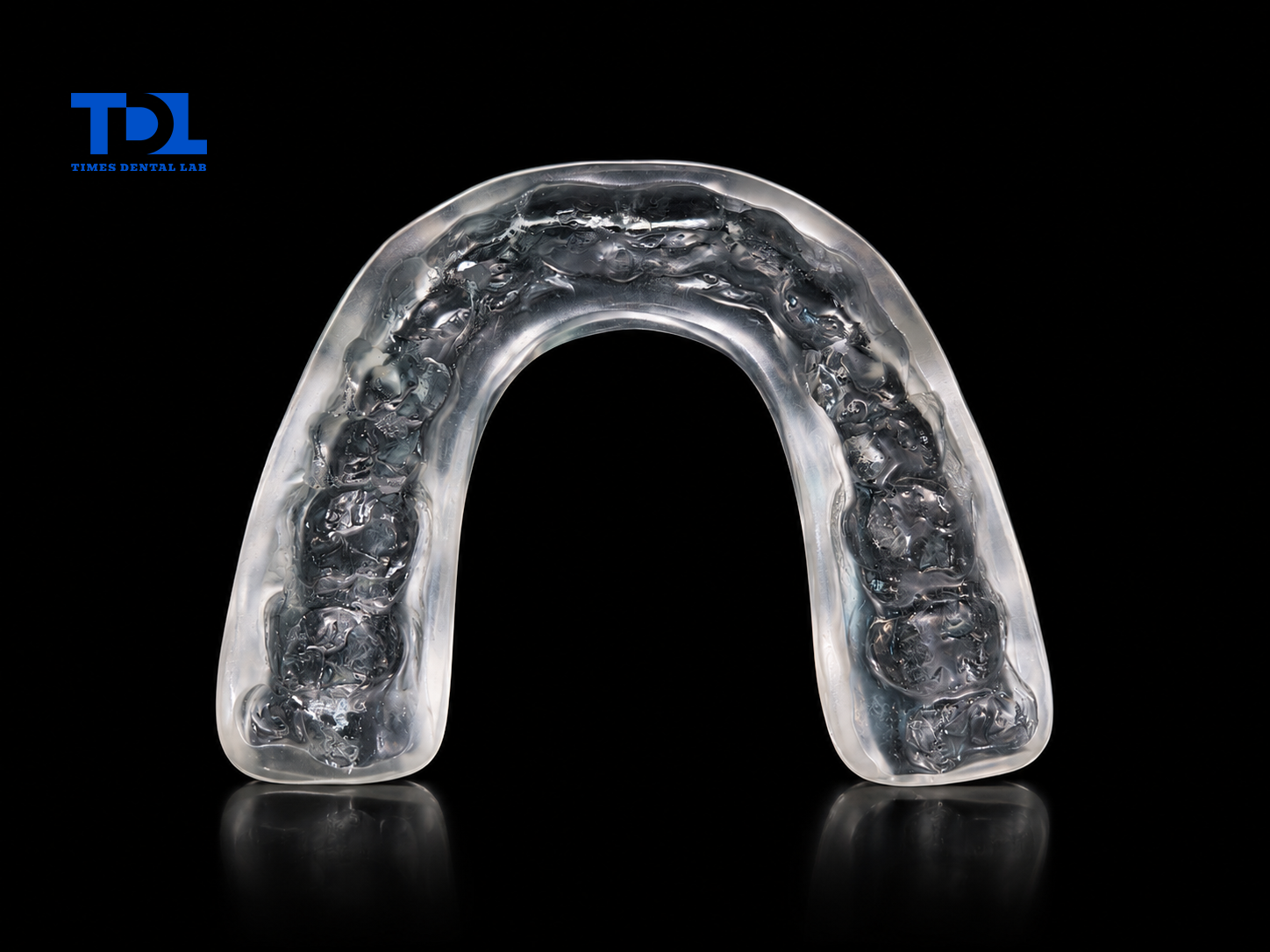
A splint prescription should identify more than “hard,” “soft” or “comfortable.” The material that engages the teeth and the surface that controls occlusal contacts can perform different roles. Talon splints are a useful example of why partners need to specify both the material and the intended appliance design.
At Times Dental Lab, we ask partners to communicate the prescribed arch, working records, bite and design requirements before production. For an enquiry specifying Talon, please confirm the branded material and the proposed appliance construction with our team. A general request for a flexible night guard does not establish that the requested product is a Talon appliance.
Quick Answer
Talon® is a branded thermoplastic methacrylate material used for the retentive portion of conventional hard interocclusal appliances. Its rigidity decreases at mouth temperature, allowing the material to engage suitable dental undercuts. A Talon splint can combine this retentive component with a hard occlusal surface, but the exact construction must be confirmed for the ordered appliance.
Partners should specify the upper or lower arch, coverage, occlusal instructions, relief requirements and approval needs. Send complete working and opposing records together with the prescribed bite or jaw-position information. Times reviews the enquiry and confirms material availability and production requirements before a case is accepted for that workflow.
What Is a Talon Splint?
Talon Is a Branded Material
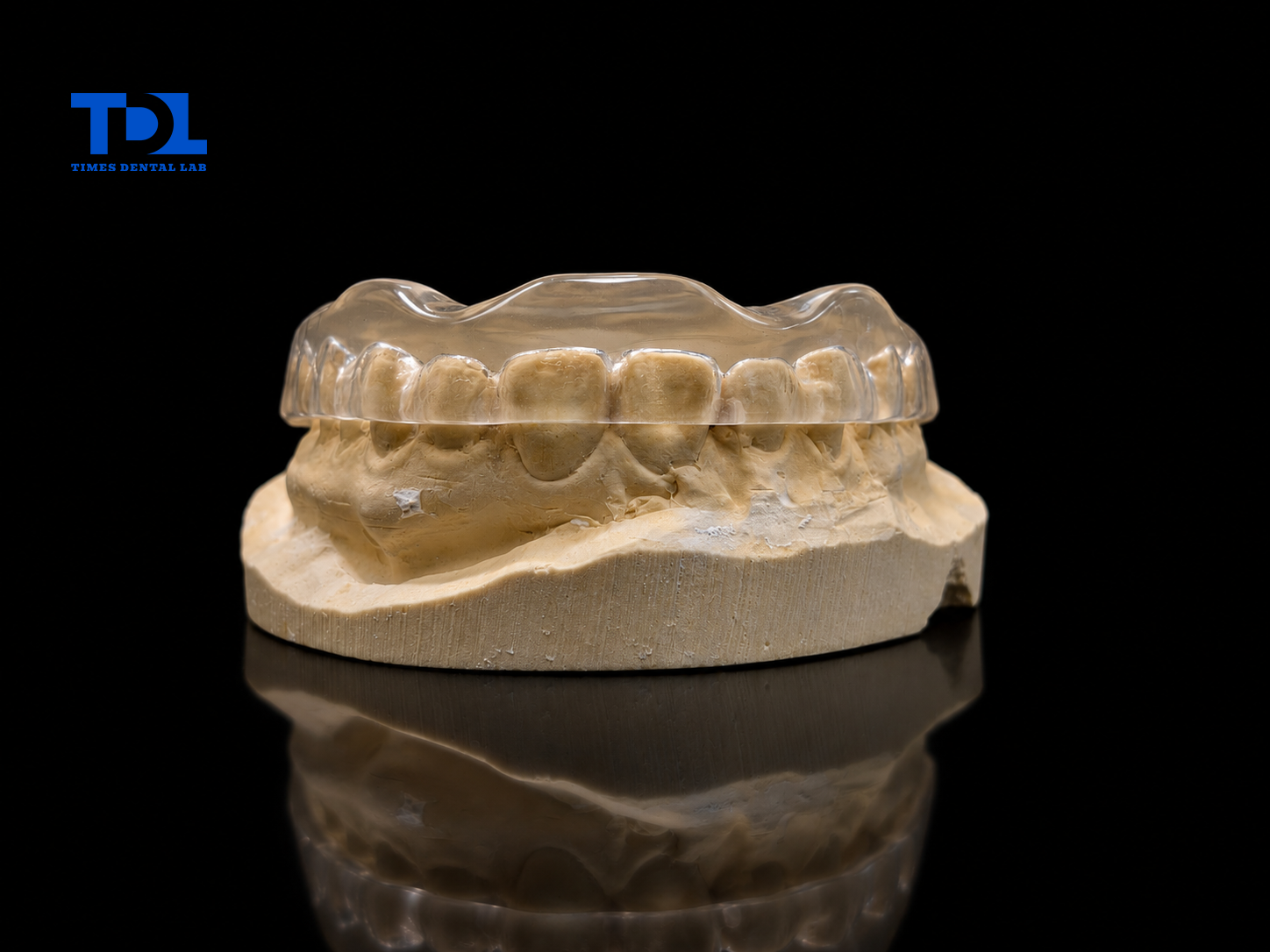
Talon is a material name, not a generic term for every soft-lined or temperature-responsive splint. It is a thermoplastic acrylic elastomer intended to provide retention for hard interocclusal dental appliances. See the official Talon material information for further details.
A partner who requires Talon should name it explicitly. If the prescription only says “hard-soft guard,” the requested construction may involve a different material or process. We need to resolve that distinction before discussing fabrication rather than assume the terms mean the same thing.
Retentive Material and Occlusal Surface
In a commonly described Talon splint construction, the material engaging the teeth provides retention while a hard acrylic occlusal portion provides the prescribed contact surface. The material on the tooth-facing side and the occlusal material therefore have different jobs.
That description should not be used as a specification for every appliance marketed under a similar name. Confirm the precise material combination and construction with Times for the proposed order. Neither the product name nor a photograph establishes the full manufacturing specification.
Material Features Partners Should Understand
Temperature-Responsive Behavior
Talon responds to temperature; it should not be described as an ordinary soft EVA sheet. Its behavior during insertion and use is related to the material formulation and the finished appliance. The manufacturer's instructions and the clinical delivery instructions must govern any warming or handling procedure.
This article does not prescribe a water temperature or immersion time. A procedure suitable for another thermoplastic appliance is not automatically appropriate for Talon or for a particular finished splint.
Retention and Insertion
Retention depends on more than material flexibility. Tooth anatomy, undercuts, existing restorations and the path of insertion and removal all influence how an appliance engages the arch. A temperature-responsive material does not remove the need for sound records or case-specific design.
Please identify areas that require relief or particular retention control. If a patient has mobile teeth, extensive restorations or a difficult insertion path, the clinician should assess those conditions and communicate the relevant requirements. We cannot determine clinical suitability from the material name alone.
Occlusal Design
A hard occlusal surface does not specify its own contact pattern. The prescription must identify the intended appliance design and any relevant occlusal instructions. The laboratory should not select an unapproved therapeutic jaw position simply because a certain material has been requested.
Where a prescribed mandibular position is needed, provide the corresponding clinical record. Ordinary upper and lower scans do not establish that position. Material choice and jaw-relation instructions are separate parts of the order.
Talon Splints Versus Other Night Guard Materials
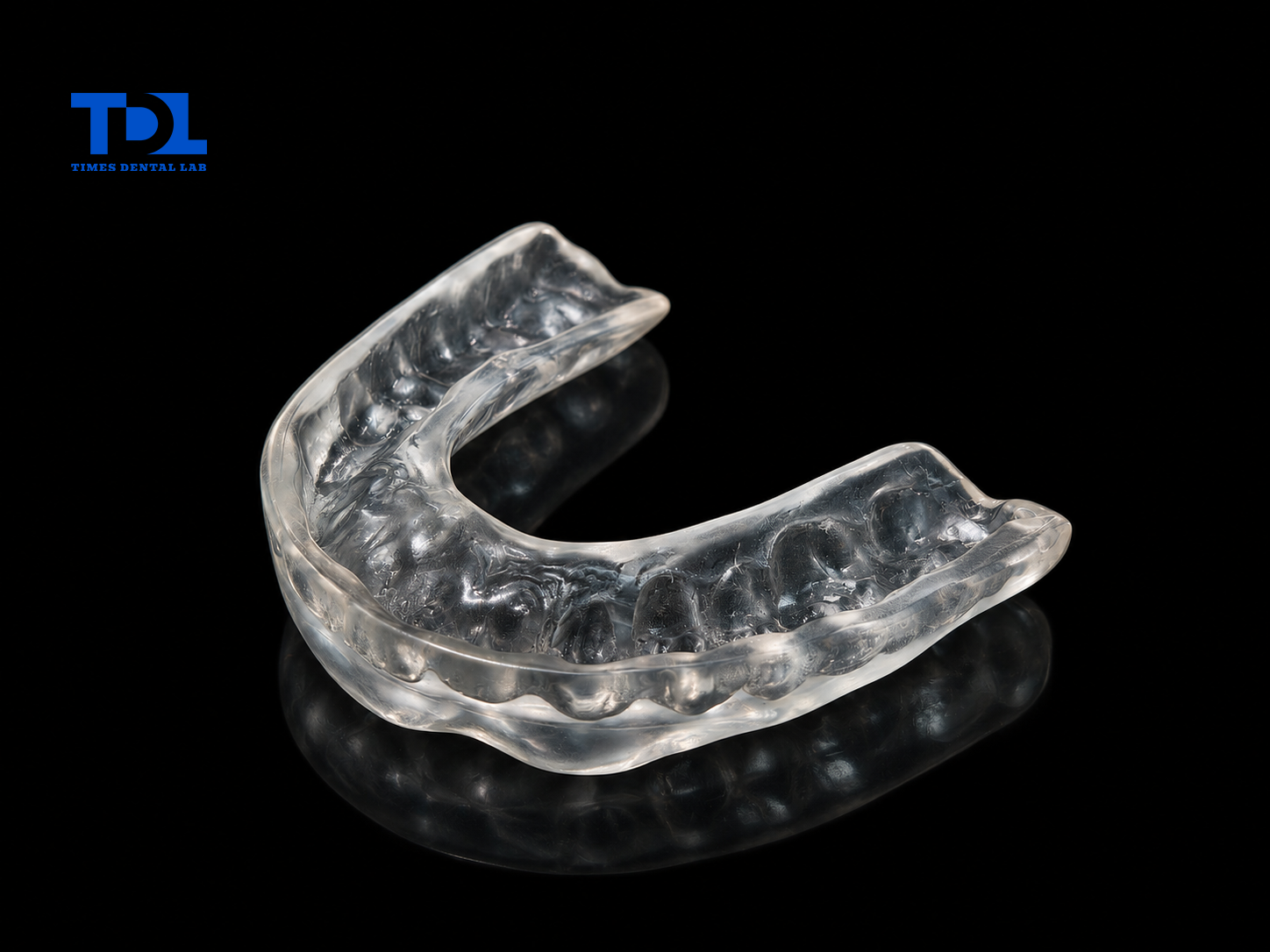
A conventional hard acrylic splint has a rigid construction; a soft EVA guard uses a flexible thermoplastic material. Other hard-soft appliances combine layers or materials but may not use Talon. Talon is distinguished by its branded, temperature-responsive retentive material, rather than by the broad label “hard-soft” alone.
These categories help partners communicate an enquiry, but they do not establish that one material is universally more comfortable, durable or effective. The prescribed design, available space, retention and patient's clinical circumstances still need evaluation.
The American Academy of Dental Sleep Medicine material nomenclature identifies Talon among temperature-responsive acrylic materials and separates these from pressure-formed thermoplastics and other constructions. That classification is useful for terminology; it does not demonstrate that a particular occlusal splint treats sleep apnea.
What Should Be Assessed Before Prescribing?
The treating clinician should assess the teeth, periodontal condition, occlusion, existing restorations and intended treatment objective. Undercuts and the insertion path need attention, particularly where crowns, bridges or implant restorations are present. Planned dental treatment can also affect whether today's records remain suitable for the final appliance.
Tell us about known material sensitivities and any material restriction in the prescription. Do not treat a general material description as evidence that the finished appliance is appropriate for every patient with an allergy or sensitivity. Product-specific information may be needed for the clinical assessment.
A splint is not automatically a cure for bruxism or temporomandibular disorders. Similarly, a Talon-containing appliance is not necessarily a mandibular advancement device or a treatment for sleep apnea. Diagnosis, appliance selection, prescribed use and clinical follow-up remain the clinician's responsibility.
What Partners Should Specify When Ordering
Upper or Lower Arch
State which arch the appliance is prescribed for. Include the opposing arch even when only one appliance is being manufactured, because it contributes to understanding the intended occlusal relationship.
Do not rely on a file name or a photograph to communicate the appliance arch. Put the final instruction in the written prescription so it can be matched to the case records.
Coverage and Occlusal Instructions
Identify the prescribed coverage and occlusal design. If the clinician requires a particular record, mounting instruction or jaw position, include it explicitly. Terms such as “standard splint” are useful only when both teams have already agreed on what that standard means.
Thickness and material dimensions must follow the selected product requirements and case design. We do not apply one universal thickness to every splint or use insufficient records to infer a therapeutic design.
Relief and Retention Requirements
Mark existing restorations and areas that need relief. Describe whether a particular region should avoid engagement, and explain any instruction that differs from your normal appliance prescription. The clinician must determine appropriate requirements for compromised teeth or tissues.
If you send an old appliance as a reference, identify the features to preserve and the features to change. “Copy this” is ambiguous when the reason for replacement is poor retention, wear or an unwanted contour.
Approval Requirements
Tell us whether a design preview is required and which features need approval. Identify one contact who can provide the final instruction when different comments arrive from the same partner.
A design approval documents the intended form from the supplied records. It does not replace clinical seating, tissue evaluation, occlusal assessment or adjustment at delivery.
What Records Should Be Sent to Times?
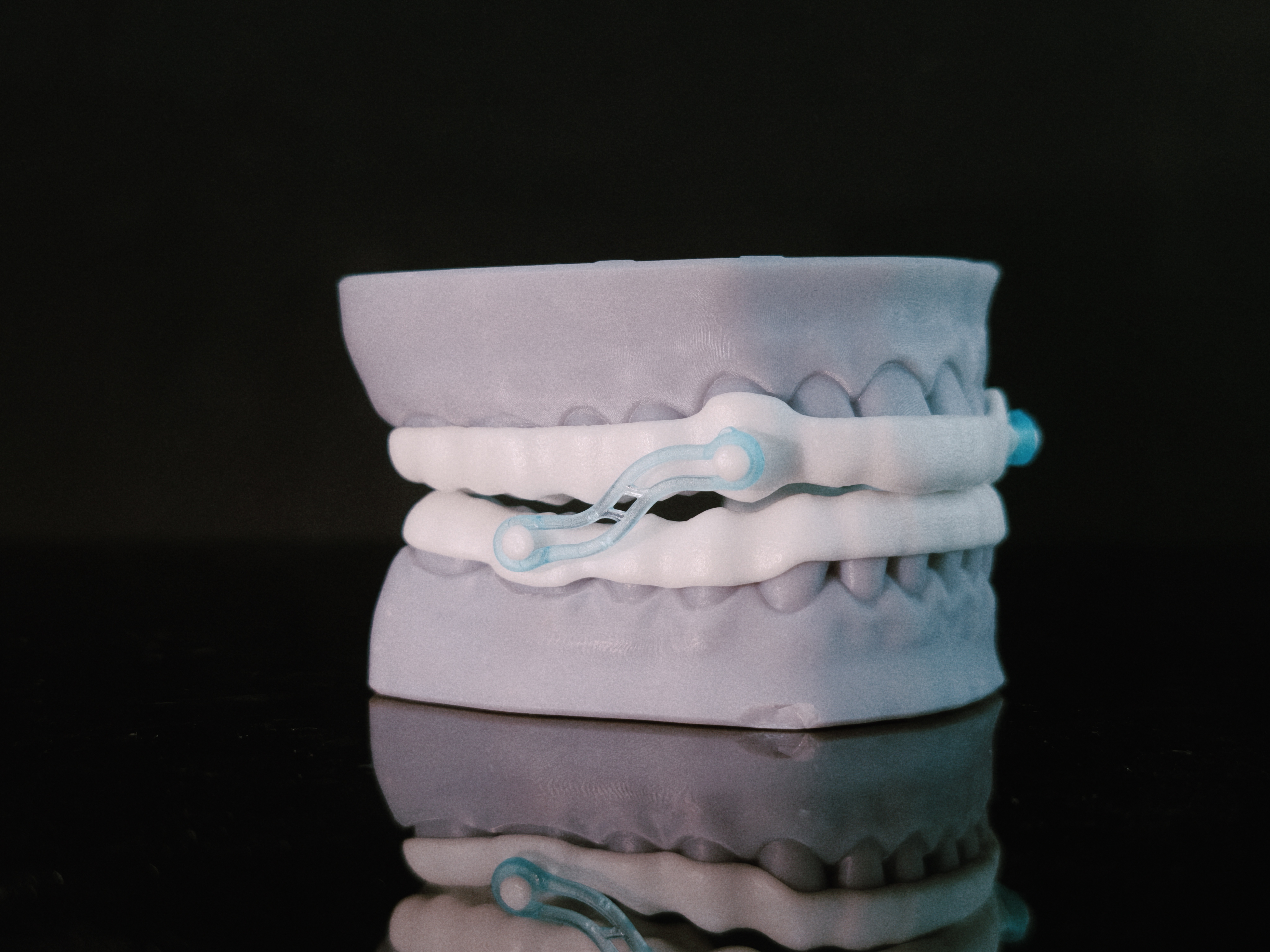
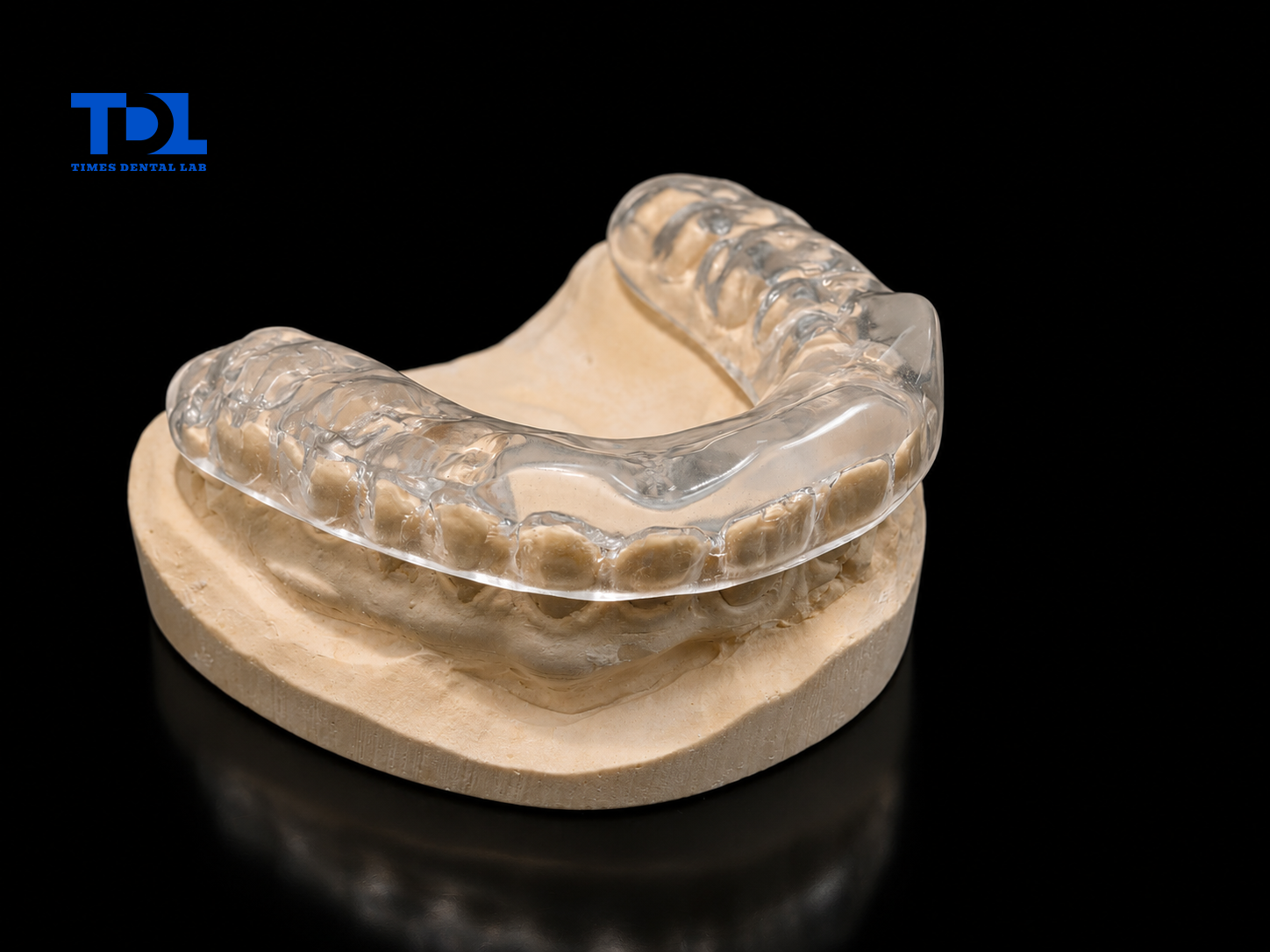
For an initial Talon splint enquiry, provide the case number, named material request, prescribed arch, working and opposing records, bite information and written design instructions. Add photographs and relief notes where existing restorations or other relevant features require explanation.
If the appliance requires a prescribed jaw position, send the corresponding record rather than assume that an ordinary bite scan supplies it. Physical impressions or models may be discussed with our team when appropriate to the proposed workflow. Material, record format and fabrication route should be confirmed together.
Include the approval contact and requested delivery date. Receiving files does not mean a case is automatically production-ready. Our guide to digital case intake and dental laboratory quality control explains why early record review matters across product categories.
How Times Reviews a Talon Splint Enquiry
We first clarify the requested appliance and whether the order specifically requires Talon-branded material. We then discuss the available material and construction rather than silently replacing it with a generic hard-soft product.
The case review considers the working and opposing records, bite or prescribed jaw-position information, appliance arch and written requirements. If the records or instructions conflict, we contact the partner before confirming the next production step. Any required approval should refer to the design version intended for fabrication.
The final laboratory checks must correspond to the agreed product and prescription. They do not reproduce all intraoral conditions or establish the patient's response to the appliance. Clinical verification, delivery instructions and follow-up remain essential.
For partners starting a new workflow with Times, our trial order evaluation guide explains how to assess a representative case and communicate feedback before increasing volume.
Delivery and Care Instructions
The partner should receive the applicable handling and care information for the finished appliance. Confirm the prescribed insertion procedure, cleaning approach and storage requirements rather than applying the instructions for a different night guard material.
Do not use boiling water, household heating devices or an unapproved cleaner as a substitute for the supplied instructions. Do not advise patients to reshape or grind the appliance themselves. If retention or seating is unsatisfactory, the clinician should assess the appliance and discuss the issue with the laboratory.
When contacting Times about a delivered case, provide the case number, the area of concern and useful photographs. Tell us whether the patient's dentition or the appliance has changed since delivery. Your customer service manager can clarify what additional records are needed.
FAQs
Is a Talon Splint the Same as a Soft Night Guard?
No. Talon is a branded temperature-responsive material used for retention in specified appliance constructions. A conventional soft guard may use EVA or another material and may not include the same hard occlusal component.
Is Every Hard-Soft Splint Made with Talon?
No. Hard-soft describes a broad construction category, not a single brand. State Talon explicitly when that material is required and ask Times to confirm it for the proposed case.
Why Does the Material Respond to Temperature?
Temperature response is a feature of the material formulation. The official manufacturer describes reduced rigidity at mouth temperature. Follow the instructions for the finished appliance rather than inventing a warming procedure.
Can a Talon Splint Be Prescribed for Either Arch?
The prescribed arch and design must be confirmed for the case. The clinician determines suitability, and Times reviews the records and proposed production requirements. Do not assume that changing the arch is a minor manufacturing decision.
What Should Be Noted When the Patient Has Crowns or Implants?
Identify the relevant restorations and any prescribed relief or retention restrictions. The clinician should evaluate engagement and the insertion path. The presence of crowns or implants does not, on its own, establish whether a particular splint is appropriate.
Can an Existing Splint Be Used as a Reference?
It can be discussed as a reference, but explain which features are approved and which need changing. Updated records may be required if the dentition or treatment plan has changed.
What If the Appliance Feels Too Tight or Loose?
The clinician should assess seating and retention before the patient attempts any change. Partners can contact their customer service manager with the case details and relevant records to discuss the laboratory question.
Discuss a Talon Splint Case with Times Dental Lab
For a Talon splint enquiry, bring the material request and appliance prescription together. Confirm the brand, construction, arch, records and approval requirements before production rather than relying on the general label “comfortable night guard.”
Existing partners can contact their customer service manager with the case records and design questions. For a new partnership enquiry, contact Times Dental Lab to discuss material availability and the proposed workflow.