Quick Answer
A custom nylon anti-snoring appliance is a patient-specific oral appliance made from dental scans or models and prescribed bite-related records. Times Dental Lab uses EOS PA 2200, a PA12 nylon material, for this appliance category and provides ON1 and ON3 sample designs for product reference.
This guide explains the material, product structure, ordering records and laboratory review steps for overseas clinics, dental laboratories and purchasing teams. Clinical use, patient suitability and final appliance adjustment should be determined by the responsible dentist or qualified dental sleep medicine provider.
What Is a Custom Nylon Anti-Snoring Appliance?
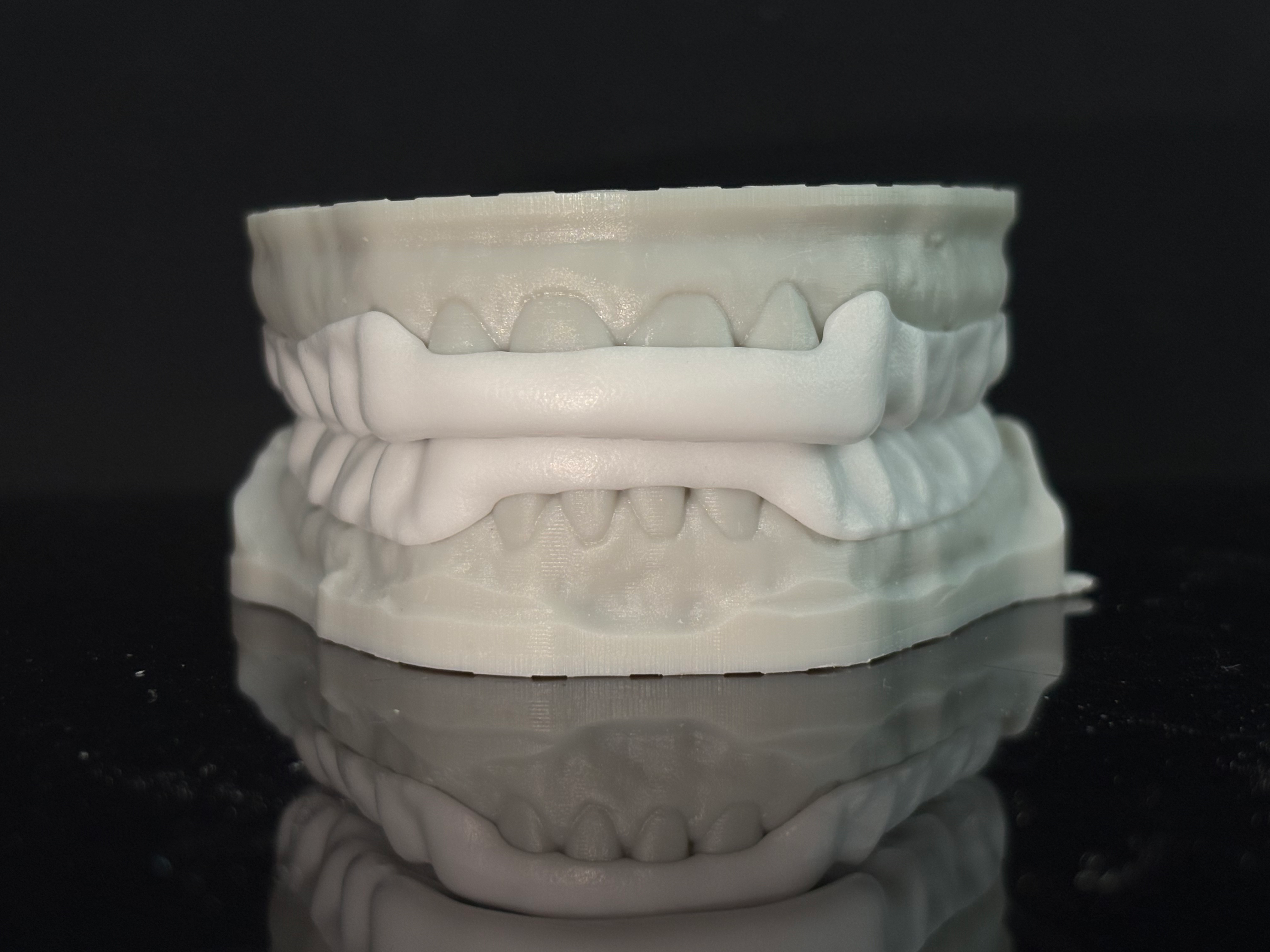
A custom nylon anti-snoring appliance is a laboratory-made oral appliance designed for a specific patient's upper and lower arches. In many clinical workflows, anti-snoring and sleep-related oral appliances are designed to support mandibular advancement during sleep, but the exact indication, design and adjustment protocol must follow professional evaluation and prescription.
A nylon anti-snoring appliance is different from a standard night guard. A night guard is generally used to protect teeth or restorations from grinding and clenching forces, while an anti-snoring appliance has a sleep-related design purpose and may require a specific mandibular position record.
The dental laboratory manufactures according to the submitted prescription and approved records. The prescribing clinician remains responsible for diagnosis, appliance selection, delivery, fit verification, follow-up and any required chairside adjustment.
For clinical context, the American Academy of Dental Sleep Medicine describes oral appliance therapy as requiring patient examination, appliance selection, construction bite records, delivery review and follow-up by qualified providers in its Dental Sleep Medicine Standards. The AASM/AADSM clinical practice guideline also emphasizes professional prescription and follow-up for oral appliance therapy.
What Material Does Times Dental Lab Use?
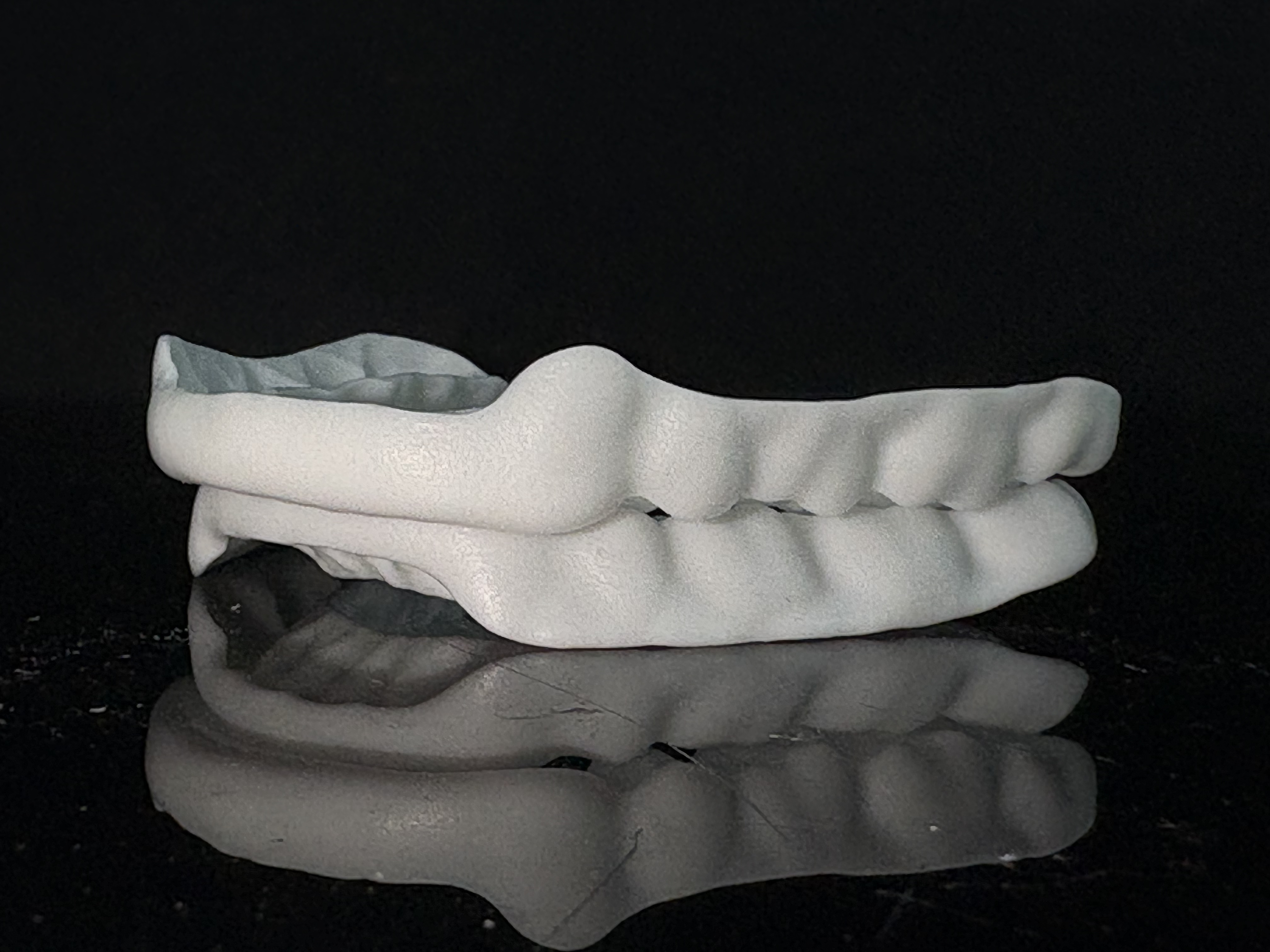
Times Dental Lab uses EOS PA 2200 for this nylon anti-snoring appliance category. EOS identifies PA 2200 as a polyamide 12, or PA12, material. The EOS PA 2200 product page describes the material as a white PA12 polymer powder used for durable parts with balanced mechanical properties.
EOS PA 2200 provides useful material documentation for buyers who need to understand the PA12 nylon used in the appliance. These documents help confirm the material name, supplier statements and testing background. The finished appliance should still be evaluated according to its intended design, manufacturing process and clinical use.
|
Material Information |
Source |
What It Helps Confirm |
|
EOS PA 2200 |
EOS GmbH |
PA12 nylon material used for this appliance category. |
|
PA2200 MP validity statement |
Eurofins Germany, Jan. 26, 2021 |
Review of referenced biocompatibility study validity. |
|
PA 2200 food-contact declaration |
EOS GmbH, Dec. 19, 2024 |
Food-contact plastics compliance context at the supplier stage. |
|
EU 1169/2011 allergen statement |
EOS GmbH, Aug. 8, 2023 |
Statement about listed allergen substances in the named products. |
For additional material background, see Times Dental Lab's article on 3D printed nylon occlusal splints.
Nylon Anti-Snoring Appliance Design: ON1 and ON3 Examples
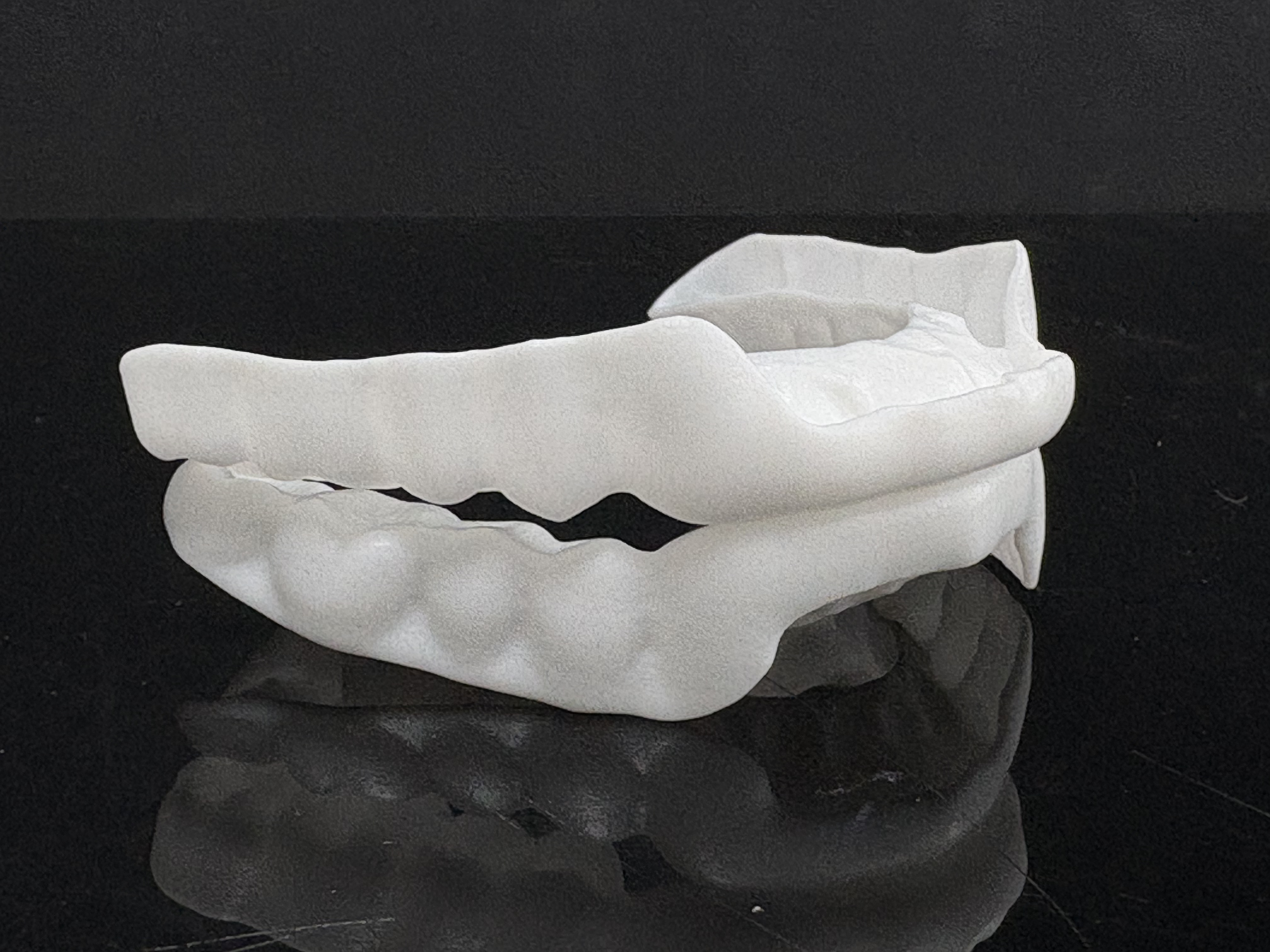
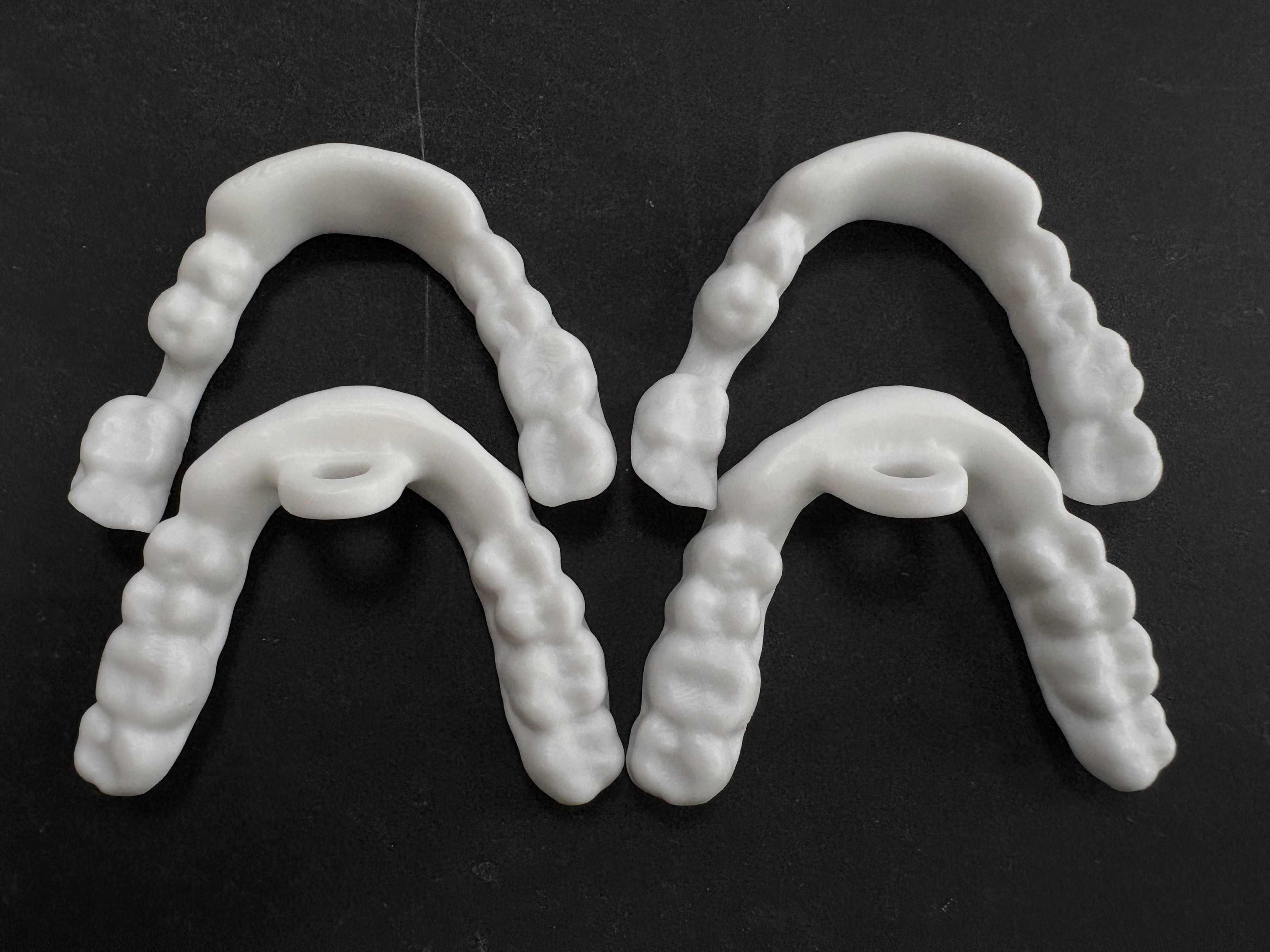
ON1 and ON3 are shown below as physical sample designs. The images help buyers review the overall shape, upper and lower arch coverage, front appearance and side structure. The photos should not be used to infer treatment effect, adjustment range, comfort level or patient suitability.
What Records Are Needed to Order a Custom Appliance?
A custom nylon anti-snoring appliance order should include records that allow the laboratory to identify the arches, model selection, material instruction and prescribed jaw relationship. Upper and lower scans alone may not be enough if the appliance requires a specific construction bite or mandibular position record.
|
Record Needed |
Purpose |
|
Upper and lower scans or models |
To design the appliance to the patient's arches and review fit areas. |
|
Bite or mandibular position record |
To support the prescribed jaw relationship for the requested appliance design. |
|
Model selection |
To confirm whether ON1, ON3 or another design is requested. |
|
Material instruction |
To confirm EOS PA 2200 / PA12 nylon or another approved material requirement. |
|
Special design notes |
To record coverage, retention, relief, marked areas or model-specific requests. |
|
Approval contact |
To confirm who should review questions or design details before production. |
|
Delivery requirement |
To coordinate production and shipping expectations. |
Clinics preparing their first case can follow the Times How to Start process for basic case information and file submission.
How Times Reviews, Manufactures and Checks the Appliance
Times Dental Lab reviews a nylon anti-snoring appliance order before production by checking whether the submitted records match the requested appliance type. The team reviews upper and lower records, bite or construction information, model selection, material instruction and special notes.
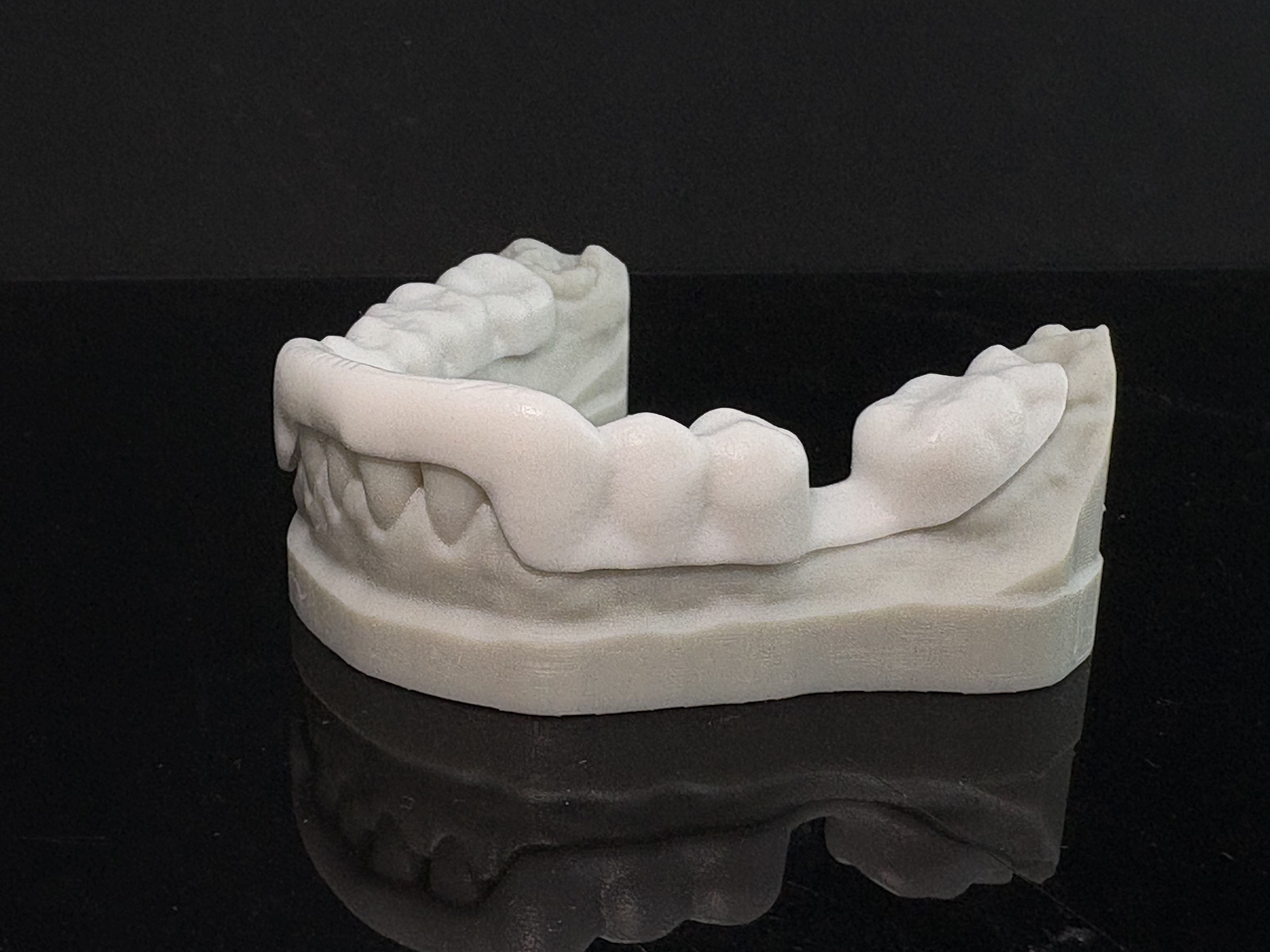
Case Intake Review
The case intake step confirms whether the order includes the required scans, models, bite-related records and prescription details. If information is incomplete or contradictory, the case should be clarified before manufacturing begins.
Model and Design Confirmation
The requested appliance model should be confirmed before production. ON1 and ON3 may have different design features, so the laboratory should not switch models or infer the appliance type without confirmation from the clinic or partner lab.
Manufacturing and Post-Processing
The appliance is manufactured according to the approved design and material instruction. Post-processing focuses on producing a clean finished appliance that matches the submitted case information and requested product design.
Finished Product Check
Before shipment, the lab can check product identity, case information, surface finish, edge condition, model adaptation and relevant design features. These checks support manufacturing consistency but do not replace clinical delivery, fitting or adjustment.
What Should Be Confirmed Before Production?
Before production begins, the clinic or partner laboratory should confirm the appliance model, material, records, approval route and delivery requirement. Clear confirmation helps prevent delays and reduces the risk of producing the wrong appliance type.
· Confirm whether ON1, ON3 or another anti-snoring appliance design is requested.
· Confirm EOS PA 2200 / PA12 nylon as the requested material.
· Confirm upper and lower scans or models.
· Confirm the required bite or mandibular position record.
· Confirm whether a design preview is needed before manufacturing.
· Confirm the person responsible for approval and follow-up communication.
Frequently Asked Questions
Is a nylon anti-snoring appliance the same as a night guard?
A nylon anti-snoring appliance is not the same as a standard night guard. A night guard is generally made to protect teeth and restorations from grinding or clenching forces, while a nylon anti-snoring appliance has a sleep-related design purpose and may require specific mandibular position records.
What is EOS PA 2200?
EOS PA 2200 is a PA12 nylon material used in additive manufacturing. Times Dental Lab uses EOS PA 2200 for this nylon anti-snoring appliance category, while the finished appliance still depends on design, manufacturing and clinical use.
Can the appliance be made from digital scans?
A nylon anti-snoring appliance can be reviewed from digital records when the scans and bite-related information meet the appliance requirements. The clinic should confirm whether the submitted bite scan or construction record is suitable for the requested device.
What bite records are required?
The bite record required for a nylon anti-snoring appliance depends on the prescribed design and appliance model. The laboratory should confirm the record requirement before production if the submitted bite information is unclear.
Are all nylon anti-snoring appliances adjustable?
Not all nylon anti-snoring appliances should be assumed to have the same adjustment mechanism. Adjustment features depend on the appliance model, so ON1, ON3 or any other design should be confirmed before ordering.
Conclusion
Custom nylon anti-snoring appliances require clear product selection, suitable material documentation and complete patient-specific records. EOS PA 2200 provides the PA12 nylon material basis, while ON1 and ON3 samples help buyers understand available product forms.
Before production, the clinic should confirm the appliance model, material instruction, upper and lower records, bite or mandibular position record, approval contact and delivery requirement. Clinical fitting, patient instructions and follow-up should be handled by the responsible dental professional.
To request a nylon anti-snoring appliance case review, send Times Dental Lab your country, product requirement, preferred model and available case records through the Anti-snoring Device page or the Contact page.
References
· EOS PA 2200 - Polyamide 12 - material identity and EOS material-data disclaimer.
· EOS Biocompatible Polymers - material-level biocompatibility context and part-level interpretation caution.
· AADSM Dental Sleep Medicine Standards - clinical evaluation, appliance selection, delivery and follow-up context.
· AASM/AADSM Clinical Practice Guideline - professional prescription and oral appliance therapy context.
· EOS Statement of Compliance according to Regulation (EU) No 1169/2011, issued August 8, 2023.
· Eurofins Germany Statement No. 020-00235 for PA2200 MP, issued January 26, 2021.
· EOS Declaration of Compliance for PA 2200 food-contact plastics, issued December 19, 2024.