Quick Answer
A full-arch implant verification jig is used to help confirm that the laboratory record represents the intraoral implant or multi-unit abutment positions before the final framework is produced. A verification jig may be considered when the accuracy of a conventional impression or digital full-arch scan requires additional verification. The treating clinician should determine whether verification is necessary for the specific case, based on the implant system, number of implants, workflow, records and planned restoration.
What Is an Implant Verification Jig?
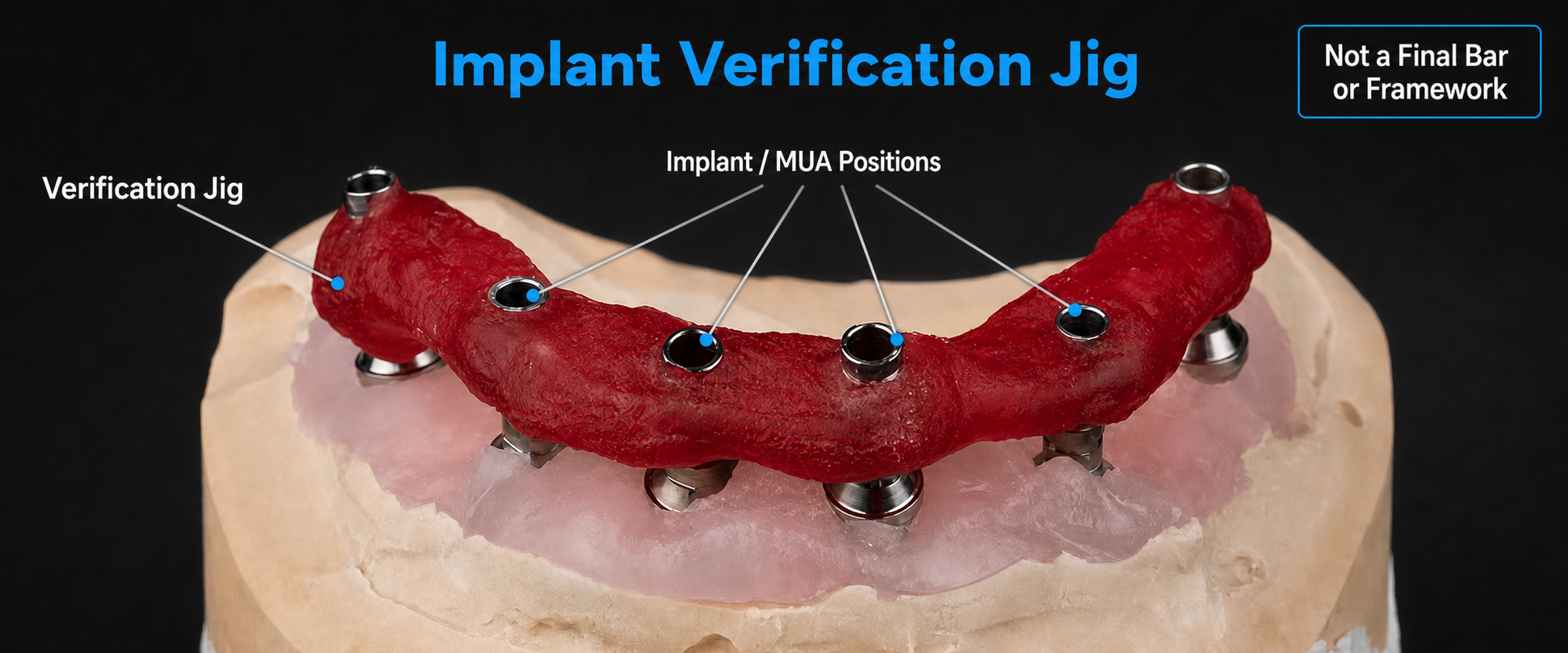
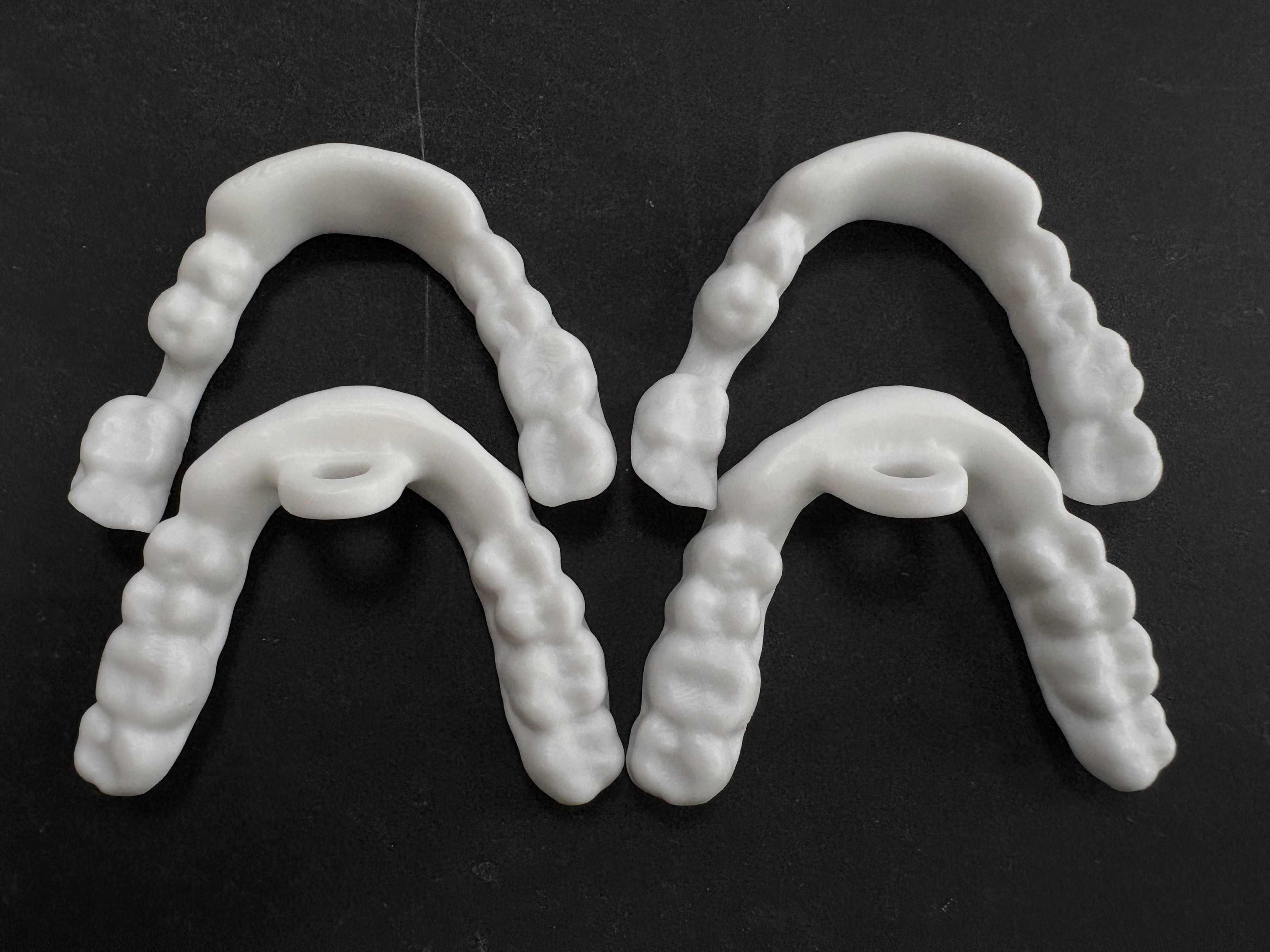
An implant verification jig, sometimes called an implant verification index, is a rigid or semi-rigid device used to verify the relationship between implant positions or multi-unit abutment positions. In a full-arch implant case, the jig is not the final bar, bridge or prosthetic framework. It is a verification checkpoint before the lab commits to final framework production.
A verification jig may connect at implant level or at multi-unit abutment level, depending on the clinical plan and component system. That level must be clearly communicated to the dental lab because implant-level and MUA-level workflows require different libraries, components and seating checks.
A verification jig mainly helps evaluate whether the lab record matches the intended implant or abutment positions. It does not verify everything about the final prosthesis. Occlusion, vertical dimension, tooth position, smile line, lip support, phonetics and esthetics require separate clinical records, prototype try-in or other approval steps.
For complex implant restorations, this distinction matters. A case can verify implant positions but still need a prototype review before final teeth, acrylic, zirconia or framework decisions are finalized.
Why Full-Arch Implant Positions May Need Verification
Full-arch implant records can be more difficult to verify than short-span implant cases because the scan or impression must transfer several positions across a larger arch. Edentulous arches may also provide fewer stable tooth landmarks for digital stitching, which can increase the importance of workflow control.
Digital scan data can be affected by scan body recognition, library matching, scan strategy, soft-tissue movement and the amount of reference geometry available. Conventional records can also be affected by impression material distortion, transfer coping movement, component loosening or cast errors. Multiple small errors may accumulate across the arch.
A full-arch digital workflow accuracy study on PMC reported limitations in digital full-mouth rehabilitation workflows and discussed verification steps before definitive framework fabrication. Another PMC study on CAD-CAM verification devices evaluated how complete-arch scanning techniques can affect the passive fit of verification devices. These studies support a cautious, case-specific approach rather than a blanket rule.
The practical takeaway for a dental lab is simple: when the record is uncertain, the lab should not silently move into final framework production. The lab should clarify the implant system, component level, scan body data, model records and approval stage before the case becomes harder to revise.
When Might a Verification Jig Be Considered?
A verification jig may be considered when the case involves multiple implants across a full arch and the final restoration depends on accurate inter-implant positioning. It is especially relevant when the next production step is an implant bar, full-arch implant bridge or large screw-retained framework.
|
Scenario |
Why Verification May Help |
|
Multi-implant full-arch fixed restoration |
Several implant or MUA positions must coordinate across the arch before final framework production. |
|
Implant bar or large implant bridge |
The framework fit depends on a reliable master record, not only on single-unit seating. |
|
Digital scan data is questionable |
Scan body recognition, soft-tissue capture or full-arch stitching may need confirmation. |
|
Clinical records and working model do not match |
A verification step can help identify which record needs correction before production. |
|
Framework fabrication is high-cost or difficult to revise |
Extra confirmation may reduce the risk of remaking a complex structure. |
|
Previous try-in did not seat for a non-obvious reason |
A verification step can help separate record error from design or production issues. |
This does not mean every full-arch implant case must use a verification jig. It means the verification step should be discussed when record accuracy has a direct impact on passive fit and final framework production.
When May a Verification Jig Not Be Necessary?
A verification jig may not be necessary when the treating team already uses a validated clinical and laboratory workflow, the records are complete, and the clinician confirms that the case can proceed without an extra verification stage. Smaller implant cases may also be handled through other verification methods depending on the clinical plan.
Some teams may use photogrammetry, verified provisional prostheses, clinically validated digital scanning protocols or other documented methods. A narrative review on implant verification jigs notes that different analog, digital and photogrammetry workflows may require different verification decisions. Times Dental Lab therefore treats verification as a case-planning question rather than a universal production requirement.
Verification Jig vs. Prototype Try-In
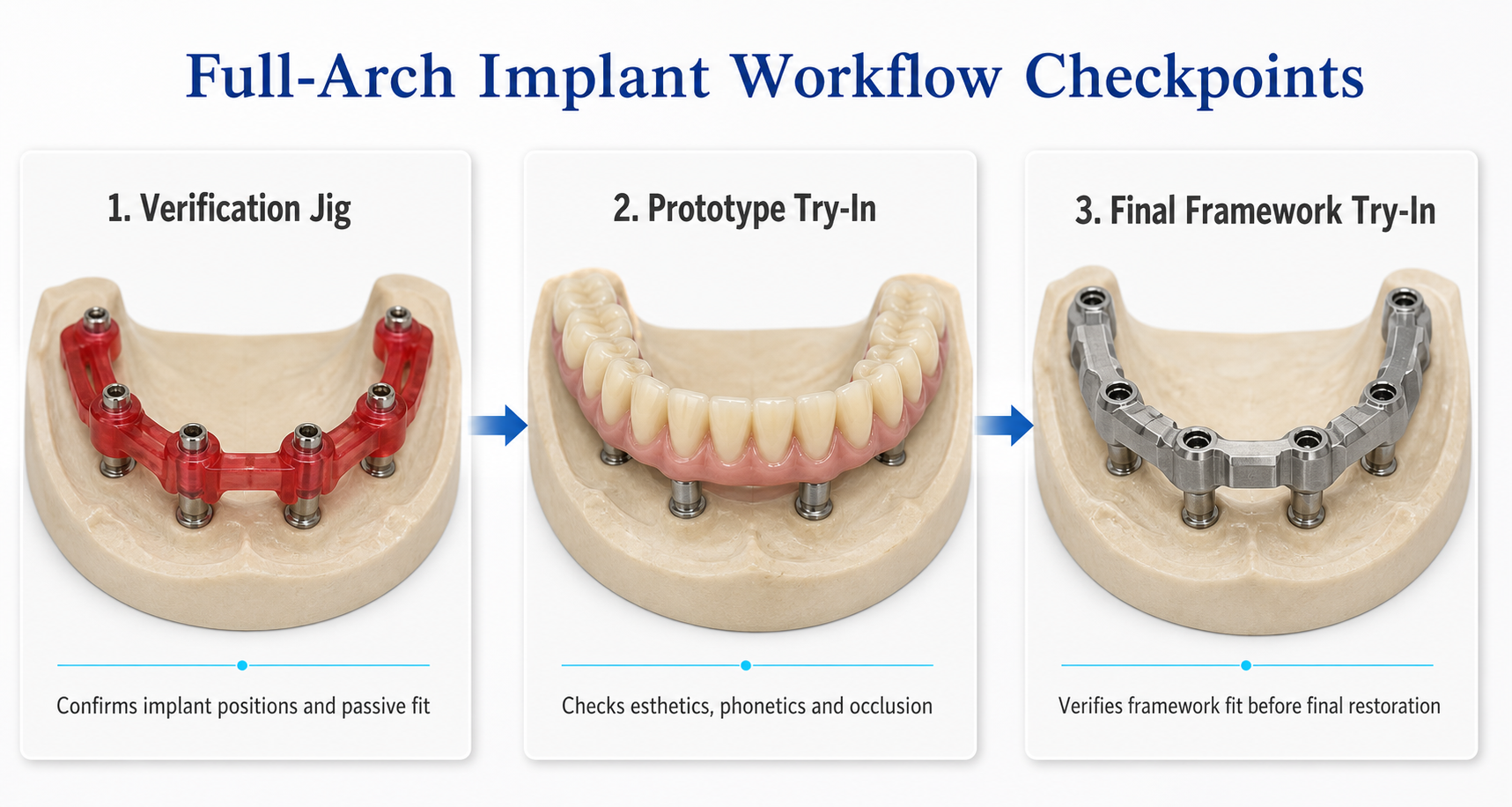
A verification jig, prototype try-in and final framework try-in are different checkpoints. Mixing them together can create confusion between implant-position accuracy, prosthetic design approval and final framework seating.
Verification Jig
A verification jig mainly checks whether the implant or MUA position record used by the lab corresponds to the intraoral situation. It helps the lab decide whether the master record is suitable for the next design or production stage.
Prototype Try-In
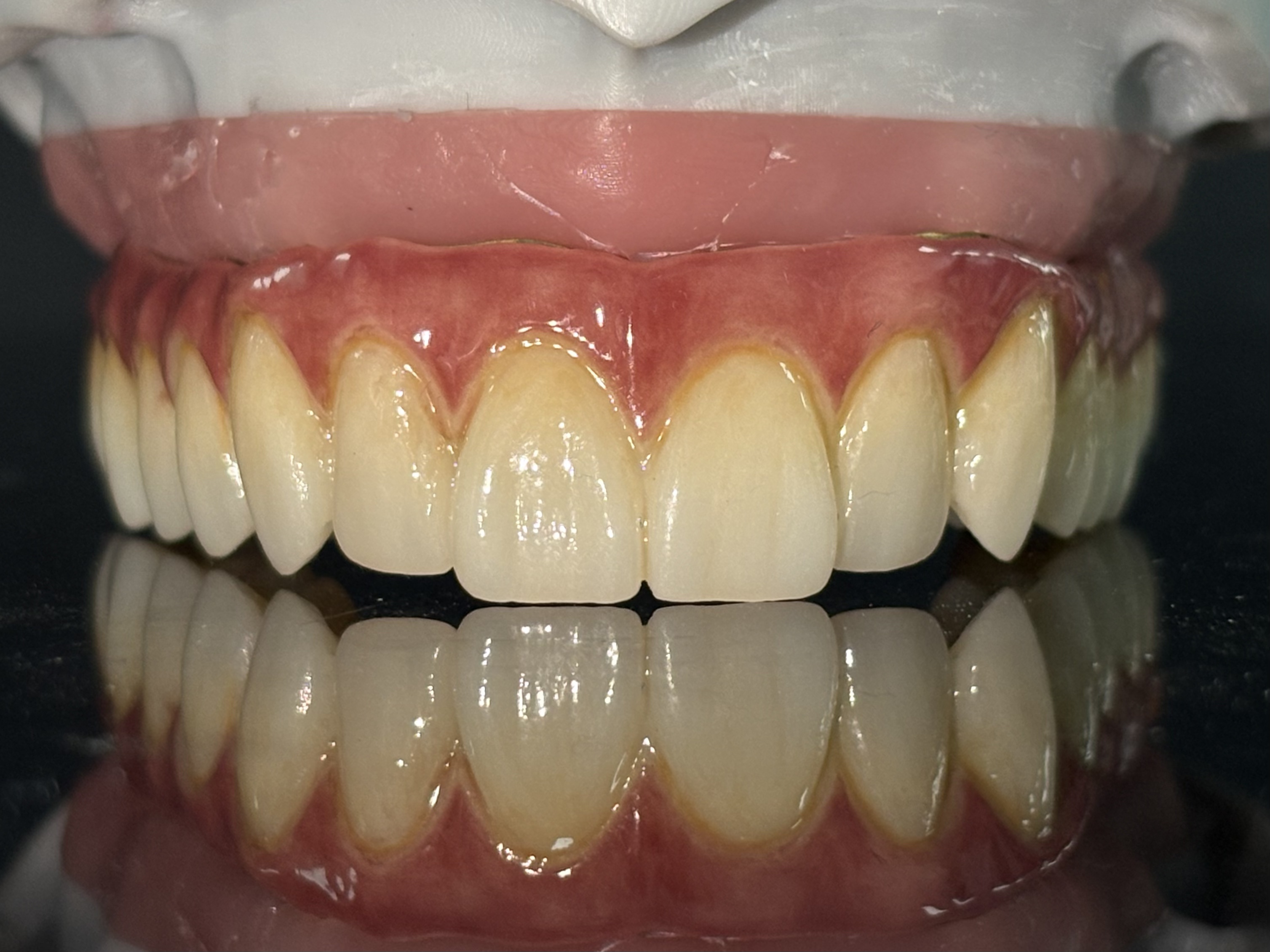
A prototype try-in mainly checks prosthetic information such as tooth position, vertical dimension, occlusion, midline, smile line, lip support and esthetic approval. A prototype may be printed or milled, but its primary purpose is not the same as a verification jig.
Final Framework Try-In
A final framework try-in is a later clinical checkpoint for the definitive structure or substructure. The clinical team uses its own protocol to evaluate seating and whether the case can proceed to finishing, veneering, acrylic processing or final delivery.
|
Checkpoint |
Primary Purpose |
What It Does Not Replace |
|
Verification jig |
Implant or MUA position verification |
Prototype esthetic and occlusal approval |
|
Prototype try-in |
Tooth setup, occlusion and esthetic communication |
Implant position verification in every workflow |
|
Final framework try-in |
Final structure seating review before finishing or delivery |
Early record correction if the master record was wrong |
What Information Should Be Sent to the Dental Lab?
A full-arch implant verification jig case should be submitted with enough information for the dental lab to identify the implant system, connection level, component library and requested verification stage. A general dental lab case submission checklist is useful, but full-arch implant verification requires more detailed component records.
|
Record |
Why the Lab Needs It |
|
Implant manufacturer and system |
Identifies the correct component family and design library. |
|
Implant or multi-unit abutment level |
Clarifies whether the jig should connect at implant level or MUA level. |
|
Platform and connection information |
Helps avoid library mismatch and incorrect component selection. |
|
Scan body or impression component reference |
Allows the lab to confirm compatibility with CAD libraries or physical components. |
|
Working and opposing scans or models |
Provides the arch records needed for design and articulation context. |
|
Bite record |
Helps relate the arches, even though the jig itself does not verify occlusion. |
|
Soft-tissue scan |
Supports emergence, access and tissue relationship planning for later stages. |
|
Existing provisional or denture scan |
Provides tooth position, vertical dimension and esthetic references. |
|
Photographs |
Supports midline, smile line and prosthetic communication outside the jig itself. |
|
Requested verification stage |
Defines whether the lab should produce a jig, prototype, design preview or framework. |
|
Approval contact and instructions |
Ensures the lab knows who can approve changes or confirm unclear records. |
Digital and Conventional Verification Workflows
Digital Workflow
In a digital workflow, the clinic or partner laboratory sends scan files, scan body information, bite data and provisional references. The lab imports the files, checks the scan body match, confirms the CAD library and designs the verification device or next approval item. Times Dental Lab can support digital design services when digital review and approval are part of the case plan.
Digital submission can improve speed and communication, but it does not automatically remove the need for verification. Full-arch implant scans may still require confirmation when scan body matching, soft-tissue capture or cross-arch accuracy is uncertain. Times’ article on digital dental workflow can support the broader topic cluster around scan review, CAD design and lab-clinic communication.
Conventional Workflow
In a conventional workflow, the clinical team may use impression copings, open-tray impressions, working models and physical verification devices. The lab reviews the components, model accuracy and prescription before creating the requested verification or framework stage.
Hybrid Workflow
In a hybrid workflow, digital files may be used for planning and communication while a physical verification step is still used clinically. This is common when teams want digital efficiency but also want a tangible verification point before final framework production.
How the Verification Jig Is Checked Clinically
The clinical check of a verification jig should follow the treating clinician’s protocol and component manufacturer instructions. From the lab communication perspective, the key points are whether the components are correctly connected, whether the jig seats completely, and whether any section shows visible fracture, lift or mismatch.
The lab needs clear feedback after the clinical check. Useful feedback may include intraoral photos, marked problem areas, notes about which implant or MUA position is questionable, and whether a new scan, impression or component record will be sent.
This article does not provide clinical operating instructions. The clinician should decide how to test the jig, whether to section or remake any record, and whether the case can proceed to prototype or final framework production.
What Happens If the Jig Does Not Verify?
If a full-arch implant verification jig does not verify, the dental lab should not automatically proceed to final framework production. The verification result is a signal that the record, component level, scan, model or design setup may need review before the case continues.
· Pause the case before final framework production.
· Confirm implant system, platform, MUA level and scan body or impression component references.
· Review whether the digital scan, impression, model or CAD library may be mismatched.
· Ask the clinician to identify the position or section that does not seat as expected.
· Receive updated records, photos or marked instructions when needed.
· Update the model, scan alignment or design according to the revised records.
· Confirm whether a second verification step is required before production continues.
How Times Dental Lab Reviews Full-Arch Cases
Times Dental Lab reviews full-arch implant cases through a staged workflow because implant bars, full-arch bridges and large frameworks are sensitive to record quality. The review is designed to catch missing information before production reaches a stage where changes become difficult.
|
Times Review Step |
What the Team Checks |
|
Implant system and platform |
Manufacturer, implant family, connection and component compatibility. |
|
Implant level or MUA level |
Whether the design should connect to implants, multi-unit abutments or other approved components. |
|
Scan body and CAD library |
Whether the submitted scan body data matches the CAD library and component reference. |
|
Working, opposing and bite records |
Whether scans or models align well enough for the requested stage. |
|
Verification, prototype and final stages |
Which item the client needs now and which approval comes next. |
|
Digital preview and approval |
Whether the client needs to approve a verification device, prototype or framework design before production. |
|
Unclear information |
Production is paused and the client is contacted when component level, library, scan quality or approval instructions are unclear. |
This workflow supports Times Dental Lab’s position as a full-service China dental lab for complex implant restorations, while keeping responsibility clear: the lab reviews records and production feasibility, and the treating clinician confirms the clinical plan and verification requirement.
Frequently Asked Questions
Is a verification jig required for every full-arch implant case?
A verification jig is not automatically required for every full-arch implant case. The treating clinician should decide based on the number of implants, workflow, scan or impression confidence, component system and whether an additional verification step is needed before final framework production.
What does an implant verification jig verify?
An implant verification jig helps verify whether the laboratory record represents the intraoral implant or multi-unit abutment positions. It mainly checks positional relationships used for framework production. It does not replace bite registration, esthetic evaluation, vertical dimension review or final tooth-position approval.
Is a verification jig the same as a prototype?
A verification jig is not the same as a prototype. A verification jig focuses on implant or MUA position records, while a prototype try-in focuses on tooth setup, occlusion, vertical dimension, midline, lip support and esthetic communication.
Can a verification jig be produced from digital scans?
A verification jig may be produced from digital scans when the scan files, scan body data, CAD library and bite records are suitable for the lab workflow. The lab may still request clarification or additional records if scan body recognition, soft-tissue capture or full-arch accuracy is uncertain.
What should be done if the jig does not seat completely?
If the jig does not seat completely, the clinician should document the issue and inform the lab before final framework production. The lab may need marked photos, updated scans, a new impression, component confirmation or a revised model before the case proceeds.
Does Times Dental Lab support implant bars and full-arch restorations?
Times Dental Lab supports implant restorations, including complex cases such as implant bars and full-arch restorations, when clients provide the required implant system information, component level, scans, bite records and approval instructions. The Times team reviews unclear information before design or production continues.
Conclusion
A full-arch implant verification jig is one checkpoint in a larger implant workflow. It mainly focuses on whether the implant or multi-unit abutment position record is suitable for the next laboratory stage. It does not replace occlusal, esthetic or final prosthetic approval.
Whether a verification jig is needed should be decided by the treating clinician based on the specific case and workflow. For the dental lab, the priority is to receive complete implant system information, scan or impression records, bite data, provisional references and clear approval instructions before final framework production.