Introduction
Dental lab consistency problems are one of the biggest reasons clinics and dental laboratories lose confidence in an outsourcing partner. One crown may fit well, while the next similar case needs more adjustment. One shade may look stable, while another case from the same prescription feels slightly different. The issue is not always technical skill alone; it is often the consistency of the workflow behind the case.
For dentists, lab owners, and overseas buyers, consistency means mo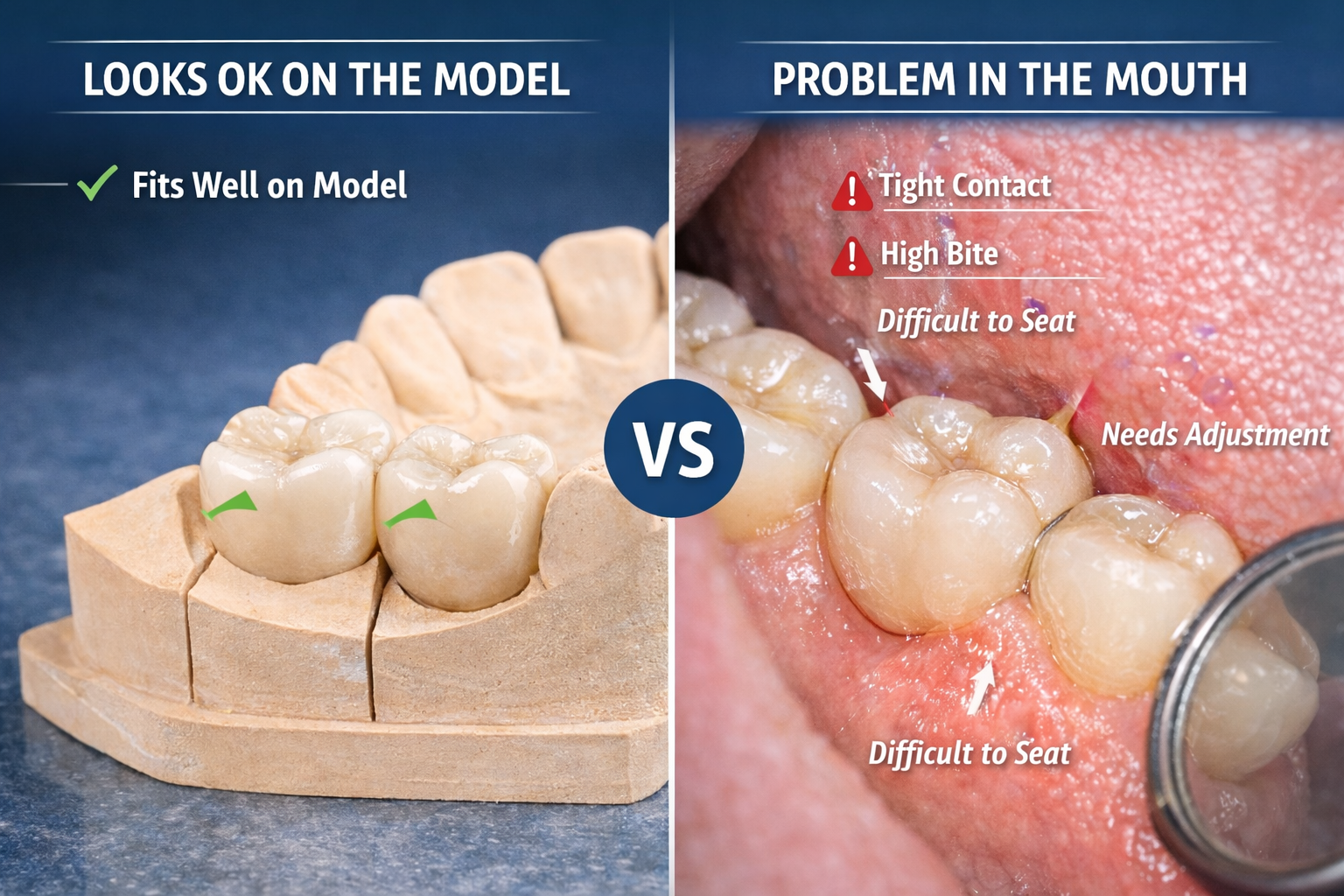 re than producing a good single restoration. It means producing predictable results across repeated cases, different technicians, different product categories, and different batches of work. This article explains the main causes of dental lab consistency problems and practical solutions that reduce variation.
Quick Answer
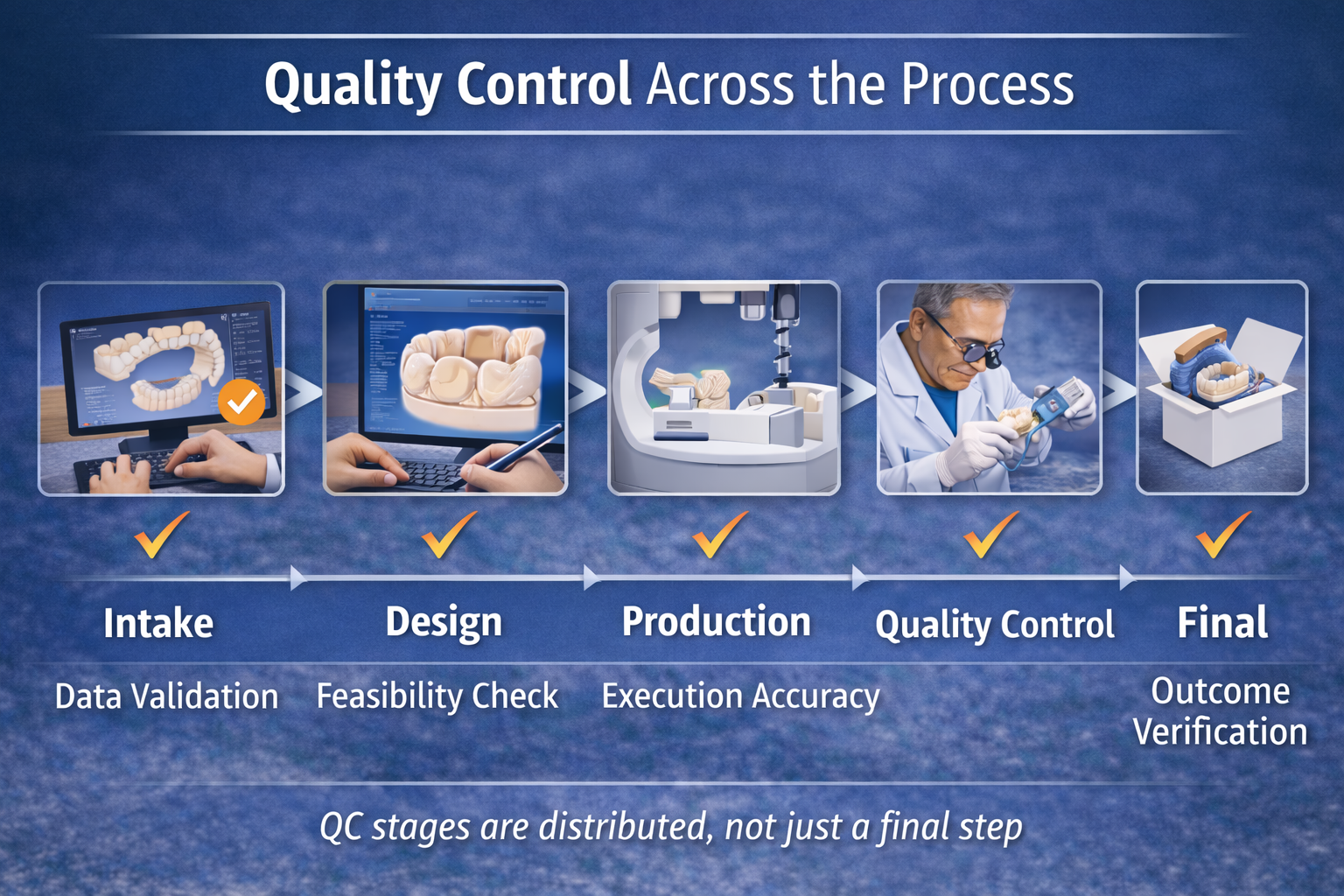
Dental lab consistency problems usually come from inconsistent case intake, unclear digital design review, technician interpretation differences, weak technician verification, material or batch variation, incomplete communication, and final QC that happens too late. The solution is a structured workflow: standardized case review, digital design checks, technician verification, production process checks, batch stability controls, and final QC before shipment.
At Times Dental Lab, consistency is treated as a workflow-control issue. The lab supports overseas clinics and laboratories through case information checks, Digital Workflow, product-specific production checks, and Quality Control before shipment.
What Are Dental Lab Consistency Problems?
Dental lab consistency problems occur when similar cases do not produce similar outcomes. The issue may appear as crown fit variation, contact differences, inconsistent occlusion, shade instability, uneven surface finishing, remake variation, or different results between batches of cases.
Consistency does not mean every case is identical. Different preparations, materials, scans, and clinical expectations create natural variation. A consistent lab controls the variables it can control and communicates the variables that need clinic confirmation.
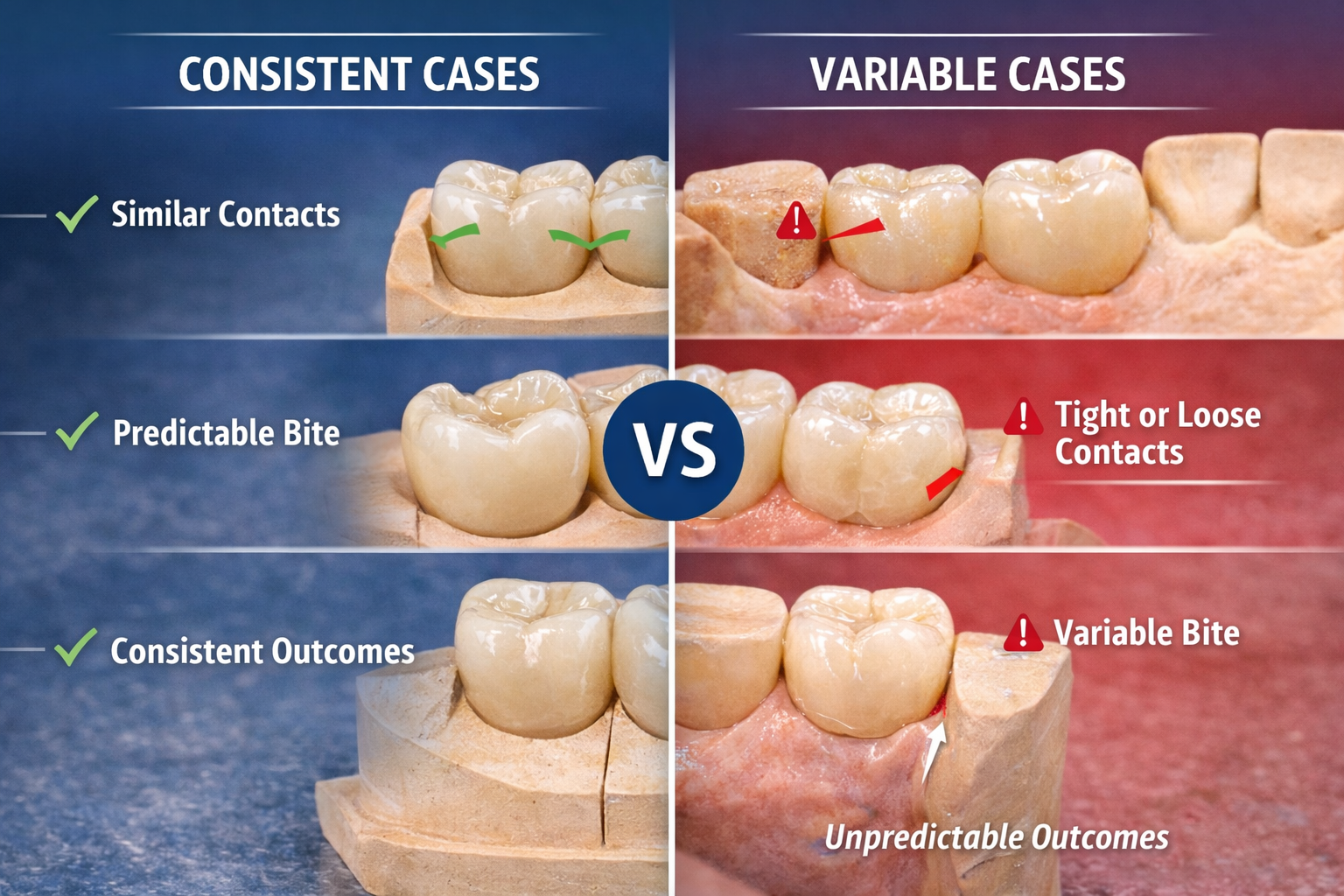
Why Dentists Choose Consistent Dental Lab Partners
· Less chairside adjustment across repeated cases.
· More predictable crown margins, contacts, occlusion, and shade communication.
· Lower remake pressure for clinics and partner labs.
· Easier scaling when case volume increases.
· Clearer communication when multiple technicians or case types are involved.
· Better confidence in long-term dental lab outsourcing.
Key Factors to Consider
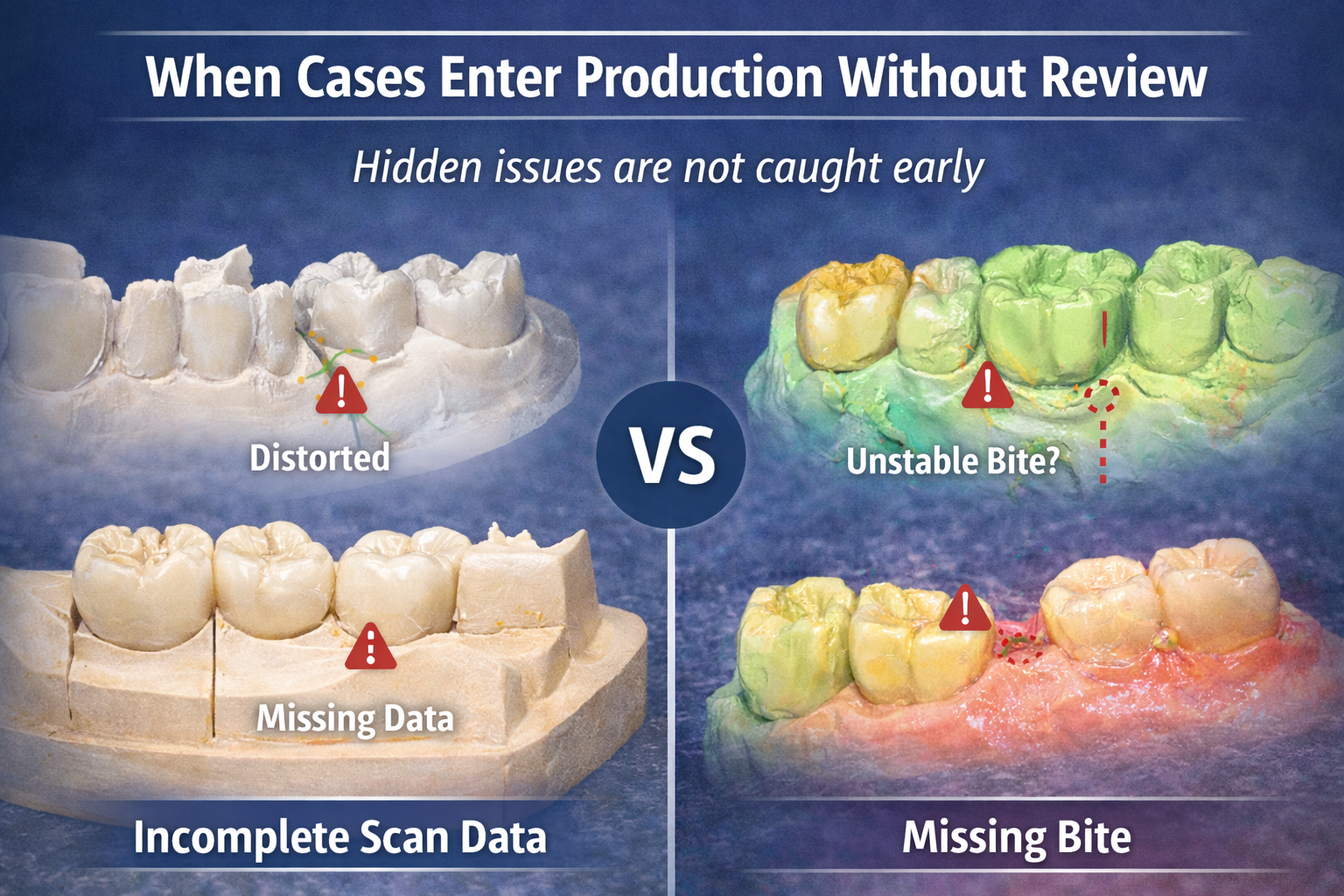
Inconsistent Case Intake
Consistency problems often begin before production. If one case includes complete scans, bite records, shade photos, and design notes while another case arrives with missing information, the lab may be forced to make assumptions. Standardized case intake reduces guesswork and creates a cleaner starting point for production.
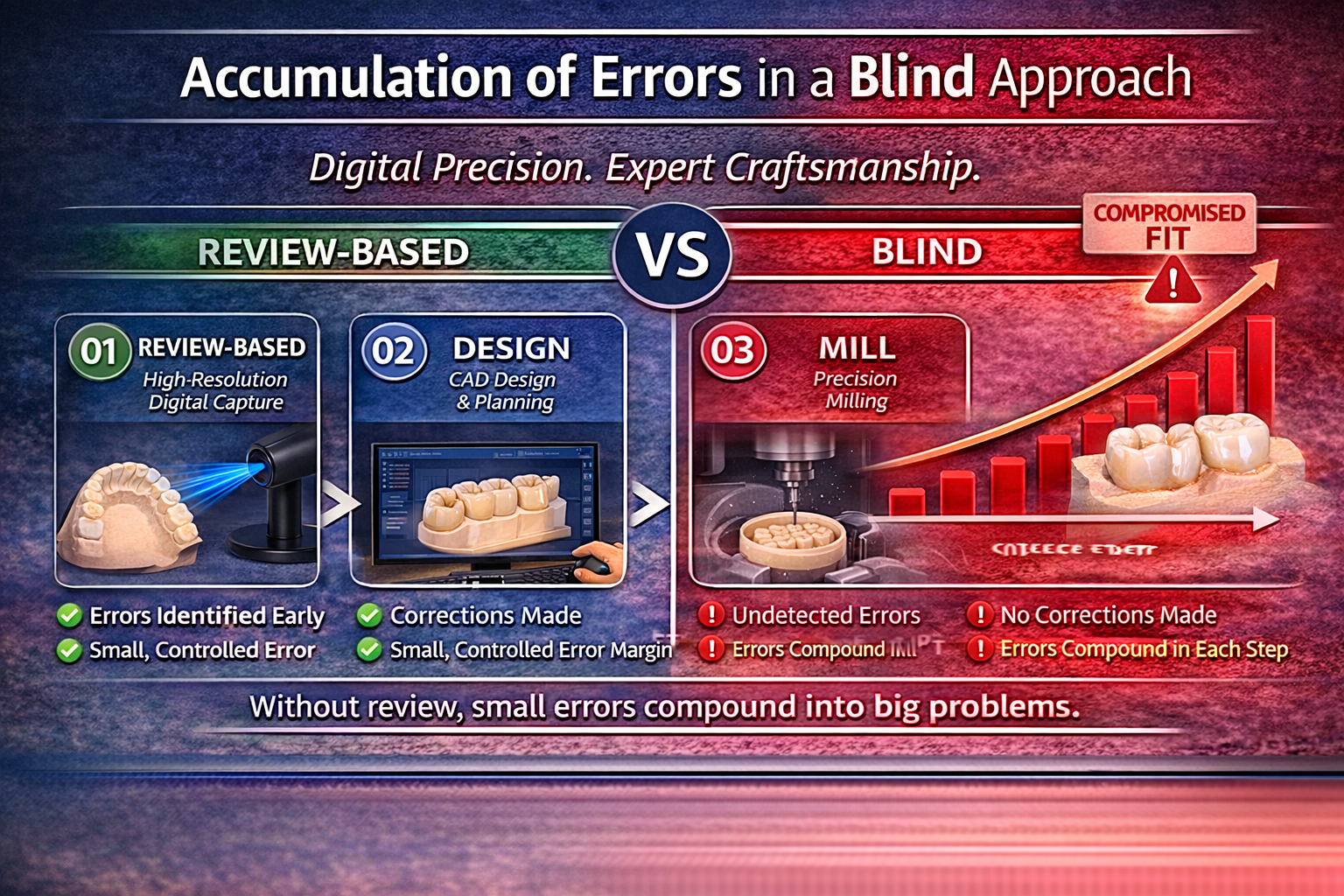
Digital Design Review
Digital design review helps reduce variation before manufacturing. For crowns and bridges, technicians should review margin lines, contacts, occlusion, cement space, thickness, anatomy, and case instructions. A stable review process supports better crown accuracy across repeated work.
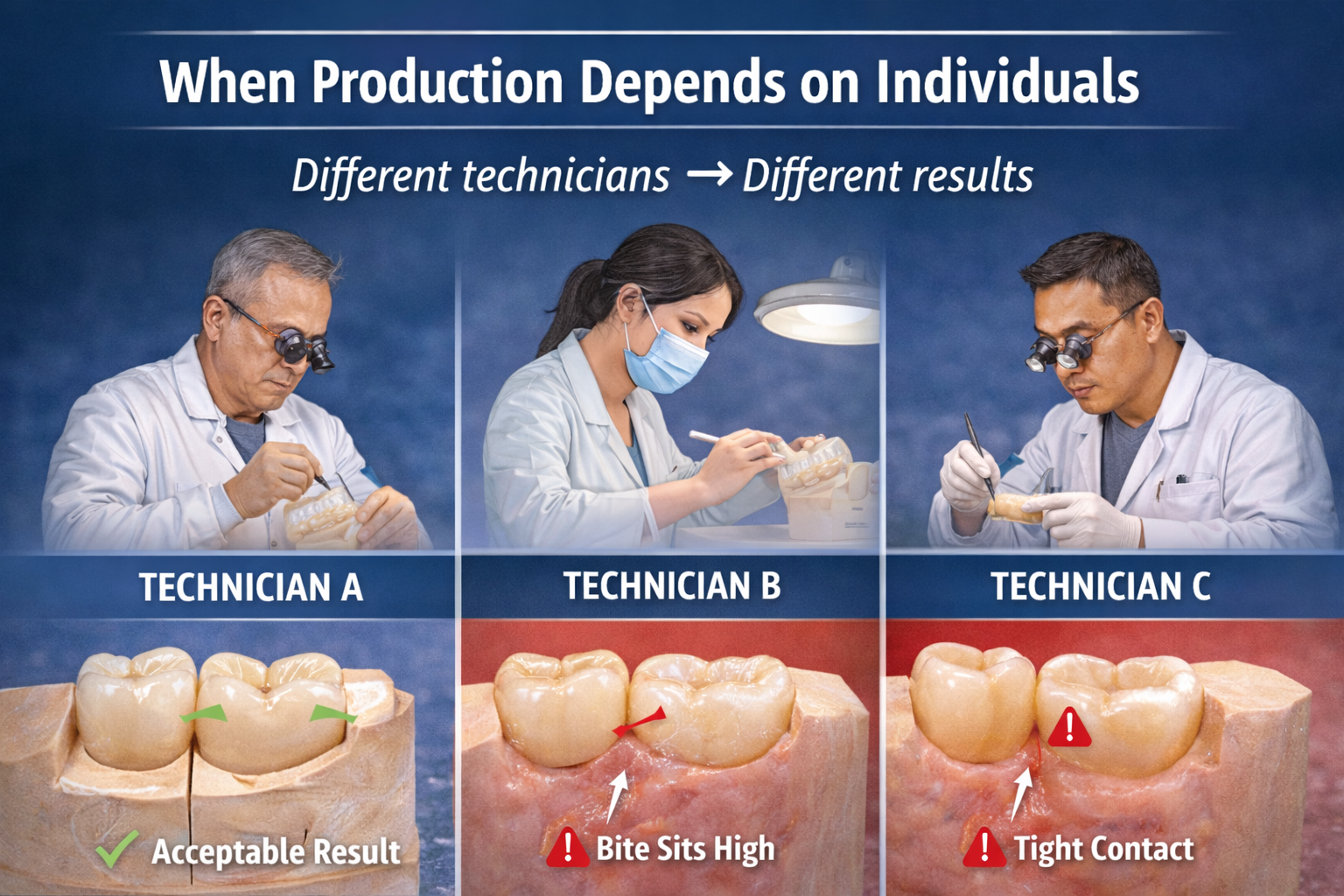
Technician Verification
Different technicians may interpret cases differently if there are no shared standards. Technician verification helps align work across teams. This may include senior technician review, case notes, design checkpoints, product-specific standards, and escalation when a case does not match normal workflow.
Final QC and Pre-Shipment Review
Final QC should not be the only control point, but it is still essential. Before shipment, the lab should check fit, contacts, occlusion, shade, surface finishing, case details, packing, and any client-specific instructions. This final checkpoint helps prevent avoidable variation from reaching the clinic.
Batch Stability
Batch stability matters when a clinic or partner lab sends repeated cases over time. Consistency can be affected by material batches, technician assignment, equipment settings, finishing habits, shade interpretation, and production volume. A stable lab needs repeatable rules, not only experienced people.
Table Comparison
|
Source of Inconsistency |
What It Looks Like |
Solution |
|
Case intake variation |
Some cases have complete files; others require assumptions. |
Use standardized intake requirements and missing-information checks. |
|
Design review variation |
Margins, contacts, and occlusion differ between similar cases. |
Apply digital design review and product-specific CAD rules. |
|
Technician interpretation |
Results change depending on who handles the case. |
Use technician verification, shared standards, and escalation rules. |
|
Material or batch variation |
Shade, finish, or processing behavior differs between batches. |
Track materials, production notes, and repeat-case preferences. |
|
Weak final QC |
Issues are found only after delivery. |
Check fit, contacts, occlusion, shade, finish, packing, and case details before shipment. |
|
Poor feedback loop |
The same issue repeats across future cases. |
Archive feedback and update client preferences for repeat cases. |
Dental Laboratory Workflow
A consistency-focused workflow starts with case information review and continues through design, production, verification, and final QC. At Times Dental Lab, workflow language should remain practical and objective: case information check, digital design review, production process check, technician verification, final inspection, and packing review.
|
Workflow Stage |
Consistency Control |
|
Case review |
Check scans, impressions, bite records, shade photos, implant system details, material instructions, and design notes. |
|
Digital design review |
Review margins, contacts, occlusion, fit, cement space, thickness, and anatomy before manufacturing. |
|
Technician verification |
Use product-specific standards and senior review for complex or repeat-risk cases. |
|
Production process check |
Monitor material requirements, fit, contacts, occlusion, thickness, finishing, and case-specific details. |
|
Final QC |
Inspect restoration fit, contacts, occlusion, shade, surface finish, case ID, packing, and client notes before shipment. |
|
Feedback loop |
Record repeated preferences, adjustments, remake reasons, and clinic-specific standards for future cases. |
Case Box: When Consistency Breaks Down
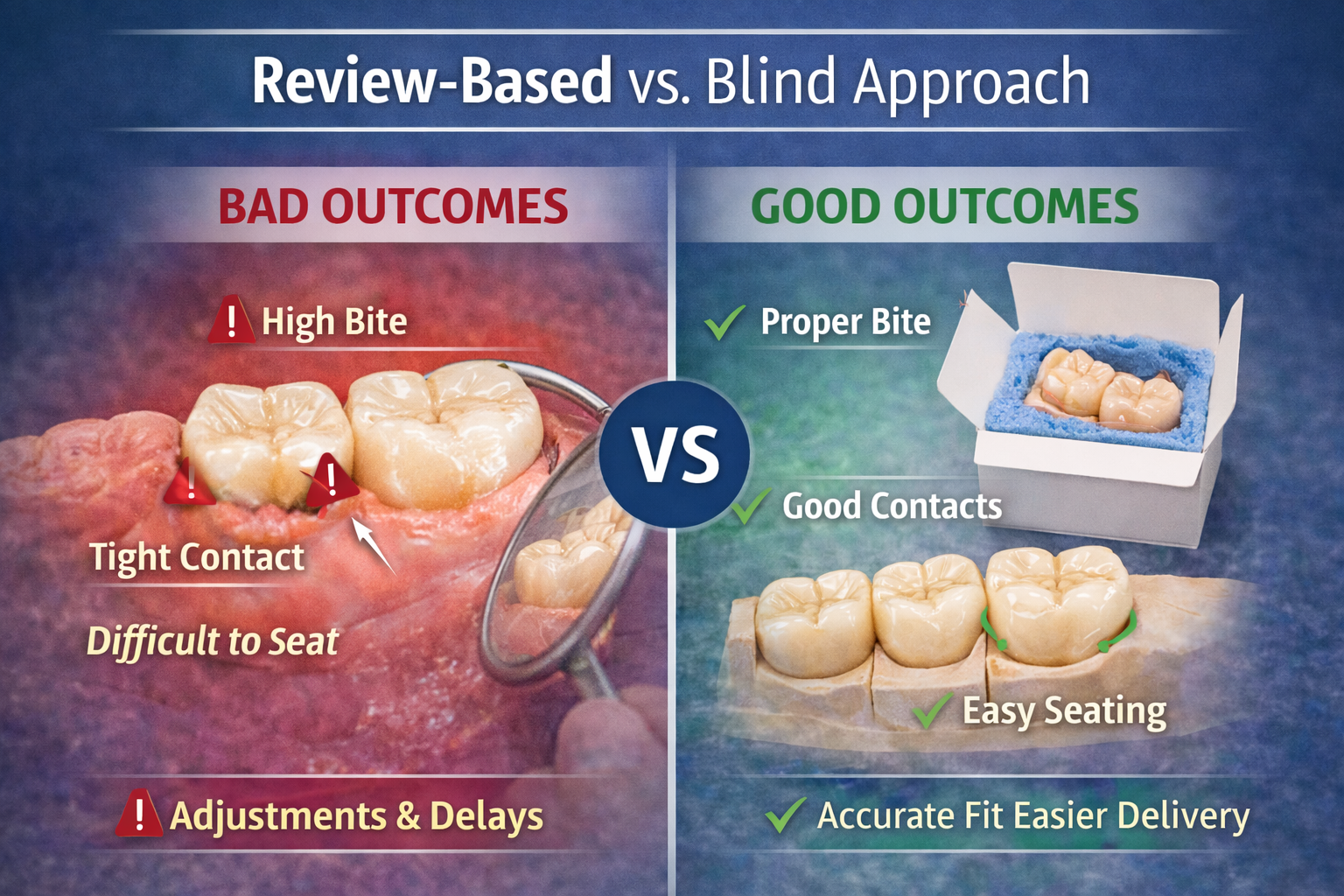
Case example: A clinic sends a series of posterior crowns over several weeks. The first few cases fit well, but later cases need more contact and occlusion adjustment. On review, the issue is not one dramatic mistake. The intake format changed, bite records were inconsistent, and the lab did not have a clear note that the clinic preferred lighter proximal contacts.
Solution: The lab creates a client preference note, confirms bite record requirements, asks for clearer case photos when needed, and adds a technician verification step for the next several cases. The goal is not to blame the clinic or technician. The goal is to make the repeat workflow more stable.
Common Mistakes Dentists Should Avoid
· Changing file submission habits from case to case.
· Sending incomplete bite records or unclear shade photos.
· Assuming the lab remembers preferences that were never documented.
· Judging consistency from one successful case instead of repeated outcomes.
· Not giving structured feedback after adjustments or remakes.
· Choosing a lab only by price without checking workflow controls.
FAQ
What causes dental lab consistency problems?
Common causes include inconsistent case intake, unclear digital design review, technician interpretation differences, material or batch variation, weak final QC, and poor feedback documentation.
How can digital design review improve consistency?
Digital design review creates a checkpoint before manufacturing. It helps technicians confirm margins, contacts, occlusion, thickness, cement space, anatomy, and case instructions more consistently.
Why is technician verification important?
Technician verification reduces variation between team members. Senior review, shared standards, and escalation rules help similar cases receive similar handling.
Can final QC solve all consistency problems?
No. Final QC is important, but consistency should be controlled earlier through intake, design review, production checks, and technician verification. Final QC should confirm, not rescue, the workflow.
How does Times Dental Lab support consistency?
Times Dental Lab supports consistency through structured case review, digital workflow support, product-specific production checks, technician verification, quality control before shipment, and feedback handling for repeat cases.
Conclusion + Times Introduction
Dental lab consistency problems are usually workflow problems before they become visible restoration problems. The most effective solutions are standardized case intake, digital design review, technician verification, batch stability control, final QC, and a feedback loop that improves repeat cases.
Times Dental Lab is a full-service dental laboratory based in Shenzhen, China. As a China dental lab, Times supports overseas clinics and dental laboratories with crowns, bridges, implant restorations, removable prosthetics, orthodontic appliances, digital design support, structured production workflow, and quality control. To discuss consistency issues or start a case review, contact Times Dental Lab.