A custom implant abutment is not simply a component between an implant and a crown. Its connection, shape, margin and emergence profile have to work with the prescribed restoration and the information captured from the patient. For overseas clinics and partner laboratories, those details are also the difference between a case that is ready for design and one that needs clarification.
Times Dental Lab supports custom abutments as part of its implant restoration range for overseas dental clinics and laboratories. We use the clinician's prescription, implant component information and case records to review the requested design. This guide explains the product decisions we need to clarify before production; it does not replace clinical treatment planning or the implant manufacturer's instructions.

Quick Answer: What Does Times Dental Lab Need for a Custom Abutment?
For a custom implant abutment, Times Dental Lab needs the implant manufacturer, system, connection and platform; an identified scan body or impression component; working and opposing records; a reliable bite; and the planned crown or bridge design. The prescription should also state the abutment material or approved options, restoration type, preferred margin location, emergence-profile references and any design-approval requirement. We review missing or inconsistent information with the client before the case moves into production.
An abutment cannot be selected by the words “implant crown” alone. At the laboratory stage, the exact implant connection and compatible restorative components must be identified for the individual system. The final crown design matters as well: it determines the space and form that the abutment must support.
What Is a Custom Implant Abutment?
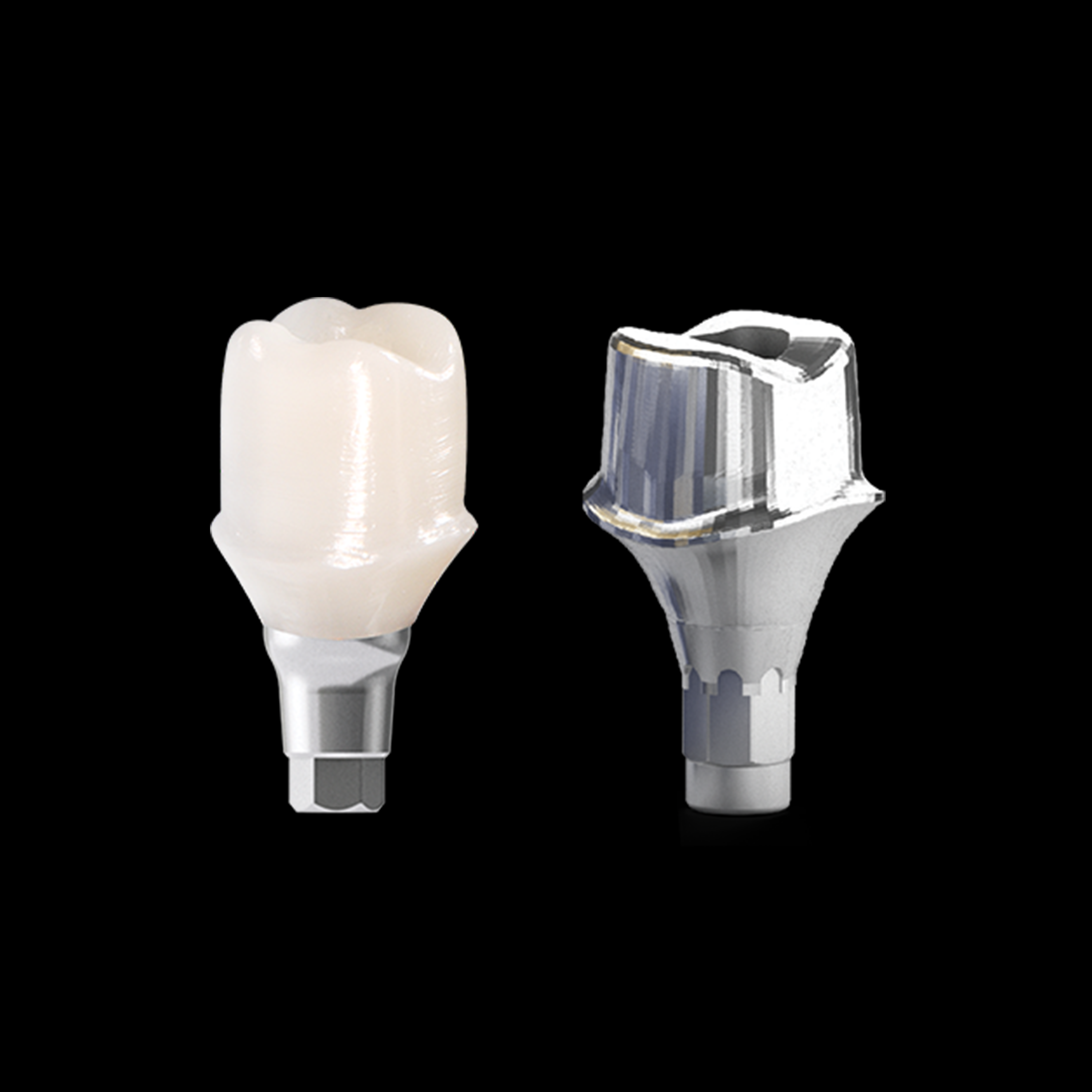
A custom abutment is a patient-specific restorative component designed to connect the implant to a crown or other prescribed prosthesis. A prefabricated stock abutment has a fixed shape and limited modification options. A custom abutment is designed around the implant position, available restorative space, surrounding tissue record and proposed final restoration.
“Custom” does not mean that an abutment is automatically clinically superior. The ITI consensus on CAD/CAM implant abutments found similar short-term survival for individually customized CAD/CAM abutments and conventional or stock abutments in the evidence it reviewed. A stock option may be suitable when its connection, dimensions and restorative form meet the clinician's plan. A custom design becomes relevant when the available stock shape does not adequately address the prescribed margin, crown support, emergence contour or implant angulation. The treating clinician decides which restorative approach is appropriate; our laboratory works from that decision and the confirmed component data.
The abutment and crown should be treated as related but separate design elements. The abutment supplies the implant connection and support for the restoration. The crown supplies the visible tooth form, contacts and occlusal anatomy. Designing an abutment without knowing the planned crown shape can create avoidable conflict over space, margin location or insertion path.
Which Design Decisions Matter Before Production?
Implant Connection and Component Compatibility
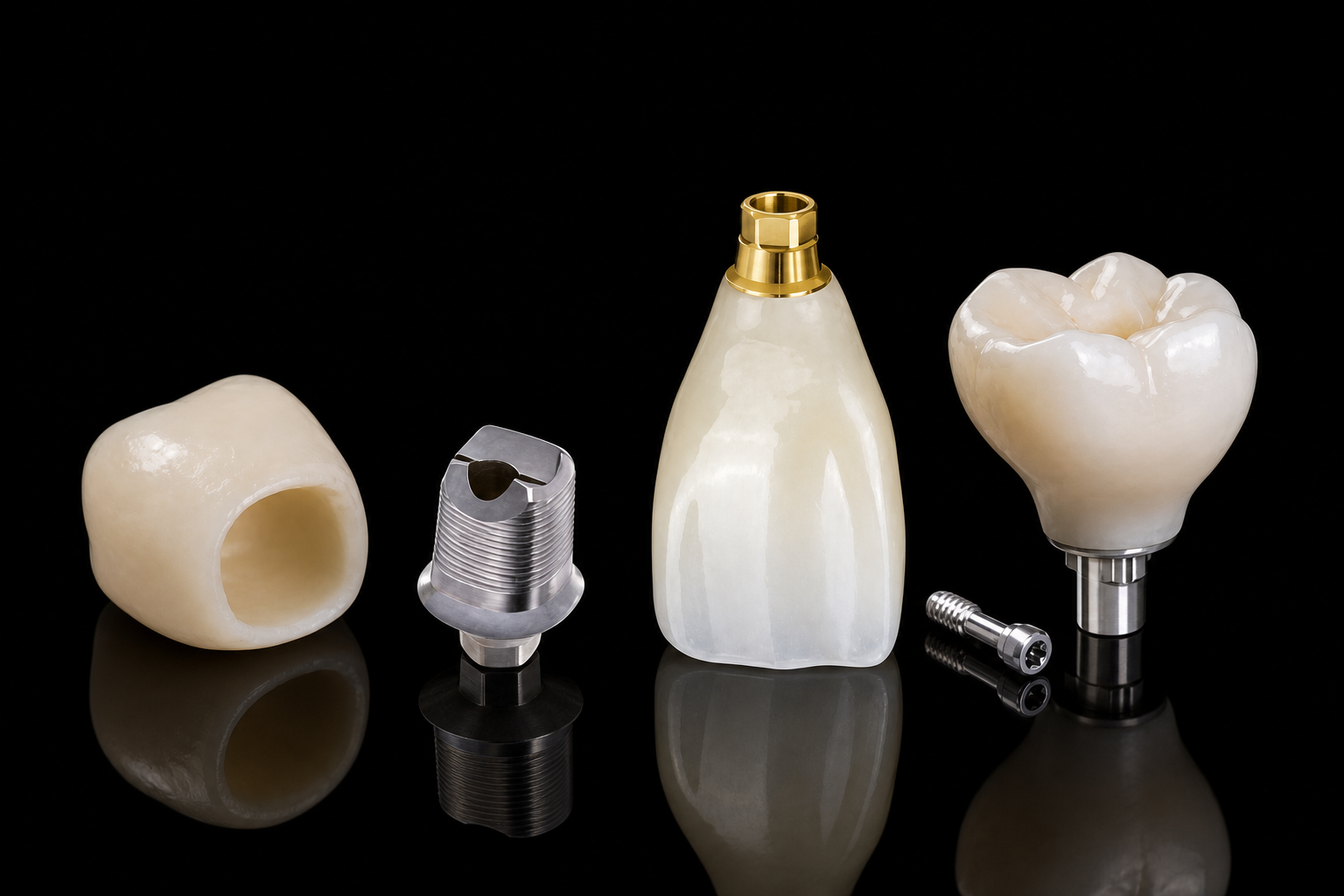
The implant brand name is only the starting point. We also need the specific implant family, platform size and connection type, plus the scan body or impression component reference. A similar-looking scan body is not evidence that its CAD library or connection is compatible. If a library, component reference or scan level cannot be verified, we ask the client to confirm it rather than substitute a presumed match.
The order must also clarify whether a named original component, an approved compatible component or another manufacturer-specified combination is required. Component choice, screw choice and any manufacturer-specific handling requirements should be agreed before design release. This is particularly important when a partner laboratory supplies its own components or expects the finished abutment to fit a locally produced crown.
Material and Restorative Form
Titanium and zirconia are established transmucosal abutment materials, but neither is the right choice for every case. The International Team for Implantology consensus on abutment materials reports broadly comparable clinical outcomes for titanium and zirconia on several evaluated measures, while noting that esthetic-region considerations may affect selection. Material choice still depends on the implant system, available dimensions, restorative design and clinician's assessment.
For a Times order, the client should state the requested abutment material and whether the restoration is a separate cement-retained crown, a screw-retained assembly or another approved design. A titanium-base-supported ceramic restoration is not interchangeable with a one-piece custom abutment. Bonding surfaces, component geometry and the manufacturer's instructions may differ. We confirm the product and components first, then review whether the available records support that design.
Margin, Emergence Profile and Crown Space
A custom abutment can be shaped to support the planned crown and emergence profile, but the design needs a reliable tissue reference. A soft-tissue scan, model, provisional restoration scan or clinical photographs can help communicate the desired contour. These records are especially useful when the clinician has already developed a provisional emergence profile that should inform the final restoration.
The margin position should be stated or approved by the clinician. For a cement-retained crown, margin accessibility matters because intraoral cementation and excess-cement removal are clinical tasks. For a screw-retained design, screw-access direction and restorative thickness need review. Our separate screw-retained versus cement-retained implant crown guide explains those retention choices in more detail; this article focuses on the abutment product itself.
Available space also governs what can be designed. A scan may show the implant position clearly but still leave insufficient information about the opposing arch, bite or planned crown. Before approving an abutment, the clinic should check whether the proposed form provides the required crown space and follows the chosen restorative system's instructions.
What Should a Clinic or Partner Lab Send to Times?
For a digital custom abutment case, send the written prescription and a complete working-arch scan, opposing-arch scan and bite record. Identify the implant manufacturer, system, connection, platform and scan body reference. State the tooth number, requested abutment material, planned restoration and retention method. Add shade photographs, a soft-tissue or provisional scan, and a design reference when they are relevant to the case.
For a physical workflow, impressions or models and any necessary implant components should be clearly labeled and discussed with Times before shipment. The component itself should not be assumed compatible because it appears to fit the model. Our implant case submission checklist gives a fuller intake list covering single-unit, multi-unit and full-arch cases.
The most useful instruction often concerns the decision point rather than another file. Tell us who may approve the abutment design, whether the crown will be made by Times or by your local lab, and which features must be reviewed before manufacturing. If the crown will be produced locally, confirm the agreed output, component and fit responsibilities before starting. Times' digital design services can support a design-only discussion, but deliverables and software compatibility should be confirmed for the specific order.
Where Does Design Approval Make the Biggest Difference?
Approval is most valuable where a decision is difficult to reverse after production. For a custom abutment, that can include the selected component, emergence contour, margin position, insertion path and relationship to the proposed crown. In an anterior case, the provisional contour and esthetic reference may also need explicit review. In a case with limited space or difficult angulation, the client may need to approve a proposed compromise before machining.
We can discuss a digital design preview when the case requires client approval. The person who approves it should understand what the preview does and does not verify. A CAD view can show component selection and intended shape, but it cannot replace intraoral seating, tissue assessment, occlusal adjustment or the clinician's final inspection. Approval should be documented against the design version that is ultimately produced.
How Times Dental Lab Reviews a Custom Abutment Case
We start by matching the prescription to the submitted records: implant identification, scan body or impression component, working and opposing arches, bite and proposed restoration. We then check whether the requested abutment and crown plan can be designed from those records without guessing at the connection or margin. If a key item is missing, we contact the client for clarification before production proceeds.
During design review, we assess the approved component relationship, available crown space, proposed emergence contour, margin and restorative path against the case information. If the client requires a preview, we confirm the relevant design details before fabrication. Laboratory checks after production focus on the prescribed component, fit on the available validated model or digital workflow, surface finish, identification and the agreed case instructions. These checks support controlled manufacture; they do not replace the treating clinician's intraoral verification and follow-up.
For an overseas partner lab, the workflow should also define what Times will deliver. The order may be for an abutment alone, a related crown and abutment assembly, or design support, but those are different deliverables. We recommend confirming the product, component supply, approval stage and final recipient before the first representative case.
FAQs
Can Times Dental Lab make a custom abutment without the implant system details?
We can review the enquiry, but we do not release the design for production until the implant system, platform and connection can be identified and the restorative components verified. A brand name without the exact implant family may not be enough.
Is a custom abutment always better than a stock abutment?
No. A custom design provides case-specific shaping, but a suitable stock abutment may meet the clinical and restorative requirements. The clinician should make or approve the choice for the patient, considering the implant position, tissues, space, material and planned crown.
Can my local lab make the crown while Times makes the abutment?
This may be possible as an agreed split workflow. Before ordering, confirm the selected component, the file or physical deliverable, design approval, crown-interface requirements and who is responsible for the final crown fit. Do not assume the two laboratories use identical libraries or production settings.
Can Times help with a titanium or zirconia abutment?
Times lists custom abutments among its implant restoration services. The requested material and component combination should be stated in the prescription and confirmed for the individual implant system and destination market before production. We will not substitute one material for another without client approval.
Does a digital preview prove that the abutment will fit in the mouth?
No. A preview helps the clinic or partner lab approve the intended design, but it is based on the submitted data. The treating clinician must verify seating, contacts, occlusion, tissue response and the final restoration clinically.
Discuss a Custom Abutment Case with Times Dental Lab
If your clinic or dental laboratory is considering custom implant abutment outsourcing, send Times the implant system and platform details, scan body reference, working and opposing records, bite, planned crown design and any approval requirements. Tell us whether you need the abutment, an abutment-and-crown workflow or design support. We can review a representative case and clarify the production route before you commit to repeat volume.
Contact Times Dental Lab to discuss your case or request a quote.