
Quick Answer
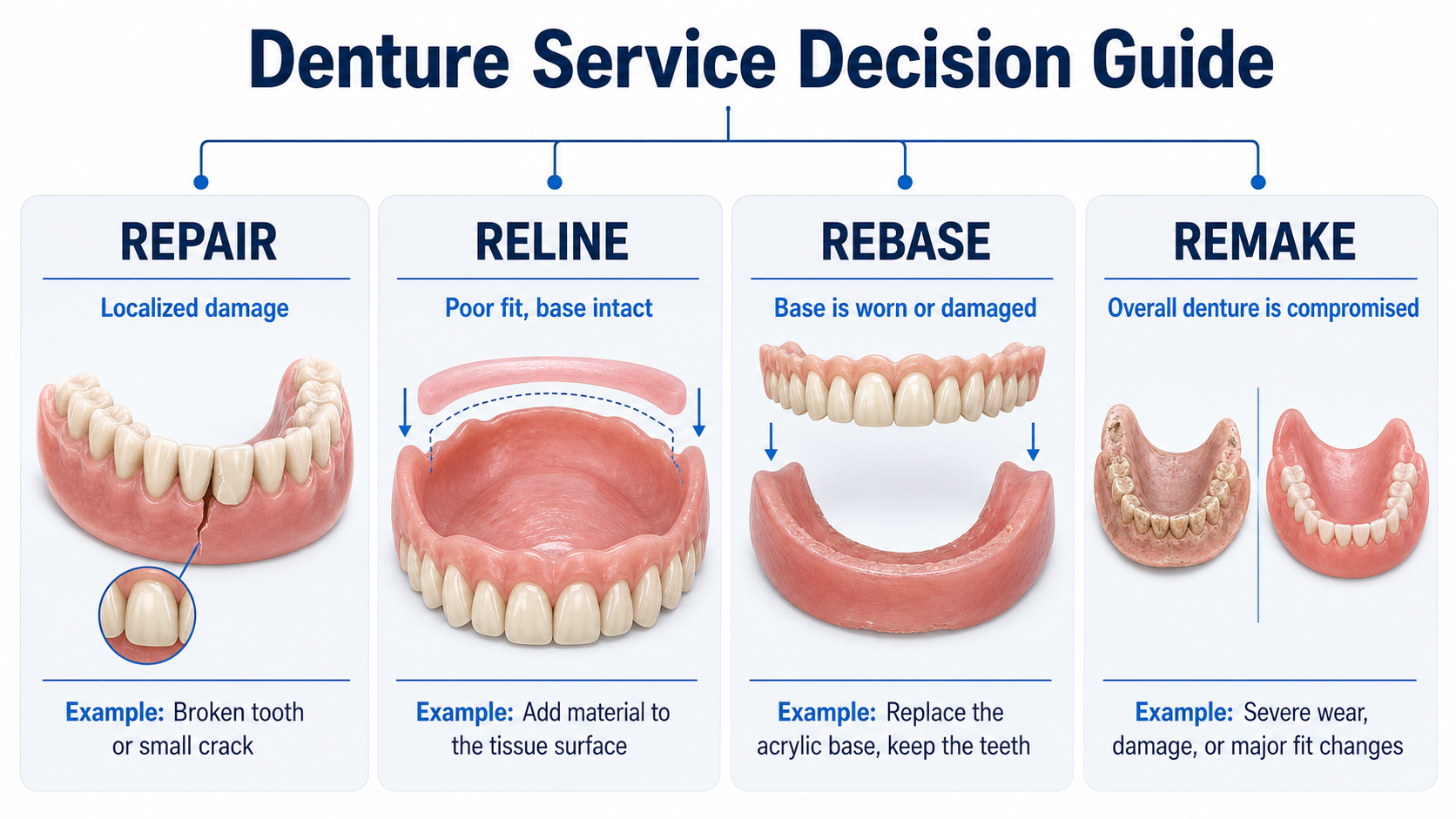
Denture repair, reline, rebase and remake are different laboratory requests. Repair fixes localized damage, such as a fractured base, broken tooth or damaged clasp. Reline renews the tissue-facing surface of an existing denture. Rebase replaces most of the denture base while retaining suitable existing teeth and their arrangement. Remake means producing the case again when the existing restoration cannot be predictably corrected or when an eligible production issue is confirmed.
A repair, reline, rebase or remake is not automatically covered by the Times Dental Lab guarantee. Coverage depends on the cause of the issue, the product category, the submitted records and the applicable guarantee period. Final classification and guarantee support can be confirmed only after Times Dental Lab reviews the original restoration and supporting records.
Why the Correct Request Matters to the Dental Lab
A prescription that only says “fix denture” or “remake” is usually not enough for a dental lab to choose the correct workflow. The lab needs to understand whether the problem is localized damage, tissue fit, base replacement, production-related fit or a clinical change after delivery.
The difference matters because each request needs different records. A repair may need the existing denture and all broken pieces. A reline may need a new tissue impression. A rebase may need bite and approval records. A remake review may require the original restoration, case number, photos and updated clinical information.
For new removable cases, clinics can also use the removable denture lab outsourcing checklist and the broader dental lab case submission checklist to reduce missing information before production begins.
What Is a Denture Repair?
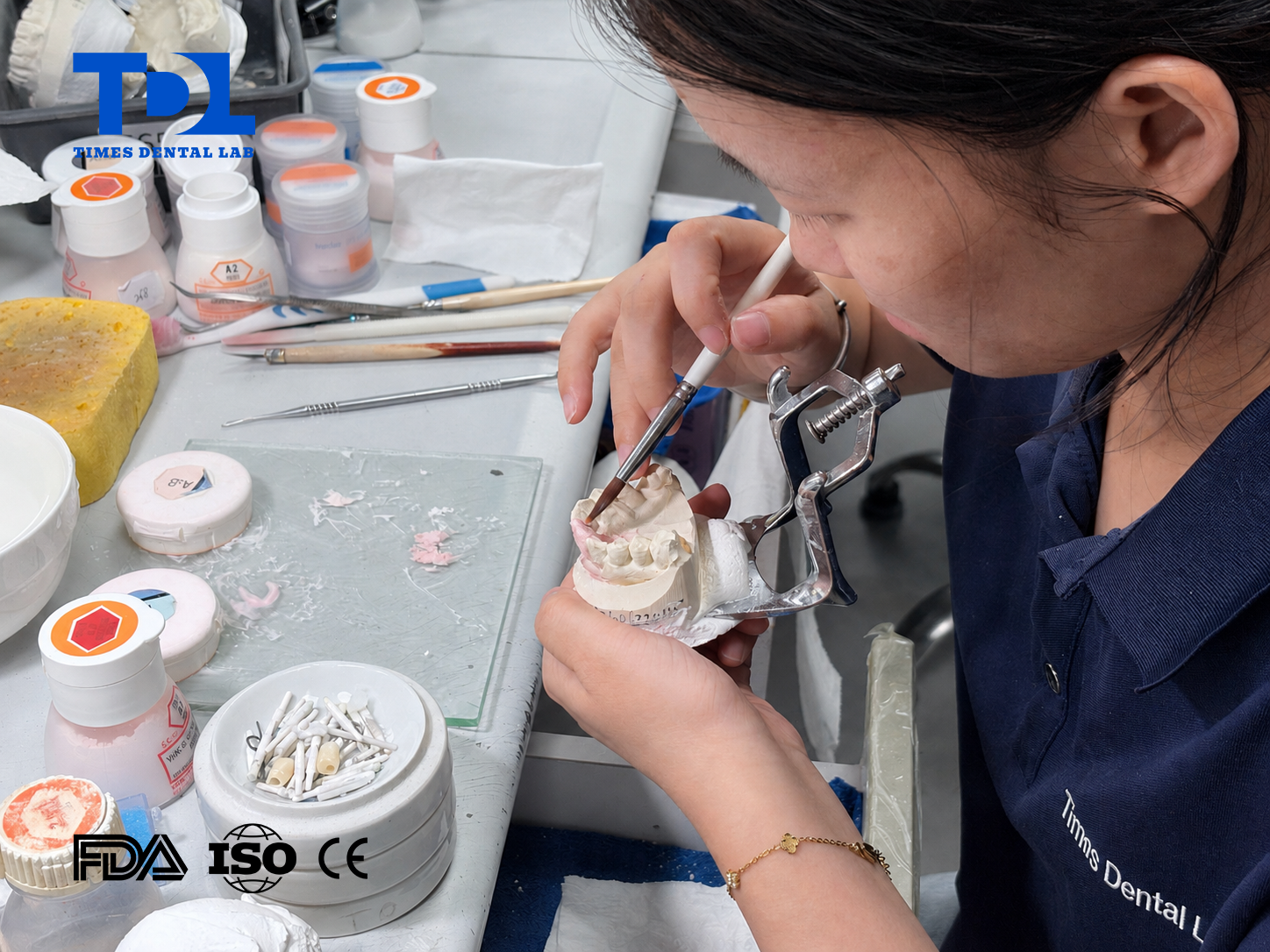
A denture repair addresses localized damage to an existing denture. Common examples include a fractured acrylic base, broken or detached denture tooth, tooth addition, damaged clasp, localized acrylic addition or a small area of base damage.
The dental lab needs to know where the denture broke, how the issue happened and whether all pieces are available. Simply reconnecting a visible fracture line may not solve the underlying problem if the denture is unstable, worn, distorted or affected by changes in the patient’s oral condition.
A repair request should therefore include photographs, the written prescription, the existing denture and a clear description of what should stay unchanged. If a tooth addition is requested, the lab also needs the tooth position, shade, mould, current denture, impression or model when required, opposing arch and bite record when relevant.
What Is a Denture Reline?
A denture reline renews the tissue-facing surface of an existing denture. The goal is to improve adaptation between the denture base and supporting tissues without remaking the entire prosthesis. The clinician should determine whether the denture is suitable for relining after examining the mouth and the existing denture.
Hard Reline
A hard reline uses a harder denture base material to rebuild the tissue surface. It may be considered when the existing denture teeth, occlusion, vertical dimension and base structure are still acceptable but the tissue surface no longer adapts well.
Soft Reline
A soft reline uses a softer lining material on the tissue side of the denture. The material and workflow should be selected by the treating clinician according to the patient’s oral condition, the denture condition and the intended use.
The FDA product classification for denture relining, repairing and rebasing resin shows that relining, repairing and rebasing materials have specific regulatory context. For clinic-lab communication, this reinforces the need to identify the requested service and material category clearly.
What Is a Denture Rebase?
A denture rebase replaces most of the denture base while retaining suitable existing artificial teeth and their arrangement. The NCBI MeSH definition of denture rebasing describes it as refitting a denture by replacing denture base material without changing occlusal relations of the teeth.
A rebase is different from a reline because it is not limited to renewing the tissue-facing surface. Before a rebase is started, the clinic and lab should review tooth position, wear, occlusion, base condition, esthetics and whether the existing tooth arrangement is still worth keeping.
If artificial teeth, tooth position, occlusion and denture base all have obvious problems, a remake may be more appropriate than a rebase. The final decision should come from clinical evaluation, not from a lab assumption based only on photos.
What Is a Denture Remake?
A denture remake means producing the restoration again. Before a remake is approved or quoted, the lab must review the cause of the issue. Possible causes include a confirmed manufacturing defect, confirmed material defect, production-related fit issue, incomplete clinical record, inaccurate scan or impression, change requested after production started, clinical change or damage after delivery.
Only issues that meet the Times Dental Lab guarantee scope may qualify for remake support after review. Remakes caused by incomplete records, changed instructions, patient oral-condition changes or post-delivery damage may be chargeable.
Repair vs. Reline vs. Rebase vs. Remake
|
Request |
Main Purpose |
Typical Records |
|
Repair |
Correct localized damage |
Existing denture, photos, prescription and all broken pieces. |
|
Reline |
Renew the tissue-facing surface |
Existing denture, reline impression or clinical record. |
|
Rebase |
Replace most of the base |
Denture, impression, bite and approval instructions. |
|
Remake |
Produce the restoration again |
Original restoration, detailed photos, updated records and issue description. |
Final case classification and guarantee coverage are confirmed only after review. A request that starts as “remake” may be reviewed as a repair, reline, rebase or new chargeable service depending on the restoration, records and cause of the issue.
What Is Covered by the Times Guarantee?
Based on the current Times guarantee wording provided for this article, issues that may be reviewed include manufacturing defects, material defects and fit issues related to production. These issues may qualify for remake support after the original restoration and supporting records are reviewed by Times Dental Lab.
Guarantee review is part of Times Dental Lab’s broader dental lab quality control process. The team reviews the original prescription, production records, returned restoration, photographs and updated clinical records before confirming whether the request is covered or chargeable.
What Is Not Covered?
Not every remake request is covered by guarantee. The following situations may fall outside the guarantee scope or require a chargeable repair, remake or new service:
· Instruction changes after production begins.
· Insufficient preparation or restorative space.
· Impression or scan errors.
· Missing occlusal records.
· Unclear shade selection.
· Improper clinical operation or use.
· Changes in the patient’s oral condition.
· Changes to product type, design, material or shade.
· Delayed insertion resulting in unsuccessful delivery.
· Tissue or bone changes affecting fit or retention.
The American College of Prosthodontists notes in its position statement on denture replacement that removable complete and partial prostheses have limited lifespans and can be affected by tissue changes, wear, fracture, fit and other factors. This supports the need to distinguish production issues from clinical or time-related changes.
Guarantee Periods for Removable and Related Products
|
Product |
Guarantee Period |
|
Cobalt chrome partial denture framework |
1 year |
|
Acrylic denture |
1 year |
|
Valplast denture |
3 months |
|
Custom tray or wax rim |
No guarantee period listed |
Guarantee support applies only within the defined policy scope. The start date and final interpretation should follow Times Dental Lab’s official order terms. A guarantee period should not be understood as automatic free repair or remake for every type of damage or clinical change.
What Should Be Sent for a Repair Request?
· Existing denture.
· All broken pieces.
· Detailed photographs.
· Exact description of the problem.
· Written prescription.
· Tooth shade and mould for tooth additions.
· Impression or model when required.
· Opposing arch and bite when required.
· Areas that should remain unchanged.
For removable dental restorations, the more clearly the clinic explains the request, the faster the lab can decide whether the case is a repair, reline, rebase, remake review or new production service.
What Should Be Sent for a Remake Review?
· Detailed photographs showing the reported problem.
· Explanation of the problem and when it was identified.
· Updated impressions or scans if requested.
· Updated bite or occlusal records when relevant.
· Returned original restoration.
· Original case number.
· Any requested design, material or shade changes.
Priority remake arrangements must be confirmed after Times reviews the request. If the requested design, material or shade is different from the original order, the case may need to be treated as a changed instruction or new service rather than a guarantee remake.
What to Send for a Tooth Addition
A tooth addition is often a new laboratory service rather than an automatic guarantee item under the original denture. The lab needs enough records to add the tooth without changing areas that should remain stable.
· Tooth position.
· Tooth shade.
· Tooth mould.
· Current denture.
· New impression or model.
· Opposing arch.
· Bite record when required.
· Clasp or retention instructions.
· Requested completion date.
Common Reasons a Case Cannot Be Reviewed Immediately
|
Issue |
Why It Delays Review |
|
Original denture was not returned |
The lab cannot inspect fit, fracture, material or production details. |
|
Photos do not show the problem |
The review team cannot confirm the reported issue visually. |
|
Broken pieces are missing |
Repair feasibility and fracture pattern may be unclear. |
|
No impression or scan is available |
The lab may not know whether the current tissue surface or bite has changed. |
|
Bite information is incomplete |
Occlusal or vertical changes cannot be evaluated. |
|
Case number is missing |
The original prescription and production history cannot be matched quickly. |
|
Prescription only says “remake” |
The lab cannot classify the issue or guarantee status. |
|
Requested design differs from original order |
The request may be a new service rather than a guarantee review. |
How Times Dental Lab Reviews a Repair or Remake Request
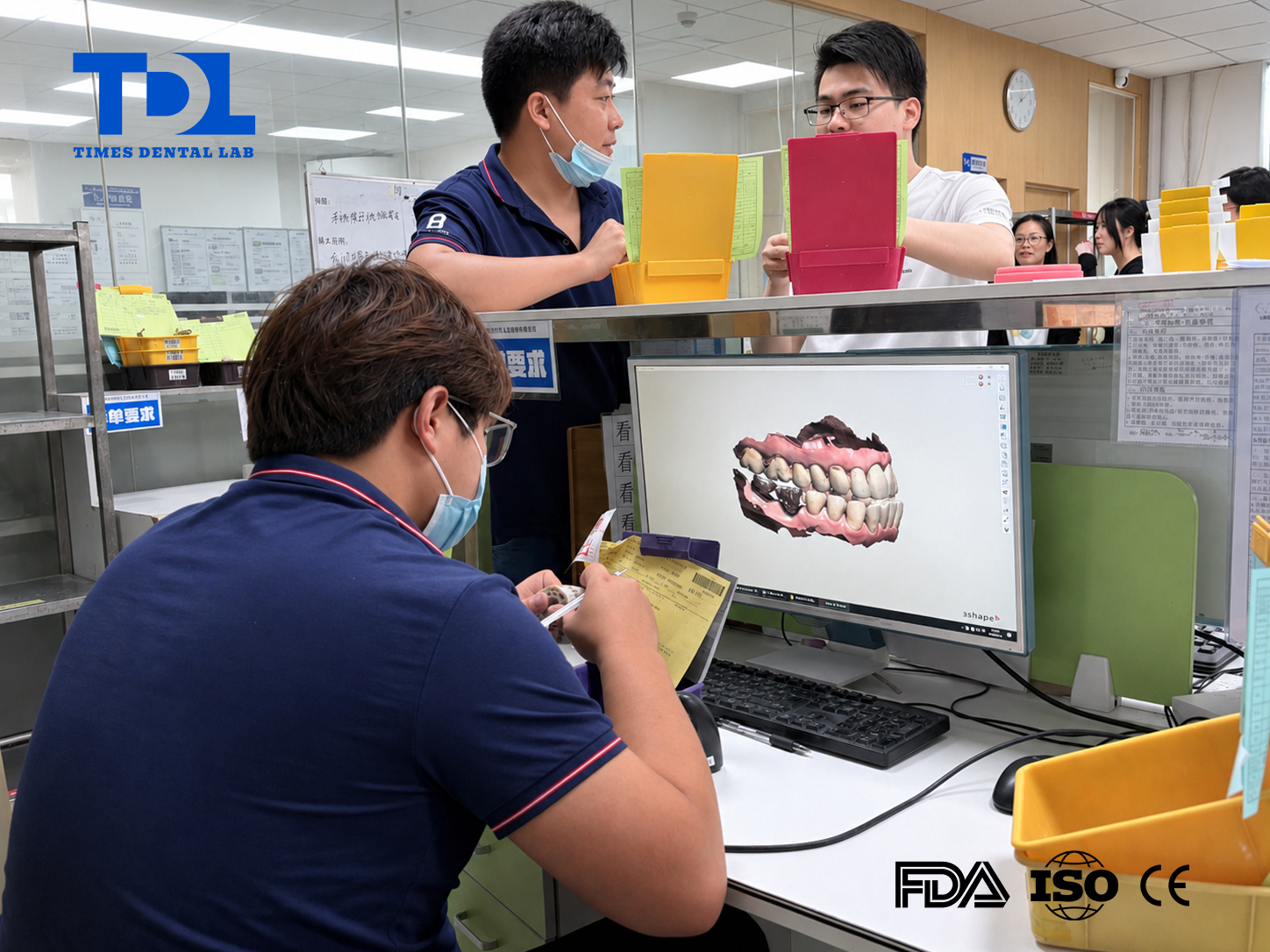
Times Dental Lab reviews repair and remake requests through a step-by-step process. This helps separate eligible production-related issues from clinical changes, record issues, changed instructions or damage after delivery.
· Confirm the original case number and product.
· Check whether the request is repair, reline, rebase or remake.
· Review photographs and the reported issue.
· Inspect the returned restoration.
· Compare the result with the original prescription.
· Review impressions, scans, bite and shade records.
· Determine whether the issue appears production-related.
· Confirm whether the request is covered or chargeable.
· Arrange the repair or priority remake after review.
FAQs
What is the difference between denture repair and remake?
Denture repair corrects localized damage on an existing denture, such as a broken tooth, fractured acrylic base or damaged clasp. Denture remake means producing the restoration again when the existing denture cannot be predictably corrected or when an eligible production issue is confirmed after review.
What is the difference between a denture reline and rebase?
A denture reline renews the tissue-facing surface of an existing denture. A denture rebase replaces most of the denture base while retaining suitable existing teeth and their arrangement. The clinician should decide which option is appropriate after evaluating fit, occlusion, tooth wear, tissue condition and patient needs.
Is every denture remake covered by the guarantee?
Every denture remake is not automatically covered by the guarantee. Times Dental Lab reviews the cause of the issue, product category, original prescription, submitted records, returned restoration and guarantee period before confirming whether remake support applies.
What is covered by the Times Dental Lab guarantee?
Based on the policy information prepared for this article, manufacturing defects, material defects and fit issues related to production may be reviewed for guarantee support. Final coverage depends on Times Dental Lab’s review of the restoration and supporting records.
What information is required for a remake review?
A remake review requires the original case number, detailed photographs, written issue description, returned original restoration and updated clinical records when relevant. Updated impressions, scans, bite records or shade information may be required if the original records no longer represent the current situation.
Do I need to return the original denture?
The original denture should usually be returned for a repair or remake review because the lab needs to inspect the restoration, compare it with records and evaluate whether the issue is repairable, production-related, record-related or caused by later changes.
What is the guarantee period for an acrylic denture?
The guarantee period listed for an acrylic denture in the provided Times policy is 1 year. The guarantee period does not mean every repair or remake is automatically free; the request must still match the guarantee scope after review.
Is a Valplast denture covered for one year?
The guarantee period listed for a Valplast denture in the provided Times policy is 3 months, not 1 year. Coverage still depends on the issue cause, submitted records and Times Dental Lab’s guarantee review.
Is a tooth addition covered by the original guarantee?
A tooth addition is usually treated as a new laboratory service unless Times Dental Lab confirms that the request falls within an eligible guarantee situation. The clinic should send the current denture, tooth position, shade, mould, model or impression and bite information when required.
Conclusion
Repair, reline, rebase and remake are different workflows. The right choice depends on the existing denture, the cause of the problem, the clinical records and whether the current restoration can still be predictably corrected.
A remake does not automatically mean a free replacement. Times Dental Lab reviews the original case number, prescription, photographs, returned restoration, updated records and guarantee period before confirming whether a request is covered or chargeable.