Introduction
Removable denture lab outsourcing means sending complete denture, partial denture, flexible denture, or framework cases to an external dental laboratory for design, fabrication, try-in, finishing, and shipment support. A successful removable denture workflow depends on accurate impressions or scans, bite records, jaw relation, shade, setup preferences, approval checkpoints, and clear communication before production begins.
This article is not a replacement for a removable product page. A product page explains what the lab can make. This checklist explains what clinics and dental laboratories should send before a removable case enters design or production. The goal is to reduce confirmation delays, avoid unclear setup instructions, and help the lab produce the case according to the submitted records.
For professional context, the American College of Prosthodontists describes the dental laboratory and dentist relationship as a prescription-based collaboration in which the laboratory fabricates prostheses from dentist-provided impressions, casts, or digital scans.ACP dental laboratory and dentist relationship That is why complete removable denture case records matter before outsourcing begins.
Quick Answer
A removable denture case submission should include patient or case identification, denture type, arch, impressions or scans, working and opposing records, bite registration, jaw relation, shade, tooth mold or setup preference, clasp or framework design, old denture reference when available, try-in requirements, approval contact, requested delivery date, and special instructions.
What to Confirm Before Sending a Removable Case
Before sending a removable case to an outsourcing dental lab, confirm the product type and the workflow stage. A first impression case, final impression case, bite rim case, wax try-in, framework try-in, setup approval, repair, reline, or final denture requires different records. The lab cannot choose the right workflow when the submission only says "denture" without the required stage and design instructions.
If your team is preparing a first case with Times Dental Lab, review the How to Start workflow before sending files or shipping physical records. A clear starting workflow helps the clinic, case coordinator, and dental lab confirm which records control the case.
· Denture type: complete denture, partial denture, flexible denture, metal framework denture, or combination case.
· Arch and restoration area: upper, lower, both arches, or specific edentulous spaces.
· Case stage: impression, custom tray, bite rim, try-in, framework, final processing, repair, or reline.
· Clinical records: impressions, scans, models, bite registration, jaw relation, photos, shade, and old denture reference.
· Design requirements: tooth arrangement, clasp position, framework design, base extension, tissue support, and esthetic expectations.
· Approval contact: who reviews setup, framework, shade, tooth position, and try-in feedback.
Records Required by Denture Type
Different removable denture cases need different records. The table below helps case coordinators match the product type with the minimum denture lab case records and likely approval checkpoints.
|
Product Type |
Required Records |
Approval / Checkpoint |
|
Complete denture |
Final impressions or models, bite rim, jaw relation, vertical dimension, shade, tooth mold, smile photos, old denture reference when available. |
Bite rim approval, wax try-in, tooth setup, midline, occlusal plane, esthetics, final processing approval. |
|
Partial denture |
Working model or scan, opposing arch, bite record, tooth chart, edentulous spaces, clasp preference, rest seats, path of insertion notes. |
Framework design, clasp position, fit check, tooth setup, try-in feedback. |
|
Flexible denture |
Final impression or model, opposing record, bite, shade, tooth replacement area, extension requirements, clasp/retention preference. |
Design confirmation, extension check, shade/tooth setup, final finishing review. |
|
Metal framework denture |
Accurate model or scan, survey information, rest seats, clasp design, major connector preference, opposing arch, bite record. |
Framework design approval, metal try-in, fit and retention feedback, final setup. |
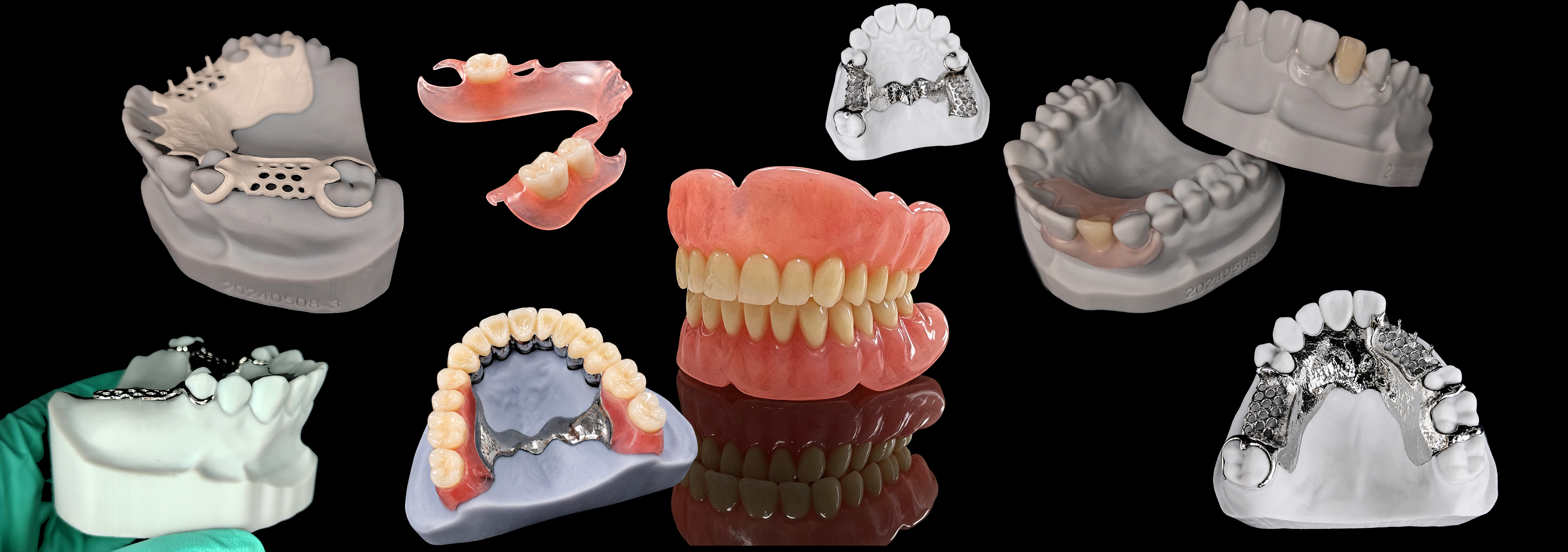
Complete Denture
A complete denture case usually requires more jaw-relation and esthetic information than a simple repair or tooth addition. The lab needs to understand vertical dimension, midline, lip support, occlusal plane, tooth display, and patient expectations. Old dentures are useful references because the clinic can explain what should be copied and what should be changed.
Partial Denture
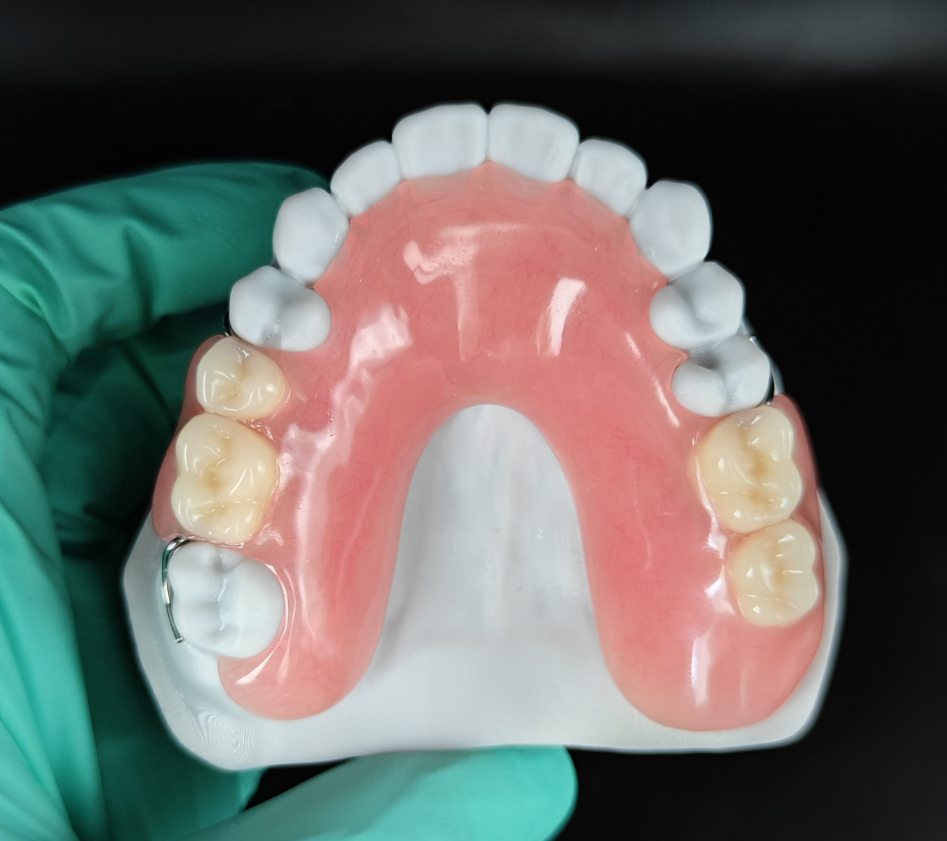
A partial denture submission should describe the edentulous area, remaining teeth, rests, clasps, connector design, path of insertion, and opposing occlusion. If the dentist has prepared rest seats or guide planes, those details should be visible in the scan or model and noted in the prescription.
Flexible Denture
A flexible denture case needs clear instructions for extension, flexible clasp design, shade, tooth arrangement, and tissue contact. Because flexible designs depend on material behavior and undercut engagement, the lab should receive accurate impressions or scans and any clinical retention preferences.
Metal Framework Denture
A metal framework denture case should include accurate master records, rest-seat information, clasp and connector design preferences, opposing arch, bite, and approval requirements. When the framework design is unclear, the lab should request confirmation before producing the metal framework.
Digital vs Physical Case Submission
Removable denture workflow can be digital, physical, or hybrid. Digital submission may include STL scans, intraoral scans, model scans, design notes, and uploaded photos. Physical submission may include impressions, poured models, bite blocks, wax rims, old dentures, or try-in records. Times Dental Lab can support digital case information and CAD design for removable-related workflows through Digital Design Services.
For broader digital case support, Times Dental Lab's Digital Solutions page explains how digital and physical records can be reviewed together, including scans, models, bite records, shade photos, and case instructions based on product type.
|
Submission Type |
What to Send |
What to Check Before Sending |
|
Digital |
STL files, upper and lower scans, bite scan, photos, shade, setup instructions, design notes. |
Scan completeness, tissue capture, bite alignment, file names, arch labels, and prescription match. |
|
Physical |
Impressions, models, bite blocks, wax rims, old dentures, photos, written prescription. |
Model accuracy, impression defects, bite stability, labeling, packaging, and case ID. |
|
Hybrid |
Digital scans plus physical bite rims, wax try-ins, old dentures, or verification models. |
Which record controls the case, which stage needs approval, and which items must be returned or archived. |
Bite, Jaw Relation, Shade and Setup Records
Bite and jaw-relation records are central to removable denture cases. Incomplete bite information can delay setup or create occlusion problems after the case is processed. For complete dentures and full-arch removable cases, vertical dimension, centric relation, lip support, midline, smile line, and occlusal plane should be clearly communicated.
· Bite registration or jaw-relation record.
· Vertical dimension record for complete denture cases.
· Wax rim or bite block when required.
· Shade tab photo and written shade.
· Tooth mold or tooth arrangement preference.
· Old denture scan or photo with notes on what to copy or improve.
· Smile photo, retracted view, and lateral view for esthetic cases.
· Patient expectations for tooth display, lip support, midline, and setup.
Approval and Try-In Checkpoints
Removable denture outsourcing should define approval checkpoints before production. A try-in is not only a visual step. A try-in can confirm bite, vertical dimension, tooth position, midline, occlusal plane, phonetics, esthetics, retention, and patient comfort before final processing.
The ACP notes that removable complete and partial dental prostheses replace missing teeth and have clinical limitations over time because hard tissue, soft tissue, and prosthetic components can change.ACP denture replacement position statement This supports the need for careful try-in feedback, fit review, and clear post-delivery communication rather than treating a denture as a one-step product.
|
Checkpoint |
What the Clinic or Lab Should Approve |
|
Bite rim / jaw relation |
Vertical dimension, centric relation, lip support, midline, occlusal plane, and tooth display. |
|
Framework design |
Major connector, rests, clasps, path of insertion, support, and retention plan. |
|
Wax try-in |
Tooth setup, shade, midline, smile line, occlusion, phonetics, and patient feedback. |
|
Final processing |
Confirmed setup, base design, material, shade, finish, and requested delivery date. |
|
Post-delivery feedback |
Fit issues, pressure areas, occlusion adjustments, esthetic feedback, and future case preferences. |
Common Submission Problems That Delay Production
Most removable denture production delays begin before production. The lab may need to stop the case when required records are missing or when the submitted records do not match the prescription.
For regulatory context, the FDA's medical device pages list dental devices as products used to maintain dental health and treat dental problems, including denture-related products.FDA dental devices context This does not change the clinic's prescription responsibility, but it reinforces why documentation and case records should be handled carefully.
· The prescription says complete denture but does not identify the workflow stage.
· Bite record or jaw relation is missing.
· Upper and lower records do not align correctly.
· Old denture reference is sent without notes on what should be copied or changed.
· Shade, tooth mold, or setup preference is missing.
· Partial denture clasp or framework design is unclear.
· Metal framework case lacks rest-seat or path-of-insertion information.
· Try-in approval contact or response timeline is not defined.
· Physical items are unlabeled or not protected for shipment.
Removable Denture Case Submission Checklist
|
Check |
Submission Item |
|
[ ] |
Case ID, clinic contact, and approval contact are clear. |
|
[ ] |
Denture type and workflow stage are identified. |
|
[ ] |
Upper and lower impressions, scans, or models are complete. |
|
[ ] |
Bite record, jaw relation, and vertical dimension are provided when needed. |
|
[ ] |
Shade, tooth mold, smile photos, and esthetic references are included when needed. |
|
[ ] |
Old denture reference is included with notes on what to copy or improve. |
|
[ ] |
Partial denture clasp, rest-seat, connector, and framework preferences are documented. |
|
[ ] |
Flexible denture extension and retention preferences are documented. |
|
[ ] |
Metal framework design approval or try-in requirement is defined. |
|
[ ] |
Wax try-in, setup approval, or final processing approval is clearly assigned. |
|
[ ] |
Requested delivery date and shipping requirements are written. |
|
[ ] |
Physical items are labeled, protected, and matched to the prescription. |
FAQ
What is removable denture lab outsourcing?
Removable denture lab outsourcing is the practice of sending complete denture, partial denture, flexible denture, or framework cases to an external dental laboratory for design, fabrication, try-in support, finishing, and shipment.
What records are needed for a complete denture case?
A complete denture case usually needs final impressions or models, bite rims, jaw-relation records, vertical dimension, shade, tooth mold, smile photos, and old denture references when available.
What records are needed for a partial denture case?
A partial denture case needs a working model or scan, opposing arch, bite record, edentulous space information, clasp preference, rest-seat information, connector design notes, and approval requirements.
Can removable denture cases be submitted digitally?
Removable denture cases can be submitted digitally when scans capture enough tissue, anatomy, bite relationship, and design information. Some removable cases still benefit from physical models, bite rims, wax try-ins, or old denture references.
Why do removable denture cases need try-in approval?
Try-in approval helps confirm tooth setup, bite, vertical dimension, midline, occlusal plane, lip support, esthetics, phonetics, and patient feedback before final processing.
What causes delays in removable denture outsourcing?
Removable denture outsourcing delays often come from missing bite records, unclear denture type, incomplete jaw relation, missing shade or setup instructions, unclear framework design, unlabeled physical items, or undefined approval responsibilities.
Conclusion
A predictable removable denture outsourcing workflow begins with complete denture lab case records. Clinics and dental laboratories should confirm denture type, case stage, impressions or scans, bite records, jaw relation, shade, setup notes, approval checkpoints, and shipment details before the case enters production.
Times Dental Lab supports complete dentures, partial dentures, flexible dentures, metal framework cases, and related removable workflows for overseas clinics and dental laboratories. To review Times product scope, visit removable dental restorations. To discuss a removable case or submit records for review, contact Times Dental Lab.