Introduction
Dentists and clinics usually search for how to prevent zirconia crown fractures after seeing a fracture, remake, or patient complaint. But inside a dental lab, prevention should begin much earlier than the final quality-control check. It starts when the case is received, reviewed, classified, designed, produced, documented, and approved for shipment.
This article is intentionally different from the earlier Times Dental Lab article, Why Zirconia Crowns Chip or Break. The earlier article explains failure causes. This page explains the lab-side prevention system: what the lab checks, when it should pause production, how risk is communicated to the clinic, and what should be documented before shipment.
Quick Answer
Dental labs prevent zirconia crown fractures by using a documented SOP, not by relying only on final inspection. The workflow should include case intake review, risk classification, CAD rule checks, material confirmation, production parameter control, sintering records, finishing and polishing records, occlusal verification, and pre-shipment QC sign-off.
For a China dental lab serving overseas clinics, this structured process is especially important because the lab must reduce uncertainty across distance, time zones, digital files, physical models, production teams, and shipping. Prevention is therefore a communication system as much as a manufacturing system.
What a Prevention Workflow Means in a Dental Lab
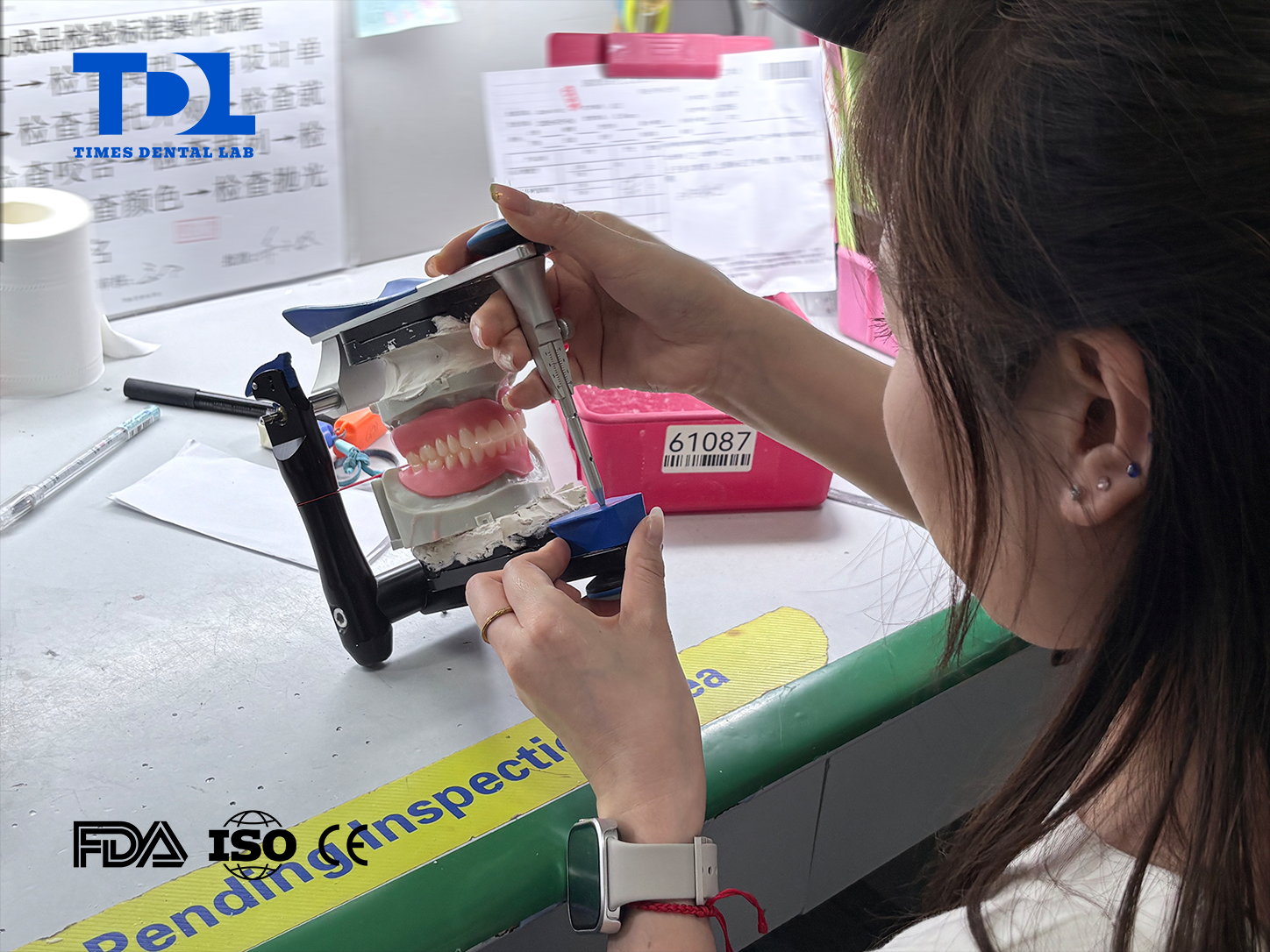
A prevention workflow is a repeatable way to identify case risk before the restoration is made. It does not mean a lab can guarantee that no restoration will ever fail. It means the lab has a process for detecting avoidable risks, documenting decisions, asking questions when information is incomplete, and checking the case before shipment.
For zirconia crowns and bridges, the workflow should connect clinical information with production decisions. A technician should not only ask whether the crown can be milled. The lab should ask whether the case information is complete enough to design, process, finish, and ship the restoration with reasonable predictability.
Why Prevention Starts Before CAD Design
A common mistake is treating fracture prevention as a design or QC issue only. In reality, prevention starts before CAD design. At intake, the lab should review whether the scan or impression is usable, whether the bite appears reliable, whether opposing arch data is present, whether the restoration type is clear, and whether the clinic has provided enough information for the selected material.
This early review is where a lab decides whether to proceed, ask for clarification, request a new scan, or warn the clinic about a potential production compromise. Silent assumptions create risk. A prevention-focused lab communicates uncertainty before manufacturing begins.
A simple risk classification can help the team act consistently. A routine case can move into CAD design. A caution case may continue with a note for the designer or QC team. A hold case should stop until the clinic confirms the missing information. This makes prevention less dependent on one technician's memory and more dependent on a shared production rule.
The Zirconia Fracture Prevention SOP
|
SOP Step |
Lab Action |
Purpose |
|
1. Intake review |
Check scan/impression, bite, opposing arch, margin visibility, shade, restoration type, and instructions. |
Confirm whether the case is complete enough to start. |
|
2. Risk classification |
Mark the case as routine, caution, or hold-for-clarification. |
Separate normal cases from cases that require client confirmation. |
|
3. CAD rule check |
Review design rules for anatomy, cement space, contacts, occlusion, margins, and connector logic. |
Prevent design decisions from depending on guesswork. |
|
4. Material confirmation |
Confirm zirconia type, translucency, indication, and product category. |
Match material choice to case purpose. |
|
5. Production parameter control |
Track milling, nesting, sintering, staining, glazing, and finishing requirements. |
Keep manufacturing consistent across cases. |
|
6. Finishing record |
Confirm adjusted areas are finished and polished before final QC. |
Avoid sending rough or unfinished functional surfaces. |
|
7. QC sign-off |
Check fit, contacts, occlusion, shade, surface, case ID, and packing. |
Create a final release checkpoint before shipment. |
This SOP works together with Times Dental Lab's Zirconia / Crowns and Bridges workflow and broader Quality Control approach.
How Labs Communicate Risk to Clinics
A prevention-focused lab should not quietly accept every case condition. Some cases should move forward normally, some should move forward with notes, and some should pause until the clinic confirms additional information. Clear communication protects both the clinic and the lab.
· Ask for a rescan when margins, proximal areas, or bite information are unclear.
· Request confirmation when restorative space appears limited for the selected material.
· Flag bridge cases when span, connector design, or occlusal load may require review.
· Suggest monolithic zirconia instead of layered zirconia when functional load is the main concern.
· Hold production when implant system, scan body, screw-access, or component details are incomplete.
· Record client approval when the clinic chooses to proceed despite a documented limitation.
This is where a strong Digital Workflow helps. Digital files, photos, notes, and archived case communication make risk review easier to repeat across future cases.
What Should Be Documented Before Shipment

Documentation is important because fracture prevention is not only a technical action. It is also a record of what was checked, what was approved, and what limitations were communicated. For overseas cooperation, documentation helps clinics understand the case history if a question appears later.
|
Record Item |
Why It Matters |
|
Case ID and client name |
Keeps the restoration traceable through production and shipment. |
|
Material and shade |
Confirms the selected zirconia type and esthetic request. |
|
Design notes |
Records special instructions, risk comments, or client-approved compromises. |
|
Production notes |
Documents milling, nesting, sintering, finishing, and polishing status. |
|
QC result |
Confirms fit, contacts, occlusion, shade, surface finish, and case details. |
|
Packing check |
Confirms the restoration and accessories are protected for shipment. |
Checklist for Clinics Before Sending a Zirconia Case
The lab can reduce production risk, but prevention works best when the clinic also sends complete information. This checklist helps the lab make fewer assumptions before zirconia production begins.
· Clear scan or impression with readable margins.
· Accurate bite record and opposing arch information.
· Restoration type: single crown, bridge, implant crown, or full-arch case.
· Material preference and esthetic expectation.
· Photos for shade, stump shade, midline, or smile-zone cases.
· Implant system, scan body, platform, and screw-access details when relevant.
· Notes about bruxism, heavy occlusion, limited space, or prior remake history.
· Clear deadline and shipping requirements.
Common Mistakes Dentists Should Avoid
· Sending a zirconia case without a reliable bite record.
· Expecting the lab to solve limited restorative space without discussion.
· Changing material preference after CAD design has already started.
· Leaving implant component details incomplete.
· Ignoring lab questions because they seem minor.
· Treating fracture prevention as a final QC issue instead of a shared workflow.
For related guidance, visit our Restoration Hub covering poor fit, shade mismatch, crown chipping, occlusal problems, and restoration risk prevention.
FAQ
What should a dental lab check before making a zirconia crown?
The lab should check scan quality, margin clarity, bite record, opposing arch, restoration type, material request, occlusion notes, implant details when relevant, and whether the case requires clarification before design.
When should a lab stop production and ask the clinic?
A lab should pause when margins are unclear, bite records are missing, implant details are incomplete, restorative space appears limited, or the requested material does not appear suitable for the case information provided.
Why is documentation important in zirconia cases?
Documentation creates traceability. It records case details, design notes, material selection, production status, QC results, client approvals, and packing checks, which helps both the clinic and lab manage future questions.
Can a dental lab prevent every zirconia fracture?
No lab can prevent every possible fracture because clinical conditions, patient habits, occlusion, and chairside procedures also matter. A lab can reduce avoidable risk by using a structured SOP and communicating limitations early.
How does digital workflow help prevent zirconia fracture risk?
Digital workflow helps by making scans, bite records, design notes, and case communication easier to review and archive. It allows the lab to identify missing information before production begins.
What should clinics send to reduce zirconia crown fracture risk?
Clinics should send clear scans or impressions, accurate bite records, opposing arch data, shade photos, material preferences, implant details, and notes about bruxism, heavy occlusion, or limited space.
Conclusion + Times Introduction
Dental labs prevent zirconia crown fractures through system control, not one final visual check. A strong prevention workflow includes intake review, risk classification, CAD rule checks, material confirmation, production records, finishing notes, QC sign-off, and clear communication with the clinic.
Times Dental Lab is a full-service dental laboratory based in Shenzhen, China. We support international clinics and dental laboratories with zirconia crowns, bridges, implant restorations, digital design support, production control, and quality checks. To review a zirconia crown or bridge case, contact Times Dental Lab with scans, bite records, photos, and case requirements.