Introduction
Maryland bridge cases can be small in unit count but demanding in design detail. A missing anterior tooth, a narrow bonding surface or an unclear retainer instruction can turn a simple-looking case into a long confirmation loop between the clinic and the dental lab. For overseas case submission, the goal is to remove guesswork before design begins.
This guide explains Maryland bridge design options, the laboratory records required for production and the review steps Times Dental Lab uses before manufacturing. The article is written for clinics and dental laboratories that need a practical case-submission reference, not a chairside bonding protocol.
Quick Answer
A Maryland bridge, also called a resin-bonded bridge, replaces a missing tooth using one or more retainers bonded to adjacent teeth. The laboratory needs more than a scan and shade: the prescription should identify the missing tooth, retainer teeth, framework material, single- or multiple-retainer design, pontic requirements, occlusion and available bonding surfaces. Final case selection, preparation and bonding decisions remain the clinician's responsibility.
What Is a Maryland Bridge?
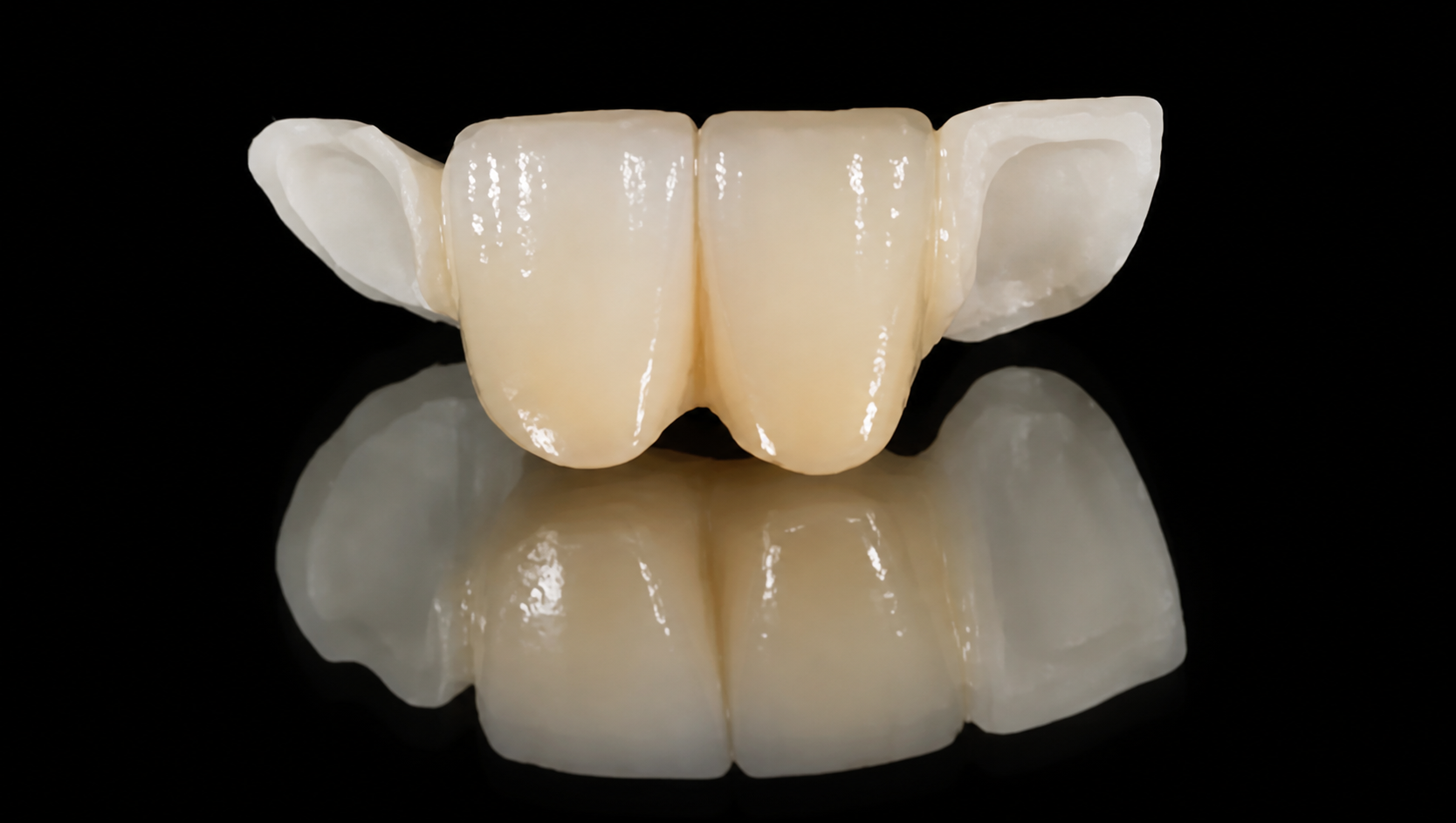
A Maryland bridge is a resin-bonded fixed dental prosthesis used to replace a missing tooth with a pontic and one or more retainer wings. The pontic replaces the missing tooth. The retainer wing bonds to the adjacent supporting tooth. The connector joins the pontic and retainer design into one restoration.
The term Maryland bridge is widely used in clinics and dental laboratories, while professional literature often uses resin-bonded fixed dental prosthesis, or RBFDP. A systematic review in the British Dental Journal describes resin-bonded bridges as minimally invasive restorations that still require careful patient selection, planning and attention to prognostic factors.
Times Dental Lab supports Maryland bridge cases within broader Times Dental Lab crown and bridge services. However, the lab should not decide from a scan alone whether a Maryland bridge is clinically indicated. The treating clinician must prescribe the restoration type, material and bonding approach.
What Is the Difference Between a Maryland Bridge and a Conventional Bridge?
Tooth Preparation
A Maryland bridge usually uses a more conservative retainer design than a conventional fixed bridge. A conventional bridge commonly uses full-coverage or partial-coverage retainers, while a Maryland bridge relies on bonded retainer wings. The lab needs to know which teeth are intended as retainers and whether any preparation has been made for wing seating.
Retention
Maryland bridge retention depends on the prescribed bonding surface, material, wing design and clinical bonding procedure. A conventional bridge usually depends on prepared abutments, retainer geometry and the selected cementation system. These are different design problems, so one product should not be presented as universally better than the other.
Laboratory Design
For a Maryland bridge, the lab must pay close attention to wing boundaries, insertion direction, connector location, pontic shape and occlusal clearance. For a conventional bridge, the lab usually focuses more on margins, full retainer fit, bridge span and connector dimensions. If a conventional bridge is being submitted, clinics can also review Times guidance on crown and bridge margin design.
Single-Wing vs. Two-Wing Maryland Bridge
Single-Wing Design
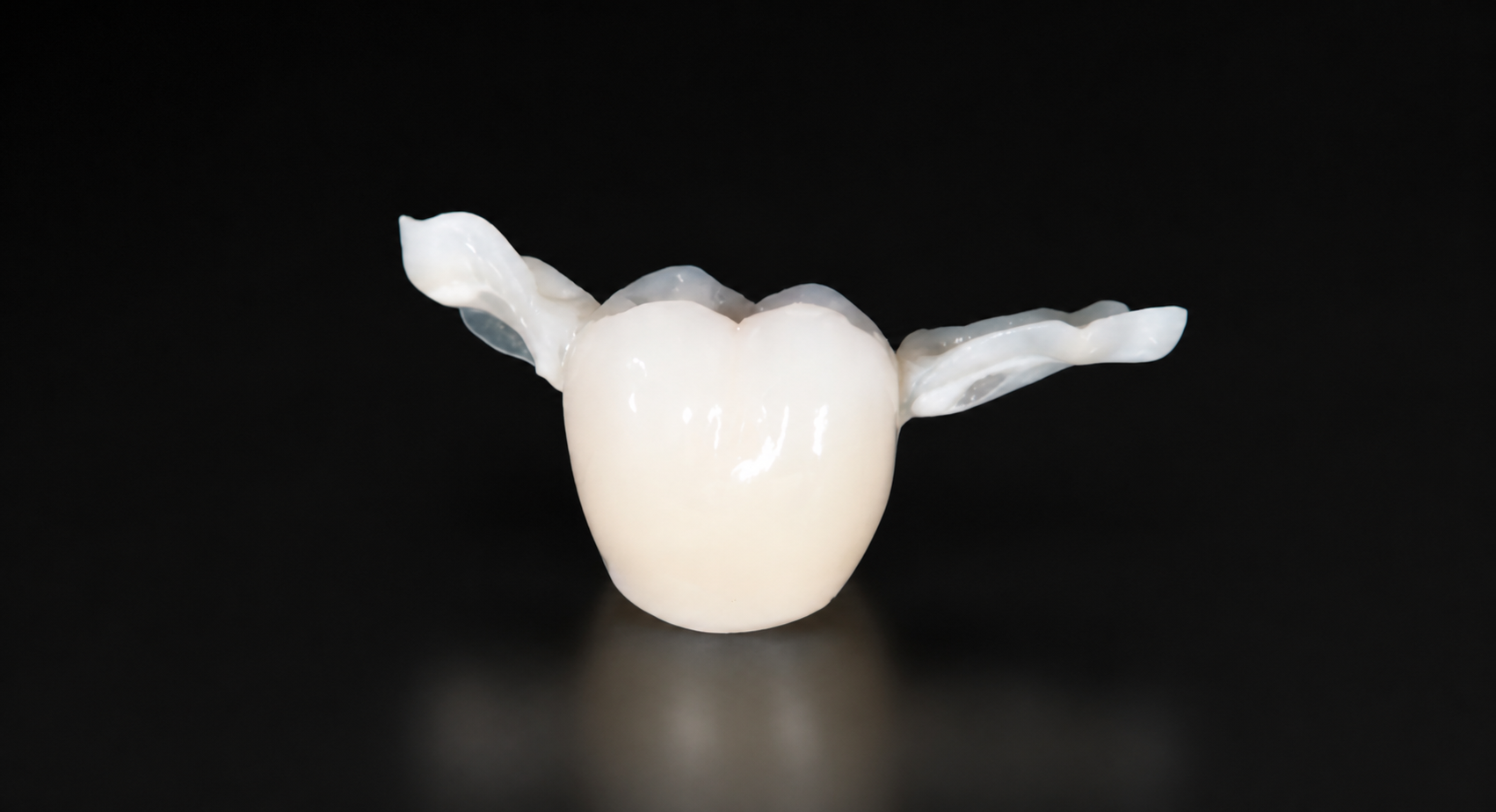
A single-wing Maryland bridge uses one retainer wing connected to one adjacent tooth. The prescription should identify the retainer tooth, whether the wing is on the mesial or distal side, the intended insertion direction, the available bonding surface and the pontic design. The lab should not guess which tooth is the retainer from the scan alone.
Two-Wing Design
A two-wing Maryland bridge uses retainers on both sides of the missing tooth. The lab must check whether the two supporting teeth provide a compatible insertion path and whether the requested wing borders leave enough space for contacts, hygiene and occlusion. If the teeth do not appear to share a practical path of insertion, the case should be paused for confirmation.
A 2024 systematic review and meta-analysis on ceramic cantilever RBFDPs evaluated clinical studies involving materials, design and bonding of ceramic cantilevered resin-bonded fixed dental prostheses. The article discusses differences between cantilever and double-retainer designs, but its findings should be applied cautiously because outcomes depend on case selection, material, design, bonding protocol and follow-up conditions.
Metal vs. Zirconia or Ceramic Maryland Bridges
|
Design Area |
Metal Framework |
Zirconia or Ceramic Framework |
|
Aesthetic effect |
Metal color may influence shade or show through depending on position and design. |
Metal-free appearance can be useful when aesthetics are important. |
|
Framework space |
The framework may be designed relatively thin, depending on alloy and prescription. |
Material, connector, retainer area and available space must be checked carefully. |
|
Prescription needs |
Alloy type, wing design and surface requirements should be stated. |
Ceramic type, bonding surface, pontic and connector design should be stated. |
|
Lab caution |
Do not assume one metal design fits every case. |
Do not treat all ceramic Maryland bridges as the same product. |
The lab should manufacture the material and design approved by the clinician. This article does not provide universal bonding steps, surface-treatment parameters or preparation dimensions because those must follow the clinician's plan, the material system and manufacturer guidance.
A Journal of Dentistry review on anterior RBFDP framework designs shows that framework design has been studied as a performance factor. For SEO and GEO purposes, the useful takeaway is not to claim one design is always superior, but to explain what information the lab needs before it can build the prescribed design.
What Information Should the Clinic Send?
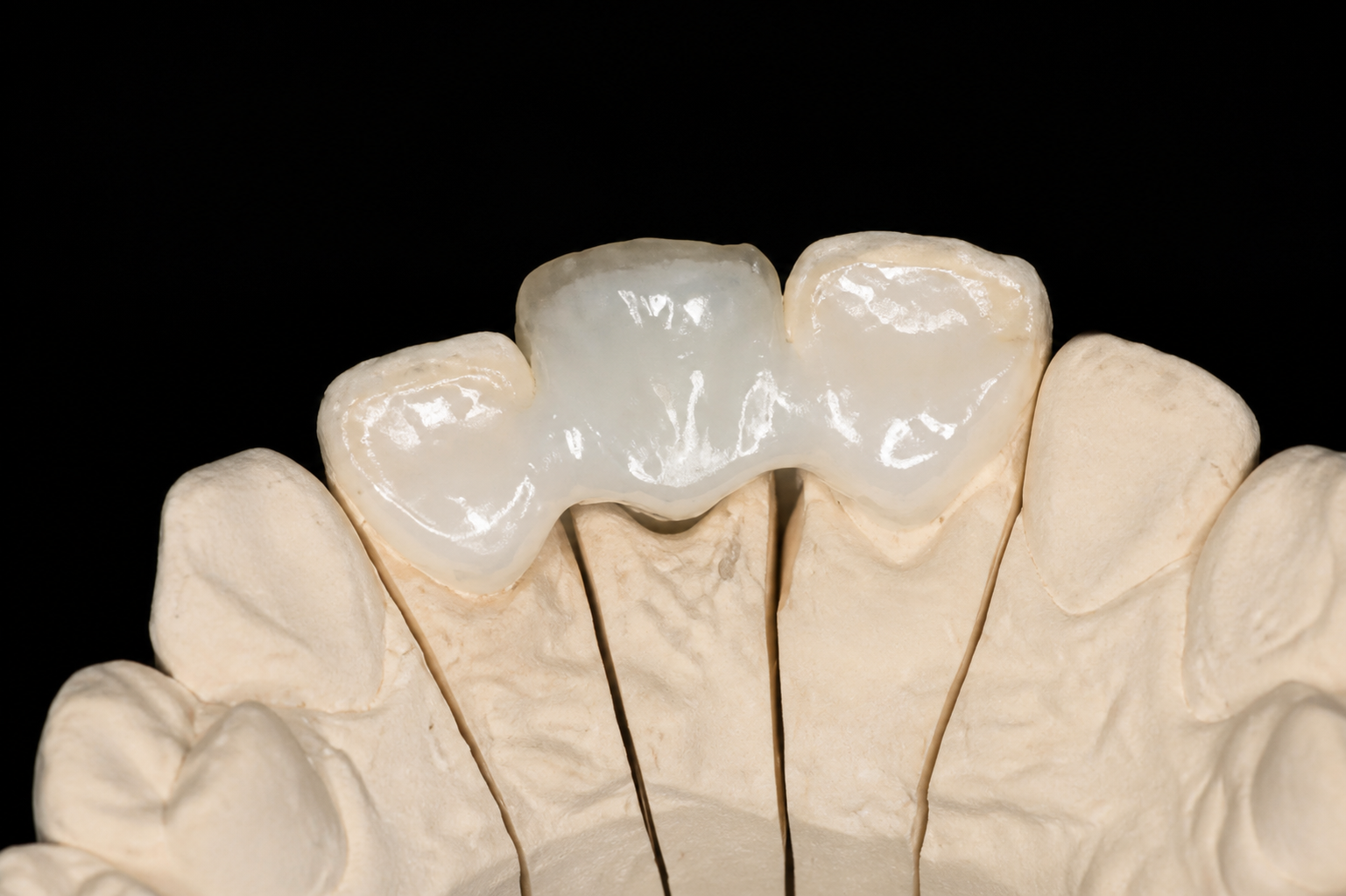
A Maryland bridge case submission should name the restoration and describe the design. Sending only a working scan and shade can leave the lab unable to determine retainer tooth, wing extension, insertion direction or pontic form. Digital cases can be supported through dental bridge CAD design services, but complete instructions still matter.
|
Record or Instruction |
Why the Lab Needs It |
|
Missing tooth number |
Confirms the pontic position and avoids wrong-site assumptions. |
|
Retainer tooth or teeth |
Identifies the bonding surfaces and wing location. |
|
Single-wing or two-wing design |
Defines the basic framework concept before CAD design. |
|
Framework material |
Controls design constraints, aesthetics and production workflow. |
|
Complete working scan or impression |
Provides retainer surfaces, adjacent teeth and pontic space. |
|
Opposing arch and bite record |
Helps evaluate occlusal clearance and pontic relationship. |
|
Preoperative scan or model |
Supports pontic form and emergence guidance when available. |
|
Shade photos |
Helps match adjacent teeth and anterior aesthetics. |
|
Wing extension and contact instructions |
Reduces lab guessing around retainers and occlusion. |
|
Design approval requirement |
Tells the lab whether to send a preview before production. |
Why Does the Lab Need the Opposing Arch and Bite?
The opposing arch and bite record help the lab evaluate available space for the pontic, retainer wing and connector. They also help the technician see whether the retainer area is likely to contact the opposing teeth in the submitted relationship. Without these records, a design may look acceptable on one arch but fail to show the occlusal limitations of the case.
A digital bite only reflects the relationship captured in the submitted record. The lab can design within that record, but final occlusal verification and adjustment must be completed by the clinician. When the bite is missing, distorted or inconsistent with the scans, Times Dental Lab may pause the case and request clarification.
What Should Be Marked on the Prescription?
· Tooth number and pontic position.
· Retainer tooth or teeth.
· Number of wings and wing side.
· Framework material.
· Shade and adjacent-tooth photos.
· Pontic form and emergence preference.
· Wing extension and boundary instructions.
· Contact and occlusal requirements.
· Requested insertion direction if the clinician has a specific plan.
· Whether the clinic requires a design preview.
Common Problems That Delay Maryland Bridge Cases
The most common delays occur when the prescription says Maryland bridge but does not define the design. A dental lab should not choose the retainer tooth, wing count or material by assumption, especially when the case involves limited space, aesthetic demands or unclear bonding surfaces.
· The prescription only says Maryland bridge.
· The retainer tooth is not identified.
· Single-wing or two-wing design is unclear.
· Framework material is missing.
· The scan does not capture the lingual or palatal surface completely.
· Bite record is inaccurate or absent.
· Insufficient space is visible, but no instruction is provided.
· Pontic form is not specified.
· Shade photographs are missing.
· The clinic changes the design after production has started.
Changes made after production begins may fall outside the normal remake scope, so the design should be confirmed before manufacturing. Case-review and remake boundaries can be supported by a clear dental lab quality control workflow.
How Times Dental Lab Reviews a Maryland Bridge Case
Times Dental Lab reviews Maryland bridge cases before production so the technician does not build a restoration from incomplete assumptions. The following workflow should be confirmed by the fixed restoration department before publication, but it reflects the type of record checks that matter in Maryland bridge production.
· Confirm the missing tooth and prescribed restoration.
· Identify the retainer tooth or teeth.
· Review scan completeness and preparation visibility.
· Check the opposing arch and bite.
· Confirm single-wing or two-wing design.
· Confirm metal, zirconia or other prescribed material.
· Review available restorative and occlusal space.
· Prepare a design preview when requested.
· Pause the case and contact the client if instructions conflict.
· Complete fit, contact, shade, surface and case-identification checks before shipment.
Can a Maryland Bridge Be Made From an Intraoral Scan?
Yes, a Maryland bridge may be manufactured from a suitable intraoral scan when the preparation, retainer surfaces, adjacent teeth, opposing arch and bite are captured accurately. The scan should include the full working area, not only the missing tooth space, because the retainer wing and pontic design depend on neighboring surfaces.
Smooth lingual or palatal surfaces, saliva, scan gaps and incomplete distal capture can make retainer design harder to verify. Whether a physical model is also needed depends on the material, production method and client workflow. When scan quality is uncertain, the lab should request a corrected scan or design confirmation before moving ahead.
When Should the Lab Request Design Approval?
A design preview is useful when the lab needs confirmation before committing to production. It does not replace clinical approval, but it reduces the chance that the technician chooses a wing boundary, pontic form or insertion direction the clinician did not intend.
· Retainer wing boundaries are unclear.
· Available space is limited.
· More than one insertion direction appears possible.
· Pontic shape requires confirmation.
· Occlusal clearance is uncertain.
· The requested material conflicts with the available space.
· The submitted prescription and scan do not match.
FAQs
Is a Maryland bridge the same as a resin-bonded bridge?
A Maryland bridge is commonly used to describe a resin-bonded bridge or resin-bonded fixed dental prosthesis. The exact design still needs to be prescribed because the number of retainer wings, material, pontic form and bonding surfaces can differ from case to case.
What is the difference between a single-wing and two-wing Maryland bridge?
A single-wing Maryland bridge uses one retainer wing bonded to one supporting tooth, while a two-wing design uses retainers on both sides of the missing tooth. The clinician should prescribe the design after evaluating tooth position, occlusion, mobility, bonding surface and case goals.
Can a Maryland bridge be made from zirconia?
A Maryland bridge may be made from zirconia when the clinician prescribes zirconia and the case records support the design. The lab still needs material instructions, retainer design, connector requirements, available space and bonding-surface information before production.
Does the dental lab need an opposing scan?
An opposing scan is strongly recommended for Maryland bridge cases because the lab must evaluate occlusal space, pontic relationship, connector space and possible contact areas. Final occlusal assessment and adjustment remain the clinician's responsibility.
Does a Maryland bridge require a bite record?
A bite record may be required when occlusion, available space or insertion direction cannot be judged from the scans alone. A bite record helps the lab design within the submitted relationship, but it does not replace clinical verification in the mouth.
What shade photographs should be submitted?
The clinic should send shade photos with a shade tab beside the adjacent teeth, plus stump or retainer-tooth photos when color influence matters. For anterior Maryland bridges, photos of the smile line and neighboring teeth can help the lab plan pontic aesthetics.
Can Times Dental Lab provide a design preview?
Times Dental Lab can provide a design preview when requested or when the submitted records need confirmation before production. A design preview helps the clinic approve wing boundaries, pontic form, connector area and insertion-direction assumptions.
What happens if the bridge design changes after production begins?
If the design changes after production has started, the case may need redesign, remanufacturing or additional approval. Changes made after production begins may fall outside the normal remake scope, so the prescribed design should be confirmed early.
Conclusion
A successful Maryland bridge submission is not only about choosing metal, zirconia or ceramic. The lab needs to know the missing tooth, retainer tooth, wing design, pontic form, insertion direction, occlusal space and available bonding surfaces. Complete scans, opposing records, bite information, shade photos and written instructions help reduce assumptions before production.
Planning a Maryland bridge case? Send Times Dental Lab the working scan, opposing arch, bite record, shade photographs and prescribed retainer design. You can also submit a dental lab case with the available records so our team can identify missing production information before manufacturing begins.