Turnaround time is one of the first questions clinics and dental laboratories ask when working with a China dental lab. Fast delivery matters, but predictable delivery matters even more. A restoration that is rushed without proper case review, design control, quality inspection, or packing can create more problems than it solves.
The real question is not only “How many days will it take?” A better question is: what affects the timeline, and how can the clinic and lab work together to reduce avoidable delays? For overseas dental lab outsourcing, turnaround time depends on case complexity, file quality, material choice, production steps, quality control, communication, and shipping.
At Times Dental Lab, turnaround management is treated as a workflow-control issue. The goal is to make production more predictable across repeated cases, not simply promise the shortest possible time for every case.
What Turnaround Time Means in Dental Lab Outsourcing
Turnaround time is the total period from confirmed case receipt to finished restoration shipment or delivery. In overseas cooperation, it should be separated into several stages: case submission, case review, design, manufacturing, finishing, quality control, packing, and shipping.
A reliable dental lab should explain what is included in the timeline. Some delays happen before production starts, such as missing bite records, unclear margins, incomplete implant information, or unclear shade photos. Other delays happen during production, especially for complex implant cases, layered restorations, removable prosthetics, or cases that require remake prevention checks.
Typical Stages That Affect Turnaround Time
|
Stage |
What Happens |
Why It Affects Time |
|
Case submission |
The clinic sends scans, impressions, STL files, bite records, shade photos, implant details, and instructions. |
Missing or unclear information can delay case confirmation. |
|
Case review |
The lab checks margins, bite, opposing arch, restoration type, material, shade, and special instructions. |
Early review helps prevent manufacturing errors and remakes. |
|
CAD design |
Technicians design crowns, bridges, implant components, models, splints, or related restorations. |
Complex designs require more review and communication. |
|
Manufacturing |
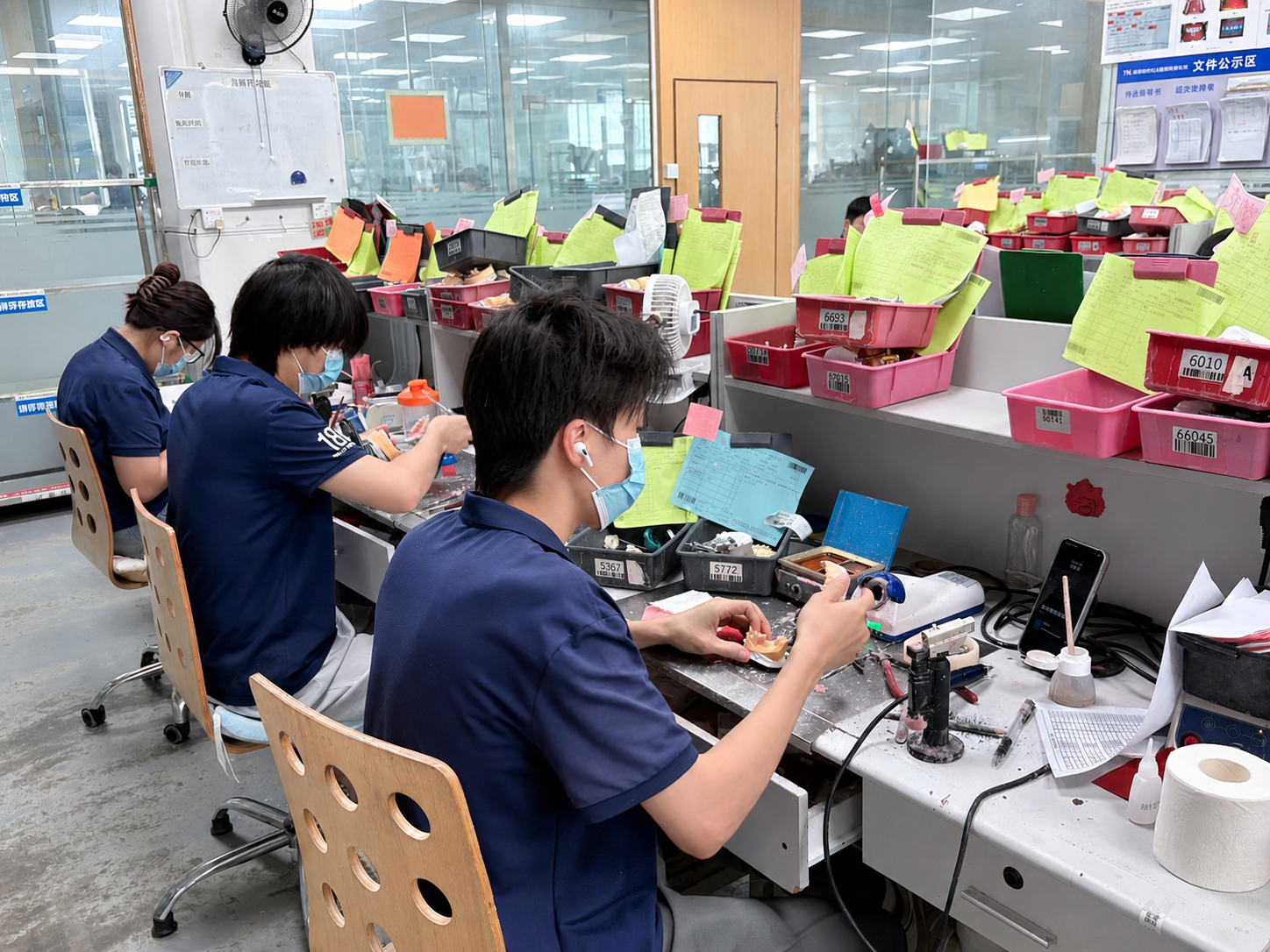
The case moves into milling, 3D printing, sintering, casting, layering, finishing, or other production steps. |
Different materials and product types require different processing steps. |
|
Quality control |
The lab checks fit, contacts, occlusion, shade, surface finishing, case details, and packing. |
QC takes time, but it helps protect the final result. |
|
Packing and shipping |
The case is packed for international shipment and prepared for delivery. |
Shipping time depends on destination, carrier, customs, and documentation. |
Factors That Can Shorten or Delay a Dental Lab Timeline
Case Complexity
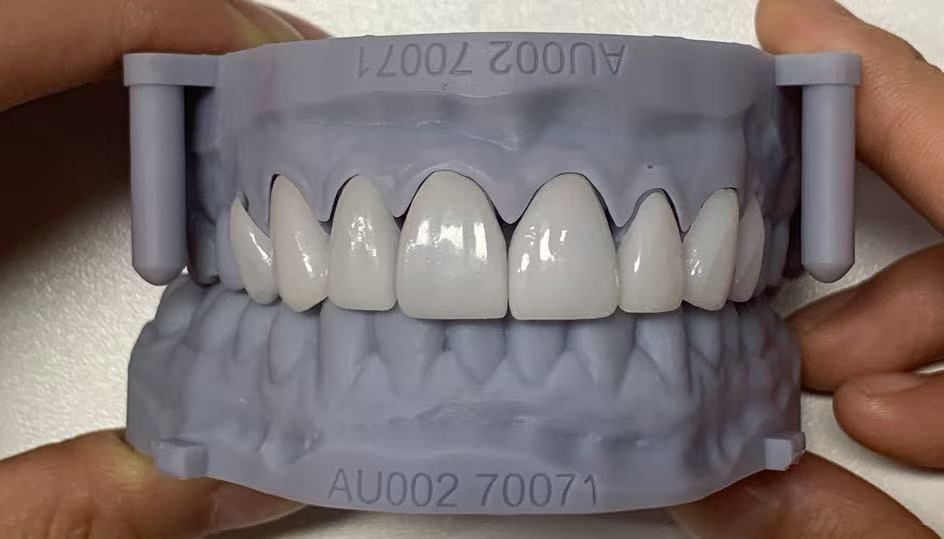
A single monolithic crown usually has a simpler workflow than a multi-unit bridge, implant case, full-arch restoration, removable prosthetic, or orthodontic appliance. More components, more fit checks, and more esthetic requirements usually mean more production planning.
Digital File Quality
Clear digital files can reduce the time spent asking questions before production. Clinics that submit clean scans, accurate bite records, shade photos, and complete instructions often help the lab start faster. Times Dental Lab supports digital design services and STL-based workflows as part of its digital case support.
Material and Product Type
Different restorations require different processing steps. Crowns and Bridges may involve milling, sintering, staining, glazing, layering, or metal-ceramic work. Implant restorations may require additional component verification, screw-access review, and fit control.
Communication Across Time Zones
Overseas cooperation can lose time if every question waits for the next business day. A clear submission checklist and responsive communication help reduce back-and-forth delays. The How to Start page can support clinics that want to prepare case information before sending files.
Quality Control Requirements
Quality control should not be treated as wasted time. A case that ships quickly but fails because of fit, contacts, occlusion, shade, or packing issues can cost more time later. This is why turnaround time and quality control in a China dental lab should be evaluated together.
How Digital Workflow Helps Improve Turnaround Predictability
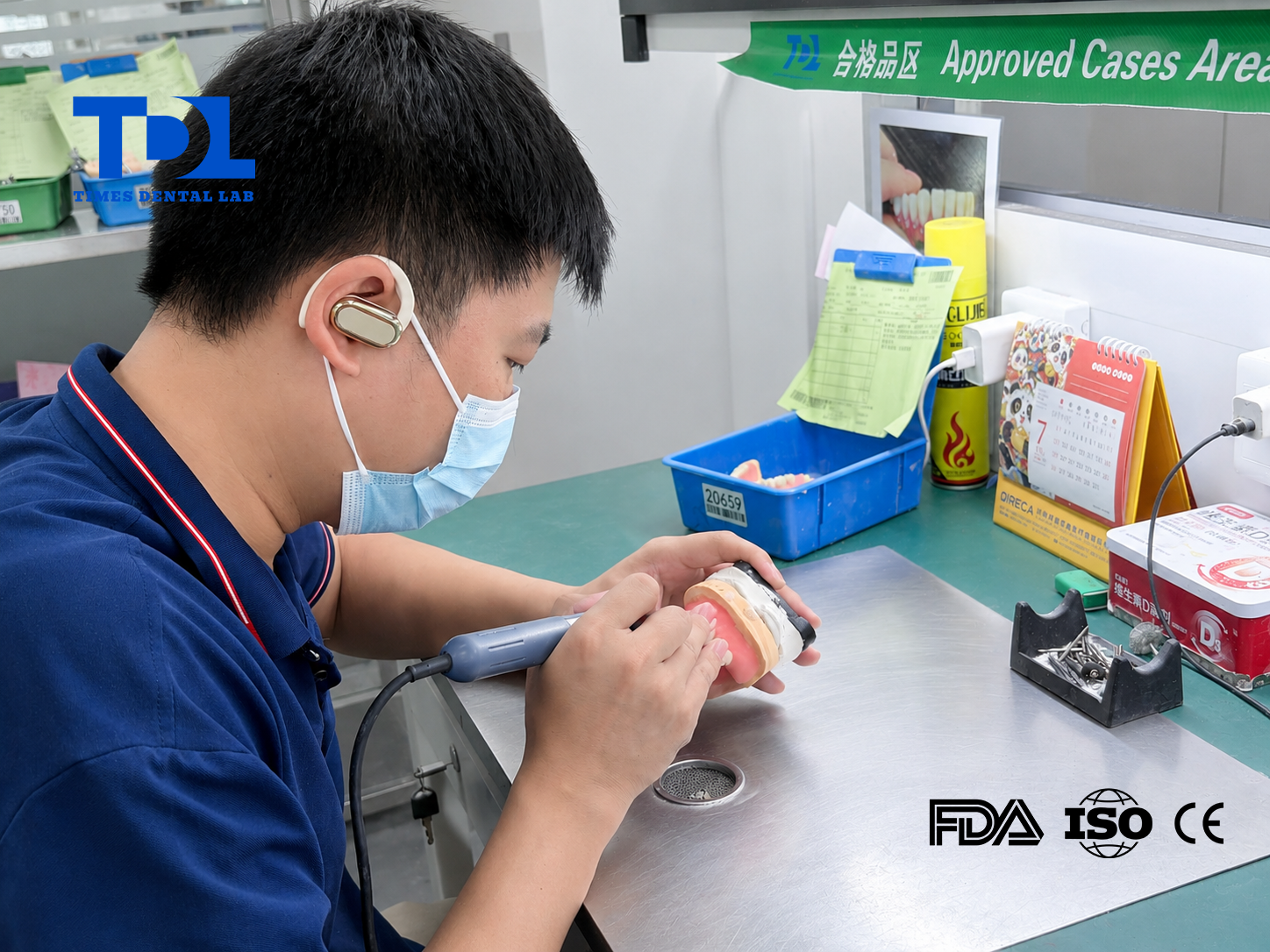
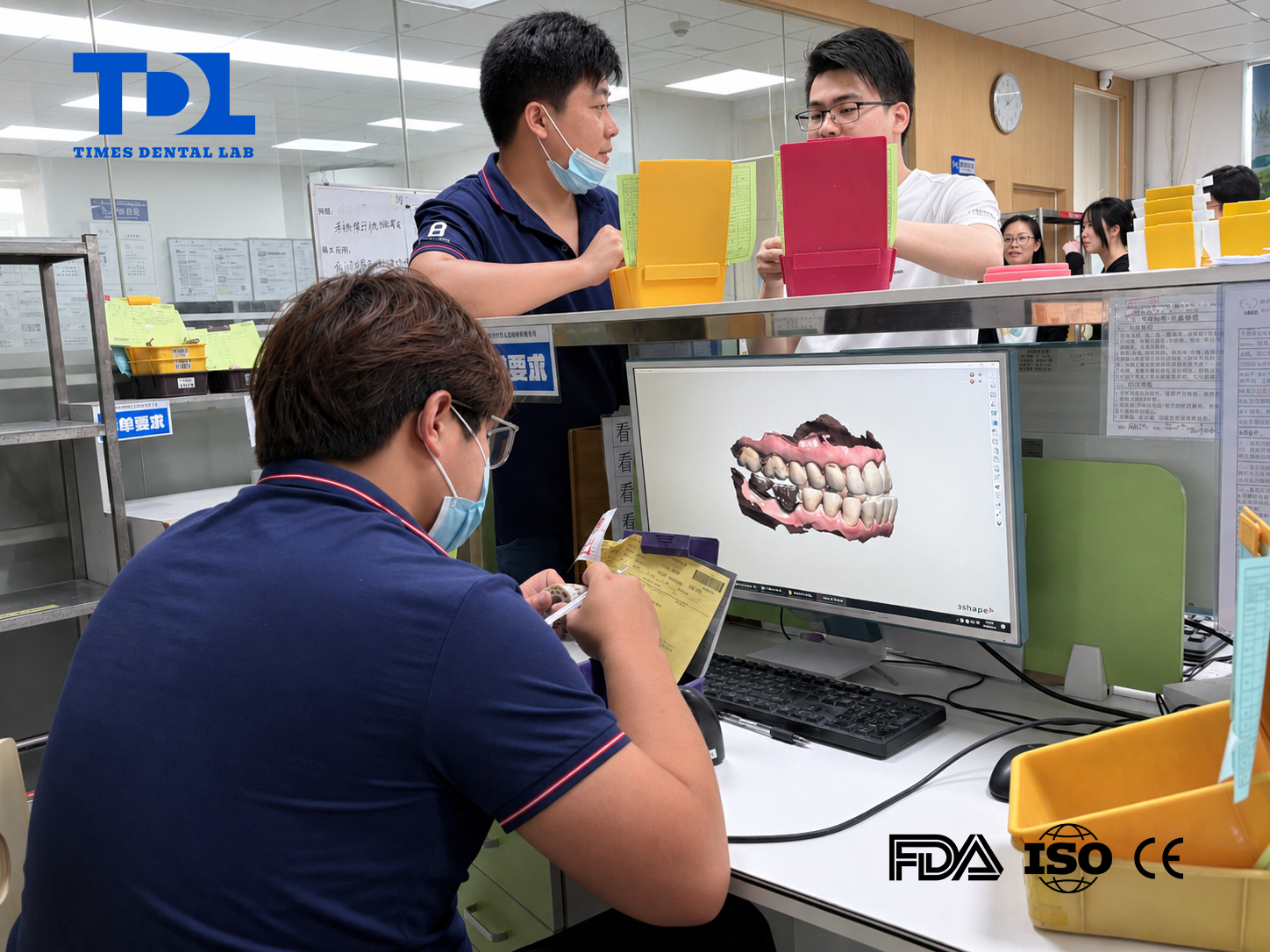
Digital workflow does not automatically make every case instant, but it can make case information clearer and easier to review. Intraoral scans, STL files, CAD design records, digital photos, and archived case notes can help the clinic and lab work from the same information.
For Times Dental Lab, digital workflow supports case review, CAD design, manufacturing preparation, production tracking, and after-sales communication. Clinics can learn more in the related guide: Digital Workflow Between Clinics and Dental Labs.
From a standards perspective, ISO 13485 provides a quality management framework for medical devices, and ISO/TC 106 Dentistry covers dentistry-related standardization. These references support the idea that predictable manufacturing depends on controlled processes, not only speed.
How Clinics Can Help Reduce Delays
Clinics and partner labs can often reduce avoidable turnaround delays by sending complete information at the beginning. A useful submission checklist includes:
· Upper and lower scans or accurate impressions.
· Bite records and opposing arch information.
· Clear margins for crown and bridge cases.
· Final shade, stump shade when needed, and shade photos.
· Restoration type, material choice, and design expectations.
· Implant system, platform, scan body, screw access, and component details.
· Special notes about occlusion, contacts, texture, esthetics, or delivery priority.
Professional organizations such as the American Dental Association, FDI World Dental Federation, and National Association of Dental Laboratories reflect the wider professional context of dental care, dental technology, and laboratory cooperation.
How Times Dental Lab Supports Predictable Turnaround
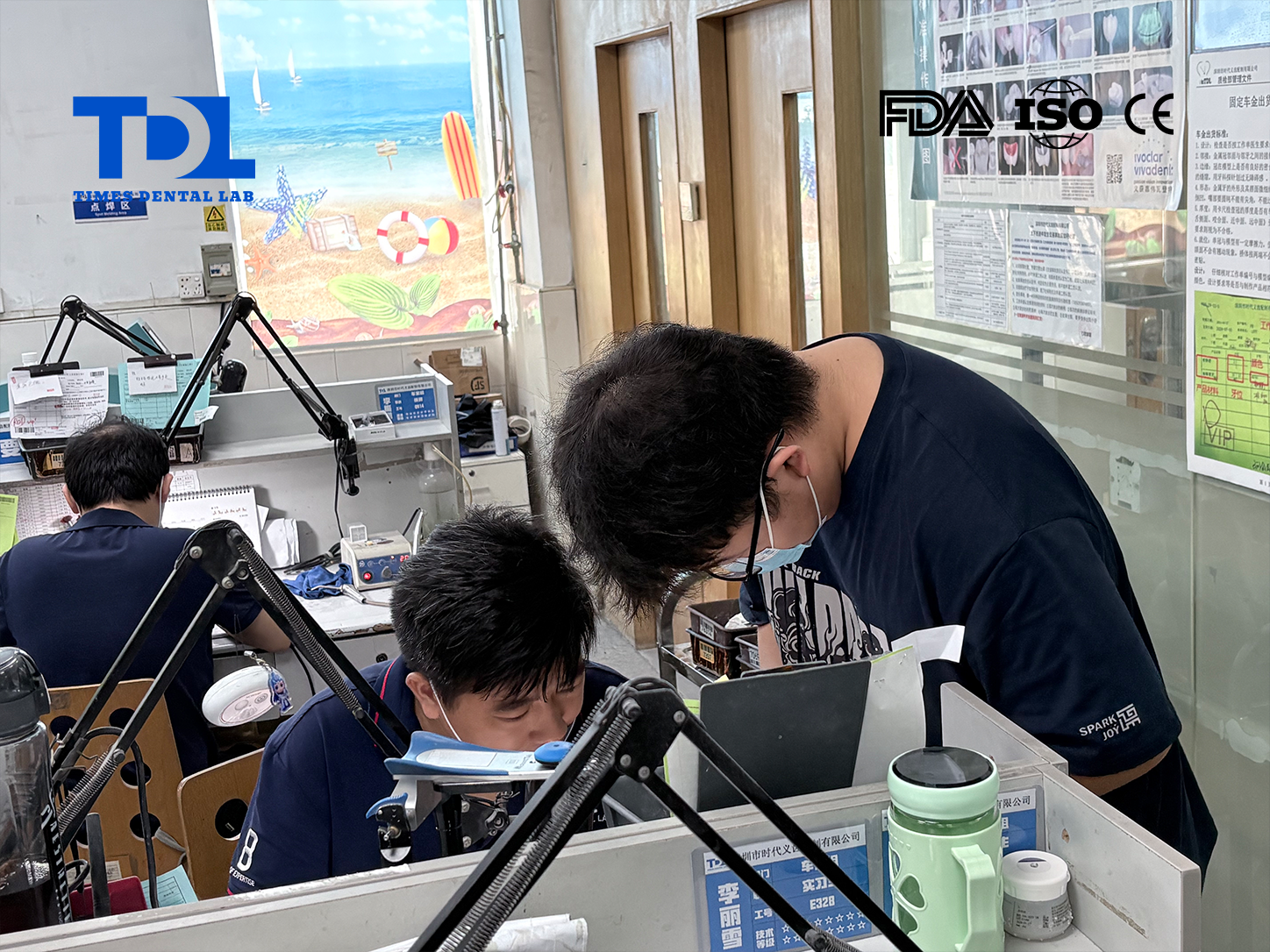
Times Dental Lab is a full-service dental laboratory based in Shenzhen, China. The lab supports international dental laboratories and clinics with fixed restorations, implant restorations, removable prosthetics, orthodontic appliances, and digital design support.
The workflow is built around case review, production control, communication, quality checks, and packing before shipment. This helps overseas clients understand where the case is in the process and reduces uncertainty during repeated cooperation.
· Digital Solutions for scan-based and digital case cooperation.
· Digital Design Services for CAD design and STL workflow support.
· Crowns and Bridges for fixed restorations such as zirconia, PFM, E.max, veneers, inlays, and onlays.
· Implant Restorations for implant crowns, bridges, abutments, and related workflows.
· Contact Times Dental Lab for case review and cooperation questions.
The FDA Dental Devices page is also a useful external reference for understanding that dental restorations and related products exist within a medical and dental device context. For a lab partner, this reinforces the need for documentation, communication, and process control.
What Buyers Should Ask Before Confirming Turnaround Time
|
Question |
Why It Matters |
|
When does the timeline officially start? |
Some labs count from file receipt; others count from case confirmation after review. |
|
What information is required before production? |
Missing scan, bite, shade, or implant data can delay the start. |
|
Does the quoted time include QC and packing? |
QC and packing are part of reliable overseas production. |
|
How are urgent cases handled? |
Urgent production should still protect fit, function, and quality checks. |
|
How will the lab communicate delays? |
Clear updates help clinics plan patient appointments. |
|
What happens if the case needs clarification? |
A structured review process reduces repeated questions. |
FAQs
What is the typical turnaround time of a China dental lab?
It depends on the case type, material, digital file quality, production steps, quality control requirements, and shipping destination. A reliable lab should confirm the timeline after reviewing the case instead of giving one fixed answer for every restoration.
Does digital submission make turnaround faster?
Digital submission can reduce delays when scans, bite records, shade photos, and instructions are complete. It helps the lab review and design the case more efficiently, but complex cases still need proper planning and quality checks.
Why do implant cases usually take longer?
Implant restorations may require scan body verification, implant system details, screw-access planning, abutment design, component checks, and additional fit control. These steps help reduce risk before shipment.
Can a dental lab rush an urgent case?
Some urgent cases can be prioritized, but rushing should not remove essential case review, manufacturing checks, or final QC. Clinics should send complete information and confirm whether priority production is realistic for the specific case.
What causes the most common delays?
Common delays include unclear margins, missing bite records, incomplete implant details, poor scan quality, unclear shade communication, late case approval, complex remakes, and shipping or customs issues.
How can clinics plan appointments around overseas lab production?
Clinics should confirm when the timeline starts, whether the case has passed review, whether shipping time is included, and how the lab communicates updates. Buffer time is helpful for complex or esthetic cases.
How does Times Dental Lab support turnaround management?
Times Dental Lab supports turnaround management through case review, digital workflow support, production control, quality checks, packing, and communication with overseas clinics and dental laboratories.
Conclusion
The turnaround time of a China dental lab depends on more than the number of production days. Case complexity, digital file quality, material selection, communication, manufacturing steps, quality control, packing, and international shipping all affect the final timeline.
A good lab partner should help clinics reduce uncertainty by reviewing cases early, communicating clearly, managing production steps, and checking restorations before shipment. Times Dental Lab supports overseas clinics and dental laboratories with digital workflow, full-service dental lab production, quality control, and structured communication.
To discuss turnaround for a specific case, contact Times Dental Lab with scans, photos, restoration details, and deadline requirements.