Quick Answer
A cobalt chrome partial denture framework should provide support, stability and retention while following the prescribed path of insertion. A typical framework design includes rests, clasps, major and minor connectors, guide-plane relationships and acrylic retention areas. Before production begins, the dental lab needs accurate models or scans, a clear prescription, surveyed information when available and approval of the proposed framework design. This guide is written for lab-clinic communication and case preparation; it does not replace clinical diagnosis, treatment planning or material instructions from the clinician and component manufacturers.
What Is a Cobalt Chrome Partial Denture Framework?
A cobalt chrome partial denture framework is the metal support structure used in many removable partial dentures. The framework connects rests, clasps, denture base areas and acrylic retention sections so the prosthesis can seat, resist movement and support replacement teeth.
Compared with an all-acrylic partial denture, a cobalt chrome framework is usually thinner in selected areas and provides a more rigid metal structure. Compared with a flexible denture, a cobalt chrome partial denture depends more heavily on planned support, path of insertion, clasp design and major connector design. The question is therefore not only whether cobalt chrome is suitable, but whether the framework design and case records are clear enough for production.
For dental clinics and laboratories outsourcing removable cases, the design discussion should happen before casting, milling or printing begins. Times Dental Lab supports removable dental restorations including complete dentures, partial dentures, flexible dentures and metal framework dentures, but each cobalt chrome framework still needs case-specific records and design confirmation.
What Are the Main Components of an RPD Framework?
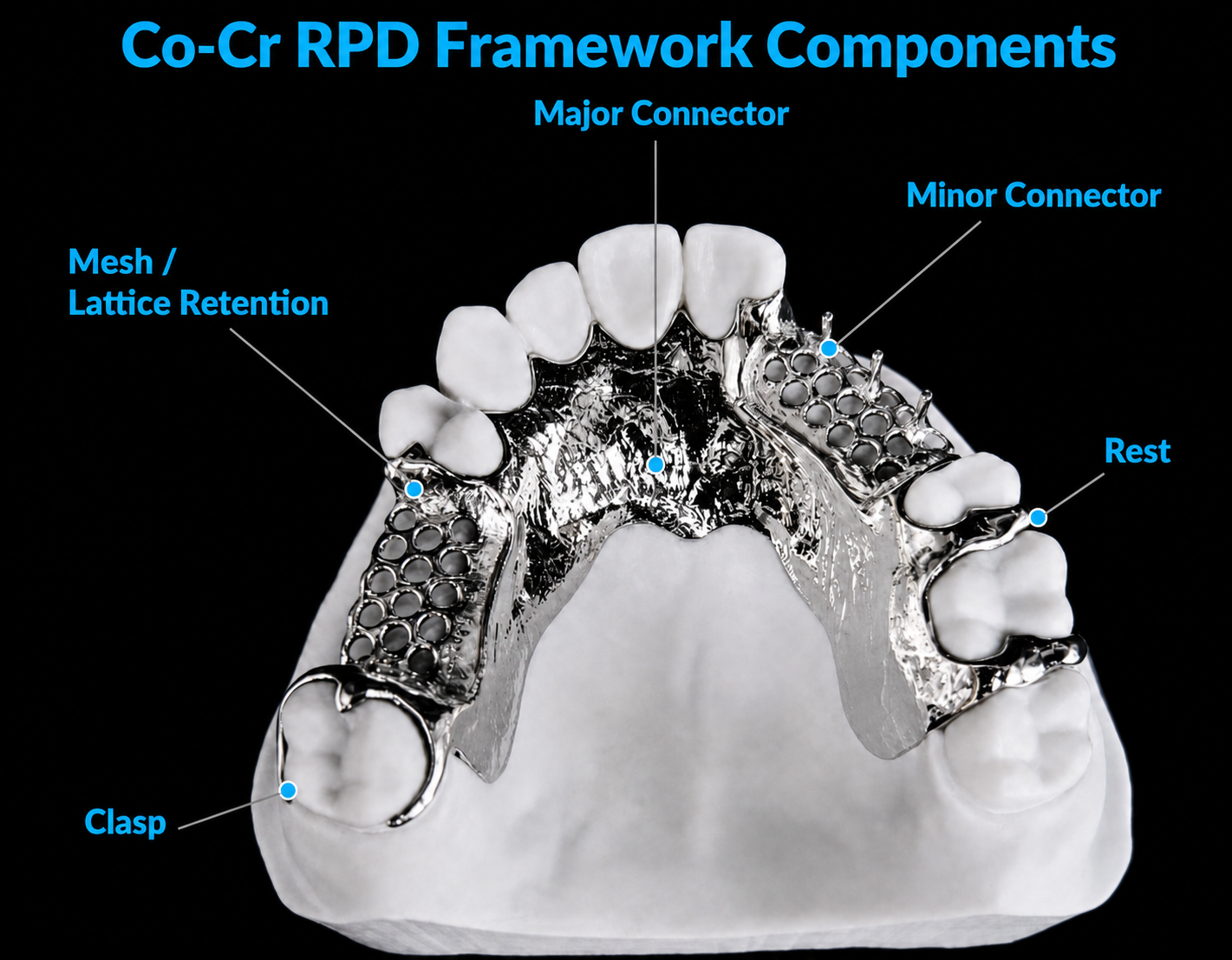
A removable partial denture framework is not one single component. It is a coordinated design made of support, retention, connection and acrylic-retention elements. When one element is unclear, the lab may need to pause design and confirm the prescription before proceeding.
|
Framework Component |
Main Function |
What the Lab Reviews |
|
Major connector |
Connects framework sections across the arch. |
Type, location, tissue clearance and patient comfort requirements. |
|
Minor connectors |
Link rests, clasps and denture base areas to the major connector. |
Continuity, contour and relationship to adjacent teeth. |
|
Rests and rest seats |
Help direct support to prepared teeth and control vertical movement. |
Visibility, preparation detail and whether rest-seat information is complete. |
|
Clasps and retentive parts |
Provide mechanical retention using planned undercuts. |
Clasp type, terminal position, tooth contour and path of insertion. |
|
Mesh or lattice retention |
Retains acrylic base and prosthetic teeth. |
Acrylic space, extension, finish line and tissue coverage. |
Major Connectors
The major connector is the main metal element that joins the framework across the arch. The selected connector design affects rigidity, tissue coverage, hygiene access and patient comfort. A dental lab can manufacture the connector shown in the prescription, but the clinical indication and final design choice should come from the prescribing clinician.
Minor Connectors
Minor connectors link rests, clasp assemblies and denture base areas to the major connector. In digital design, these parts must be continuous and shaped so the final framework does not create unnecessary bulk or fragile transition points.
Rests and Rest Seats
Rests and rest seats help control support and seating. If rest seats are not visible on the model or scan, the technician may not be able to confirm whether the framework can seat as intended. In that situation, Times Dental Lab would normally request clarification, an updated scan or a marked design before production.
Clasps and Retentive Components
Clasps need to match the planned undercut, path of insertion, esthetic expectation and abutment tooth location. The lab should not guess clasp type when the prescription is unclear. Clear instructions help avoid later disputes about visibility, retention position or framework adjustment.
Mesh or Lattice Retention
Mesh or lattice areas provide acrylic retention for the denture base. The lab checks whether the extension covers the required edentulous area while leaving enough room for acrylic thickness and artificial tooth setup. Incomplete tissue capture is a common reason for design questions in distal-extension cases.
Why the Path of Insertion Matters
The path of insertion is important in RPD framework design because rests, guide planes, clasps and denture base areas must work together during seating and removal. A framework that looks acceptable on a static model can still create interference if the insertion path, undercut use or guide-plane relationship is not clearly planned.
A review of RPD path of placement on PubMed describes the relationship between path of placement, guide planes, seating and framework adaptation. For a dental lab, this reinforces a practical point: the scanned arch or master model must show enough tooth and tissue detail for the technician to evaluate possible interferences and retention areas.
When Times Dental Lab receives a cobalt chrome partial denture case, the design team checks whether the proposed framework can follow the prescribed path without obvious conflicts. If the case lacks surveyed information, clasp guidance or visible rest-seat preparation, the safer workflow is to confirm the design with the clinic before production rather than silently guessing.
What Records Should Be Sent to the Dental Lab?
A cobalt chrome framework case should be submitted with records that let the lab understand the arch, opposing dentition, support teeth, insertion path and requested design. A general dental lab case submission checklist is useful for many restorations, but RPD framework cases need additional design-specific information.
|
Case Record |
Why It Matters |
|
Accurate master model or full-arch digital scan |
Shows preparation, edentulous areas, tissue extension and tooth contours. |
|
Opposing arch |
Allows occlusal relationship and available restorative space to be checked. |
|
Bite record |
Helps verify jaw relationship and articulation before setup or try-in stages. |
|
Tooth chart and edentulous areas |
Confirms which teeth are present, missing, mobile, crowned or planned for support. |
|
Surveyed model or survey instructions |
Clarifies undercuts, path of insertion and potential clasp positions. |
|
Rest-seat and guide-plane information |
Shows whether support and insertion guidance are already prepared clinically. |
|
Preferred clasp and major connector design |
Prevents the lab from choosing visible or unwanted components by assumption. |
|
Shade, mould and setup instructions |
Supports tooth selection and acrylic-stage planning after framework approval. |
|
Approval requirements |
Defines whether the clinic wants a design preview, wax-up, framework try-in or staged approval. |
Digital vs. Physical Framework Workflow
Cobalt chrome partial denture framework design can be supported by digital, physical or hybrid workflows. The best submission method depends on scan completeness, clinical preference, production method and whether a physical verification model is needed.
Digital Workflow
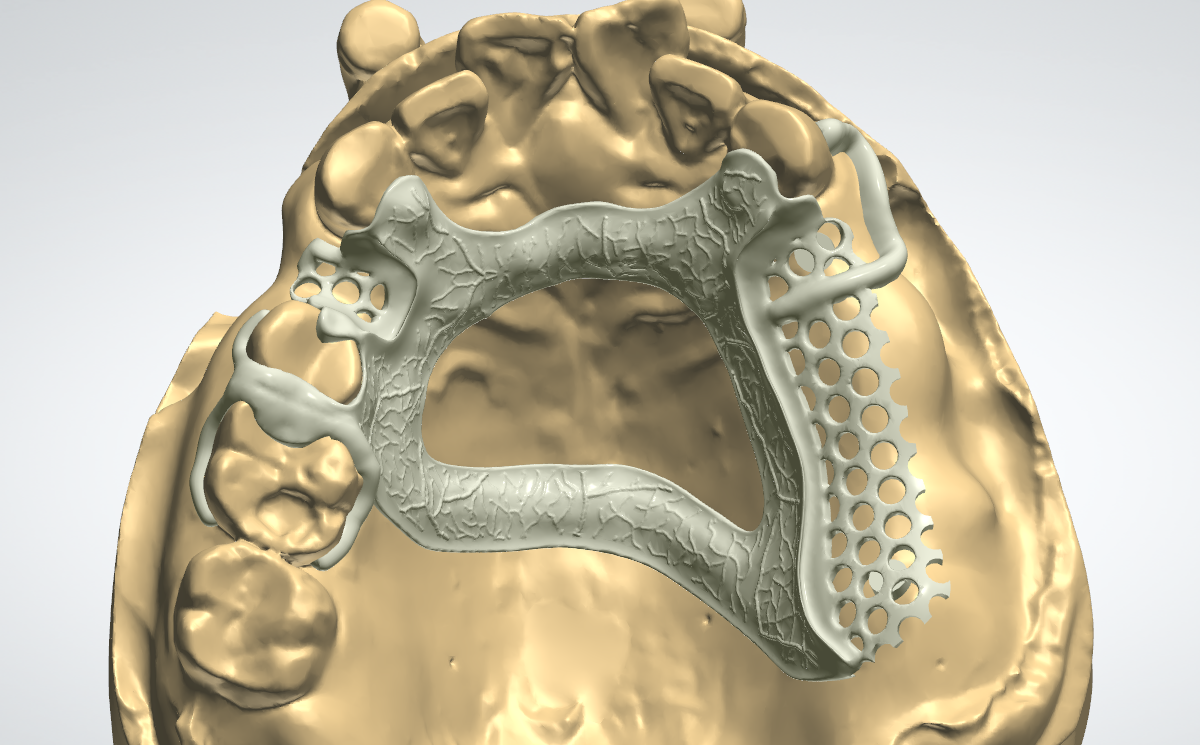
In a digital workflow, the clinic or partner lab sends STL files, upper and lower scans, bite data and a written prescription. The lab imports the data, reviews the model, designs the framework and may provide a digital preview for approval. Times Dental Lab can support digital design services for cases where digital communication and review are part of the workflow.
A case report on PMC describes a removable partial denture workflow using digital impressions, CAD design and metal framework production. The useful lesson for case submission is not that digital files solve every problem, but that digital design still depends on complete scan data, verification and communication between clinic and lab.
Physical Workflow
In a physical workflow, the clinic sends impressions, working models, opposing models, bite records and a written prescription. Physical models are still helpful when the case requires tissue evaluation, conventional surveying, framework try-in or physical verification before the next removable stage.
Hybrid Workflow
In a hybrid workflow, digital data may be used for design communication while a physical model is used for verification, setup or staged approval. This approach can be practical when the clinic wants faster communication but still needs a model-based checkpoint before final processing.
Common Framework Design Problems That Delay Production
Most cobalt chrome framework delays do not come from the alloy itself. They usually come from incomplete records, unclear design instructions or a mismatch between the prescription and the submitted model or scan.
|
Problem |
Why the Lab Pauses |
What the Clinic Can Supplement |
|
Rest seats are not visible |
The technician cannot confirm support areas. |
Updated scan, preparation photo or marked rest-seat instruction. |
|
Clasp instructions are missing |
The lab may not know whether retention, esthetics or tooth condition should guide the design. |
Preferred clasp type, visible limitations and surveyed information. |
|
Major connector is not specified |
Different connector options can change comfort, coverage and rigidity. |
Prescription note or approval request before design finalization. |
|
Scan does not capture full tissue area |
Acrylic extension and distal-extension support may be difficult to judge. |
Supplemental scan, physical model or corrected impression. |
|
Undercut or path of insertion is unclear |
Framework seating and clasp position cannot be confidently planned. |
Surveyed model, design screenshot or clinician-marked instructions. |
|
Working and opposing arches do not align |
Bite and setup decisions may be unreliable. |
Correct bite scan or physical bite record. |
|
Prescription and marked design do not match |
The lab cannot know which instruction should control production. |
One final confirmed instruction set. |
|
Production begins before approval |
Changes after metal production can be costly or impractical. |
Digital preview or framework design approval before casting or printing. |
A study on cobalt-chromium RPD framework fit and retention available through PMC shows why framework outcomes should be discussed through design, manufacturing and verification together. In practice, a clear prescription and reviewable model give the lab a stronger starting point than a vague note such as “make metal partial.”
How Times Dental Lab Reviews a Framework Case
Times Dental Lab reviews cobalt chrome partial denture framework cases through a staged process before production. The goal is to identify missing information early and confirm design-sensitive areas before the case reaches a harder-to-change production stage.
· Review the prescription, denture type and requested production stage.
· Check the working model or digital scan for full-arch capture, tissue coverage and visible abutment details.
· Review planned rests, clasps, major connectors, minor connectors and acrylic retention areas.
· Evaluate the proposed insertion path and obvious interference areas based on the available records.
· Mark unclear instructions and request confirmation before design or production when needed.
· Provide a design preview when the client requires approval before production.
· Check framework identification, finishing, fit on the model and case documentation before shipment.
This review process is not a substitute for clinical judgment. It is a communication and production-control workflow designed to reduce avoidable clarification, remake risk and late-stage changes.
Framework Try-In and Approval
A framework try-in can help the clinical team check whether the metal framework seats as planned before acrylic processing and final tooth setup. The try-in stage is especially useful when the case has complex edentulous spaces, esthetic clasp concerns or uncertain tissue relationships.
|
Try-In Checkpoint |
What the Clinic Can Review |
|
Seating |
Whether the framework seats fully without visible interference. |
|
Stability |
Whether the framework is stable enough to proceed to the next stage. |
|
Clasp position |
Whether clasp arms are acceptable clinically and esthetically. |
|
Tissue relationship |
Whether extension and relief areas match the treatment plan. |
|
Space for acrylic and teeth |
Whether setup and acrylic processing can continue as planned. |
|
Approval to proceed |
Whether changes are needed before the next production stage. |
The dental lab can adjust production only within the limits of the submitted records, material system and clinical approval. If a framework cannot be accepted at try-in, the clinic should document the issue clearly with photos, notes and model or scan references so the lab can review the case efficiently.
Implant Abutment, Crown and Removable Case Boundaries
Cobalt chrome partial denture framework design should not be confused with implant abutment design, crown margin design or flexible denture design. Each product category uses different support concepts, records and approval points. This article focuses only on removable partial denture metal framework communication between the clinic and dental lab.
For clinics sending mixed cases, Times Dental Lab recommends separating fixed, implant and removable prescriptions so the removable framework team can review the RPD design without ambiguity. A single patient may need multiple workflows, but each workflow should have its own records and approval stage.
FAQs
What information does a dental lab need for an RPD framework?
A dental lab needs an accurate model or complete digital scan, opposing arch, bite record, written prescription, tooth chart, edentulous area details, rest-seat information, clasp or connector preferences and approval requirements. Surveyed information or a marked design is especially helpful when the path of insertion or undercut use is important.
Can an RPD framework be designed from an intraoral scan?
An RPD framework may be designed from an intraoral scan when the scan captures the full arch, tissue areas, abutment teeth, rest seats and bite relationship clearly enough for the lab workflow. Some cases may still require a physical model, verification step or supplemental record depending on complexity and production requirements.
What is the purpose of a major connector?
A major connector joins the main parts of a removable partial denture framework across the arch. A major connector helps distribute forces, provide rigidity and connect rests, clasps and acrylic retention areas. The final connector type should follow the clinician’s prescription and case requirements.
Why are rest seats important in partial denture design?
Rest seats help guide where rests contact prepared teeth and support the removable partial denture framework. If rest seats are missing or unclear, the lab may not be able to confirm support areas, seating or the relationship between the framework and abutment teeth.
Who should approve the framework design before production?
The prescribing clinician or responsible dental laboratory partner should approve the framework design before production when design choices affect rests, clasps, major connector type, esthetics or patient-specific requirements. Design approval is especially useful before metal production because later changes may be more difficult.
Does Times Dental Lab provide digital CCP framework design?
Times Dental Lab can support digital design communication for cobalt chrome partial denture framework cases when clients provide suitable scan files, bite records and framework instructions. The Times team reviews submitted records and confirms unclear design-sensitive areas before production when needed.
Conclusion
Cobalt chrome partial denture framework quality starts before production. Complete clinical records, clear design instructions and a defined approval process help the dental lab understand support, retention, connector design, acrylic retention and path of insertion before the framework is made.
For Times Dental Lab, the strongest removable workflow is one where the clinic sends complete models or scans, bite records, framework preferences and approval instructions at the beginning. This allows the removable team to review the case, confirm unclear areas and support predictable production communication for removable dental restorations.