Introduction
Dental laboratories often reach capacity limits in different places. One lab may have milling machines and finishing technicians available, but not enough CAD designers. Another lab may lack both design and manufacturing capacity during peak periods. That difference matters because dental CAD design outsourcing and full-production outsourcing solve different problems.
This guide compares both workflows from a dental lab buyer's perspective. It explains what files are needed, where quality-control responsibility sits, which case types may fit design-only support and when full production may be the more practical choice.
Quick Answer
Dental CAD design outsourcing provides production-ready design files while the receiving laboratory retains control of manufacturing and finishing. Full-production outsourcing transfers both design and fabrication to the external laboratory. Design-only outsourcing may suit dental labs with available milling, printing or finishing capacity, while full production may suit labs or clinics that need additional manufacturing capacity, materials, technicians or complete case delivery. The appropriate model depends on internal equipment, staffing, product range, quality-control responsibilities and delivery requirements.
FDI describes CAD/CAM dentistry as designing and manufacturing custom-made dental devices with computer assistance in its CAD/CAM Dentistry policy statement. That definition is useful because this article separates the CAD stage from the CAM and finishing stages.
What Is Dental CAD Design Outsourcing?
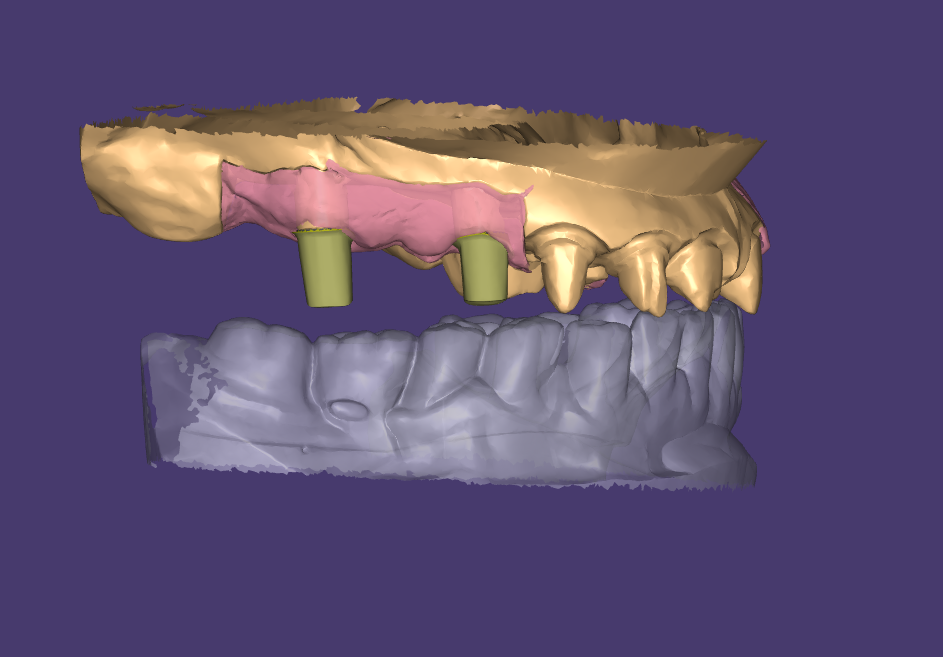
Dental CAD design outsourcing is a design-only cooperation model. The buyer sends scans, bite records, prescription details and design preferences to an external dental design team. The partner prepares the digital design and delivers the agreed file so the buyer's own laboratory can manufacture and finish the case locally.
A design-only workflow may require working scans, opposing arch, bite scan, margin information, material requirements, implant system data and preferred design settings. The client laboratory then handles milling, printing, sintering, pressing, finishing, staining, glazing and final inspection. Times Dental Lab's dental CAD design outsourcing services can support this type of digital design discussion.
Output format, software version, implant library, manufacturing compatibility and whether editable source files are included should be confirmed before the first case. Official software platforms such as exocad DentalCAD and 3Shape Dental System show how broad dental CAD workflows can be, which is why file compatibility cannot be assumed from the word CAD alone.
What Is Full Dental Lab Production Outsourcing?
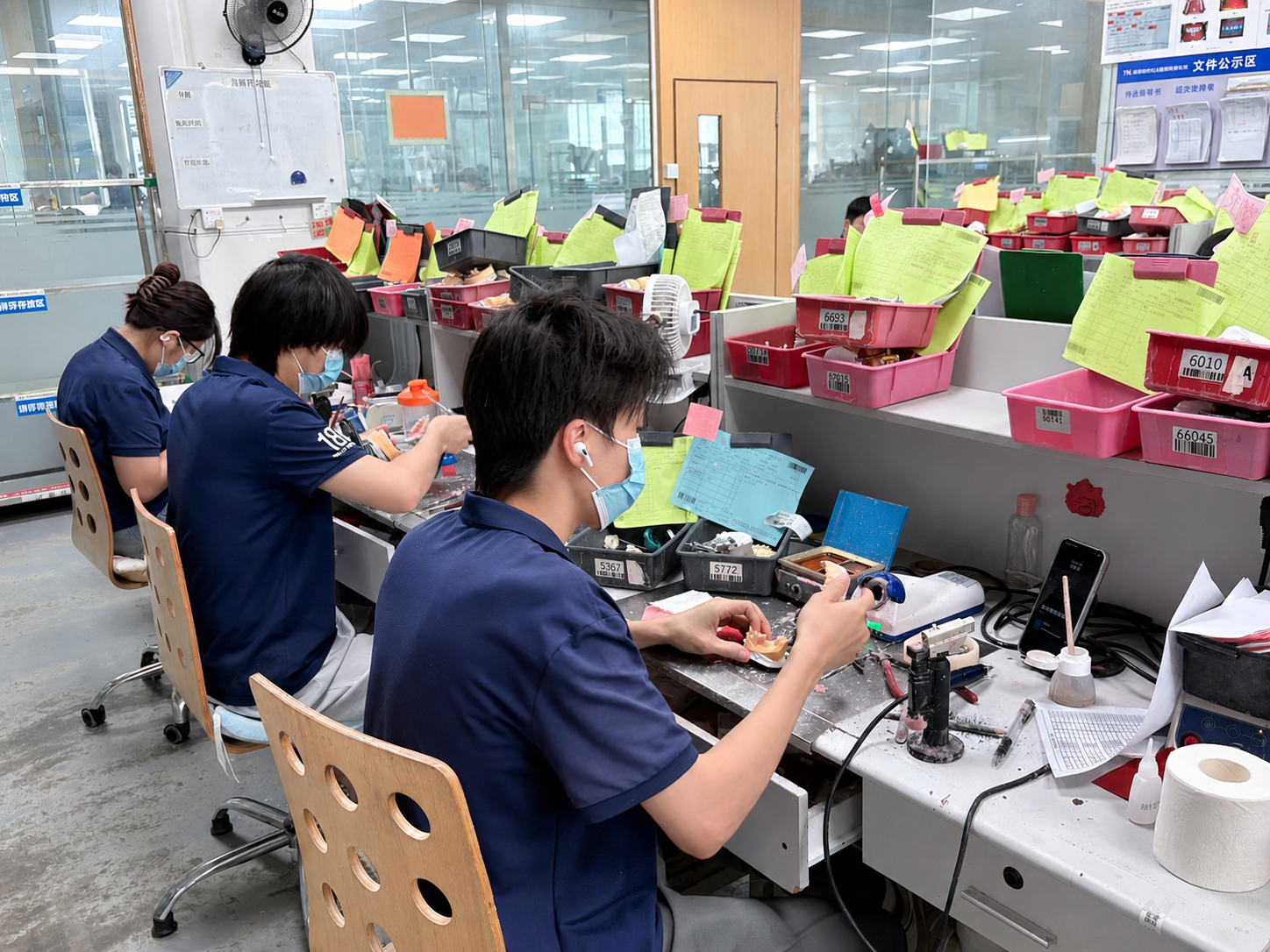
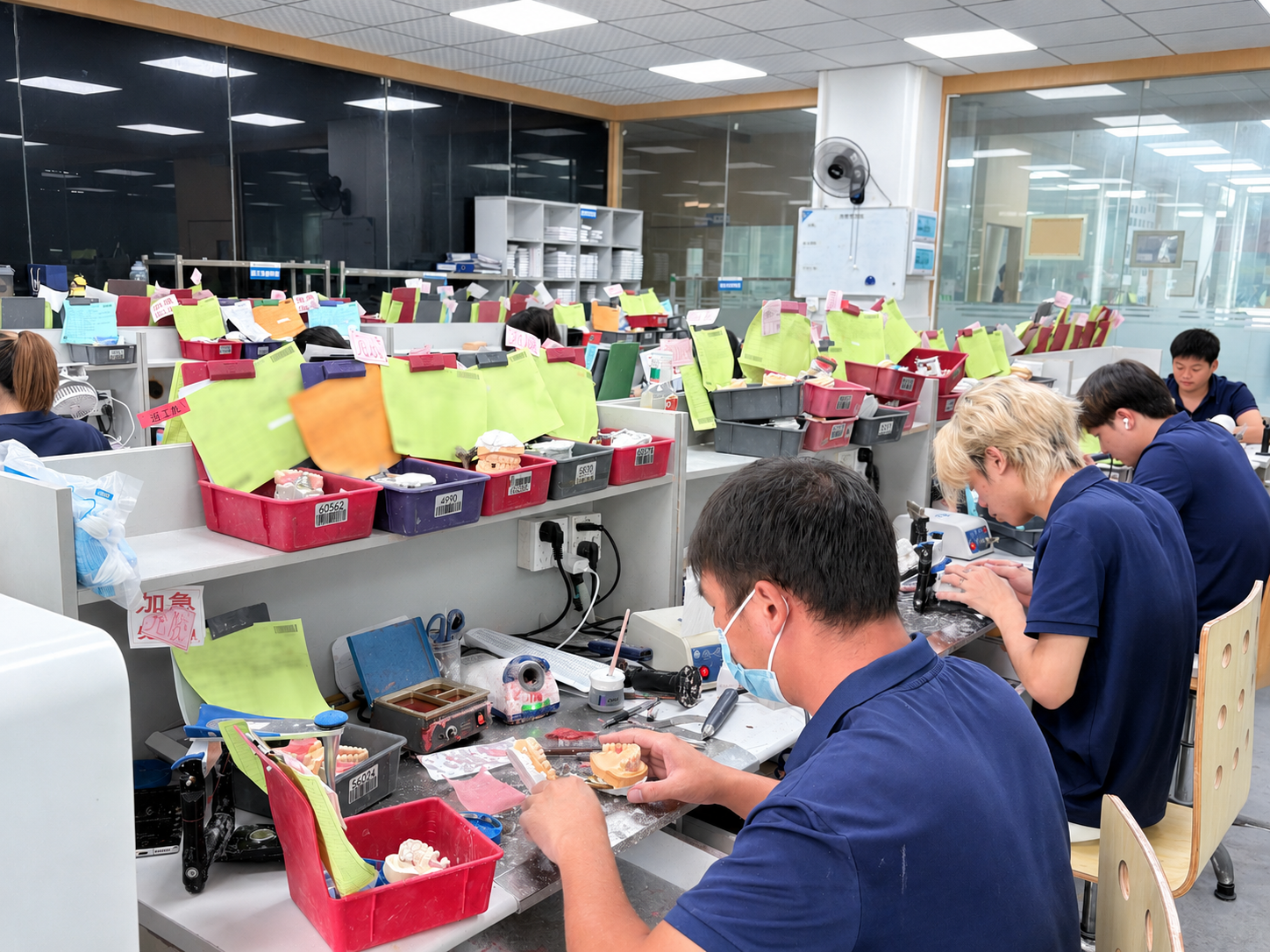
Full dental lab production outsourcing means the external laboratory manages both design and fabrication. Depending on the agreed case and quote, the workflow may include file review, CAD design, design confirmation, model production, milling, printing, casting, finishing, product-specific QC, packaging and international shipping.
This workflow may fit buyers that need more than design help. A clinic may want complete restorations delivered. A lab may want to expand into products it cannot manufacture internally. A busy laboratory may use full production to handle standardized case types during peak periods. The exact included services should always follow the formal quote and case confirmation.
What Is the Main Difference?
|
Area |
CAD Design Only |
Full Production |
|
Design completed by |
Outsourcing partner |
Outsourcing partner |
|
Manufacturing |
Buyer's laboratory |
Outsourcing partner |
|
Finishing |
Buyer's laboratory |
Outsourcing partner |
|
Physical restoration shipping |
Usually no |
Yes |
|
Buyer needs equipment |
Usually yes |
Not necessarily |
|
Material processing control |
Buyer keeps direct control |
Supplier controls production process |
|
Best suited to |
Labs with production capacity |
Labs or clinics needing complete delivery |
Neither workflow is universally better. The right choice depends on which part of the laboratory process is creating the capacity problem. If CAD design is the bottleneck, design-only support may help. If the lab lacks manufacturing capacity, full production may be more useful.
When Does Design-Only Outsourcing Make Sense?
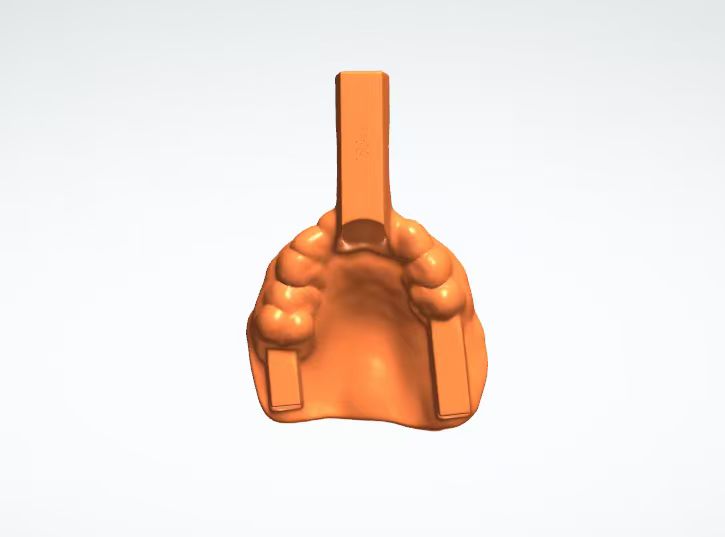
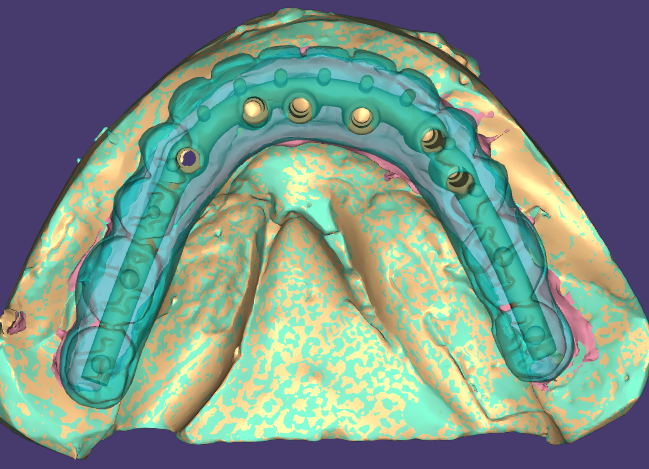
Design-only outsourcing makes sense when the buyer has production capacity but needs more digital design support. This is common when milling machines, printers and finishing teams are available, but CAD technicians are overloaded or specialized design skills are missing.
· The lab already has milling or 3D printing equipment.
· Production equipment has capacity, but CAD design is delayed.
· The lab needs cross-time-zone design support.
· Seasonal case volume creates a CAD backlog.
· The buyer wants to keep local material processing and finishing control.
· Only selected complex cases need outside design support.
· The lab wants to expand implant, splint, model or framework design capability.
When Does Full-Production Outsourcing Make Sense?
Full-production outsourcing makes sense when the buyer needs both design and manufacturing support. It can also fit labs that want to expand their product range without purchasing new equipment or training a full internal production team for every indication.
· Internal production equipment or technicians are limited.
· The buyer wants to add zirconia, PFM, implants, removables or orthodontic products.
· The lab does not want to invest in new manufacturing equipment.
· Peak volume requires extra production capacity.
· One supplier should handle design, manufacturing, QC and packaging.
· A clinic needs a complete restoration rather than a design file.
· A lab wants to outsource standardized products as a complete workflow.
Times Dental Lab's full dental lab production services can be used as the broader product-scope reference before discussing complete outsourcing.
Which Products Can Be Outsourced as Design Only?
Design-only support can apply to many digital dental indications, but each product requires different records. The point is not to send one STL file and ask for a finished design. The lab should submit the design goal, material, manufacturing method and case-specific requirements.
|
Design Type |
Core Records Usually Needed |
|
Crown and bridge |
Working scan, opposing arch, bite, tooth number, material, margins and contact preference. |
|
Implant crown |
Implant system, scan body, soft-tissue scan, bite, component details and screw-access instructions. |
|
Custom abutment |
Implant platform, emergence profile, margin preference, tissue scan and crown plan. |
|
Implant bar |
Implant or MUA level, verified positions, opposing arch, bite, prosthetic plan and component data. |
|
Veneer |
Preparation scan, opposing arch, smile or shade reference, margin and esthetic instructions. |
|
Splint or night guard |
Appliance arch, opposing arch, bite, material, thickness, coverage and occlusal design. |
|
Model or tray |
Complete scan, requested model or tray type, base requirements and production purpose. |
|
Cobalt chrome framework |
Master scan or model, design prescription, survey information, clasp and rest requirements. |
Which Cases Need More Than an STL File?
Crown and Bridge Cases
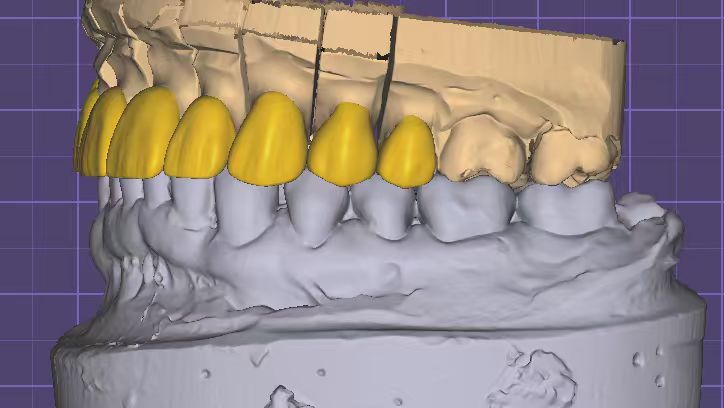
Crown and bridge design usually needs tooth number, restoration type, material, margin confirmation, opposing arch, bite scan, contact preference and occlusal preference. If the margin is unclear or the bite does not align, the design should pause for clarification.
Implant Cases
Implant CAD design usually needs implant system, platform, connection, scan-body information, Ti-base or component details, soft-tissue scan, screw-access instruction and emergence-profile requirements. A scan body without the correct library or component information can delay the design.
Splint Cases
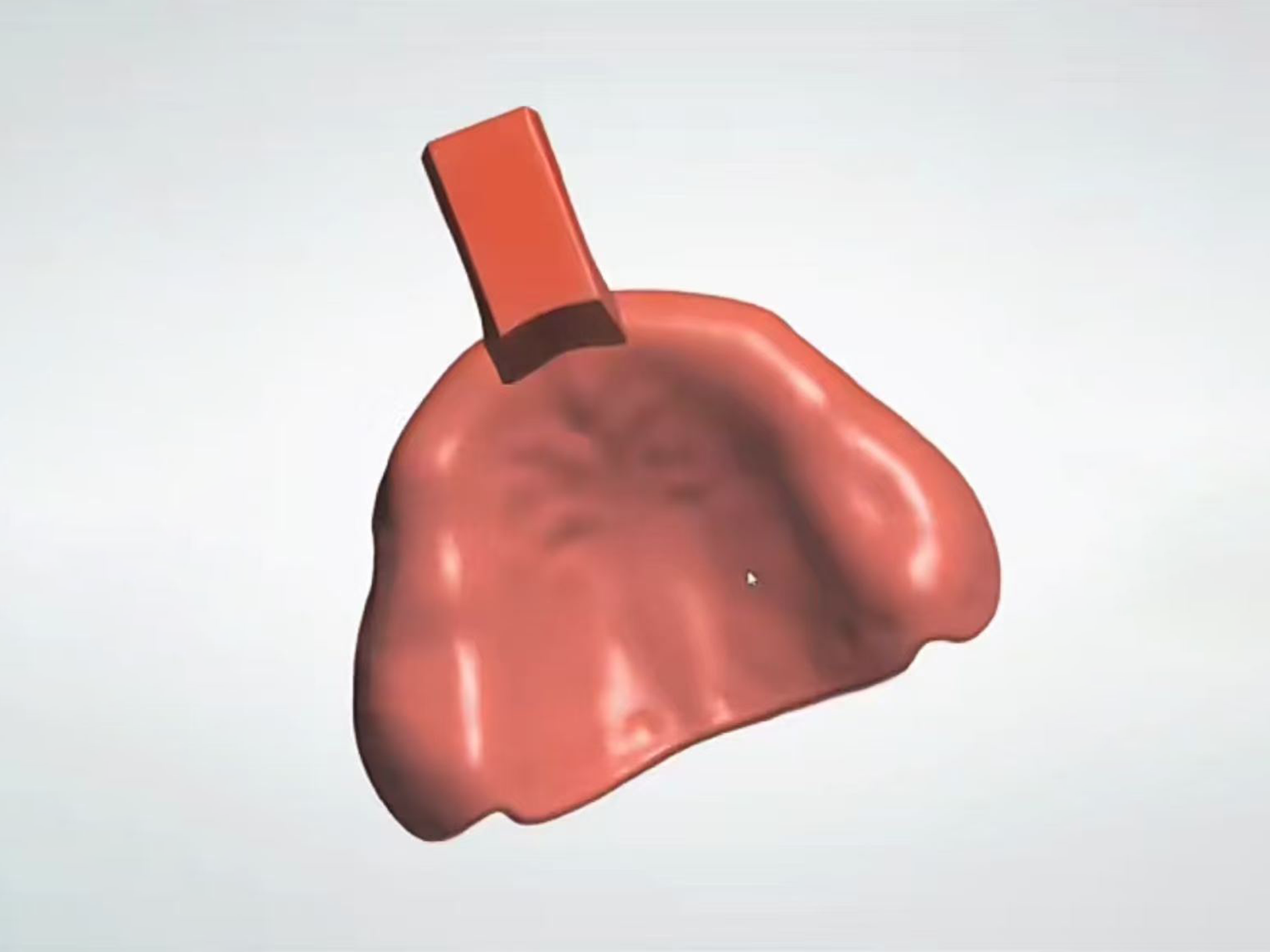
Splint cases may need appliance arch, opposing arch, bite record, material, thickness, coverage and occlusal design. The design team should not assume a protective or occlusal scheme from the model alone because appliance purpose and clinical adjustment remain prescription-driven.
What Files Should Be Delivered After CAD Design?
File delivery should be agreed before the design workflow starts. A buyer may need an STL, manufacturing file, model file, preview file or editable design file. Those are not always the same deliverable, and the policy may depend on software, license, library and project scope.
· Required output format.
· Manufacturing software compatibility.
· Design file or production file.
· Model files where required.
· Naming convention and case ID.
· Version control and approval status.
· Whether editable source files are included.
· Whether manufacturing parameters are included or set by the client.
How Should Design Approval Work?
Design approval should be documented before production begins. A clear approval record helps separate design changes from manufacturing issues and reduces confusion when more than one person gives feedback.
· Times receives the case and instructions.
· Submitted files are checked for completeness.
· Missing or conflicting information is reported.
· CAD design is prepared.
· A design preview is shared when required.
· The client approves or requests specific revisions.
· The final approved file is released for production.
· Approval records are retained with the case.
Design changes after production begins may affect turnaround, cost and remake responsibility. This is true for both design-only and full-production workflows.
Who Is Responsible for Quality Control?
In Design-Only Outsourcing
In design-only outsourcing, Times can review design-related areas such as margins, contacts, occlusion, insertion path, material thickness, connector design and implant component data according to the submitted prescription. The client laboratory remains responsible for its local manufacturing process, including milling or printing settings, material handling, sintering, support removal, finishing and final QC.
In Full-Production Outsourcing
In full-production outsourcing, the supplier manages internal quality checks for design and manufacturing. The receiving client still needs to inspect the restoration according to its clinical or laboratory workflow. Times Dental Lab's article on digital case intake and quality control explains why file review, production checks and feedback records should be connected.
What Can Cause CAD Design Revisions?
· Margin is unclear.
· Bite scan does not align.
· Opposing arch is incomplete.
· Wrong restoration type was selected.
· Material requirements changed.
· Implant system information is missing.
· Scan-body library does not match.
· Connector or minimum thickness requirements conflict with available space.
· Design preferences were not supplied.
· Feedback is given by multiple people with conflicting instructions.
What Should an Overseas Lab Compare Before Choosing a CAD Partner?
|
Evaluation Area |
What to Compare |
|
Supported case types |
Crowns, bridges, implants, bars, splints, models, trays or frameworks. |
|
Software and file formats |
Compatible platforms, export policy and output format. |
|
File-review process |
How missing data, unclear margins and conflicting instructions are handled. |
|
Turnaround definition |
When the design clock starts and whether revision time is included. |
|
Revision workflow |
How many revisions are included and what counts as a new request. |
|
Communication |
Time zone, response channel, design preview and escalation process. |
|
Implant libraries |
Supported libraries, scan-body matching and component verification. |
|
Future production option |
Whether the partner can also manufacture the approved design later. |
Can a Dental Lab Start With Design Only and Add Production Later?
Yes, a dental lab can start with design-only support and later add full production, but the workflow must be re-confirmed. Manufacturing introduces new requirements: material, milling or printing process, sintering, finishing, QC responsibility, packaging, shipping, guarantee policy, invoice terms and turnaround definition.
This staged approach can lower the first step of cooperation. A lab may begin with a representative CAD design case, evaluate communication and file quality, then decide whether to start a dental lab outsourcing trial for full production.
How Times Dental Lab Supports Both Workflows
Design-Only Support
· File and prescription review.
· Crown and bridge CAD.
· Implant CAD.
· Abutment and bar design.
· Splint, model and custom-tray design.
· Design communication and revisions.
· Production-ready file delivery according to confirmed requirements.
Full-Production Support
· Case review and CAD design.
· Product manufacturing.
· Product-specific quality control.
· Packaging.
· International shipment.
· Feedback review.
For broader cooperation context, buyers can review Times Dental Lab's China dental lab outsourcing guide.
FAQs
What is dental CAD design outsourcing?
Dental CAD design outsourcing means sending case records to an external design team that prepares digital dental designs or production-ready files. The buyer usually keeps local control of milling, printing, sintering, finishing and final quality control.
Can I outsource exocad design to another dental lab?
Yes, exocad-based design may be outsourced when both parties confirm file requirements, software compatibility, libraries, design scope and delivery policy. The buyer should confirm whether the delivered file is a production-ready file or an editable source file.
What files are needed for a crown design?
A crown design usually needs the working scan, opposing arch, bite scan, tooth number, restoration type, material, margin information, contact preference, occlusal preference and any shade or anatomy references required by the prescription.
What information is needed for implant CAD design?
Implant CAD design usually needs the implant system, platform, connection, scan-body information, soft-tissue scan, opposing arch, bite record, restoration type, Ti-base or component details and screw-access or emergence-profile requirements.
Will I receive an STL or editable design file?
The delivered file depends on the agreed workflow. Some projects require an STL or production file, while others may need additional model files or editable design data. File policy should be confirmed before the first case begins.
How many revisions are included?
Revision rules should be confirmed before starting. A simple design change before approval is different from changing the restoration type, material, implant component or manufacturing plan after approval. Those changes may affect cost and turnaround.
Can Times Dental Lab provide design only?
Times Dental Lab can support design-only discussions for qualified cases through its digital design workflow. The exact scope, software compatibility, output format and revision rules should be confirmed with the Times digital design team.
Can Times also manufacture the approved design?
Times Dental Lab can support full production for many dental laboratory products when the case, material, workflow, QC requirements and shipping details are confirmed. A design-only case can be reviewed separately before moving into production.
How is turnaround calculated?
Turnaround should be calculated from the point when files and instructions are complete, not simply when the first message is received. Design approval time, revision requests, missing information and full-production steps can all affect timing.
Is CAD outsourcing suitable for small dental labs?
CAD outsourcing can suit small dental labs that already have milling, printing or finishing capacity but lack enough design time or specialized CAD staff. It is less useful if the lab also lacks manufacturing capacity, materials or final QC resources.
Conclusion
Design-only outsourcing is suitable when a dental lab wants to retain manufacturing control but needs additional digital design capacity. Full-production outsourcing is suitable when the buyer needs both technical design and physical manufacturing support. Before choosing, the buyer should define which stage is limiting capacity, what files are required, who approves the design and who owns each quality-control step.
Need additional CAD capacity or complete dental lab production? Send a CAD design case to Times Dental Lab with one representative case, your required output format and your preferred workflow. Our team can review whether design-only or full-production support better fits the case.