Full Contour Zirconia Surface Finish What Partners Should Specify Before Production
A partner receives a full contour zirconia crown and says it looks too shiny. Another asks for a more natural surface but does not want visible fissure staining. Both requests concern appearance, yet neither can be resolved by changing the shade code alone.
At Times Dental Lab, we encourage partners to describe surface expectations separately from material and shade. Gloss, texture and characterization are different instructions. This guide explains how to make those requirements clearer before finishing begins, and how to give useful feedback when the result differs from the intended appearance. The situations below illustrate communication problems; they are not reports of particular patient cases.
Quick Answer
For a full contour zirconia restoration, specify the desired surface appearance by identifying the area, the reference and the requested effect. Separate gloss from texture and staining. Provide photographs showing what to retain and what to avoid, and confirm whether a review is needed before final finishing. Polishing and glazing are not interchangeable terms, and a shiny photograph does not prove that a surface is adequately smooth. Material-specific instructions govern the finishing process, while the treating clinician remains responsible for clinical verification and any chairside adjustment.
Why a Shade Code Does Not Describe the Whole Surface
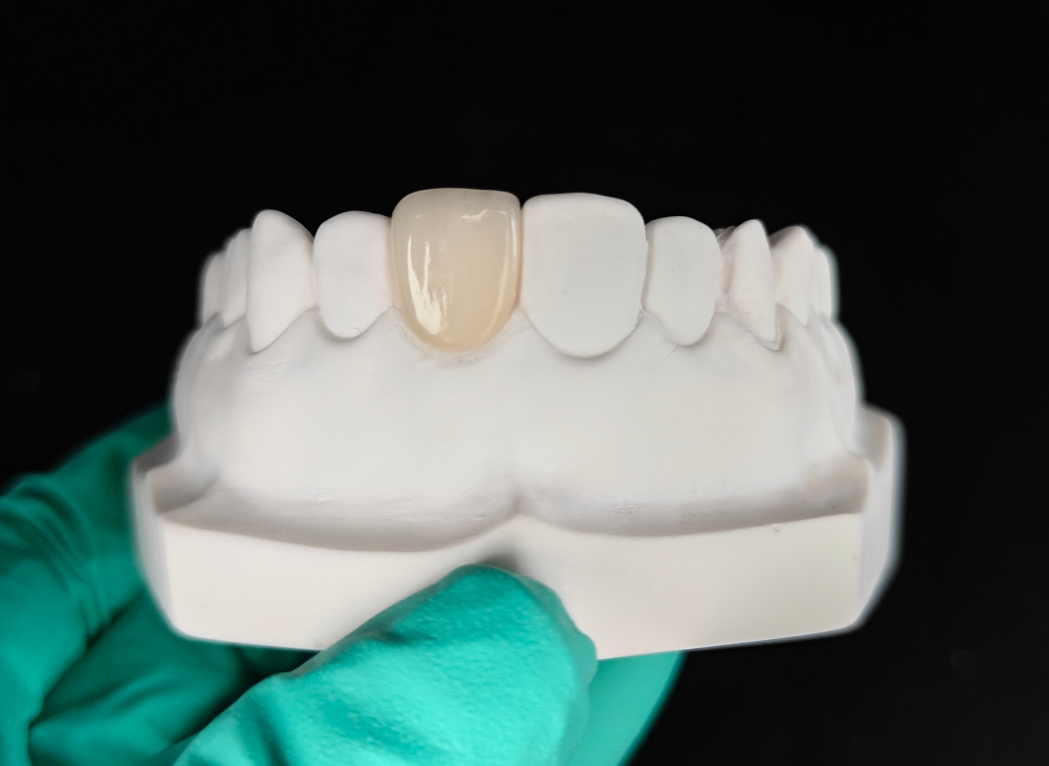
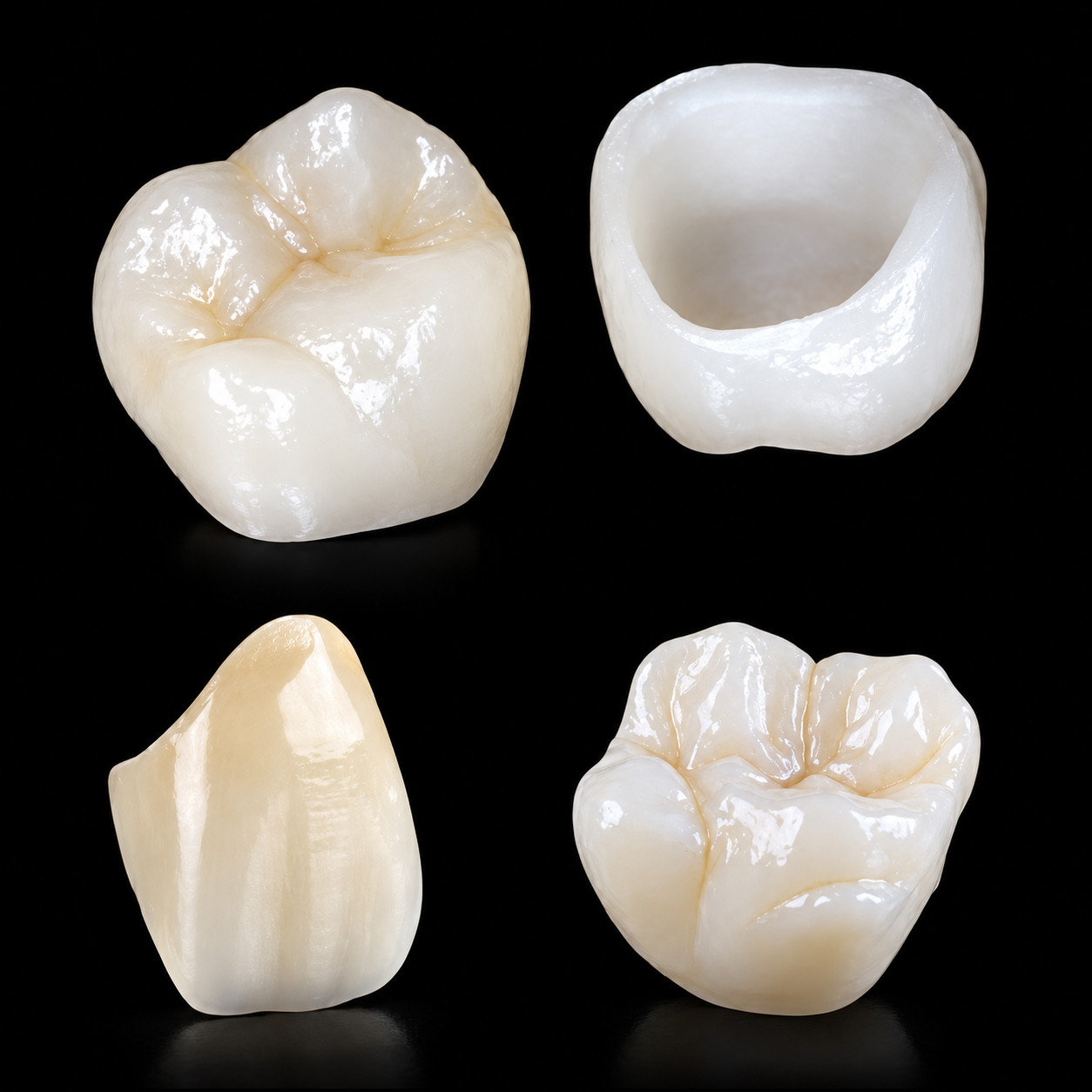
A shade designation identifies a color target within a shade system. It does not tell the laboratory how prominent the facial texture should be, whether fissure characterization is wanted, or how glossy the visible surface should appear. Two restorations with the same prescribed shade can therefore look different in photographs and in the mouth.
Before asking for a shade change, identify the concern. Is the restoration too bright in overall appearance, too reflective in one view, too strongly characterized, or different in contour? Those observations lead to different questions. A photograph dominated by a light reflection may not establish that the base shade is incorrect.
For product context, see our Full Contour Zirconia page. This article focuses on the finishing instruction rather than selecting the zirconia material or comparing monolithic and layered restorations.
Polishing Glazing and Staining Have Different Roles
Polishing Concerns the Material Surface
Polishing uses an appropriate system to refine the surface. The instruments, sequence and operating conditions must be suitable for the zirconia and follow the applicable instructions. A request for a particular appearance does not override the need for an adequately finished surface.
Partners should not use “less shiny” as an instruction to leave zirconia rough. If the visual goal is a subtler surface, describe the reference and discuss a compatible finishing approach. Gloss and surface roughness are related but are not the same measurement, and neither can be established reliably from a single product photograph.
Glazing Is a Separate Surface Treatment
Glazing involves applying a compatible glaze and processing it according to the relevant system. It is not another word for mechanical polishing. A laboratory may use different combinations of finishing steps depending on the material, restoration area and prescription.
The KATANA Zirconia ONE manufacturer FAQ illustrates why adjustment, polishing and glaze compatibility are system-specific questions. This reference is not a claim that Times uses that material for every case. The correct protocol is the one applicable to the material and finishing products actually selected.
Staining Adds Characterization
Staining can introduce prescribed color effects to selected areas, such as cervical regions or occlusal anatomy. It does not physically create a groove, restore missing anatomy or reproduce the optical depth of every natural tooth. More stain is not automatically a more natural result.
If you want minimal characterization, say so. If a particular effect is important, show its location on a reference photograph rather than simply asking for “more character.” Material shade and translucency still need to be appropriate; staining should not be treated as a universal correction for an unsuitable underlying material choice.
Separate Texture From Surface Roughness
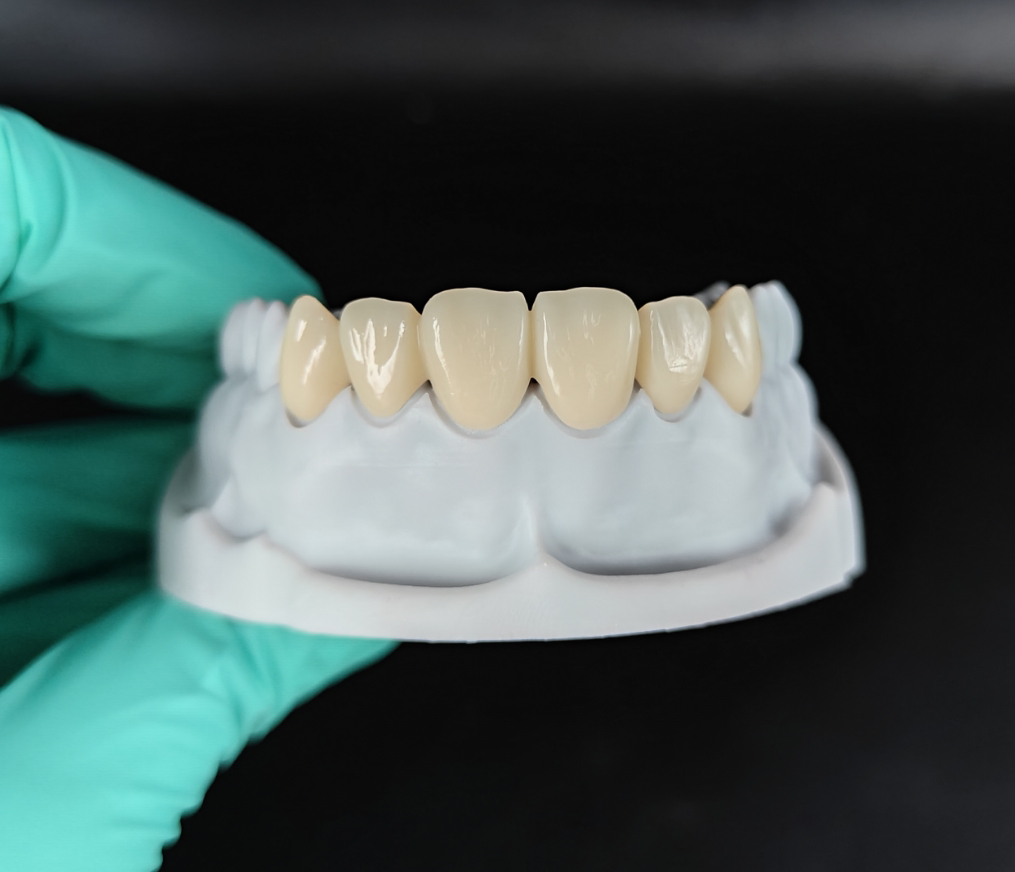
In an appearance discussion, texture may refer to visible contour details such as developmental features or subtle surface undulations. Undesirable roughness is a different issue. Asking for visible texture is not permission to leave a poorly finished surface.
A useful instruction might ask to retain the subtle facial texture shown in a reference while avoiding exaggerated grooves. It should also identify the relevant tooth and surface. A general request for “more texture” gives no clear limit on the size, position or prominence of the intended features.
Three Finishing Requests That Need More Detail
The Crown Looks Too Shiny
Identify the affected surface and provide a contextual photograph. Explain whether the concern is a broad reflective appearance, one strong highlight, or a mismatch with an adjacent restoration. Include the original reference if one was supplied.
Do not immediately request a darker shade to compensate for a reflection. Lighting, camera angle and surface condition may affect the image. The first task is to clarify what looks wrong before agreeing on a material, color or finishing change.
Make It Look More Natural
Define what “natural” means for the case. You may want less prominent fissure staining, subtler facial texture, or closer similarity to the neighboring crown. These are specific requests that can be discussed separately.
Avoid sending several photographs with different finishes without explaining which aspect each illustrates. Label one as the gloss reference and another as the texture reference if they serve different purposes. Also mark any effect that should not be reproduced.
Keep the Occlusal Anatomy Clean
Clarify whether this means avoiding strong dark characterization or changing the actual morphology. Removing a visual stain effect is different from reducing a groove or altering an occlusal contact. Design changes may need review before finishing rather than a last-minute surface instruction.
A concise note could read: “Use restrained occlusal characterization and avoid prominent dark fissure stain. Retain the approved anatomy; do not change contacts without confirmation.” This is an example of communication wording, not a patient-specific prescription.
How to Provide a Useful Finishing Reference
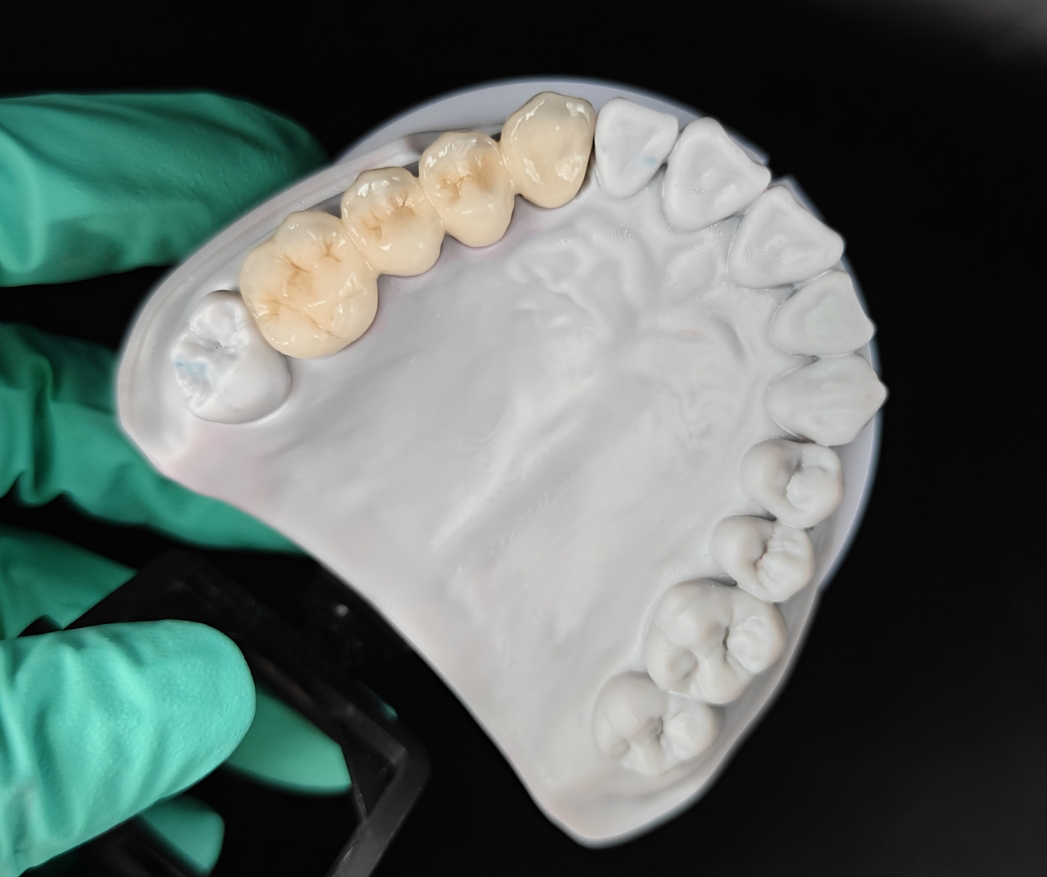
Use photographs that show the intended surface and the restoration in context. A close view can show texture or characterization, while a wider view helps explain how it should relate to adjacent teeth. Identify the reference tooth and the relevant area in the accompanying instruction.
Where possible, provide comparable views with consistent lighting. Avoid filters and heavy image enhancement that change color or reflections. Tell us whether the reference surface is wet or dry if that affects the comparison. A cropped highlight without an overall view may be difficult to interpret.
Photographs guide communication but are not a calibrated measurement of gloss, roughness or shade. If the requested effect is not clear, discuss it before approving finishing. For related color-record considerations, our crown material and prescription guide explains why shade and underlying color information should remain distinct from a broad material label.
A Practical Finishing Instruction for Times
The following example can be adapted to an individual clinician-approved order:
“Full contour zirconia crown for the tooth identified in the prescription. Material and target shade are specified in the order. Use the attached photograph as the facial texture and gloss reference. Keep facial characterization subtle and avoid prominent dark occlusal fissure staining. Retain the approved contour and contacts. If the requested appearance cannot be achieved within the selected material and finishing system, please contact the designated approval contact before proceeding. Confirm whether a finished photograph can be supplied for visual review before dispatch.”
This separates material, color, texture, characterization and approval. It does not prescribe an unsupported universal processing protocol. Preview availability and the scope of any requested changes should be agreed for the particular order.
Confirm Appearance Before Repeating a Finish Across Cases
If a finished case becomes your reference, identify it by case number and describe the features you want repeated. “Same as last time” is insufficient when the previous case used another material, shade, tooth position or photographic setup.
A standing preference can guide future communication, but it should not automatically override a new case prescription. Record exceptions for the individual order. Our partner preference profile article discusses how recurring preferences can be distinguished from case-specific instructions.
When several people review a case, nominate one approval contact and keep feedback linked to the latest version. Conflicting instructions such as “increase characterization” and “remove all staining” need resolution before work continues.
What Happens if Zirconia Is Adjusted Chairside
Adjustment can change the finished surface and remove local stain or glaze. The fact that a crown was glazed before delivery does not establish that an adjusted area remains appropriately finished afterward. The clinician should follow the material and polishing-system instructions for the affected area.
GC's guidance on polishing after crown adjustments emphasizes appropriate instruments and techniques. It is useful professional background, not a single protocol for every zirconia system. This article does not replace manufacturer instructions or clinical judgment.
If an adjustment creates an appearance concern, tell Times which area was adjusted and provide before-and-after photographs if available. Do not assume that the original laboratory finish can be assessed from a photograph taken only after the surface was altered.
How to Give Useful Feedback to Times Dental Lab
For an existing case, contact your customer service manager with the case number, relevant photographs and a description of the affected area. Distinguish what you observed from the change you are requesting: “prominent dark fissure stain on the occlusal surface” is more informative than “finish not good.”
Explain whether the concern was noticed before insertion or after adjustment, and identify the approved reference. A request for a different appearance and a reported discrepancy with confirmed instructions are different situations. Any further work, charges and timing need case-specific confirmation.
Frequently Asked Questions
Are Polishing and Glazing the Same
No. Mechanical polishing refines the material surface, while glazing is a separate compatible surface treatment. The appropriate combination and sequence depend on the material system and prescribed restoration.
Does More Glaze Always Produce a Better Result
No. Appearance and surface quality depend on correct processing and the case requirements, not simply the amount of glaze. Follow the relevant manufacturer instructions rather than requesting extra glaze as a universal solution.
Can I Request Less Gloss Without Changing the Shade
You can describe that appearance goal, but its feasibility needs review for the selected system. Send a reference and identify the surface. Do not request reduced gloss by leaving an inadequately polished or rough surface.
Can a Photograph Prove That a Surface Is Smooth
No. A photograph can communicate visible appearance but cannot reliably measure microscopic surface roughness. Strong reflections also do not prove that the surface is suitable clinically.
Can Times Match a Previous Finishing Style
Provide the previous case number and specify the features you want to retain. Material, shade, anatomy and available records can affect the result, so similarity should be discussed rather than an identical finish assumed.
Discuss Your Zirconia Finishing Requirements With Times
For a new full contour zirconia order, send the prescription and available records to cases@times-dental.com. Add a clearly labeled finishing reference and explain the gloss, texture and characterization you want to retain or avoid. Confirm any visual review requirement before production.
For an existing case, please contact your customer service manager. You can also contact Times Dental Lab to discuss your finishing preferences before submitting the next order.